

The 13 Most Underrated Cuts Of Beef, According To Reddit
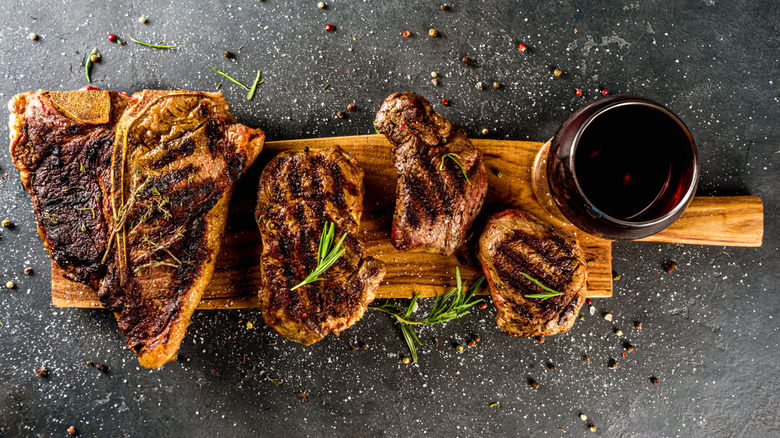
When it comes to culinary knowledge, there's an overwhelming amount of information out there — especially since everyone on social media seems to have a hot take. But perhaps, people that actually cook for a living are some of the most valuable sources of knowledge. The r/Chefit subreddit is "for professional chefs who are also Redditors," and it's where we turned to get the inside scoop on the most underrated cuts of beef.
Folks certainly had a lot to say on the subject, with a wide range of beef parts rising to the top of the list for their affordability, uniqueness, or unparalleled flavor. Some of these cuts you may have seen at the grocery store, and others you probably walked right by. Even for someone that knows their way around a butcher counter, there is probably still a niche piece of beef you haven't sampled yet. Here are 13 less-celebrated cuts of beef that pro cooks and chefs think everyone should try.
1. Flat iron steak
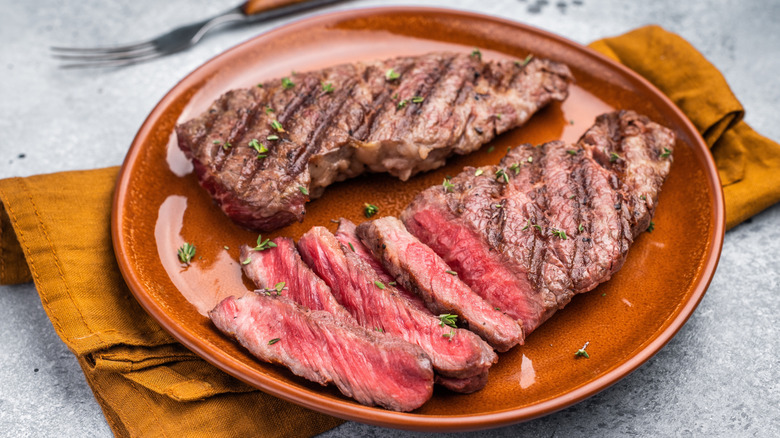
Flat iron is a wide, relatively thin cut with a notable beefy flavor and a good amount of marbling. It comes from the cow's shoulder (otherwise known as the chuck) — there is a layer of connective tissue that separates what is known as the top blade from the flat iron below. However, sometimes a flat iron can be labeled as blade, top blade, shoulder top blade, or top blade filet. If you do come across the whole, unseparated piece and have decent knife skills, you can separate the flat iron steak yourself (or ask your butcher to do it).
Depending on the area you live in, this cut varies in popularity, which also affects how much it will cost. "Honestly, I feel like people forget about flat iron," shared one person on Reddit, but another responded, "I want people to forget about the flat iron! It's been my go-to cut for years, especially when skirt steak prices were going through the roof. As it's gotten more popular over the years (in my area), the prices have been overinflating, and it's harder to find at my local stores."
Flat iron lends itself well to marination, like in this easy three-ingredient steak marinade. Sear it in a smoking hot cast iron pan or char it on the grill. The consensus seems to be that medium rare is the best temperature to cook a flat iron steak to for maximum tenderness. Slice it thin and load the beef into flour tortillas with pico de gallo and salsa, pile it onto a crunchy romaine salad with lots of blue cheese crumbles, or serve it alongside your favorite grilled vegetables.
2. Chuck eye steak
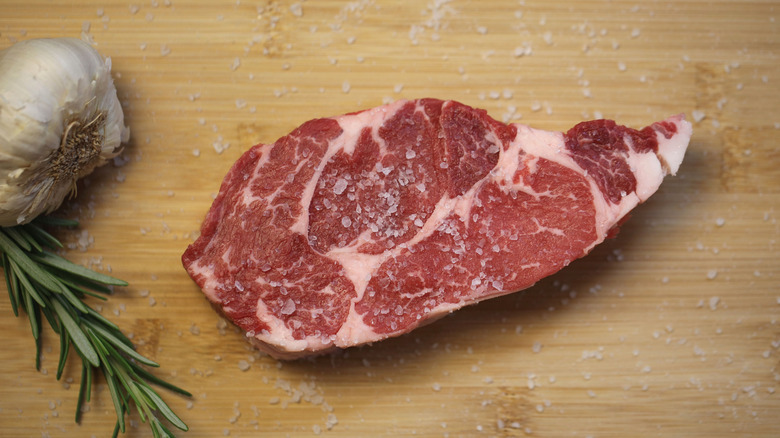
Chuck eye is a versatile, flavorful, and affordable cut of beef, and it appears many times on the thread asking Redditors about the most underrated ones. One commenter even referred to it as "poor man's ribeye." According to experts, chuck eye does live up to its hype as a ribeye alternative. This cut is also sometimes referred to as chuck steak or chuck center steak.
Like flat iron, chuck eye steaks also come from the chuck primal muscle, though they are located farther up on the shoulder. They are a bit tougher than ribeyes because they come from the fifth rib (or sometimes even closer to the neck), while ribeyes are cut from the latter seven, but they are still tender enough to be seared quickly on high heat. Since these steaks tend to be on the thicker side, this means you can achieve a nicely charred crust without overcooking them. As such, chuck eye can be enjoyed as a straightforward steak alongside your favorite sides, or it can be used for easy yet tasty tacos.
There are technically only two chuck eye steaks per cow, so they're not always available. "Few butchers are going to break out an entire chuck just to cut you a few eye steaks. Try and place a special order so they can collect a few for you. Signed, a butcher," advised a Reddit user. However, others find that they're regularly stocked in their local supermarkets.
3. Denver steak
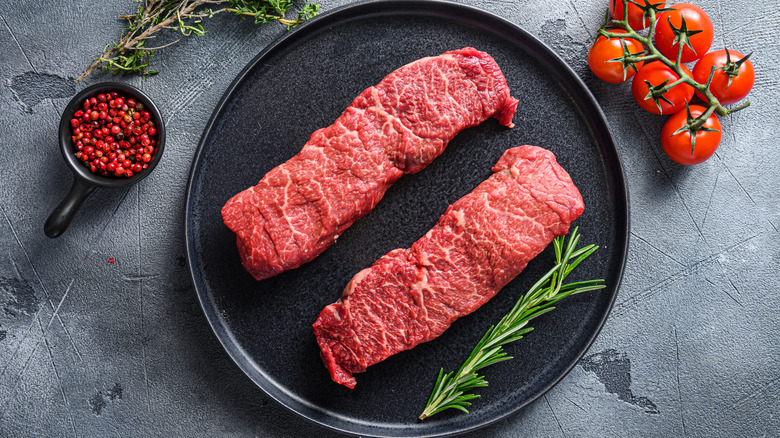
From the chuck primal comes yet another underrated cut of beef: the Denver steak. It is shielded by other harder-working muscles in the cow's shoulder, which means it is more tender than you'd expect, but you still get the rich flavor chuck is known for. Denver steaks also have quite a bit of marbling. They are sometimes called underblade steaks or bottom chuck steaks, and, when they are cut into chunks, they're also known as boneless short ribs.
The catch is that a skilled butcher needs to specifically and carefully remove this strategically located cut from the rest of the chuck. Often, the tender Denver steak is left intact as part of larger chuck pot roasts simply because it's less labor intensive.
When you do see a Denver steak in the case, it's definitely worth grabbing, or you can always put in a special request for them from a butcher. "I just tried this as a steak cooked medium rare and sliced thin and can attest to its goodness," shared one fan on Reddit. "One of the best steaks I've made this year was a Denver," proclaimed another.
4. Teres major steak
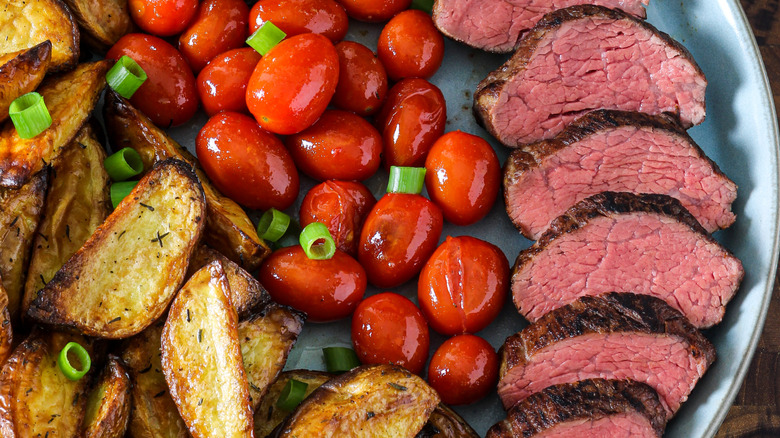
If you like a lean and soft tenderloin or filet mignon, the teres major is for you. This long muscle is located by the shoulder blade (here's that trusty chuck primal coming up again). Because of where the teres major is situated, it doesn't get as much use as other muscles in the shoulder area, which maintains its tenderness. Its location means that it also has the beef-forward flavor that chuck is known for. For those who think you should avoid filet mignon if you're after a flavorful steak but still want a succulent bite, the teres major may just be the perfect cut. You might also find this piece of beef by the names of petite tender, shoulder tender, oyster steak, or shoulder filet steak. "We love this one!" exclaimed an insider on Reddit. "We call it the mini tendie!"
It's best to serve this lean cut of steak rare — the very minimal fat and marbling can mean that teres major can easily dry out when overcooked. You can prepare it like you would a whole tenderloin by just searing it on all sides and letting it rest before cutting the meat against the grain. Alternatively, slice it crosswise before cooking to portion out teres major medallions — bonus points if you wrap them in bacon.
5. Picanha
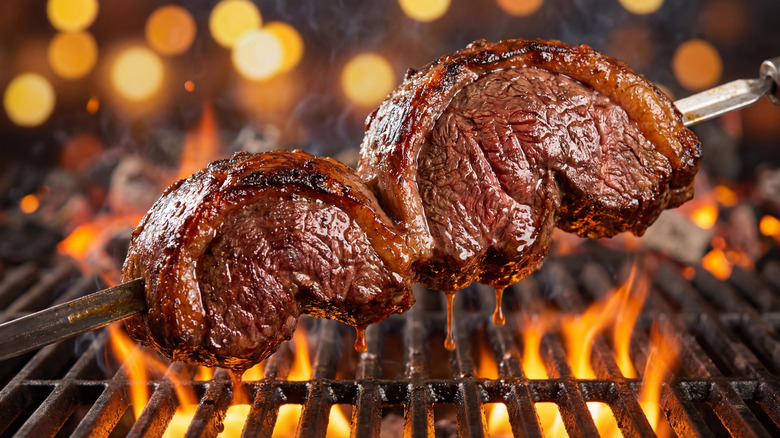
If you're in Brazil, picanha is definitely not underrated. It's the cut of beef you should never pass up at a Brazilian steakhouse, but in North America, it still flies under the radar. Though picanha does not tend to be very widely available, depending on where you shop, it is usually pretty affordable when it is for sale.
Picanha is also called sirloin cap or rump cap, meaning it comes from the tail end of the cow. It can be recognized by the thick cap of fat that runs across the top of the sizable slab of meat. When dining at a Brazilian steakhouse like Fogo de Chão, you'll see that the picanha has been cut into slices so that a layer of fat tops each piece. It is then folded into a C-shape, skewered, and flame-grilled. Indeed, this is an ideal way to enjoy this piece of beef, as the melting fat bastes the relatively lean meat. You can sometimes get an even better deal when you purchase the whole roast and cut it into steaks yourself.
Picanha without the fat is also known as a coulotte, which is a popular cut for steak frites at French bistros. However, the fat adds a special richness and savoriness to picanha, so many cooks feel that it is absolutely worth leaving it on.
6. Flap steak
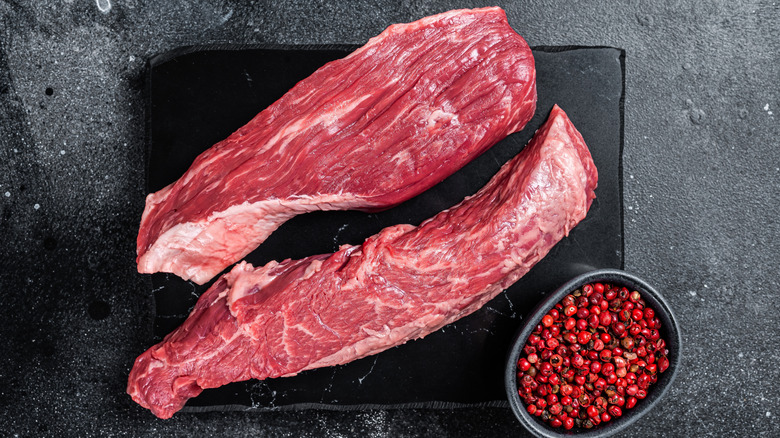
When you're looking for an affordable jack-of-all-trades, flap is what you should try to get your hands on. Flap meat is perhaps the least appealing name for this cut, which could contribute to its underrated status. In areas where it's sold as faux hanger, sirloin tip, or bavette, it might be a bit more popular. No matter what it's called, it's a versatile piece of beef that's as good seared to medium rare as it is slow-cooked in saucy braise. "Bavette is just right up there behind skirt steak for best grilling cuts," said one Redditor.
Marinating this affordable steak before cooking it hot and fast is a great approach. It's ideal when flavored with a sweet steak marinade that also has punchy and salty ingredients like miso paste, ponzu, or soy sauce — thinly slice the meat and serve it over a bowl of steaming white rice. Or, combine garlic, lime juice, Worcestershire sauce, oil, and a touch of sugar to make a marinade for some tasty beef fajitas.
7. Deckle
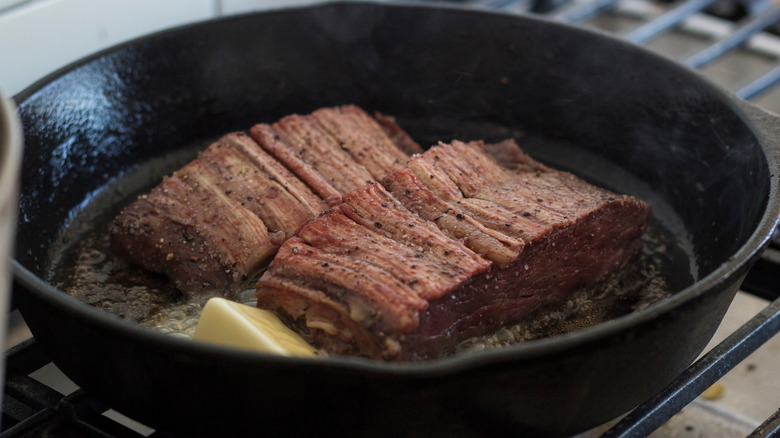
If you see a ribeye cap, spinalis, or calotte, you're looking at a deckle of beef, and you should buy it. The piece is also sometimes called butcher's butter, which speaks to the tender texture, rich beef flavor, and awesome marbling. "It's easily the best piece of beef on the cow in my opinion," shared one fan on Reddit.
If you've enjoyed a full ribeye steak, you've had the deckle before. It's the long muscle that curves around the outer edge of the steak. It can be separated off of the full rack of ribs before they are portioned into ribeyes — the result is a flat, thin, and even cut that is tender, fatty, and flavorful once cooked.
Now, the deckle of beef that's made of the spinalis dorsi muscle is not to be confused with the brisket deckle. The absolute best cut of brisket for barbecue is a full packer brisket, which is made up of both the flat and point muscles. Between the flat and the point on the interior side, you'll find a layer of firm fat, tough connective tissue, and rubbery intercostal meat — this section is also, confusingly, known as a deckle, and it possesses almost none of the qualities of the deckle from the ribeye cap.
8. Liver
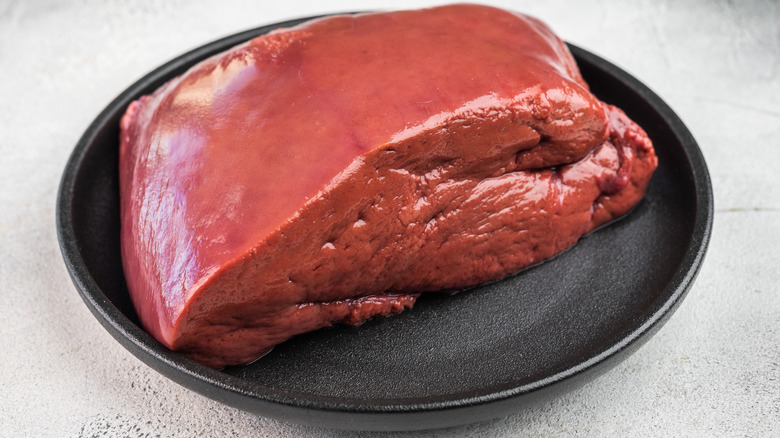
If you think you've tried it all when it comes to underrated cuts of beef, but you haven't tapped into what all the organs have to offer, you're missing out. Liver is a favorite for people that know what's up. It has a rich beefy flavor, soft texture, and a gamey, slightly metallic taste. Here's how one Redditor described it: "A lot like cooked blood, only much better. Very earthy and beefy. I cook it with onions and bacon, and it's glorious." If you're a fan of morcilla or blood pudding, you may very well like liver too.
There's no beating around the bush here, though — beef liver has a strong, unmistakable flavor — which is why soaking it in milk is a preparation step that many people take. After an hour or two and a good rinse, you will find that liver soaked in milk or buttermilk has a mellower taste. From there, saute it with butter and onions, batter it up and deep-fry it, or make kaleji masala by cooking it with ingredients like tomatoes, yogurt, ginger, garlic, and lots of classic Indian spices.
9. Heart
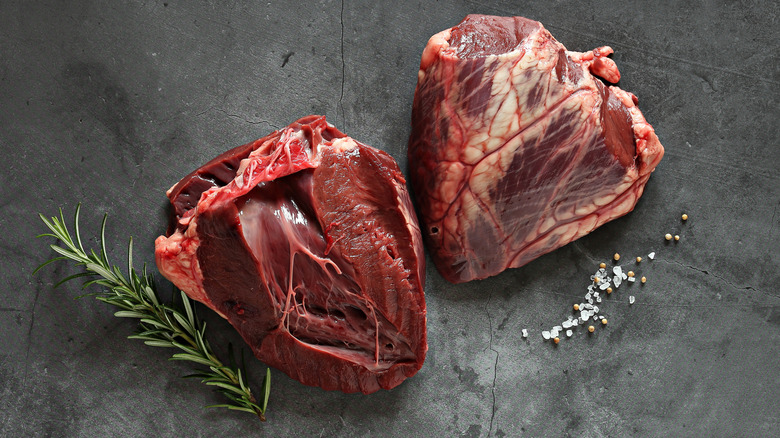
If the liver's flavor profile is a bit too intense for you but you're still open to offal, heart is another cut of beef that should be on your list. Beef heart has a dense texture and meaty flavor, and it's only slightly gamey — basically, it tastes like lean beef with the volume turned up. This means heart works extremely well in bold, rich, fatty, and heavily spiced recipes — like fiery coconut milk-based Thai and Indian curries or tacos loaded with seriously spicy salsas.
Once it is well trimmed of gristle and fat pockets, the heart is also surprisingly versatile. One of the most popular ways to prepare it is a slow braise or stew, though pan-searing and stir-frying are also quite popular. You can grind it up and pair it with a fattier minced meat to make sausage, burgers, meatballs, or chili. Or, if you're a big fan of the taste, prepare it like you would a lean steak and top it with a raw garlic-spiked compound butter, a bright chimichurri, or spicy chili crisp. "Tastes great grilled medium rare," shared a Reddit user, adding, "I'm secretly glad people don't like it. Keeps the cost down."
10. Tongue
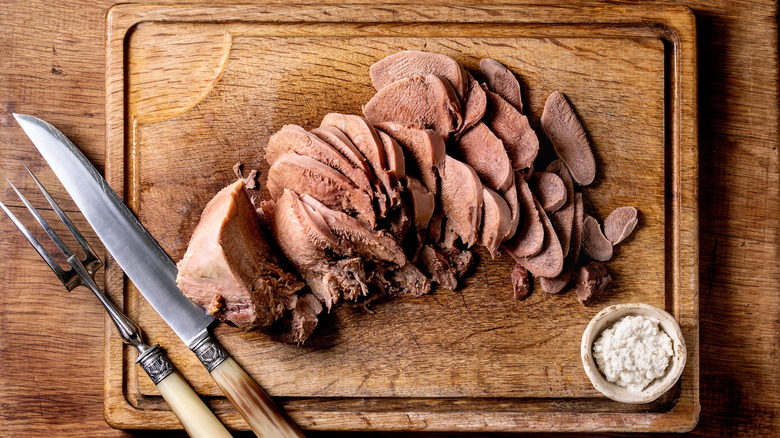
Tongue is another cut that is not universally underrated. Lengua, as it is called in Spanish, is a staple of Mexican cuisine. It is also enjoyed in countries such as China, Japan, Korea, Russia, Germany, and Italy, as well as in Jewish communities across the globe. In the United States, it is not as widely used, probably because it looks exactly like what it is: a tongue from an extremely large mammal.
As you can imagine, this is a well-used muscle, so tongue is definitely something that needs to be cooked slowly at a low temperature. When prepared this way, it becomes fall-apart tender and has a rich taste that some would compare to beef short ribs. "When it's done right, it's one of the most delicious and tender cuts of meat you'll ever try," said one lengua fan on Reddit. "Man, I got two in my freezer. Love to slow cook and shred them and make tacos," shared another.
Tongue does require special preparation, though, but the good news is that most of that time is hands-off. In a classic Mexican preparation, the tongue is simmered for up to about six hours. Once cooked, you can easily peel off the outer membrane before shredding and chopping the meat. Before being loaded into tacos, it is seared until crisp and browned and served with toppings like fresh lime and cilantro, sharp raw onions, and a bright and acidic salsa to balance out the richness of the lengua.
11. Beef shank
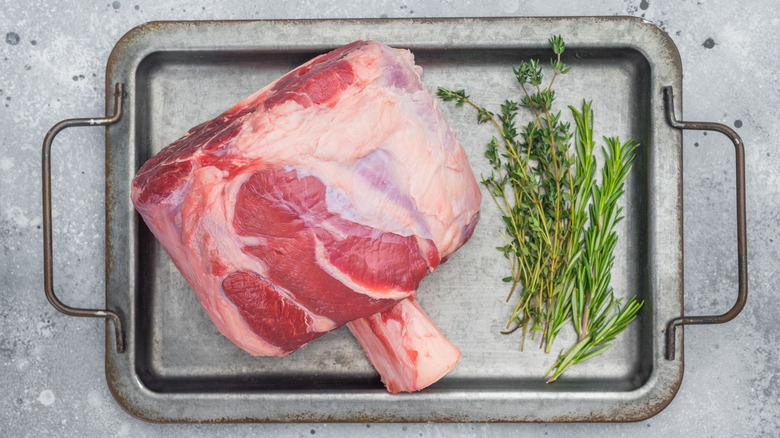
Steaks cooked hot and fast are not the only way to enjoy beef. When you want that fall-apart tender, ultra-rich, melt-in-your-mouth experience, a beef shank is the underrated cut you need. This hefty piece of beef from the leg of a cow has lots of connective tissue and a big old bone, though sometimes it is sold as a boneless cut. The meat itself has plenty of flavor, but it does require a long cook to tenderize — and that's the beauty of it. "Give me that connective tissue and some time, and I can make magic," commented one beef shank fan on Reddit.
When cooking a bone-in shank, the bone brings even more collagen to the party, which melts into gelatin and lends that signature silky mouthfeel to stews and braises. The large bone also has lots of marrow, which, after cooking or roasting, can be scooped out and spread on toast, whipped into a compound butter, or folded into warm corn tortillas.
12. Beef cheeks
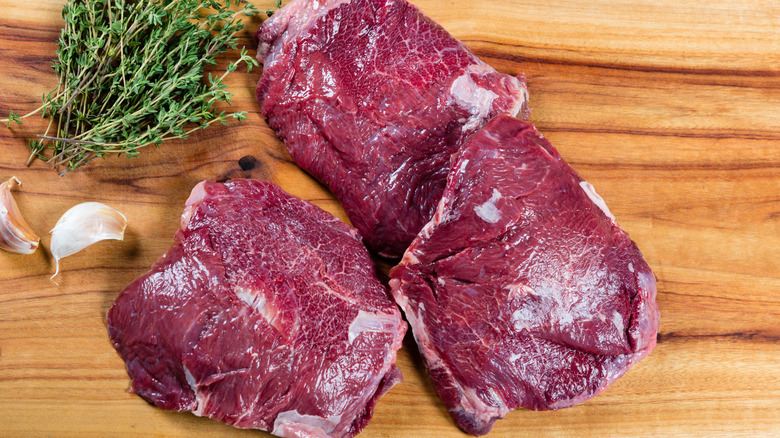
Another excellent piece of beef for braising is the beef cheeks. As the name accurately suggests, they come from the face of the cow, and because of all that chewing, the muscle is very tough. But, after an hours-long braise, the connective tissue breaks down into luxurious gelatin, transforming beef cheeks into a succulent dish that's full of beefy flavor. It's important to note that whole beef cheeks have quite a bit of sinew and hard fat on the outer layer. Simply ask your butcher to trim them for you, or do it yourself with a sufficiently sharp knife.
They're not always widely available at standard grocery stores, so fans of this cut suggest checking local Mexican markets — they are commonly used in beef barbacoa, tacos de cachete (beef cheek tacos), or tacos de cabeza (head tacos). However, not everyone is so keen to get the word out about this fantastic cut. "Shhh! Don't tell people about beef cheeks, or they'll get expensive," commented one person on Reddit. Another Reddit user affirmed this fear: "Beef cheek and tongue became popular for a bit because of TikTok, and barbacoa prices are only barely recovering. Such great cuts."
13. Oxtail
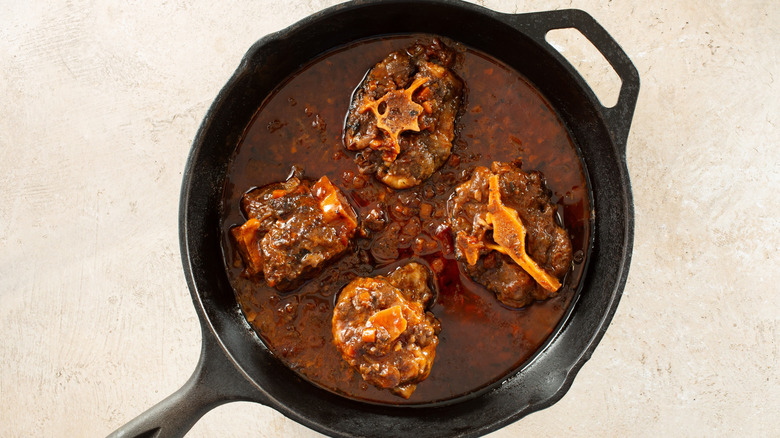
These days, oxtail comes from a regular old cow, not an actual ox, but it is still very much worth the buy. These pieces of tail — cut crosswise into cylindrical chunks — feature bone, connective tissue, fat, and just a bit of meat.
Oxtails make you work for their riches. They require a long cooking time to break down, and they're not so easy to eat — but that's part of the joy of this piece of beef. You have no other option but to grab a piece with your hands, slurping out marrow, working for bits of luscious meat, and gnawing on every morsel of buttery fat. Oxtail is a cut for true beef lovers. Try it with a warmly spiced broth, rice noodles, and lots of fresh herbs in phở đuôi bò (Vietnamese oxtail soup). Or, in a Scotch bonnet and thyme-flavored Jamaican oxtail stew, or even slow-cooked and spooned over rice in Puerto Rican rabo guisado. Oxtails are also well-loved in Korea, South Africa, Trinidad and Tobago, Armenia, and beyond.
Since the cut is so widely enjoyed and because you need a decent amount to have enough meat to go around, it can be costly to buy. But oxtail lovers everywhere will tell you that it is well worth the spend. "I don't know when it took off in the States, but I started seeing it everywhere and then at higher prices," shared a Reddit user. "I'm just glad people are starting to recognize other [cuts] of meat and the amazing dishes you can make with them."