

10 Grocery Store Bagel Brands, Ranked Worst To Best
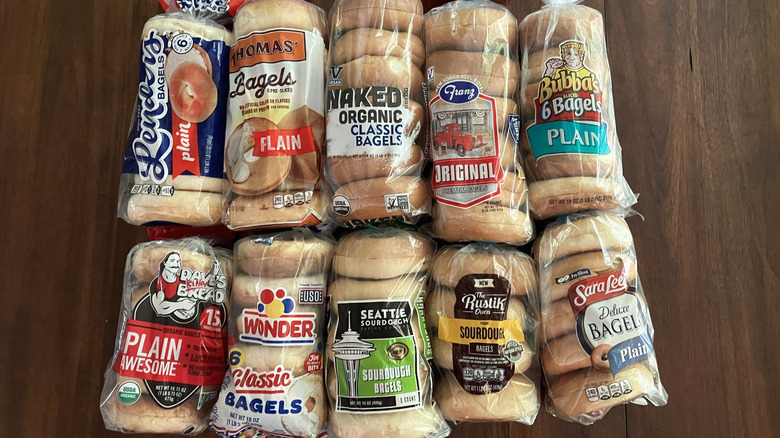
There is a gaping hole in the bagel market where I live. But I know a good bagel when I eat it. I have eaten a New York bagel (once), said to be the best, though we'll see if this new flour ban might change NYC's bagels forever. I've also indulged in Montreal bagels, believed to be the superior bagel in some circles. However, I can't go back East or up North whenever I want a really good bagel, so, like many of you, my options are a handful of local bagel shops or the alluring convenience of a bag of bagels I can pick up on my regular grocery run.
Now, I'm not naive enough to expect bakery-quality bagels from high-volume, mass-producing, bread-aisle bagel manufacturers who don't use the traditional boil and bake method. Their goal is shelf-stable bread products that taste good. And sometimes bagel-lovers, and even bakery-style restaurants, choose the convenience of factory-made bagels, even when it comes with negative consequences, as in the case of Panera's downfall.
By nature, bagels are extremely versatile and can be used in meals, snacks, desserts, and many recipes can be successfully pulled off with store-bought bagels. So, when an authentic bagel isn't an option, this ranking of the best and worst grocery store bagels helps identify reasonable substitutes for the real deal.
10. Naked Organic
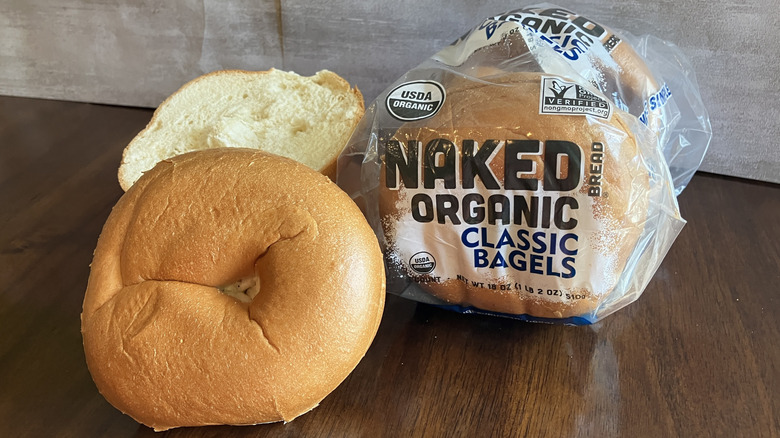
What's the difference between a bagel and a roll? The naked truth is that Naked Organic doesn't seem to know. The brand's hamburger buns and bagels differ by just one ingredient and a few differences in ingredient amounts — the bagel has more vital wheat gluten for elasticity and chewiness. However, it still looks, smells, tastes, and chews like a roll. It doesn't even have a hole in the middle, just a dimple of pinched dough. The skin is dark but not crusty, the interior is fluffy and dry, and the taste is bland. Big buns like these are good candidates for a scooped bagel, a low-carb practice most bagel-lovers abhor. However, it is a great way to balance out the bread-to-filling ratio of a bagel sandwich.
True to its name and reputation, Naked Organic bagels are free of artificial preservatives and sweeteners. Subsequently, they have a limited shelf life, so follow the best-by date and always check your bagel thoroughly for signs it has gone bad. If you can't use them up fast enough, make a batch of air-fryer bagel chips for a snack or salad topping. A bag of six costs about $4, and while they look big, these bagels are so light that they weigh only 85 grams each.
9. Dave's Killer Bread
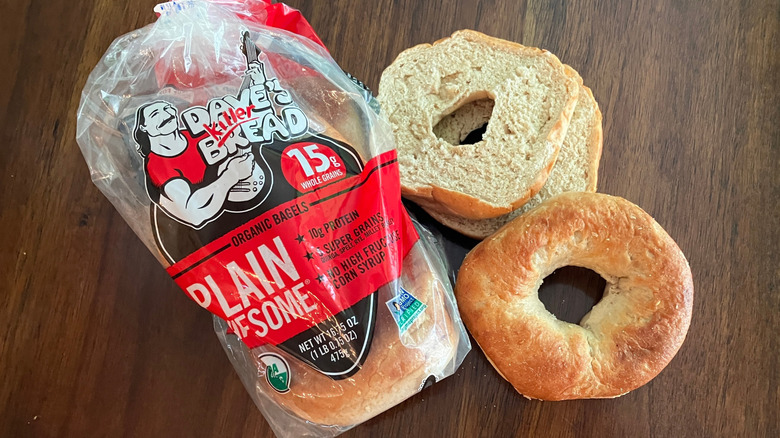
Dave's Killer Bread Plain Awesome Bagels are everything but. From the very first bite, they taste like 15 grams of whole grains and 10 grams of protein. That's not a compliment. I blame the sharp, earthy notes of the rye flour and fermented rye flour for steering the flavor into unpleasant territory. You can call my palate unsophisticated for such a statement; just don't call me to share one of these bagels with you.
Dave's Killer Bread also sells an Epic Everything flavor, which I imagine could either overpower or maybe just intensify the offensive taste. This plain variety could be improved with a generous shmear of a robust cream cheese, preferably a nutrient-dense one in line with the brand's health-conscious reputation. These bagels would have ranked higher if I could've gotten past the rye taste, because they actually have a good, firm texture with a slightly resistant tug in each bite. They also toast up satisfyingly crispy.
As far as store-bought bagels go, Dave's Killer bagels are one of the few that are not ultra-processed. I paid $6 for a bag of five 95-gram bagels, which, in my opinion, is excessive. But not everyone feels the same. Dave's Killer Bread bagels have been steadily increasing in market share for the past two years (via Keychain).
8. Franz
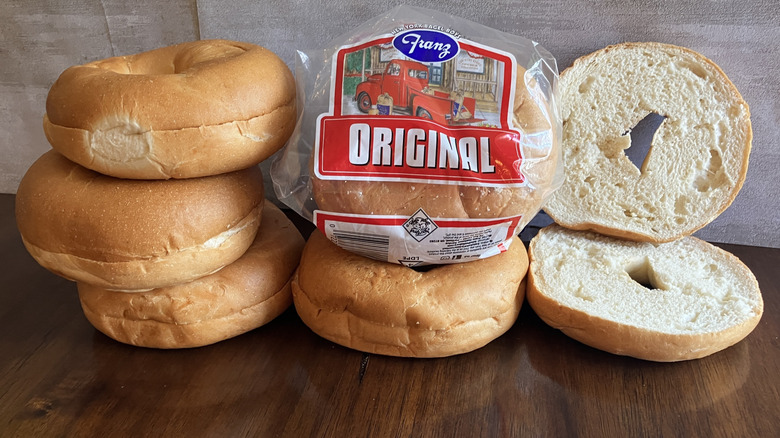
Sweet and tender with a bready aroma, Franz's premium bagels are very good ... hamburger buns. Franz completely missed the memo on what a bagel should be. These are too soft and too sweet to be a bagel. However, that isn't too surprising considering the company's backstory. Franz collaborated with Yaw's Restaurant in 1926 to invent the hamburger bun we know and love today — a round, 5-inch bun, which became the industry standard. Franz bagels are also round and 5 inches in diameter. I didn't taste the manufacturer's buns, but I suspect they have a similar flavor profile as the bagels. However, they aren't clones because the bagels are 32 grams heavier than the hamburger buns. And there is a price difference, as well. Bagels are sold in a six-pack for $3.50, compared to an eight-pack of hamburger buns for $3 in my area.
The taste and texture of Franz bagels are more in line with the other brands and products the fifth-generation family-owned company has added over the last century, including bread, Hawaiian rolls, cookies, donuts, pastries, and English muffins. In a strange twist of fate, among Franz's subsidiaries are the brands that make the second-best bagel on this list as well as the absolute worst — go figure.
7. Bubba's
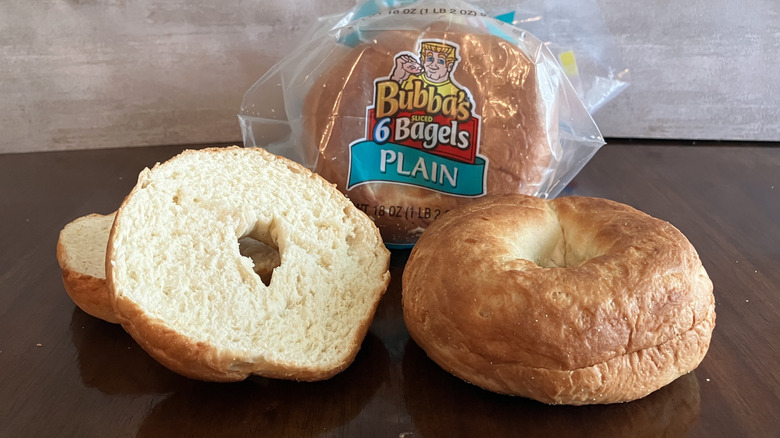
In a blind taste test, I would have identified Bubba's bagels as one of the frozen dinner rolls I previously ranked, albeit one of the best ones. These are delightfully soft and deliciously sweet, but there is no hint of a bagel-like tastiness or chewiness. A more fitting name would be Bubba's Bread Rings because the shape is the only thing they have in common with bagels. They weigh the same as most other bagels — 85 grams — but are denser and therefore visually smaller. They come out of the bag looking like bumpy rolls with holes in the middle, not glossy or smooth like bakery bagels.
These are the bagels I would reach for to make a sandwich. They'd also taste good toasted and topped with butter and jam. These really are tasty little buns, full of sweet and yeasty flavor. It's actually surprising how much flavor a product labeled "plain" can have, not unlike the popularity of vanilla ice cream despite its name that can mean "boring." Plain doesn't adequately describe the range of flavors unflavored bagels can release when eaten, and plain bagels actually account for nearly half of all bagel purchases worldwide (via Coherent Market Insights). Their popularity is due to their convenience and all-purpose nature, pairing well with both savory (chive and onion cream cheese) and sweet (Nutella) toppings.
6. Wonder
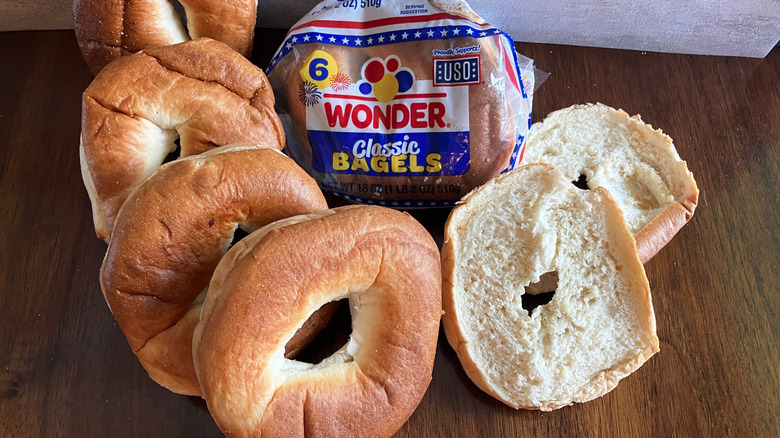
Wonder has been making sandwich bread since 1921, but bagels only joined its product line in May 2026. The new addition may have sparked some concern for the owners of New Jersey bakery Wonder Bagels, but they can relax. There's no chance anyone would confuse Wonder's mass-produced roll-with-a-hole for the bakery's traditional handcrafted bagels.
I really like the sweet, mild taste of Wonder brand bagels, which have a hint of yeasty flavor. The texture is halfway between a dinner roll and a bagel — too soft to be the latter but too firm to be the former. There's no slick skin and tough chew you typically get from a traditionally boiled-and-baked bagel, but there is a heftiness and a bit of resistance in each bite that is on the right track.
What disappoints me most about this product is the bedraggled appearance — squashy, wrinkled, and misshapen. At 85 grams, they are the perfect size for a sandwich or with some shmear, but honestly, I would be embarrassed to serve these to a guest unless they were torn to pieces in a bread pudding. Wonder bagels cost between $3 and $4 for a sleeve of six.
5. The Rustik Oven
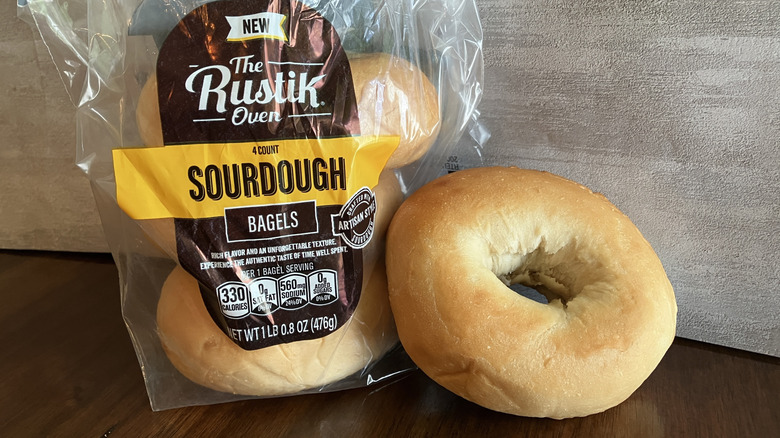
Fresh out of the plastic sleeve, The Rustik Oven's sourdough bagels look like the real deal. Made with artisan-style sourdough, the smooth and shiny skin opens to an appealingly dense and springy interior. However, these miss the mark in taste. Unlike an artisan bagel, they only deliver a moderately bready flavor followed by a mildly acidic sourdough aftertaste. For once, toasting did not bring out the best in the bagel. In fact, when heated, it lost its identity and became a very tasty, toasted hamburger bun.
Unlike the other brands, these bagels are unsliced, which means you have to use a knife, or better yet, a bagel slicer to open them safely. However, there is another option, especially for a large bagel like this. Weighing in at 119 grams, these are the heftiest of the bunch, making them a perfect candidate for cutting the bagel St. Louis style. However upsetting it is to New Yorkers, this method ensures a more balanced bagel-to-cream cheese ratio in each bite.
The Rustik Oven's sourdough, lemon blueberry, and Hearty Grain varieties — which are free of artificial colors, flavors, and high fructose corn syrup — are newcomers to grocery store bagel shelves. They cost around $4 for a four-count sleeve.
4. Thomas'
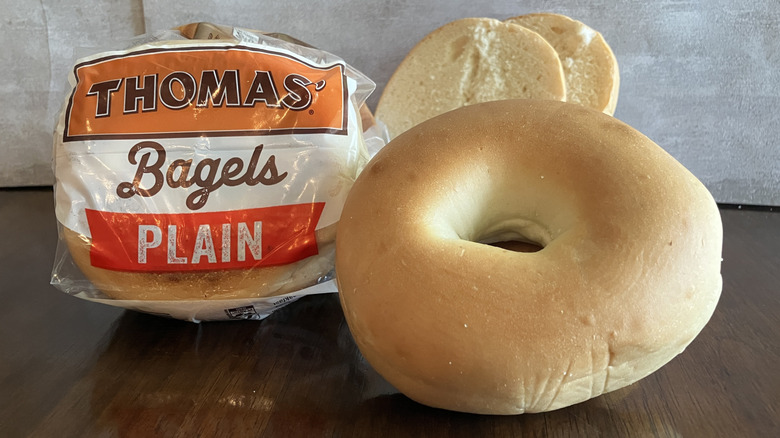
While it didn't take top place in this ranking, Thomas' is undeniably the most dominant and recognizable brand in the bread aisle. Thomas' takes up a large section of shelf real estate with over a dozen bagel flavors and varieties, representative of the brand's impressive 50% market share of store-bought bagels. That's not to mention its title of the No. 1 English muffin on the market. No other brand even comes close.
Thomas' plain bagel is flavorful with sweet overtones and a bready aftertaste. Its best feature is how soft and thick it is. The brand promises the freshest bagels on the grocery store shelf by restocking deliveries five days a week. Of course, a look at the ingredient list shows they contain preservatives and emulsifiers, which places it unquestionably into the category of ultra-processed foods but ensures the bagels will last longer on your kitchen counter. Some shoppers have even reported unopened Thomas' bagels remain mold-free for a surprisingly long time, even up to a year. Nevertheless, there are easy ways to keep bagels fresh longer if you don't want to risk losing money (in this case, $3 for half a dozen).
3. Sara Lee
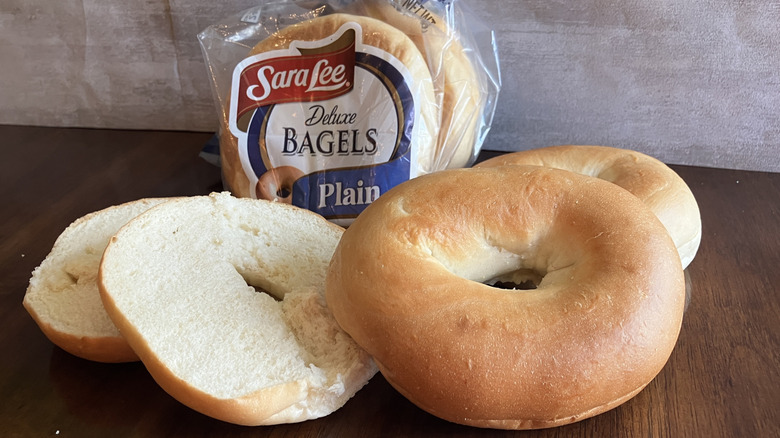
I knew Sara Lee was something special before I even tasted the product because in 1985, the brand began advertising frozen bagels, going head-to-head with Lender's Bagels, which had dominated the American market for decades. Both brands survived, but the real winners were the customers, because the two companies' efforts to outdo each other helped expand the popularity of bagels beyond the Northeast epicenter.
Even in modern times, Sara Lee bagels slice through the competition with superior texture. The skin is smooth, and the interior is firm and moderately chewy, creating a discernible contrast in mouthfeel. The taste is also delicious — sweet and yeasty, but with more of a dinner roll flavor than a plain bagel flavor. Ultimately, the snackable, sugary taste is the reason these didn't take the cake — they are sweeter than a plain bagel should be.
Sara Lee's Deluxe bagels cost around $3 for a five-count and come in a variety of flavors and sizes. The Deluxe line is big (95 grams) compared to the Toaster Size products (62 grams). However, I had no problem fitting the Deluxe size into my wide-slot toaster. Being able to fit into a toaster is a deal-breaker for me because the best way to enjoy a store-bought bagel is to toast it. Not only does bread taste better warm, but a bagel's crust and crumb respond differently to direct heat, creating an appetizing textural contrast.
2. Seattle Sourdough Baking Company
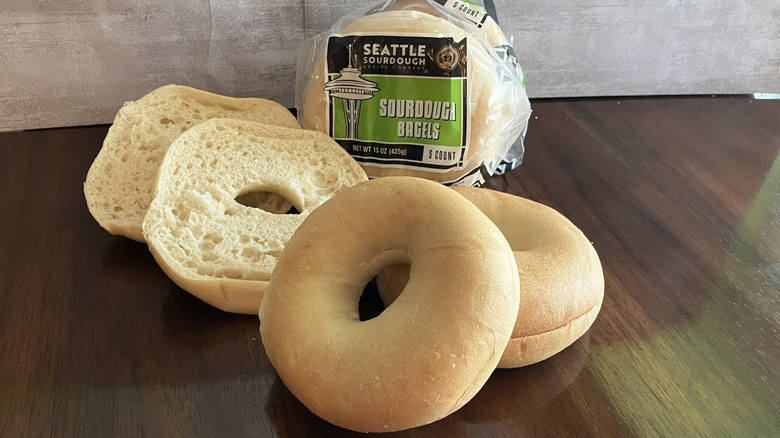
I credit the power of sourdough as the reason this bagel ranked so high. Seattle Sourdough Baking Company uses a sourdough starter from 1939 — which is not as old as the mother dough used by one of the oldest bakeries in the U.S. — but still delivers a delicious zing after 18 hours of proofing. Sourdough's unique fermentation process creates a bagel with a chewy texture and a satisfying rip when you bite through the slightly snappy skin. It's even better when the bagel is lightly toasted.
These bagels are hearty and thick, making them perfect for a classic bagel and shmear. You just have to be careful to choose the right brand of cream cheese because they contain the same lactic acid that ferments in sourdough, so a particularly tangy spread could clash with the sourdough's natural sourness.
On the topic of flavor, Seattle Sourdough Baking Company offers some unique ones, such as jalapeño cheddar, apple cinnamon, and cheese, onion, garlic. They sound like gourmet flavors, which certainly explains the gourmet price tag. At $4 a bag containing only five 85-gram bagels, these are one of the most expensive brands I tried. I think they're worth it.
1. Lender's Bagels
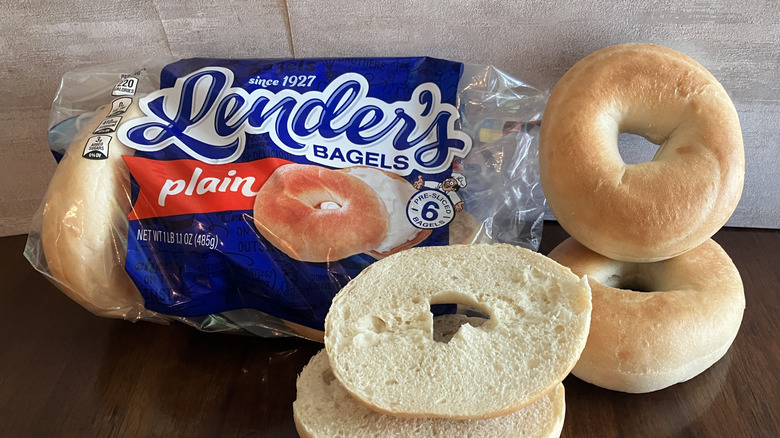
Lender's Bagels may be the smallest on this list, just 81 grams each, but they have the biggest bagel flavor. While other brands allow sweeteners to monopolize the flavor profile, Lender's limits the amount of sugar(and omits high fructose syrup) to allow classic bready and salty flavors to prevail. The texture is near-perfect, too. The inside is dense and doughy, and when toasted — on the bagel setting, of course — the exterior develops a satisfyingly crispy contrast to the soft and springy interior, making for a classic bagel combination.
Lender's bagels are sold six to a bag for around $3 and are the only brand I found in the refrigerated section of the grocery store. You might consider bagels one of the foods you should never refrigerate, especially since brands like Lender's list preservatives among the ingredients. However, considering the company's history, it makes sense that Lender's bagels are sold cold.
Polish immigrant Harry Lender and his family opened a bagel bakery in Connecticut and kept up with demand by eventually introducing a freeze and thaw production method. This made it possible to get large amounts of fresh bagels on grocery store shelves, which helped shape the Jewish staple into an everyday breakfast for the masses. Lender's has changed hands several times in its 99 years but still manages to stay on top of the bagel game.
Methodology
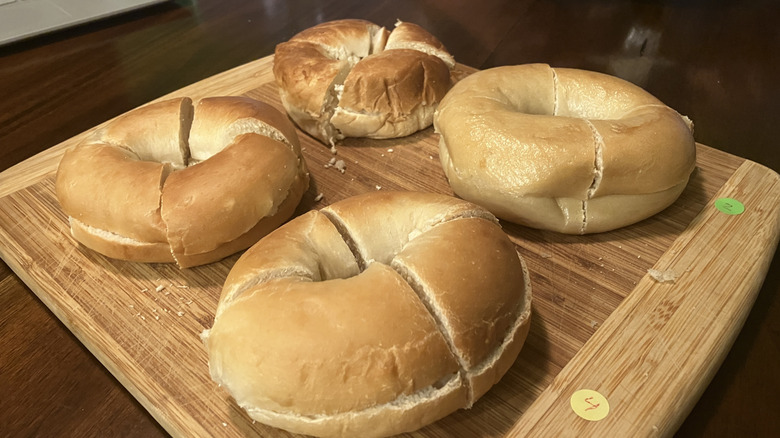
I had no idea there were so many bagel options at the grocery store. To keep it simple, I chose just 10 store-bought bagel brands from my local grocery store. I know store-bought options could never replace bakery shop bagels, and even bagels from the deli are sure to taste better. For the sake of consistency and availability, however, I only selected national name brands that most people should be able to find during their regular grocery trip.
So it was with adjusted expectations that I rated the bagels based on how similar they were to traditional ones in taste, texture, and appearance. All options were regular size and plain flavor, except for two that were plain sourdough, and none were gluten-free. I noted the weight and price in my descriptions because no one wants to be ripped off when they're already scraping at crumbs, but the value didn't affect the rankings.