

13 Warning Signs These Everyday Foods Have Gone Bad

While expiration dates have their place, they're not exactly the final say when it comes to food safety. Except for infant formula, federal regulations don't actually require food manufacturers to put dates on their products at all. Those "best by" and "use by" dates that get us all worked up? Think of them more as a general window for peak freshness rather than the cutoff time when your shredded mozzarella is guaranteed to cause food poisoning.
In fact, the biggest takeaway from this guide to food expiration dates is that plenty of provisions are perfectly fine to eat after the date on the package has come and gone. The question is: how are you supposed to know when something's still safe to eat versus when it's time to toss? Simple. Listen to your gut — or rather, your senses. Here are some warning signs that your food is no longer good to eat.
Milk with a funky smell or taste

For all you anxious dairy drinkers out there, you'll be relieved to know the date on the side of the carton doesn't necessarily mean the milk turns on you the second the clock strikes midnight. In fact, it's not really an expiration date at all. Allegedly, adding dates to milk cartons is only a thing thanks to a relative of Al Capone who got sick after drinking some spoiled milk.
So rather than putting all your faith in the date stamp, your senses are usually a lot more useful for gauging the safety of your milk. Fresh milk should have a mild and slightly sweet scent. Get a waft of some funkiness, and you can bet some bacteria are hanging out in there.
The same goes for flavor. If your milk tastes sour, it's time to throw it out. You might also find some floating curdles in your glass, which can happen when the milk's proteins have begun separating as it spoils. If you spot them, it's best to put the glass down. Notice a yellow or greenish tint? Better start planning a trip to the grocery store.
Cracks in egg shells
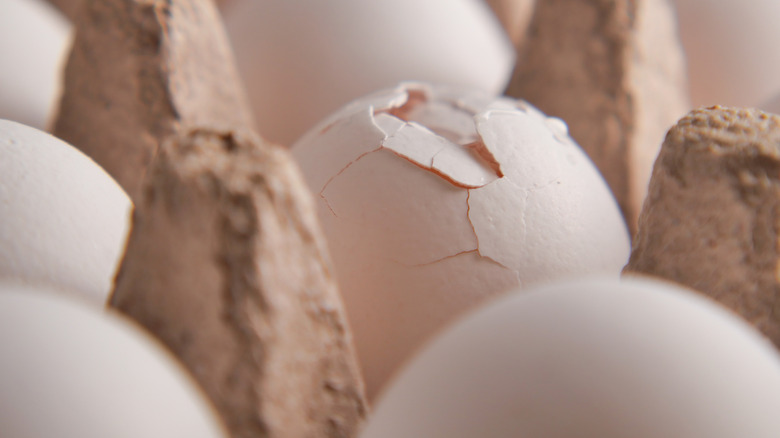
Eggs really aren't too tough to crack if you're trying to figure out whether they're still good to eat. Start by inspecting the shell. If you see any cracks, be warned. These are basically open-house invites for bacteria. If the shell also feels powdery or slimy, that could mean there's some bacterial or mold growth. Shell looks fine, but you're still not convinced? Try the MVP of egg inspection: the sniff test. Fresh eggs shouldn't smell like much of anything, so if there's a sulfur-like or rotten odor after cracking one, that's not a good sign. The rotten egg stereotype exists for a reason, after all.
Some people also swear by the candling method. In a dark room with a flashlight, you can inspect the egg for cracks or air bubbles inside the shell to determine freshness. Alternatively, you can always try the sink test and plop your egg in a bowl of water. If it sinks, you're in the clear. If it floats, that's another story. An older egg is more buoyant because, over time, it loses moisture inside the shell, making room for air or gases. Of course, floating doesn't mean your egg is 100% unsafe to eat. But it does mean the egg is past its prime and warrants a closer look and sniff before becoming an omelet.
Bread with even the tiniest spot of mold
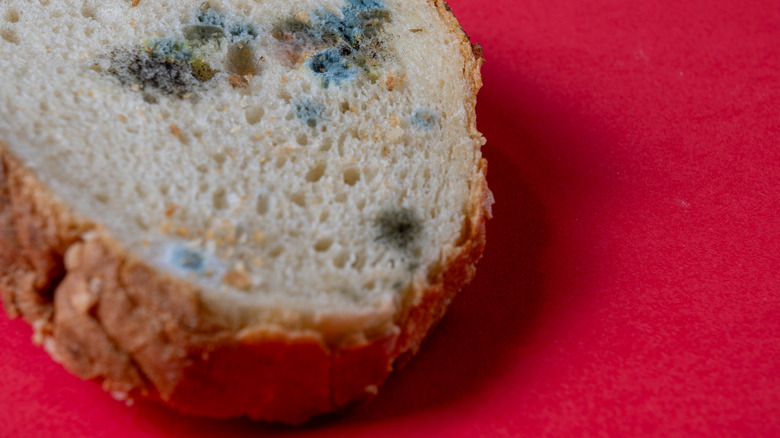
Let's be real, who here hasn't just torn off that little splotch of mold before finishing their sandwich like nothing happened? We've all done it. After all, bread isn't exactly cheap these days. So what's the harm as long as the fuzzy bit is gone? Well, unfortunately, it's not a risk-free fix.
Because bread is soft and soaks up moisture like a sponge, mold can spread much farther than what the eye can see. By the time you find that fuzzy green spot, microscopic roots may have already worked their way through more of the loaf. This doesn't just apply to sandwich bread, either. Bagels, hamburger buns, English muffins, tortillas, you name it — once visible mold appears, your best bet is to chuck the whole thing.
Homemade and bakery breads can be especially vulnerable because they usually contain fewer preservatives than grocery store loaves. That's great news for flavor, but not always for longevity. So if you picked up some farmer's market sourdough bread and it's been a few days, it might not hurt to take a magnifying glass to it. Kidding ... sort of.
Ground beef that smells like window cleaner
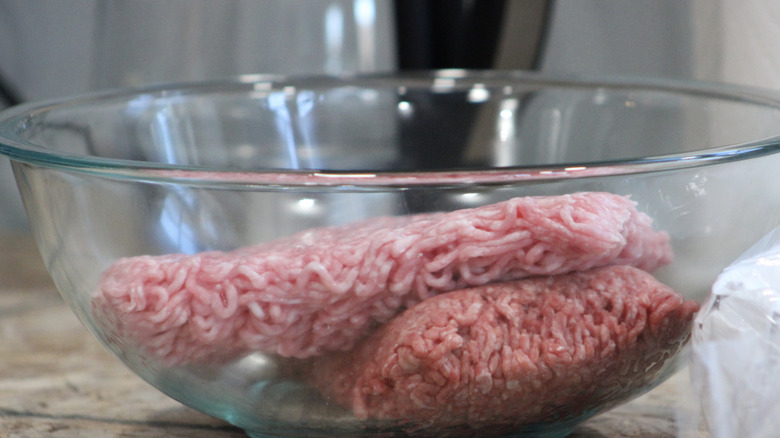
If you spot a little brown on your ground beef, that doesn't mean it's bought itself a one-way ticket to the garage bin just yet. Sometimes it's just beef being beef. Ground beef naturally turns brown when oxygen can't get to certain parts of the meat. This is why you might see bright red beef on the outside and brownish beef in the middle. Packaging methods and freezing can also affect the color, so appearance alone isn't enough to go on.
Texture and smell are much more reliable for beef inspections. Fresh ground beef should feel slightly moist but not sticky or tacky. If it feels slimy, you're better off cutting your losses. The same applies to odors. Sour, tangy, rotten, or the ammonia aroma of window cleaner are pretty strong indicators of spoilage. Basically, if your nose recoils, take the hint.
How much discoloration we're talking about here also matters. Small brown patches with no weird scents or textures? It's probably fine. Beef that's turned totally gray or brown and stinks like it's been marinating in Windex? Oof.
Deli meat that feels sticky and smells off

Slimy slices of turkey and ham aren't exactly ideal fixings for a sandwich. Fortunately, though, slime doesn't automatically mean your lunch meat has spoiled. Some processed deli meats have been injected with thickening ingredients. After slicing, these additives sometimes make their way to the surface of the meat, which can cause slime. Gross? Yes. Dangerous? Not really.
That said, slime isn't something to ignore completely. If deli meat is slimy and has a sour, sulfur-like, cheesy, or cabbage-like stench, toss it. Those are not the aromas you want wafting out of your turkey sandwich. Also, pay attention to any color changes. Gray, dull, or discolored patches can signal that the meat is beginning to go bad, especially when these changes show up alongside other warning signs.
While lunch meat can be many things, sticky should never be one of them. A sticky, tacky texture accompanied by unpleasant smells is a much stronger indication of spoilage than sliminess alone. If the slices stick together in a way they didn't before or leave behind an icky residue on your fingers, you should probably play it safe with a PB&J.
Soft cheese with any fuzzy spots
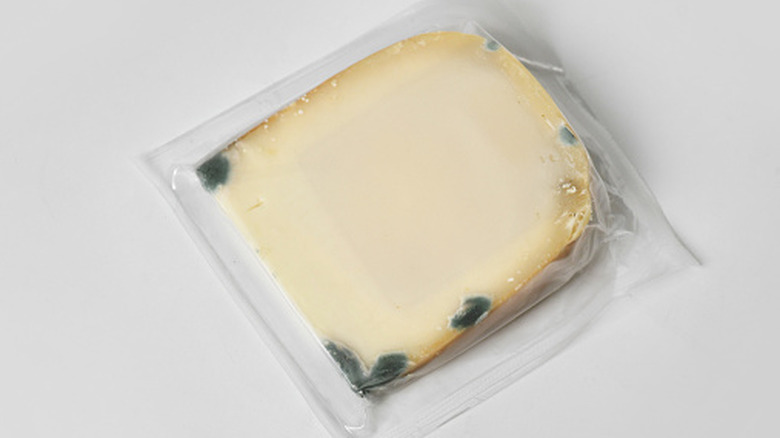
Moldy cheese isn't always a disaster, especially when we're talking about hard cheeses like parmesan or cheddar. Soft cheeses, however, play by a completely different set of rules. Cream cheese, ricotta, cottage cheese, brie, and goat cheese all pack a lot more moisture, which paves the way for mold and bacteria to have a field day. And since mold and bacteria often like to work undercover, that fuzzy spot you see might only be a small part of what's actually there.
That's why excising the fuzz — like you can do with hard cheeses — doesn't cut it for soft cheeses. Nobody enjoys throwing out that wheel of brie, but this is generally one of those times when you should. The same goes for cheeses that come down with a case of unusual fading or darkening, sliminess, or uncharacteristic sour, ammonia-like smells.
Green potatoes
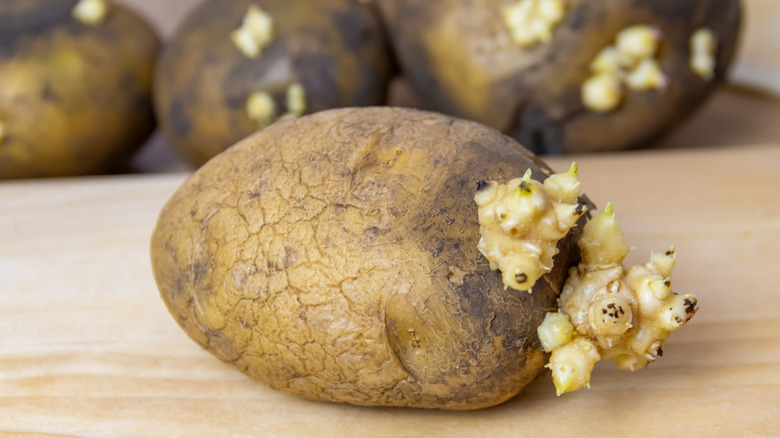
A green potato isn't just an eyesore — it could be a sign that your tuber has started pumping out higher levels of solanine. For those unfamiliar with potato science, solanine is a naturally occurring compound that potatoes produce when exposed to light and can be toxic in large amounts. While a few green spots probably won't land you in the emergency room, it's not worth the risk to your health or taste buds.
Solanine can cause potatoes to taste unusually bitter or even burn your throat and mouth when consumed. If you've somehow tasted a potato at this stage, there's really no amount of additional boiling, frying, or twice-baking that can save it. An abundance of sprouting can be another clue that solanine is present, especially if you've got a soft, shriveled, or wrinkly tater on your hands.
Black spots on onions

Onions aren't exactly the most transparent veggie in the produce aisle when it comes to spoilage, since they hide most of their issues underneath all those layers. One obvious sign of an ailing onion is black, sooty patches on the papery skin. No, it's not an innocent dusting of dirt. It's actually mold, which we're going to bet is not the seasoning you were hoping for. The good news is that a little black soot doesn't mean the whole onion is doomed. Sometimes, trimming the moldy spots can be enough to salvage the onion. But, as with any mold, it can hint at deeper, lurking issues.
As with so many other foods, smell and texture matter. Fresh onions have an earthy and sweet scent, albeit tear-inducing, while spoiled onions smell harsh, bitter, and sour. Onions that have become soft, mushy, or squishy might have some hidden deterioration issues. Wet spots, leaking liquids, or slimy and moldy layers? Yeah, that onion's gotta go.
Yogurt that looks or smells off
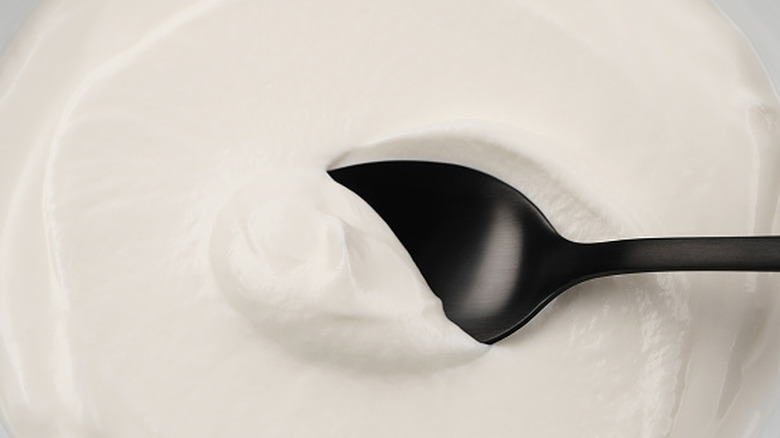
No one particularly likes a puddle on top of their yogurt, but this liquid is actually perfectly safe to eat. Despite giving most people the ick, it usually just means that the whey in the yogurt has separated and can simply be stirred back in with no problem.
Actual spoilage looks (and smells) very different. Rancid or any unpleasant stenches are strong signs that something has gone south. Clumping, sliminess, and weird discoloration can also signal spoilage, so if you see any fuzzy spots or unusual streaks of green, blue, or pink, for the love of all things holy, put down the spoon.
How the yogurt has been handled can also tell you whether it is safe to eat. Although it's advised not to consume yogurt that's been sitting out at room temperature for more than two hours, some food scientists clarify that four hours is a more realistic limit (via NYT Cooking). Nevertheless, even if the yogurt looks totally normal, if it's been left out too long or has been contaminated by dirty utensils, you might have missed that safety window. The packaging can also give you some clues about what's going on inside. If the cup is bloated or the lid is bulging, you can put money on it being the work of bacteria.
Bulging and rusty canned food
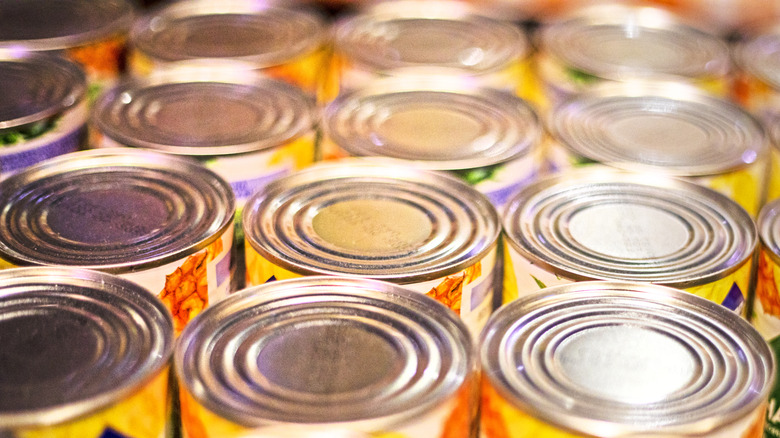
Unlike a lot of other spoiled foods, canned goods can harbor some dangerous bacteria without obvious clues like color, smell, or taste. The biggest red flag that your green beans are a goner is a bulging can. This is basically your pantry's version of a flashing warning light. A bulging can means that the bacteria inside have produced gas, building up pressure within. Sometimes, the culprit is the lethal clostridium botulism, so don't even think about opening the can if you come across a swollen one.
Other signs can be just as alarming. Leaking liquid, severe rust, and a loud hissing noise when opening are all good reasons to bid the can farewell. A can that spurts liquid is also suspicious. While not every dent makes a can unsafe, dents along seams and lids deserve some attention since those areas do a lot of heavy lifting to keep bacteria out.
Cooking oils that smell like crayons
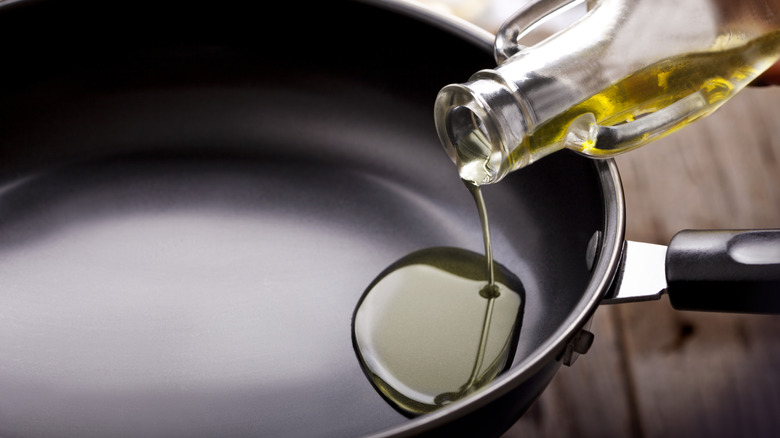
Despite what your expiration-date-immune grandma might insist, cooking oils don't last forever. Light, oxygen, and heat can cause the oils to oxidize and turn rancid, which can noticeably affect flavor and quality. One of the biggest clues that oil has seen better days is its smell. Fresh cooking oils usually have a light and mild aroma. Spoiled oils, on the other hand, smell ... weird. If your cooking oil has any odor similar to crayons, paint, or old nuts, it might be better to stick with butter for the time being.
Another sign your oil might be rancid? You're storing it in transparent containers. To get the most out of your oil before it goes bad, dark bottles that block UV and artificial light are the way to go. Still, checking for signs of quality deterioration is important, not just for taste but for your health as well. Rancid oils zap the nutrition out of food by breaking down vitamins A and E, and some evidence has linked oxidized oils to neurodegenerative conditions like Alzheimer's and Parkinson's disease (via Olive Wellness Institute).
Holes in your bags of brown rice
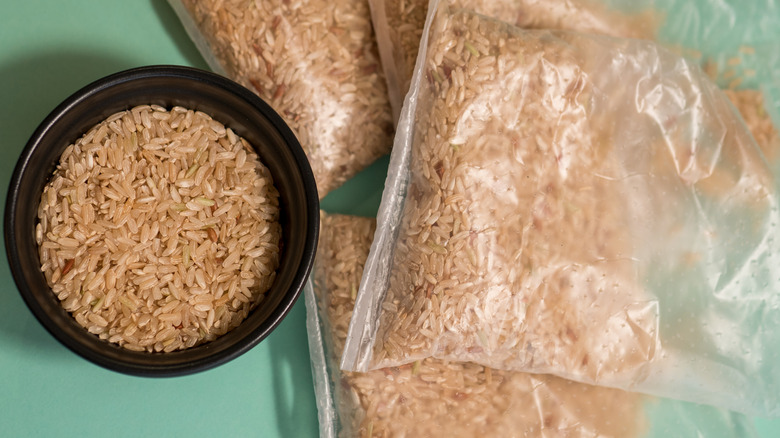
Brown rice has one disadvantage compared to white rice: it just doesn't last as long. That's because brown rice retains its bran and germ layers, containing natural oils that can eventually go rancid. While those oils are what make it more nutritious than its white counterparts, it turns out those extra nutrients come with a few strings attached. Since these oils make it extra sensitive to heat and humidity, brown rice can be more high-maintenance when it comes to pantry conditions.
The bag itself can provide some important warning signs. Tiny holes in the bag or stringy webbing could mean that pantry pests like weevils have gotten into the rice. Yes, we're talking about bugs. At this point, you're honestly better off just replacing the bag than spending your dinners paranoid about creepy crawlies.
Also, if you clock any unusual odors like sour, musty, or rancid, your rice might be bad. Any dampness or visible mold are also alarms that your rice is done for. If it feels greasy, this could mean that its natural oils have begun to turn rancid and the grain is starting to spoil.
Fish that smells too ... fishy

While this might sound counterintuitive, fish that reeks of, well, fish usually isn't a great sign. Fresh fish should smell mild and clean, so if you're getting hit with strong or pungent odors, it's probably taken a turn for the worse.
Appearances matter, too. Whole fish should have shiny, clear eyes, so if you're being stared down by cloudy or sunken eyes, don't eat it. Gills should look red or pink rather than dull red or brown, and the fish's flesh should look moist and shiny. Dry, dull, or discolored fish is usually a no-go. If the fish also feels excessively slimy, sticky, or mushy, it may have begun to go bad. Fresh fish should feel firm and spring back when gently pressed. If your finger leaves a mushy indentation, you should let that catch go.
Seafood has a passion for spoiling quickly, so even a day or two of improper storage can impact its quality. That's why even the smallest of changes in how it smells, looks, and feels should sound the alarm. Fish doesn't usually stay on the fence very long between fresh and "Ew, what's that smell?!"