

11 Olive Oil Mistakes You Keep Making
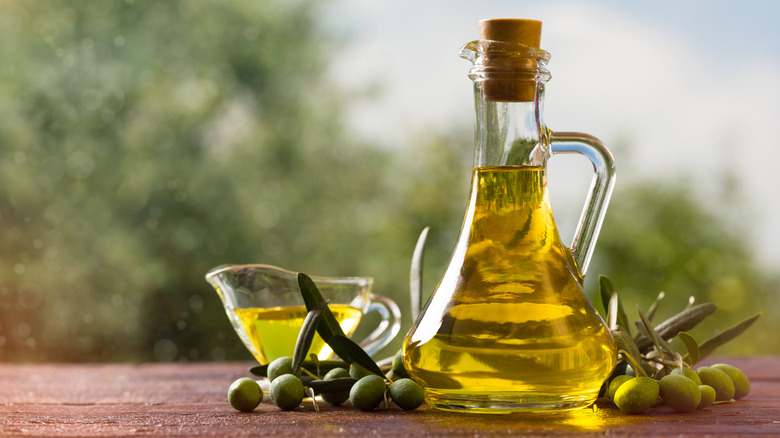
If you are a fan of olive oil and love to cook with it or toss your salads with it, odds are there is a bottle (or two) in your kitchen right now. Outwardly, it sits on your counter looking perfectly fine. But there is also a very good chance that you might be doing several things wrong, not because you are careless, but because the olive oil industry has made it very easy to be confused.
To get to the bottom of what kind of mistakes are costing us flavor, nutrition, and money, we spoke to four experts and olive oil insiders. Gianfranco Cosmano is a second-generation producer and certified olive oil taster at Deliba Olive Oil, a single-origin family estate in Calabria, Southern Italy. Diamantis Pierrakos is co-owner and fourth-generation producer at Laconiko, one of the most awarded olive oil brands in the world, with over 400 competition honors to its name. Brooke Gil is the Whole Foods Market Category Lead and Olive Oil Sommelier, where she oversees oils, vinegars, and pastas nationally. Finally, we have Lisa Pollack who is an olive oil specialist and Education Manager at Corto Olive, where she designs tasting experiences and works directly with chefs on olive oil appreciation and application. What they told us will make you look at the olive bottle you use very differently.
You're storing it in the worst possible spot in your kitchen
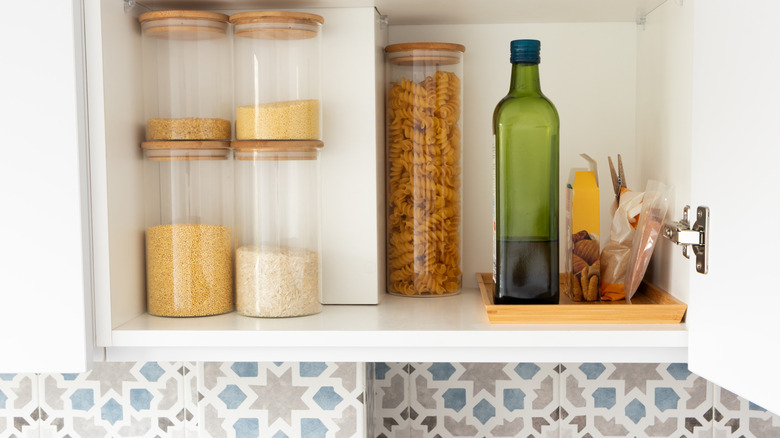
Make no mistake — the spot where most of us keep our olive oil (next to the stove) is possibly the worst place for it. For Lisa Pollack, the biggest issue is that most people treat olive oil like a pantry staple when it is actually a fresh product. Olive oil is made from a single ingredient (olives) and should be treated more like a fruit juice (or wine) and less like a bottle of vinegar. Light, heat, and air are all working against olive oil from the moment the bottle is opened. Now imagine the effect of heat emanating from a stove or oven every time you cook.
Brooke Gil offers a simple solution: "Treat it like wine and keep it cool, dark, and sealed," she told us. "A cupboard away from the stove is all it takes." Diamantis Pierrakos goes a step further. Room temperature storage for olive oil is acceptable, but if you want to preserve the polyphenols that make a quality oil genuinely worth buying, he recommends a basement or wine cooler kept between 56 degrees Fahrenheit and 59 degrees Fahrenheit.
If that sounds like too much, the least you can do is remember to screw the cap tightly back after every use. These are small habits, but they make a significant difference to what ends up on your plate.
You're buying it in the wrong container
Gianfranco Cosmano has strong feelings about that carafe filled with olive oil that sits on so many kitchen counters: "Decanting oil into a beautiful clear glass carafe may look elegant, but light degrades olive oil quickly," he said. "Dark glass or tin is not a marketing choice — it is a preservation requirement."
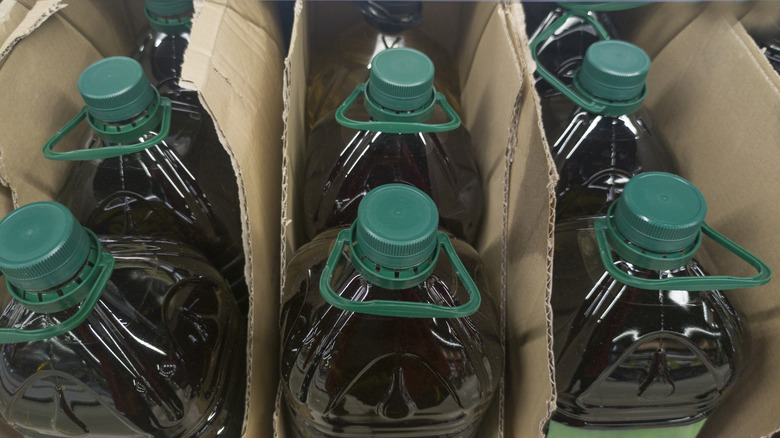
Brooke Gil puts a timeline on it. In a clear container with an open spout left on the counter, she estimates you only have about two weeks before the oil starts to degrade noticeably. Diamantis Pierrakos makes the practical case against large plastic bottles specifically: By the time you work through one, the oil inside has almost certainly gone rancid.
Lisa Pollack points out that the container you buy is your first line of defense. "The best thing you can do to set yourself up for success is to purchase oil initially that is stored in a container that protects from light, heat, and air," she explained. When choosing a good olive oil bottle, look for some kind of protection such as an outer cardboard container, tinted glass, or tin.
You're buying olive oil the same way you buy any other vegetable oil

Most people don't spend too much time choosing an olive oil for home cooking. A trip to the supermarket should throw up some decent options such as Ina Garten's favorite store-bought olive oil, Olio Santo. However, if you are serious about learning more about olive oil (and maximizing your returns from each purchase), its time you started paying attention to the labels. Remember, this is not your regular canola oil you are shopping for.
Gianfranco Cosmano identifies the label problem clearly. The front of the bottle creates a perception, but it's the back label that tells the real story, albeit in smaller print. A bottle that says "Packed in Italy" or "Product of the EU" on the front may read "a blend of oils from various countries" on the back, he said. That gap between front and back is not accidental, and many olive oil producers are likely banking on the average consumer not to dig deeper.
Lisa Pollack cuts to the heart of it: "Many consumers rely on front-label cues like 'Extra Virgin' or country of origin as indicators of quality, but those don't tell the full story. What really matters is freshness — when the olives were harvested and milled and how the oil has been handled since." Cosmano explained, for example, that an oil harvested in October 2023, left sitting in a storage tank for months and bottled later, could carry a best-by date well into the future while no longer being genuinely fresh.
You're confusing first cold press for a quality signal
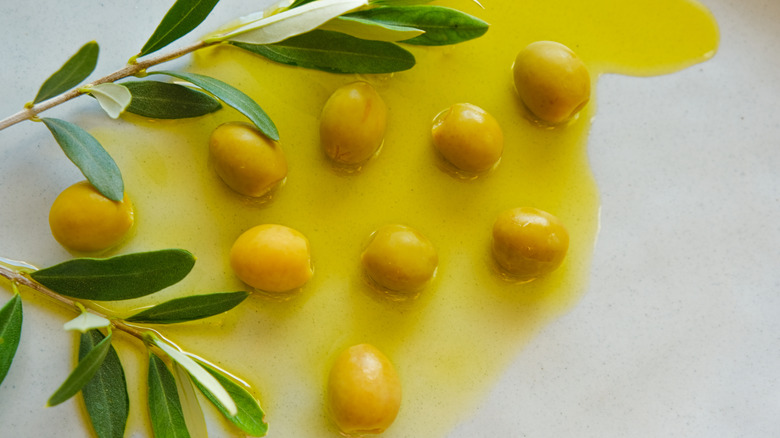
It would be natural to believe that "first cold press" mentioned on an olive oil bottle sounds like the promise of freshness — of something artisanal. An unhurried extraction from the most perfect of fruit at just the right time. Sorry to say, but our experts are here to tell us that we are (intentionally) being led down the wrong path.
Diamantis Pierrakos explained what the words actually describe: "Most consumers do not realize that these phrases simply refer to the process of crushing olives and extracting the oil from the fruit," he said. "What the olive oil industry often does not want consumers to know is that many virgin and pure olive oils will also go through the same extraction methods. There are not multiple presses as consumers often believe." Pierrakos suggests looking for an olive varietal to be mentioned on a bottle rather then the terms "first press" or "cold press."
In other words, the phrase tells you about a method, not a result. It says nothing about when the olives were harvested, how healthy the fruit was, or how the oil was stored after pressing. Lisa Pollack reinforces the point from a freshness angle: All high quality olive oil is produced from fruit harvested in the fall, when olives are at their peak for flavor, aroma, and antioxidants. A producer focused on quality will tell you that; the words "first cold press" will not.
You don't know what extra virgin olive oil actually means
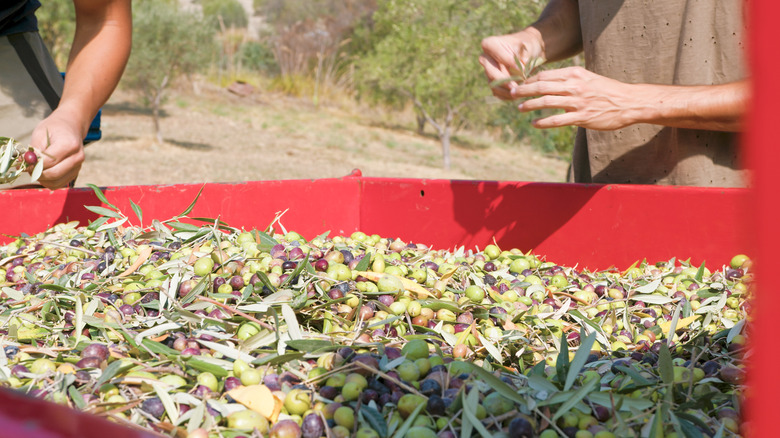
By now, you would have heard the refrain, compared to other vegetable and neutral oils, extra virgin offers so much more. And while this is undoubtedly true, the term "extra virgin" itself is also one of the most misunderstood and abused labels in the grocery store.
Brooke Gil offers the clearest definition: "Extra virgin olive oil is essentially fresh-squeezed olive 'juice'. There's no heat, no pressure, and no chemicals. It must also pass both a chemical lab analysis and a sensory evaluation by trained panelists to earn that designation." The problem is that earning it at the point of production does not guarantee it by the time the bottle reaches your kitchen. Gianfranco Cosmano explains that the grade does not expire, but quality does. An oil can leave the producer in perfect condition and arrive degraded after months of sub-optimal transportation conditions and being stored under artificial lights in a grocery store.
But bear with us. It gets murkier. Lisa Pollack points out that in the United States, the extra virgin standard is "largely not tested or enforced" at the consumer level. Diamantis Pierrakos adds to this revelation by pointing out that relaxed labeling regulations have allowed widespread mislabeling, with some products marketed as pure actually containing cheaper seed oils, and even extra virgin oils being mislabeled. The consumer test, he says, is straightforward: A genuine extra virgin olive oil should taste grassy, peppery, and fruity. If it tastes mild, smooth, and neutral, that is not a sign of quality; that is a red flag.
You're not cooking with it
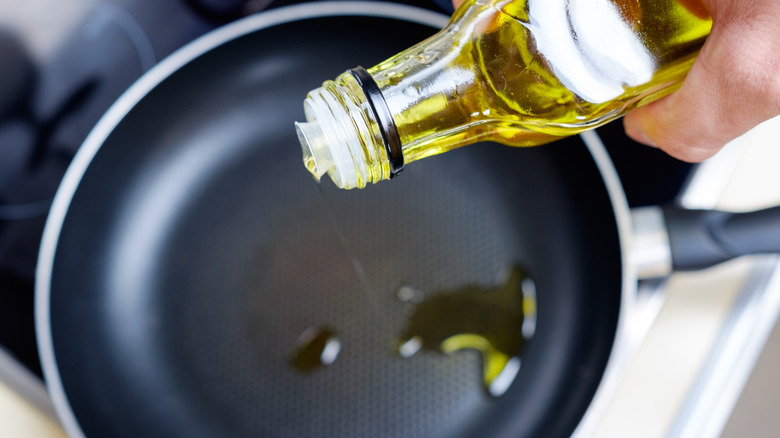
Most home cooks treat extra virgin olive oil as something too precious or too delicate to apply heat to. They reach for a cheaper oil for the pan and save the good stuff for only drizzling. This, our experts agree, is a habit that needs breaking.
If you are worried about the smoke point of oil, Lisa Pollack reassures us that fresh, high-quality extra virgin olive oil has a smoke point close to 400 degrees Fahrenheit and performs well across a wide range of cooking applications, from baking and sauteing to roasting. Gianfranco Cosmano adds important nuance: The smoke point is not actually the most important measure. What matters more during cooking is oxidative stability, and a fresh, high-polyphenol extra virgin olive oil is more stable under heat than many refined oils with higher smoke points.
Diamantis Pierrakos makes the everyday case plainly: "Sauteing or cooking with EVOO instead of other seed oils or butter not only adds flavor to your meal but makes it healthier as well." You could experiment with various recipes or use infused olive oils for raising the flavor profile of any dish instantly. The fear of cooking with olive oil is largely unfounded. It's time to use the good oil. That is what it is for.
You're judging quality by color and mildness
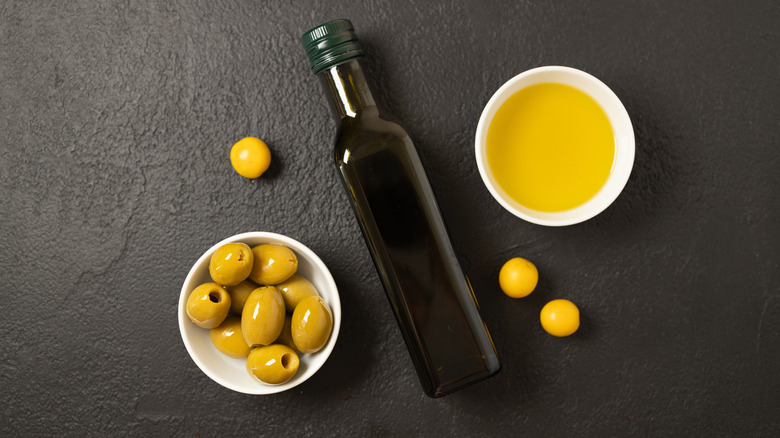
Check out any olive oil aisle and you will see bottles of oil ranging from pale gold to deep green in color. The tendency is to reach for the greener looking oil, believing this to be the highest quality of the lot with a mild and smooth taste. Unfortunately, here's where we are getting several things wrong.
In terms of color, Gianfranco Cosmano explains that when professional tasters evaluate oil, they do so in cobalt blue glass cups specifically to remove color from the equation. "The hue depends primarily on the olive variety, the degree of ripeness at harvest, and the presence of natural pigments such as chlorophylls and carotenoids," he said. What this means is that a bright green oil does not automatically mean it's better than a golden one. Oil color is not a measure of quality or freshness.
On the mildness front, the problem runs deeper. Diamantis Pierrakos argues that mass-produced olive oil has fundamentally distorted what consumers expect olive oil to taste like. Most people think it should be mild or smooth because that is what they have always tasted. But that mildness is not a feature; it is the absence of one. Lisa Pollack describes what a fresh, high-quality oil should actually deliver: "A bright aroma of the garden, a clean texture, and a peppery finish." If your olive oil has none of those things, you are not tasting quality. You are tasting its absence.
You're buying in bulk
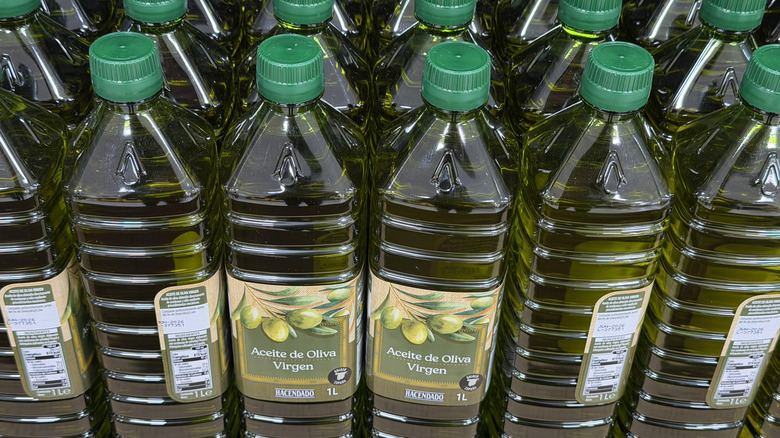
Buying in bulk is often the sensible move. You save per unit, plus it means fewer trips to the store. When it comes to olive oil however, buying in bulk is a sure fire way to ensure you end up cooking with rancid oil.
Gianfranco Cosmano lays out the core problem: "A smaller bottle finished within 30 to 45 days of opening often maintains significantly better quality than a large one used over six months," he told us. "Continuous exposure to light and heat sources also accelerates deterioration considerably." These effects accumulate over time, and when the bottle is half empty, the oil is often already past its best.
Lisa Pollack adds that continuously refilling the same container can compound the problem, because residual oil clings to the interior and oxidizes. Fresh oil poured into that container is immediately in contact with oxidized residue, which accelerates its own decline. The better habit is to buy in a size you will finish within a month or so, and to wash any container you decant into before refilling it. The savings on the unit price are not real savings if the oil is not good by the time you reach the bottom.
You're not treating it like an ingredient
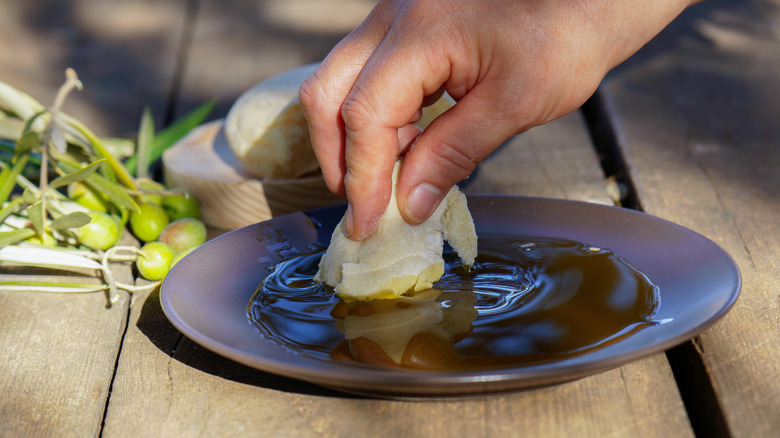
Let's be honest: The idea that olive oil comes with its own flavor and purpose, and that it belongs in the same category as a good spice or a finishing salt, has not fully landed in most home kitchens. Many people tend to treat it as a basic cooking oil, and here's where Gianfranco Cosmano comes in strong. "Finishing oil should be treated as an ingredient with its own personality, not a neutral fat," he said. "The mistake is using it as the latter when it has the potential to be the former."
Lisa Pollack makes the same point from a tasting angle. A fresh, high-quality extra virgin olive oil has vibrant aromatics and flavor compounds that are a direct reflection of the fruit it was extracted from. These characteristics, in turn, vary enormously depending on the type of olive. "The goal is to embrace the flavor a fresh olive oil brings to a dish, and to use it to enhance flavors the same way you would a spice or seasoning," she explained.
Brooke Gil is the most expansive on this point. "Olive oil is an amplifier of flavor, and most people are only scratching the surface," she said. She finishes steak off the grill with it, builds it into salad dressings, and drizzles it over vanilla ice cream with a pinch of flaky salt. Once again, our experts encourage us to use the same pairing logic as wine, and do as Martha Stewart does and stock varieties of olive oil for different uses.
You're opening a bottle and forgetting about it
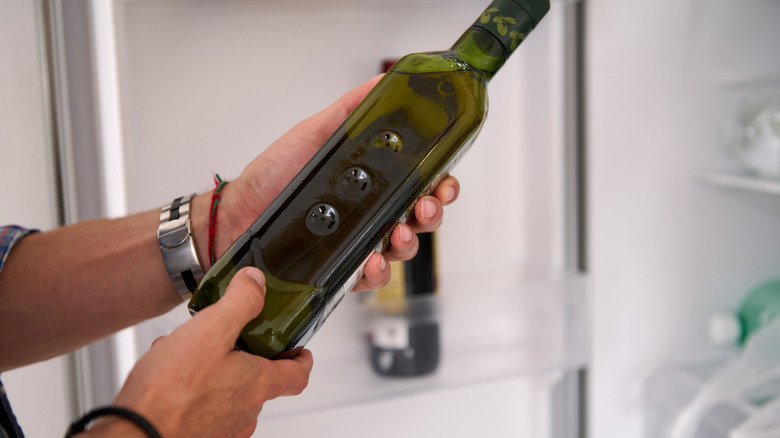
There is absolutely no need to sit on your olive oil or just bring it out for a special occasion. Diamantis Pierrakos insists that good olive oil is not meant to be saved. It's meant to be enjoyed, especially if it is genuinely high quality. Storing an opened bottle for prolonged periods does not improve it. The window he recommends is three to four months after opening — and that, according to him, should be the outer limit, not the target.
Even during the cooking process, you need to pay attention to timing. "One of the most frequent mistakes is leaving the bottle open for too long while preparing food," said Gianfranco Cosmano. The subsequent exposure to air and kitchen heat contributes to oxidation, gradually and invisibly. Lisa Pollack adds that olive oil (unlike wine) does not improve with age. A fresher oil that has been properly handled will almost always deliver better flavor and more nutritional value than something older, regardless of what was paid for it.
Brooke Gil puts a practical number on it: "The gorgeous clear glass carafe with the open spout, displayed proudly with 'green gold' on the countertop is the culprit," she said. "Light and air are olive oil's two greatest enemies. In that scenario, I'd give the oil about two weeks before it starts to degrade noticeably." Moral of the story? Open the bottle. Use it generously. And buy another one when it is done.
You're paying more and not getting more
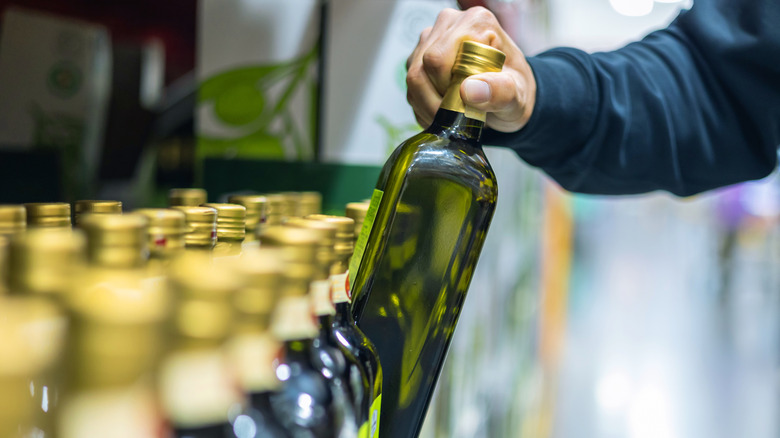
The rule to remember is that spending more on olive oil does not automatically mean getting better oil. However, knowing what to actually look for when you spend more almost always does. Gianfranco Cosmano doesn't mince words: "A high price does not automatically guarantee high quality." Marketing, packaging, and brand prestige can all inflate a price tag without improving what is inside the bottle.
"The quality of fruit heading into the mills determines the quality of olive oil produced, so this is the single most important factor to consider when choosing an olive oil," said Lisa Pollack. "Equally, it's important to pay attention to how recently the oil was produced and how it's been handled along the way."
Diamantis Pierrakos adds that third party certification is one of the most reliable qualifications available to consumers: His brand provides harvest dates, polyphenol and oleocanthal counts, and a link to a third party certificate of analysis. Awards from competitions like the NYIOOC World Olive Oil Competition are another honest signal. They represent independent evaluation by trained judges, not marketing. He urges us to spend on these things that matter, and save on everything else.