

You're Not Imagining It, Bread Tastes Better Warm (Here's Why)
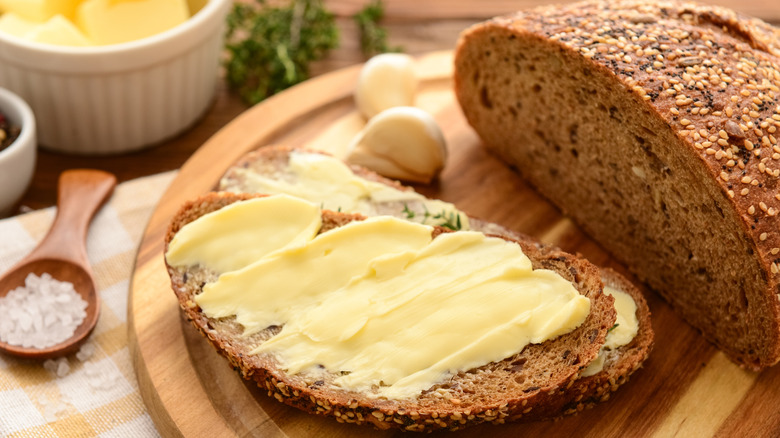
You know the smell of fresh, warm bread. It's a famously comforting one, and its seemingly universal appeal is the secret reason your supermarket's bakery is located at the front of the store. Some folks tend to assume they're imagining it, but bread genuinely seems to taste better when it's warmer. What causes that?
For one thing, hot food almost always smells better than cold food because warmer foods release more particles into the air for our noses to detect. Smell does matter because how we taste food is heavily influenced by how we smell it. A food that smells better will taste better, according to our brains. On top of that, we humans likely evolved to prefer hot foods because properly heated food contains fewer harmful germs and takes less effort to digest because it's already been broken down by the heat. When it comes to bread, starches become more stubborn as they cool, and it takes more energy for our stomachs to break them down.
Why is this effect so pronounced with fresh bread, though? Possibly, a study suggested that bread is a nostalgic taste and smell because it's so involved in childhood diets, making it even more appealing to us as adults. There's also one other key force here called the Maillard reaction, which gives freshly baked or toasted bread a stronger taste and smell.
Heating and browning bread makes it better
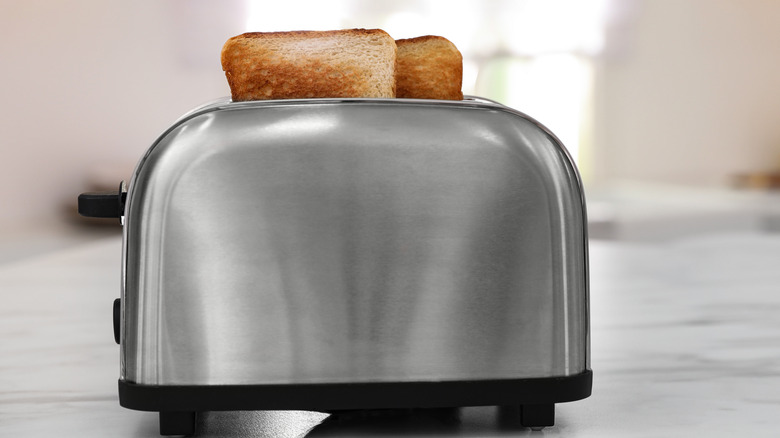
The Maillard reaction is a chemical process that makes foods turn brown and activates a lot of flavor compounds. Bread is somewhat unique in that there are multiple stages in bread's lifespan (so to speak) where the Maillard reaction occurs. It first happens when you're baking the bread, in contrast to fellow grains like freshly boiled rice or pasta, which don't have the same intense taste or smell. This is because bread baking in the oven is undergoing a rapid Maillard reaction, which is how the crust forms. When the bread is done, you're smelling the flavor compounds made by that Maillard reaction, which will fade as the bread cools down.
Still, bread often smells even better when you reheat it later on — you know, when you toast it. That's a second Maillard reaction, which crisps up the bread and gives its paler interior a fresh coat of brown, and leaves you with that pleasant smell as the toaster works its magic. We're used to doing it with a toaster, but you could toss bread on the stove instead and get the same effect, and you might even try frying your toast. Steaming your toast wouldn't work because water evaporates before it gets hot enough for the Maillard reaction to begin. The point is that most of the ways we heat up bread involve browning it, which adds a ton of new flavors.