

Is Your Favorite Bread An Ultra-Processed Food? Here's What To Look For
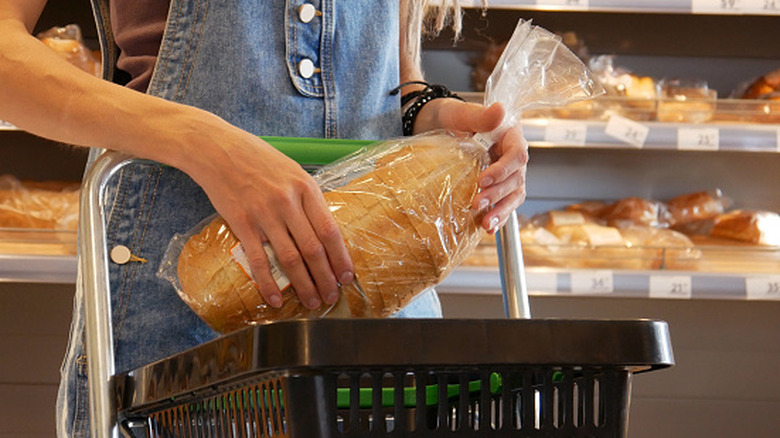
We all know — or at least have heard — that ultra-processed food isn't that great for our health and should be avoided, or at least consumed in moderation. But what exactly classifies a food as ultra-processed? NOVA classification of foods — a system that categorizes foods and drinks into four groups based on their level of industrial processing — determined that ultra-processed foods (UPFs) are made with additives not commonly used in home cooking and undergo multiple processing steps.
Some of the most popular products sold in U.S. grocery stores and fast food restaurants fall into NOVA's ultra-processed category, including sliced bread — all non-whole grain bread, including bagels of all types. This means the bread that you grab at the grocery store or from a sandwich order (unless it's from restaurant chains that bake their own bread) is likely ultra-processed.
There are an estimated 5,000 to 10,000 different preservatives, emulsifiers, sweeteners, and artificial colors that can be used as additives in bread products. The most common ingredients to show up on packaged bread labels include calcium propionate, mono- and diglycerides, seed oils (such as canola and soybean), high-fructose corn syrup, DATEM, caramel coloring, soy lecithin, and soy flour. Some breads also contain dough conditioners like azodicarbonamide (ADA) or potassium bromate, both of which are ingredients used in American bread that are banned in European loaves. Even if only one additive is present, the bread is still considered ultra-processed.
Choosing bread without additives
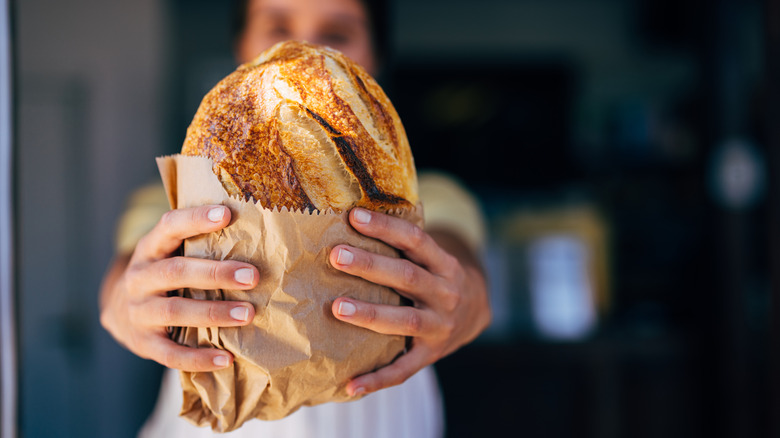
It's a fair question to wonder why so many additives are used in bread, especially when delicious bread can be made with just a few simple, recognizable ingredients. Many of these additives are used to help extend shelf life, improve texture, speed up production, and lower costs by relying on cheaper ingredients — high fructose corn syrup is less costly than cane sugar, for example.
Although thousands of these additives are approved by the FDA, research continues to show their long-term health effects, particularly in relation to cancer and cardiometabolic diseases. Still, it can be tricky to avoid ultra-processed bread when these products have become part of nearly every meal.
If you're regularly buying ultra-processed bread products and want to switch to more wholesome options, look for ingredient lists that mainly consist of flour, water, starter or yeast, and salt. Choosing breads made with whole grains — like rye, spelt, or 100% whole wheat — can offer additional nutritional benefits, including more protein, fiber, B vitamins, and minerals like iron. However, this may feel like a treasure hunt in a typical grocery store, even in the bakery section. You may have better luck visiting a health-forward store, such as Whole Foods Market, where there are several options of bread from Whole Foods' bakery made without additives. Local bakeries are also increasingly offering fresh bread, particularly sourdough.
You can also make your own bread, which is often the most rewarding option. There are countless tutorials available online, from beginner yeast breads to sourdough, making it easier than ever to learn. No matter the alternative, it's hard for ultra-processed bread to compare to the fresh.