

8 Types Of Potatoes And The Best Ways To Use Them
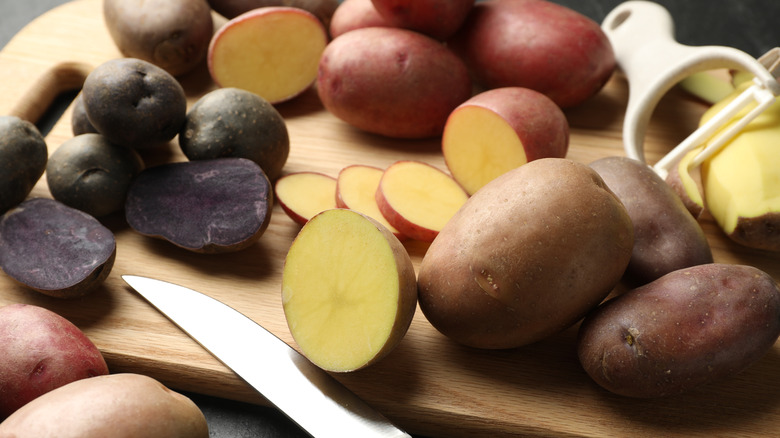
From smooth and sturdy red potatoes to fluffy Russets to vivid sweet potatoes, tasty tubers come in a variety of shapes, colors, and flavors. Chef Devin Sansone, Executive Chef at Abbracci Cuisine & Cocktails, says, "Each potato has its own personality, and choosing the right one makes all the difference in texture and flavor. Different potatoes really shine in different applications." To get the best out of potato dishes, Chef Sansone says it's important to understand the starch level, which affects taste and texture. He believes choosing the right potato is the key to a successful dish.
Potatoes are categorized as fluffy, waxy, or a combination of the two depending on moisture and starch content. Fluffy potatoes cook up fluffy or crispy in dry heat, but turn mushy when boiled or steamed. Waxy potatoes are low in starch and high in moisture, so they keep their shape and stay moist when cooked.
The variety of potatoes and the countless ways they can be prepared is why Chef Sansone enjoys cooking with them: "They are perfect for simple, comforting dishes and equally capable of anchoring an elegant, refined plate," he says. "Their versatility is what makes them so special." We asked Chef Sansone, along with recipe developers Grace Vallo of Tastefully Grace and Michelle Morey of Barefoot in the Pines, to share which types of potatoes they like to use and the best ways to use them.
1. Russets are best for baked potatoes and fries
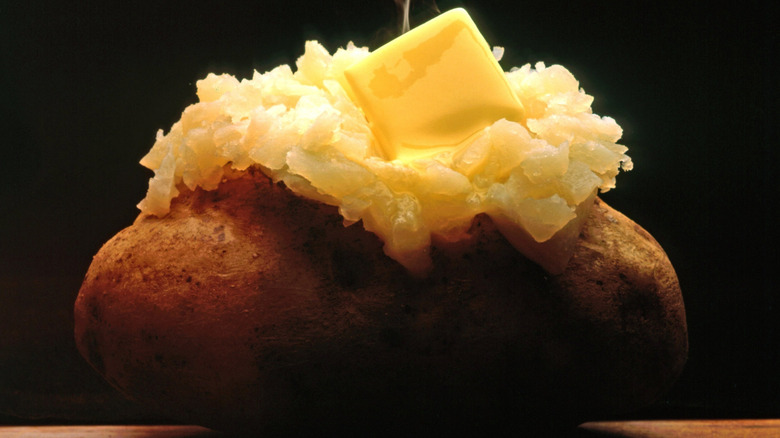
Russet potatoes are the top choice among all three of our experts for their airy texture when baked or fried. Grace Vallo claims, "Russets are king for baking because they're starchy/fluffy." Chef Sansone explains the high starch in Russets "means they crisp beautifully on the outside while staying light and fluffy inside. They're my go-to for baked potatoes, French fries, and house-made chips — anything where you want that golden crunch and airy center."
With their thick skin, mealy mouthfeel, and earthy flavor, Russets are a good choice for twice-baked Hasselback or mashed potatoes, gnocchi, and shepherd's pie. In a soup, Russets' starch helps thicken a creamy broth, and in a gratin, it helps bind the layers. Russets also make crispy tater tots, hashbrowns, potato pancakes, and potato skins. Chef Sansone uses Russet potatoes for one of his most impressive dishes, Potato Maxine. "Thinly sliced russet potatoes are layered tightly together with clarified butter and baked until crisp," Chef Sansone explains. "The result is one large, golden, cracker-like sheet of potato. It is simple, dramatic, and incredibly satisfying."
Sometimes Russets are also used for potato salad, but this isn't recommended by our experts. Michelle Morey says the Russets used in a potato salad she once ate "crumbled and turned into more of a mashed potato salad situation." When Vallo boiled Russets for a salad, "they basically fell apart into mush by the time I mixed in the dressing."
2. Yukon Golds are an all-purpose potato
Yellow potatoes have a medium starch content, making them a versatile, "middle-of-the-road" type of spud, according to Grace Vallo. However, the Yukon Gold variety stands out for its supreme texture. Vallo uses Yukon Golds for roasting and for making creamy mashed potatoes. "They hold their shape but still get silky," she says. Yukon Golds are easy to work with and yield a tender and smooth consistency. They have a denser, creamier center than Russets, and a slightly sweeter taste compared with other yellow varieties.
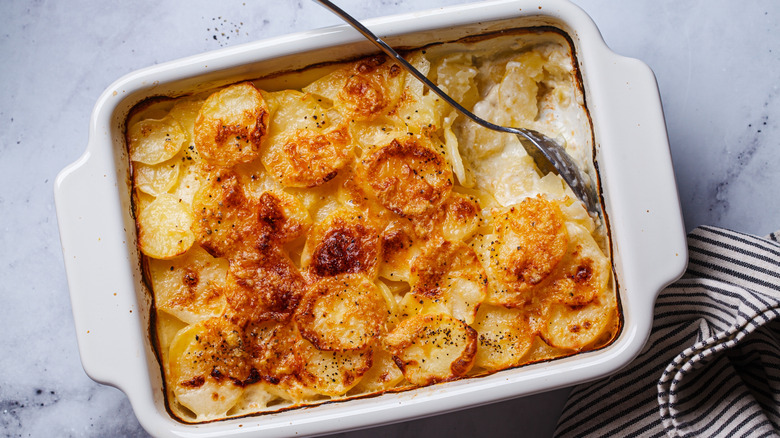
Chef Sansone reaches for Yukon Golds every day at his restaurant. "I think of them as the "all-purpose flour" of the potato world," he says. "They're naturally buttery and versatile, and perfect for silky potato puree, scalloped or gratin dishes, and hearty soups where you want a smooth, velvety finish. For gnocchi, Yukon Golds are ideal because they produce a smooth, soft, pillowy texture." Yukon Golds are Chef Sansone's favorite potatoes because of their versatility, and also because his favorite potato preparation, Joël Robuchon's Pomme Puree, features them. "I love how a very common, humble dish can be prepared with such precision and care that it becomes an unforgettable experience for guests," Chef Sansone says. "That kind of transformation is really special."
3. Red potatoes are best for potato salad
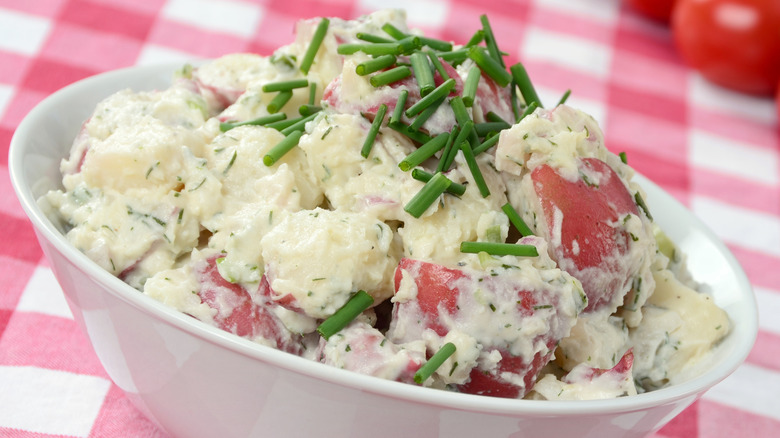
Picking the right potato for the right job will help you make an impression at a potluck, but picking the wrong potato for your potato salad is how you get uninvited to the next gathering. Red potatoes, which are a proud member of the waxy potato family, are thin-skinned, low-starch, and keep their shape when cooked. Chef Sansone says "that makes them ideal for roasting, breakfast home fries, or potato salad — dishes where you want the potatoes to stay firm and textured rather than fall apart."
While other types of potatoes melt into mush in hot water, reds are the type of potatoes that hold their shape in soup. However, you still need to take care when using wet cooking methods. Grace Vallo shares advice for cooking with red potatoes and any other waxy tubers: Cut them uniformly so they cook evenly, and don't over-boil if you want them to hold their shape.
Like other tender-skinned potatoes, red potatoes are also a great choice for roasting. To get the crispiest crust on your spud, don't crowd them in the pan, and be sure to use the right kind of oil when roasting potatoes.
4. White potatoes are great for crockpot recipes
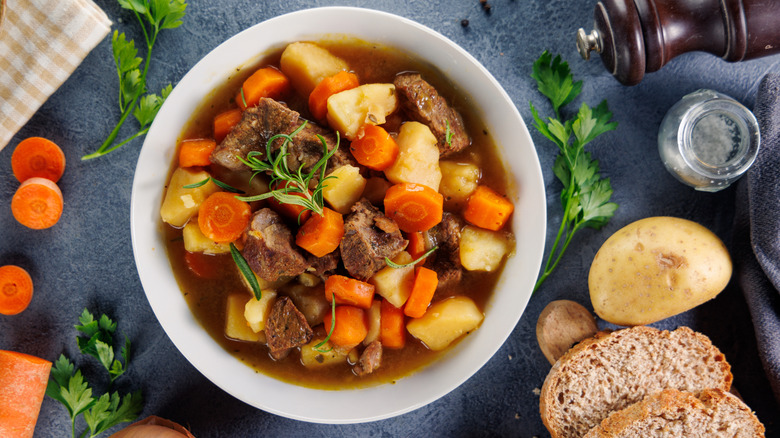
White potatoes, of the waxy potato clan, work well in most recipes. When baked, they are fluffy and smooth, and when mashed, they break down just enough to become velvety. But Michelle Morey says white potatoes really shine in recipes with extended cooking times because they have the starch content to keep their shape. "Thin-skinned, waxy potatoes are great for boiling, stewing, soups, and long cooking times (Crockpot meals)," she explains.
White potatoes have a high moisture content that prevents them from becoming as crispy or as browned as drier potatoes, like Russets, so they aren't the go-to potato to fry or roast. However, they do tend to turn brown when cut and exposed to oxygen, like most apples and "apples of the earth" do. Morey says it's nothing to worry about. "If your potatoes start to turn brown while you're prepping, that's totally fine," she assures. "That's just oxidation, not spoilage." If you are worried about discoloration, use this simple storage tip to prevent cut potatoes from browning, and place prepped potatoes in a pot of cold water before cooking.
5. Blue and purple potatoes add color and nutrients
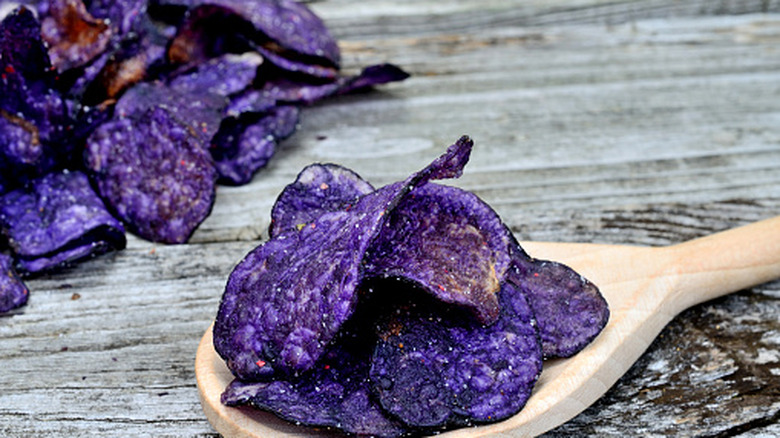
In a world where artificial dyes are being banned, purple and blue potatoes can add an all-natural, colorful kick to your recipes — just make sure you're using these spuds for the right reasons. After all, while blue potato chips reached #5 on our ultimate ranking of plain potato chips, the purple potato bun on Burger King's Purple Wednesday Whopper was one of the most ridiculous fast food menu items of 2024.
Chef Sansone was once lured in by the pigmented potatoes and made a purple potato gratin. "While it seemed like a good idea," he says, "the color cooked down to a pale, washed-out purple that was pretty unappetizing. [It was] a good lesson in choosing the right potato for the job." Grace Vallo's opinion is that people typically choose colored potatoes more for their visual appeal than their taste or texture. However, these potatoes with brilliant blue hues and picturesque purples are still nutty and earthy, and dense and moist, which makes them good for mashing. "They roast well but can get dry if overcooked," Vallo warns.
Anthocyanin antioxidants give this potato family its characteristic pigments. Colored flesh is typically a characteristic of the most nutritious potatoes, and these purple beauties really deliver, with four times more antioxidants than a Russet, and positive health benefits on blood pressure, blood sugar, inflammation, gut health, and cancer risk.
6. Baby potatoes are a tender treat
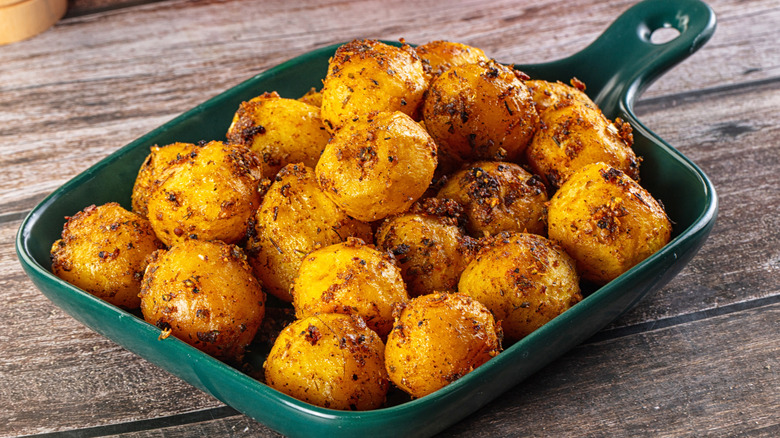
Baby potatoes, sometimes called new potatoes, are the chubby little tubers that are picked before reaching full maturity. No matter the texture the mature potato is destined for, these little bundles of joy will hold their shape well when cooked because their sugars haven't developed into starches yet.
Grace Vallo cooks with them when a dish needs potatoes that don't fall apart. "New potatoes are perfect for salads and roasting since they stay firm," she says. Because of their diminutive size, baby potatoes are an ideal spud to throw on a smoker for a stunning side dish, to cook on the grill, or to make crispy and creamy smashed potatoes with. (They are also the type of tuber Princess Diana loved to eat with an egg white coating.) Due to their immaturity, baby potatoes are delicate and sensitive to environmental factors. Don't store them for more than a few days, as they are highly perishable (keep in mind you should never store potatoes in the fridge).
7. Fingerling potatoes are cute and flavorful
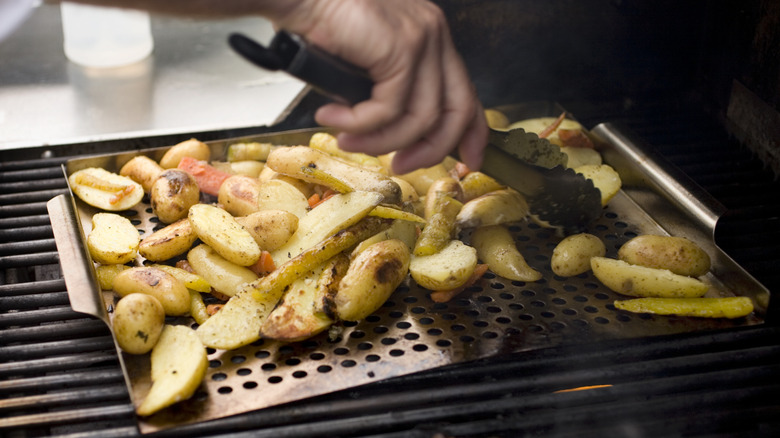
Fingerling potatoes get a lot of attention for their unique appearance — they are long and slender, stubbly and knobbly, and come in a variety of colors (white, brown, red, purple). But fingerlings are also memorable for their texture and taste. When perfectly cooked, a fingerling's skin breaks with a satisfying snap to reveal a creamy, earthy, and nutty interior. Grace Vallo uses them for their taste and visual appeal. "Fingerlings are great for roasting or simple sides because they're cute and flavorful," she says.
Fingerlings are often served grilled or smashed, but their waxy composition is ideal for roasting and boiling. However, waxy potatoes have a high moisture content, which makes it harder to get a crispy exterior. Vallo offers a helpful tip: "Dry them well before roasting ... moisture is the enemy of crisp."
When you want an easy but impressive potato preparation, low-maintenance fingerlings are a good choice. Their thin skins don't need to be peeled, and they are usually small enough that they don't need to be chopped.
8. Sweet potatoes add color and flavor to a variety of recipes
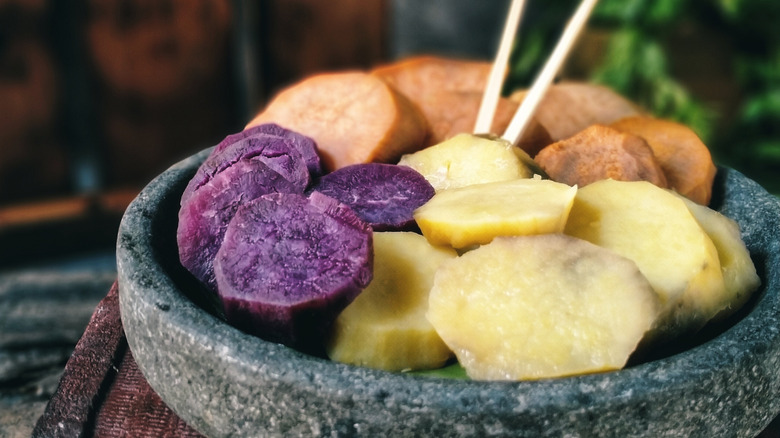
Sweet potatoes, not to be confused with yams, are best known for their role in the classic Thanksgiving dinner, but there's a world full of sweet and savory sweet potato recipes to explore with this colorful, flavorful, and nutrient-rich tuber family.
You'll find a handful of sweet potato varieties in your local supermarket and a few more in an Asian market. Beauregards are buttery, sweet, and nutty, and can do it all — they are good for mashing, baking, roasting, and make good soups and casseroles. Jewels have a higher water content, ideal for purees, muffins, and pies. Red Garnets are commonly used in casseroles, but they can add an earthy twist to a potato salad. The white-fleshed Hannah holds its shape, so it's a great option for French fries and salads. Okinawas, also called Hawaiian or purple sweet potatoes, have a unique floral, honey, roasted chestnut flavor. Their dense, dry interior turns crumbly or smooth depending on the cooking method. For example, when steamed or boiled, the flesh becomes creamy — perfect for a colorful cheesecake.
In her kitchen, Grace Vallo highlights colorful sweet potatoes in several different ways. "Sweet potatoes are awesome roasted, in mash, or fries," she says. But her favorite way to showcase their color and flavor is in sweet potato gnocchi. "Roast them and mash them smooth, and they'll turn into this slightly sweet, pillowy dough that's amazing with sage brown butter," she promises.
9. Potatoes you've probably never heard of and will probably never taste
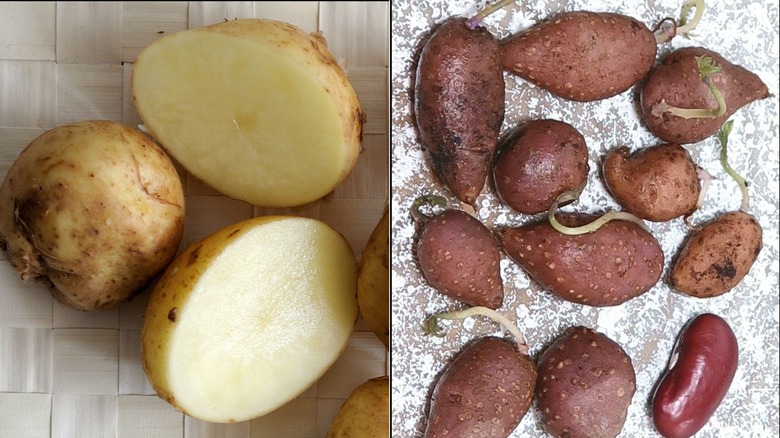
There are thousands of kinds of potatoes grown around the world, but you likely won't encounter much variety in your typical supermarket, specialty Asian stores, or even local farmers' markets. Some potatoes are so rare, or so expensive, you'll probably never get a chance to taste them.
Case in point: Le Bonnottes de Noirmoutier are an extremely rare type of potato. They only grow on the French island of Noirmoutier, where they develop a distinctive sweet, salty, lemony, walnut-y flavor from the mineral-rich soil, seaweed and algae fertilizer, and briny sea air. With yellow skin and even richer yellow flesh, this rare type of tuber sells for $400 to $500 per kilogram. So delicate and flavorful, Bonnottes are always eaten unpeeled, often steamed, sauteed in butter, or used in purees, salads, and soups.
Closer to home is another rare potato, the Four Corners Potato (Solanum jamesii), which has been growing in North America for 11,000 years. These spuds are amazingly hardy and disease-resistant and can be stored for up to eight years. Slightly bigger than a grape, their skins are packed with nutrients – more protein, calcium, and iron than a standard spud. Those who have tasted the earthy nuggets say the skins cook up crunchy, and the flesh is soft. They can be eaten as a side dish with butter and seasonings or added to soup. To counteract their slightly bitter taste, Native Americans traditionally cooked the potatoes with bentonite clay.
10. The best potato for mashed potatoes
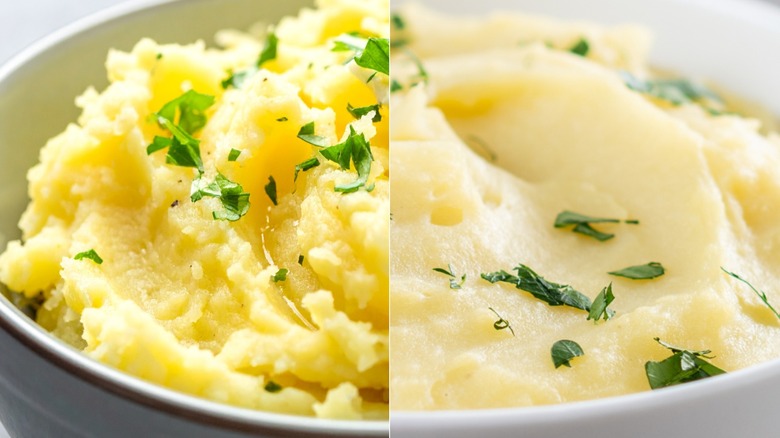
So, you want to know which potato makes the best mashed potatoes. Well, considering the potential divisiveness of controversial food opinions, we think it's safe to say that the best kind of potato for making mash is ... whichever one you like best.
Michelle Morey usually uses either Yukon Golds or red potatoes. "Their skins are thin, they mash up creamier, and they hold up really well to butter and cream," she says. However, she's aware others prefer their mashed potatoes chunky. "If you want fluffy and lumpy (not in a bad way) mashed potatoes, peeled russets work beautifully," she admits.
No matter what type of potatoes you use, or what ingredients you add to your mash, just don't overmix them — especially the starchy kinds. Chef Devin Sansone, again, learned this the hard way. "Early in my career, I used russet potatoes for a puree, which resulted in a gummy texture," he says. "That was definitely not what I wanted."
11. The best potato for French fries
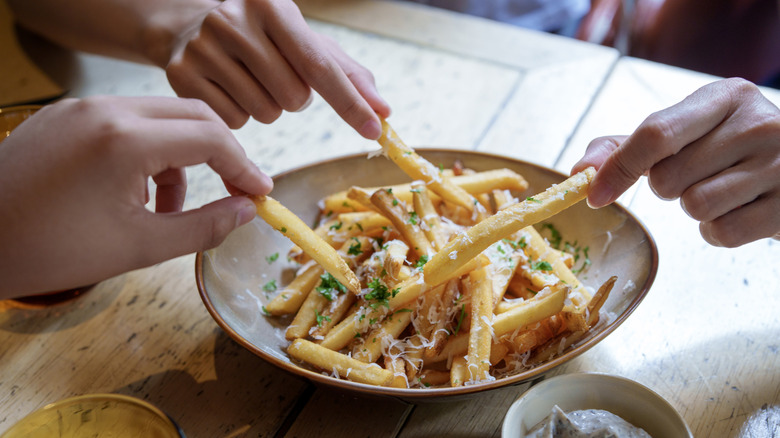
We've covered different types of potatoes and the best ways to use them, but we haven't addressed the most important question — which kind of potato makes the best French fries? Americans love French fries — they're the most popular side dish in restaurants, and a YouGov survey ranks them as the #1 most popular American dish. However, which type of potato is best for French fries is, once again, dependent on which type of French fry is your favorite.
Different types of potatoes offer different textures for French fries, explains Michelle Morey. "Russet potatoes are great. They're high in starch, which gives you that fluffy interior with a crispy exterior. Yukon Golds can work too. They're a little less starchy, so they might be kind of limpy, but they do give you a creamier inside. Waxy potatoes, like red or new potatoes, aren't good for fries because they won't give you that classic crispy outside and fluffy inside."
In some culinary circles, Kennebec potatoes, from the white potato family, hold the title of best French fry potato because they have a good balance of starch and texture that yields an ideal crispy-on-the-outside-fluffy-on-the-inside fry. Many professional fryers claim the Kennebec's high starch, low moisture structure also makes fries more browned and flavorful, and less greasy than other varieties. Some restaurants even brag on their menus that their French fries are made with Kennebec potatoes.