

14 Ingredient Mix-Ins That Turn Store-Bought Mayo Into A Superior Spread
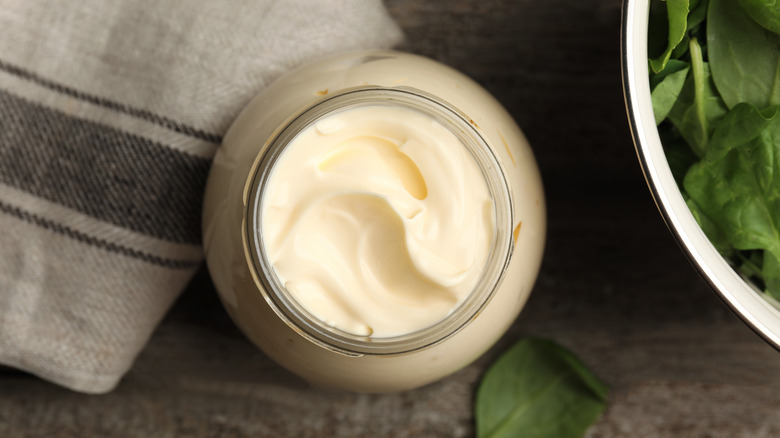
Ask a stalwart fan of popular mayonnaise brands like Duke's or Hellmann's if store-bought mayo needs any improvements and you're probably going to hear a resounding "no." The mayonnaise is amazing all on its own, and why mess with perfection? However, for the rest of us, who aren't quite so enamored with or loyal to a specific mayo brand, we might get bored with the rather basic and standard grocery store offering.
Luckily, mayonnaise is a highly versatile condiment that allows a lot of room for creativity. For example, among the many ways to use mayonnaise that you need to try ASAP, you can use it as a marinade, in place of an egg wash, in your mashed potatoes, or even on your holiday turkey. You can also simply combine mayonnaise with a variety of other ingredients, both pantry staples and specialty items, to get a brand-new spread that will take a sandwich to an entirely other level or make your fry-dipping experience a lot more interesting. Here are some favorite ingredients that will transform that jar of store-bought mayo, stat.
Gochujang
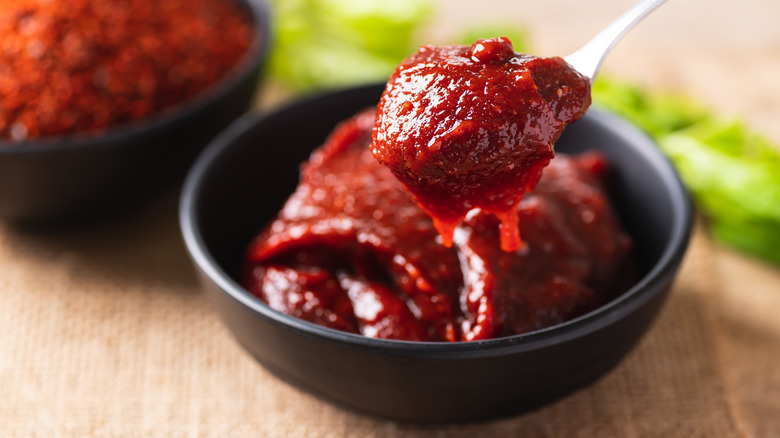
If you've yet to introduce gochujang into your kitchen, now's the time. The Korean fermented paste is made with red chile pepper, soybeans, and sticky rice, among a few other ingredients. It has been growing in popularity among American home cooks, who've found that, in a wide variety of dishes, the paste can provide both a desirable hit of umami, thanks to the fermented soybeans, as well as a palatable level of heat. You can add gochujang to your breakfast burrito. You can use gochujang to give your pasta sauce a kick, or you can use it to level up your sloppy joes — and, of course, you can also add it to your mayonnaise.
For more heat, measure out your mayonnaise and add in half that amount of gochujang. For less heat, start with a larger amount of mayonnaise and add a few tablespoons of gochujang at a time, tasting as you go. While this combo on its own makes a tasty addition to a sandwich or burger, you can enhance this spread's flavor profile further by adding in some acidity in the form of rice wine vinegar.
Anchovies
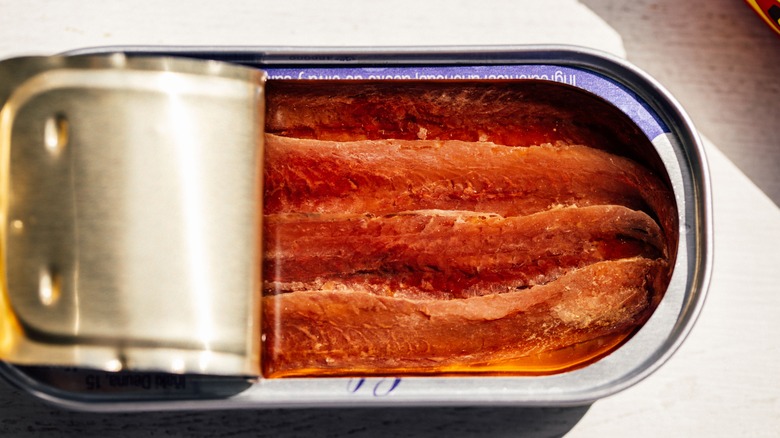
Anchovies have gotten a bit of a bad rap. They gained a reputation as the "gross" ingredient that you might find atop your pizza. However, there's a reason why anchovies are Bobby Flay's secret go-to ingredient and why you should add them to your mayo: They add a certain savory saltiness and umami flavor that really take any dish to the next level. Plus, there's no need to worry about any perceived, off-putting textural issues, as canned anchovies can be easily transformed into an anchovy paste, with just a little elbow grease (or, if you're into making the cooking process as easy as possible, you can opt for store-bought anchovy paste instead).
Anchovies or anchovy paste will significantly enhance your mayonnaise's flavor, but there's one particular place you might want to consider using your anchovy-mayo combo: on a tuna salad sandwich. Anchovies and tuna already appear together frequently in a Niçoise salad, and combining the two flavor profiles in your tuna salad sandwich will only amplify the sandwich's rich, fishy flavor profile.
Mustard
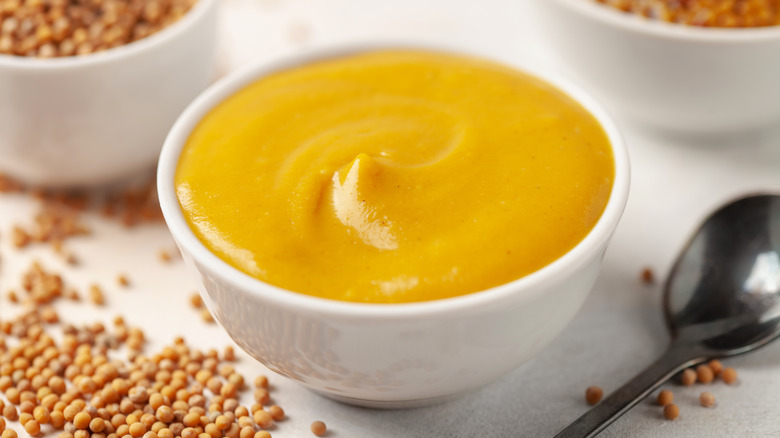
You don't have to look too far to find an appropriate mix-in for your mayonnaise. Just look a bit further in the fridge and grab that bottle of mustard. Combining mustard and mayonnaise is a straightforward, easy way to create a spread or dipping sauce that's zesty, but not as potentially abrasive as just eating straight mustard. If you're looking for something milder, the creaminess of the mayo cuts through the mustard for the perfect balance.
Of course, your results will vary based on both the type of mustard you use and the ratio of mayo to mustard that you mix up. For example, you may want to use less mayo and more mustard, if you're using a mild-flavored mustard like yellow mustard. However, you may need more mayo and less mustard if you're using spicy or Dijon mustard. Want even more spice than what you're getting in the spicy mustard? Heat things up further by adding in a small amount of horseradish.
Pesto
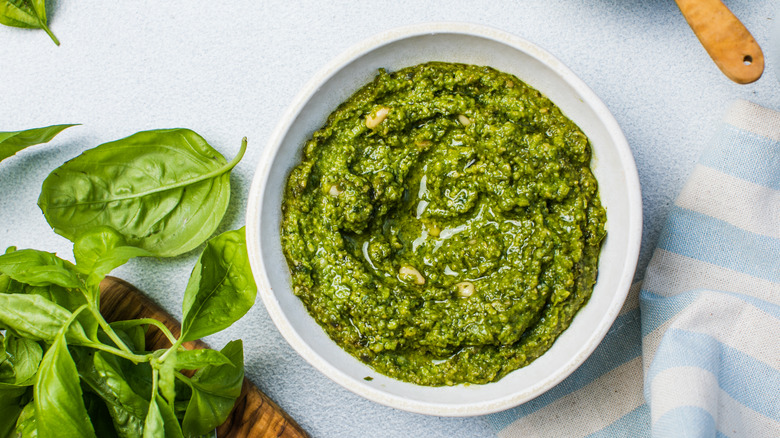
Brighten up your mayonnaise by incorporating some pesto. A few tablespoons of pesto is all that you need for ½ cup of mayonnaise. Beyond using the mixture as a spread on a sandwich or in a wrap, you could also use it in a pasta salad, as a marinade for chicken, or to coat vegetables before roasting them.
For the ultimate in bright, fresh, herby flavors, though, you'll want to opt to make your own pesto at home versus reaching for the store-bought jar of pesto. All it takes is blitzing some fresh basil, pine nuts, Parmesan, garlic, olive oil, and lemon juice in a food processor before seasoning with salt and pepper to taste. Once you master a basic pesto recipe, you can begin playing around with adding in other ingredients, as well, which will then further enhance your pesto-mayo mixture. For example, jalapeños can give the pesto mayo a spicy edge.
Sriracha
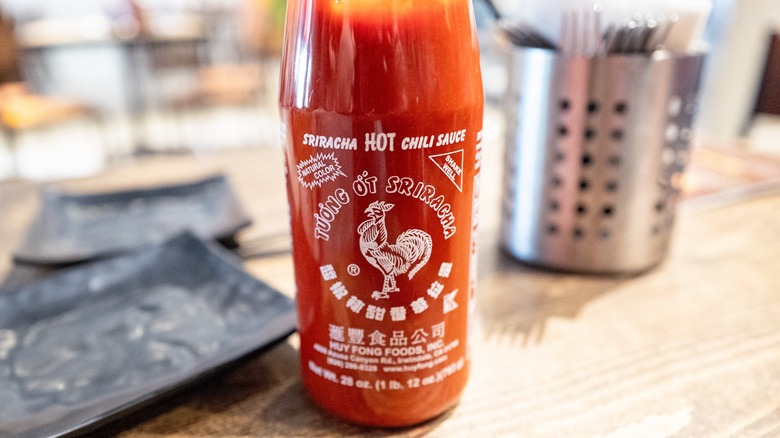
For a while there, sriracha was having a big, big moment. Everyone seemed to be eating it — to the point that there were on-going sriracha shortages — and brands, from restaurants to food manufacturers, had no problem rolling out sriracha-flavored foods to the hungry masses. Today, sriracha may no longer by the darling of the condiment world, but it still deserves a place in your pantry for the many ways it can come in handy, including as a mayo mix-in.
Yes, for the best homemade spicy mayo, reach for the sriracha bottle. Just ¼ cup of sriracha adds a nice bit of garlic and heat to a cup of mayonnaise, though nothing's stopping you from adding more, if you'd like it even hotter. While this mixture will make an excellent addition to sandwiches and burgers, as well as work for dipping fries, consider adding a few other ingredients if you have them on hand. Lime juice can add bright acidity and a sprinkle of salt is the icing on the cake, ensuring your new sauce has a well-rounded flavor profile.
Garlic
Despite what some restaurant menus might claim, "aioli" is not just a fancy word that you can use in place of "enhanced mayonnaise." Aioli and mayo are two different things. Aioli is very garlic-forward, but also contains olive oil, lemon juice, and salt. Mayonnaise typically has no garlic, and while it might contain olive oil and lemon juice, like aioli, it's also going to have eggs. Mayonnaise is smoother and creamier, as well.
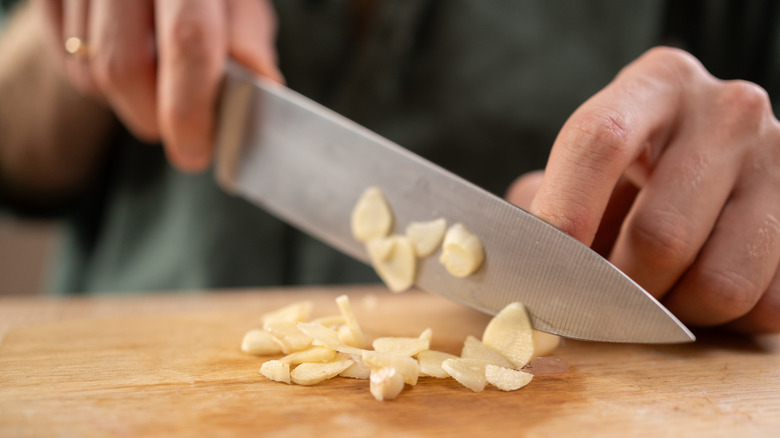
All that said, though, you can upgrade your store-bought mayonnaise to make a condiment somewhat similar to traditional aioli in flavor, by adding some garlic. You have three options for how you incorporate garlic into your mayonnaise: Use fresh garlic, garlic paste, or garlic powder. Using fresh garlic that you've minced into paste-form will be more labor intensive, but you'll likely find that this method gives you a stronger garlic flavor than a garlic powder. If you don't mind a little labor, though, you might even consider roasting the fresh garlic until its soft, and then adding it to your mayonnaise.
MSG
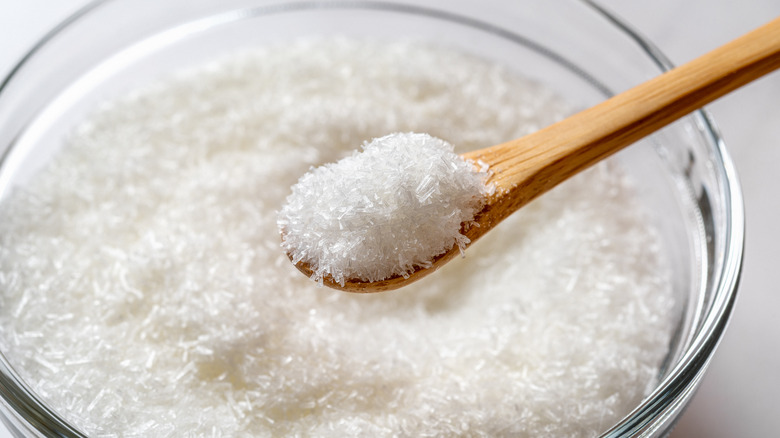
Similarly to anchovies, MSG is a umami-packed ingredient that has been inappropriately maligned. Through a combination of poor science and racism-fueled assumptions, MSG gained a reputation throughout the latter half of the 20th century as a dangerous ingredient that could cause ill health effects when consumed. Luckily, though, the general population has wised up since then and, finally, MSG is no longer the bad guy. Now, home cooks and professional chefs alike routinely use MSG — and the ingredient can come in very handy if you're trying to accomplish one specific thing with your store-bought mayo.
Fans of authentic Japanese Kewpie mayonnaise have discovered that adding MSG to your mayonnaise can help you replicate the condiment's distinct flavor profile as closely as possible (because, while Kewpie does sell its mayo in America, the American-made version leaves out the MSG found in the original product). In addition to being very umami-rich thanks to the MSG, authentic Kewpie mayo is also fatty, tangy, and a little sweet, as compared to Western mayo.
Kimchi
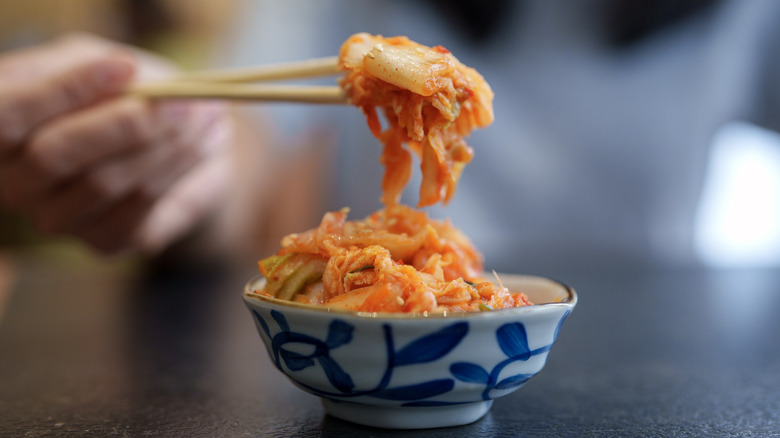
Korean fermented vegetables, kimchi might not be the first thing you'd think of to add to your mayonnaise, but when you give it a little more consideration, it makes sense. If you like pickles on your sandwich alongside your mayo, chances are likely you'll enjoy kimchi this way, too. You can also combine kimchi and mayonnaise on sandwiches — pairing it with turkey, Havarti cheese, and sprouts; sautéing it and melting some cheese on top, before adding it and the mayo to toast; or incorporating it into a mayo-based tuna salad.
So how can you make kimchi mayo for yourself? Combine equal parts mayonnaise and kimchi in a blender or food processor and blend until smooth. You can adjust the ratio as you like, and if you find that the mayonnaise is a bit runny from the kimchi juice, just drain it off.
Sundried tomatoes
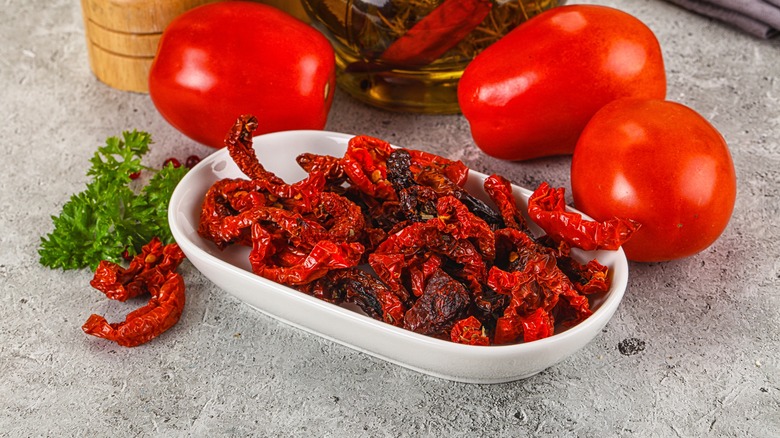
Like pesto, sundried tomatoes can add a bit of fresh brightness to your mayonnaise, providing a little 'oomph' to a veggie wrap or grilled chicken sandwich. You can either use oil-packed or non-oil-packed sundried tomatoes for this, but if you go with the latter option, you'll have to take a few extra steps.
With oil-packed tomatoes, all you have to do is drain them and then puree them in a food processor. Then, add the mayonnaise to the food processor, using twice the amount of mayonnaise that you are tomatoes. If, though, you choose to use the non-oil-packed sundried tomatoes, you'll want to soften them before pureeing, in hot water. After tasting your sundried tomato-mayonnaise mixture, if you decide that it needs just a little something more, consider adding garlic, salt and pepper, basil, or a splash of red wine vinegar. You'll find that the mayo makes a great addition to a Mediterranean-style tuna salad, and that using the tomato-infused mayo instead of fresh tomatoes can help you avoid a soggy BLT.
Wasabi
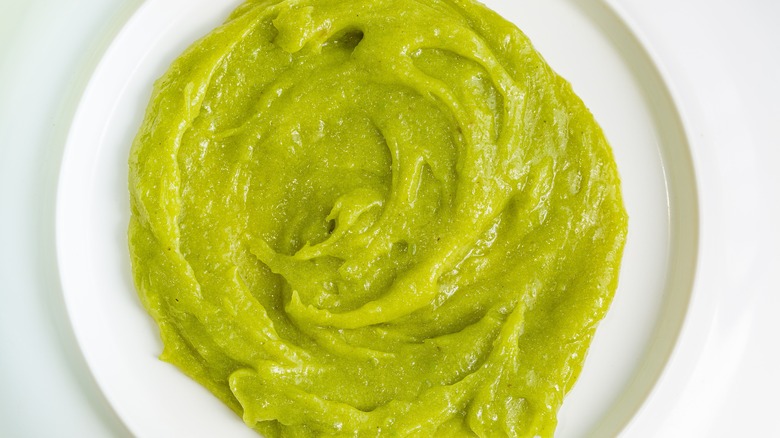
If you like to keep things spicy, then consider adding a bit of wasabi powder or paste to your mayonnaise, Kewpie or otherwise. If you're using wasabi powder, mix it with a little water before you add it to your mayonnaise. It's important to note that a little wasabi goes a long way, so avoid being too heavy handed at first. Taste as you go and, if you think the mixture needs a little more umami, sprinkle in some MSG, too.
As for how you use your wasabi mayo, keep in mind that wasabi is in the same plant family as horseradish, so any sandwich that might take a horseradish spread, would also be a good fit for your wasabi mayonnaise. For instance, you might use this mixture to upgrade your roast beef sandwich. You can also use it as a dip for fries or a sauce for salmon, or on burgers.
Ketchup
Utah has an interesting food culture. For example, Utah shares a special connection with Jell-O, with the state's large Mormon population latching onto Jell-O salads, leading to the state becoming one of the highest consumers of Jell-O per capita (and Jell-O is the official state snack). The Utah Mormons also gave us the "dirty" soda trend and Mormon funeral potatoes. Then, there's the fry sauce.
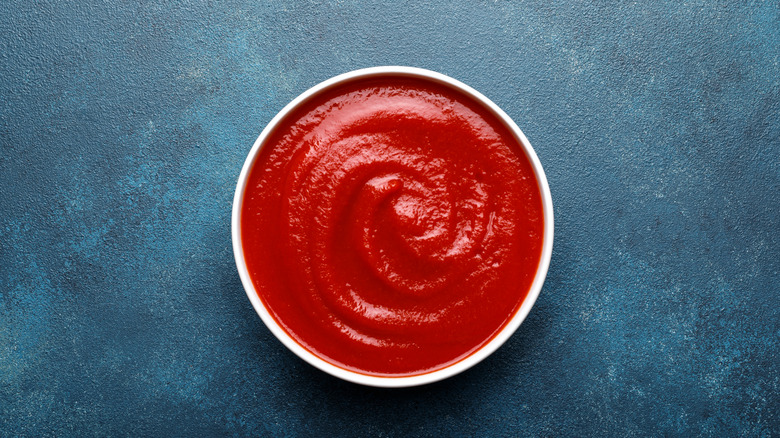
This Utah invention is simple. It's equal parts ketchup and mayonnaise (though some will add in other ingredients, such as garlic or spices). The sauce is served in restaurants across the state and sold in stores, and regional fans are fast to defend it, noting that there's not another thing like it, even though similar, pink-hued dipping sauces have popped up at fast-food chains elsewhere in the country (such as Cane's dipping sauce).
There's no need for you to plan a road trip to try this ketchup-mayo combo out for yourself. You probably have ketchup and mayonnaise in the fridge right now. So, the next time you're looking to pump up your mayo with a little extra flavor, combine it 1-to-1 with some ketchup — and see what all the fuss is about.
Bottarga
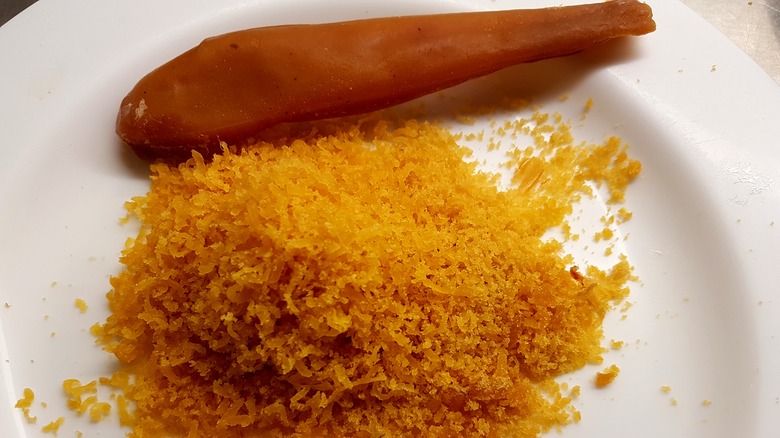
If you're not familiar with bottarga, the first thing you need to know is that, as far as mix-ins that will elevate your mayonnaise go, this is probably one of your most luxurious options. Bottarga has been called the truffle of the sea and the prosciutto of the sea. Somewhat similar to caviar, bottarga is technically a dried, cured, fish roe sac. After the roe sac is removed from the fish, it's cured in salt and dried. Once done, the bottarga can be grated or sliced, and might be served on pasta or salads, or in sandwiches.
It's salty, it's umami-rich, it's expensive, and it's elegant. As such, if you make some bottarga mayonnaise by simply grating the bottarga into the mayo, you'll want to use it appropriately, not just on some pedestrian ham sandwich. For example, pair it with beef tartare, or use it in oeufs mayonnaise, a traditional French dish that combines boiled eggs with high-quality mayonnaise.
Can't be bothered with anything fussy? For something simpler, follow a celebrity chef's lead. Bottarga is the unique ingredient that Alton Brown tops his scrambled eggs with, and, since making richer, fattier scrambled eggs is one of the top ways to use mayonnaise that you need to try ASAP, you could both incorporate your bottarga mayo into the eggs themselves, and then shave some extra bottarga onto the top.
Curry paste
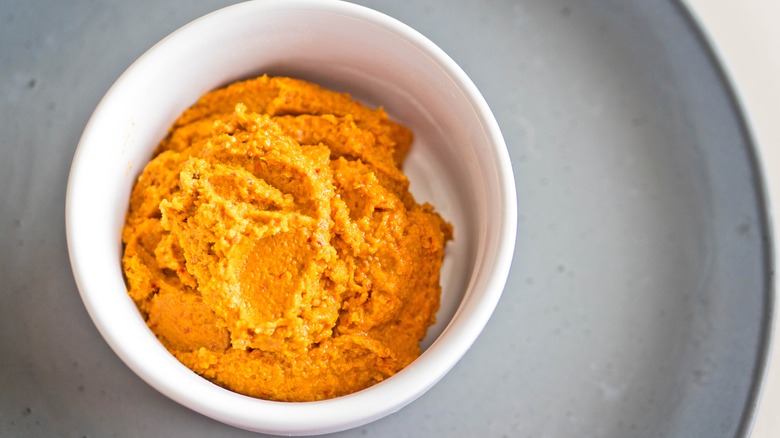
By adding just a few teaspoons of curry powder to your mayonnaise, you can have a tasty spread or dip that pairs well with grilled chicken sandwiches, burgers, and fries. However, consider using curry paste instead of powder, even though the powder is what some recipes may suggest. The powder can leave behind an undesirable texture. Additionally, if your jar of curry powder has been sitting in the spice rack, open, for very long, the flavor may be dull and not ideal for mixing with your mayo. If curry powder is all you have on hand, try blooming the curry powder before use, combining the curry powder with oil in a warm pan.
Once you have your bloomed curry powder or curry paste ready, you're just a few steps away from not just a dip and spread, but also broader dishes that can utilize this mayo-based sauce. For example, you can use the curry mayo as a base for chicken curry salad, or you could use it as a marinade for roast chicken.
Sambal
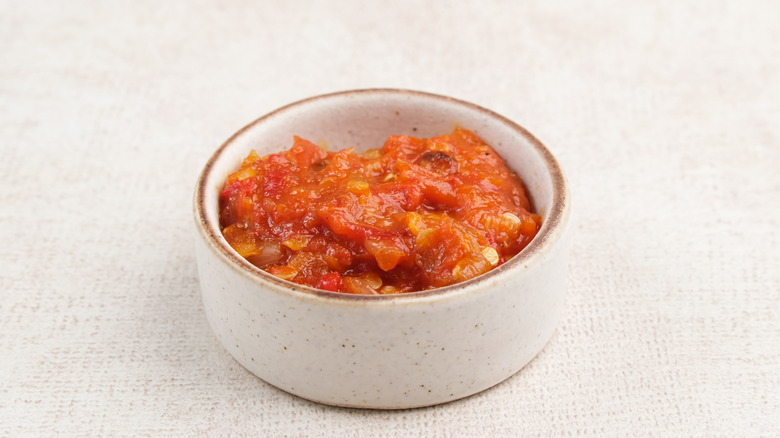
A Southeast Asian chile paste, sambal comes in many, many different forms and varieties, and it traditionally might be used as a dip or sauce for rice or noodles, or as a marinade. While making authentic sambal from scratch at home might be a little difficult, as you might not have access to the traditional ingredients in the States, you can find jars of sambal in many grocery stores in the Asian foods section, often near the sriracha — and just like sriracha, sambal works well if you're trying to make a spicy mayo.
Since sambal is coarser than sriracha, though, you'll need to take an extra step if you want a very smooth, creamy mayonnaise. Blend and separate the sambal to form a purée, before adding it to your mayo. If, though, you don't mind the added texture, skip this step. You can further add more ingredients to your sambal mayo if you feel its needs some acid, herbs, or sweetness. Potential additions include cilantro, lime juice, honey, rice vinegar, or ginger. Spread the mayo onto a sandwich, use it in a pasta salad or regular salad, or even slather it onto an ear of corn, elote style.