

14 Italian Restaurant Terms And Lingo You Should Know
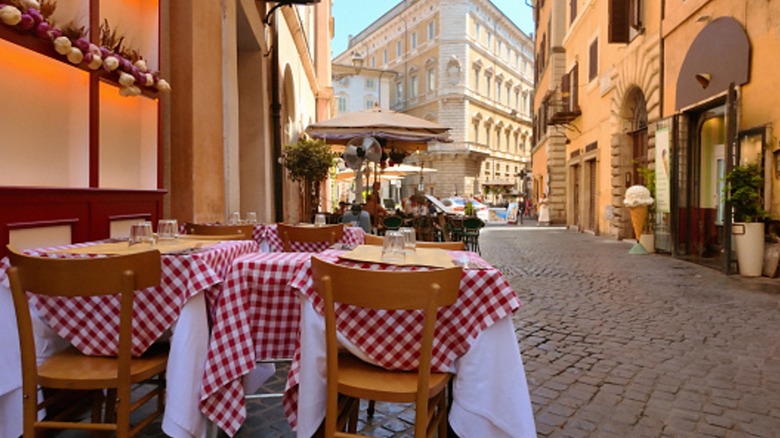
Italian restaurant menus have a special way of making a diner feel excited yet underprepared. You may know you're craving pasta, veal, or calamari, but the words looking back at you say things like primi, secondi, or frutti di mare. Some Italian restaurant language reflects authentic dining traditions, regional Italian foods, or time-honored culinary techniques. Other phrases signal modern Italian-American interpretations with trendy ingredients or tempting twists on classic preparations. None of this is meant to make your dinner feel like a pop quiz. The Italian dining experience is simply less rush, and more ritual.
Knowing a few key terms can help you understand the pacing, the pleasure, and why the pasta is not necessarily your main entree for the night. To assist with the translations, we spoke with chef Nicole Brisson of Brezza Italian restaurant inside Resorts World Las Vegas; chef Ben Dodaro of The Edison, Enzo's Hideaway, Maria & Enzo's Ristorante, and Pizza Ponte at Disney Springs; chef Costantino Ghinzani of Via Napoli at Epcot; chef Anthony Vitolo of Vitolo in Fort Lauderdale and Emilio's Ballato in New York City; and chef Salvatore Olivella of Chelsea's Forno D'Oro.
Their collective message is, of course, hospitable: Learn a little of the lingo, order what sounds good, and don't worry about getting every course or pronunciation exactly right. The best Italian meal invites you to linger over the experience with one more bite, one more sip, and one more round of conversation.
Ristorante, trattoria, and osteria
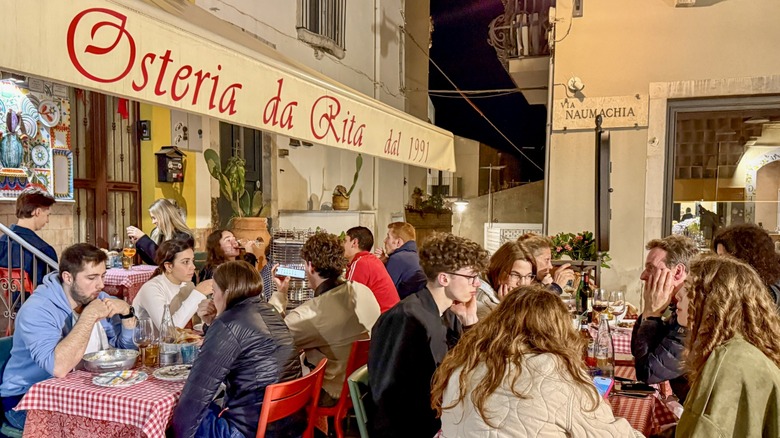
These are three Italian restaurant names with three very different vibes — or at least, that was the original idea. A ristorante generally suggests the most formal dining option with a broad menu, polished service, and a more structured, sit-down pace. At a trattoria, the mood typically leans less white tablecloth and more regional family favorites. An osteria is also more casual, but historically more focused on wine, hospitality, and a short menu of simple fare.
Today, the lines between these types of restaurants can get as blurry as the bottom of your third glass of Chianti. Chef Ben Dodaro explains "these terms are mostly interchangeable" in the United States. Chef Costantino Ghinzani agrees that it's easy to put an Italian word on a storefront, but the food, service, and atmosphere should back it up: "The name feels earned when the restaurant understands the spirit behind it," he says. "A trattoria should feel generous and personal. An osteria should have a genuine relationship with wine and local food."
Aperitivo
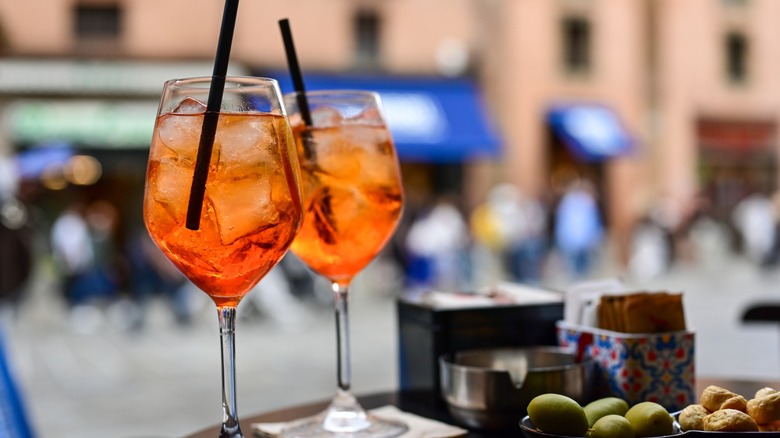
Think of aperitivo as a gracious little pause between the end of the workday and dinner. It can refer to an actual drink — maybe a spritz, vermouth, or a bittersweet Negroni (the perfect cocktail, according to Anthony Bourdain) — but also the surrounding ritual. Your beverage may arrive alongside olives, nuts, crostini, cured meats and cheese, or other stuzzichini. These tiny nibbles are far more than a garnish. According to chef Salvatore Olivella, aperitivo is "the Italian way of saying, 'The evening starts now'."
The word aperitivo is rooted in the Latin 'aperire' (meaning 'to open') and it's intended to awaken the appetite before dinner. This differs from the American 'Happy Hour' which often centers on bargain-priced Buffalo wings and enough fried food to qualify as a full meal.
"At Vitolo, we have a phrase," says chef Anthony Vitolo. "Aperitivo isn't just a drink — it's a slow seduction of the senses. The purpose is to eat or drink something and stay and linger for the next meal."
Antipasto, primo, secondo, and contorno
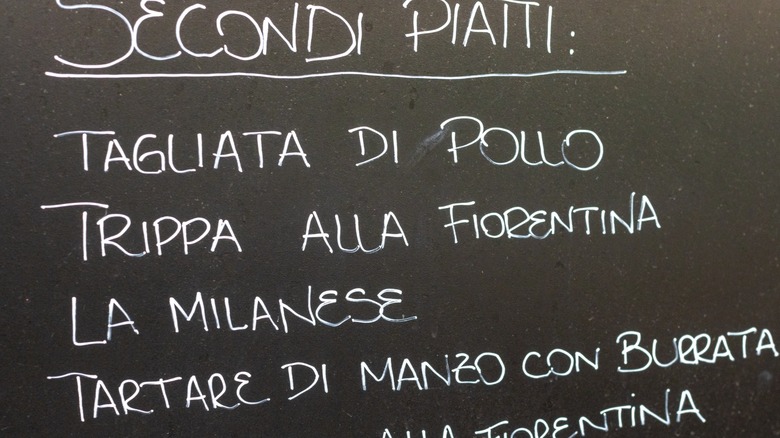
American restaurant dining tends to focus on starters, complete entrees, and maybe some spare room for dessert. Italian menus tend break the meal into a longer list of choose-your-own-adventure possibilities. Antipasto is the opening act, and it may include plates of cured meats, cheeses, marinated vegetables, fried bites, or seafood. Primo follows as the first proper course, usually a pasta, risotto, or soup. Secondo is generally a protein-centered main dish of meat or fish. And the contorno is your vegetable or potato side dish ordered separately to accompany it.
This Italian menu structure offers a lot of variety, but more importantly, it gives family and friends a chance to connect and share bites as the meal unfolds more slowly at the table. Chef Salvatore Olivella notes that "Italian meals have a rhythm." Constantino Ghinzani adds that while the structure gives the meal rhythm, "It is not meant to turn dinner into a marathon."
When navigating an Italian restaurant menu, relax and take your time. There's no need to order something from every category or feel pressure to order everything at once. According to Ghinzani, "Italians may share a course, skip one, or order according to the occasion or appetite."
Crudo
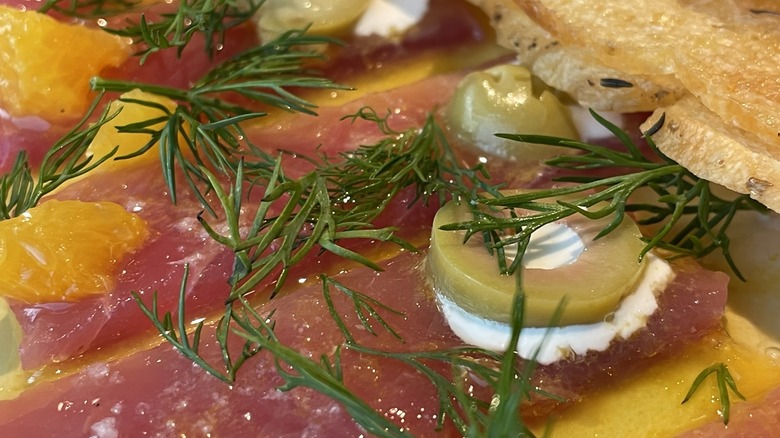
Crudo is the Italian word for "raw." In simple terms, crudo is raw fish or shellfish — think tuna, scallops, shrimp, or branzino — sliced and artfully arranged with care. This may sound similar to thinly sliced Japanese sashimi, but Nicole Brisson explains a main difference: Crudo is "very simply dressed with pure extra virgin olive oil, sea salt, and citrus to complement the flavors of the fish."
If you see crudo on the menu, it usually means your restaurant has access to impeccably fresh seafood that's worth showing off. At Brezza in Las Vegas, Brisson's raw bar features a Chef's Daily Selection Crudo as well as an Amberjack Crudo highlighted by aglio olio crunch and blood orange.
While technique and ingredients can make a crudo stand out, our chefs agree the goal is to always reveal the quality and character of the seafood, not cover it up. Ben Dodaro favors an Italian crudo using "the freshest fish, properly cut, [and] seasoned simply with high-quality extra virgin olive oil, lemon, chili, fresh soft herbs (parsley, chive), and coarse sea salt."
Fritto misto
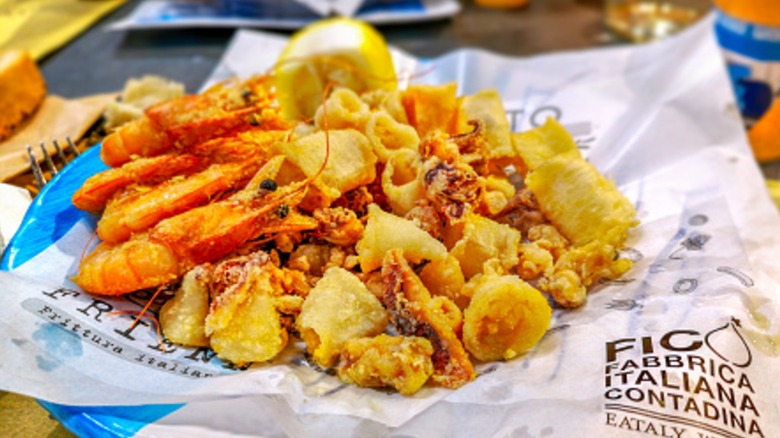
Fritto misto translates to "mixed fry," and ordering one for the table is always a good idea. The best known version, fritto misto di mare, arrives with a tangle of lightly breaded and seasoned calamari, shrimp, and small fish, plus lemon on the side. But the "mixed" part of this dish also leaves plenty of room for interpretation. Some regional variations include vegetables such as zucchini, eggplant, or squash blossoms. The land-based fritto misto alla Piemontese gets particularly festive, combining savory meats and vegetables with sweet bites of fried fruits and semolina.
While the components of fritto misto may change from place to place, the concept remains the same. "It should be crispy, golden, and light, never heavy or oily," notes Salvatore Olivella. "The secret is temperature and timing."
Anthony Vitolo agrees, saying he likes to use "high-quality extra virgin olive oil and beef tallow heated to an exact temperature, along with the right ratio of flour." Italian dining may be about taking it slow, but fritto misto is one delicious exception. That delicate crunch is best enjoyed fast and fresh from the fryer.
Burrata
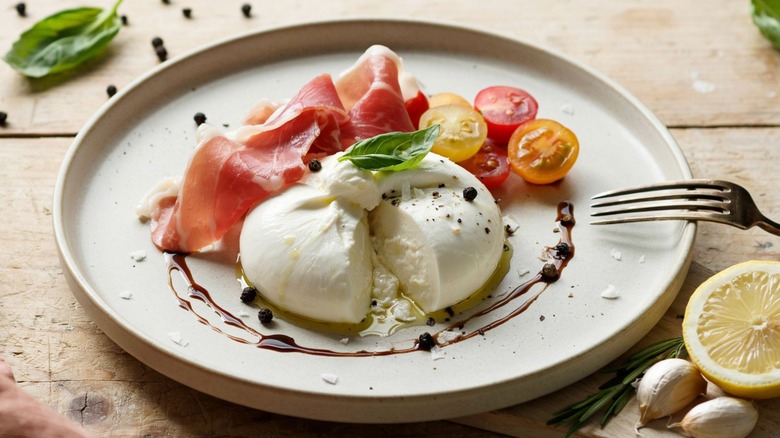
From the outside, burrata resembles your everyday ball of fresh mozzarella. But its name offers a hint to the surprise inside. Burrata comes from 'burro' – the Italian word for butter. Traditional burrata doesn't actually contain any butter, but it certainly deserves the comparison. The center of this cow's milk cheese holds soft, luscious shreds of stracciatella — stretched mozzarella curd mixed with cream.
First created in southern Italy's Apulia region in the 1920s, burrata has become a global menu sensation in the 2020s. These days the artisan cheese turns up on pizzas, pastas, salads, and panini at Italian restaurants — and plenty of places that are not Italian at all. The Takeout recently spotted a burrata salad at Costco, for example.
While it's currently trendy to put burrata on top of just about everything, our chefs agree it's best served simply, at room temperature, with seasonal ingredients. Ben Dodaro favors seasonal tomatoes in the summer and squash in the fall or winter, with extra virgin olive oil, coarse salt, and, of course, crusty bread. "Personally, I think burrata is perfect the way it is," says Anthony Vitolo. "Other than eating it on its own, I also love a fried burrata. You lay it out, stuff it with stracciatella, and fry it, but it has to be properly seasoned with the perfect amount of salt."
Frutti di mare
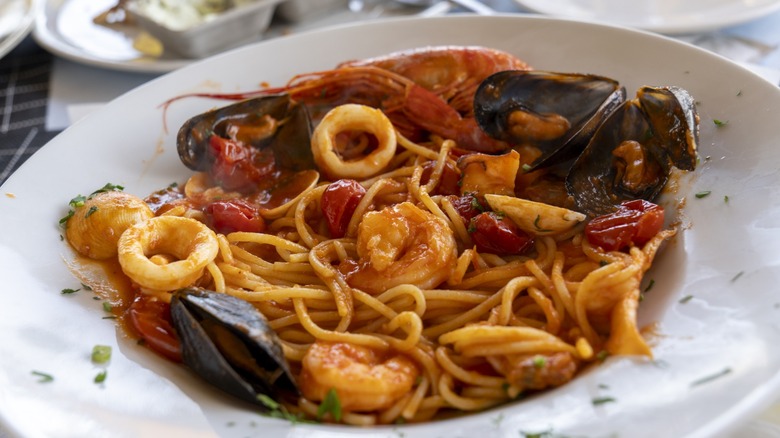
Frutti di mare literally translates to 'fruits of the sea': "It is a celebration of seafood," according to Salvatore Olivella. Depending on the restaurant, region, and what's freshest that day, that could mean a mix of mussels, clams, shrimp, calamari, scallops, octopus, or small pieces of fish. It's more of a promise than a tightly fixed recipe, and that's precisely why it can be such a good repeat order.
Pasta is the most familiar expression of frutti di mare on U.S. menus — often spaghetti tossed with shellfish in light tomato sauce or white wine and garlic broth. Chef Ben Dodaro prefers frutti di mare with spaghetti al nero (squid ink pasta). But it can also appear without pasta in risotto, seafood stews, grilled preparations, salads, and chilled antipasto.
"One of the best expressions is often the simplest: fresh shellfish opened gently with olive oil, garlic, white wine and parsley," says Constantino Ghinzani. Enjoy it with crusty bread to chase every last drop of the rich seafood brodo (broth).
Cacio e pepe
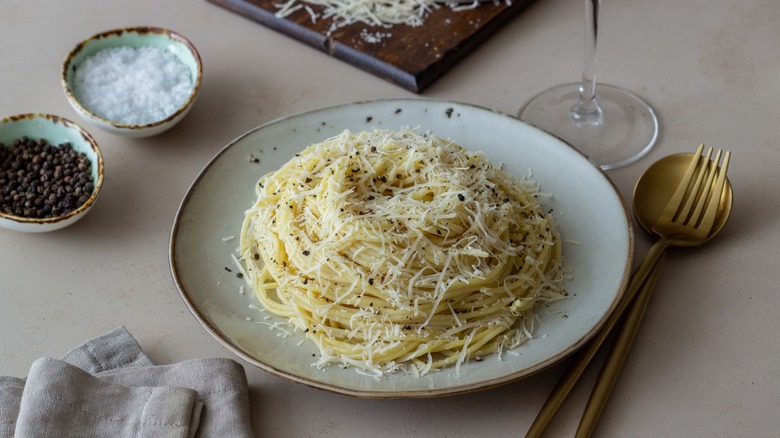
Cacio e pepe has come a long way from its humble beginnings in Rome. A common origin story traces the dish back to shepherds who needed filling but accessible provisions while roaming the countryside. Today that tradition lives on in a simple but luxuriously creamy pasta built around cacio (usually a hard, salty Pecorino Romano cheese), pepe (black peppercorns), and the starchy pasta water that brings it all together.
Of course, seemingly simple Italian dishes are often some of the most exacting to prepare. This now-trendy primo contains no cream and no butter, yet it expertly lands on the table with a smooth, glossy sauce that clings to every noodle. According to our chefs, it all comes down to technique.
Constanstino Ghinzani hones in on temperature control. After mixing the finely grated cheese with a small amount of starchy pasta water, he finishes cooking the pasta away from aggressive heat. "The pan should be warm enough to emulsify the cheese, water, and starch, but never so hot that the cheese separates," he explains. "If it becomes to too hot too quicky, its proteins tighten and create lumps." Anthony Vitolo says this creamy emulsifying process is called "mantecare" in Italian, adding that to master cacio e pepe "takes a lot of trial and error." Cacio e pepe may be a viral sensation, but on an Italian restaurant menu, this flavor profile is deeply rooted in tradition and precision.
Alla griglia
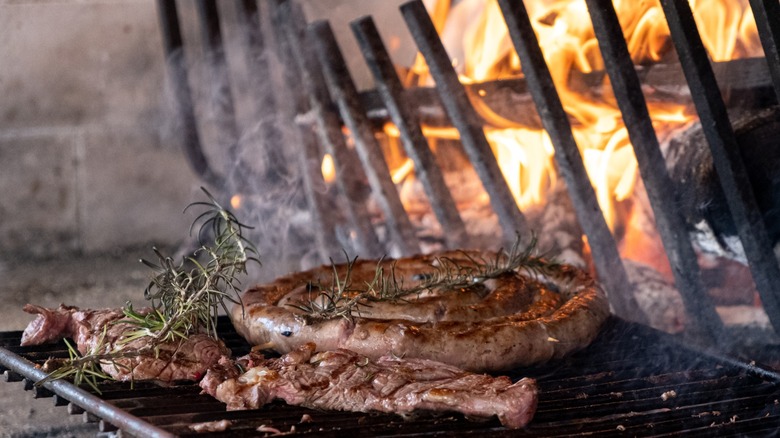
Alla griglia means "grilled," but on an Italian menu it suggests much more than propane or decorative grill marks. It's a method of direct cooking over strong heat, usually with charcoal or wood. The goal is to impart color, aroma, and a light char while preserving natural flavor. "The grill should enhance the ingredient rather than make everything taste burned or smoky," explains Constantino Ghinzani. "The technique [...] depends on controlling the heat and knowing when to move or remove the food."
While beef, pork, lamb, or chicken are obvious candidates for this style of cooking, alla griglia preparations may also extend to fresh seafood and even fruits and vegetables. On Italian restaurant menus you may find branzino (Mediterranean sea bass) alla griglia prepared simply with olive oil, lemon, salt, herbs, and just a few minutes of cooking over an open fire. Chef Ghinzani also favors vegetables alla griglia: "Radicchio, zucchini, peppers, and eggplant develop sweetness and bitterness that you cannot achieve in quite the same way in a pan."
Alla vodka
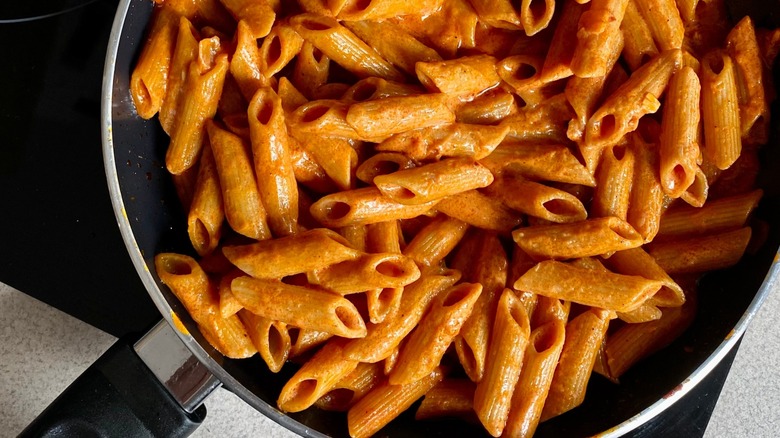
Vodka sauce has made a delicious return to mainstream restaurant menus, often appearing with a modern touch of chile heat. The rich, rosy tomato sauce — made with vodka and cream — is most famously associated with penne or rigatoni alla vodka. But one peek at social media will tell you vodka sauce is also being used to reimagine pizzas, chicken parm, meatballs, and even butter beans and chickpeas.
The appeal of anything alla vodka is not hard to understand. The sauce is tangy, silky, comforting, and pretty enough to make the simplest foods feel like a celebration. That being said, the vodka isn't added to make your dinner taste boozy. Incorporated properly, the spirit heightens and enhances the flavor compounds in the tomato while also balancing the richness of the cream.
"Most of the alcohol cooks away, leaving a sauce that tastes smoother and more aromatic," according to Constantino Ghinzani. However, Ben Dodaro adds that some chefs make vodka sauce without any vodka at all — just tomato and cream or butter. Both agree alla vodka is a primarily Italian-American restaurant creation, though it may be connected to similar dishes prepared in Rome and Bologna in the 1970s. While the origins of vodka sauce may be up for debate, its popularity leaves no room for doubt.
Ragù
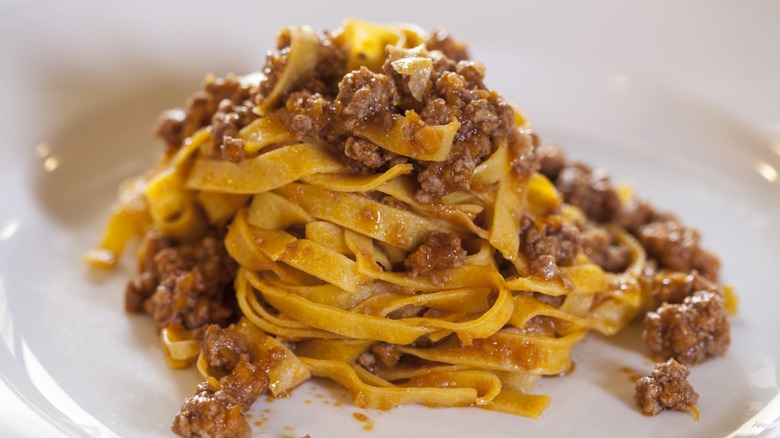
The word "ragù" may conjure up images of a quick, convenient, grocery-store pasta sauce that comes in a jar. In Italy, ragù means quite the opposite. It's a slow-cooked Sunday sauce built with plenty of patience, care, and regionally diverse points of view. Meat can be a key ingredient, but it's not the only possibility. "Ragù can refer to any slow-cooked sauce with finely chopped vegetables and typically wine, but not necessarily tomato- or meat-based," says Ben Dodaro. His favorite pasta on the Maria & Enzo's menu is paccheri al ragù di cavolfiore, a house-made pasta prepared with a light cauliflower ragù, Calabrian chili, lemon extra virgin olive oil, and Pecorino Romano.
The most famous and familiar version on restaurant menus is the classic Bolognese. This ragù usually starts with a soffritto of onion, carrot, and celery, then builds slowly with finely ground meat, tomato, and, finally, milk. The popularized version of Bolognese may be poured over spaghetti, but Constantino Ghinzani notes it's traditionally served with long, flat ribbons of tagliatelle pasta or used in lasagna.
Ghinzani also mentions the contrast between Bolognese and the southern Italian ragù alla Napoletana. The Neapolitan technique "uses larger pieces of meat that cook slowly in tomato sauce, sometimes for many hours," Ghinzani explains. "The sauce dresses the pasta, while the meat can be served separately as the secondo."
Alla Fiorentina
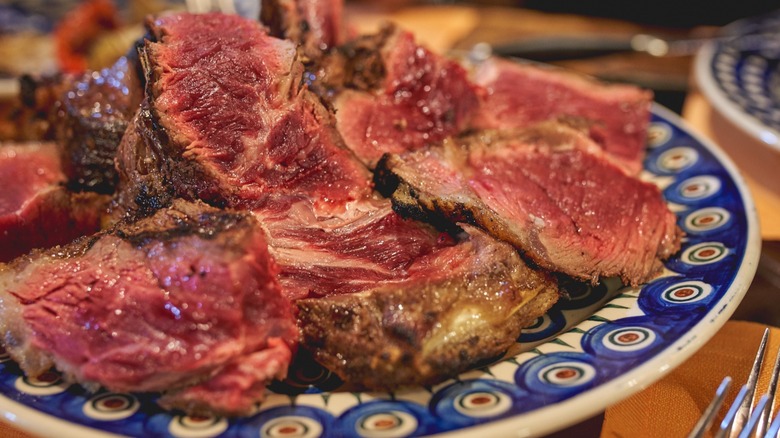
Bistecca alla Fiorentina is Tuscany's signature steak: a thick-cut T-bone or porterhouse featuring both the tenderloin and striploin, two very desirable cuts of beef for grilling. Traditionally, the dish is prepared with Chianina beef — an ancient Tuscan cattle breed that's remarkably lean — along with a minimalist formula of salt and fire. This creates a strong exterior crust and a warm, juicy, rather rare center.
Chef Nicole Brisson says in Italy, bistecca alla Fiorentina is "tempered for hours and cooked on the bone with a light seasoning of salt, maybe cracked black pepper, and extra virgin olive oil. The meat is then just 'kissed' by the fire for five to seven minutes on each side." Brisson serves reserved cuts of artisanal dry-aged beef at Brezza. For bistecca alla Fiorentina, she lets the meat rest before slicing and finishing with more Tuscan virgin olive oil and flake salt.
If you're a diner who prefers their meat cooked beyond medium rare, steak made in the Florentine style may not be the dish to order. Pushing this thick, lean cut past its rosy red center changes the special texture. For a more medium steak, look for a thin-cut tagliata di manzo, or go with Ben Dodaro's cozier recommendation: a slow-braised beef brasato.
Affogato
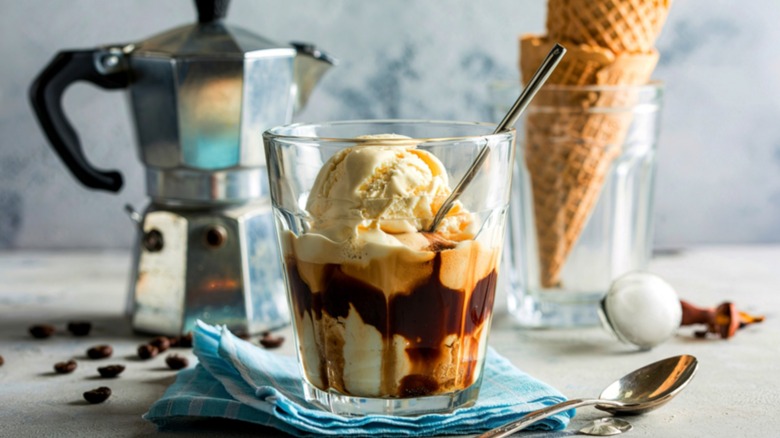
An affogato combines two essential Italian pleasures. The word means 'drowned' — and in this case, it's referring to gelato immersed in espresso. The result is a simple but divine expression of contrasts: cold collides with hot, sweet melds with bitter.
So is affogato considered a coffee or a dessert? Chef Constantino Ghinzani sees it as the best of both worlds: "a small dessert and an after-dinner ritual at the same time." His ideal version uses one scoop of high-quality vanilla or fior di latte gelato, plus one single shot of espresso. "Too much coffee turns it into a melted drink," he warns. Ben Dodaro, however, prefers a slightly more caffeine-forward formula. "A double shot of espresso and a single scoop of gelato create a perfect balance of temperature and flavor," he says.
Both experts agree an affogato should be enjoyed as soon as it arrives at your table. Freshly made, the gelato begins to soften around the edges while the center stays cold — the gradual change in texture is all part of the luscious experience. Here's how to make a simple version of Italian affogato at home.
Digestivo

A digestivo is an after-dinner drink meant to help guests wind down and perhaps delay the end of the night. Traditionally these liqueurs are believed to aid with digestion — especially after a rich Italian meal — but the social ritual is just as important. "A digestivo marks the natural close of the meal," explains Constantino Ghinzani. "It gives people a reason to remain at the table, continue the conversation, and slow down before leaving."
The most familiar menu option is amaro, a broad category of bittersweet, herb-forward liqueurs made with varying blends of roots, herbs, citrus, and spice. Then there's limoncello: a brighter, sweeter choice from southern Italy. Offering the fresh aroma of lemon peel, limoncello is best served ice cold. If you prefer a stronger, drier sip, grappa is the most warming and direct option.
Italian restaurants may also offer regional specialties, such as the anise-flavored sambuca, walnut-rich nocino, or a Sardinian mirto made with the dark berries and leaves of the myrtle plant. The particular bottle you choose matters less than the final moment it creates. "A digestivo is good for the mind and body," Ben Dodaro explains.