

7 Barbecue Restaurant Dishes To Leave To The Pros, And 4 To Make At Home
We may receive a commission on purchases made from links.
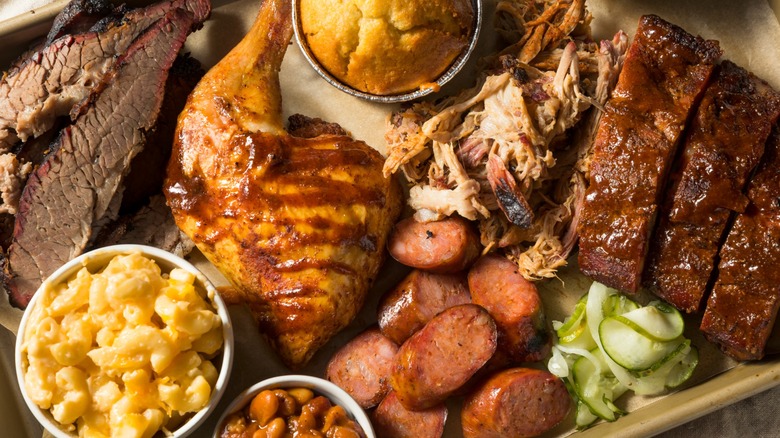
If you have a hankering for barbecue and you don't have a local eatery where you can snag some of your favorites, fast, you may be tempted to try your hand at rustling up some BBQ on your own, at home. After all, how hard can it be? You can grill, so surely you can conquer the art of barbecue ... right?
Well, not exactly. As anyone who's tried (and failed) to replicate barbecue restaurant dishes at home will tell you, there's a certain high level of skill necessary in achieving truly good barbecue. It's why so many famous BBQ pits are overseen by longtime masters of the trade, men and women who've fine-tuned their processes, expertly, over the decades.
As such, there are a few barbecue restaurant dishes that are best left to the pros — whether because they do require that level of hands-on knowledge, they're simply too time-intensive or costly to make at home, or they necessitate certain equipment that maybe you don't want to invest in. Several barbecue experts from around the country weighed in on what exactly these dishes are.
We spoke to Ben Krueger, owner of Huli Sue's BBQ and Grill in Asheville, North Carolina, Matt Abdoo, executive chef and co-founder of Pig Beach BBQ with locations in New York City, Boston, and Florida, Nick and Elliott Reese of Reese Bros Barbecue in San Antonio, Texas, and R.B. Quinn — the co-author of "Cheater BBQ: Barbecue Anytime, Anywhere, in Any Weather" and the new "Self-Rising: The Magic Rise Behind Biscuit and Cornbread Culture." And the good news? They actually told us that, while, yes, some dishes should be left to restaurants, there are still a handful of barbecue dishes that you can easily replicate with no problem whatsoever, right in your home kitchen. Here's what they had to say.
Leave to the pros: Brisket
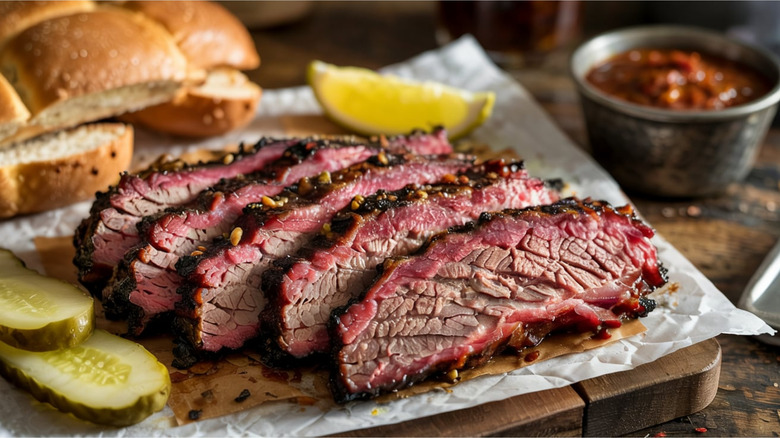
Multiple experts mentioned brisket when we asked about the barbecue classics that are difficult to get right for the average home cook. According to Ben Krueger, there are myriad reasons why taking on brisket at home is likely to end in frustration. First, he noted, the cost of the cut of beef has risen quite a lot over the last six years, meaning it might not be the best cut of meat to practice on, for barbecue newbies. Then, there are the large number of steps involved in making barbecue brisket, all of which are equally important, including trimming the brisket, choosing the right seasoning, maintaining your cooker for 12 to 14 hours, resting the cooked brisket, and then finally properly slicing it before serving.
"These things take practice and it takes actually cooking these expensive primal cuts, leading to a large investment of time and money," Krueger said. Matt Abdoo concurred, saying, "[Brisket] requires a significant time investment, precise temperature control, and a deep understanding of the cooking process to get right. It's easily one of the most challenging barbecue proteins to execute well."
Leave to the pros: Bacon
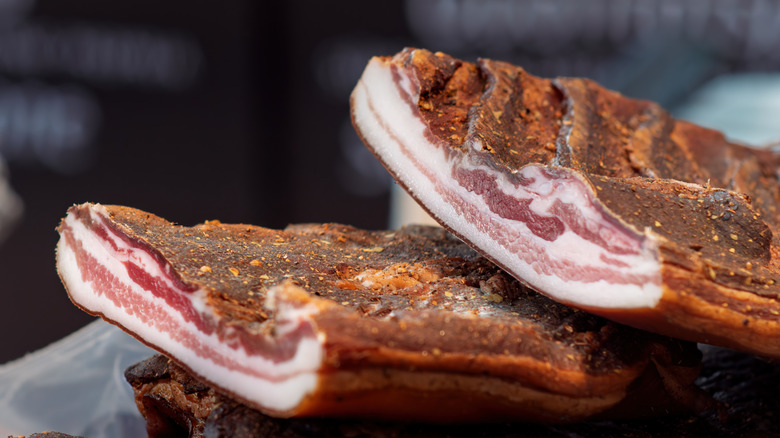
Bacon might not be the first cut of meat you think of when it comes to classic barbecue, but it's also one that's not entirely uncommon on barbecue restaurant menus — and since you've probably had plenty of experience cooking up a pack of bacon on the stovetop, in the oven, or even on the grill, you might think to yourself that going the old-school route and making your own bacon, barbecue restaurant-style, should be easy. Think again.
Ben Krueger explained, "It's a time-intensive process involving a brine to cure a pork belly or sometimes pork butt or loin depending on the style you want to make. ... Curing the meat can take a week or more and involves using curing salt to prevent bacteria from forming. Curing salt is a tricky ingredient to use and must be handled with care. Most bacon is cold-smoked and bacteria prevention during the cook is very important." He likewise added that if you choose to use pork belly for the bacon, this endeavor can be pretty expensive. Also, you'll need a smoker that even has the capability to cold smoke, as well as plenty of refrigerator space for the curing process.
Leave to the pros: Sausage
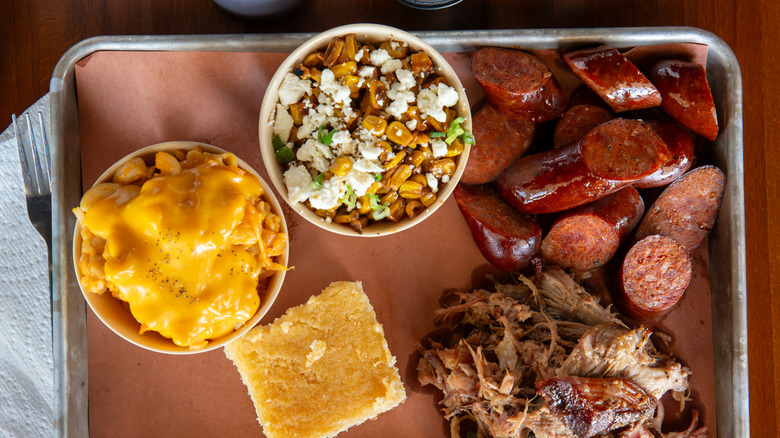
On a similar note, Ben Krueger told us that sausage is another popular barbecue pick that's not exactly beginner friendly. Making your own from scratch is not only difficult, but could also pose a potential risk to your health. "Sausage isn't something a lot of new pitmasters I've found aspire to make right away, and for good reason," he said. "There's an investment in equipment. A grinder and sausage stuffer is needed."
He brought up the need for curing salt again, to prevent bacteria forming, just as is needed for making bacon, reiterating that it's an ingredient that requires a degree of care. "The amount used is exact and if attention to that is not observed, [it] can result in a product that not only tastes off but can make you sick as well," said Krueger.
Nick and Elliott Reese also mentioned sausage as a troublesome undertaking for the home cook, noting that sausage production is one of the most tedious and time-intensive processes that their restaurant undertakes each week — and they're the experts! "The process from start to finish takes three days and requires heavy and powerful commercial equipment," they said. "Meat grinders are expensive and sausage stuffers are not something the home cook has access to. Leave this one to the pros."
Leave to the pros: Smoked items
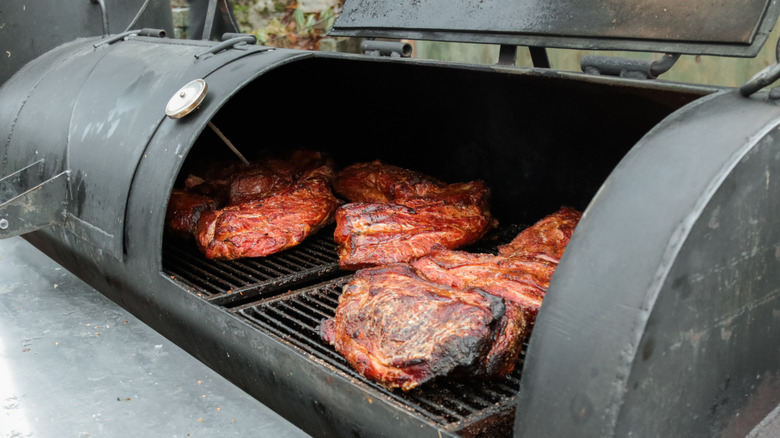
Whatever the end dish you're trying to recreate, those new to making barbecue at home should probably stay clear of smoked items. While R.B. Quinn admits that smoking meat can be fun if you have the time, equipment, and a backyard, but many people might not want to, or simply can't, put in the necessary amount of work.
That said, he advised, even if you're relying on the experts for your smoked meats, you can still put your own stamp on things once you get those items home. "Take ribs for example," he said. "Get your ribs un-sauced. ... At home, slice between the bones and cut up the rack into individual ribs. Dunk the ribs in a pot of warm sauce. ... With tongs, shake off the excess sauce and place the ribs on a hot grill (or under the broiler) to caramelize the sugars and create a spectacular crusty texture. Five or so minutes is enough; just don't burn the sugars and make them bitter. This little trick is a good first step for new barbecue cooks who are relying on the pros, yet making the final product their own."
Leave to the pros: Collard greens
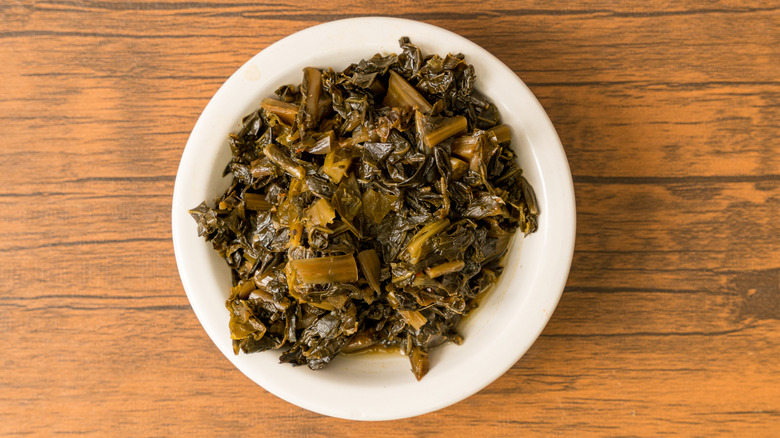
It's not just the meats that you might not want to tackle on your own. Just like smoking a brisket can take hours upon hours of your time, so can some of the most popular barbecue restaurant side dishes. Take collard greens, for example, which Matt Abdoo told us can take hours to properly prepare, saying that "for most people, it's more practical ... to leave those to a restaurant as well."
For classic, Southern-style collard greens, you're going to need at least two hours, allowing the greens to simmer on the stovetop. You're also going to need to get your hands on a ham hock, which will add flavor as the greens cook. There are a few ways to speed up the cooking process — such as cutting the greens down into smaller strips or even utilizing a pressure cooker — but the low and slow simmering is still preferred by traditionalists.
Then, if you've never cooked with collard greens before, you may find the end results bitter. To take the bitterness out of collard greens, you can choose to either blanche them in salted water with lemon slices, before storing them in the freezer for later use, or, if you want to simmer them on the stove for a few hours, you can balance out that bitterness by adding in some acidity in the form of ingredients like red wine vinegar or apple cider vinegar.
Leave to the pros: Bread pudding
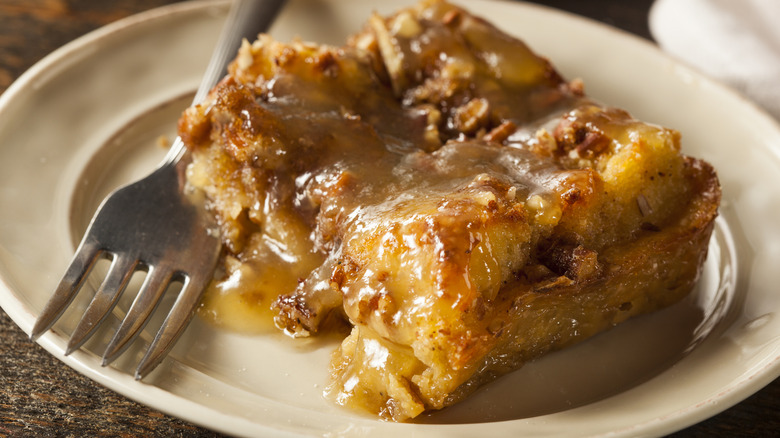
It's important here to make a distinction between your typical bread pudding and the bread pudding you might be ordering at your area barbecue joint. For instance, at Reese Bros Barbecue, Nick and Elliott Reese take their bread pudding to an entirely new level, meaning it's not going to be something you can easily mimic on your own. They explained: "Bread pudding is another recipe that you might want to leave to the pros. This dessert is baked off before being deep fried to order. The bourbon caramel served with it requires precision and high heat to get just right. Smoked sea salt, the last element of this dish, requires an offset smoker to infuse the oak flavor into [it]."
Of course, not every barbecue master is going to create a bread pudding that's quite so spectacular, but you'll still see many putting their own special touches on this classic dessert, whether that's smoking their bread pudding, grilling it, or incorporating unique and unexpected ingredients like beer and hot dog buns. As such, maybe stick with your tried-and-true bread pudding recipe, and leave the upgrades to the experts.
Leave to the pros: Baked beans
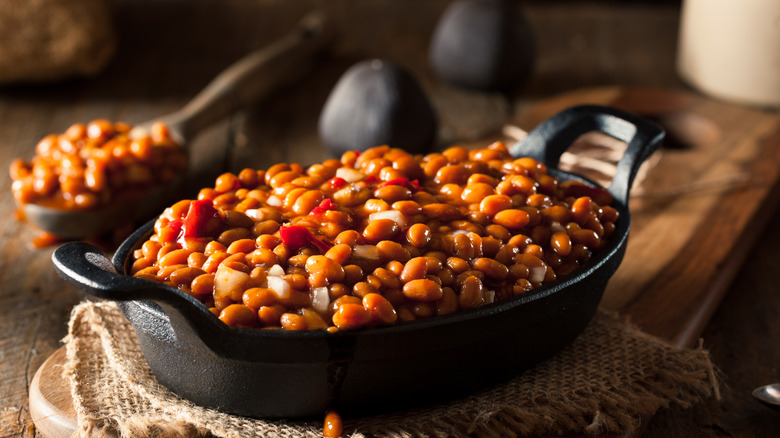
Alongside collard greens, Matt Abdoo also mentioned baked beans as a popular barbecue side dish that can require hours of your time. In fact, making baked beans from scratch can take over a day.
First, you have to let the dried beans soak overnight. Soaking the beans rehydrates them and ultimately shortens the cooking time, while also ensuring a better texture and easier digestibility (though some are forgoing this traditional tactic in the name of timesaving, regardless of potential benefits). After the beans are soaked, some recipes will then tell you to allow the beans to simmer on the stovetop for about two hours, and then to combine them with your baked bean sauce and ingredients like bacon or onions, before baking the mixture for an additional two to three hours. If you decide to take a more hands-off, no-stove approach, as is the case with this recipe for husky rural baked beans, which utilizes a slow cooker, the process takes even longer, with up to 10 hours in the slow cooker.
Obviously, this is a big time commitment. As such, if you're dining at home, you might just want to stick with that can of baked beans in the pantry. Don't worry — there are plenty of ways to upgrade canned baked beans, including adding additional spices and seasonings, incorporating ingredients like caramelized onions or chorizo, or even giving them a shot of whiskey.
Make at home: Pulled pork
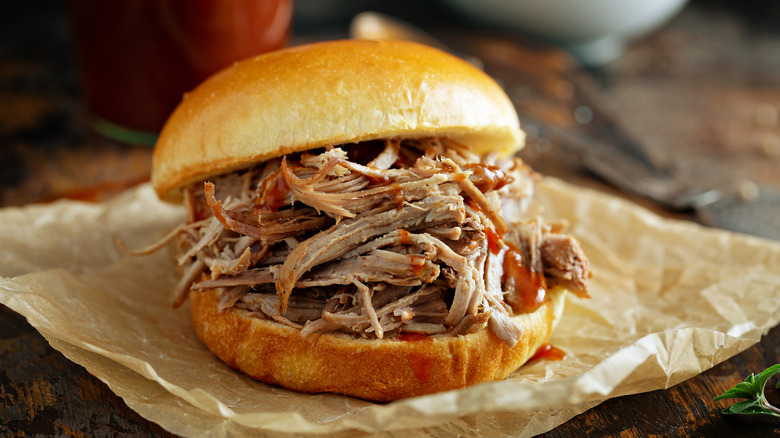
Great news — not all barbecued meats are going to be difficult for the average home cook. If you've never made barbecue at home before, the easiest place to start is going to be with pulled pork. As Matt Abdoo advised, "If you're cooking at home, quicker proteins like chicken, turkey, ribs, and even pulled pork are great options. Pulled pork, in particular, is very forgiving and hard to mess up."
You can find an abundance of barbecue pulled pork recipes online (such as Joanna Gaines' barbecue pulled pork recipe, which contains Dr Pepper), and many of them don't even require any sort of special equipment. Just make sure you're following some of the top tips for crafting the best pulled pork, including choosing the right cut (pork butt with strong marbling and fat content), cooking the pork to the perfect internal temperature, and then letting it rest before shredding.
Make sure you hold onto those leftovers, too! The perfect way to repurpose leftover barbecue pulled pork is definitely by mixing it into some mac and cheese, adding it to a grilled cheese sandwich, or using it as a pizza topping. In order to reheat the leftover pulled pork without drying it out, store your leftovers in a vacuum sealed bag and then, to reheat, pop the bag into boiling water for five minutes per serving.
Make at home: Barbecue sauce
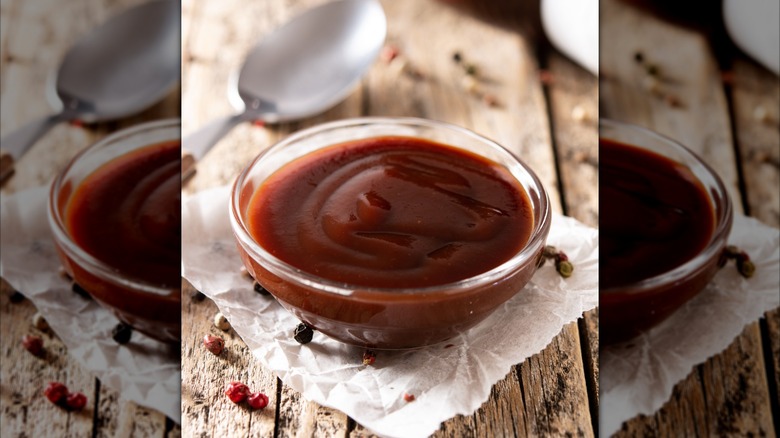
Whatever your favorite type of barbecue sauce — sweet, savory, spicy, Kansas City, Carolina, Alabama white — if the actual sauce is one of your favorite parts of visiting a barbecue joint, you'll be glad to know that this condiment is one that you can easily make at home, with no big time or monetary investments, and little risk. After you do, you may just find that you never rely on bottled barbecue sauce again.
If you're unsure where to start, R.B. Quinn offered a quick formula to get you going. "It's really easy to mix up a good, balanced sauce at home," he said. "Start with a grated onion sautéed in oil in a saucepan and then add the magic even ratio of three pantry ingredients — ketchup, brown sugar, and vinegar. Add a little Worcestershire sauce, some salt, and black pepper. Try it and adjust the three main ingredients to suit you."
Simple enough, right? Don't have any brown sugar or vinegar on hand? Some home cooks are partial to turning ketchup into a barbecue sauce with just two extra ingredients: maple syrup and bourbon. Just avoid using white sugar in lieu of brown sugar. It's a sweet barbecue sauce mistake that can ruin your flavor, due to white sugar's lack of depth and complexity.
Make at home: Coleslaw
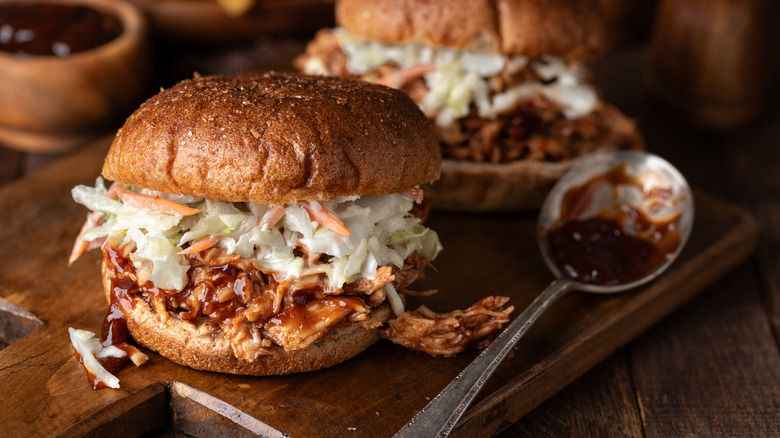
Coleslaw is another classic barbecue restaurant side dish (and sandwich topping) that's easy enough to put together at home. However, R.B. Quinn recommended that you stick to a particular flavor profile, saying, "Shred your own slaw that, for pork ribs or shoulder, leans toward tangy and sweet to cut through the fat."
So how do you achieve those tangy or sweet notes? You have a lot of options. For example, one tangy sauce that makes a perfect coleslaw dressing? Reach for the tzatziki. Not only does it bring a nice tanginess that's a little more subdued than what you might get from your favorite vinegar variety, but it also provides creaminess. Another tart ingredient that your coleslaw may be missing is pickles. All you have to do is chop the pickles and combine them with your other coleslaw ingredients. In contrast, if you want to lean sweet rather than tangy, you should opt for a mayonnaise-based coleslaw recipe, as well as one that incorporates white sugar.
Make at home: Potato salad
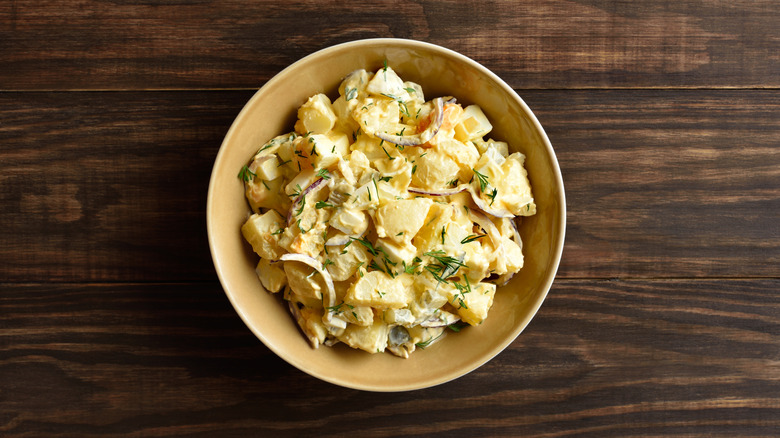
Finally, another side dish worth making at home (and serving alongside whatever smoked, barbecued meats you picked up from your favorite local spot) is the requisite potato salad. R.B. Quinn advised, "Figure out your family's favorite style of potato salad — is it lots of mayo, or mustardy, with sweet or dill pickles? Play with the variations and match it to the meat."
For example, if you're chowing down on those fatty pork ribs, you might choose an acidic potato salad, like one that incorporates lots of dill pickles and maybe a splash of vinegar or mustard. If you're eating barbecued chicken, though, you might go with a potato salad that's on the lighter side (so maybe not super-reliant on a ton of mayonnaise). For spicy barbecue or sausages, something cool and creamy does the trick. There are truly all sorts of potato salad recipes that you could choose from, and you can go as low-key and simple or as complex and ingredient-rich as you'd like. Once you've finally come upon a recipe that you love, you'll never buy the potato salad sitting in the grocery store deli again.