

10 Ways Grocery Stores Keep Baked Goods So Cheap
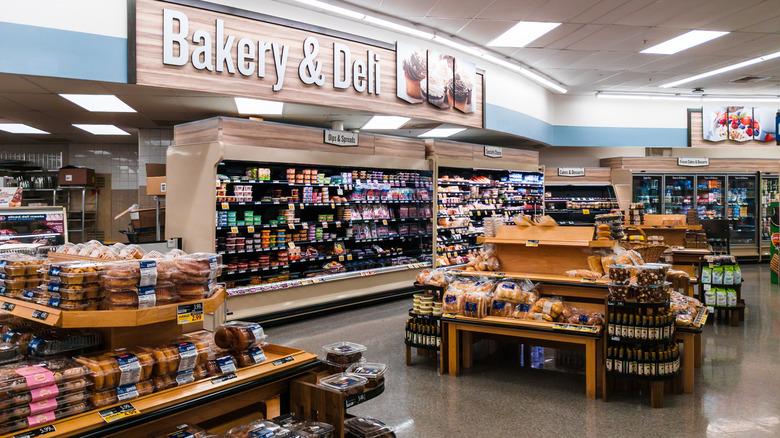
In a world where things feel like they get more expensive every day, it can be surprising to see a loaf of freshly baked bread selling for less than a fancy coffee. Similarly, those who know the time, effort, and cost of laminating dough are probably surprised when they see freshly baked croissants in the grocery bakery case for less than $2 each. Sure a batch of homemade croissants made with good butter, elbow grease, and hours of time would likely come out to a similar price when finished, but when you calculate in equipment, labor cost, and the rest of the overhead involved in running a grocery store, it is almost a marvel they are able to maintain affordable prices while turning a profit.
So, how do they do it? The answer isn't as simple as cutting corners on quality or using mysterious ingredients, though those are part of the secret. Grocery store bakeries have all but perfected strategies to maximize their efficiency, minimize waste, analyze customer patterns, and leverage the scale of their bakery section against the rest of their operation to their own advantage. Coming to understand these strategies can help reveal how grocery stores in your local area manage prices, but also how the entire retail food system uses the same strategies to keep drawing in a crowd.
1. Baked goods as loss leaders
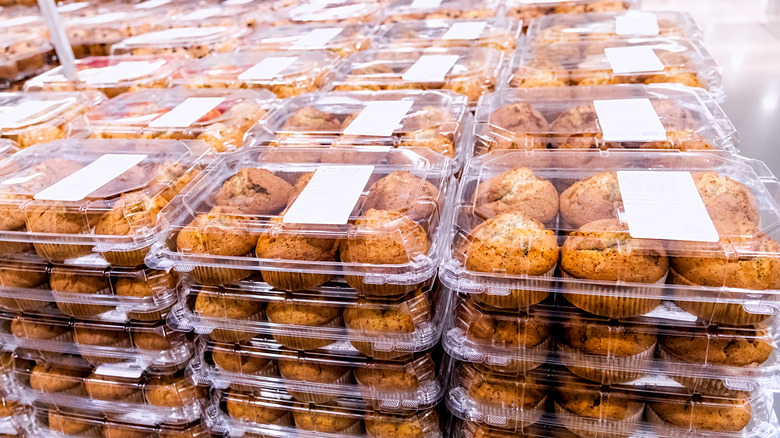
Over time, grocery stores have come to realize that when it comes to drawing in customers, you sometimes have to take a loss. Selling a product at a deliberate loss or minimal profit as a method of attracting customers is a time-tested way of increasing overall sales, and grocery stores are known for using bread and bakery items among their top choices for this method.
Simply put, low prices drive foot traffic. Knowing that, grocery stores can strategically position products with low costs in ways that pull people toward items selling for higher margins. Increasing the overall transaction value of your shopping trip can ensure selling that loaf of bread at a small loss still makes for profit. After all, who goes to the store and ends up leaving with just a loaf of bread?
Of course, bread isn't the only loss leader that you'll recognize grocery stores using. Rotisserie chickens are a common loss leader. While a fully-cooked bird makes for a perfect main for an easy dinner, do you really want to have to make the sides from scratch? That's where those easy premade and pre-portioned sides come into play. While that chicken may be selling at a slight loss, the store makes money on the high markup of the mashed potatoes, creamed spinach, or other prepared side that you pick up to go with it.
2. Using a centralized baking facility
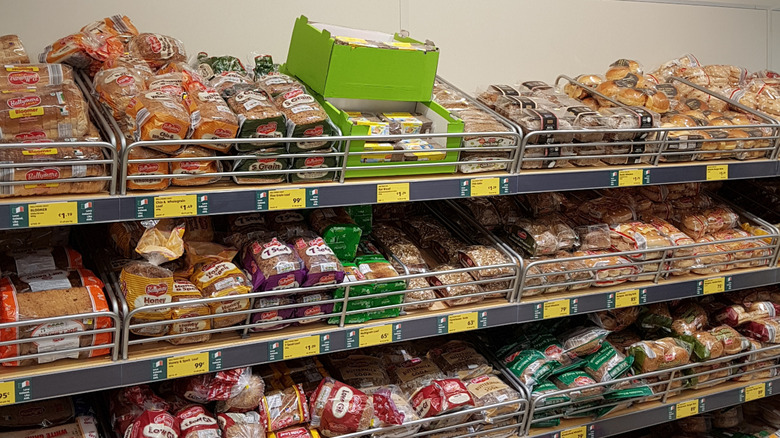
While it can be hard to believe, not every baked good you see in that bakery case was actually baked in the store. In fact, despite the store branding and plastic case, many of those delicious doughy treats may have been shipped in that morning or the night before. Using a centralized bakery can fundamentally shift the economic viability of an in-store bakery. By producing hundreds or thousands of loaves of bread, muffins, or pastries in a single day and then distributing them to a local region, the scale of bakery operations can facilitate cost efficiency in ways that wouldn't be possible when baking daily in individual stores.
Methods like this are one way grocery stores, especially discount stores like Aldi, keep their bread prices low while still maintaining their own brand of baked goods. Centralized facilities also help negotiate bulk prices for ingredients, allow for standardization of recipes, more efficient labor scheduling, and lower investment in specialty equipment.
When a single facility can bake for one hundred stores, instead of one store baking for itself, the per-unit cost of each individual loaf of bread, croissant, or cake drops dramatically. These savings can be passed on to the consumer, or folded into a loss leading strategy more directly. While individual stores may do some baking, particularly for specialty items or simply to create the mouth-watering aroma of fresh baked bread when you walk in, most items are baked off-site.
3. Bulk bargaining
Buying ingredients in bulk is a popular strategy for saving money. However, the sheer volume of product a grocery store can purchase grants access to prices lower than even the most thrifty home baker could achieve. A home baker is going to be paying close attention to the cost of their ingredients, and the same is true for the grocery store, even if they're using a centralized process. However, unlike home bakers, the store bakery doesn't have to pay the same markup on products as the average consumer. Whatever you're paying for a pound of butter at the store, the store likely pays only half that cost if not less.
As much as we'd love to buy everything in bulk, the simple truth is that the average household can't go through products fast enough to justify the same discounted pricing grocery store bakeries can get. No matter how much you love baking, going through a 50-pound bag of flour before it goes bad can be a difficult task in a small kitchen. This is why grocery giants like Costco can afford to sell baked goods for seemingly impossible prices compared to even well established local bakeries; they just sell that much more in volume. While you can make an individual loaf of bread at an equivalent cost to the one at the store bakery, the savings only happen if you use up every bit of what you purchased.
4. Adding some chemical help

You may look at the ingredient list on store-bought baked goods and be surprised to see things that most home bakers wouldn't even think to add to their bread. Dough conditioners, emulsifiers like mono- and diglycerides, and other various additions, may seem a bit sketchy to someone who is used to making bread with just flour, salt, yeast, and water. These additives aren't top secret, they're actually tools store bakeries use to reduce production costs while improving the consistency and shelf life of their goods.
These products each have their own function, and together they help to make mass bakery production more economical for both the bakery and consumer. Dough conditioners, which allow bakers to use lower-quality flour and less water while speeding up production, are commonly seen in large-scale bakery operations. In commercial bakeries, they're a necessity when it comes to making mass production and loss leader strategies viable.
Choices such as using preservatives to extend shelf life or shortening instead of butter can reduce costs drastically but have their downsides. For example, using shortening can leave a product more tender and lighter, but it often leads to that waxy mouth feel some grocery baked goods are known for due to its higher melting point. While quality and taste may take a hit, the grocery store's bottom line definitely doesn't. However, despite their widespread use here in America, you won't find European bakeries using such shortcuts.
5. Trading quality for shelf life
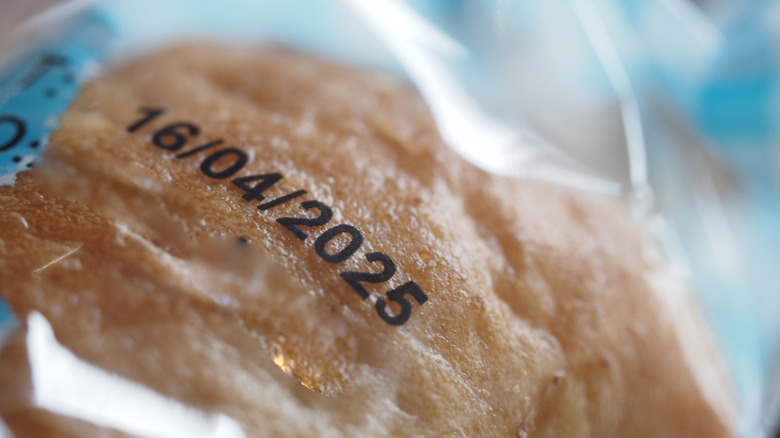
Saving money in production often comes from sacrificing freshness for stability. When products stay good for longer they have a higher chance of selling, which leads to less waste and better profits. Many grocery store baked goods use preservatives to stop mold growth, slow fat oxidization, or slow the rate goods go stale.
A loaf of bread that stays fresh for 10 days is generally more enticing and likely to sell than one that lasts for three. Combined with effective packaging, it can continue looking appetizing and fresh for days without worrying about unwelcome guests setting up shop and making the product unsellable. Likewise, extended shelf life means less markdowns for clearance products as they approach their best-by dates.
Some stores choose to forgo this step, like Trader Joe's, taking the risk and reducing shelf life in order to deliver a superior product. But while the bread may have a better flavor and texture, it also comes with increased waste and cost. Whether preservatives are used or not, the goal is to promote and display fresh bakery goods, and consumer expectations don't always align with reality. Making things look fresh can be just as effective as actually making these goods daily when it comes to enticing consumers.
6. The fresh-baked illusion
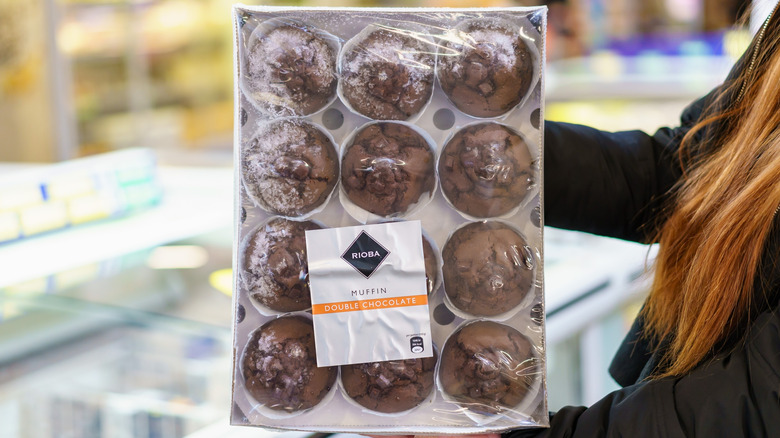
When it comes to effective retail strategies, there's one that appears across bakery cases everywhere you look. Recognizable by the words "fresh" and "daily," stores often rely on technicality to pull off this particular claim. While claims that bread, muffins, or other baked goods are baked fresh daily seem hard to manipulate, consumers aren't always aware of exactly what that means, and often assume exactly what stores want without realizing they are being manipulated by clever advertising.
Preservatives aren't the only way to extend the shelf life of baked goods. By using a par-baking process, in-store bakeries can receive frozen loaves, muffins, or pastries from a centralized baking facility and simply complete the process with a dip in the oven to finish off the last few minutes in-store. The result is a bakery that smells like freshly-baked products, despite the fact that none of the ingredients were mixed, kneaded, portioned, or prepared in the store itself. Surprisingly, or perhaps not when you know how much money it saves, this model of service was picked up by Panera Bread, despite backlash.
Par-baking eliminates the need for trained bakers working overnight, while also reducing production costs thanks to the efficiency of centralized facilities. When you add in the fact that shoppers still get to enjoy the delightful sensory experience of smelling fresh baked goods, it's not much of a wonder how this particular practice caught on.
7. Pricing by demographic instead of cost
While many grocery stores use baked goods as a loss leader, not all of them price their baked goods in the same way, despite the same shortcuts and strategies being used to reduce production costs. Different companies have different approaches when it comes to pricing baked goods based on market position. Stores that find themselves appealing to a budget-conscious audience, like Aldi or Walmart, keep their bakery prices exceptionally low because that aligns with their brand and promises of affordability. On the other hand, premium stores can afford to price their bakery items higher, sometimes even avoiding the loss leader strategy altogether by treating them as a luxury offering.
While all large-scale grocery chains have similar options when it comes to reducing costs, higher-end markets can choose to price their bakery goods just beneath the name brand, or in some cases above it, in order to increase revenue from customers. As with real estate, sometimes the deciding factor is location. Where in the store that product is located can often matter more when it comes to pricing than the cost of its production, as can the location of the store and the general income of the area.
This principle can also be seen when it comes to store brands of non-bakery products as well. Despite many store-brand items being produced by famous companies with high levels of brand recognition, once the packaging is replaced with a store-brand logo, the exact same product suddenly becomes less expensive.
8. Shrinking portions

Sometimes the simplest way stores reduce the cost of producing baked goods has nothing to do with offering a lower price, but rather keeping the price steady while increasing the profit margin. The easiest way to do this is through a strategy commonly called shrinkflation. By selling products in smaller portion options or reducing the overall weight of an existing item while maintaining the original price, stores can basically frame less product as more value.
In some cases it works to the advantage of both consumer and store. After all, in many cases smaller portions allow those trying to limit their intake to buy a treat without having to worry about extras going to waste, or to their stomach. However, when a muffin suddenly weighs less than it did last week but the price is the same, the benefit to the consumer disappears. Smaller portions are one thing, but this type of shrinkflation is usually a simple means of increasing margins. Even when the price does go down it's rarely by an equivalent amount. The math is pretty simple: Selling less for the same amount leads to more profit. When combined with other cost-cutting strategies, businesses can start saving a lot of money while increasing their profits.
9. Closing the production loop
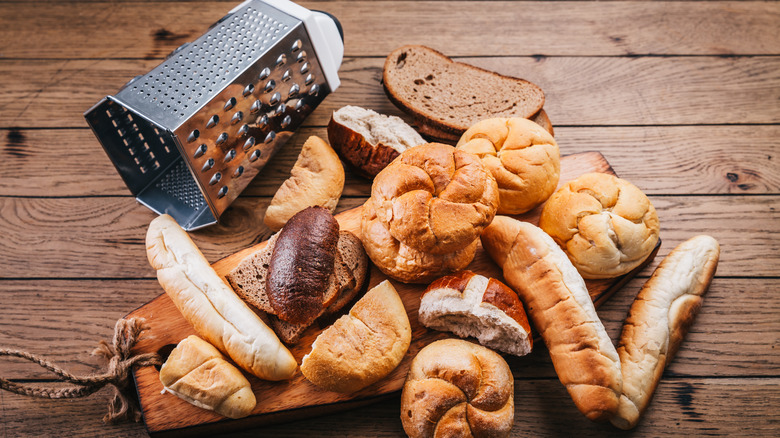
Among the ways grocery bakeries find to cut costs and operate efficiently, controlling waste is at the top of the to-do list. When it comes to increasing profit, anything that can be done to make the product work for the company instead of winding up in the trash helps. With something simple like dealing with stale bread, a commercial bakery can reduce waste and create more marketable products by repurposing unsold baked goods.
Even imperfect items that don't make it onto the shelves can be made into something new. If done correctly, a company can transform accidental waste into income by repurposing a mistake into something new.. That wonky loaf of bread no one wanted to see on the shelf can suddenly become a delicious portion of bread pudding, bread crumbs for the prepared foods section, or maybe house made croutons to sell alongside the deli salads.
By finding ways to put failures, flukes, and follies back into the production cycle, stores can drastically lower overhead and increase profits. This tip is just as useful for home bakers, especially if they take the time to learn more about expiration dates, who decides them, and how to interpret them. Finally, some stores find ways to partner with food banks or charities to close their production loops through donation. This allows the food to go to those in need while the store gets a tax write off.
10. Taking control of the supply chain
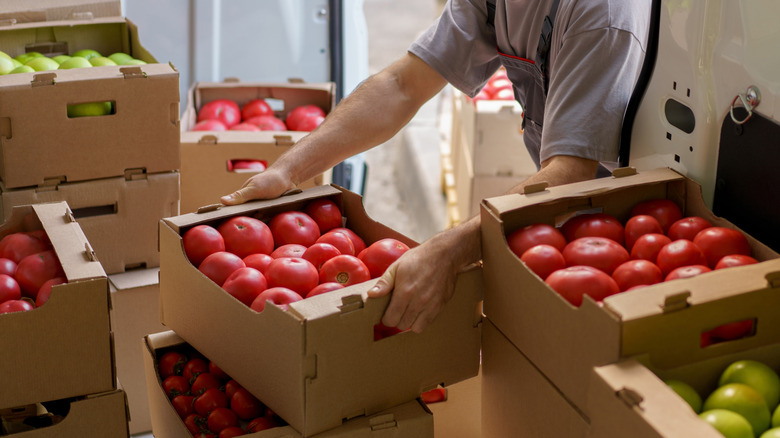
Perhaps one of the most powerful methods that grocery stores use to keep their bakery products at the lowest cost possible is vertical integration. Put simply, by owning multiple steps within the supply, chain stores can substantially lower their own production costs.
Steps from ingredient sourcing and production to retail sale all become cheaper when under the same ownership. Normally, each business adds a markup to the products or services they provide and pay for. However, when a company owns several steps of these processes, middleman markups simply disappear instead of becoming a growing chain of additional costs. For example, when a retailer owns the farm that grows the grain that is made into the flour used to bake its bread, it only has to pay for labor and equipment.
Vertical integration, while undeniably valuable as a business practice, has led to companies leveraging these strategies at every opportunity. Large chains like Walmart and Costco have developed the scale necessary to facilitate their own baking facilities, distribution networks, marketing materials, and retail locations. This synergy is one of the ways a few companies have come to dominate the market, by offering products at lower costs than smaller chains can keep up with.