

10 Steak Cuts That You Should Avoid Ordering Rare
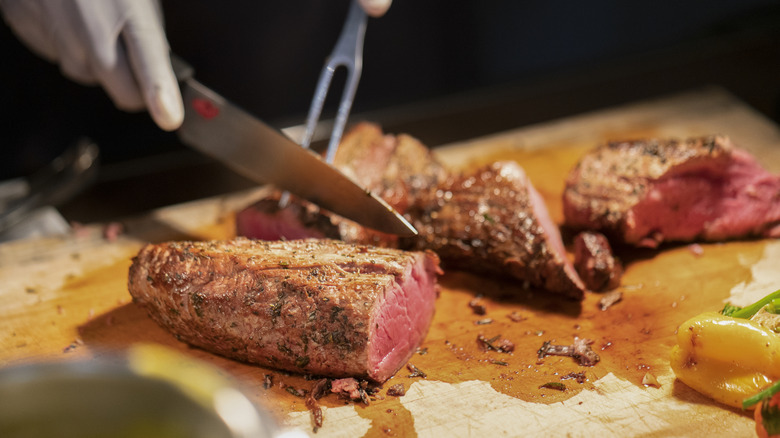
Ordering meat rare sometimes gives off an air of, perhaps not sophistication, but discernment. To some it may say, "I want to enjoy steak in its purest form, and I have both the digestive system and constitution to do so." We're not saying you're The Liver King or anything, if this is indeed how you go about your meat consumption — unless you actually are The Liver King, reading this while enjoying an entire elk carcass or whatever.
The truth is, not all cuts of steak are, well, cut out for being eaten rare — rare being an internal temperature between 115 and 130 degrees Fahrenheit, ranging from extra rare to just below medium rare. Ideal doneness varies based on the makeup of the animal. Generally speaking, cuts imbued with a lot of internal marbling (the strains of fat you see lined throughout a steak), fare much better as a meal when cooked to higher temperatures, giving that fat time to render and seep its flavor magic into the meat. After all, the bottom line is enjoying the steak, not proving your worth as a primal human specimen. Right?
Which specific cuts, then, should one avoid ordering rare? We talked to a veritable militia of meat experts to get answers: Jorge Thomas, founder of Swaledale Brothers; chef Antonio Iocchi, SVP of F & B Innovation at Fogo de Chão; Katie Flannery, COO of Flannery Beef; chef Greg Mueller, Director of Culinary Innovation at recteq; Troy Guard, Owner and Executive Chef of TAG Restaurant Group; and William Eck III, the In-House Meat Expert at Verde Farms.
Skirt
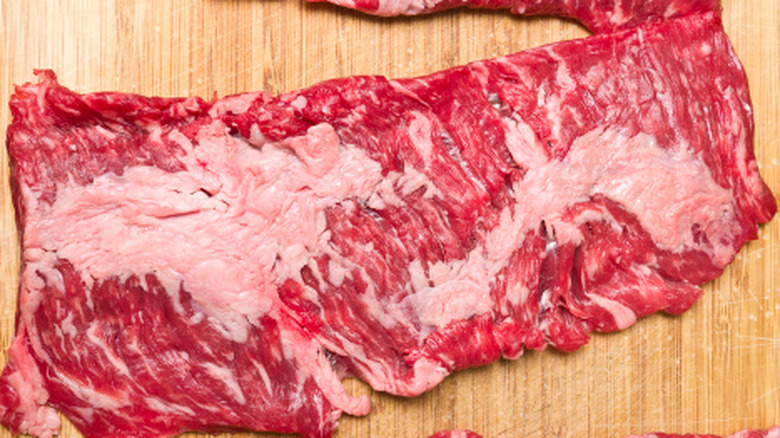
Long and thin, skirt steak is a cut of meat that comes from the part of the cow known as the plate. This section is just below the ribs on the cow's underside (specifically referred to as the plate primal). Skirt is flavorful, yet can be a bit tough or chewy. It's a popular cut for Asian and Latin dishes, such as Korean bulgogi and Mexican carne asada. It's also not best when cooked rare, according to a number of the experts we spoke to.
Antonio Iocchi, Troy Guard, and Katie Flannery specifically point out the muscle fibers and connective tissue in skirt steak as the primary reasons for turning up the temperature. "Rare skirt is chewy in a way that obscures what makes the cut special," Flannery explains. Jorge Thomas also advises, aside from giving skirt steak "a bit more heat," to slice it across the grain in order to shorten those muscle fibers and turn bites tender.
The "strong beef flavor" of the cut, as William Eck III says, makes skirt steak the ideal fajitas centerpiece. "Great for fajitas, with a high heat sear and thin slice." It's important to remember, not only with skirt steak but other cuts of meat, doneness can equally depend on the source animal having been grain-fed or grass-fed. "Grass-fed animals are significantly leaner," Greg Mueller explains. You can cook them to a less done texture and have a better eating experience." He admits, however: "Grain-fed is the way for me."
Bavette
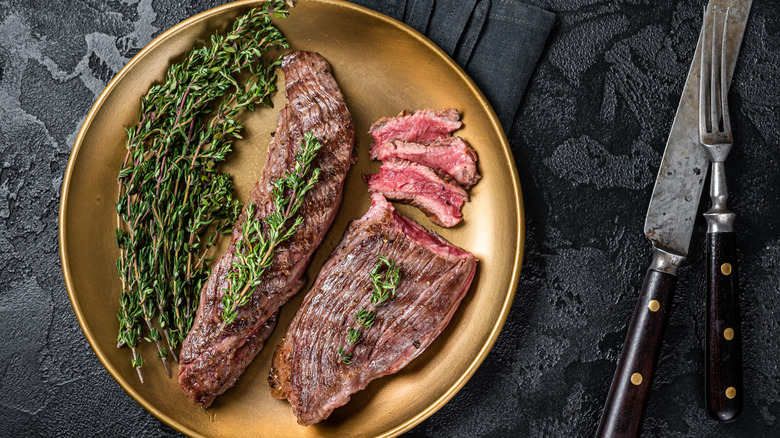
Also known as flap steak, bavette is an overlooked cut of beef favored by connoisseurs. A lengthy, flat cut, the shape is what gives bavette its name, which means "bib" in French. Although it doesn't have the marbling of, say, a ribeye, and is a bit tougher, it's known for a great chew and a loose texture that's conducive to high-heat cooking.
As per Jorge Thomas, bavette steaks, like skirt, are "brilliant cuts, but rare isn't necessarily where they eat best. They've got more fiber and structure to them." That implies more time is needed for all that to break down and for the meat to tenderize. As with other tougher cuts, slicing against the grain is also critical.
Although it is a popular cut in France, and even sounds a bit fancy when referred to as bavette, it is still one of the most underrated cuts of beef you can get your hands on. Great for impressing dinner guests who are naive about butchery nomenclature, without having to break the bank.
Flank
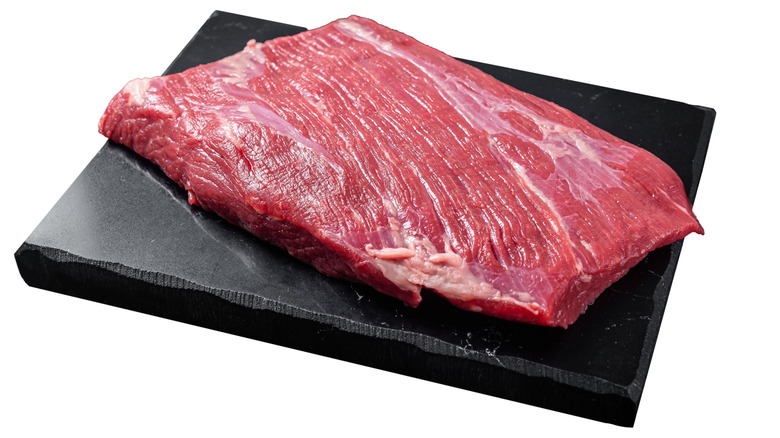
The muscles fibers run thick in a flank steak, and there is little fat to be found in this cut. That's because it comes from a part of the cow that sees a lot of activity: the abdominal muscles located between the plate and the rear quarter. As a result, the meat is lean, protein-heavy, and actually quite versatile. Just don't cook it rare. This was a consensus among our experts.
Antonio Iocchi wants to clarify this a bit, however. "The issue isn't necessarily that these cuts can't be eaten rare, it's that they tend to be more enjoyable when cooked enough to improve their texture." He says that heating something like flank steak to at least medium-rare goes a long way toward tenderness and mouth-feel.
Katie Flannery concurs with that level of doneness: "Medium is where the beefy, mineral flavor really comes through." Flank steak is also a great replacement for skirt steak in fajitas, according to William Eck III, along with being his "preferred options for beef bulgogi and galbi. The meat takes acidic marinades well." Julia Child would no doubt be on board with this assessment, as her flank steak marinade was famously flavorful.
Chuck eye
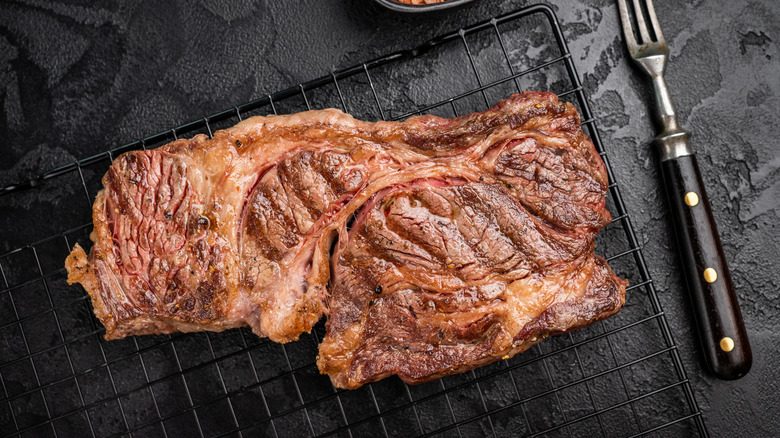
You could call a chuck eye steak the cousin of the ribeye, since it's taken from the same muscle on the cow, giving it a very similar marbling, taste, and texture to its starry anatomical neighbor. Chuck eye is cut from the shoulder part of the cow on top of the front legs. Obviously there's a lot of movement in this section of the body, and that creates a sinewy slab with a very beefy flavor. A heavily marbled cut like the chuck eye, as Greg Mueller illustrates, is "best cooked to a slightly higher internal temperature to render the fat and yield a better eating finished product."
William Eck III is, personally, a big fan of the cut: "Underrated in my opinion, [it] contains a nice fat to muscle ratio, and [is] generally cheaper due to toughness of the muscle. However the marbling of the fat helps to balance the muscle fiber toughness." He also appreciates, like the flank steak, its ability to work with marinades. In addition, chuck eye is one of the best steak cuts for the slow-cooker, if you want to use it as a clutch, prepared-ahead-of-time weeknight supper.
Hanger
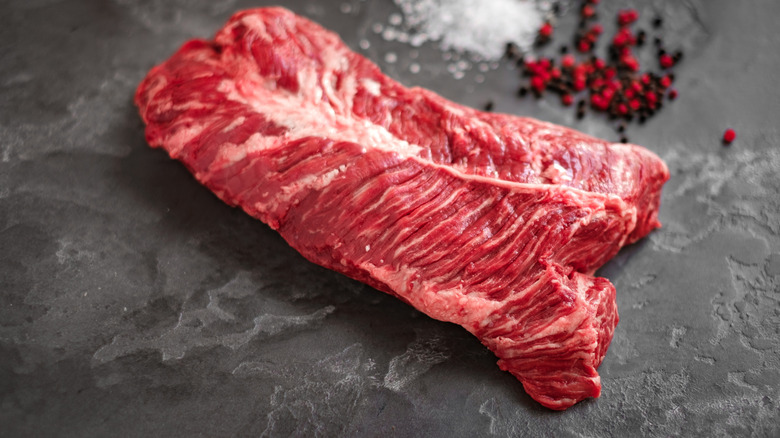
Hanging from the diaphragm of a cow, hence the name, hanger steak is a cut found in between the plate and the loin. It's coarse, thick, and busting with flavor — so much so that it's known as the cut butchers would keep for themselves. Adding to its allure (though not high cost) is the fact that just one hanger steak is yielded per cow. On that notion alone, you want to get this one right; and many folks, at least in the eyes of one of our experts, don't.
"The hanger steak is the one I'd push hardest on," Katie Flannery asserted, when listing the steaks she wouldn't cook rare. "This is a cut that actually wants more heat than most people give it." Her reasoning is, because it's attached to the diaphragm, the meat has a "loose, coarse grain" along with a whole lot of fat and connective tissue. This means it's being let down by a rare cook. "At rare, the fat hasn't had time to render, the texture is chewy and unpleasant, and the flavor hasn't fully opened up."
It's no accident that hanger steak is the cut Bobby Flay loves to grill. Combine that with the fact that it's generally inexpensive and — keeping Flannery's doneness advice in mind — hanger shouldn't be a piece of meat that's overlooked by steak lovers.
Ribeye
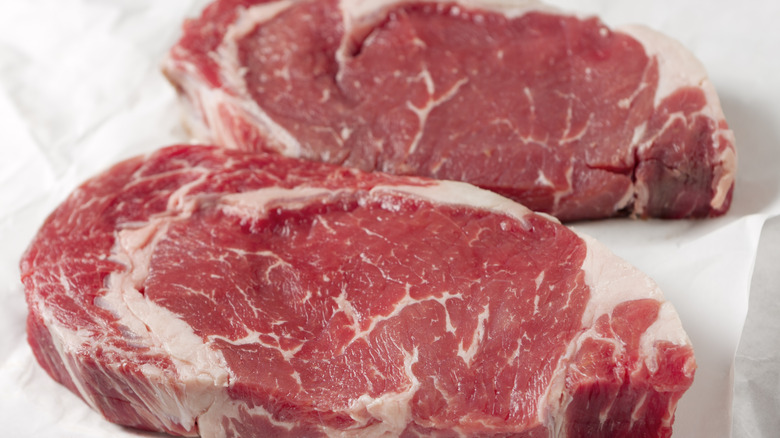
The ribeye is one of the headliner cuts of steak. People adore its mouth-watering attributes: juicy, tender, bold, and fatty. It all comes together in this sumptuous piece of meat. It was a nearly across-the-board fave for the meat mavens we spoke to. With such a glorious pillow of beef, the last thing you want to do is botch the cook — whether that's making the mistake of using a wet marinade on your ribeye or, as experts will tell you, undercooking it.
In fairness, not all them were on the anti-rare train when it came to ribeye (reminding us that this advice isn't necessarily gospel, just well-informed preference). For William Eck III, it's actually one of his preferred cuts for cooking rare, as well as it being his personal favorite steak overall.
Still, Antonio Iocchi isn't going to budge. "I prefer ribeye medium-rare, which allows its marbling to soften and release more flavor," he says. Jorge Thomas is also on team not-rare for ribeye: "Rare ribeye can mean lovely beef with bits of cold fat running through it, which seems a waste." Medium-rare is the perfect ribeye temperature for Katie Flannery, too. "The fat is doing real work at that temperature: it's starting to render, it's basting the meat from the inside, and the flavor is at its most complex," she says.
Denver steak
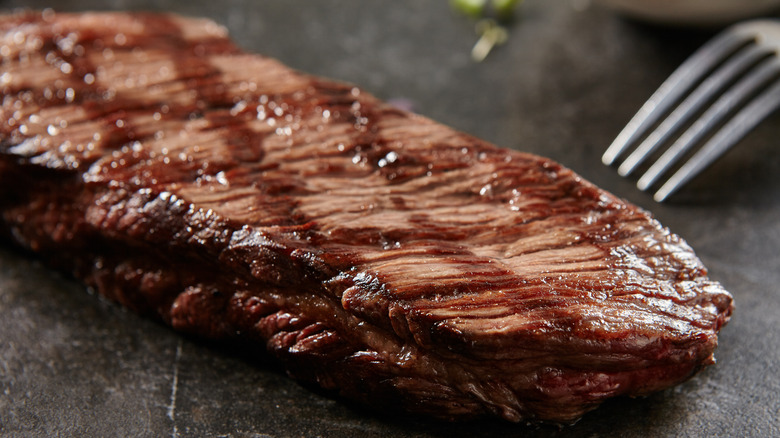
Tender, beefy, and juicy, the Denver steak comes from the part of the cow known as the chuck under-blade. It's imbued with some of the notable qualities of other cuts of beef, which makes one wonder why it's not a more commonly regarded hunk of meat. A lot of people probably haven't even heard of it, and they are missing out on the Denver steak's outrageous marbling game. It's all pretty remarkable when considering it comes from a notoriously toughened sector of the animal.
In fact, according to William Eck III, Denver steak has "the best marbling of all shoulder cuts," making it unexpectedly tender. Antonio Iocchi likes the Denver cut for "adventurous home cooks," due to "the excellent flavor" that puts it on par with pricier cuts when made with a bit of skill. Greg Mueller does bring a caveat: "Don't overcook steaks like Denver," he cautions, as "they are incredible eating steaks."
Denver steaks are so well-marbled, in fact, that some can mistake a run-of-the-mill offering for high-end Wagyu – a heady marbling compliment indeed. Even a mere examination of a good-looking Denver steak is like looking at a piece of abstract art. Instead of paint, however, it is vertiginous strains of beef fat. Art you can eat? What in the world is better than that?
Flat iron
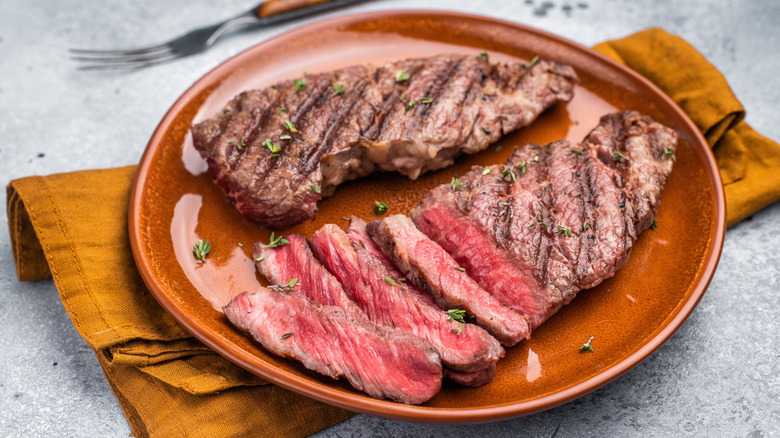
The flat iron cut is an interesting one, since it had to be mined for in recent decades. Like some other cuts in this article, it originates from the chuck and shoulder area — a region of the cow notorious for lean, tough meat. Prompted by a desire to find affordable cuts with desirable qualities, the flat iron was discovered near the shoulder joint. Its function as a stabilizing muscle means it deals with less stress than nearby muscles, and less stress means increased tenderness.
Yet, as per Antonio Iocchi, it does take a little bit extra on the butcher's part to attain this cut — though it's well worth it. "Due to its location and the butcher process of removing the surrounding connective tissue to get this cut, it is much more tender than its appearance." All the more reason to get this one right in the cook.
Jorge Thomas keeps things straight, and welcomely sardonic, in regards to this cut. "Flat iron I'd keep around medium-rare, too," he says. "Rare isn't a badge of honor. Cook the cut where it actually tastes best." Jamie Oliver loves to cook flat iron steak, and he does so to medium-rare (while referring to it as feather steak, because he's an Englishman).
Anything Wagyu
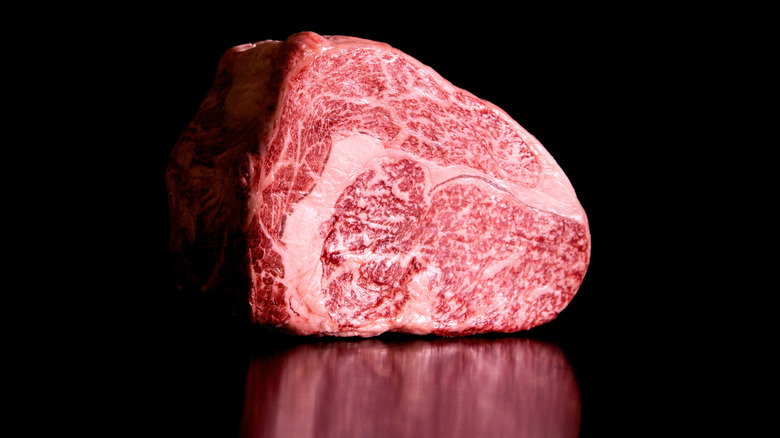
Yes, Wagyu is not a cut of beef at all. It's any steak that comes from a species of native Japanese cows, made up of four distinct breeds: Japanese Brown, Japanese Black, Japanese Shorthorn, and Japanese Polled. Because of the stringent, exacting standards of care that go into how the cows are raised, the meat they yield is top-notch, with incredible marbling, tender texture, and robust flavoring.
Therefore, anything Wagyu needs to be treated a little differently that perhaps a non-Wagyu cut of meat you'd normally enjoy rare. When Wagyu is cooked rare, the richness and chewiness of the meat can actually be a bit too much, since the substantial pervasiveness of fat has not had a chance to reach its all-important melting point.
Medium-rare to medium is often considered the ideal range for Wagyu. When cooked to this temperature, the marbling liquefies and the meat becomes soaked in flavor, without sacrificing juiciness and tenderness. Just be wary when you're out and about ordering Wagyu, as restaurants have been known to lie about Wagyu beef being Wagyu (among other food-based fibs).
Short ribs
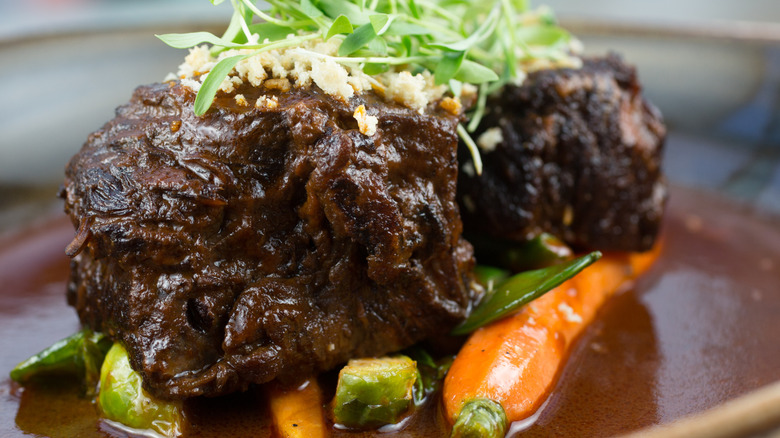
Short ribs are a bit of a steak mash-up. They can be made up of four sections of the cow: the chuck, brisket, rib, or plate. They're named as such due to the so-called short pieces of rib bone within the meat — which they have less of than other cuts. However, that's offset by the high amount of fat that makes short ribs ideal for slow-cooking methods (not to mention combined with anchovies and olives for a Sicilian short rib recipe that slaps).
If you're not slow-cooking for a while, you'll want to at least get short ribs to medium-rare. Anything under that and you're risking un-melted, unpleasant nuggets of fat — as opposed to juicy, oily, permeated goodness. Going higher than medium-rare, however, leaves a chance that fat gushes out of the meat, drying things out and making it tougher to eat.
As far as temperature control, our experts have some good rules of thumb. One, from Jorge Thomas, is simple and straightforward: "Buy a probe thermometer. Seriously. They're cheap now and they remove most of the guesswork." Greg Mueller vigorously agrees: "An instant-read thermometer is going to be your best friend!" Katie Flannery is all about the thermometer as well, while adding to "pull the steak earlier than the target temperature. Carryover cooking is real." And, of course, as they nearly all emphasized: Let the steak rest. For thicker cuts, that means at least five minutes per inch of thickness, left completely alone once it's off the heat.