

12 Major Times Restaurants Flat-Out Lied To Customers About Their Food
Lying is, generally speaking, bad. Yet, not all lies are the same. There are small lies (adding an inch to your drivers license height), medium lies (calling out sick just to watch March Madness), and big lies (being a double agent). We all do it, or have done it, in one form or another. We also possibly live in the biggest era of lying in human history, what with the propagation of misinformation, fake news, and AI-generated media. In other words, we've built a pretty high tolerance for it as a species.
This tolerance, however, doesn't really cross over to the food we eat, and more specifically, the places where we eat that food. Restaurants — both large and small, chains and indies — have flat-out lied to customers about the fare they're serving. Like with most lies, they tend to be self-serving on the liar's part: Either to hide some kind of wrong or transgression, or to aggrandize themselves, making them seem like they're doing the awesome, agreeable thing when they're not.
The following are a dozen instances where eateries have perjured themselves to their patrons. The consequences of such food fibbery varied with each act of deception — with the big fish often able to survive being caught over the little fish (money and expensive lawyers might have something to do with that). But, no matter the offender, its the customers who always gets the short end of the stick.
Fancy but fraudulent LA seafood spot Dudley Market
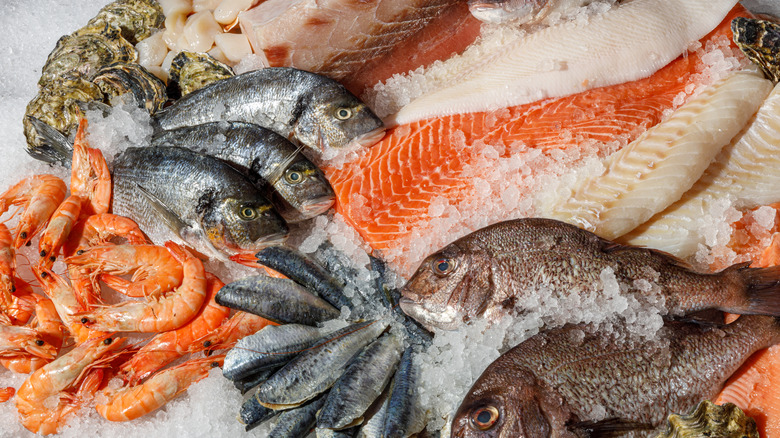
It's been a difficult thing for much of the human species to wrap its head around: The ocean is not a limitless well of bounty. Many species have been fished to near-extinction — especially commercially. As a result, laws and regulations have been put in to place to preserve and enliven sources of seafood. Many purveyors of sea fare will highlight the fact they abide by such rules, showcasing an eco-consciousness that doubles as a solace for customers. That is, if the customers are being told the truth.
In the unfortunate case of Dudley Market — the exceedingly hip Los Angeles seafood market and restaurant — the truth didn't prove to be a priority. In 2022, the California Department of Fish and Wildlife cited the Venice fishmongers for multiple, egregious violations on both the state and federal level.
These included illicit harvesting in protected marine areas, unlicensed commercial fishing, the wrongful buying and selling of sport-caught fish, and the lack of proper documentation for regulated species. The owners of Dudley Market had no choice but to admit to this, apologizing for the fact that they openly advertised themselves "as source of fully sustainable, transparent, and lawfully procured fish."
No fruit in Starbucks Fruit Refreshers
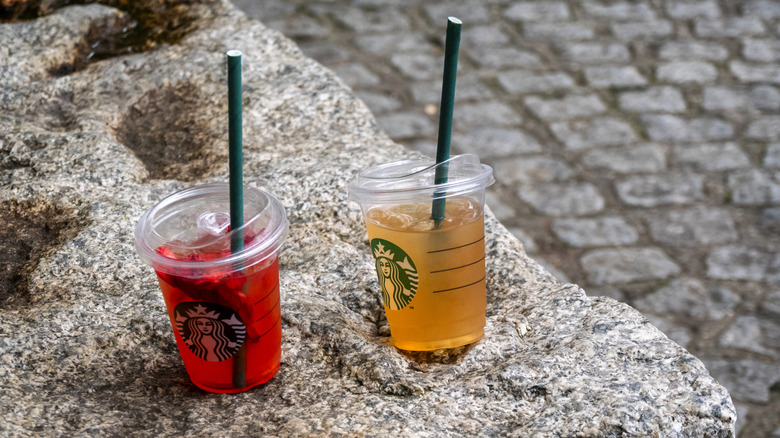
Mango dragon fruit. Strawberry acai. Pineapple passionfruit. It's fair to say that anyone reading those beverage flavors on a menu would assume that said beverages would contain those ingredients. If a menu had a cheeseburger, you would think there'd be cheese. Spaghetti and meatballs? Good chance the dish will have a meatball or two. No need to overthink it.
Well, it seems Starbucks doesn't think like the rest of us. Because the Starbucks Refreshers that were mentioned above apparently had exactly (checks notes) 0% of any of those fruits. In 2022, a class-action lawsuit was filed in New York federal court, claiming that the drinks marketed as fruit-based were anything but. In fact, they were made with little more than sugar, water, and grape juice concentrate.
The Starbucks Refreshers are still going strong, boasting a robust summer selection for 2026. But, the class-action suit is still ongoing, with a judge refusing to dismiss the case at Starbuck's behest. That's not a good sign for the Seattle-based corporation, although if anyone has the clout to take it on and survive, it is the impossibly wealthy coffee chain.
Gulf shrimp has to come from the Gulf, doesn't it?
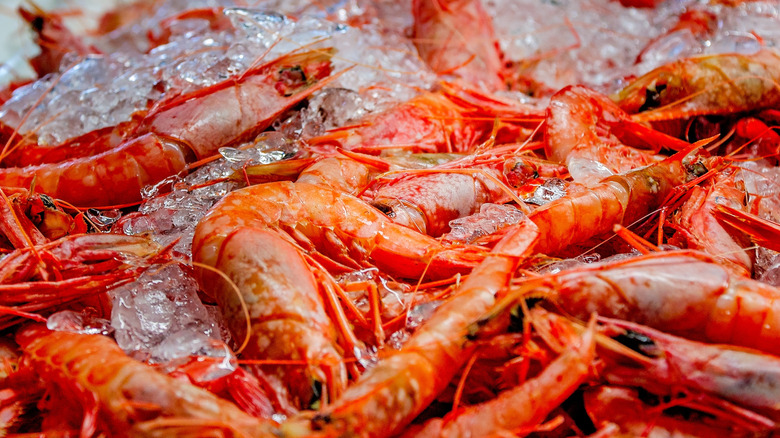
It's one thing when a restaurant falsely advertises where it gets its food. But, what about when dozens of restaurants from Florida to Texas do it? That was the case in 2025, when it was found that over 20 eateries in the Tampa Bay area were telling their customers they were getting Gulf shrimp — the uniquely sweet and plump type of wild-caught crustaceans that are greatly sought-after. Turns out, they were not.
On top of this, a number of seafood restaurants in Texas were also found to be guilty of this deception: Advertising Gulf shrimp in dishes when it was sourced from elsewhere. This was part of a lying epidemic, it seemed. Scientists from SeaD Consulting began testing purported Gulf shrimp being served at festivals and vendors throughout the Gulf region in 2024. For every five samples they tried, four were found to instead be imported and farmed shrimp.
Falsely claiming shrimp is from the Gulf is not only a lie in and of itself, it also gives these restaurants license to charge more for a dish. Plus, in the bigger picture, it hurts an already struggling Gulf shrimping industry. After all, why go out and pay these shrimpers more for the product when you can pay less for a cheaper ingredient, while just saying they're the real deal. Easy peasy, customer-wallet-squeezy.
Burger King's whoppers about Whoppers
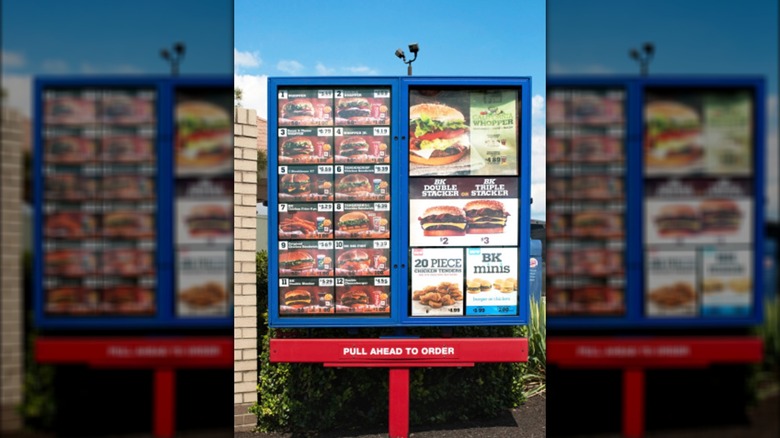
You may have noticed lately that Burger King has made a very public upgrade of the Whopper. The toppings are stacked higher, and both the bun and the mayo have been swapped out for improved versions. It's not a reach to say this PR-backed augmentation of its most famous menu item probably has something to do with a massive lawsuit made public in 2023.
A U.S. judge in the Southern District of Florida denied Burger King's motion to dismiss the case, which claimed that Burger King misled customers about the size of the Whopper on its menu images (although claims against BK's digital and TV ads were tossed).
According to the lawsuit, the King showcased the Whopper replete with ingredients, making it appear 35% bigger than what a customer is actually getting. The suit backs up what many people would post on social media, showing the sad little Whoppers that belied the meaty, robust iterations advertised on menus. And, when the real items were shown side-by-side with Burger King's images, just as the lawyer for the plaintiffs did, it convinced the judge (and anybody with working eyes) that there was a serious discrepancy.
Shrimp isn't local when it comes from another country
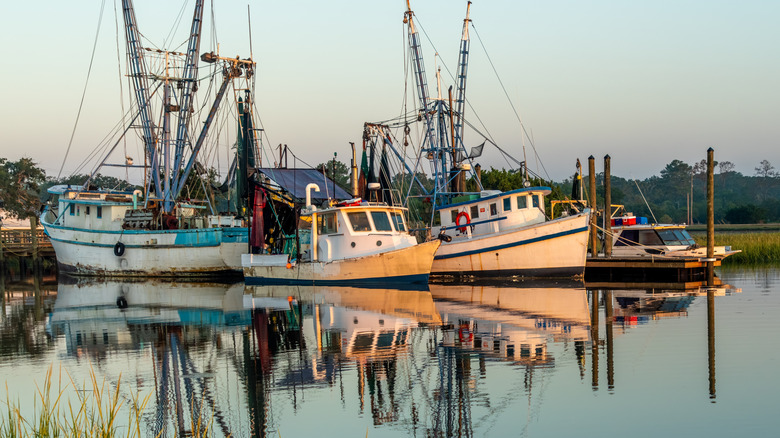
Maybe you harbor a belief that all the world, all the universe is intrinsically connected. In that sense, you could technically say everywhere is local. When it comes to shrimp in South Carolina, however, this kumbaya'd meta-spirituality does not apply. If you're a restaurant that claims the shrimp you serve is from the waters around you, then that better be the case. If not, then a courtroom beckons.
In 2025, a federal lawsuit was brought by the South Carolina Shrimpers Association against 25 businesses that told customers they were selling "local" shrimp. In fact, the shrimp was usually brought in frozen from far afield, even from other countries. South Carolina is proud of its native shrimp, and its one of the main draws for tourists to the area.
Lying about it is not a good look for anyone, especially since public mistrust can lead to not only bad PR, but hits to various bottom lines. It's one thing when grocery stores claim shrimp is fresh when its actually frozen (although no less forgivable), but there's a higher expectation at seafood-destination restaurants. If they can't be legit, what's the point?
Taco Bell skimped on the beef
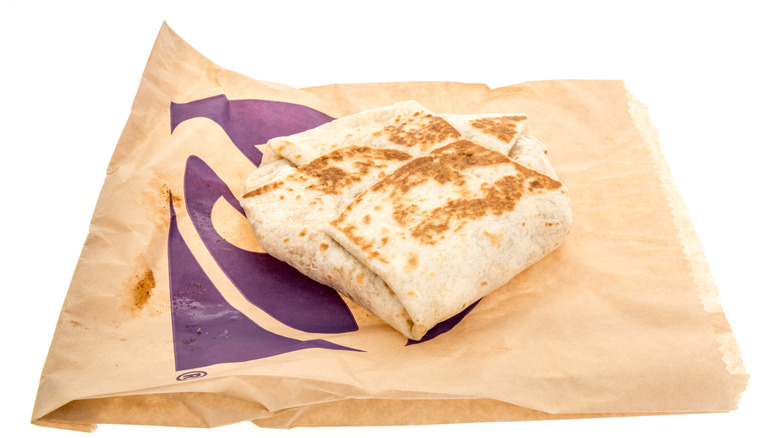
Burger King isn't the only big boy with big fibs on this list. And, it's certainly not the only one that had its customers saying "we'll see your butt in court." Its fellow fast food mega-chain, Taco Bell, also got itself in hot water when it came to the meat it was apportioning out to its patrons who felt they were getting underserved ground beef-wise.
In 2023, a fellow in New York took the initiative and filed a lawsuit against Taco Bell for the lack of ground beef in Crunchwraps and Mexican pizzas. Like Burger King, the suit centered on the images of the menu items Taco Bell portrayed, and how it contrasted with the sparse reality of what was actually being served out. (In fact, it was the same lawyer who represented the BK plaintiffs.)
We all know food photography is a thing, and a lot of the ingredients you see in stills and ads are — like the movies — false elements intending to look real. Fair enough. But, quantity is another issue, especially when cost to the consumer is factored in. The claim alleged that a customer received "100% less" meat and ingredients than they were led to believe. The $5 million lawsuit against Taco Bell is still ongoing.
The Hen and the Hog shuttered for violations, told customers it was a gas leak
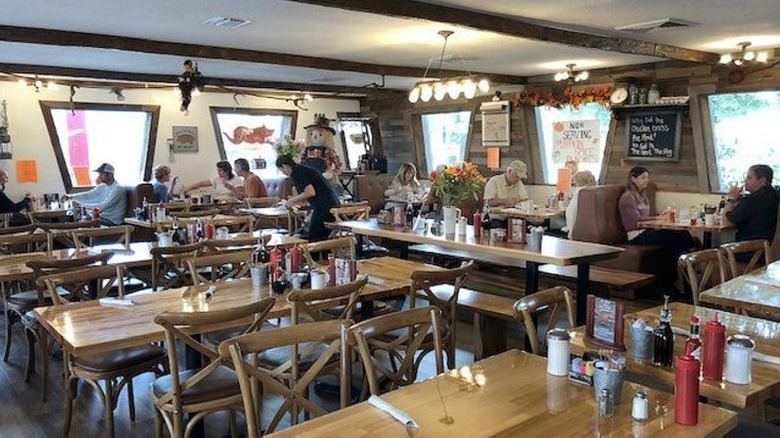
A local news investigation in 2024 revealed that a restaurant in Pompano Beach, Florida straight-up lied to customers about why it was closed down. When the reporter, Jeff Weinsier, approached the owner of The Hen and The Hog to find some clarity about the situation, she claimed the shuttering had to do with a gas leak. As unsettling as that may be, the truth was even more so.
Turns out The Hen and The Hog was closed for a baker's dozen of violations. This included an alarming amount of rodent crap found all over the restaurant: The sink, the kitchen, the cooler, the front counter, next to bowls and cups, near the water heater, and under stored toilet paper.
That's not all, kids. Meats were kept at unsafe temperatures, the ice machine was moldy, and Weinseir claimed he once saw an employee pick their nose with gloves on before handling bread straightaway. This all came on the heels of repeated, failed inspections of the restaurant in the years prior, generally involving hygiene and food-storage failures. You know its bad when people would probably prefer a gas leak.
Sweet Dixie Kitchen tastes as good as Popeyes, because it is
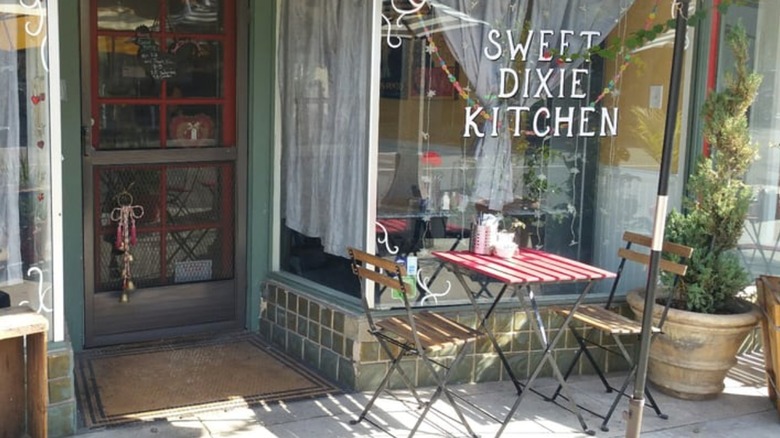
This is one of the more entertainingly brazen wrongs on the list, especially considering the owner of the offending restaurant didn't think she was in the wrong. Everyone can judge for themselves on that, but it has to be said that the optics looked god-awful here for Sweet Dixie Kitchen.
The Long Beach restaurant reached a national level of infamy in 2017 when it was caught selling Popeyes chicken as its own. How did eagle-eyed customers catch this deception? Easy, the restaurant's employees were seen literally carrying boxes of Popeyes into the kitchen. The resulting chicken and waffles menu item was sold for around $15, a shameless upcharge for a shameless move.
Owner Kimberly Sanchez, when asked about this, was unapologetic. She posted what was basically a boast on Facebook, saying she was proud to serve what she considered the best fried chicken anywhere. She also defended herself by saying the building housing the restaurant wasn't made for frying. Although her defense was robust, the backlash was just too strong: Sweet Dixie Kitchen closed for good in 2019.
One menu at Azure Restaurant & Bar, so many lies
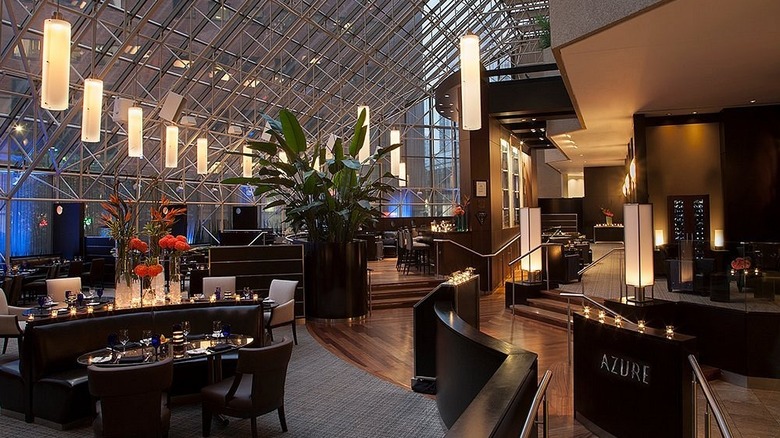
Can a restaurant's menu be so full of blatant lies that it deserves a chef's kiss, just for the ballsy-ness of it all? That's a question for the wise. What's not a question is that a high-end restaurant in Toronto went the full Pinocchio with an eye-opening number of falsely advertised dishes. No word on if the owners slept well at night while all this went on — or the customers who dropped a pretty penny at the dishonest dining joint.
Back in 2016, Azure Restaurant & Bar, situated in Toronto's Intercontinental Hotel, had its menu examined by the Canadian Food Inspection Agency — after a tipoff from an employee with a guilty conscience a few years before. To say the restaurant didn't pass with flying colors might be an understatement.
The Wagyu beef was not Wagyu. The homemade dressing was commercially bought. The "organic" granola was actually Quaker Harvest Crunch — as in what you would find in the cereal aisle of your grocery store. Even a follow-up visit from a Toronto Star reporter revealed a freshly squeezed juice (that would set you back $6) was really from a bottle of Lambeth Groves.
Chipotle somehow being non non-GMO
Sure, not every corporate settlement of a class action lawsuit is an admission of guilt. It can just be a relatively small price to pay to get an annoyance out of a company's hair. But, it's hard to fathom it as an admission of innocence either.
When a suit was brought against Chipotle in 2015, initially by a woman in Piedmont, California, who claimed the Tex-Mex chain was deceptively overcharging customers for food that wasn't actually GMO-free, there were doubts about its validity. This came on the back of a massive advertising campaign promoting Chipotle's non-GMO menu.
About four years later, however, in 2019, Chipotle dropped $6.5 million dollars to settle the class-action case. Each member of the suit was to receive $2 on each qualified purchase, among other monetary damages. Chipotle, for its part, still disputed the certification of the lawsuit. Regardless, the mega-chain that started as a humble burrito spot in Denver, was humbled litigiously
Dropping haute cuisine money at Fig & Olive, getting frozen food
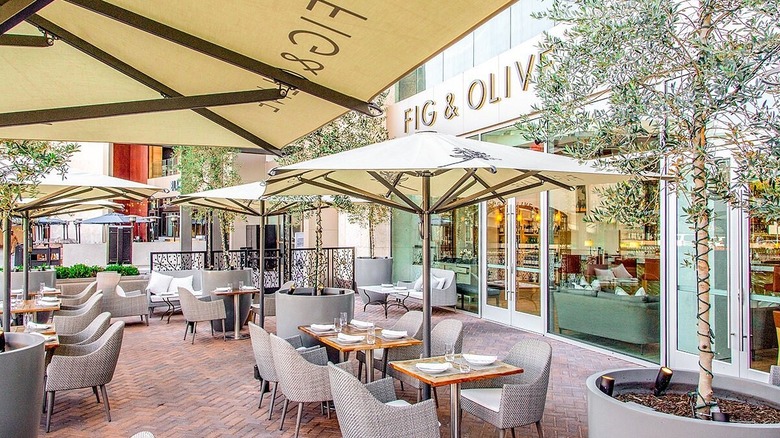
One of the main problems with a restaurant that's lying about the food it serves, is that it's essentially also stealing. Customers are trusting that they're getting what they're told they paid for. It's not like a patron can patrol the kitchen and walk-in coolers to inspect the food themselves. There's a faith that has to be there when the check finally arrives. Someone should've reminded Fig & Olive of that.
Or, maybe it wouldn't have mattered anyway. A chain of fine dining restaurants, as well as a purveyor of retail olive oils and vinegars, Fig & Olive came under massive, well-deserved fire in 2015 when an investigation revealed that many of its haute cuisine menu items were not made from scratch, on-site at its locations. Instead, they were shipped, pre-cooked and frozen, from a commissary in Long Island City, New York.
These items included everything from sauces, soups, purées, and dressings, to breads, desserts, and ravioli. Even its paella, chicken tagine, and crab cakes were delivered pre-made across the country. The revelation came from a salmonella outbreak linked to Fig & Olive's food, which unveiled its sources. So, not only was it overcharging people, it was getting them sick. Well done.
The indie place you love on Uber Eats is actually a mega-chain's front
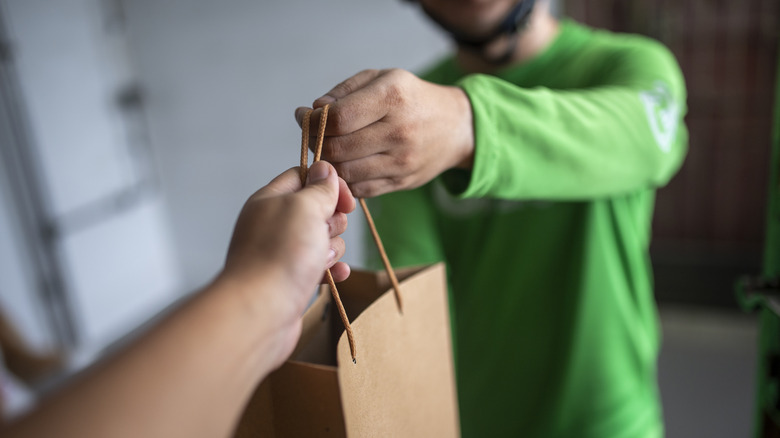
This deception is a broad one, rooted in an industry-wide practice that exploits the murky behind-the-scenes maneuverings of delivery apps. It seems that many large chains masquerade themselves as independent eateries on apps like Uber Eats, misleading customers into thinking they're ordering from a non-chain (which is obviously what the customers want to do, since that's what they're doing).
A 2026 BBC report revealed that complaints from actual independent restaurants and vendors alleging this practice were legitimate. In the U.K., when you click on the allergen information at a restaurant, it reveals the registered info for the company providing the food. It turned out many of these quote-unquote indies were just fronts for chains like Pizza Hut, TGI Fridays, and others.
And, it seems there is nothing stopping this from going on. The apps claim that anyone can set up a virtual brand, be they a corporation or a small business. This may promote equality in the marketplace, but the practical reality is not equitable. Delivery apps are no strangers to controversy, from shady labor practices to hiding fees.