

Why These 13 Foods Are Banned In The US
It was most likely the Old Norse cognate banna, which meant to curse or prohibit, that roots our modern word ban. We may not use the curse aspect of the term the way a medieval Scandinavian might (which is welcome — since no one wants, like, a Valkyrie or something set upon them), but the prohibition side is still firmly in the modern definition. Governments and municipalities love banning things, and there have been some doozies: pinball in New York City, underwater whistling in West Virginia, public gargling in Louisiana, and sleeping on top of a refrigerator outside in Pennsylvania, to name a few of the more unconventional official restrictions that have existed in the U.S.
These may seem ridiculous and arbitrary. But when it comes to foods that are banned in America, the reasons become, for the most part, much more clear and substantive. There is generally some kind of health or ethical issue at play (although both notions can be subjective), or a type of import-export matter from one side or the other. What makes it interesting is that, as taboo or frowned-upon as a food item can be to a people in one part of the planet, it can just as equally be embraced and enjoyed by people elsewhere. Let's take a gander at 13 of the foods that are banned in America ... and why.
1. Haggis
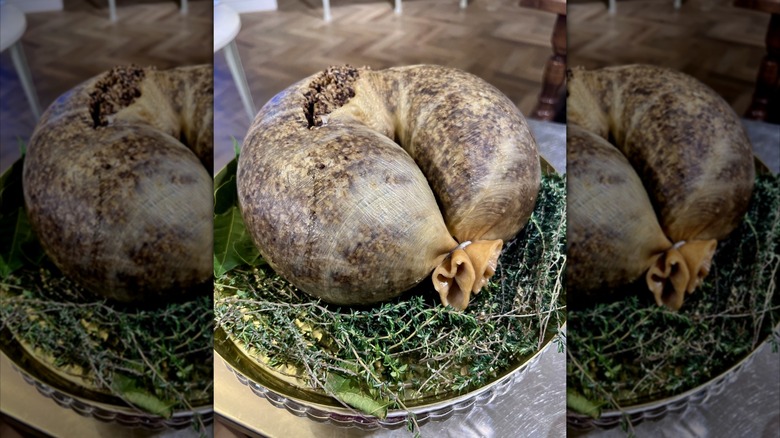
Scotland is just a beautiful animal all its own. From the rugged beauty of the Highlands to the cobblestone bustle of Edinburgh to the white-hot football tribalism of Glasgow. For a country of roughly 7 million people (much smaller than the population of the five boroughs of New York City) there is an incredibly strong identity built from time immemorial. But haggis, one of its defining foods, is disallowed on U.S. shores.
What's amazing about haggis is that it's described as a pudding. And there are few more stark differences between folks in the British Isles and folks in the U.S. than when it comes to the term "pudding." If you say pudding to an American, a chocolate custard is imagined, probably manufactured by Jell-O.
And what is haggis exactly? It's the heart, liver, and lungs of a sheep, encased in its stomach, or at least some sheep's stomach. Try to pitch that to American eaters. As far as legality, it's seems to be the sheep's lung that's the point of contention for the U.S. government, and has been since 1971. And although there are American attempts at haggis (like Tartan-ified haggis pizza), the authentic stuff is still a no-go here.
2. Shark fin
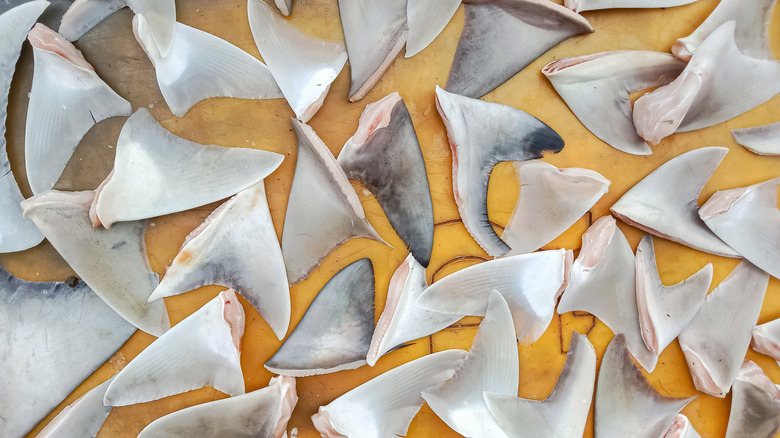
The cruel thing about shark fins, is that they're basically cut off living sharks who are caught, which then leads them to die in the water as a result. A brutal thought. Imagine someone coming along and lobbing off a part of your body. But, like a lot of these entries, there's a cultural aspect to it, and that needs to be respected. Every culture, even the U.S., has facets to it that may be grotesque to others.
Shark fin soup, the obvious result of shark finning, goes back a long time in China and the surrounding region. And it's a dish that's treated with a degree of veneration. The crazy thing is, the shark fin itself doesn't have much of a taste. It's simply seen as a luxury, something symbolic, and has been so going back over 700 years.
When it comes to the restriction on shark fins in America, there really is no wiggle room. Unlike with even haggis, there's no way to loophole this this on a domestic level. The ideological gap has seeped into the legislative side. And this is a case where it's probably for the better, at least for sharks.
3. Ackee
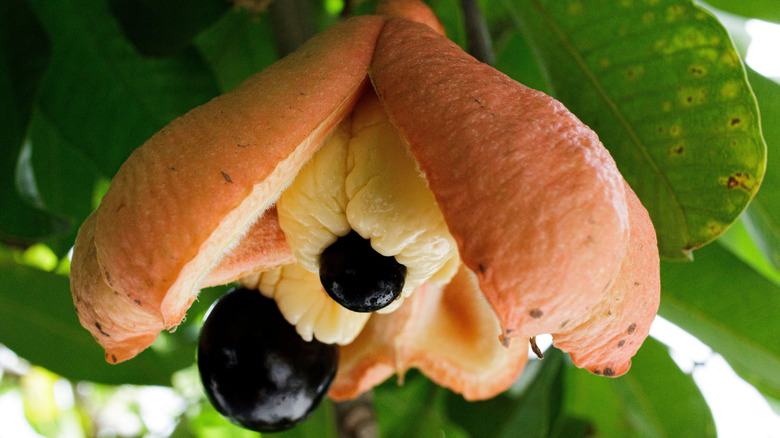
Although it's impossible to imagine reggae being banned in the United States (which would cause probably the most chill riot ever), there's another major component of Jamaican culture that is prohibited in America. It's a fruit called ackee, and it has a vibrant, iridescent outer skin. When it's ripe and ready to be eaten, the exterior opens to unveil the edible meat.
Indigenous to West African countries like Ghana, ackee likely made its way to Jamaica on a ship transporting enslaved people. It has since become the national fruit, with ackee and saltfish being a popular dish. It has a kind of savory flavor, which makes it unique for a fruit. But there's a big caveat with ackee that has made the fresh version illegal in the States.
It contains a toxin called hypoglycin A. If the fruit isn't prepared properly, or eaten before its fully ripe, then severe health issues can occur, including vomiting, drowsiness, and serious fatigue. It can even be fatal. It's possible to buy canned ackee stateside, as long as they are manufactured by select companies on the FDA's Green List. But the fresh version is a no-no in the U.S.
4. Casu marzu
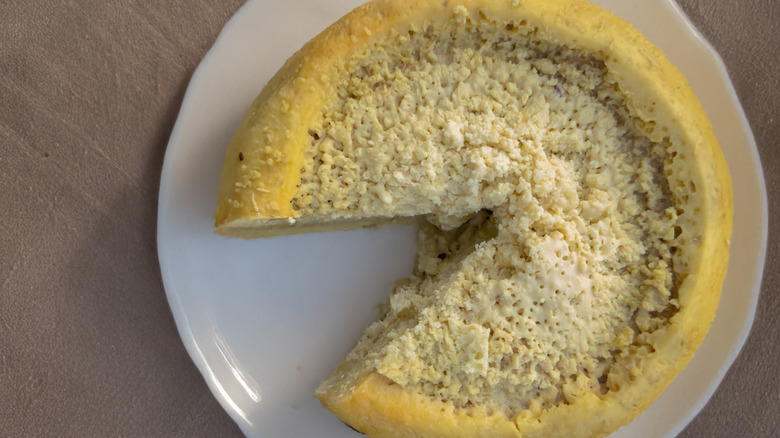
And so we come to the Sardinian specialty that is banned, not only in the U.S., but in many other parts of the world. It's a cheese that starts out life as a harmless, innocent Pecorino. Nothing wrong with that, right? Oh, just you wait.
Because what turns this cheese into the infamous casu marzu is the infusion of, yep, fly larvae. Once the baby bugs hatch, they start eating through the cheese, which speeds up the fermentation process and softens it up. Well, okay, that's gnarly as it is. But if you really want to sample it, to up your foodie cred, you can simply take the larvae out and quote-unquote enjoy, right?
Wrong. You have to eat the cheese while the maggots are still very much alive and worming their way around in there. Some of the entries on this list require a bit of reasoning behind their bans. It's hard to imagine too many Americans arguing over the unavailability of this one, however.
5. Bird's nest soup
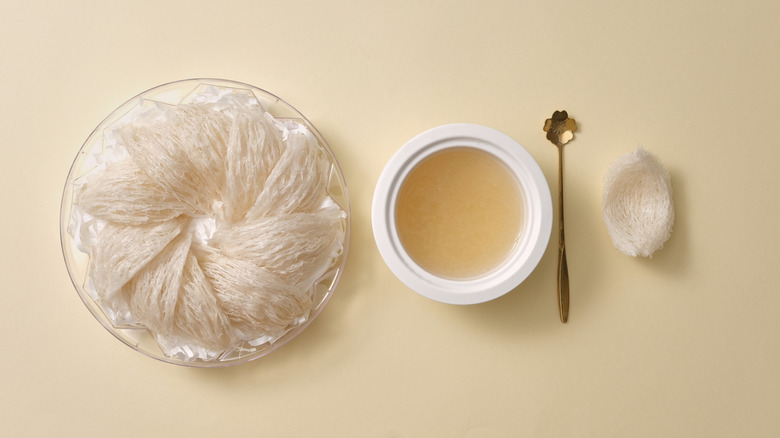
Bird's nest soup, a popular dish that's even considered a bit fancy, is consumed mostly in China. These bird's nests themselves, which are fashioned out of, essentially, spit, have a lot of nutrition: packed with magnesium, iron, calcium, and potassium. The problem is, they can also carry diseases.
This is why bird's nests are banned from being imported into the U.S. unless they have certification proving their safety, quality, and cleanliness. Even with the proper paperwork, the nests have to pass inspection before getting the okay to enter the country. If they don't pass inspection, or if they're undocumented, the nests are seized and destroyed using steam sterilization.
As mentioned, the edible avian nests aren't your typical nests made of twigs — because they don't come from just any bird. They belong to tiny fliers called swiftlets, who dwell in caves and use saliva from glands under the tongue to create the nest. When exposed to air, the saliva hardens, and that's when they are collected.
6. Bushmeat
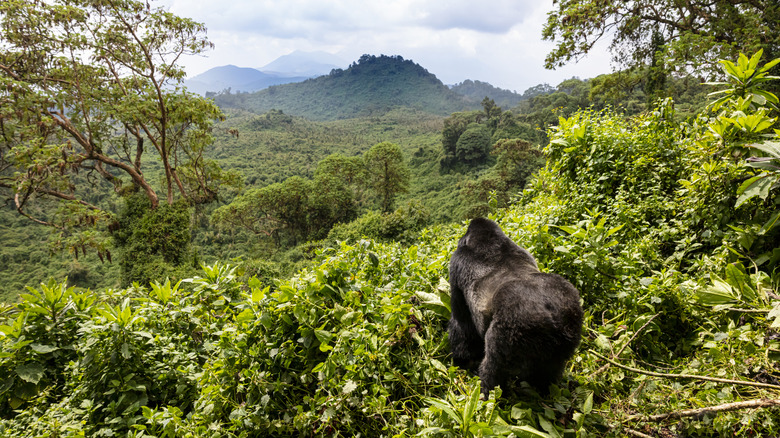
This is a type of food that not only ruffles the sensibilities of a lot of people in the U.S., but is outright illegal on these shores without exception. We're talking about bushmeat. Bushmeat is the flesh of wild animals found in particular parts of the world, such as Africa. This includes primates, bats, wild rats called grasscutters, and antelope. More often than not, bushmeat is eaten raw after a bit of salting, drying, or smoking.
Because bushmeat isn't cooked, it can carry infectious diseases. This includes Ebola, which can be spread when animals that have the rare and deadly virus are handled — like when being hunted, butchered, or processed. If any amount of bushmeat is brought in, it will be immediately destroyed along with any items that came in contact with it. Oh, and whoever tries to bring it in can be hit with an eye-watering $250,000 fine.
7. Ortolan
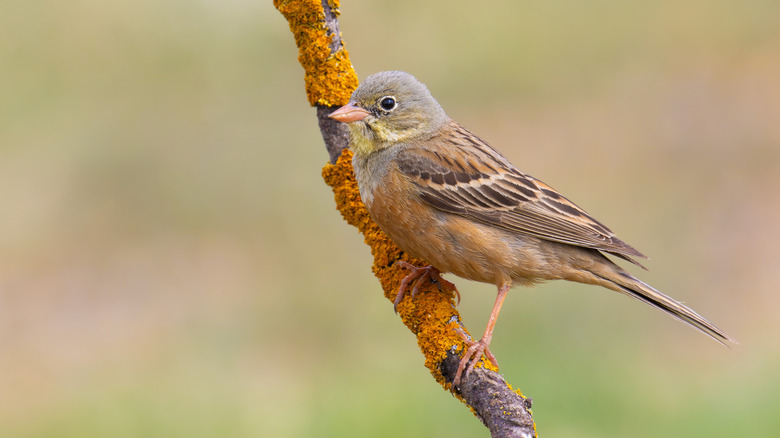
Sometimes you just have to shake your head in sympathy for the fate of some poor animals. Let's take the charming, adorable little songbird known as the ortolan. The species has come close to extinction, which is sad enough for any animal. But the reason the ortolan has gotten to that point is because its been harvested for food.
How is the bird — which is about the size of a thumb — prepped for eating? It's either kept in complete darkness or just blinded, made to overeat in order to fatten up, then drowned alive in a vat of brandy before being roasted. One is supposed to eat it whole, feet-first. But, hey, at least the beak is removed for your convenience.
No surprise that there's a dose of shame built into the very eating of the dish, with people often covering their heads with a napkin while dining on the bird. But the reason ortolan is illegal in the U.S. is because the species itself is protected, not for the controversial way it's cooked.
8. Beluga caviar
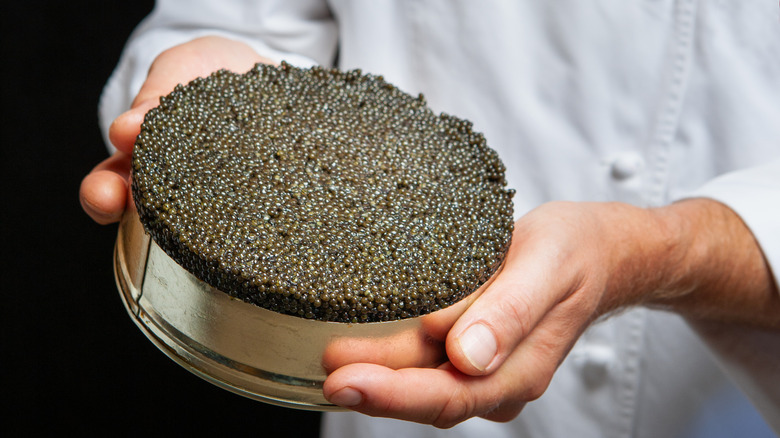
The term beluga caviar might cause some confusion. Beluga is a type of whale after all and, as we all know, whales are not fish. Therefore, they can't produce fish eggs, aka caviar. Right? Well, if that was still your thought process up to the point of reading this sentence, don't worry, your secret's safe.
The beluga refers to beluga sturgeon. This authentic source of caviar lives in the Caspian Sea, though there are independent sturgeon farms all around the world. The reason it's so prized, and so expensive (up to $200 an ounce), is that beluga sturgeons take 15 years to reach the age of reproduction. Meaning, if you want to harvest those eggs, you might want to sit back and pick up a big, thick novel to read — you're going to be waiting around a decade-and-a-half.
In 2005, however, the U.S. Fish and Wildlife service banned the import of beluga caviar in an effort to protect the fish — since the U.S. is responsible for 60% of the world's beluga caviar consumption (including the late Elizabeth Taylor, who was reportedly a big fan of the roe). As of this writing, the only legal producer of beluga caviar in the U.S. is Marky's Caviar's Sturgeon Aquafarms.
9. Foie gras
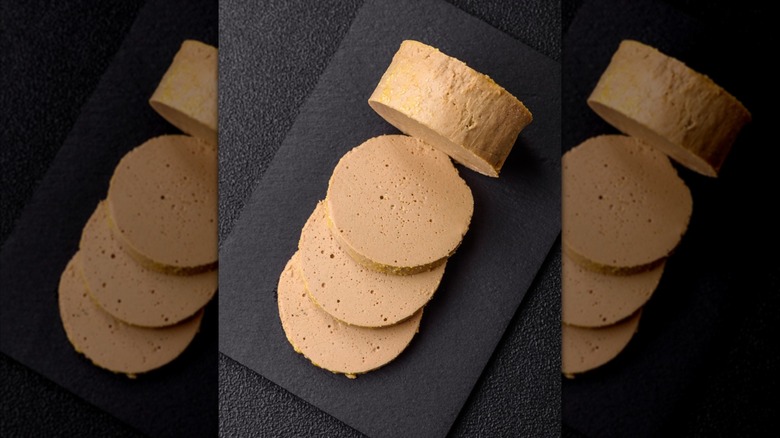
The controversy around foie gras has reached a fever pitch over recent years. The perceived barbarity of how duck or geese are treated in the cultivation of the food has had animal rights activists pushing for a nationwide ban. As of 2026, only California has fully prohibited foie gras in the U.S., with a New York court recently ruling in favor of a ban taking effect in that state.
They would follow suit with countries that have fully prohibited its production, such as Germany, Sweden, Ireland, Turkey, Argentina, and the U.K. (even King Charles won't eat foie gras). Some places have also regulated imports as well as restricted its sale within their borders.
For those unfamiliar with the practices that go into foie gras, a duck or goose is force-fed in order to fatten up the liver. That liver is what's then consumed, usually served out in slices with fancy plating and edible accoutrements. The refined finished dish hides what's considered a coarse and cruel origin.
10. Brominated vegetable oil
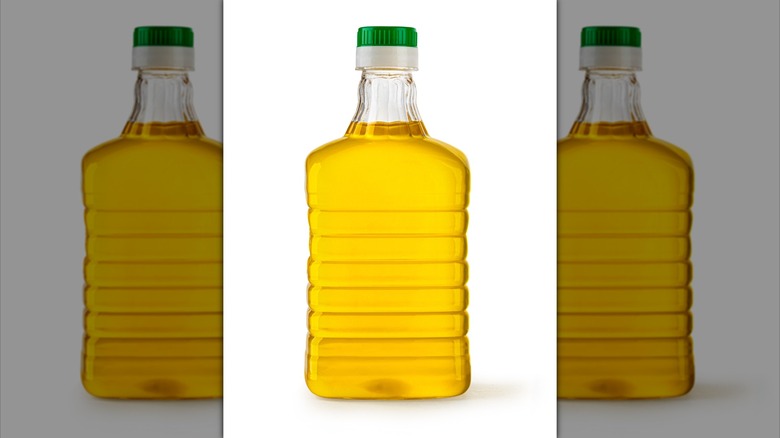
Brominated vegetable oil, or BVO, is a vegetable oil that's modified with an element called bromine. Its use as an ingredient in food and beverages dates back to the 1920s. It was mainly used in soft drinks to stabilize fruit flavoring and prevent it from separating and floating to the top. As late as the 1960s, BVO was considered safe by the FDA.
However, subsequent years and studies showed that BVO had possible negative effects on the heart (the results born out of its use on test animals). In 1970, the FDA started regulating BVO. Further research in 2022 revealed that BVO could impact the thyroid as well. In 2024, the FDA decided to ban BVO outright, giving a grace period for any remaining manufacturers to reformulate products.
Due to many companies having already found alternatives to BVO that do the same job, it was difficult finding a beverage on shelves that still contained the oil. At one time that included Mountain Dew, which fueled an (unfounded) rumor that the Dew contained a flame retardant – due to BVO sharing some compounds with flame-retardant products.
11. Mirabelle plums
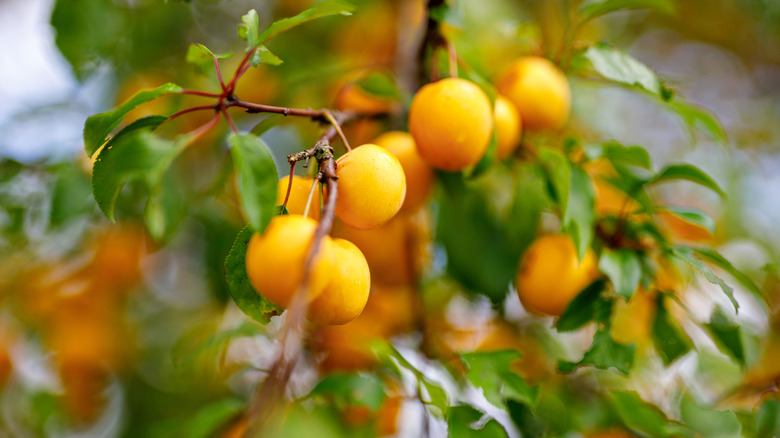
Unlike some other banned items, Mirabelle plums aren't illegal in the U.S. for any kind of health risk, ethical issue, or endangered label. Rather, the ban comes out of the same kind of protected status that goes into, say, Champagne or prosecco — in that it needs to come from specific locales to be considered the real deal.
For Mirabelle plums, that home is the Lorraine region of France. The people from the area, especially in the region's major city of Metz, see the plum as a proud native of their land. There is even a festival there centered around the plum, called le Fête de la Mirabelle — which goes on for almost two weeks each August.
This sweet, tangy little fruit is used to make jam, desserts, and alcohol. You can technically grow a Mirabelle plum tree in America, you just can't sell those plums. But, if you want to indulge in an authentic Mirabelle plum, your best bet is to get yourself over to Northwest France. Oh, and also while you're there, enjoy France.
12. Sassafras oil

Sassafras oil, which comes from the sassafras tree, was an ingredient in root beer for a long time. The oil is extracted from the bark and roots, and they contained a compound used in flavoring. That compound is called safrole. And in 1960, the FDA prohibited safrole from being used in food and commercial products, due to possible carcinogenic properties.
It's safrole's psychoactive effects, specifically, that keep people on the lookout for it and authorities surveilling it. That's because it can be used in the production of MDMA. MDMA — aka ecstasy or Molly — is a controlled substance, so the government is on careful watch of safrole being put in the wrong hands. Companies that still handle safrole are asked to report to the DEA if a buyer of a product containing safrole does so suspiciously — for example, purchasing a large amount, using an odd method of payment or delivery.
And although root beer today does not contain this once signature ingredient, it's hard to believe that something like enjoying a soft drink was once not that far off from tripping on E. Maybe that's why Barq's originally had bite.
13. Unpasteurized cheeses
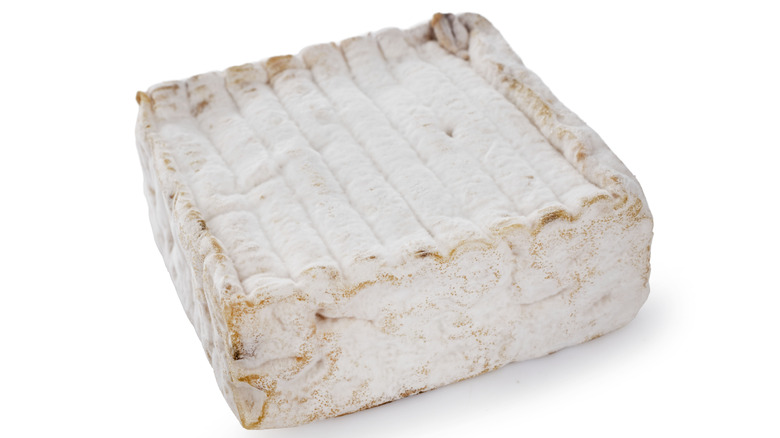
Louis Pasteur, when he first invented the process that bears his name — pasteurization — probably didn't foresee it becoming a lightning rod surrounding an FDA ban more than 100 years later. Pasteurization, for those that need to be reminded, is the process where a liquid or a food is heated in order to kill any pathogens.
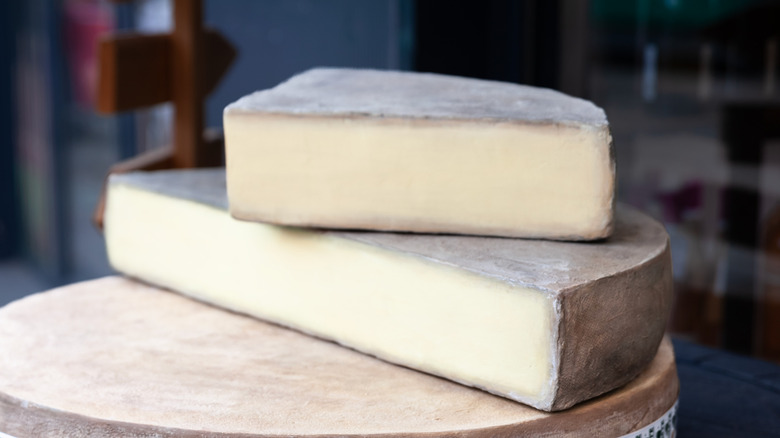
In 1987, a U.S. judge ruled that unpasteurized, or raw, milk is unsafe — with exceptions being made for raw milk cheese that's been aged at least 60 days and carries the label "unpasteurized." What this meant is that many cheeses that are happily consumed overseas, but come from unpasteurized raw milk, can't be enjoyed stateside. These include Brie de Meaux, Camembert de Normandie, Reblochon, and Mont d'Or.
Not everyone is on board with this ban. Not only because the cheeses we're missing out on are supposed to be delicious, but also because raw milk has some good bacteria that gets eliminated in the pasteurization process.