

11 Ways To Cook With Whiskey That You Have To Start Trying
If you're considering all the different types of alcohol you might utilize in the kitchen, whiskey may not be the first option you reach for. Wine has plenty of culinary uses, whether you're deglazing a pan or cooking a simple pot of risotto. Beer is great in a batter or for braising. Even the arguably less flavorfully complex vodka is well known for its use in sauces and pastry dough. However, whiskey doesn't often get the same culinary love or widespread use, at least when it comes to home cooks.
Maybe it's because whiskey can feel a little less approachable. It's bold and flavorful, with a passionate, opinionated fanbase. Cooking with whiskey can feel somewhat intimidating, and that's particularly the case if you're not an avid whiskey drinker yourself. However, cooking with the spirit doesn't have to be a process that you avoid just because you're currently unfamiliar with all the ways to do so. There are tons of straightforward — and also unexpected — places in which you can begin incorporating whiskey into your cooking and baking.
To get some top recommendations and tips, we spoke with chefs and restaurateurs in two of the most prominent whiskey states in the nation: Kentucky and Tennessee. Here's what Stephen Goodin, owner and head baker at Dust & Flour Co. in Springfield, Kentucky; chef Karissa Perez from Five Brothers Bar & Kitchen at Heaven Hill Distillery in Bardstown, Kentucky; executive chef Jeff Carter from Dancing Bear Appalachian Bistro in Townsend, Tennessee; chef Marci Mays at Kitchen218 in Pulaski, Tennessee; and Ellen Kelley Bowling, owner of The Old Talbott Tavern in Bardstown, Kentucky had to say.
Add it to your wet ingredients when baking
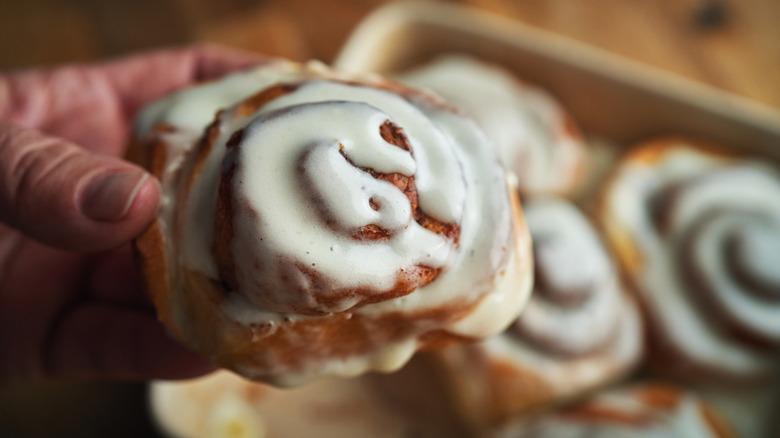
When it comes to leveling up your next baking project, Stephen Goodin said bourbon is the way to go. He told us, "When dealing with bourbon (my preferred spirit!) as a baker, I normally count it as an intense fermented water. When using it in cookies or cakes, we love to add a splash to our wet mise like buttermilk or cream. [It] makes a killer soaking agent for cinnamon roll or sticky buns."
Never used a soaking agent for your cinnamon rolls or sticky buns? If you're trying to achieve an ultra-moist final product with either, a common "hack" is to pour heavy cream over your cinnamon rolls or buns before they go into the oven. The rolls or buns soak in and up the cream, making for a supremely moist, gooey treat. In fact, some say they'll be so wonderfully moist and delicious that you won't even need any of the typical frosting.
However, again, don't limit your use of whiskey-infused cream to just cinnamon rolls and sticky buns. As Goodin recommends, toss a splash into your normal wet ingredients when baking other items like cakes, too. While you're at it, you might even use bourbon as a boozy swap for one particularly common baking staple: vanilla.
Add it to your eggs
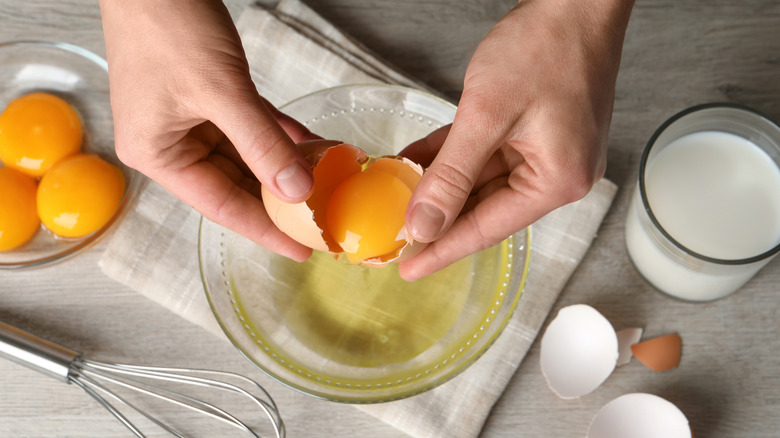
Another way that Stephen Goodin uses bourbon in his kitchen is by adding it to his eggs. No, we're not talking scrambled eggs or an omelet. Instead, when making cookies, this pro baker specifically adds bourbon to the required yolks. He said, "Our cookies have it added in during the emulsification process of the eggs, that way the moisture doesn't affect our final product in the end, besides adding an intense boozy finish." (Because adding too much moisture to your cookie dough is one quick-fire way to end up with a disappointing bake.)
Overall, when baking with bourbons, Goodin explained, "We try to pair flavor profiles in the bourbon to the flavors we put in our products. If a bourbon has more of an intense orange note, we add a little orange zest to really highlight those after-notes that sometimes get lost in the tasting part of bourbon. It's hard sometimes to pick out the small notes as an average cook or baker, so we listen to the distiller's palate, helping to accent their flavors to the best of our abilities."
If you heard "bourbon and eggs" and your ears perked up, explore other ways to combine these two ingredients — though maybe just not at the breakfast table. Eggs and whiskey make friends in numerous tantalizing cocktails, from your classic boozy eggnog to Ina Garten's favorite cocktail, the whiskey sour.
Make a bourbon caramel
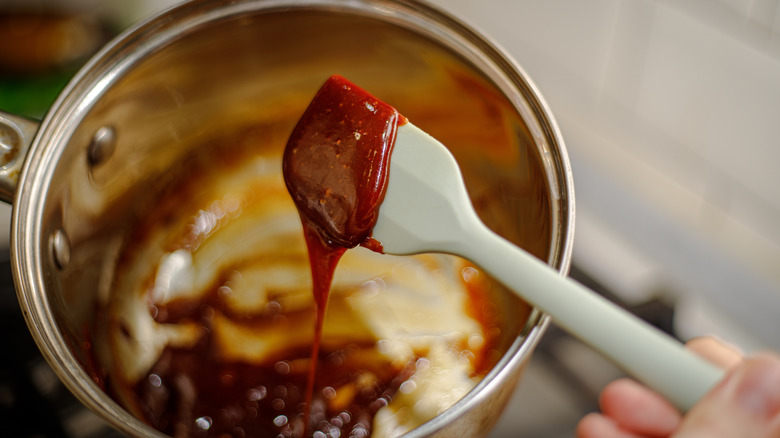
One of the easiest ways to give a favorite baked item a kick of bourbon flavor? Go with possibly the simplest (and yet still very impressive) route of all, and make a bourbon caramel.
According to Stephen Goodin, "By far my favorite application of bourbon in baking is simple, but delicious — a salted bourbon caramel." Cook your dry caramel until it's "a deep amber color, hit it with heavy cream, a generous amount of salt, along with vanilla paste, then a personal amount of bourbon to finish," he said. "Boozy, dark, [it's] a perfect accompaniment to any dessert or even as a sweetener for your morning coffee (we don't judge in Kentucky)."
Never made caramel from scratch? Don't worry. You will seriously be surprised at how simple and easy it is. You're basically just boiling sugar, at the end of the day, but remember that you shouldn't leave the stove when making caramel. Stirring and watching for the right color is crucial, so that you end up with a caramel that's creamy and consistent, rather than burnt or separated.
Create a vinaigrette
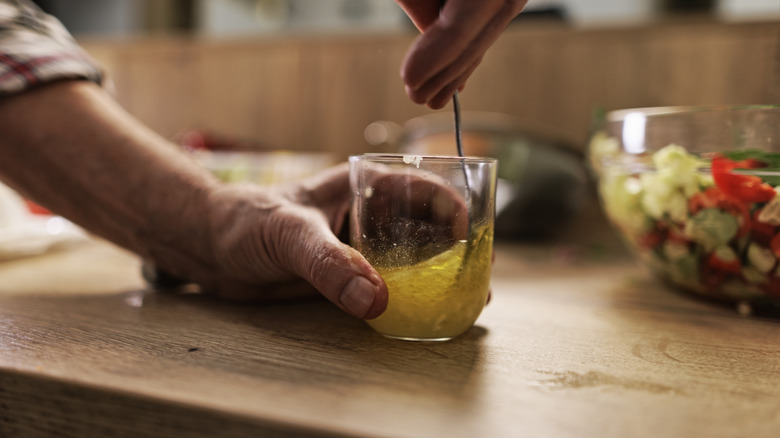
Once you start making your own caramel at home, you're never going to go back. Why would you when it's so deceptively simple and yet all your friends and family are so impressed? Making your own vinaigrette at home, regularly, is much the same — and can likewise benefit from a hit of bourbon.
If you're not sure where to start, chef Karissa Perez at Five Brothers Bar & Kitchen creates a vinaigrette using Heaven Hill Distillery's Bottled-in-Bond bourbon, combining it with oil, brown sugar, Dijon mustard, garlic, salt and pepper to taste, and tarragon vinegar. If you don't have any tarragon vinegar on hand, she suggests that you substitute it with a mix of white wine vinegar and dried or fresh tarragon.
Perez noted that the dressing "works well on a variety of salads but is best paired with a bright citrus salad. The notes of the Bottled-in-Bond, its slightly floral and vanilla-backed flavor, are cranked up with the addition of citrus. The flavors in the dressing combine with the acidic notes and bring out the best and brightest of the bourbon, opening it up on the palate." Some chefs recommend that before adding booze to salad dressing, you flambé the alcohol to burn off the boozy flavor, but Perez doesn't bother for this recipe. Instead, all you do is blend your ingredients and go.
Make a ganache for a cake
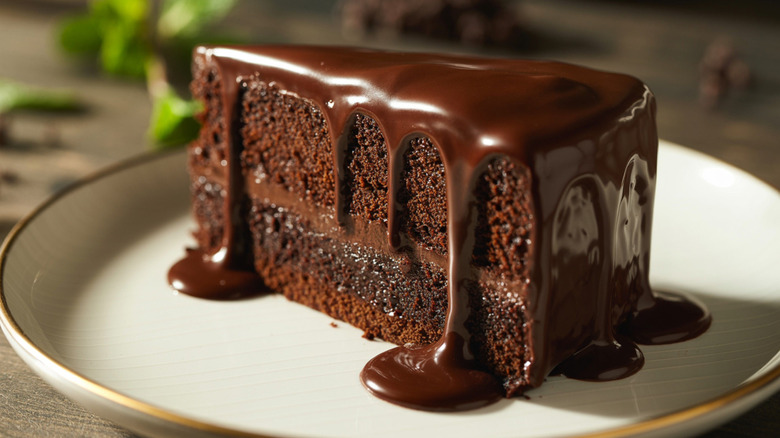
Chef Karissa Perez also recommends making a bourbon ganache for a chocolate cake. Again, this is something that sounds a bit fancy, but it's really straightforward. (What's the difference between a ganache and a typical frosting? Ganache is generally richer and denser than your average buttercream or similar.) While many recipes for ganache may just call for equal or near-equal parts chocolate and heavy cream, Perez combines 300 grams of dark chocolate with 250 grams of heavy cream, plus 3 tablespoons of Elijah Craig Toasted Rye bourbon.
She described, "Elijah Craig Toasted Rye has a warm complex flavor with notes of vanilla, maple, cinnamon, and cherry. All of these flavors lend themselves incredibly well to desserts, and more specifically dark chocolates. The bitterness in the dark chocolate is balanced perfectly with the warm sweetness of the bourbon. It creates a rich, layered flavor that isn't too sweet."
Bringing the ingredients together couldn't be any easier, either. Just combine the chocolate and heavy cream either in a double boiler or even the microwave, before adding your bourbon. Then, let it set in the fridge. When you're ready to use it, you can whip it in a stand mixture, adding more cream, until you get to your desired texture.
Put it in your barbecue sauce
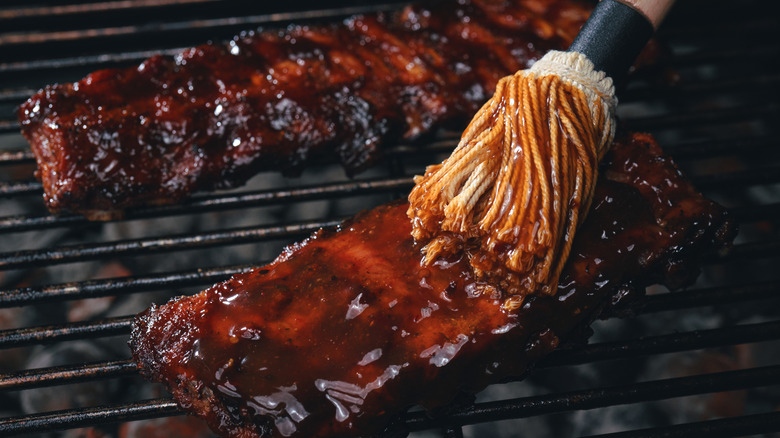
Likely one of the most common uses for whiskey in the average home kitchen? Adding it to your favorite homemade barbecue sauces or marinades. Dancing Bear Appalachian Bistro in Townsend, Tennessee is a stop along the state's Cork to Fork Trail — an initiative from the Tennessee Whiskey Trail that pairs distilleries with restaurants to create whiskey-infused dishes. Executive chef Jeff Carter said that one dish in particular — a burnt ends pork belly — highlights bourbon in multiple ways, including through a blackberry barbecue sauce.
You can similarly infuse your favorite homemade barbecue sauce with your whiskey of choice. For example, as you sauté some of your sauce ingredients (like if you're using onion or garlic), you can cook down the whiskey at that same time, before adding in other ingredients like vinegar, mustard, and spices. Other home cooks, though, just add bourbon to pre-made barbecue sauces, while being cognizant of how the addition may impact the existing sauce's consistency and flavor. If you find you add too much bourbon to the sauce and it makes it runny or too boozy, for example, you should simmer it down.
Already made a habit of adding whiskey to your barbecue? Flip the script and add barbecue sauce to your cocktails next. That's right, you can add barbecue sauce to an Old Fashioned for a smoky kick.
Toss together a bourbon gastrique
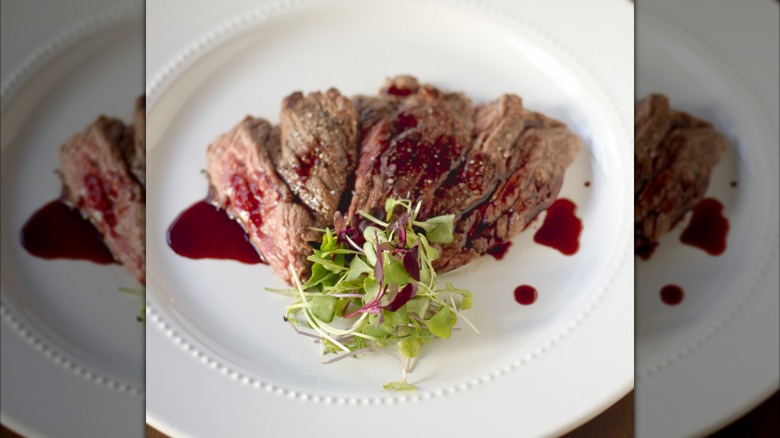
Executive chef Jeff Carter's burnt ends pork belly also highlights regional whiskey via a bourbon gastrique. What is a gastrique, you might ask? Gastrique is a sweet and sour sauce that, at its core, is simply a combination of caramelized sugar and vinegar. From there, as far as tweaking your gastrique's flavor profile further, it's all chef's choice. You can influence the flavor by utilizing different types of vinegar. You can add in various herbs and spices. You can, as Carter does, add in some whiskey. Then, you can use your gastrique all sorts of ways, whether you add it to pork belly or other decadent cuts of meat, or even desserts or cocktails. You can also use it as part of a vinaigrette.
Ultimately, this is a highly versatile sauce that can be made with a long list of ingredients, and put to work in a long list of dishes. If it's not in your sauce repertoire yet, it should be.
Overall, Carter's top tip for cooking with whiskey? "When cooking with whiskey, the key is balance," he told us. "It should add depth and character, not take over. The best results come when you pair it with ingredients that can stand up to it, like smoke, fruit, acid, and rich cuts of meat."
Blend it with butter
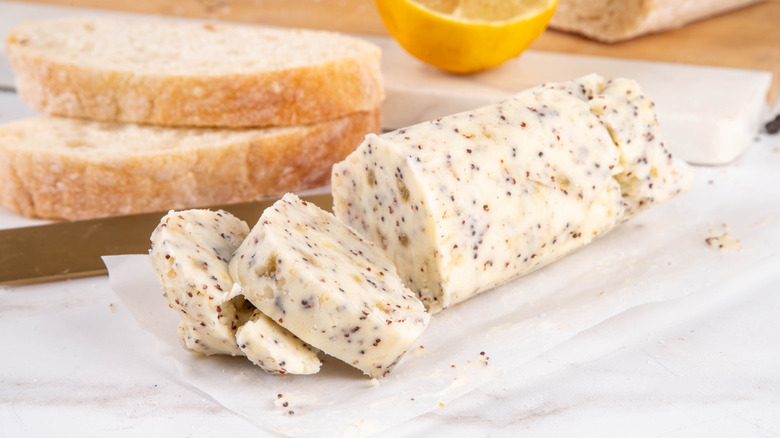
There's nothing more simple and yet as effective a vessel for delivering flavor as a compound butter. If you've only been acquainted with this accompaniment in a restaurant setting, breathe easy knowing that making a compound butter is exceptionally straightforward (and the results are as versatile as what you'll get from your bourbon gastrique). Crafting a compound butter requires merely softening and whipping your butter along with the ingredients of your choice — and these can really be anything. Herbs, spices, sun-dried tomatoes, cheese, honey, hot sauce, nuts, chipotle in adobo, and, yes, bourbon. Then, you form the butter into a log and allow it to re-harden.
It's a use that multiple experts told us they employ. Chef Marci Mays at Kitchen218 in Pulaski, Tennessee, another stop on the Cork to Fork Trail, recommended using Jack Daniel's Old Number 7 for making compound butter.
Similarly, at The Old Talbott Tavern in Bardstown, Kentucky, owner Ellen Kelley Bowling said that, in addition to using bourbon in a popular sweet bourbon sauce, the restaurant also features whiskey "in a more approachable, comforting way" by serving bourbon butter alongside house-made corn muffins. "Blended with brown sugar, the bourbon adds a subtle warmth and depth that elevates a simple staple into something memorable," she said.
Deglaze a pan
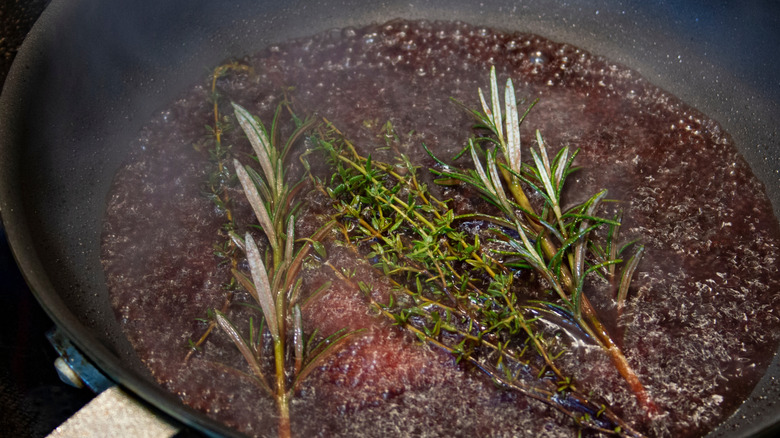
Along the same lines of simple yet effective, chef Marci Mays also prefers Jack Daniel's Old Number 7 for deglazing a pan. This particular Tennessee whiskey offers a "deeply warm flavor" that she especially likes for savory dishes.
Deglazing is a common practice in any professional kitchen, and you've probably deglazed a pan or two at home in the past, even if you haven't called it that. It's just the simple process of pouring a liquid (like whiskey) into a hot pan in which you've previously seared another ingredient, allowing the liquid to loosen all those little, perfectly browned bits as it cooks down into a delicious pan sauce.
You'll want to remember, though, never to pour whiskey into your pan while it's on direct heat, as that can lead to a newbie losing an eyebrow or two. Instead, measure your whiskey separately, remove the pan from the heat, add the whiskey, and only then return it back to a slow simmer, along with any other ingredients you want to add, such as salt, pepper, butter, or other additional liquids like stock or cream.
Make crème anglaise
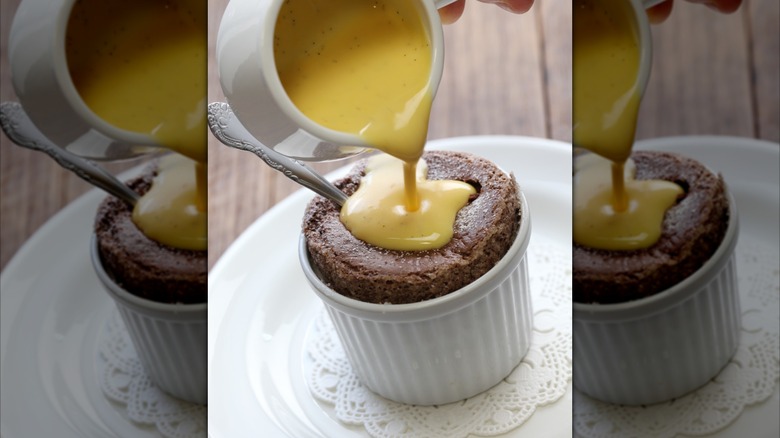
When it comes to dessert, chef Marci Mays skips the Jack Daniel's Old Number 7 and instead goes for Tennessee Honey. "It still has that richness, but with a sweet edge that mixes so well. I skip the cook-down process and put it directly into my sauces," she said. One of those sauces? The restaurant's Jack crème anglaise.
So what is crème anglaise and should you be making it more often, whiskey included? This versatile dessert sauce comes together through a careful preparation of milk or cream, eggs, sugar, and vanilla (and whiskey, if you so desire). The sauce must be cooked slowly and carefully, with continual stirring, until it's about 165 to 185 degrees Fahrenheit, varying according to desired thickness. Tempering is also required, and having an instant read thermometer on hand is smart, too.
Once you nail getting the base just right, you can add all sorts of other ingredients to create a unique flavor profile. The crème anglaise can be used as just a sauce on its own, for other desserts, or you can actually use it as an ice cream base as well.
Add it to bread pudding
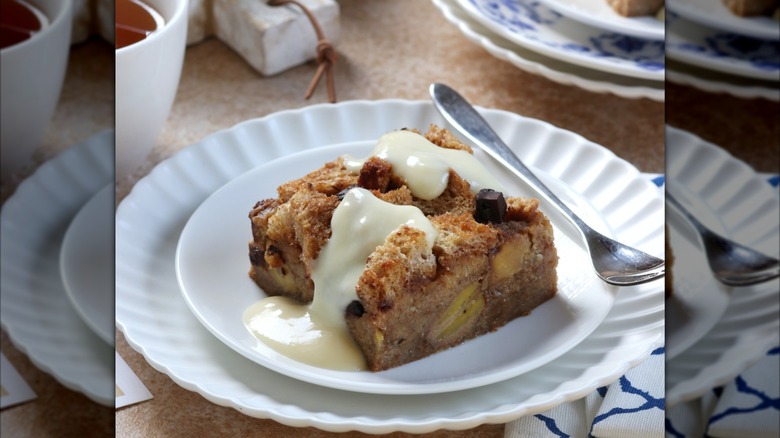
As for where chef Marci Mays chooses to use her Jack crème anglaise, she opts to incorporate it as a topping for the restaurant's bread pudding. She's not the only expert, though, who told us that they like adding whiskey to this classic dessert.
"On the dessert side, bourbon truly shines. We incorporate it into a rich finishing sauce for our bread pudding, where its notes of vanilla, oak, and spice complement the sweetness and create a well-rounded, indulgent finish," said Ellen Kelley Bowling. Overall, she added, across all the restaurant's dishes that incorporate whiskey, the "approach is to let bourbon add depth and character without overpowering, creating a cohesive flavor experience that ties together both savory and sweet offerings."
If you're not quite up to pulling together a batch of crème anglaise or any other finishing sauce, there are other ways that you can incorporate whiskey into your bread pudding. For example, if your recipe includes raisins, you can soak them in whiskey before use. You can also, as already mentioned in regards to other baking projects, swap out your bread pudding recipe's vanilla for a favorite whiskey, or you can add a splash of whiskey to your other wet ingredients.