

Are Speed Ovens Really The Microwave Replacement You've Been Needing?
We may receive a commission on purchases made from links.
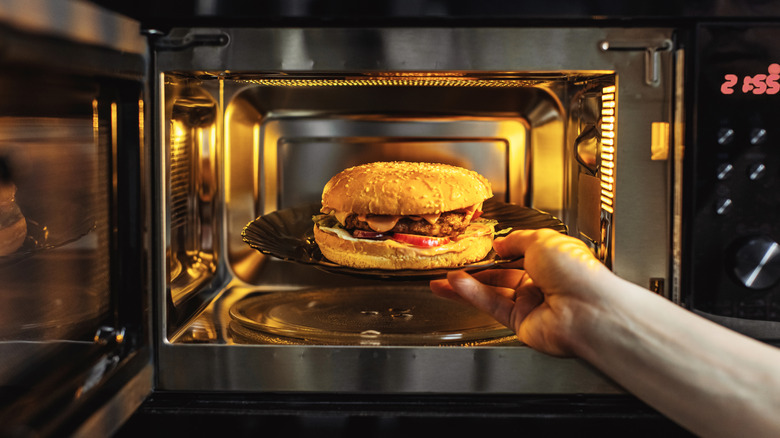
All kitchen appliances break down eventually, and although it typically happens at the most inconvenient time, it's an opportunity to upgrade if you look at the situation through a glass-half-full lens. When a microwave stops working (either due to age or because you forgot why metal shouldn't be microwaved and found out the hard way), there's a wide array of models that will do everything your old unit did, but not much more. They are simple machines that make a mean batch of microwaveable buttered popcorn for movie night, but you're not going to be baking pastries or creating a three-course meal in one.
If you want an appliance that can do more, a speed oven might be up your alley. If you've ever had a toasted sub from Subway, you can thank the speed ovens they use for that appetizing crunch. They come equipped with a microwave magnetron to reheat leftovers as well as a convection fan and heating element that cooks food similarly to a traditional convection oven, but faster. In other words, they can function as a microwave, a convection oven, or both simultaneously, depending on your needs.
That being the case, one would think that having a speed oven over a microwave is a no-brainer. Not so fast. Speed ovens certainly hold some advantages over microwaves, but there are some drawbacks as well. Let's dig into the differences between the two appliances.
Speed ovens offer versatility while microwaves don't
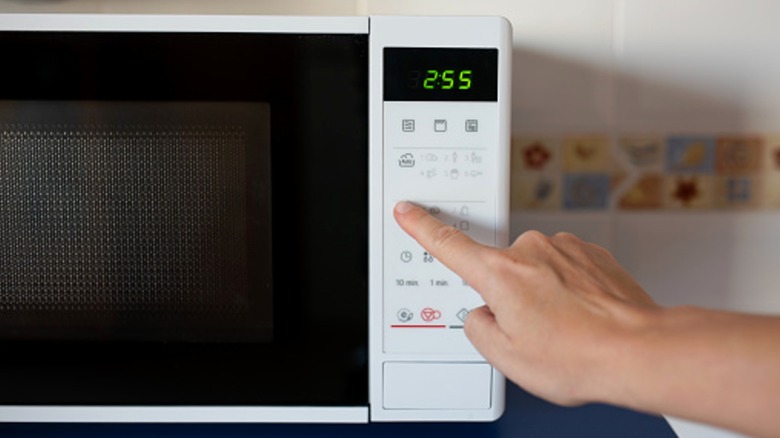
Technically, you can cook raw chicken in the microwave, but you probably don't. While the poultry would eventually reach an internal temperature that makes it safe to eat, it would be devoid of the crispy browning you'd get from roasting it, and it isn't a stretch to assume it would come out rubbery. A speed oven, on the other hand, can cook you a browned, juicy chicken breast that looks and tastes amazing. It can also broil dishes and make baked goods like cookies.
So, how are speed ovens different than a regular convection oven? In a word: time. Whereas an oven-roasted chicken breast can take 15 to 20 minutes to reach 165 degrees Fahrenheit internally, a speed oven can do the same job in less than half that time. The same timeframe applies to other foods, such as roasted vegetables.
Want to heat up your favorite convenience meal from the frozen section of the supermarket? A speed oven can do that, too. Essentially, it can do anything a microwave can do, with the added capability to bake cookies in under two minutes. With a speed oven, you can cook a hearty meal in less time than it would take in a normal convection oven without the many disadvantages of microwave ovens.
Not all kitchens can accommodate a speed oven
When you bring a new microwave home, finding the best place for it in your kitchen generally isn't a problem. That's rarely the case with a speed oven. Although they are smaller than a traditional convection oven, they usually take up more space than your average microwave. Typically, sticking one on your countertop isn't an option. It's more likely you'll have to install it into a wall or cabinetry, a job you'll want a professional to tackle.
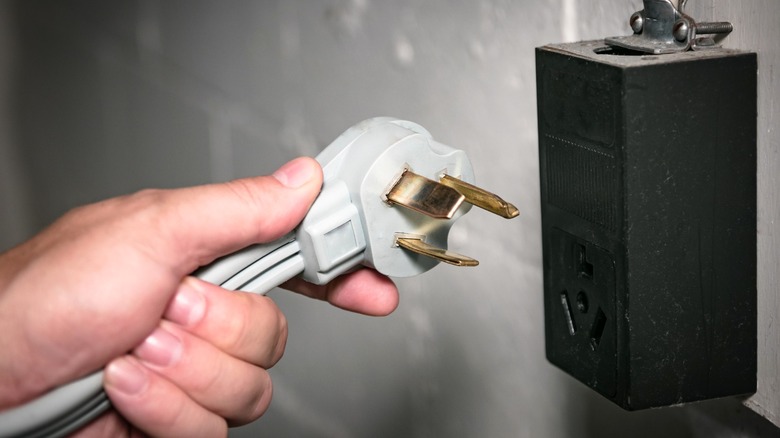
It's also important to consider your power options. While some models come equipped with power cords that can plug right into a normal, 120-volt wall outlet, not all do. Some units require a 240-volt outlet, which may be something your kitchen is lacking. Even if you do have an outlet that can power a speed oven, you'll be forced to install it near that power source, which may not be the most convenient place for it in terms of ease of use or your kitchen feng shui. And even though they're built to be power-efficient, even 120-volt compatible models will use more power than a microwave, which could affect your energy bill with extensive use.
Speed ovens have lots of unique features
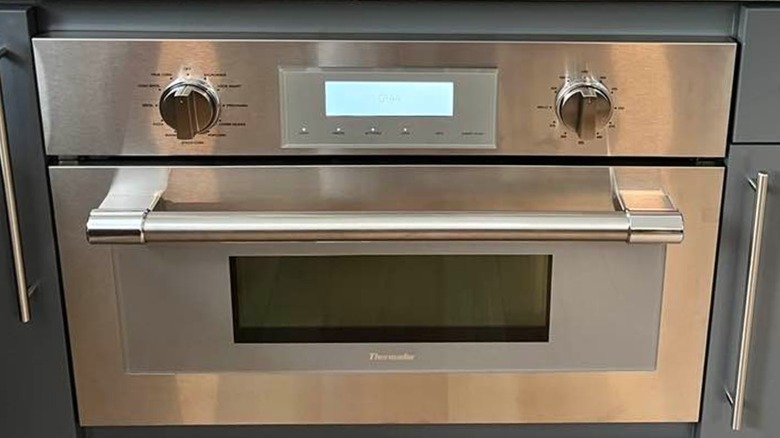
The ability to make quick meals that look and taste like they were prepared in the oven isn't the only advantage speed ovens have over microwaves. Some models have additional useful features, such as settings that allow you to steam cook veggies and other foods. They also often have sensors built in that read the temperature of the food and adjust the cook time and power setting automatically to prevent it from overcooking. Some even come with meat probes that can grant immediate insight into the internal temperature of proteins.
While there are specific ways to make cleaning a dirty microwave easier, you don't need to worry about those with a speed oven. They are typically fashioned with non-stick material on the inside, meaning errant splatters should wipe away with ease. Microwave ovens, on the other hand, generally feature a stainless steel interior, which tends to allow messes to stick to the surface and require a bit more elbow grease to remove.
There is a learning curve with speed ovens

Even folks who don't cook often can usually figure out how to cook something in the oven without too much trouble, and using a microwave is even easier. Speed ovens, on the other hand, can take some time to get the hang of. While the various functions they possess provide versatility, they also introduce unique challenges. Calculating exactly what setting to use to make a casserole versus baking pastries takes some trial and error.
A normal convection oven offers more control over your cooking, simply by the nature of taking longer. People familiar with when to glaze a meatloaf or slather BBQ sauce on roasted chicken in a regular oven are going to quickly find that the timing is much different when utilizing the swiftness of a speed oven. Baked goods can also be challenging until you understand the timing, as the rapid pace at which a speed oven will bake them could mean they go from moist and delicious to dry and hard in the blink of an eye. However, even with its quirks, a speed oven can easily perform these tasks once you unravel the nuances, whereas a microwave can't.
The price difference is stark
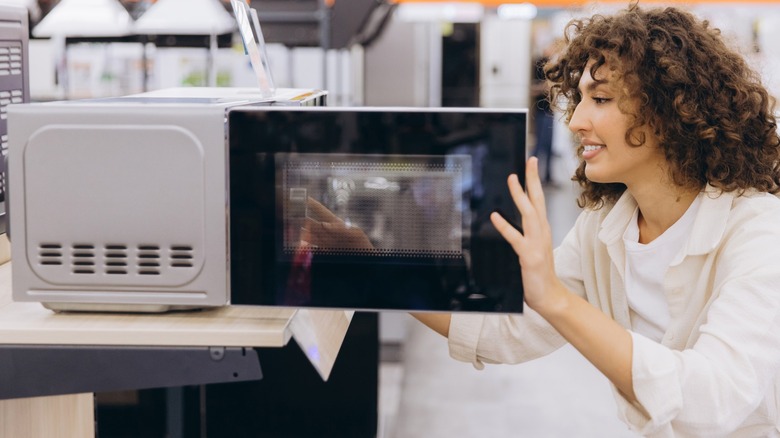
The biggest drawback to purchasing a speed oven over a microwave is arguably the price difference. Replacing chef Mic generally sets you back a couple hundred bucks. Home Depot stocks some units for closer to $100, and Amazon sells the Chefman Countertop Microwave and other models for even less. Some souped-up units cost more, but overall, they are relatively affordable if you just need a microwave to defrost meat or heat up your coffee.
The price of speed ovens also varies, but in a whole different range. A run-of-the-mill unit will cost $1,200. If you want a model with all the bells and whistles, you'll be looking at closer to $3,000. As mentioned previously, you'll also probably have to pony up for someone to install it.
All things considered, whether someone should trade in their microwave for a speed oven depends on their lifestyle and budget. If you're someone who does meal prep for the week, reheating those pre-made dishes in a speed oven is much faster than a traditional oven and will maintain the quality of your food better than a microwave. Alternatively, if you enjoy making homemade meals daily, you may be more comfortable using your regular oven while reaching for the microwave separately to perform tasks like thawing meat and melting butter. It's all about what works best for the way you like to cook and how big a budget you have for a new appliance.