

11 Mistakes That Are Ruining Your Cornbread
We may receive a commission on purchases made from links.
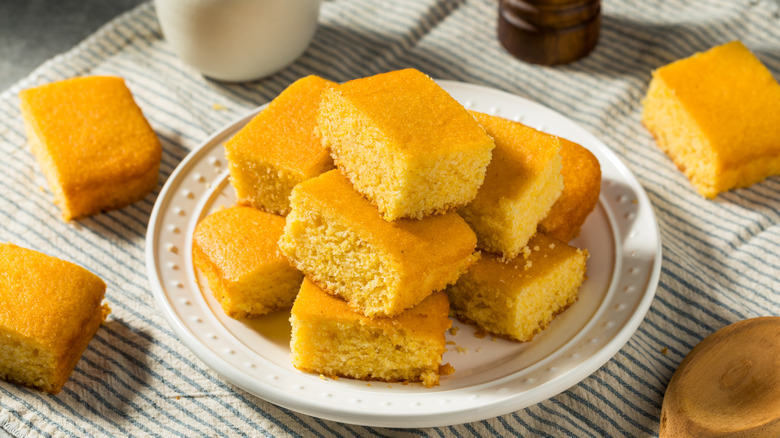
Cornbread may be simple, but it's a versatile, beautiful bread that goes with so many different dishes and meals. Fried chicken and collard greens? Add in some cornbread. Barbecue with all the fixin's? You're gonna need some cornbread there, too. Honestly, if you have some really amazing cornbread, you can literally just mash it down with some milk and you have an easy breakfast or not-so-sweet dessert that old-timers in the South will recognize on sight.
However, simple as it may be, making truly amazing cornbread at home can be a challenge if you don't have a reliable recipe and your method down pat. The wrong choices here and there can result in dense, flat cornbread, or cornbread that's bland and flavorless (or worse, that tastes like your leavening agent and little else). So how do you achieve a skillet of cornbread that's light, airy, crumbly, moist, and oh-so-tasty?
To find out, we spoke with some pros who have more than a little experience. Here's what they had to say about the top mistakes that are ruining your cornbread — and how to avoid them in the future.
1. Using a cold skillet
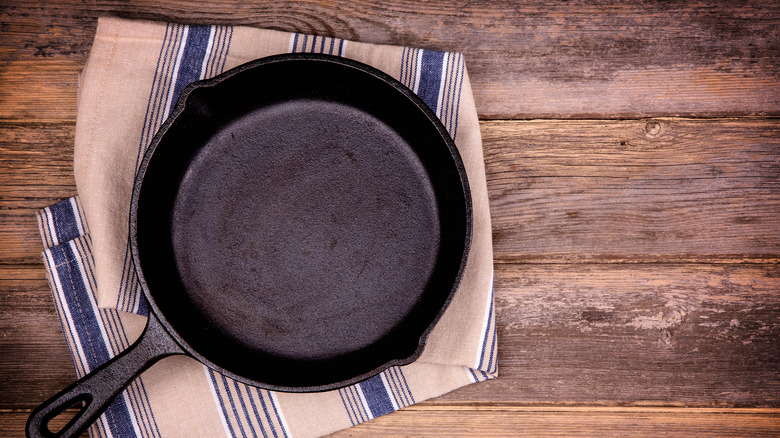
So you have your corn bread batter all mixed up. You're ready to toss it into the oven. You grab your handy cast iron skillet or Dutch oven — but not so fast there. If you didn't bother to preheat your cooking vessel, you're going to be in for a bad time.
According to Kent Rollins, host of the Outdoor Channel's "Cast Iron Cowboy," preheating your cast iron is crucial. "... if you're going that route you're going to want to preheat it a little on a burner before you pour your cornbread mix in, just enough so that you can barely put your hand on the bottom of it. Starting with a cold skillet is a sure way to end up with a pale and soggy cornbread instead of one with a perfect golden crust."
It's not just your pan that should be the correct temperature, either. Jessica Bograd, senior director of culinary for City Barbeque, likewise told us that your batter needs to be the right temperature, too. Specifically, you need to bring it up to room temperature before baking. "If the butter or eggs in the batter are too cold, you'll end up with a dense bread that doesn't rise evenly," she said.
2. Incorrectly preheating the pan
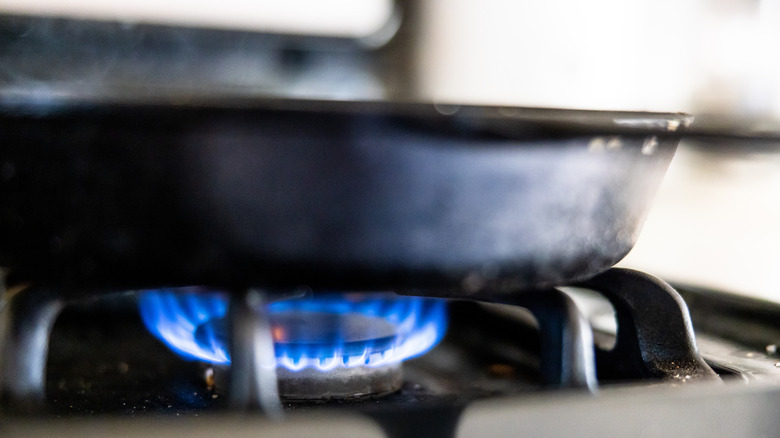
So now you know that you need to preheat your cast iron skillet or Dutch oven before you bake your cornbread — but make sure you're going about it the right way. This isn't a matter of just letting the skillet warm up and calling it done. Just like a skillet or Dutch oven can be too cold for your cornbread batter, it can also be too hot.
Kent Rollins said, "If it's too hot when you add your grease (or butter if you're using that), it will kick off the cooking process and burn your cornbread. You want it just warm enough to melt that bacon grease and get it coated well."
And along those lines, you really should be routinely keeping your bacon grease for use in future recipes, like cornbread. To do so, and to ensure your bacon grease stays tasty, longer, right after cooking a pan of bacon, pour the fat into a heat-safe container, and then let it cool. Any solids should settle to the bottom of your container, so you can easily remove the fat and store it in a glass jar in the fridge. You can also strain the grease ahead of cooling, using a cheesecloth and sieve, to remove any of those solid bits, which can make the grease go rancid quicker, if you leave them.
3. Under or over baking
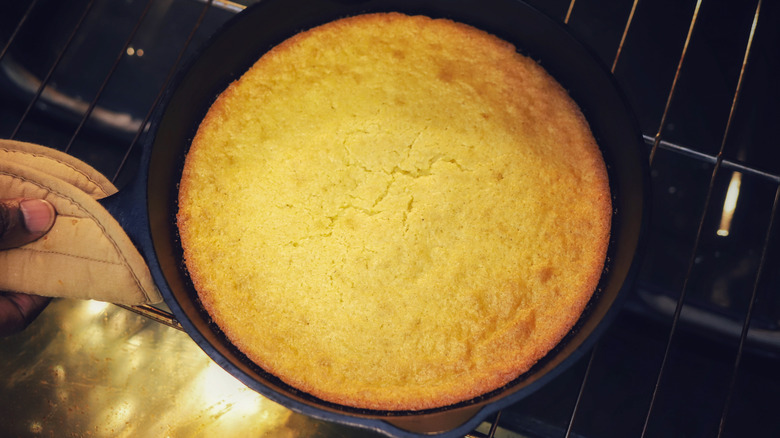
You have a cornbread recipe and you're pretty sure you can trust it... but can you? Even if your cornbread recipe tells you that your cornbread will reliably be done in a certain amount of time, don't trust that recipe without question, walking away from the oven only to return once your timer's gone off. Under or over baking your cornbread is one of the top mistakes that could be ultimately ruining your cornbread, according to Kent Rollins.
"If you're not sure when your cornbread is done cooking just give it a little pat on top to make sure it's set in the middle. When it has that golden brown crust on top and the edges of the cornbread separate from the sides and the center doesn't jiggle, then it's done," said Rollins.
Then, once your cornbread's finished, don't leave it to linger for too long. It's best served hot, as Jerry Stephenson, Jr., founder of Redneck BBQ Lab, an award-winning BBQ restaurant in Benson, North Carolina, noted, recalling his own favorite cornbread memories.
"My thoughts on what cornbread should look and taste like come from watching my grandmother and my mother make it when I was growing up. It was always served hot and moist, with a crispy bottom and a golden-brown top crust. It was crumbly, yet held together perfectly — moist but never dense," he described. "It was the perfect accompaniment to just about any meal we had."
4. Being afraid of fat
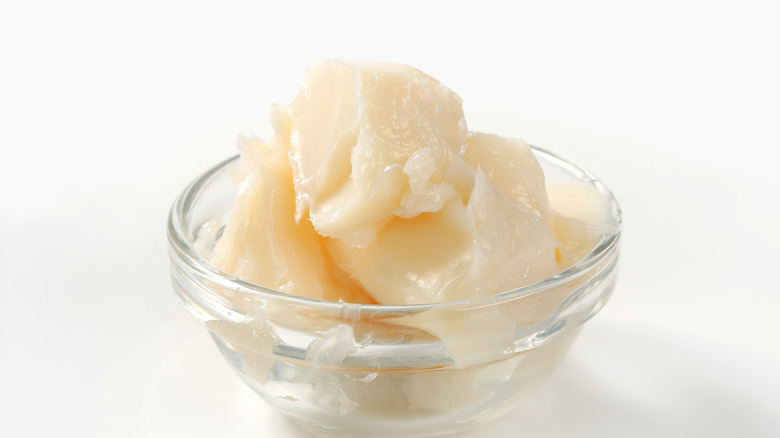
If you're trying out a low-fat diet, well, you might not get the best results from your cornbread. It's one of those foods that really needs a fatty component for the best texture and flavor. For example, Kent Rollins said that specifically using bacon grease in his cast iron skillet when making cornbread results in a good outer crust.
Meanwhile, Jerry Stephenson, Jr. takes things further. He told us, "Cornbread loves flavor. I like adding hog jowl, pancetta, bacon bits, or even a little cheese to the mix. Fat brings richness and depth that makes the cornbread taste even better."
Likewise, Matt Abdoo, executive chef and co-founder of Pig Beach BBQ, concurred, saying, "Using too little fat can... lead to problems. If there isn't enough fat (whether oil, butter, bacon fat, lard, or a combination) the cornbread will often turn out dry and crumbly instead of moist and tender."
Similarly, Jessica Bograd advised that you opt for the good butter. "It helps create a more tender, spongy cake and adds great flavor," she said. Yet another fatty ingredient you can add to your cornbread that will add extra moisture? Try full-fat mayonnaise. Yep, just like mayo can add fatty, rich goodness to chocolate cakes, it can also give the same to your cornbread, plus a little characteristic tang. This is especially the case if you're using a boxed cornbread mix rather than going the from-scratch route.
5. Not picking the right cornmeal
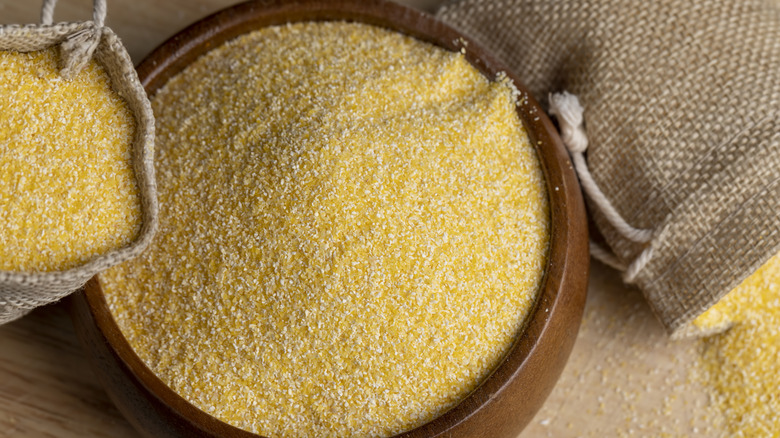
Cornmeal is cornmeal is cornmeal, right? Not exactly. There are various types of cornmeal and if you pick the wrong variant, you could ruin your cornbread. While all cornmeal is, at its core, just dried, ground corn, it may be fine, medium, or coarse-ground. Cornmeal may also differ in flavor according to where the corn was grown. Cornmeal can additionally be categorized according to color: yellow, white, or blue.
Matt Abdoo explained how to pick the best option for your cornbread endeavors. "If the cornmeal is too finely ground, the result tends to be more cake-like in texture. If that's the goal, that's perfectly fine, but most people expect cornbread to have a bit of texture. A medium-grind, stone-ground cornmeal is usually the best choice because it gives the cornbread that classic rustic crumb."
Similarly, Culinary Director Sezer Deniz at CBD Provisions at The Joule in Dallas said, "I also recommend using stone-ground cornmeal for better texture and flavor" — and, while you're at it, Deniz cautioned that you don't accidentally over-mix the batter. Avoiding doing so will ensure a more (again) rustic texture and tender crumb.
6. Using a wrong ratio of cornmeal to flour
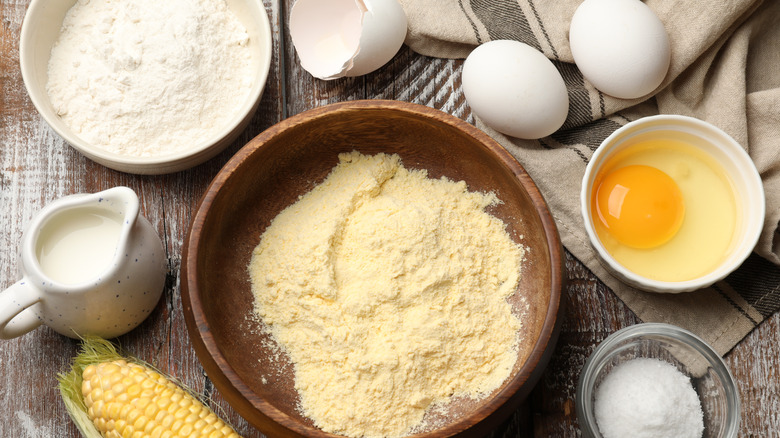
Cornbread is not made from cornmeal alone. You're going to need some flour in that batter, too, but it's important that you get the ratio of cornmeal to flour correct.
"A good rule of thumb is about two parts cornmeal to one part flour. If the flour ratio increases too much, the texture starts to shift toward cake rather than traditional cornbread. Many classic Southern recipes actually use very little flour at all," said Matt Abdoo.
You can see an example of this Southern take when you look at the somewhat controversial cornbread that's king at a North Carolina barbecue joint. The restaurant avoids the typical cornbread combo of cornmeal, all-purpose flour, sugar, and eggs, and instead opts for a recipe that's mostly just cornmeal, water, and salt. It's simplistic and a throwback to times when wheat flour may've been hard to come by. Still, people love it. So, when making your cornbread, don't go overly enthusiastic with the flour. Aim for more cornmeal than not.
7. Using something other than cast iron
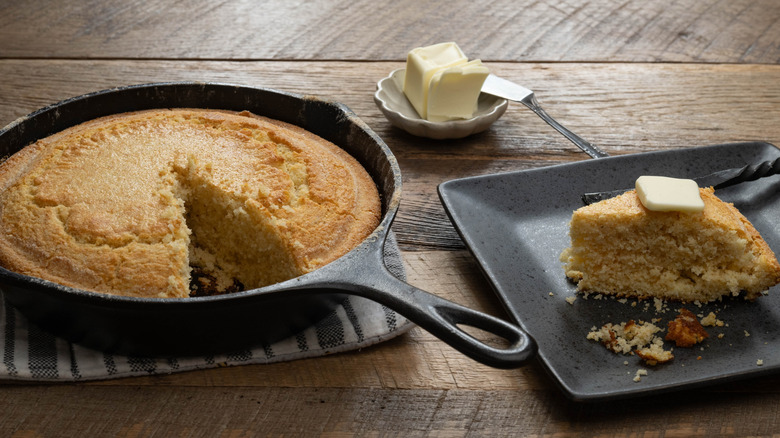
Sure, you could technically make cornbread using your aluminum cake pan or a glass casserole baking dish, but that's not going to give you the crispy exterior crust that you want on your cornbread. For that, it's cast iron all the way, baby.
As Jerry Stephenson, Jr. said, "A cast-iron skillet is the secret to a great crust. I like to coat mine with 3 to 4 tablespoons of bacon grease and place it in the oven to preheat while the cornbread batter rests." Your ears should perk up at the sizzle. "That's the start of the crispy, crunchy bottom crust that makes cornbread so special."
There is one caveat to this piece of advice, though. While cornbread is a food you should always cook in cast iron, you don't want to let the cornbread sit in the cast iron skillet for too long. If you try to store the cornbread in your cast iron, you'll find that doing so negatively impacts both the pan and the cornbread. The moisture in the cornbread breaks down the pan's seasoning and can even lead to rust. Meanwhile, the cornbread will take on a metallic taste if it's left in the pan for more than a few hours.
8. Not letting your cornbread batter rest
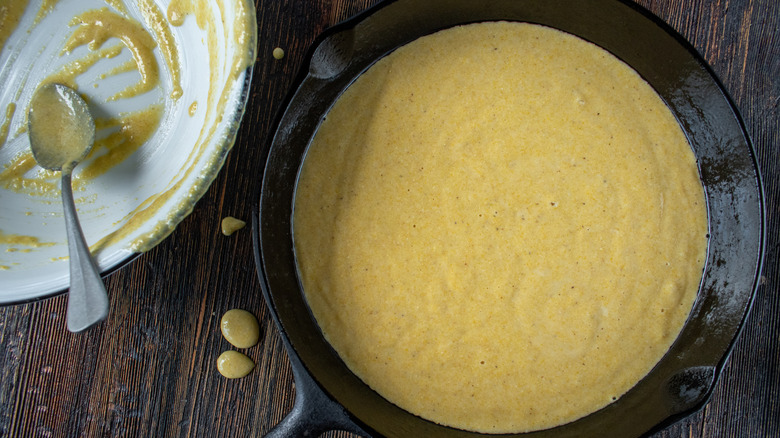
Cornbread is not something that you need to rush. While you can find recipes out there that will promise cornbread in the time it takes you to watch your favorite sitcom, hold off on speeding up the process.
Jerry Stephenson, Jr. recommends letting your cornbread batter rest for at least 30 minutes, so that your dry ingredients can fully absorb all the liquid. Plus, doing so allows your batter to come up to room temperature, which, as already discussed, is important.
Joseph Wheeler, a third-generation grist miller, and owner and operator of Atkinson Milling Company, likewise stated, "Seeing how fast we can throw a meal together nowadays is often the determining factor if we even cook at all. But corn meal usually needs extra time to mesh with other ingredients. Cornmeal has varying amounts and varying sizes of grit particles that need time to dissolve in liquid. Gritty, sandy textured cornbread is no fun."
9. Forgetting to add acid
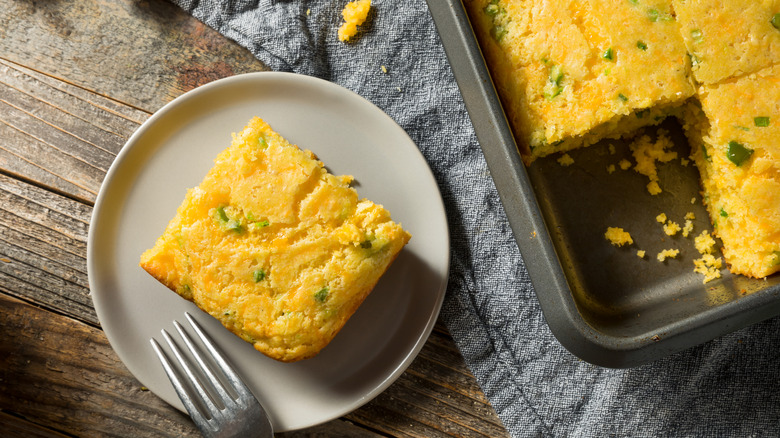
Jerry Stephenson, Jr. recommended adding a little bit of acid into your cornbread, saying, "Cornbread pairs beautifully with something bright and tangy. Pickled jalapeños are one of my favorites. That touch of acidity helps balance the butter and fat in the bread." He said that this tip can make The Redneck BBQ Lab Cornbread Mix by Redneck Scientific that Redneck BBQ Lab sells in packages, commercially, even more special. However, this is something that you can do to upgrade other cornbread mixes as well — like if you want to upgrade Jiffy cornbread mix.
Other ingredients that can add a bit of acid? They include grocery staples like sour cream and buttermilk (if your chosen recipe doesn't already include it — buttermilk is a popular one for cornbread). Note that if you do add sour cream to a mix like Jiffy, you may want to adjust your other ingredients accordingly. For example, you might leave out the milk that the Jiffy box calls for, as the sour cream will bring its own fat and moisture to the party.
10. Not getting creative with your mix-ins
When you think of various ingredients you could add to your cornbread, you might stick with the familiar — cheddar, canned corn, or jalapeños if you're going savory; maple syrup or honey if you're going sweet. But get creative with it and you may just surprise yourself (and your tastebuds).
As Jessica Bograd said, "Have fun with the mix-ins. Cornbread is a great base for a range of sweet, savory, or spicy flavors. Inclusions like roasted peppers or cheeses, or toppings like whipped flavored butters or honey, can really take the cornbread to the next level."
You might also consider upgrading your cornbread with a pantry staple: a can of beans. A can of black beans adds extra moisture and flavor to a basic cornbread recipe, but you'll have to do a little extra work before just tossing them into your batter. Drain, rinse, and roughly chop the beans to ensure that they distribute evenly throughout the bread as it's baking. You can reserve some of the liquid from the can for use in the cornbread as well, but adjust the liquid in your original recipe if you do.
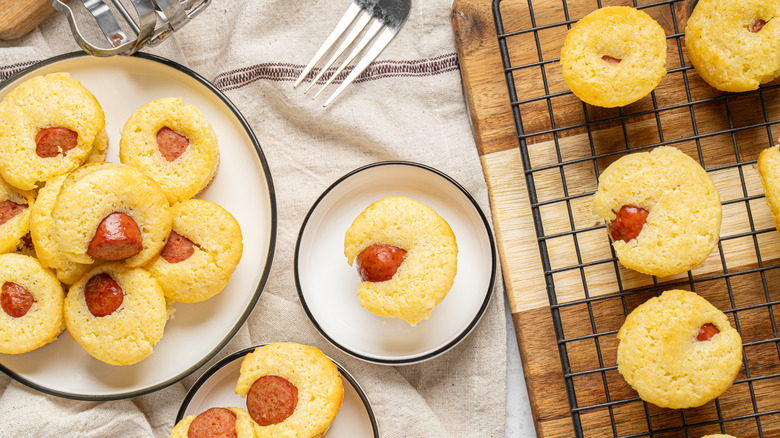
For a cornbread upgrade that's totally nostalgic and kid-friendly, though, you'll need to reach into the fridge. Hot dogs and cornbread are a match made in heaven. Just chop them up and add them to your batter or make hot dog cornbread mini muffins.
11. Not repurposing your leftover cornbread
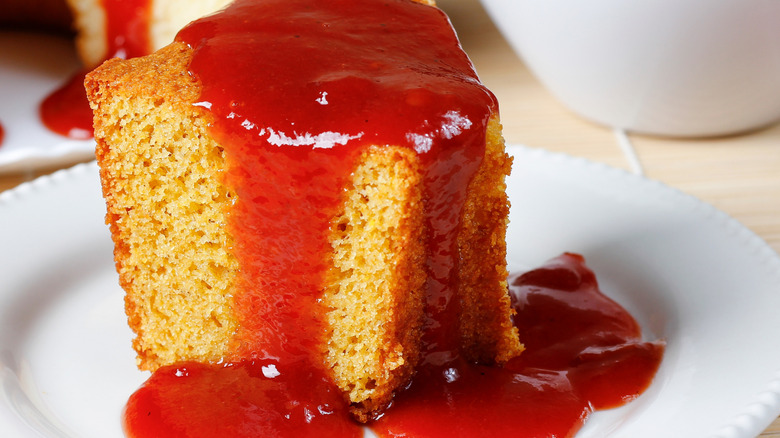
We love a dish that can be repurposed and re-crafted into something brand-new — and that's exactly what you can do with cornbread. Jerry Stephenson, Jr. has two suggestions for using your leftover cornbread in unique ways: as a dessert, and to improve stews.
"Simply macerate some strawberries or blueberries with a little sugar and spoon them over a warm slice. Add fresh whipped cream, and you've got a simple but incredible treat," he said. "Cornbread can also help tighten up a stew. Crumble a little into the pot and it will add body while bringing a subtle sweetness that balances acidic ingredients like tomatoes."
You can also turn your leftover cornbread into french toast. The process is simple, but you'll want to keep cornbread's crumbly texture in mind and adjust your normal french toast habits accordingly. Rather than letting the cornbread soak in your egg mixture, all the cornbread needs is a quick dip. Cut the slices of cornbread thick, and then after the cornbread's cooked, let it rest a bit to firm up.
No sweet tooth? Turn your cornbread into croutons, by cubing the leftover cornbread, gently coating the cubes in oil, and either air frying or baking them until they're nice and crunchy.