

For The Best Seafood Boil Every Time, This Is The Most Important Thing To Keep In Mind
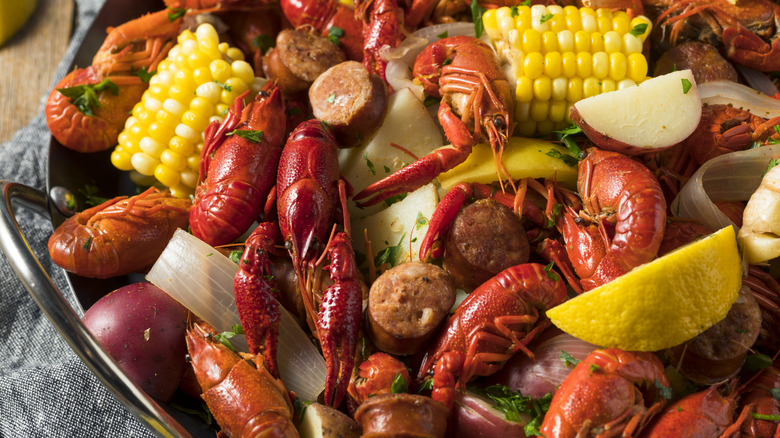
From the seasonings to the array of ingredients to the beverage you'll enjoy when it's all done, there's a lot to consider when putting together a seafood boil. However, one of the biggest mistakes you can make when making a seafood boil is not paying attention to quality. If the crab, shrimp, crawfish, and assorted mollusks aren't good on their own, there is no amount of Cajun seasoning, butter, sausage, or fresh lemon that can make up for it.
If you're not able to buy from a fishmonger or specialty shop, hitting up one of the best grocery stores for finding quality seafood is the next best option. Have a chat with the person behind the counter so that you can get more information about freshness, quality, sourcing, and seasonality — they're the experts and can usually guide you towards options that have the best price-to-quality ratio. If you're buying from the refrigerated case or freezer at a supermarket, look for packaging labeled with specific information, like when the seafood was harvested, where it was sourced from, and how it was processed.
When shopping, it's very important to look for signs that the seafood isn't fresh. Some cues will vary depending on which little creature you're eyeing, but one marker of quality is universal: All seafood should smell pleasant. It should have a scent reminiscent of a fresh sea breeze — salty, clean, and mild. There should be no odor of pungent fishiness, ammonia, or sourness, which is true for both fresh and defrosted seafood.
How to buy live crustaceans
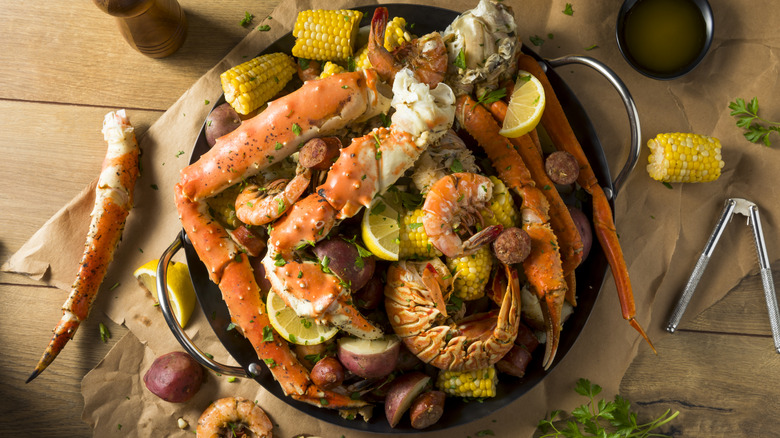
Shopping for seafood boil classics like crawfish, crab, and lobster are similar in many ways. If you're looking to purchase the whole animal raw, they should be alive, alert, and moving around. Once they die, the enzymes in their bodies quickly start to turn the meat to mush. Their shells shouldn't be damaged.
Pay attention to seasonality too. The best time to buy live crawfish is from the end of February through May, though you can still find them for a few months on either side of that window. The best seasons for crabs and lobsters will depend on the particular species and where they are sourced from.
Crab claws and legs, as well as lobster claws and tails, are among the frozen seafood items that are worth buying when you don't have access to fresh and live options. Frozen crab will most often be pre-cooked, while you can typically find frozen raw lobster. In either case, look for products that specify that they were flash frozen — this technique best preserves quality and is often done right on the fishing boat.
Select the best shrimp at the market
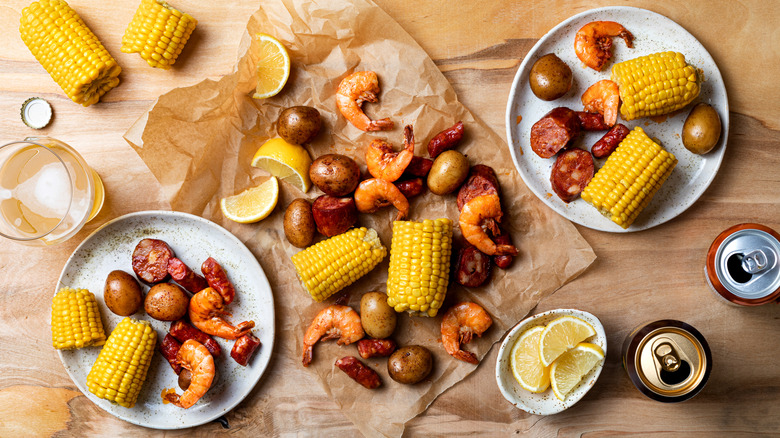
For a seafood boil, it's better to buy unpeeled shrimp. Slipping off the shell yourself as you hunch over a newspaper-covered picnic table is a part of the experience, and the shells flavor the broth. If you live in an area where you can get it freshly caught, look for shrimp that are firm, intact, and without any black spots on the head or shell. In some places, you can even buy live shrimp, in which case, they should look healthy and alert.
However, shrimp is notoriously perishable, so frozen is often the better option, especially since the shrimp you see on ice in the seafood case is, in many cases, previously frozen and defrosted. When buying frozen shrimp, look for packages with "IQF" on the label — this stands for "individually quick frozen." They are usually better quality than the shrimp that are frozen in large blocks. It's also a good idea to take a look at the shrimp themselves and check them for any obvious signs of freezer burn, like large ice crystals. You should stay away from precooked shrimp — they tend to be rubbery, which will only get worse when they're used in a seafood boil, and they won't be able to absorb the flavorful broth very well.
Mussels and clams should always be bought live
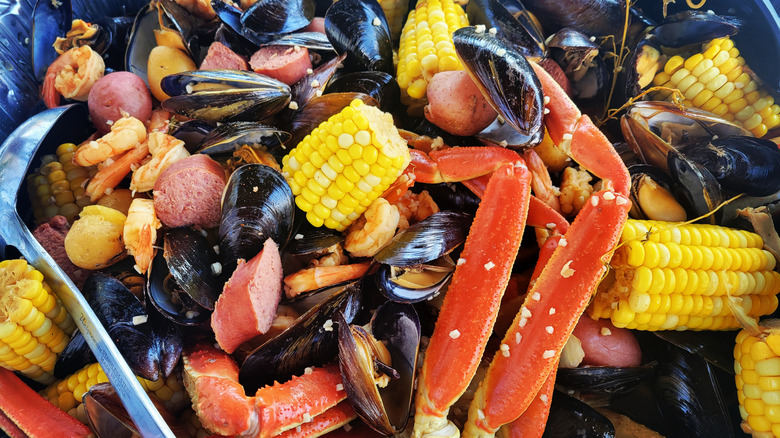
While there are times when tinned and frozen seafood can be absolutely lovely, fresh mussels and clams are the only option for a seafood boil. Because they must be purchased while they are still alive, they should be packaged in some sort of porous bag, like mesh, burlap, or cloth. Mollusks that are stored in water or sealed plastic will die. Check the shells for cracks, and make sure all the little guys are closed. If open, they should shut again with a light tap. Any that show no signs of movement should be tossed.
To avoid an unpleasantly gritty bite, clean mussels and clams thoroughly. They should be scrubbed well with a hard-bristled brush, and it's a good idea to give them a soak in a large bowl of salt water so they can expel any lingering sand and grit that might be inside their shells. Also, mussels need debearding — using a pair of kitchen tweezers, simply pull off the fibrous thread that's poking out of the shell.
While fresh mollusks do require quite a bit of prep work, don't be tempted to get anything other than the live ones. Like with shrimp, frozen, precooked products tend to be tough, and they won't soak up all the flavors from your seafood boil broth.