

12 Unexpected Ways To Use Eggshells In Your Kitchen
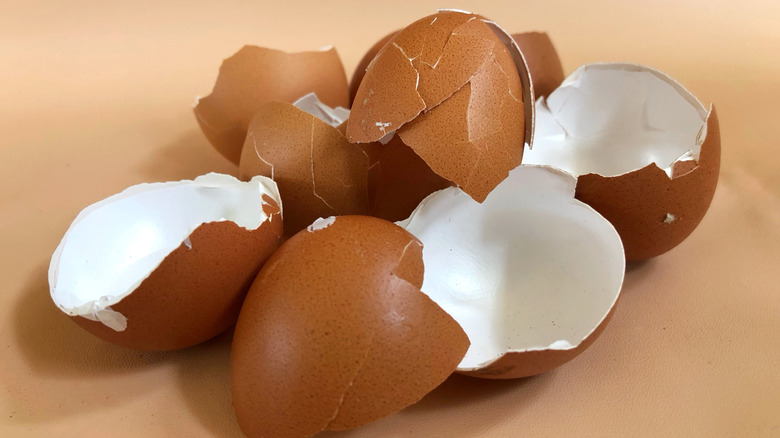
You probably don't think much about eggshells when you're cooking or baking. Sometimes, sure, they're a nuisance, like if you crack an egg and a piece of shell breaks off into your bowl or pan. Then, you're stuck fishing around for the piece as it seems to effortlessly evade you among the other ingredients in your dish (which is only one of several reasons why you should always crack eggs into their own separate bowl). If you do think about eggshells to any greater degree, it's probably in relation to the risk of salmonella. It's no secret that, in some cases, salmonella can live on eggshells, posing a potential health and safety risk.
However, you can remove the risk of egg-associated pathogens through a simple cooking process (because salmonella easily dies when heated to as little as 131 degrees Fahrenheit, so long as you cook it long enough). Once you do, eggshells become so much more than just a nuisance or an afterthought, or something to toss in the trash. They become a handy, do-it-all tool in the kitchen with so many unexpected uses. Here's how to harness the power of something that's often considered mere food waste; after you give a few of these potential tricks a try, you may just discover that, yes, sometimes one cook's trash is another's treasure.
Cleaning
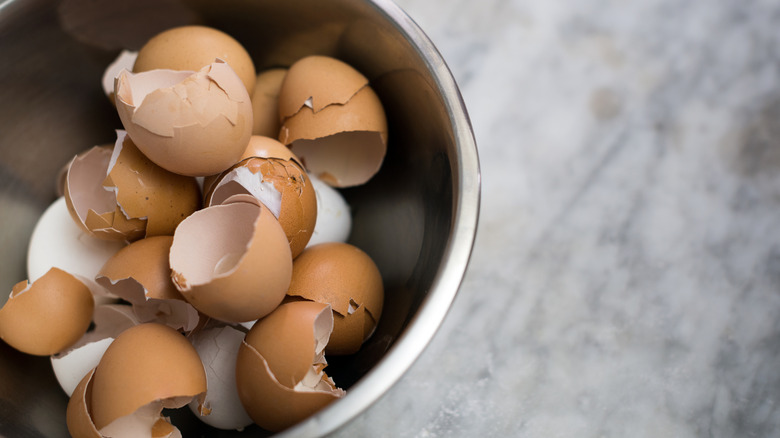
Okay, yes, first you're going to have to clean the eggshells themselves, but once you do, you can then use them as a surprisingly effective cleaning agent. First, to sterilize your eggshells, boil them and then bake them until they're dry. Toss them in a blender to make a powder, alongside some baking soda. This powder is now your secret weapon.
Sprinkle it on grimy pots, pans, baking sheets, and more, and watch the grossness disappear. You can even use the powder on your stovetop. Keep in mind that the reason that the eggshells work well for this is because they're acting as basically an exfoliant (it's just grime and grease that you're scrubbing away, instead of dead skin cells). As such, they may damage non-stick surfaces, so avoid those.
As you're cleaning all your cookware and stove, don't forget your sink! Make a paste with your eggshell powder and vinegar and apply it to your sink to remove buildup. Just don't wash eggshells down your drain. While you might think the abrasive nature of the shells could help remove built-up gunk in your pipes, the shells can actually accumulate and cause their own clogs, as they take a not-insignificant amount of time to break down.
Add more calcium to your diet
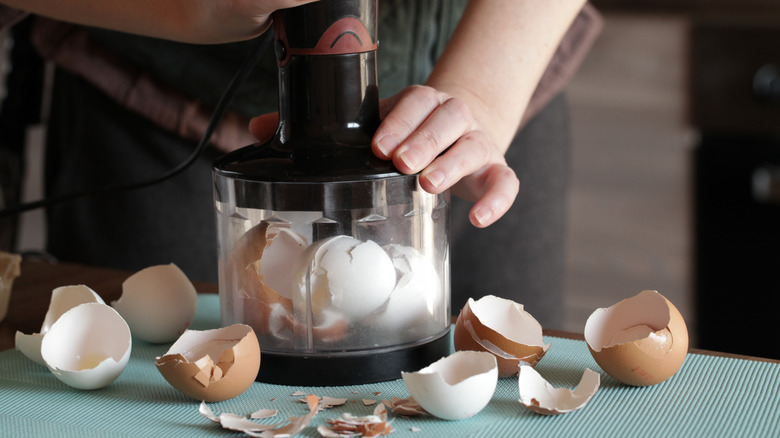
While the idea of crunching down on some eggshells might sound nasty at first — after all, when you're cooking or baking, aren't you actively trying to avoid getting any eggshells in your food? — many have found that eggshells make for a very affordable and easy extra calcium source, if that's a nutritional priority for you. Eggshells boast a 40% calcium makeup, and just eating half a shell can fulfill your daily calcium requirements.
Making eggshell-based calcium powder simply requires sterilizing the shells first — through boiling and baking; aim for at least 15 minutes on the stove and 20 minutes in the oven at 225 degrees Fahrenheit — and then grinding them. While a blender or food processor can do the trick, a coffee grinder or spice grinder can actually give you a finer grind (which is what you want when you're adding the powder to your food or drinks).
If you properly prepare the calcium powder, sterilizing the eggshells correctly and ensuring there are no large pieces of shell left over in the powder, then you'll be safe from risk of food poisoning and choking hazards. Studies have found that some of the best ways to use your new calcium powder, without affecting your food or drink's texture or flavor, include adding it to homemade bread, pizza, or pasta.
Brew coffee
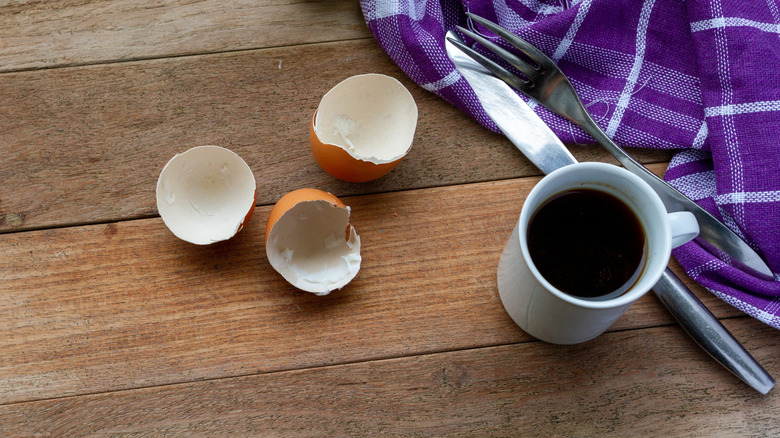
Could crushed eggshells be the secret to a better cup of coffee? Some think that might just be the case. If you feel like your coffee is a little on the acidic, bitter side, rather than throwing out your current coffee and replacing it with another blend, try to level it up using eggshells first. Eggshells stand opposite acidic coffee, as an alkaline substance. Combine acid with alkaline and you get a more balanced brew.
You can try it out for yourself by rinsing your eggshells with vinegar and water, before crushing them. Add the shells to your grounds and brew your coffee. To avoid salmonella concerns, only use this method with coffee brewing techniques that utilize boiling water.
While you're experimenting with egg-coffee mixtures, though, why not try your hand at Swedish Egg Coffee, too? To make this beverage, you keep the raw egg intact, combine it with coffee grounds and water, mash it all up, and then bring it to a boil. You get the pH-balancing properties of the eggshells, and the egg itself attracts the coffee grounds, creating a scoop-able mass you can easily remove from the mixture when done. Story goes, this method is an easy way to improve cheap coffee grounds while simultaneously making coffee in large quantities.
Make egg-shaped molds

Get a little fancy and impress your friends by creating chocolates or Jell-O Easter eggs that look like the real, eggy deal. You don't need to buy a special mold for this one-time project. All you need are some eggs and a little patience.
To make a chocolate egg, wash your actual egg and poke a hole into the rounded bottom of the egg using a pin. Dump all the egg out of the shell (you can save it for later use). Wash the eggshell again and sanitize and dry it. Then, use a piping bag to fill the egg with tempered chocolate via the hole you previously made in the bottom of the eggshell. Rotate the eggshell to ensure it's totally filled and the inside of the egg is coated. Let the eggs set, crack open the shell, and you have a hollow chocolate egg that you can fill with more chocolate, custard, or whatever you like, before sealing up the hole with additional chocolate. You can also decorate the exterior.
Making Jell-O eggs is very similar, but instead of filling your emptied, sanitized, and dried eggshells with chocolate, you'll fill them with Jell-O mixed with water according to the box's instructions. Put the filled eggshells in the fridge to set, and then remove the shell to reveal your Jell-O egg.
Sharpen blades
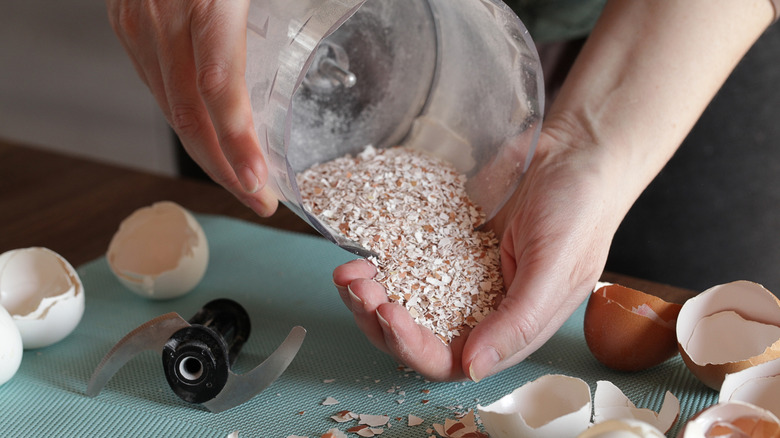
Is your blender just not quite working like it used to? Not pulverizing your daily smoothie ingredients with the same gusto? Not crushing ice into oblivion for your weekend marg like you'd hope? Maybe the blades need to be sharpened.
Some find that eggshells can come in handy in this precise situation. As you use eggs, store the eggshells in a bag in the freezer until you've accumulated a few handfuls. Then, add the frozen shells to your blender and give it a few pulses, until the eggshells are completely crushed. Wash the blender thoroughly.
That said, not everyone agrees that this is a good kitchen hack. As Matt Abdoo, the executive chef and co-founder of Pig Beach BBQ, told us in a previous interview, he believes that ultimately blending up eggshells in a blender could dull or damage the blades over time. As such, this may just be one unexpected use for eggshells that you'll need to try out for yourself, and come to your own conclusion. If the eggshells don't prove all that useful, you can just follow Abdoo's next suggestion: Get your hands on a new blade assembly instead of relying on any so-called hacks.
Enrich a compost pile
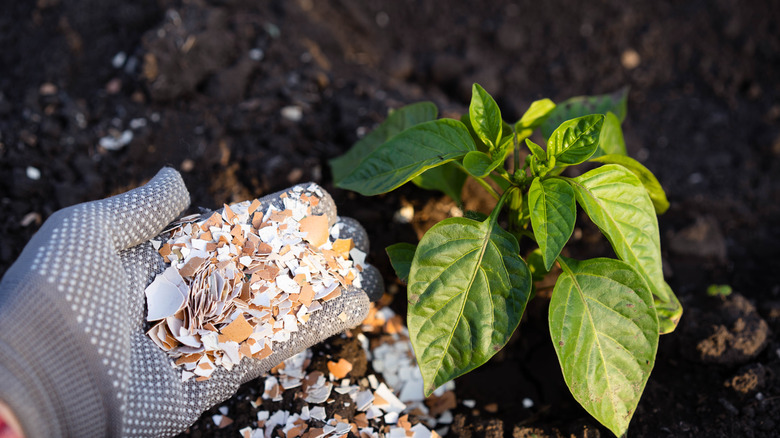
Maybe you don't like the idea of eating eggshells for the extra calcium, and you're not keen on putting them in your coffee, but you still don't want to simply throw them to the landfill. If so, make your kitchen a little greener by using the eggshells to enrich a compost pile.
Just like eggshells can help balance the pH in your coffee, they can likewise balance the pH of your soil, and provide nutrients and minerals to your plants. However, don't assume that because you're using the shells in your compost that you no longer have to worry about salmonella. If your eggshells are already contaminated with salmonella, and you don't do anything about it before adding them to your compost and then plants, you could end up contaminating the plants, too — which you definitely don't want if you're growing produce to eat.
So, clean your eggshells and bake them to kill the salmonella. Once they're decontaminated, you can add the shells to your compost pile directly. If you want to see the eggshells' benefits, faster, though, help the decomposition process along by grinding the shells first.
Make a stock
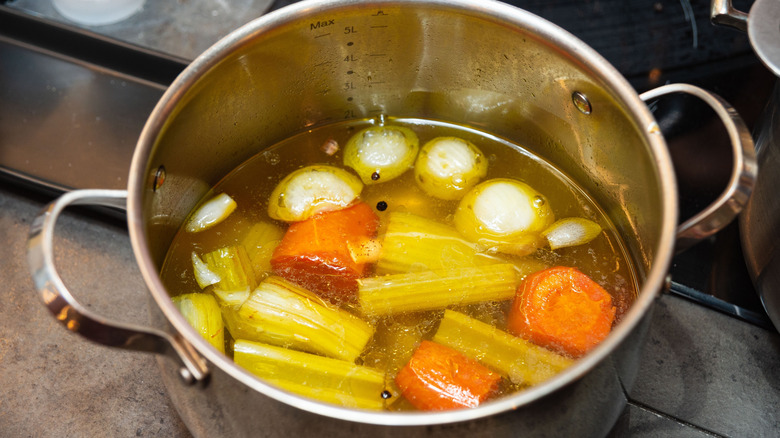
There are myriad kitchen scraps you can hold onto for making a flavorful, homemade stock at a later date — poultry carcasses, vegetable scraps, the little odds and ends from fresh herbs that you didn't use up entirely. Add it all to a zip-top bag in the freezer and, when you have enough and you have a free afternoon where you can let the mixture simmer on the stove for a few hours, make your stock. When you're compiling your stock scraps, though, don't overlook eggshells.
As the eggshells simmer in your stock, they'll add their calcium and other nutrients to the pot. Just be sure to carefully and thoroughly strain your finished stock before using or storing it, as you don't want to end up with any wayward shards of eggshell in your soup. Additionally, ensure that the broth comes up to a true simmer, for at least 10 minutes, to thoroughly kill any lurking salmonella.
Clarify consommé
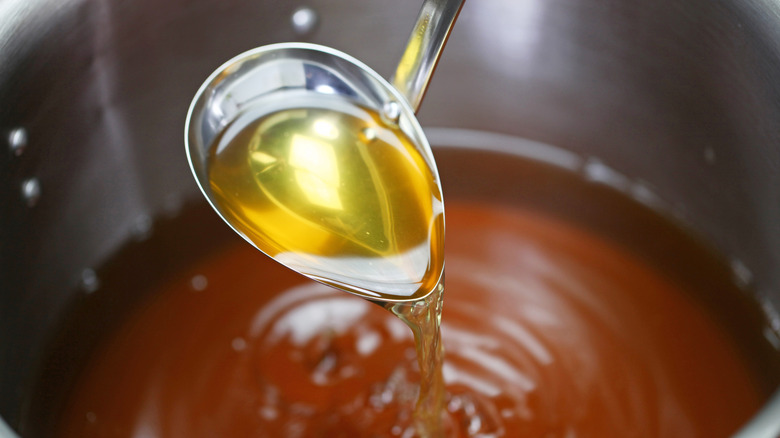
Consommé is not the same as broth or stock. Stock is what you're making when you simmer all those kitchen scraps for hours. Broth is reduced stock with more seasonings. Consommé, meanwhile, is the clarified, purified version of a stock or broth. It's exceptionally clear and flavorful. It's a staple of French cuisine and, honestly, a labor of love — and, if you want to go through the effort to make some, you're going to need some eggshells.
Making a consommé requires what's known as a raft. This raft is made up of a variety of ingredients, including eggshells, and it floats on the top of the consommé as it cooks, attracting and trapping all of the stock's impurities. A raft can be made with ground meat, egg whites, eggshells, and vegetable scraps. It can be made with gelatin or agar. However, the egg whites, eggshells, and vegetable scraps are typically considered a necessity.
The raft will look kind of gross and you can't touch it during the cooking process, because the raft could break and undo everything it's achieved. However, when the consommé is done, you can carefully scoop and strain away the raft (often using cheesecloth to really ensure nothing's left behind), and then you're left with that ultra-clear, purified liquid. Consommé can be eaten on its own and is also often used for making aspics.
Plant a windowsill herb garden
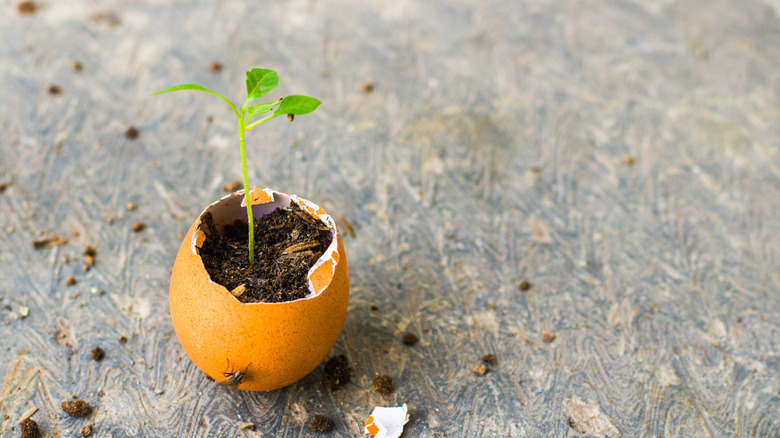
Love the idea of having fresh herbs at your fingertips as you cook, but it's not really like you have a Martha Stewart-worthy backyard with ample room to grow your own ingredients? Start some fresh herbs right on your windowsill, using your empty eggshells.
Whenever you actually use the eggs, keep in mind that you're going to try out this project and crack the eggs accordingly. You want to leave the lower two-thirds of the eggshell intact. Keep these eggshell bottoms and throw out the tops (or use them for any of the other ingenuous tricks on this list). Wash the eggshells and use a pin to poke a few small holes in the very bottoms, for drainage. Place the eggshells in an egg carton, fill them most of the way with potting soil, and then press your choice of herb seeds into the soil. Spritz them with water and place them in the sun.
The seeds will sprout and, soon enough, you'll have fresh herbs. If you ever want to transplant the seedlings, you don't even have to ditch the eggshells. Just bury them with the seedlings, as the eggs will naturally decompose.
Remove coffee stains

If you have a favorite coffee mug or thermos that you use over and over again, you've likely discovered that the interior of this favorited drinking vessel has become a little, well, gross. Over time, no matter how much you wash it or how often its run through the dishwasher, it's become thoroughly stained with the ghosts of coffees past. However, just like you can clean so many other parts of your kitchen with eggshells, so can you clean coffee stained mugs and other drinkware.
Like before, you'll want to boil and bake your eggshells to sterilize them, then grind them up and combine them with baking soda to make a homemade cleaning powder. From there, add a little of this powder to the stained mugs, fill the mugs with water, and let them sit overnight. In the morning, your previously stained drinkware should look good as new. While you're at it, go ahead and remove the stains from your cutting board, too. Add a little lemon juice to your eggshell powder to form a paste and clean stains and smells from the wood with ease.
Wash out bottles
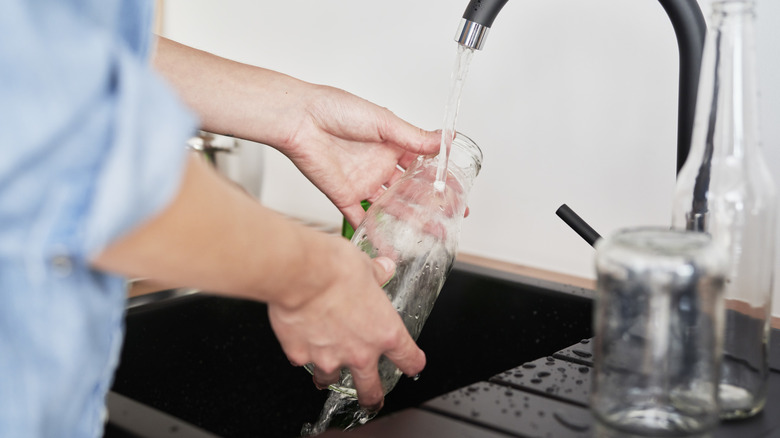
Whether it's a water bottle with a small mouth or a glass bottle that you use to store homemade infused oils, or even a vase, you probably currently have some sort of tall glass vessel that's exceptionally difficult or even impossible to clean with a standard dish cloth or sponge, due to its tiny opening. If you have no brush specifically made for this purpose, you need to enlist the help of your crushed eggshells.
Remember how we noted that crushed eggshells act like an exfoliant and, as such, may be too abrasive for certain materials? Well, those same properties make crushed eggshells excellent for scrubbing away stuck-on gunk and grime where you can't easily manually do the scrubbing yourself — like at the bottoms of those difficult-to-clean bottles.
To wash out bottles using crushed eggshells, sanitize the eggshells like you would before using them for just about any other purpose, then pulverize them. Add a few tablespoons of the crushed shells to your bottle, along with water and soap. Then, give it a vigorous shake. The shells will scrub against the bottles' interior, cleaning it with ease. (No eggshells on hand? You can do the same thing with uncooked rice.)
Remove odors from your fridge
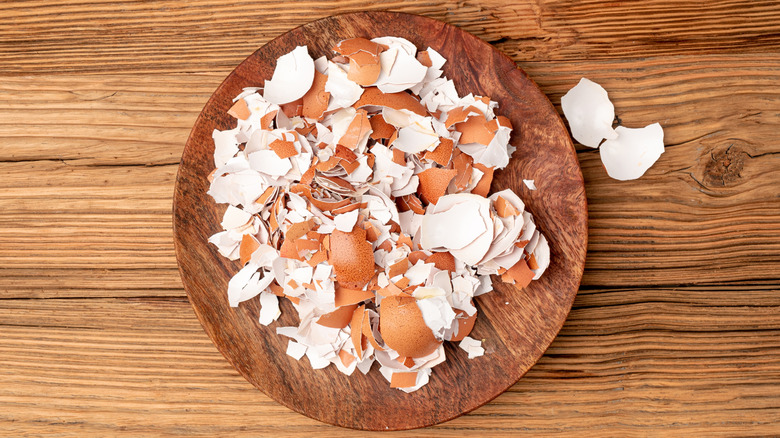
If your fridge is smelling a bit unpleasant as of late, it's time to do something about it, sooner rather than later. Letting odors linger in your fridge can negatively impact the flavor and quality of many foods, from your ice to your coffee (though you shouldn't be leaving coffee in the fridge or freezer in the first place, for this and other reasons).
Get rid of that smell and reuse your extra, leftover, sanitized, and crushed eggshells by placing them in a small bowl in your fridge. The eggshells will absorb the odors. This is because, while eggshells may look pretty sturdy and solid, they actually have thousands upon thousands of minuscule pores, all of which allow odors and flavors to flow through the shell.
Fridge smelling relatively neutral, but you've some stinky smells elsewhere? You can place the eggshells in your pantry or cabinets, where they'll likewise absorb odors. You can also pour the shells into a mesh bag and drop that bag into the bottom of your trash can, before lining it with a trash bag.