

12 Rao's Store-Bought Soup Flavors, Ranked Worst To Best
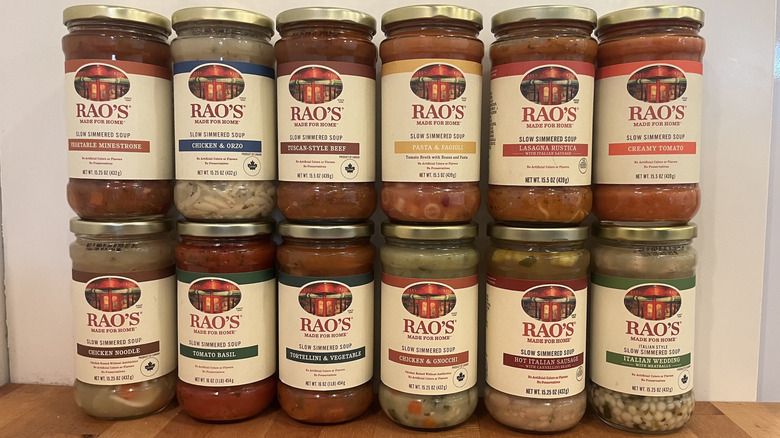
It's famously difficult to get a reservation at Rao's in New York City. Luckily, the Italian restaurant has capitalized on its reputation and now offers jarred foods that are available in grocery stores across the country. And these products have retained the brand's dedication to quality: Rao's pasta sauce may be more expensive than its competitors, but it's also considerably more delicious.
Pasta sauce isn't the only product that we laypeople can get our hands on while we dream of a seat at one of the 10 tables at the tiny Manhattan restaurant; Rao's also sells a line of soups. And with soup season officially upon us, I decided to give them a try. I gathered a dozen jars of popular Rao's soup flavors and put them head to head to find out which ones deliver on the brand's reputation for excellence and which you can leave on the shelf.
Eating a bowl of soup should feel like a hug from the inside out, and that's what I was looking for with each spoonful in this varied field of savory, soupy flavors. I ranked each one based not only on its flavors and textures, but how well it delivered on the promise printed on the packaging. Did the Italian wedding soup deliver meaty depth and a dose of perfectly cooked pasta pearls? Did the tomato basil marry its titular ingredients with bright, herby success? There was only one way to find out.
12. Chicken & Gnocchi
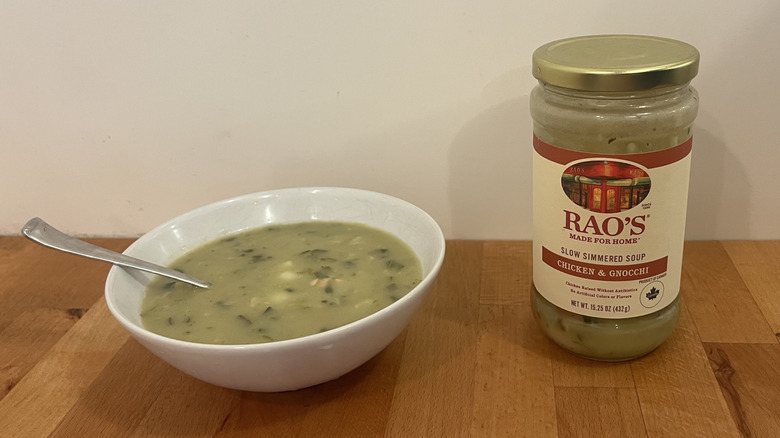
Gnocchi is one of my favorite ways to get my fill of carbohydrates. At their best, these potato dumplings convey the delicious savory flavor of a given sauce with their neutral taste and soft, pillowy texture. This is not what occurred in this jar of chicken and gnocchi soup.
The gnocchi were waterlogged, and they fell apart as soon as they hit my tongue. Instead of offering a distinct taste or texture, they melted into the broth, making it feel unnecessarily thick and claggy. This would've been redeemable is the flavors of the soup had come to the rescue, but they did not. I had the strange sense that the broth tasted a bit like dirt, not in the sense of the natural earthiness of potatoes, but like literal dirt. The chicken, meanwhile, was tough and salty and had a strangely metallic undertone that was hard to ignore, as though it had just come from a can. If confronted with a bowl of this soup again, I would run in the opposite direction.
11. Lasagna Rustica
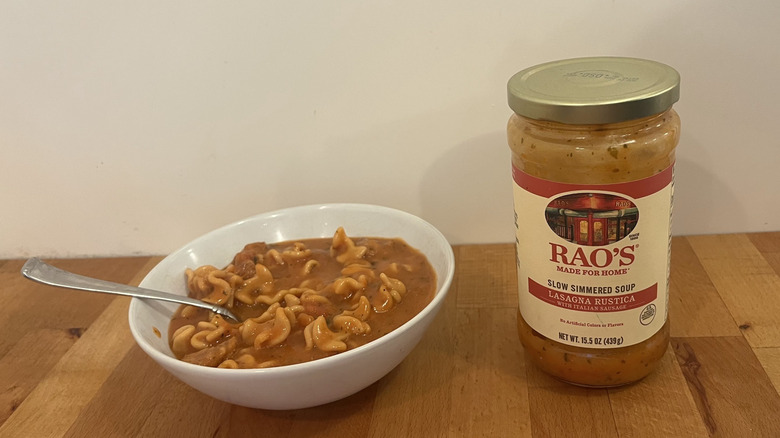
The idea of lasagna soup is fantastic. The oven-baked Italian comfort food that inspired this soup has chewy pasta, seasoned meat, and a mix of creamy white sauce and bright, flavorful marinara. So what could go wrong? Everything could, I thought to myself after I had my first bite of this soup. The pasta sheets in the soup were so mushy that it was hard to even register that I was chewing on anything when I got a bite of one. The soup was very thick, as though the noodles had mixed with the other elements in the jar to create some unholy hybrid between lasagna and soup that was somehow less than the sum of its parts.
This was a shame, especially because the liquid was this soup's most redeeming quality. It tasted like a well-seasoned marinara mixed with Romano cheese, which gave it a deep umami quality. The meat came in the form of small balls of sausage, and they tasted underseasoned and a bit boring. The flavor of this soup could still shine with some creativity. If I had to do it over, I'd mix in some freshly grated Parmesan, a splash of cream, and some fresh basil.
10. Chicken Noodle
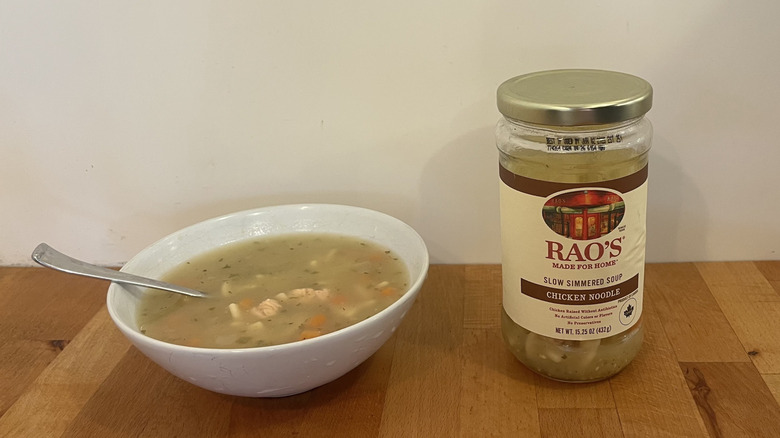
Chicken noodle in a jar or can is a super common way to conveniently enjoy this comfort food. Unfortunately, it's not easy to get it right. This was a valiant effort, but it ultimately fell short of what I'd hoped for, which was a jarred noodle that could hang out in broth for a prolonged period without becoming soggy beyond the point of recognition.
In addition to these shapeless fusilli noodles, the soup's other titular ingredient was equally disappointing. The chicken chunks tasted dry and salty, which I would've expected from a run-of-the-mill canned soup brand, but I had my sights set a bit higher given Rao's reputation for elevated store-bought items. The celery and onions were lost on me, as I couldn't detect their distinct flavors or textures in the maelstrom of tough chicken and limp noodles. The broth, however, was the soup's saving grace: it was rich and substantial, and though it was a little on the salty side, it delivered on chicken flavor better than the chicken itself. I found myself wishing the soup included more herbs — a touch of thyme or oregano would've gone a long way, as would a pinch of turmeric to add an earthy depth.
9. Hot Italian Sausage
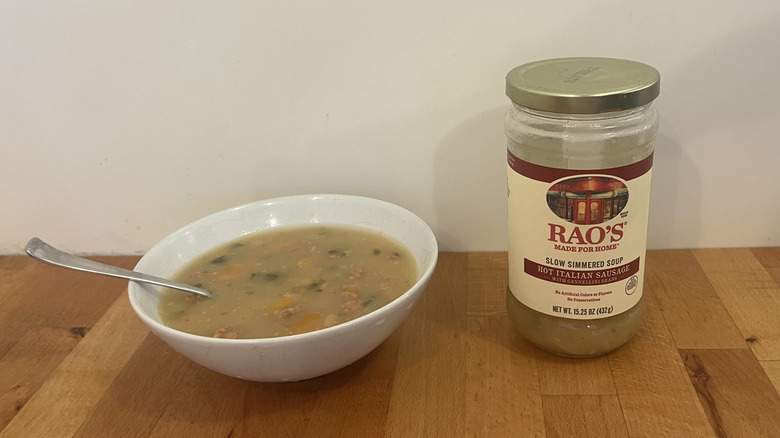
The label did not lie: The sausage in this soup really is hot. But apart from that, it's not much else. The titular meat in this soup was probably my least favorite part of the experience; it tasted underseasoned, lacking the salt and pepper that would elevate the pieces of sausage beyond spicy lumps of meat. What saved this soup from utter ruin was the broth. It was as though all the flavor from the sausage seeped into the liquid, giving it a surprisingly meaty, hearty flavor.
The carrots floating in the broth were a little mushy, but they still provided a touch of earthy sweetness that stood out nicely against the richness of the broth. The rest of the mirepoix, plus the addition of fennel, gave the experience an aromatic lift. Water-logged cannellini beans fell apart in my mouth and added some richness and body. This soup wasn't bad, but if I had it again, I'd add some chopped kale sautéed in garlic to give it some extra flavor and greenery.
8. Chicken & Orzo
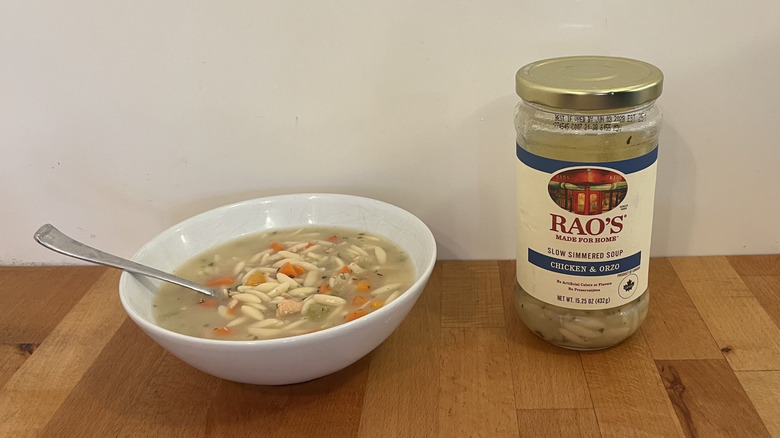
I was expecting this soup to taste just like chicken noodle, but with orzo instead of standard pasta. I was delighted, however, to find myself up against an entirely different flavor profile. Beyond the shape of the carb in question, this soup had a simpler, rounder flavor profile. I learned from this tasting that Rao's has clearly perfected its chicken broth recipe, and it really shined in this instance.
Unfortunately, the orzo met the same soggy fate as many other jarred and canned carbs, becoming mushy and watery from spending too much time in its delicious liquid surroundings. The soup was also a little on the salty side, so instead of enjoying it with saltine crackers (my favorite chicken soup accompaniment), I'd recommend a crusty baguette or unsalted water crackers. I'd also give it a squeeze of lemon to make it taste a little less salty.
7. Pasta & Fagioli
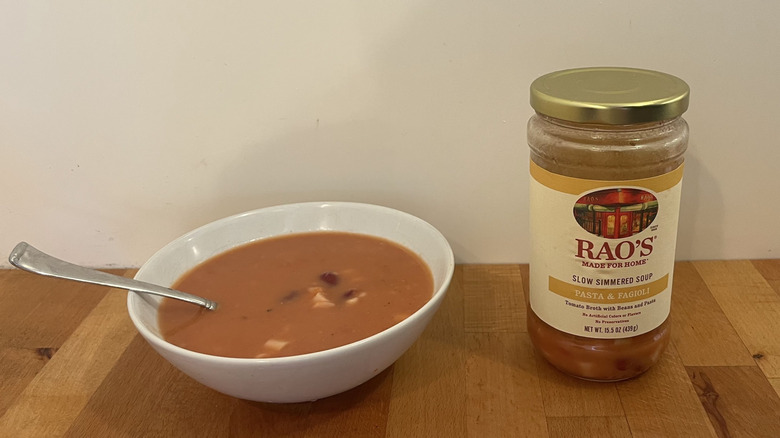
Fagioli means "beans" in Italian, and there is no shortage of the hearty legumes in this jar. The soup includes cream-colored navy beans and dark red kidney beans, which creates an attractive color contrast that you can spy through the tomato-tinted broth. The combination of chicken broth with tomato creates a liquid that is both rich and bright, providing a perfect counterpoint to the gentle, earthy flavor of the beans.
The pasta was the only aspect that was a bit of a letdown. The ditalini, as these short cylinders are called, are traditionally used in this soup. I can imagine if they were freshly cooked, they'd provide chewy, starchy, bean-sized bites that would give a little more body and personality. In this case, they were mushy to the point that you could hardly tell they were even present. Despite these listless noodles, this soup still delivered on the promise of a hearty, well-seasoned meal.
6. Italian Wedding Soup
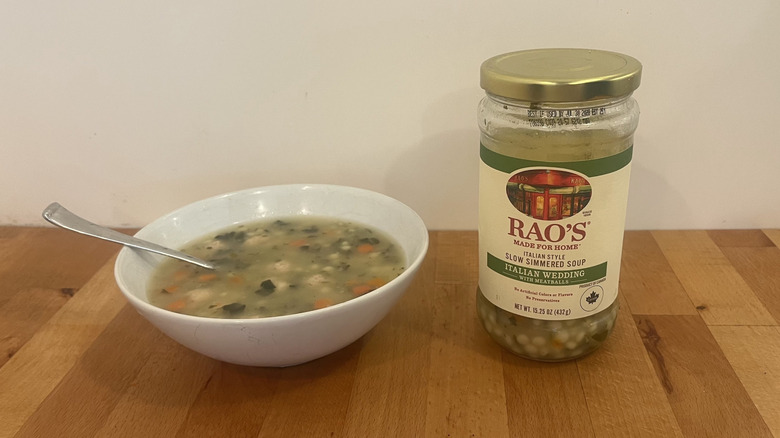
Apparently Italian wedding soup has nothing to do with nuptials and everything to do with a hot bowl of meatballs, pasta balls, spinach, and other ingredients all submerged in rich, flavorful chicken broth. The only marriage here was the one among the flavors of this soup, and it was a successful union. The meatballs are made with pork and beef, and they're small but mighty, packing a meaty intensity that's bolstered by the salty broth.
The most impressive part of this experience was that the pasta balls, known as acini di pepe, held their own. Unlike pasta noodles, which became mushy in every other soup on this list, these carby spheres remained plump and chewy, giving my teeth something to do when they weren't working on a meatball. The spinach flavor was muted, though the greenery was a nice visual addition, and carrots added a welcome sweetness. Romano cheese was listed in the ingredients, but I failed to encounter its umami richness no matter how hard I searched. Still, the soup was overall a success, and next time I'll add a handful of spinach while I'm heating it up to give it some more greenery.
5. Tuscan-Style Beef
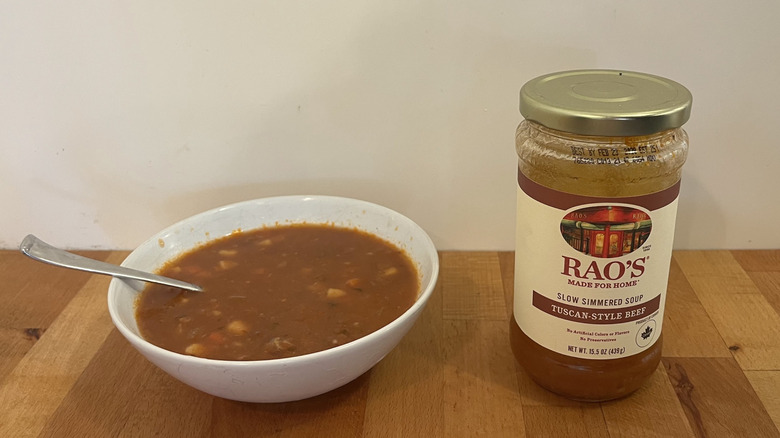
When I think of beef stew, what comes to mind is the flavors in this jar. The red, tomato-tinged broth is brimming with generous chunks of beef that make up the meaty heart of this deeply savory stew. Unlike in many iterations of beef stew, the meat wasn't tough or metallic-tasting. It was tender, well-seasoned, and a pleasure to eat.
Potatoes are also a must in any beef stew, and I was thrilled to find that the cubed spuds in this jar were still firm and held their shape. They added a subtle earthiness and, more importantly, gave the stew a varied texture. The carrots were a bit mushier, but they still lent a bit of aromatic sweetness that helped round out the overall flavor profile.
The crushed tomatoes tied the whole soup together. Their mild acidity and brightness uplifted the heavier flavors in the strew, giving it a sense of balance. I'd certainly buy this soup again, especially since it can really hold its own as a full meal. Next time I'll dress it up with some grated Parmesan and chopped parsley, or use Martha Stewart's trick and add a splash of balsamic vinegar.
4. Vegetable Minestrone
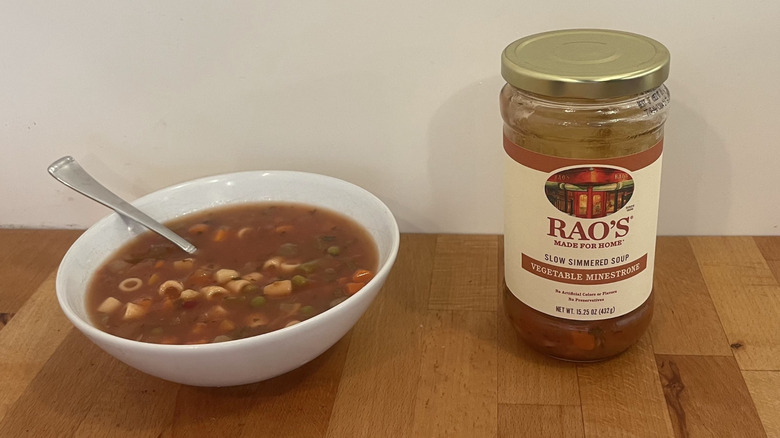
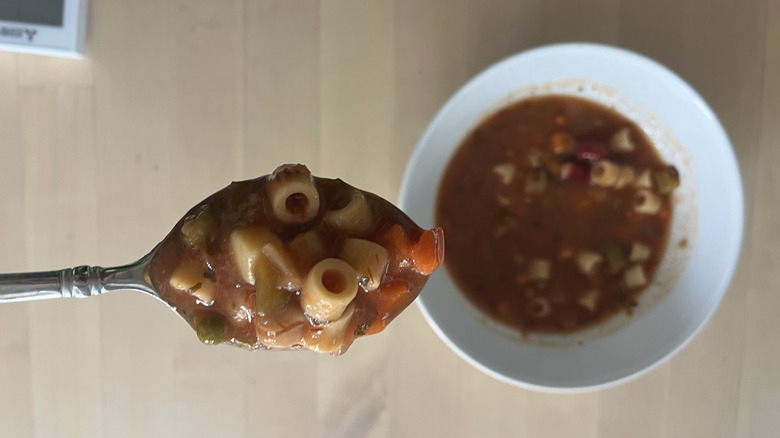
In its ideal form, minestrone is one of the best Italian soups you can eat. The soup can take many forms, hosting different veggies and pasta shapes in a savory broth. But successful minestrones taste like more than just a mishmash of vegetable chunks, and fortunately, that was the case with this one. Carrots, potatoes, tomatoes, onions, peas, and zucchini all came through vividly, coming together to form a flavor profile that was earthy, bright, and comforting. The broth was nice and peppery, and the addition of kidney beans gave it a hearty, filling quality.
The little cylinders of ditalini pasta were a little on the mushy side, but had just enough shape and firmness to give the soup an extra boost of interesting texture. A touch of Parmesan in the broth lent it a touch of umami depth that made me feel like the cooks in the Rao's test kitchen were really thinking about the details. This is a perfect soup to serve as an appetizer in the winter months alongside some buttered bread. I'd even eat it with crunchy Cheez-It crackers to contrast the tender veggies and complement the savory broth.
3. Tomato Basil
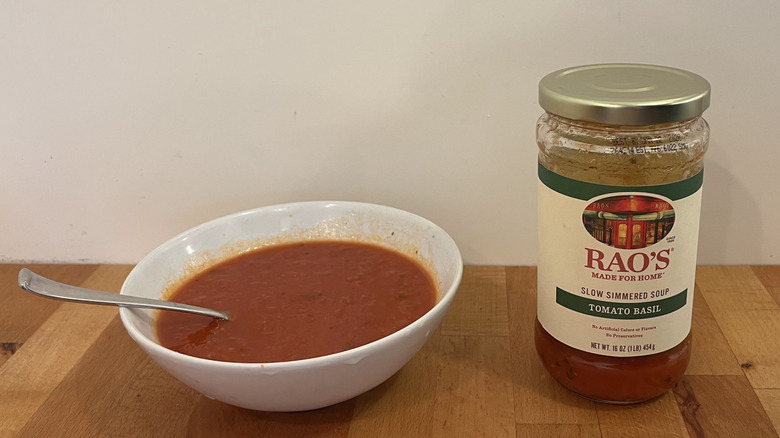
This soup embodied the ethos of Italian tomatoes. It tasted so fresh that I could practically taste the sunshine beating down on the vine-ripened fruits. They were the ideal mix of sweet and acidic, giving the soup a base that needed just a gentle nudge from a short list of other ingredients, which is exactly what it got.
The basil flavor was pronounced enough to really earn its place in this soup's name. Instead of disappearing into the broth, it was present in sizable shreds, and some bites had more than others, giving the experience a dynamic quality. The soup didn't suffer from the overseasoning that plagues some lesser canned or jarred soups — it offered a subtle balance of sugar and salt in quantities that were in service of the titular flavor. I'd eat this soup year-round, but on a hot summer day, I'd even consider serving it cold with a drizzle of olive oil and some fresh basil. After all, a simple garnish can make soup look and taste restaurant-quality. In the winter, I'd pair it with slices of crusty baguette topped with melted Gruyère.
2. Tortellini & Vegetable
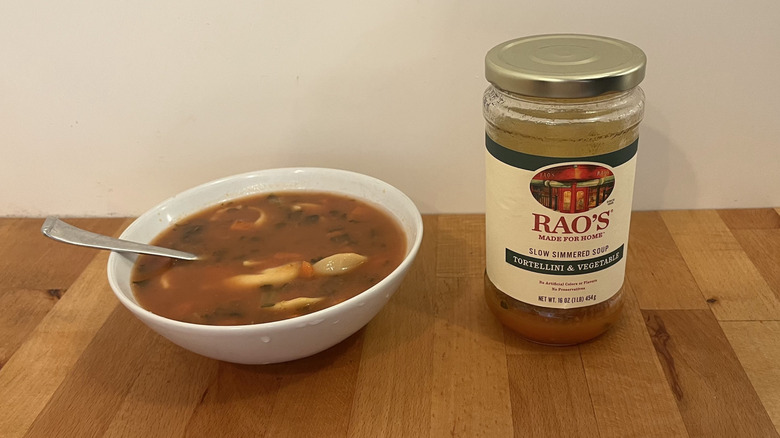
Eating these tortellini made me feel like I was healing my inner child. I grew up eating Chef Boyardee, and I thought those soggy, processed ravioli were the height of culinary excellence at the time. Little did I know that 30 years later I would discover tortellini in a jar that were plump, chewy, and packed with flavor. These pasta pockets are filled with Romano and ricotta cheeses, giving them a slightly gritty texture and savory, milky flavor. The soup is positively packed with them, and the generous portion makes this jar feel like a substantial meal in itself.
They're suspended in chicken broth that's tinged with tomato, which gives it a slight acidity. The jar is also replete with celery, spinach, carrots, onions, and crushed tomatoes, which gives the soup an aromatic base and makes me feel like I'm getting a solid serving of veggies. This filling soup doesn't need much extra, but a few sprigs of parsley and a drizzle of good, fruity olive oil would give it a little gourmet lift.
1. Creamy Tomato
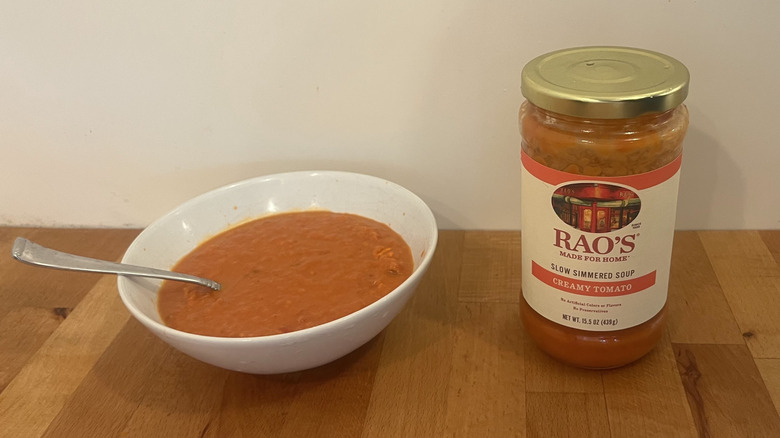
There is beauty in simplicity, a fact I was reminded of when I took my first bite of Rao's creamy tomato soup. The list of ingredients is remarkably short, and you can taste the way each one contributed to the overall taste of this well-crafted soup. The tomatoes were, as you might expect, the star. They appear in generous chunks, giving the soup a rustic aspect, and they taste remarkably fresh for a jarred soup, delivering a bright flavor that wasn't undermined by too much salt or sugar.
The creamy aspect was equally impressive, its mellow milkiness providing a perfect counterpoint to the tomatoes' natural acidity. While there was little room for improvement in this jar of soupy excellence, I found myself fantasizing about enjoying it with a grilled cheese made with sharp cheddar — one of the best cheeses for pairing with tomato soup. This is not the last time this simple, elegant soup will be in my shopping cart.
Methodology
How is one to taste a dozen soups in rapid succession? With an open mind, a trained palate, and lots of water to offset the sodium content. I make a lot of soup, especially in the fall and winter, so I'm uniquely capable of honing in on combinations of flavors and texture that make these comforting meals shine.
First, I heated each soup until it was just simmering. Then, I took a look at each one as I poured it in the bowl. Was it chunky? Watery? How well did its appearance match the ideal version of each flavor at hand? When I went in for my first bite, I made sure my spoon cradled each of the soup's components so that I knew I was getting an accurate representation of the product's overall flavor.
While savoring each mouthful, I considered how well the constituent ingredients played off one another, and whether they gave rise to something greater than the sum of its parts, which every soup should do. I also kept my tongue trained on the textures, looking for a combination of complementary mouthfeels. Based on this information, I compiled my ranking with confidence.