

11 Hands-Down Best Italian Soups Everyone Should Try At Least Once
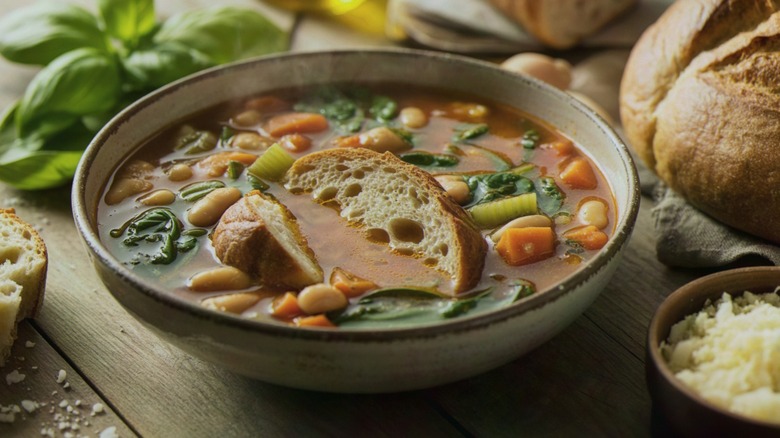
When most people think of Italian cuisine, the first dishes that come to mind are pizza and pasta. While these dishes are part of the Italian diet, they are also just that: only a couple of pieces out of the puzzle.
In reality, Italian food encompasses a much broader range of dishes, including those centered on fresh, seasonal vegetables and local seafood, flatbreads and savory pies, and, of course, soups. Many Italian soups belong to a particular subset of Italian cuisine known as cucina povera. The term refers to a historical tradition of Italian cooking rooted in poverty. It relies on affordable, easily accessible ingredients, simple cooking techniques, and waste avoidance.
As such, many traditional Italian soups use simple ingredients like seasonal vegetables common in the regions the dishes originate from and staples like leftover bread to create something that is much more than the sum of its parts. Other Italian soups, not rooted in cucina povera, are eaten around holidays or used as tonics for sickness. Regardless of their purpose, most of these dishes cannot be found on your average restaurant menu here in the United States. Many are regional Italian foods that fly under the radar stateside. But if you take a deeper look at Italy's rich gastronomy, or perhaps take a step into someone's nonna's kitchen, you might smell a hearty pot of soup ready to soothe whatever ailment you may be facing.
Ribollita
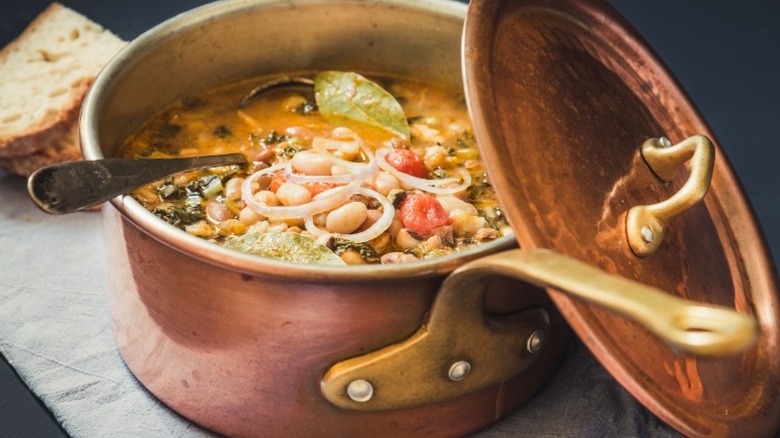
If you've ever wondered which Italian region inspired the exterior of Olive Garden restaurants, you'll find the answer in the rolling green hills of Tuscany. While the popular chain restaurant may take inspiration from the area, the real thing is far better than what can be captured in picture frames and interior design. The region is known for its sprawling landscapes, as well as its rich cultural history as the birthplace of the Italian Renaissance, plus various famous architectural landmarks. But what you may not know is that Tuscany also has a strong tradition of cucina povera, especially in the more rural regions. Vegetables, pulses, and Tuscan bread, traditionally made without salt, make up the basis of many local dishes, including ribollita.
The name translates to "reboiled," and the dish itself has its origins in the Middle Ages. The working class would use up leftover bread and the scraps of homegrown vegetables to make a soup that could be easily reheated in the coming days for a quick meal. While the dish's ingredients vary from household to household, the staple components include Tuscan bread, kale, and cannellini beans. Common vegetables thrown into the mix are carrots, celery, and onions. However, in keeping with the use-what-you-have mentality, this dish lends itself to adaptation based on whatever vegetables you have on hand or whatever is locally in season. The bread comes together with the broth and veggies to create a hearty yet light meal.
Pastina soup
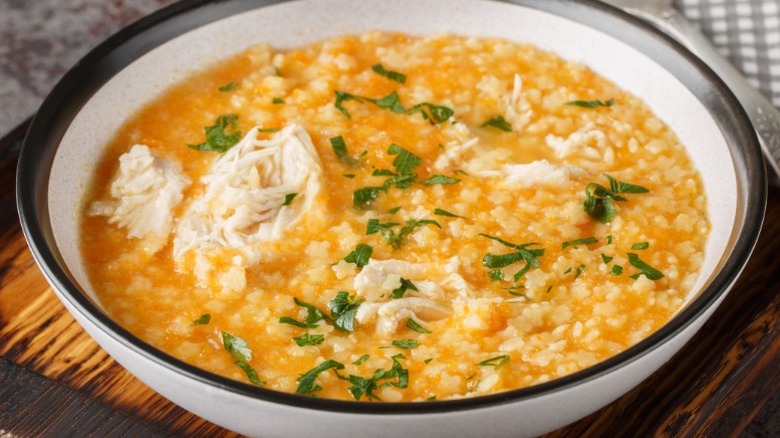
Pasta comes in all shapes and sizes, many with their own unique origin stories. Pastina is one variety of very tiny pasta that can be found in shapes like small stars or beads. This pasta's small shape makes it ideal for children, but all ages can enjoy it. In fact, it's often enjoyed as pastina soup, known as Italian penicillin.
The dish got its nickname thanks to its comforting properties. Much like how Americans turn to chicken noodle soup whenever someone gets sick, many Italians consume pastina soup when they're feeling under the weather. Its base is relatively simple, consisting of the pastina of your choice, a light broth, and some cheese, if desired. The broth can be chicken-based or vegetable-based, and the seasonings are typically light, as this is often a recovery food meant to be gentle on the stomach. Of course, the recipe can be adapted to include additions like chicken or vegetables for a heartier meal, but the lightness and simplicity of pastina soup are part of its charm. So, next time you feel a pesky cold coming on, pick up the ladle for a little dose of natural comfort.
Pasta e fagioli
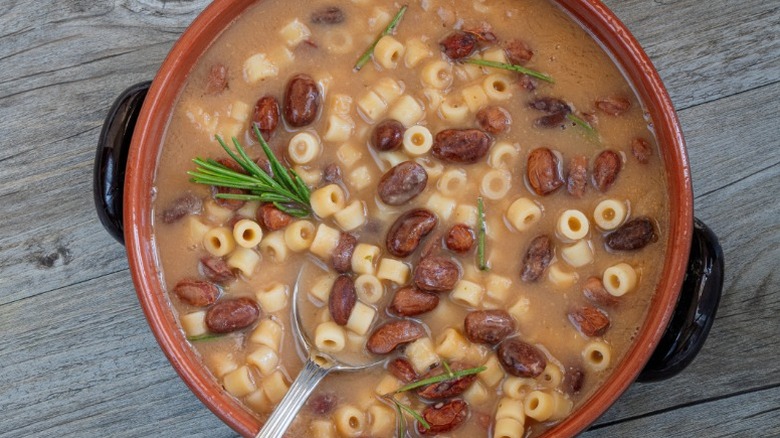
Legumes are a staple food around the world, especially when other foods like meat are too expensive to consume regularly. In Italy, beans, lentils, and chickpeas are featured in many dishes, both within and outside of the cucina povera tradition. One of the most popular of these dishes is pasta e fagioli, which literally translates to "pasta and beans."
Its main components are just that: pasta, typically the tubular ditalini variety, and beans like cannellini or borlotti simmering in a savory broth. But like many other dishes, pasta e fagioli is not one-size-fits-all. In fact, across Italy's various regions and within each family's household, the recipe is a little bit different.
From the variety of beans to the thickness of the soup itself, the beauty of this dish lies in how it reinvents itself. Changing up the herbs and vegetables is another simple way to add layers to the soup. Some choose to add the likes of tomatoes, onions, or celery. Others impart an earthy note to the broth with the addition of rosemary. And if you're feeling like making the dish a little more luxurious, albeit less traditional, throwing in some pancetta can really take it to the next level.
Stracciatella
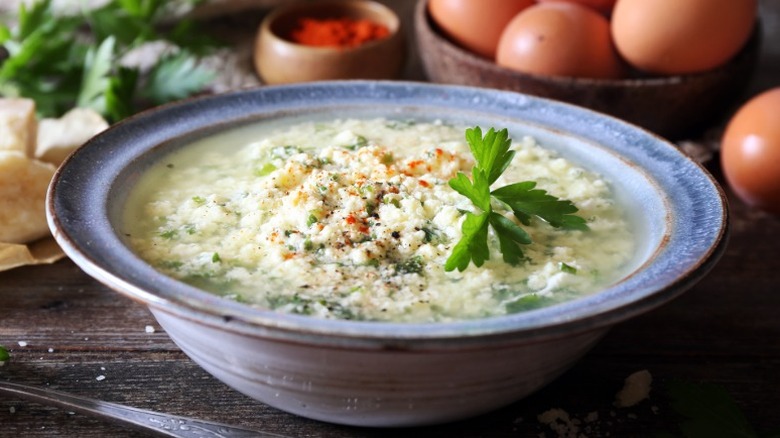
For anyone who has searched for stracciatella online and come across some conflicting results, it is not a flub in the algorithm. Rather, stracciatella is the name of not one, but three entirely different Italian foods that all share a shredded texture, hence the common name. There is stracciatella cheese, a soft cheese made from mozzarella and cream with roots in the Puglia region. For sweets lovers, another type of stracciatella may come to mind — a gelato flavor made by drizzling melted chocolate through a milky base to create a creamy treat studded with chocolate shards. And finally, there's stracciatella soup.
This dish originated in Rome around the 15th century. It is similar to Chinese egg drop soup in that it is made by drizzling beaten eggs into a hot broth, allowing them to cook in the process. However, this Italian soup trades ingredients like sesame oil and scallions for a mixture of eggs with Parmigiano Reggiano and flavors from parsley, black pepper, and olive oil. The result is a uniquely Italian dish that perfectly marries freshness and creaminess.
Italian wedding soup
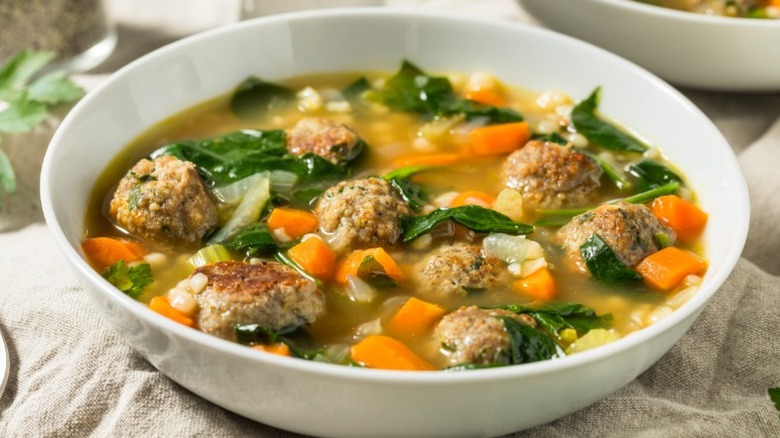
Of all the Italian soups, Italian wedding soup is probably one of the most well-known outside its home country. However, the version with which many in the U.S. are familiar is actually an Italian-American take on the original dish. The former consists of a savory broth laden with meatballs, bite-sized pieces of pasta, and greens. It's a hearty and comforting meal if there ever was one. However, proper Italian wedding soup is actually called minestra maritata and originated in Naples. Its name doesn't actually have anything to do with wedding ceremonies, as the English translation may imply, though it can still be served at weddings.
Instead, the name refers to the marriage of flavors between the meat and vegetables in the dish. While both the Italian-American and Italian versions feature these key ingredients, the latter is a bit more extravagant. Instead of just one type of meat, minestra maritata combines various cuts ranging from Italian sausages and salami to pork ribs and pancetta. There is typically no pasta, but a variety of leafy greens and a healthy sprinkle of Parmigiano Reggiano on top easily make up for it. But while they are different, whether you're looking to profess your love for all eternity or to find the perfect marriage of flavors, either will satisfy.
Minestrone
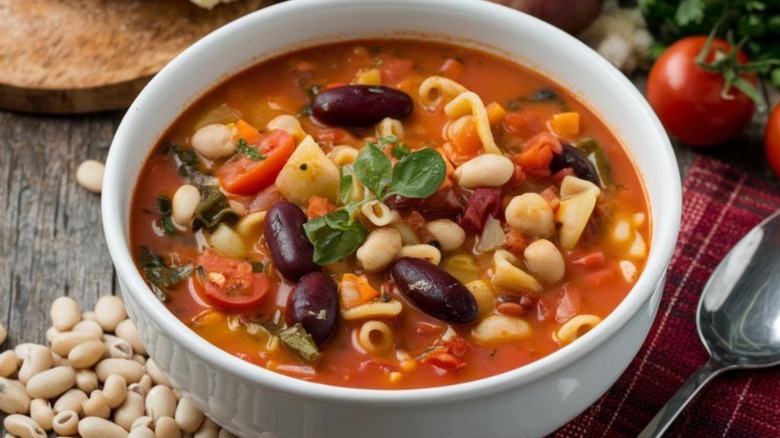
Another rather well-known Italian soup in the U.S. is minestrone, a dish that you actually will find on many restaurant menus throughout the country, though its authenticity may vary. This is another dish with roots in the cucina povera style of cooking thanks to its simple and accessible ingredient list. However, it is difficult to pinpoint exactly one traditional recipe. This is because pretty much everyone's version looks a little bit different, relying on seasonal vegetables and often, leftover ingredients. The base typically includes a mixture of onions, celery, and carrots. From there, you're free to get creative.
Other vegetables that can be used in minestrone are any variety of leafy greens, green beans, tomatoes, or broccoli. Some choose to add beans or pasta into the mix, which can help beef up your bowl and keep you satisfied for longer, but is certainly not required. The best thing to do is take a look in your pantry, use up what's there, and then look to your local supermarket for what's in season. Putting aside the specificities of it all, this dish is sure to be a hit every time.
Garmugia
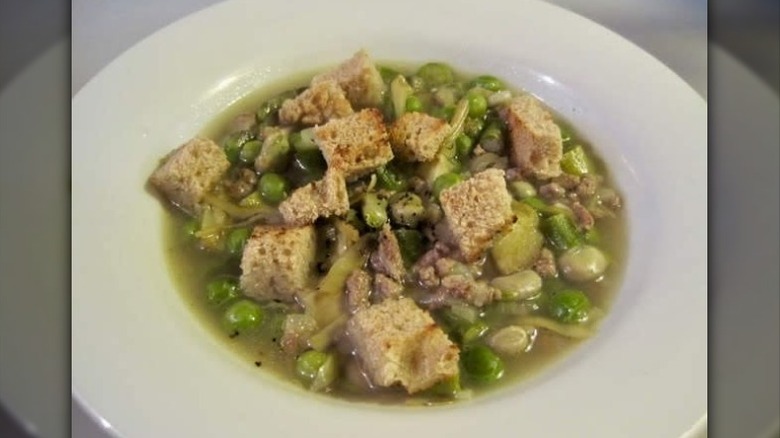
In keeping with the spirit of focusing on seasonal ingredients, garmugia is the perfect soup to ring in springtime. This is another dish originating from Italy's Tuscan region, specifically the city of Lucca, and its birthplace is reflected in the soup's vibrant color and equally vibrant flavors. Unlike many other Tuscan dishes, garmugia is actually believed to have been consumed by the nobility of the past. Hearty meats and the freshest of vegetables create the perfect harmony between light and filling, making it no wonder that it may have been considered a luxury at one time.
Typically, the recipe uses vegetables such as asparagus, peas, and fava beans, all of which are at their peak in Italy starting as spring begins to blossom. As for the meat, veal and pancetta are two commonly used varieties. For the best soup, pay attention to the order in which your vegetables are cooked. Cooking based on how hard or soft your veggies are allows them to maintain their integrity in the final product. Once it's all done, serve your bowl with toasted bread and you're all set to ring in the season with a full stomach and a happy heart.
Zuppa del canavese
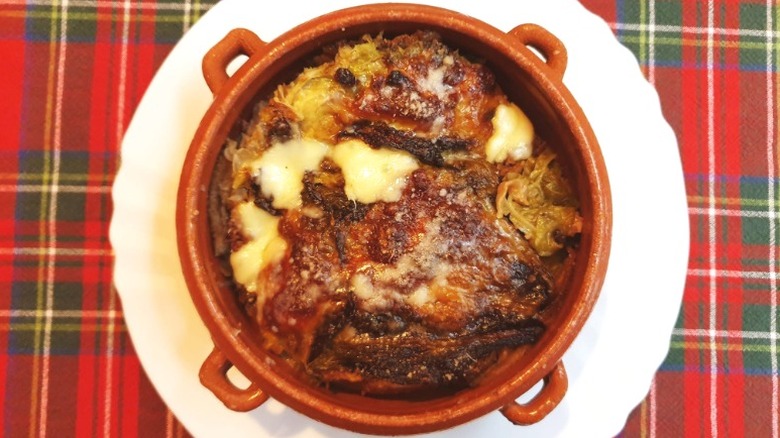
If you haven't heard of it before, this soup will quickly become one of your new favorite winter soup recipes. Zuppa del Canavese is a traditional dish from the Canavese area of Piedmont, which is known for its rolling hills and the smattering of villages ripe with historical architecture and even castles. But the food is also something to revel in as much of its gastronomy stretches back centuries, just like the buildings. Within this rich cuisine is zuppa del Canavese, or zuppa alla canavesana, which is a rich, baked soup perfect for when the weather turns chilly.
The soup uses Savoy cabbage, which is so popular in the region that it's even inspired an annual festival held in November. The cabbage is sometimes cooked with pieces of meat like pancetta. The broth takes on its own meaty flavor, often from ingredients like pork fat. To assemble the dish, layers of stale bread, broth, and cabbage are alternated and the dish is topped with a layer of cheese that forms a satisfying, golden crust. If hearty baked soups like French onion soup are your jam, this comforting Italian soup will likely steal your heart as well.
Brodetto
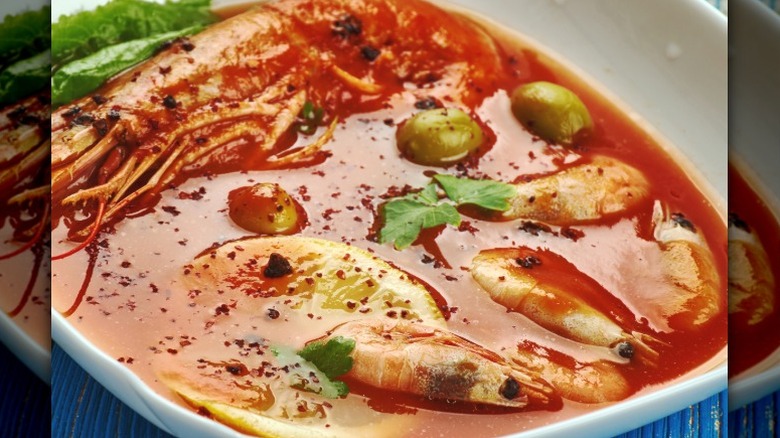
Don't let the spotlight on wood-fired pizzas and scratch-made bowls of pasta distract you from the fact that Italy has equally delicious seafood. Thanks to the country's proximity to four major seas and its vibrant coastal areas, seafood features in a multitude of dishes. Along the Adriatic coast, you'll find a dish called brodetto. In fact, there are many types of brodetto, varying by region and by family, but all are some variation on a fish soup or stew. Brodetto is yet another dish born of necessity. Fishermen would gather together the leftovers from their catch, or those bits that weren't able to be sold, and create an easy and hearty meal that doubled as a way to reduce food waste.
Of the many variations on this soup, some use a broth made with green tomatoes and peppers, while others opt for red tomatoes. The types of seafood involved also vary. You'll often find some sort of tender, white fish, and various types of shellfish like clams and shrimp. Some varieties of the dish contain a whopping 20 different types of seafood. Of course, if you're operating out of a home kitchen without prior experience, you don't have to go that far. The beauty of brodetto lies in its ability to be customized, making it a simple or an extravagant dish depending on the day.
Pappa al pomodoro
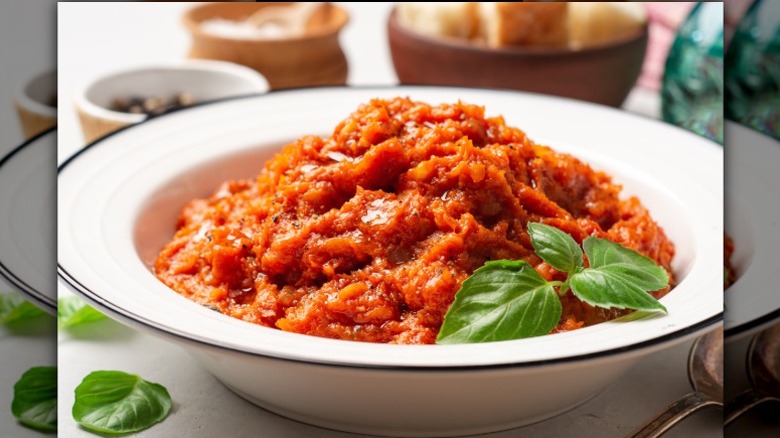
Flying back over to Tuscany, you'll find another rustic soup inspired by a need for simplicity and flavor in equal measure. The star of this dish is, like many in Tuscan cuisine, stale bread. While the idea of old bread may not sound appetizing on its own, it actually works wonders from a culinary perspective. In the same way that stale bread can be repurposed into something delicious – such as bread pudding, croutons, and French toast – Tuscan cuisine uses it as the basis for many soups and stews. One of the most popular ways to use up leftover bread is to whip up a batch of pappa al pomodoro, which roughly translates to "mush of tomatoes."
This is a classic summer dish when ripe tomatoes are bursting with flavor, but it can also be made in the winter months with canned tomatoes and still be delicious. The whole of the dish is created using tomatoes, stale bread, garlic, basil, and olive oil.While the ingredients themselves are simple, the quality of each component is what makes this soup really shine. The freshest tomatoes bring the acidity, fresh basil and high-quality olive oil add a pop of vibrancy. Meanwhile, saltless Tuscan bread creates the perfect base to soak up all those flavors. You can also adjust the amount of liquid used to create a thicker or more soupy consistency based on your own preference.
Cappelletti in brodo
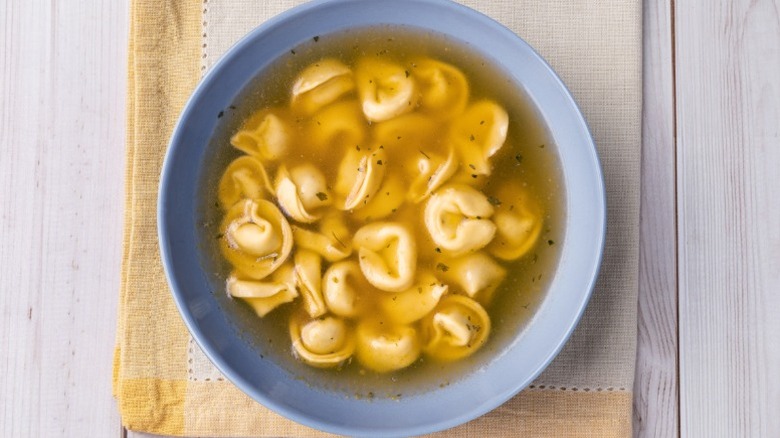
Last but not least is one of the more indulgent Italian soups you'll find. Cappelletti in brodo features filled pasta floating in a savory broth. Upon first glance, you might confuse the pasta for tortellini. But, while both are filled pasta shapes, there are some key differences. The name cappelletti translates to "little hats," which is a rather accurate way to describe these round and plump meat-filled pouches. The pasta is thought to date back to the Middle Ages when it was eaten by the upper class. Nowadays, cappelletti in brodo retains its special status, often served at Christmas.
The process is time-consuming but the end product makes the labor worth it. Whipping up the pasta dough from scratch takes up the largest chunk of time. After that, the filling is typically made with a mixture of meats that can include veal, beef, pork, and chicken. As for the broth, the most common type is a capon broth, though some opt for a chicken or even a turkey broth.
Capon broth is a staple at Christmastime in Italy, and the perfect counterpart to the hearty filled pasta. It is made using a capon, which is a castrated young rooster. Capons are known for their higher ratio of white meat and concentrated flavor. The broth's other flavors come from vegetables like onions, celery, and carrots, as well as other seasonings that vary recipe to recipe. Together, the pasta and broth create the perfect Christmas gift for any table.