

12 Best Ways To Repurpose Stale Bread Into Something Delicious
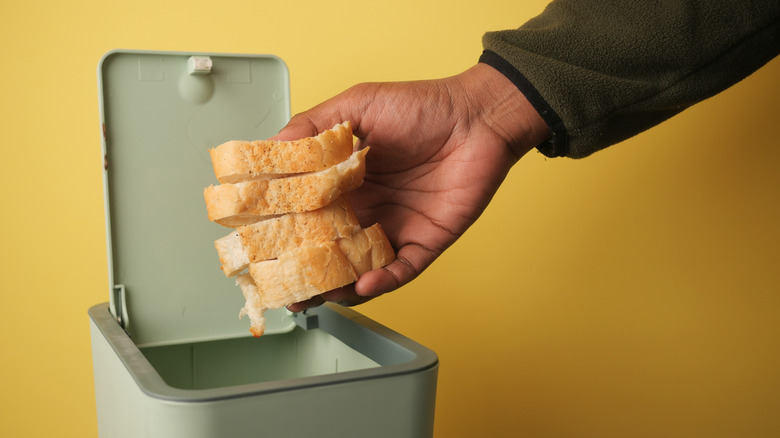
Without getting too scientific, it is important to understand what happens to bread as it ages. Basically, it goes through a process called starch retrogradation, where the exterior gets tougher and the moisture inside continues to evaporate. This dries the bread out completely. But what's important to note here is that stale bread is not moldy bread (which is something that should be disposed of immediately).
We are here to convince you that instead of fighting the stale, it's a whole lot easier (and more enjoyable) to lean into it. Any good chef recognizes stale bread as one of the most versatile ingredients in any kitchen. To help us unlock its potential, we spoke to Stephen Chavez, chef-instructor at the Institute of Culinary Education in Los Angeles, with over 20 years of industry experience; Anja Eckert, content creator at Our Gabled Home; and Lisa Keys, award-winning recipe developer, "Chopped" champion, and author of the blogs Good Grief Cook and Joyful Crumbs. Together, they offer 12 delicious ways to put that stale loaf to work.
Breadcrumbs
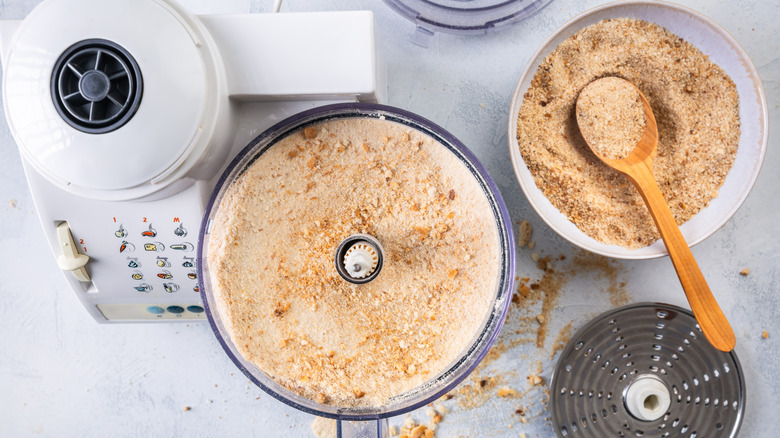
If you are a serious cook, you'll know that no bread goes to waste when you have the option of making homemade breadcrumbs in your pantry. The process to make your own breadcrumbs could not be simpler. Once your bread is completely dry, blitz it in a food processor until you reach the texture you want. You could do fine crumbs for coatings, coarser crumbs for binding, and the bigger pieces for toppings that need extra bite.
One important caveat: Your bread must always be fully dry before blending. Any moisture and you run the risk of moldy crumbs. When in doubt, spread your bread pieces on a baking tray and leave them in a low oven for up to 30 minutes. Store dried breadcrumbs in an airtight jar in the refrigerator and they will last for several weeks. You can also pop them in the freezer for several months.
As a finishing element, do not sleep on gremolata breadcrumbs. Lisa Keys makes a strong case for them. "Simply fry breadcrumbs in olive oil or butter with fresh herbs and garlic," she suggests. "Toss in some lemon zest and sprinkle on pasta, seafood, roasted vegetables, [and] eggs. ... It's a versatile crunchy finish that adds incredible texture and flavor."
Croutons
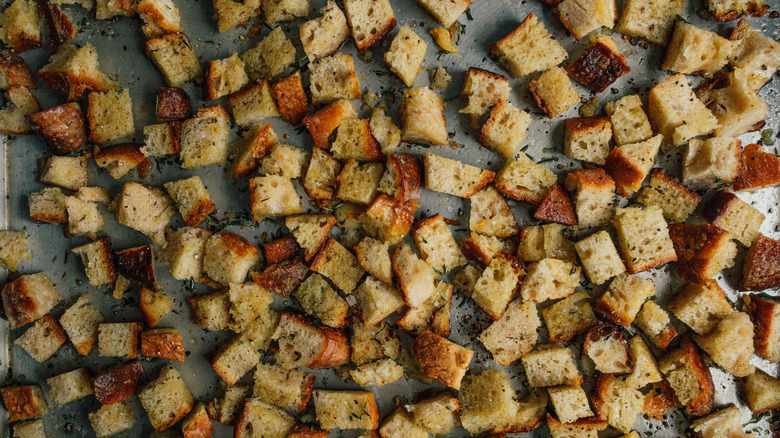
One of the reasons restaurant salads taste better than the ones you make at home is often down to the crunch and quality of the croutons. Homemade croutons made from stale bread have a depth of flavor that no store-bought bag can replicate. Once you make them yourself, we assure you, it will be impossible to reach for any pre-made version.
The magic starts with the bread. Chef Stephen Chavez makes an important distinction: "Whether the bread you have is a lean dough or a rich, enriched dough will make a difference. For example, an old baguette is great for croutons or crostini. ... However, a rich bread such as brioche or challah won't really make the best croutons, because the texture may become crumbly."
Making homemade croutons with stale bread is as straightforward as it gets. Simply cut or tear your stale bread into rough chunks. Toss them generously in olive oil, season well, and spread in a single layer to roast at medium heat on a baking tray until deeply golden. You could also experiment with an air fryer for an even easier hack. This is your base crouton. From here, the variations are endless. You can experiment with garlic, herbs, or even za'atar for croutons that will instantly elevate a homemade salad.
Bread pudding
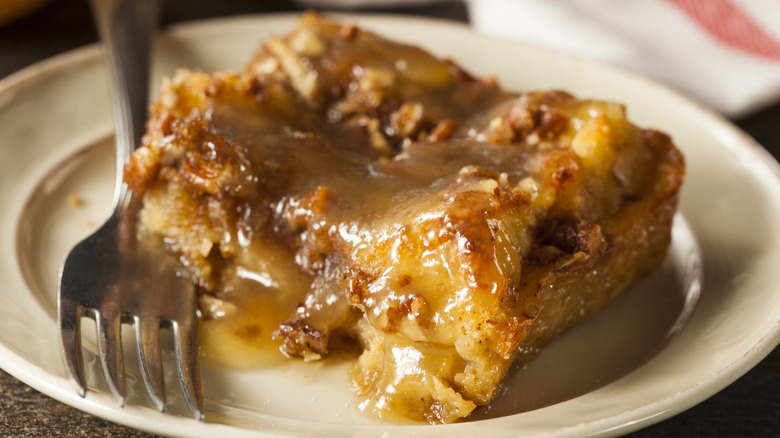
Call me biased, but I genuinely feel that stale bread was made for one dish, and that's the humble bread pudding. To begin with, this is not a recipe that typically tolerates fresh bread. Fresh bread is loaded with moisture, and adding a custard mixture will only result in a soggy, overcooked mess. As per Lisa Keys, using stale bread "gives the bread the ability to hold on to moisture like a sponge without becoming soggy. The stale bread can absorb liquid like a custard or a vinaigrette and still hold its shape." It then bakes up custardy with crisp edges.
Brioche and challah are the gold standard for sweet bread pudding, though a little birdie told us that soft hot dog buns can do the trick as well. Their high fat and egg content mean they stay soft even as they dry out, and together produce the most indulgent dessert.
For a classic version, cube your stale bread and layer it in a buttered baking dish. Whisk together eggs, milk or cream, sugar, vanilla, and a pinch of salt. Pour the custard over the bread and let it soak for at least 30 minutes before baking. One tip — do not skip the soaking time. Rushing a bread pudding is the most common mistake. Give the bread time to fully absorb the custard before it goes anywhere near the oven.
Stuffing and dressing
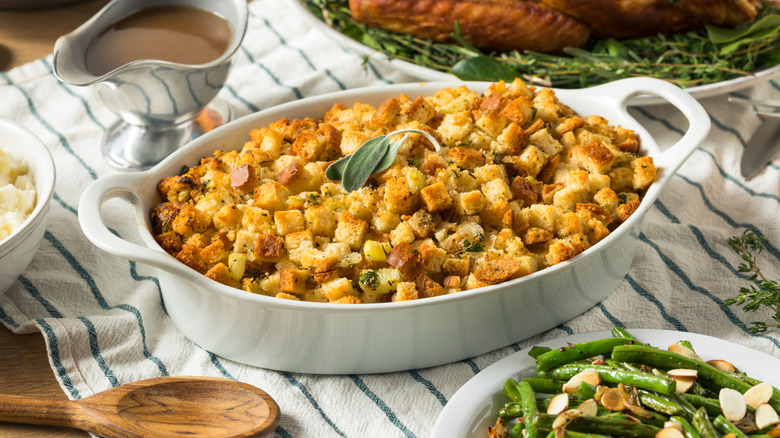
Stuffing may look simple, but get the bread wrong, and the whole thing falls apart. Use bread that's too fresh, and you can end up with dense, heavy spoonfuls that are not fully cooked through or more of a bread pudding than a stuffing. The sweet spot is stale bread that has been properly dried and generously seasoned. And let's not forget to give the dish enough liquid to absorb without losing its structure.
Lisa Keys explains that stale bread has an advantage here. "Stale bread absorbs the broth without turning pasty," she explains. That ability is what gives a good stuffing its texture with edges that crisp up beautifully in the oven. The bread you choose shapes the character of the dish entirely. A white sandwich loaf produces a softer stuffing, while sourdough brings a subtle tang and a chewier texture. Brioche can add a welcome richness, but be warned: It needs to be balanced with plenty of savory elements so it does not tip too far into sweet territory.
Anja Eckert makes an important practical point about preparation: "Toasted, dried bread cubes hold their shape in a way fresh bread never would." If your bread is not completely dry before it goes into the stuffing, it will not absorb the broth evenly, and the texture will be uneven throughout. Spread your cubed bread on a baking tray and leave it in a low oven for 20 to 30 minutes before you begin for the best results.
Soups
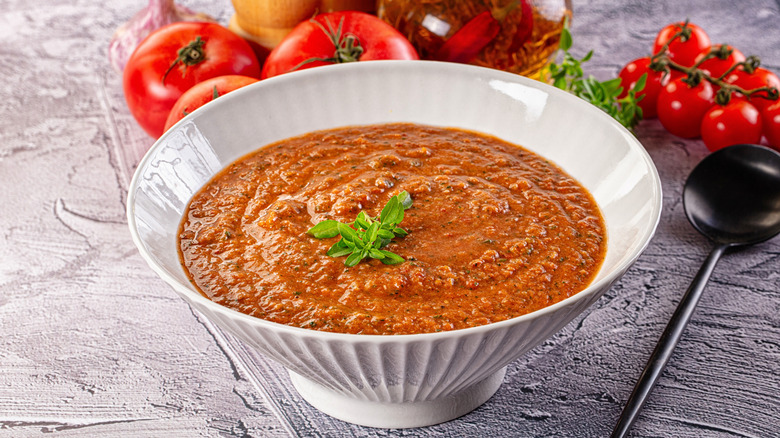
Thickening soups with bread is an age-old technique. Long before cornstarch or cream, cooks were dissolving chunks of stale bread into broths to add substance to their soups. Anja Eckert makes a compelling case for bread soup in its purest form. "Toasted bread cubes blended into a simple tomato or vegetable broth makes the soup incredibly creamy without a drop of cream," she says. "It's one of those peasant dishes that somehow never made it to the mainstream, and I think that's a shame."
Several great bread soups from Europe take a different approach, each producing wonderfully different results. For example, there's ribollita, a Tuscan white bean and bread soup. Stale bread is stirred directly into a thick vegetable and bean broth. Left overnight, it develops an almost stew-like consistency. The name "ribollita" refers to the liquid being reboiled the next day. This helps break the bread down further and intensifies the flavors. This is one of those dishes that is genuinely better on day two.
Gazpacho is a Spanish summer staple that takes an entirely different approach. As Lisa Keys notes: "In soups like Spanish gazpacho, [stale bread] emulsifies the ingredients into a creamy texture without any dairy." Chunks of old bread are blended raw into tomatoes, cucumber, garlic, olive oil, and vinegar. The final product is so smooth that you'll find it hard to believe that bread is the main ingredient.
Salads
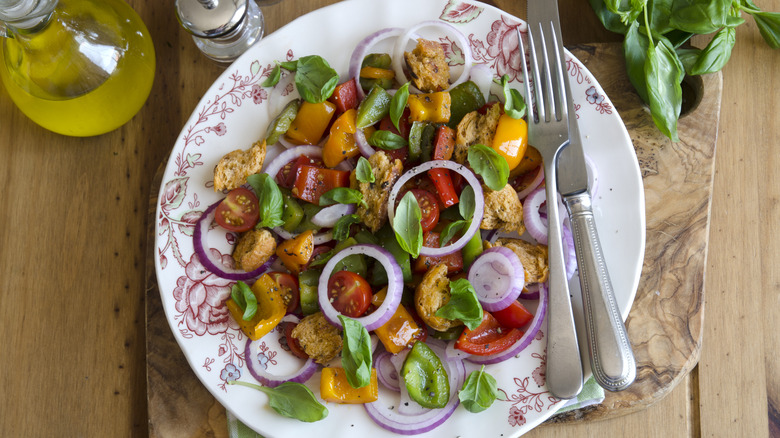
Does it take confidence to build a dish around leftovers? Yes, it does, but it also takes creativity to put together chunks of old bread and create a salad around it. Not as a filler, mind you, but as the main event. Panzanella is a classic Italian dish that Anja Eckert describes as "a summer salad built around old bread." At heart, this is a salad built around thick chunks of stale bread soaked in water, squeezed dry, and tossed with ripe tomatoes, shallots, basil, olive oil, and red wine vinegar. Bear in mind that the bread is never crunchy here. As it absorbs the tomato juices and vinegar, it sits somewhere between tender and chewy.
Chef Stephen Chavez takes a slightly different approach that is worth knowing: "Pan fry some small pieces of bread to get them crispy, then toss with a dressing and any other vegetables that you wish to use." This version gives you the best of both worlds — crispness, texture, and a layered result compared to the more traditional soak-and-squeeze method.
Alternatively, there's the Middle Eastern fattoush salad. Here, stale flatbread or pitta is toasted or fried until crisp, then tossed with the likes of chopped tomatoes, cucumber, radish, fresh herbs, and a sharp dressing built on pomegranate molasses and sumac. Unlike panzanella, the bread in fattoush is meant to stay crisp, adding crunch rather than absorbing liquid.
Dumplings and meatballs
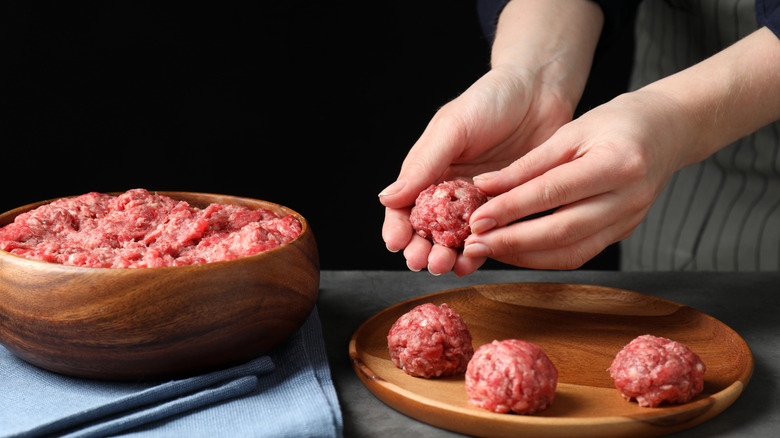
fDumplings. Meatballs. Both are essentially a combination of meat or vegetables that are mixed with soaked stale bread or breadcrumbs. There's also semmelknödel. This is a traditional German bread dumpling and probably one of the best examples of how stale bread can transform into a delicious, meaty dish. Cubes of stale bread are soaked in warm milk along with sautéed onions and fresh parsley. Anja Eckert, who grew up making these, says, "The bread needs to be dry enough to absorb the warm milk mixture without completely dissolving." That balance — dry enough to absorb, but not so dry that it falls apart — is the technique at the heart of this comforting meal.
Closer to home, you have the Italian-American meatball. The same principle of stale bread soaked in milk and mixed into ground meat is what separates a truly tender meatball from a dense one. One practical tip: Don't underestimate the type of bread you use when making these dumplings or meatballs. For dumplings, use a neutral white bread or bread roll that will not introduce competing flavors. For meatballs, a sourdough adds a subtle complexity that works well with bold seasonings or even stale seasoned breadcrumbs. Always squeeze out the excess liquid firmly before incorporating the bread into your mixture, or you risk the whole dish falling apart.
Coatings and crusts
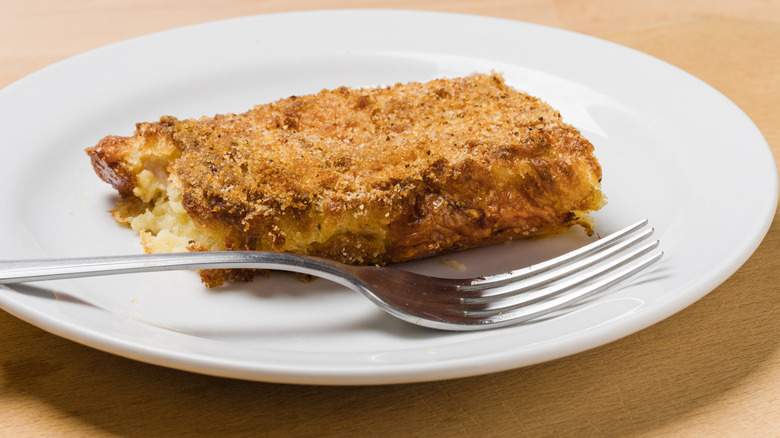
You probably use breadcrumbs when coating your fried fish or chicken without even thinking too much about it. Crusts and coatings are where most people first encounter breadcrumbs as a functional ingredient rather than an afterthought. As chef Stephen Chavez points out, "Every culture around the world has a version of a pounded, breaded, and usually fried meat item, whether it is chicken, pork, or beef." For example, Italy has cotoletta, Japan has katsu, and Austria and Germany have schnitzel.
Lisa Keys loves the versatility here: "I can make crumbs in a variety of sizes whether I am breading a protein like pork or chicken cutlets or bigger crumbs for binding meatballs and crabcakes." Beyond the classic cutlet, stale breadcrumbs open up a range of finishing techniques to experiment with. Anja Eckert uses this on more than just meat: "A breadcrumb crust on a noodle casserole ... That texture only comes from bread that has dried out. Fresh bread just steams instead of crisping."
When it comes to breadcrumb toppings, there are so many ways to expand your repertoire. For example, toasted breadcrumbs scattered over a bowl of pasta in place of Parmesan works a treat. In fact, this Southern Italian tradition is known as pangrattato, sometimes nicknamed poor man's Parmesan.
French toast
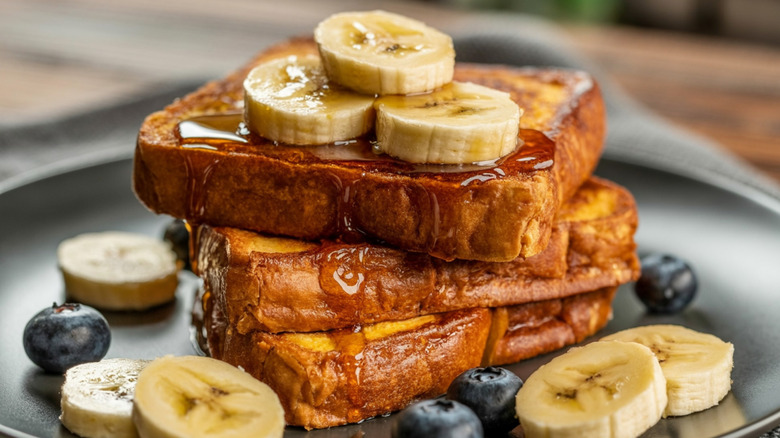
Bread. Eggs. Milk. How hard can it be? Well, if you've ever bitten into a soggy — or even worse, burnt — French toast, you already know the answer. There are so many ways in which French toast can fail. You can end up with an eggy center that never sets. Or be faced with a slice that falls apart from pan to plate. If the texture is neither custard-like nor smooth with crispy edges, the culprit is almost always fresh bread.
The proof is in the name itself — the French call it pain perdu or lost bread. This refers to bread that basically was a lost cause but rescued at the last moment to create something worth eating. Lisa Keys explains why stale bread is non-negotiable here: "It holds [its] shape as it slowly absorbs the liquid. It bakes up custardy with crisp edges [versus] a fresh bread, turning the recipe soggy and feeling raw." Fresh bread absorbs too fast, too much, and unevenly, leaving a wet interior that never fully cooks.
Another important factor with French toast is the choice of bread. Brioche produces the richest, most indulgent result thanks to its high butter and egg content. Challah follows close behind for the same reasons. A thick-cut sourdough produces something more robust and slightly tangy, with a chewier texture, while a plain white sandwich loaf (as long as it's properly stale) is the easy fix for a quick breakfast on a busy day.
Migas
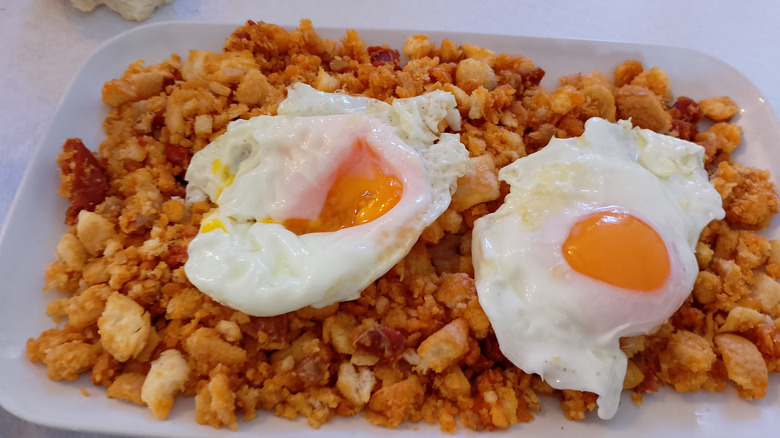
Migas, which translates as "crumbs" in Spanish, is one of the oldest methods of transforming bread that would have otherwise gone to waste. It is also, dare we say it, one of the most satisfying breakfast dishes in existence.
The dish can be traced back to shepherds and farm workers needing a filling and cheap meal that could be made from whatever was available. Stale bread fried in generous amounts of olive oil with garlic was the foundation. Everything else added to it — such as chorizo, bacon, peppers, and eggs — depends on the region and the season. In Portugal, migas take on a slightly different character. Alentejo migas is made with wheat bread and is cooked with pork fat and garlic. In the Beiras region, you find versions built around the local cornbread (broa). Spanish migas may sometimes use grapes, along with chorizo and a fried egg.
When making migas at home, always start with a good sourdough or a day-old country loaf. Fry it in olive oil with garlic and smoked paprika, add sliced chorizo, and let the fat render into the bread, then crack an egg or two directly into the pan in the final minutes. An all-in-one breakfast for champions.
Açorda
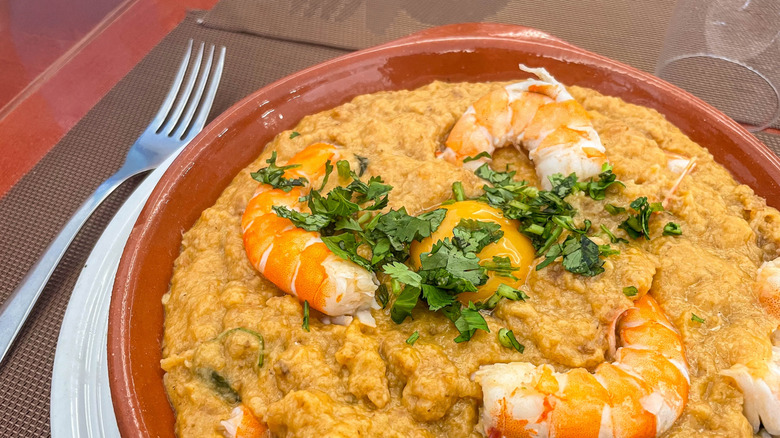
If migas is stale bread at its most robust, açorda is a dish that surprises you with its silky smoothness and sophistication. A legend in Portugal but surprisingly unknown outside it, this is a dish that needs more attention. Açorda is, at its most basic, a bread soup. That said, this description does it no justice. The base is built on garlic, olive oil, cilantro, and water or broth. Stale bread — and this is usually the dense, slightly sour pão alentejano bread of southern Portugal — is torn directly into the liquid and left to absorb until it breaks down into a thick, porridge-like consistency. Raw egg yolks are added at the end, cooking gently in the residual heat and adding richness that pulls the whole dish together.
The result is a deeply aromatic and comforting dish, in the way that only very simple food can be. There are variations across Portugal depending on where you enjoy it. Açorda de marisco, the seafood version, is perhaps the most celebrated, while açorda de bacalhau follows the same principle but with salt cod. Both versions use the bread not as a garnish but as the basis of the entire dish's texture.
Bread gratin
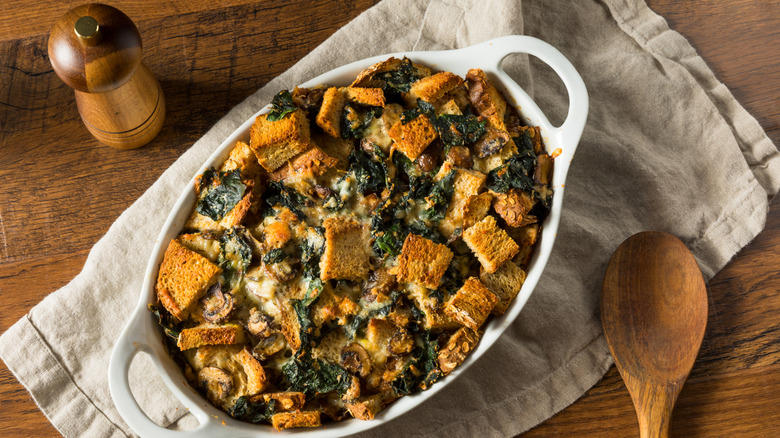
At one end of the spectrum, we have sweet, custardy bread puddings — redolent of vanilla (and if you are lucky, a whiff of bourbon). On the flip side is bread gratin. A savory version of your favorite bread pudding, consider this its more sophisticated sibling. Sitting somewhere between a stuffing and a classic French gratin, this is the kind of dish that looks humble but tastes elevated.
The principle is the same as when building a bread pudding. Stale bread, sliced or torn, is layered in a buttered baking dish, but instead of cream and sugar, you add seasoning, vegetables, or proteins, and cover it all in a savory custard. The classic version leans French and feels indulgent with thick slices of stale country bread and generous amounts of grated Gruyere. Thank me later for an extraordinary summer lunch enjoyed alongside a glass of chilled white wine and a leafy salad.
Needless to say, the variations are genuinely endless. Go Mediterranean with roasted peppers, olives, feta, and oregano, or a substantial Italian-inspired version could include sliced cooked sausage or pancetta. One practical note worth emphasizing: Never rush the baking time, and whatever you do, do not skip the resting period. A gratin cut too soon will collapse, so for beautiful slices that hold their shape on the plate, an extra 10 minutes or so will always be worth the wait.