

14 Steakhouse Chains That Use High-Quality Meats
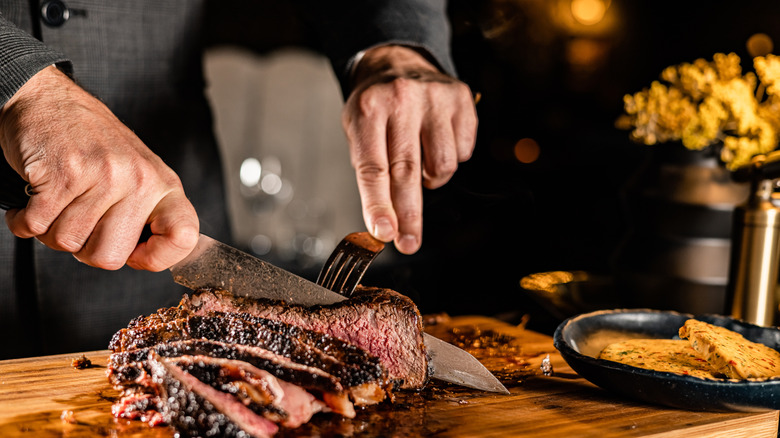
Even the best steakhouse chains carry a whiff of corporatism. But, if you get past the lack of "Mom and Pop" in the kitchen, you can still find a mouthwateringly juicy cut. We found steakhouse brands that buck the mediocre-chain stigma and deliver nothing but high-quality meat.
Everything from the cattle's diet to the aging process shapes the final steak, and a worthy steakhouse pays attention to every detail. Some source USDA Prime beef from respected, family owned ranches, while others specialize in premium, marbled Wagyu or hand-cut steaks aged to perfection. These approaches lead to absurdly sumptuous meat, and you don't have to splurge on a white-tablecloth dinner.
Take your pick: This list includes fine-dining dreamworlds with multiple styles of Wagyu and homestyle joints that include two sides with every steak. You can dine on classics, like a petite filet or a massive bone-in ribeye, wherever you go. These 14 steakhouse chains take their meat seriously, regardless of the price tag.
1. Smith & Wollensky
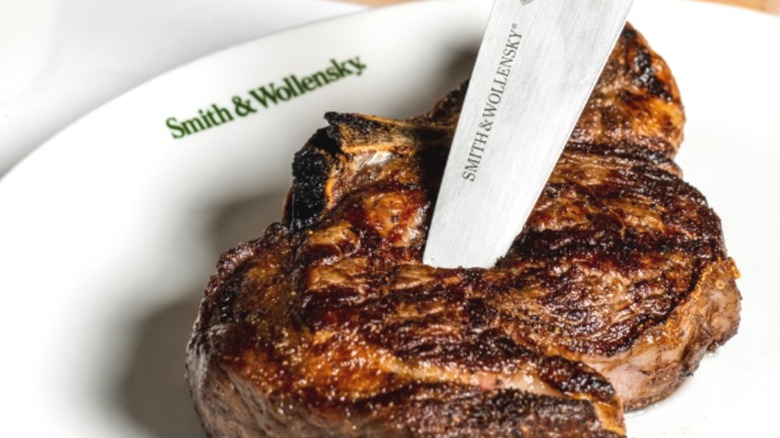
Smith & Wollensky's menu promises refined, meaty luxury. Highlights include American Wagyu, smoked tableside, and plump chicken, partially submerged in lemony au jus. The meats practically drip with juicy, succulent fat. Unlike many competitors, Smith & Wollensky serves only USDA Prime beef and high-quality chicken. The beef used for classic steakhouse cuts is grain-fed, humanely raised, and aged in-house for at least 28 days to deepen flavor. The chain's American Wagyu and signature filets come from small family farms and are sustainably produced.
Meat quality always begins with the producers. Smith & Wollensky guarantees droolworthy cuts by partnering with respected farms and ranches, including Double R Ranch, which created the first ranching program in the U.S. to receive Top 1/3 Choice certification, and Snake River Farms, which pioneered American Wagyu. Once at the restaurant, the meat's inherent quality is honored with touches like in-house dry-aging and custom steak knives. Customers have been falling in love with Smith & Wollensky's decadent choices for the past 50 years.
2. STK Steakhouse
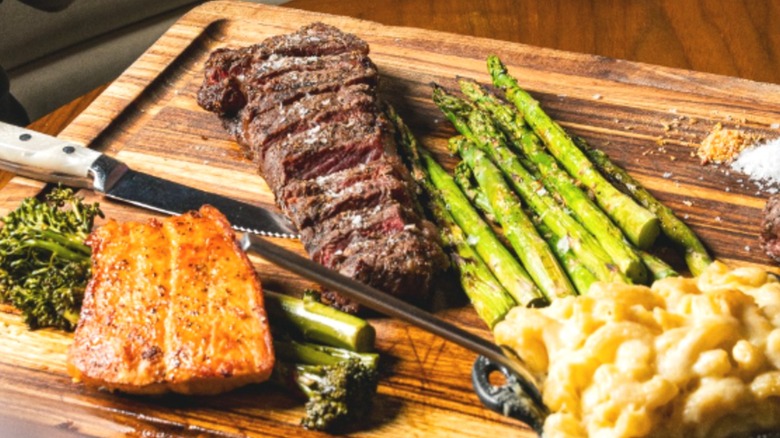
STK is a glorious departure from the typical stuffy steakhouse chains. It's famous for flower walls that attract endless selfies and servers who occasionally whip out sparklers and dance on the bar. At STK's 25 globe-spanning restaurants, dinner comes with the spectacle of a Vegas-style lounge. The show never overwhelms the food, however.
STK's beef comes primarily from certified Black Angus cattle nurtured on middle America farms. This careful curation has produced deliciously tender results. Chefs prepare cuts ranging from a 6-ounce filet and 8-ounce Wagyu flat iron to a 34-ounce bone-in rib-eye. Enjoy the buttery flavor of high-quality steak on its own, or dress it up with toppings, sauces, and signature butters. A classic pairing is the signature lobster butter, topped with real lobster. Fans rave about the steak even when the buzzy party atmosphere is missing. At the 2026 RARE Steak Championship in New York, STK won "Best Cocktail" and "Best Traditional Steak."
3. Morton's The Steakhouse
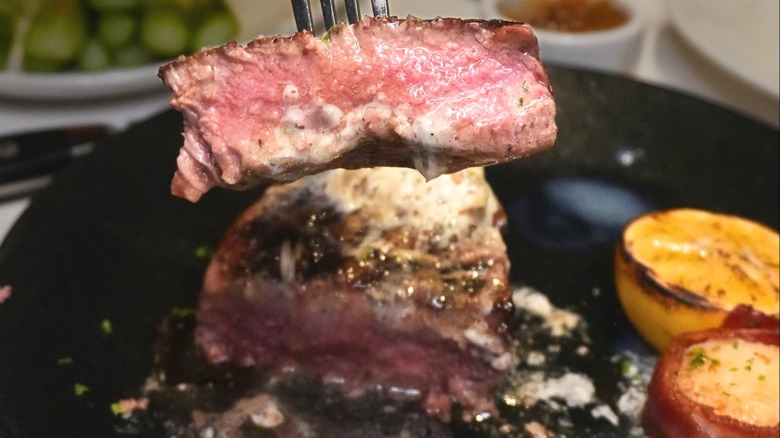
Old-school style and mammoth steaks await at Morton's The Steakhouse. A typical menu boasts six ribeye styles alone, including a showstopper 36-ounce tomahawk designed to feed the table. The famed Cajun ribeye might be the best thing on the Morton's menu. The meat's covered with a proprietary spice rub, then doused in oil and marinated for at least 60 hours.
Morton's serves custom-cut, USDA Prime steaks aged up to 28 days and melt-in-your-mouth American Wagyu. The chain works with dedicated suppliers to choose the best possible inventory. If the meat's not up to par, it never makes it to the kitchen. The system works so well that Morton's hasn't changed suppliers since it first opened its doors 48 years ago. And, it's not just the steak that's maintained high quality for decades. The Chicken Christopher continues to delight with its herby, golden crust and bed of white beurre blanc.
4. The Capital Grille
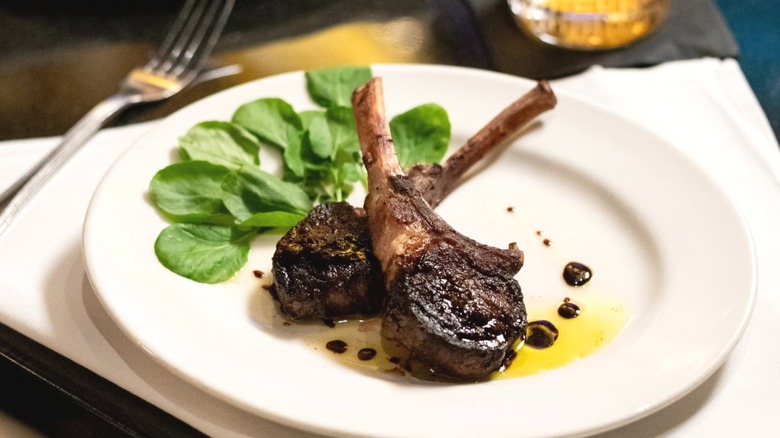
The Capital Grille originally operated out of a Rhode Island train station, a sign of what the restaurant would become: A bustling spot connecting people from around the world. The growing chain has over 60 locations, and the average meat lover would be happy at any of them. Steakhouses like STK appeal to diners who crave a show with their juicy slab of meat, but The Capital Grille has quieter charms. The splashiest thing in this dining room is the signature porcini-rubbed bone-in ribeye made with an exclusive rub and a 15-year-aged balsamic.
According to the company website, chefs at The Capital Grille use the "finest ingredients" in every meal. That dedication means you can count on a steak that's aged and hand-carved on premises. Intriguingly for home cooks, however, you don't have to remain on-site to enjoy a perfect steak. The Capital Grille also operates The Capital Butcher, a retail extension that sells the brand's meat nationwide.
5. Texas Roadhouse
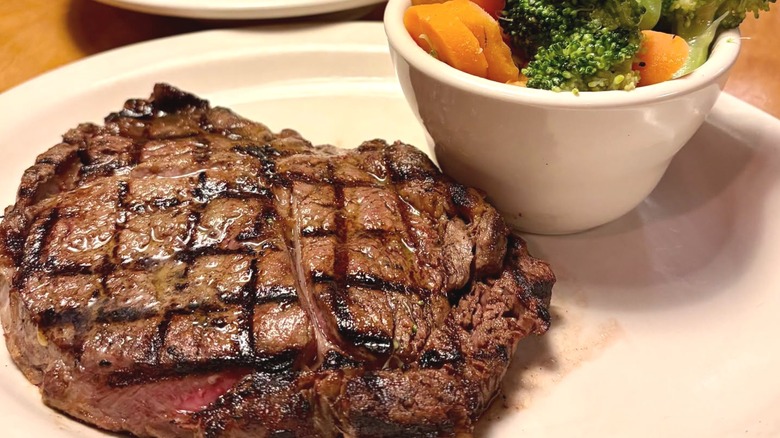
Everything's bigger in Texas, including the steakhouse chains. Homegrown favorite Texas Roadhouse now serves 736,000 meals a day from over 700 restaurants. Each location has the same winning combo: Good meat, affordable prices, and plenty of Texas fun. Let's talk about the fun first. Servers line dance between tables and work hard to keep the energy high. Celebrating a birthday at Texas Roadhouse? You'll sit on a special saddle while the rest of the dining room hoots and cheers.
It's natural to wonder whether a casual, themed restaurant can compete with the quality of more upscale chains. After all, Texas Roadhouse doesn't sell $150 Wagyu or a $200 tomahawk ribeye. Instead, you'll find affordable, well-prepared meat full of natural flavor. Texas Roadhouse relies on USDA Choice steaks hand-cut by in-house butchers. Depending on the location, a 6-oz steak and two sides can be as low as $16.99. Steaks represent less than half of the menu, however. The chain also has a BBQ section that could make an experienced pit master proud. Any side you pair with the meat will be made from scratch, whether you order macaroni and cheese or Texas red chili.
6. Fleming's Prime Steakhouse
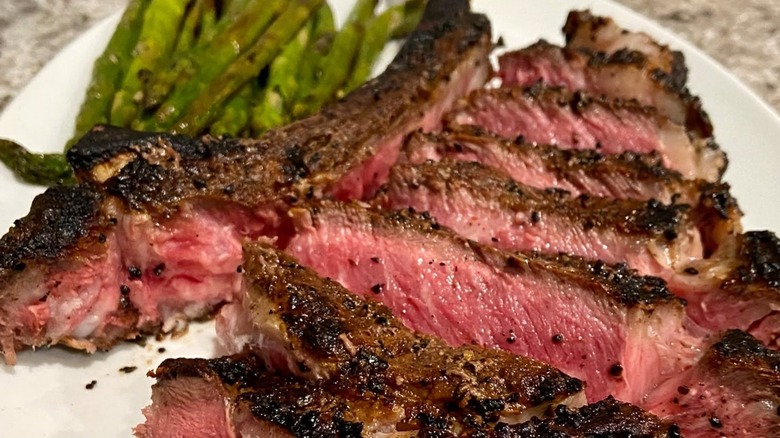
In a steakhouse-quality showdown, few chains could topple Fleming's. The brand meticulously sources prime beef from trusted, family-run farms and dry- or wet-ages it for at least 21 days. The meat reaches peak tenderness before chefs season it with Fleming's signature blend and char it in a 1600-degree-Fahrenheit broiler. Blazing heat intensifies flavor and traps the juices under a caramelized crust.
Fleming's star cuts include the 16-ounce Prime dry-aged ribeye, a rare find that's juicy and extra umami-rich, and a selection of supple Wagyu. Australian-bred Carrara Wagyu is known for heavy marbling that resembles the beautiful patterns found in real Carrara marble. A5 Japanese Wagyu is the aficionado's favorite, remarkably tender and crafted with heritage expertise. It's served rare on a sizzling hot stone with horseradish and miso glaze.
Fleming's 20-ounce, double-thick pork rib chop offers a worthy break from fatty beef. The chop's covered in a sharp, Creole-mustard glaze and perched atop a bed of sautéed apples and jicama. Diners who never order pork have changed their minds after trying Fleming's version.
7. Ruth's Chris
At Ruth's Chris Steak House, you might hear the beef before you see it. Steaks reach the table sizzling in butter on 500-degree Fahrenheit plates. Ruth Felter, the namesake founder of the Ruth's Chris brand, believed the butter-and-hot-plate combination kept steaks perfectly hot for guests. She eventually created a custom 1800-degree broiler to deliver higher heat while the meat cooks.
Ruth's Chris serves USDA Prime and Choice cuts of corn-fed Midwestern steak. Ruth herself preferred a specialty cut, the 19-ounce bone-in New York Strip. Every minute in the broiler helps the bone marrow melt into the savory meat. For a less meaty bite, try the ultra-tender filet. It contains minimal marbling and is carefully aged for 28 days.
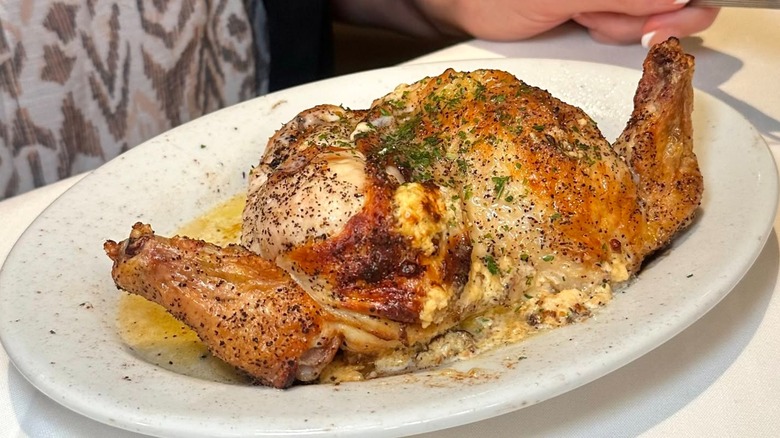
The popular petite filet & shrimp upgrades the filet with fresh seafood, matching two savory, 4-ounce tenderloin medallions with large, seasoned shrimp. Ruth's Chris recommends enjoying the meal with a bright Pinot Noir with hints of strawberry, raspberry, and cherry. Beyond the beef, Ruth's Chris tempts meat lovers with thick chops and chicken stuffed with garlic-herb cheese.
8. Mastro's
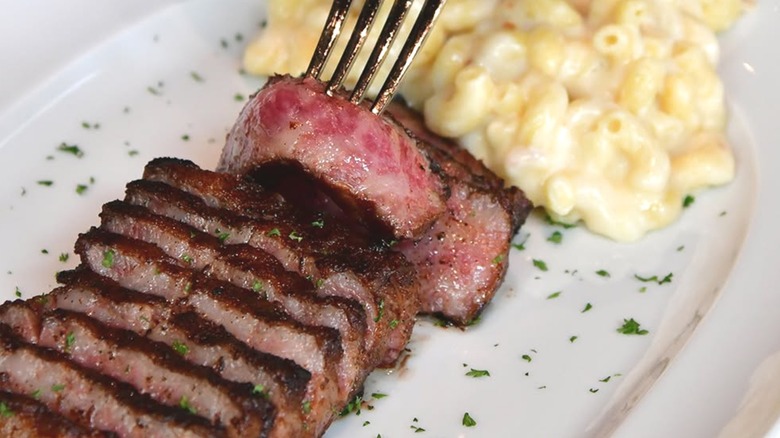
Ever snapped a million photos of your dinner? Eating at Mastro's will multiply that urge. One meal here might turn you into a burgeoning food photographer, especially if you order steak. Visual splendor caresses you everywhere you look. Over there, a bone-in ribeye shows charred flesh beneath a puddle of golden-orange shrimp Bruno; over here, a server scoops fluffy yellow rice next to glistening beef. Sometimes, architectural beauty adds weight to the aesthetic. Mastro's Las Vegas features a giant, whimsical structure called the Tree House made with Sapele wood and hand-crafted mahogany beams. The gorgeous scene raises expectations for the quality on the plate, and Mastro's doesn't disappoint.
Wet-aged, USDA Prime steaks flow out of the Mastro's kitchens. They're cooked in a 1,500-degree broiler and served on 450-degree-Fahrenheit plates that keep the meat sizzling. Multiple types of beef are available as well. Mastro's Steak House serves American, Australian, and two types of Japanese Wagyu. Mastro's Ocean Club's lineup is identical, except that it offers one less type of Japanese Wagyu. The Steak House and Ocean Club are actually so similar overall that a casual glance at the menus wouldn't distinguish between them. Only a handful of differences exist.
9. Longhorn Steakhouse
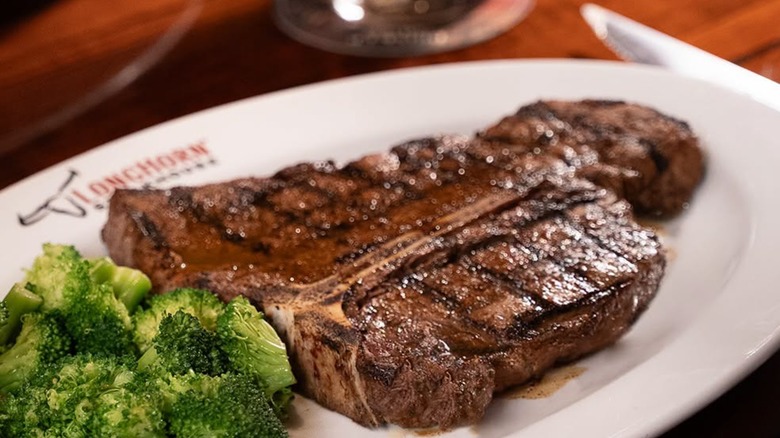
At Longhorn Steakhouse, expert grill masters work magic over the fire, coaxing new depths of umami from fresh, never-frozen steaks. Abundance rules in this kitchen, so portions are huge, and prices are low. This isn't an à la carte kind of joint. One salad and one side tag along with every steak.
An 8-ounce, custom-trimmed Renegade sirloin with the chain's signature Prairie Dust spice rub is just $21.49 at some locations. A premium 20-ounce Outlaw ribeye crusted in smoky Char Seasoning is $36.29. All the beef is high quality, USDA Choice, and grain-finished. Lean toward ribeye if everything sounds too delicious. Longhorn sells over 15 million ribeyes per year.
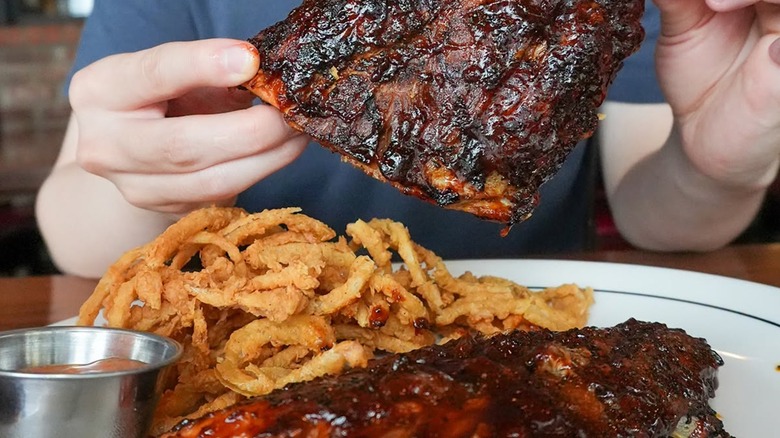
The BBQ deserves attention too. Longhorn's grill masters know their way around a fat rack of Baby Back ribs. They season the tender meat with a signature rib rub and slow-cook it until it's practically falling off the bone. Finally, they finish it on the grill with a touch of flame and a slather of sweet BBQ sauce.
10. Saltgrass
Don't kick off your boots just yet; we're still in cowboy country. Saltgrass gets its name from the Salt Grass Trail, a legendary Texas cattle drive. Happily for beef connoisseurs, the chain lives up to the golden reputation of its namesake trek. Saltgrass serves prime cuts of chargrilled Certified Angus beef. Certification ensures the beef tastes superior and meets 10 rigorous quality standards.
Every Saltgrass steak gets the same treatment: A dollop of fresh garlic butter and a pinch of Saltgrass-7 steak spice. Once prepared, each steak comes with a side to complete the meal. There's a roster of high-quality cuts to explore. Maudeen's center-cut filet is a lesson in tender steak, and Pat's ribeye is thick with just the right amount of fat.
Saltgrass is another spot with craveable baby back ribs. The ribs are among the Ranch Hand favorites, stellar entrees that aren't attention-grabbing red meat cuts. The chicken fried steak and the chicken Laredo, with Jack cheese, feta cheese, avocado, and vegetables, are favorites, too.
11. Fogo de Chao
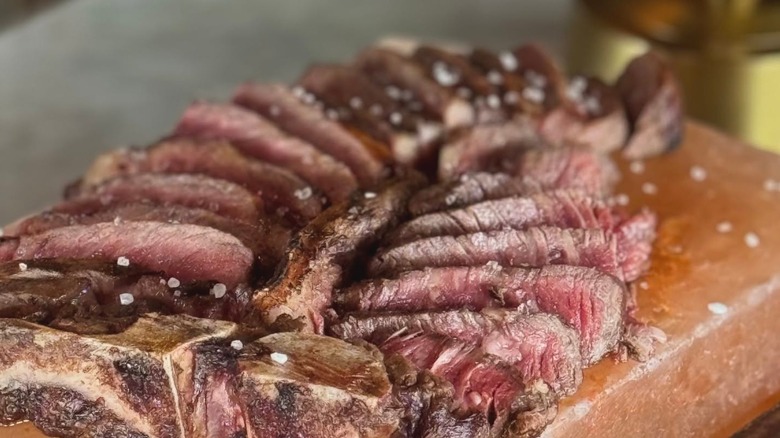
A meat-filled revelry unfolds when you sit down at Fogo de Chão. The spot is built for luxurious feasting. No more settling for ribeye and wishing you'd chosen the porterhouse. Fogo de Chão is a Brazilian steakhouse, also called a churrasco. Instead of ordering a single dish to enjoy or share, most of the menu is all-you-can-eat. Gaucho chefs continuously wander the room carving meat tableside.
Options like the bacon-wrapped steak show off Fogo de Chão's skill. The meat's dusted with rock salt and wrapped in bacon tinged with honey and hardwood smoke. For a more robust flavor, try the Picanha, the chain's signature steak. It, too, gets a salty coat, but this time the beef is sliced very thin. Switch it up again with the Fraldinha, an even bolder flavor with pronounced marbling. Gaucho chefs slice it against the grain to preserve tenderness. The beauty of Fogo de Chão is that you can try all of these in one sitting and still get the next round of Bisteca De Porco, a double-bone pork chop marinated for 48 hours.
12. The Palm
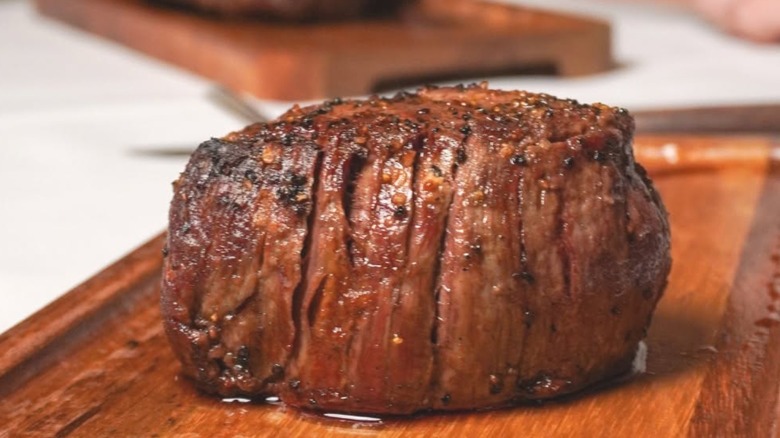
The Palm celebrated 100 years of culinary decadence in 2026. It's an incredible feat for a steakhouse that was once just a dream held by two boys from Parma. Actually, they dreamed about The Parma, but their Italian accents were so thick that someone registered the restaurant as The Palm instead. Whatever the name, exceptional steaks have been part of the deal from the beginning. The Palm has never wavered in its commitment to serving USDA prime steaks, even in 1950, when post-war struggles strained the supply chain.
Wagyu has a star slot on the Palm's menu as well. The chain gets inventive here with a deliriously savory Wagyu lasagna that also features veal, pork, and Italian sausage. Ordering a whole steak means going for a New York Strip, a ribeye, or a center-cut filet, any of which can be enhanced with seafood or sauces. The tomahawk on this menu is a pork chop.
13. Del Frisco's Double Eagle Steakhouse
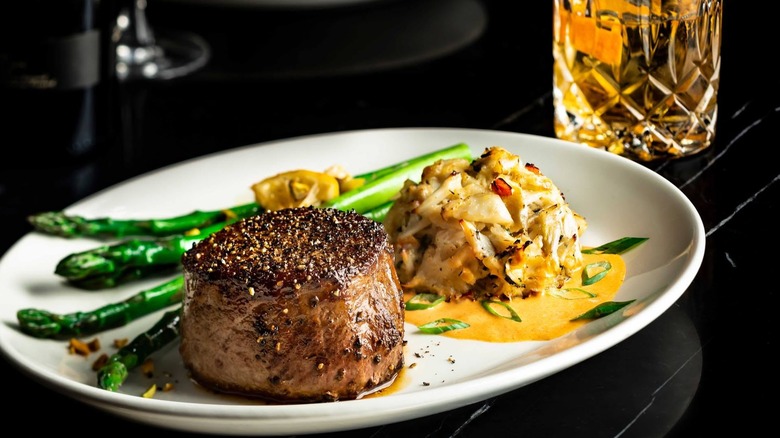
Del Frisco's pays tribute to the classic American steakhouse. Come here for expense-account dinners and intimate, upscale evenings. Del Frisco's menu features USDA Prime beef with impressive marbling and Japanese A5 Wagyu. Guests in select cities can order Certified Kobe beef, an even more luxurious version of Wagyu. Only a few thousand cattle are certified as Kobe each year.
If Kobe beef isn't an option at your Del Frisco's, try the 16-ounce Prime New York Strip that's dry-aged for 45 days. Or the 32-ounce tomahawk ribeye built for sharing. You can jazz up any Del Frisco's steak with extras like bourbon peppercorn sauce, horseradish cream, truffle butter, or gorgonzola fondue. For a carbier addition to the meal, Del Frisco's makes an amazing baked potato.
Beef is obviously the real meat story at Del Frisco's, but you might switch allegiances after trying the double-bone lamb chop, crusted with pistachios and herbs and complemented by balsamic figs and charred pearl onions. The double-bone Kurobuta pork chop is no flavor slouch either. Kurobuta is prized for its pedigree and depth of flavor.
14. Bob's Steak and Chop House
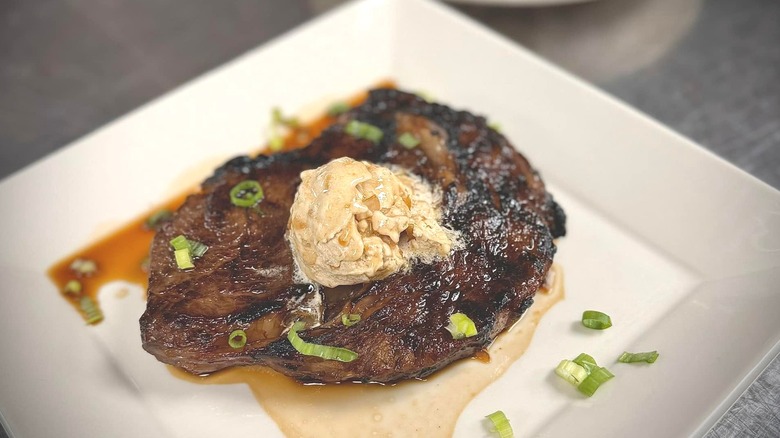
Bob's Steak and Chop House has a surprising signature move: The chain pairs every steak with a luscious, glazed carrot the size of a breadstick. The mammoth vegetable is almost more noticeable than the meat. When you do tear your eyes away, you'll see hand-selected, USDA Prime steak from the same Chicago-based producer Bob's Steak and Chop House has used for 30 years. Tradition is a big deal at this joint. The iconic carrot has been part of the brand for decades, too.
Dinner follows the steakhouse beat, with a few surprises. To start, your server will deliver complimentary bread and a jar of house pickles. Entrees arrive with the carrot and your choice of a fried or baked potato side, plus sautéed onions and peppercorn gravy. The oniony gravy increases flavor complexity and cuts the richness of an extravagant cut, like the bone-in Kansas City Wagyu strip.
The exact culinary pleasures you can expect depend on location. Bob's Steak and Chop House menus vary immensely between restaurants, down to the sauces they use. A Bob's location in Austin, Texas, serves seared duck breast with a port wine and berry reduction while a Fort Worth location two hours away serves the duck with a Luxardo cherry sauce, preserving the sweet profile but changing the notes. The impeccable quality remains consistent.
15. Methodology
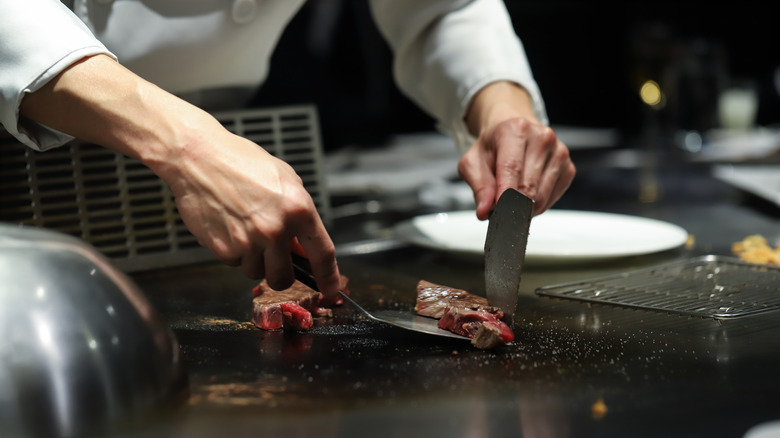
What makes a good steak? Chefs add the finishing touch, but the qualities that truly whet the appetite, such as tenderness and marbling, develop long before the meat reaches the kitchen. The same holds for other steakhouse favorites, from crispy chicken to baby back ribs. This list highlights steakhouse chains that prioritize sourcing their meat.
We vetted each chain's meat sources and preparation methods. Our winners partner with respected producers, many working exclusively with family-run farms and ranches. We also considered USDA beef grades, though Prime wasn't a requirement. Choice beef can be just as satisfying with a skilled chef.
Aging techniques and custom butchering also got extra attention. We searched for industry awards and customer reviews to see which chains had a confirmed reputation for great, high-quality meat. Every steakhouse chain is amazing if you listen to the corporate spiel. We favored restaurants with specific, verifiable quality standards.