

Boomer Halloween Candy, Ranked Worst To Best
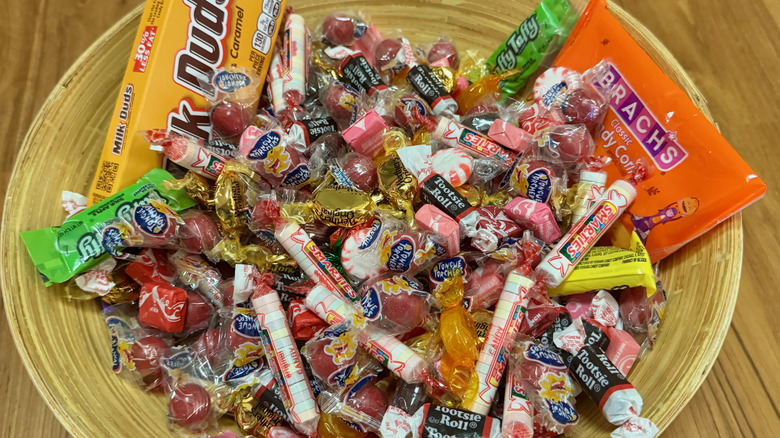
There are certain candies that survive the test of time. In a market dominated by flashy packaging and exotic flavors designed to appeal to evolving tastes, these candies plod on with few noticeable changes. We call them boomer candies today, but that's not an entirely accurate label. Many of the candies featured here were already old-fashioned when boomers were children carrying trick-or-treat buckets from house to house. For whatever reason, whether it is the affordable price tag on a bulk assortment or an embrace of nostalgia in their later years, it tends to be the older generation handing out these candies on Halloween night.
In 20 years, another writer will feature many of the same candies in an article about millennial candies. Gen Z will get their turn after that. It will be a human writer producing those articles, too, because nostalgia is difficult for AI to comprehend. While all of the candies in these rankings are dripping with nostalgia, they are not all created equal. It's mind-boggling that some of the candies have lasted this long without a visible fan base. Others are as popular now as they have ever been. These are old-fashioned, nostalgic, "boomer candies" — ranked worst to best.
13. Tootsie Roll
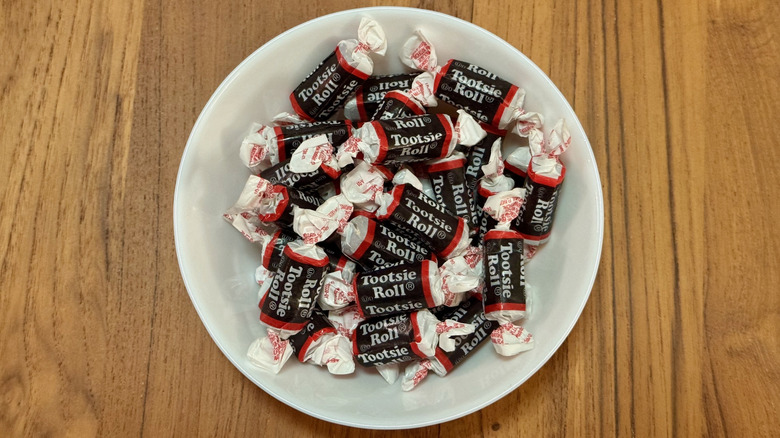
Let's cut the drama and state that Tootsie Rolls came in last in this ranking. The chewy candy was invented in 1896 and originally distributed by horse and buggy. Each batch is made starting with the previous day's mix, meaning that (theoretically) a bite of today's Tootsie Roll could be more than 100 years old. Typically, that would be a shocking statement, but it is not surprising to anyone who has tasted a Tootsie Roll. Despite their long history, the candy has few vocal fans.
The actual flavor of a Tootsie Roll is difficult to pin down. The ingredient list contains many of the usual suspects: sugar, corn syrup, condensed milk, and cocoa powder. The package doesn't mention anything specific about fruit, but the website claims there is a hint of fruit in the candy. There is no denying that Tootsie Rolls are classics, but generations of children have been disappointed to find the chewy candy in their Halloween buckets. Alas, Tootsie Roll, the unappreciated candy that won't go away.
12. Candy corn
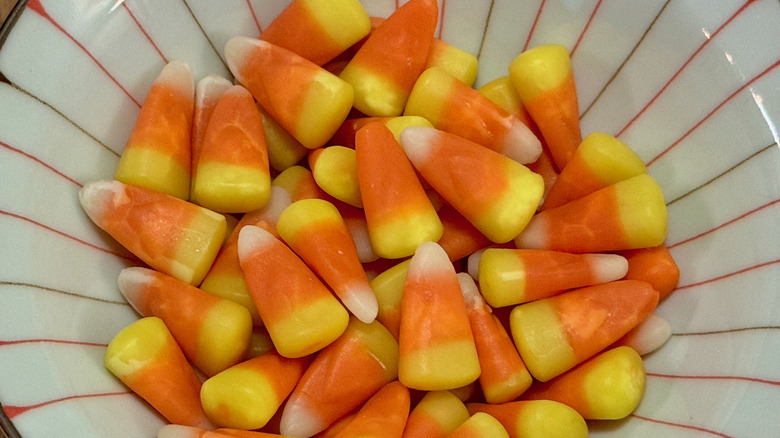
Candy corn is an odd candy that makes one big appearance a year, but unlike Girl Scout cookies, it's not something many people look forward to. Everything about it is a little weird, from the uber-sweet but unrecognizable flavor to the waxy texture that doesn't scream edible. In 2016, Thrillist contacted Jelly Belly to ask what the flavor of candy corn was supposed to be. According to a company spokesperson, it is "a wonderful blend of creamy fondant, rich marshmallow, and warm vanilla notes." The statement went on to say that the texture was as important as the flavor, and it should be "like biting into butter."
The candy corn sampled for this article didn't come from Jelly Belly, but the texture was not like butter. It was dry and crumbly, and tasted like frosting that was left out overnight. The flavor was generically sweet, similar to the filling in a Twinkie. There's a nostalgic festivity to the kernel-shaped candies with their fall colors, but it's a candy that does a better job as a decoration than a Halloween handout.
11. Peppermint
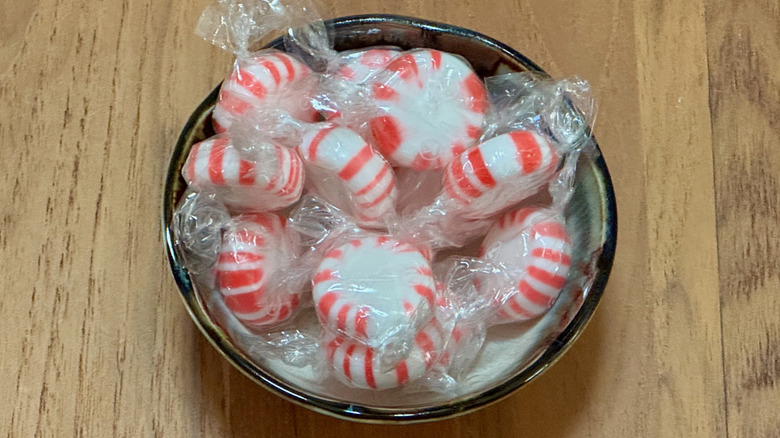
Peppermints are another classic candy that comes in near the bottom of the rankings. These hard candies are even older than Tootsie Rolls. Much older. The hard candy — in sugar stick format — dates back to Germany in 1670s. You might be wondering how a candy that is so old ends up near the bottom of the rankings. The simple answer is — peppermints are too common. A peppermint is great if you just finished your second coffee and need to freshen your breath before flirting with your crush, but they are not likely to get anyone's blood pumping on the trick-or-treat trail.
It's almost like they are more of an ingredient than a candy at this point. Peppermint flavors dominate the holiday season, but they are often used as a crushed topping on chocolate bark or as a minty enhancement to hot cocoa. Sure, there are candy canes, but those can at least be sucked into sharp spears that are more fun to play with than a sticky mint. As a standalone candy, peppermints don't bring much excitement to the table. Excellent breath mint, disappointing candy.
10. Strawberry bon bons
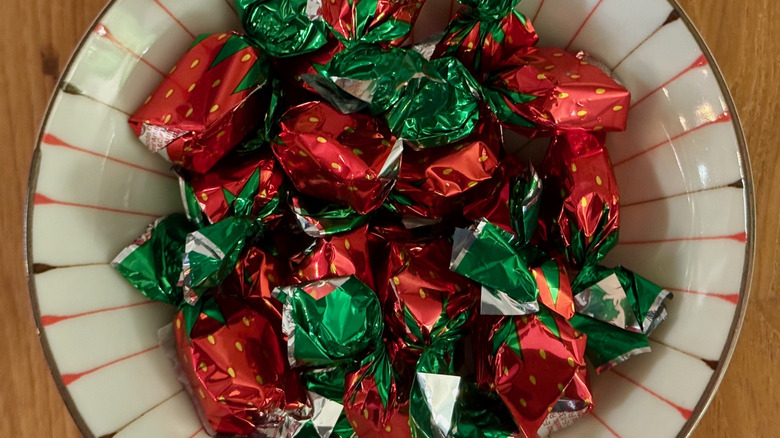
Strawberry bon bons have an intense, artificial sweetness. They'd make a great cough drop flavor, but they miss the mark as a candy. They were the sweetest candy sampled during the tasting phase of the ranking. The intense flavor was nice at first, but then it started to feel like someone turned a juice-soaked sugar cube into a hard candy. Then, at the end, it rewarded us with a gooey, sticky core that resembled strawberry jam.
That sounds harsh, so let's acknowledge a few of the characteristics that have kept strawberry bon bons on the market for a long, long time. The origins date back to at least the early 1860s, but the candy gained popularity near the end of the Great Depression. One of the keys to its early success and longevity is likely the strawberry flavor. Although you never see strawberry juice at the grocery store, it's one of the most popular flavors in candyland. The problem with strawberry bon bons is that the flavor is robust, but it's not great. The cute, berry-like red and green wrappers make them a better decoration for a vintage candy dish than a treat.
9. Root beer barrels
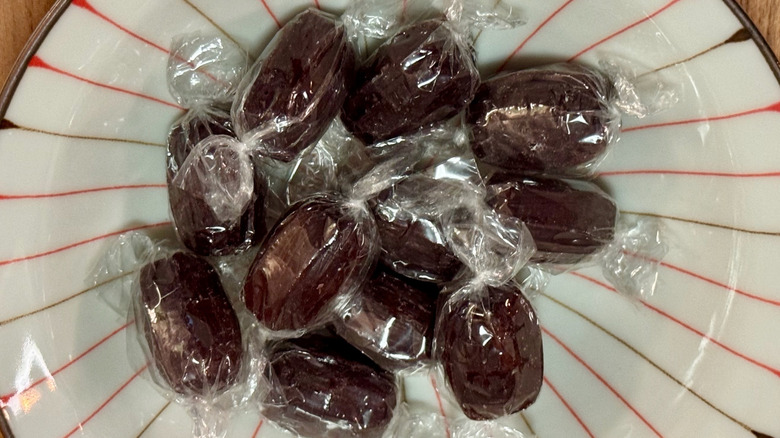
Root beer barrels are usually a love 'em or hate 'em kind of candy. Fans love the herbaceous flavors, but detractors think they taste medicinal. The detractors might be on to something because a common theory is that root beer barrels were invented by a pharmacist in the 1800s. Root beer hard candies were inspired by Charles Hires' 1870s root beer drink, using the same flavors.
Instead of the fruity sweetness found in many hard candies, root beer barrels feature notes of sassafras, wintergreen, and anise. It's a minty and earthy blend that gives the candy a unique flavor. Anecdotally speaking, there appears to be a significant overlap between people who enjoy root beer candies and black licorice. For those people, the minty sweetness will likely push root beer barrels much higher in their personal rankings, but the candies will be shunned by the rest of the population.
8. Smarties
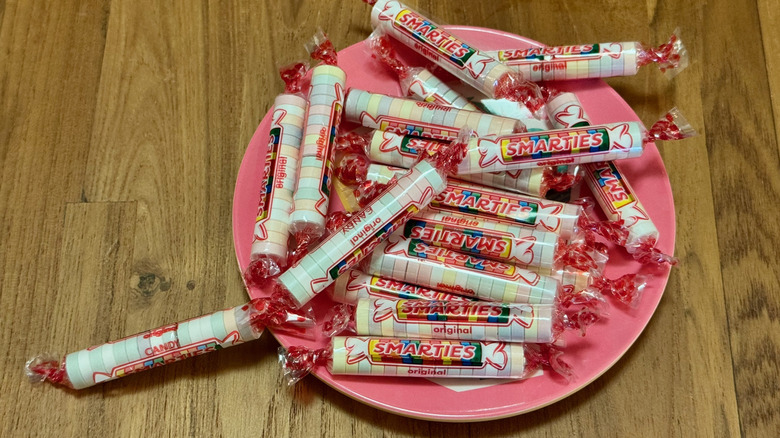
Most of the candies in this ranking are either hard or chewy. Smarties offer something different with their crunchy, powdery texture. They also bring a variety of tastes, since each roll of Smarties contains an assortment of fruity flavors. Most candy companies use a shade of red or pink for strawberry flavored items, but in a pack of Smarties the strawberry flavored one is green. Other flavors include cream, pineapple, cherry, grape, and orange. While you can let the hard discs dissolve on your tongue, it's more fun to crunch through it and pop the next one.
Technically, the sweet treat is known as a candy wafer roll. The original American candy wafers were first made in the 1840s by the New England Confectionery Company (Necco). Smarties came around in 1949 when Edward Dee immigrated from England and started a candy factory in New Jersey. Today, the company is led by his granddaughters and continues to make the nostalgic, chalky, crunchy, and fruity candy. It's near the midpoint of these rankings, and a solid candy that is fun to eat but is rarely named as someone's favorite.
7. Cinnamon discs
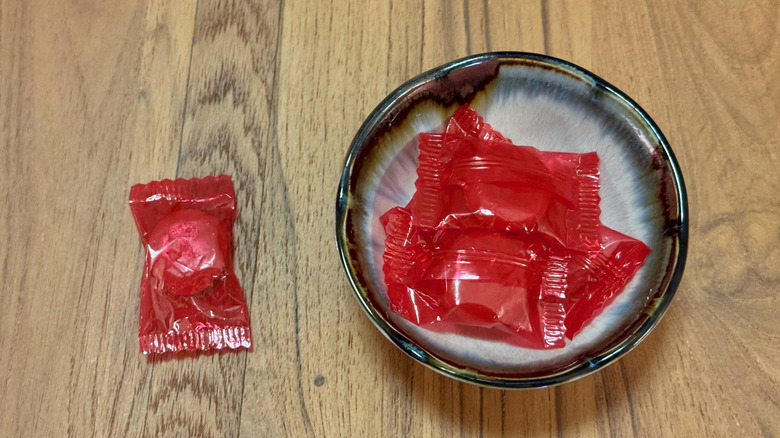
Like root beer candies, cinnamon-flavored ones tend to be polarizing. But the fans are, well, fanatical. While the market is flooded with sweet, fruity candies, there are not many competitors that contain the same flavor profile as cinnamon. There are simply not many choices to split the vote of the spice-loving crowd, which helps propel cinnamon discs up the rankings.
When it comes to cinnamon candy, the most common options are cinnamon discs, jawbreakers (which we will get to later), and Red Hots. Of those, the discs tend to be the most generic and are not often associated with a particular name brand. The ones we sampled came out of a 2-pound bag of assorted candies. The plain red plastic wrapper made it look like something you pick up for free on your way out of a diner. The candy was flavorful and left a tingly sensation in the mouth and tongue. They are not for everybody, but have enough fans to lead off the top half of these rankings.
6. Starburst
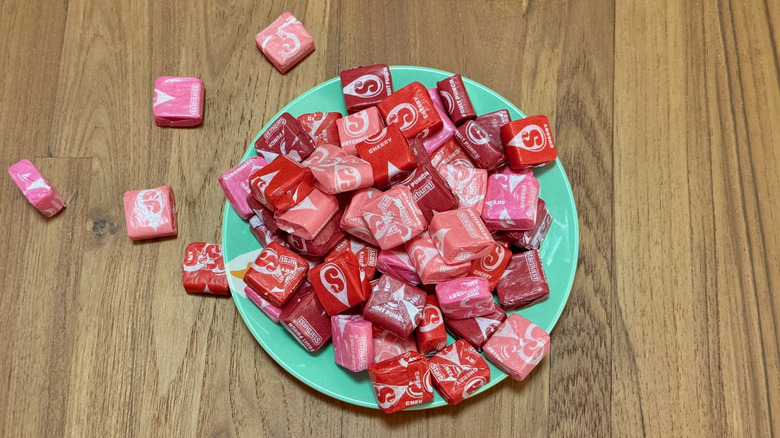
These fruity square-shaped pieces of taffy might not be the most exciting candy on the planet, but you're never disappointed to find them in a Halloween haul. Most people agree that pink (strawberry) Starbursts are the best, but the original pack also includes cherry, orange, and lemon. Part of the joy of Starburst is exploring the various flavors. The individual squares are just the right size so that you can savor each one but still finish it quickly enough to move on to the next. The candy is firm and chewy but doesn't stick to your mouth.
There is a debate about when Starbursts were invented. According to Snack History, they were invented in the United Kingdom sometime between 1959 and 1961. In the U.K., they were called Opal Fruits, but in the U.S. the name was changed to Starburst shortly after they entered the market in 1967. (They continued to be called Opal Fruits in the U.K. until the name was changed in 1998 to standardize the name globally.)
The company's lineup now includes jelly beans, gummies, and sours, but the original Starbursts are the most nostalgic. But in one nod to evolving tastes, they are now sold in an all pinks package so you don't need to root around for your favorite.
5. Butterscotch
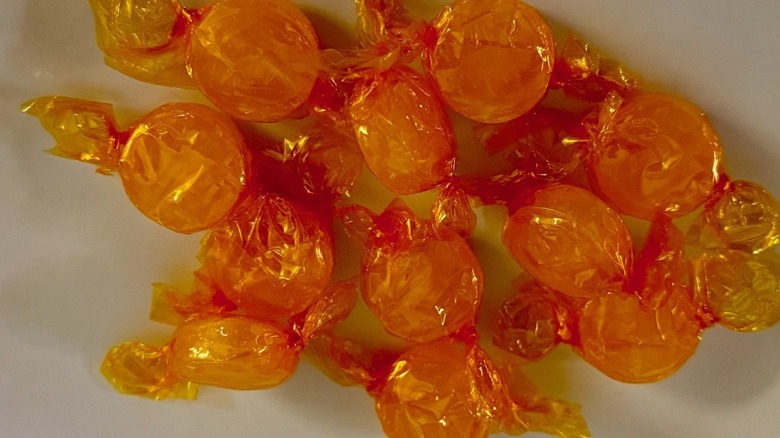
Butterscotch is a rich, luxurious candy that is believed to have been invented in Doncaster, England, in 1817. At the most basic level, it is a combination of brown sugar and butter that is cooked down to a sauce or candy. Cream and vanilla are often added to the recipe for additional flavor, but are not necessary. The candies taste like a relic from the past. They come from an era when exotic fruit flavors didn't dominate the hard candy market. They are tasty enough to crack the top five in this ranking, but their old-fashioned flavor keeps them from climbing any higher.
The butterscotch we sampled was a generic-looking plain yellow disc in a plastic wrapper. There wasn't an ingredient list available to see if cream or vanilla were added to these particular candies, but they contained the toffee-like sweetness that we expected. The key difference between butterscotch and caramel is that butterscotch uses brown sugar. This gives the candies a molasses-like fullness and deep flavor. The decadent treat is always a welcome change of pace when you are sucking down a pile of hard candies.
4. Cinnamon jawbreakers
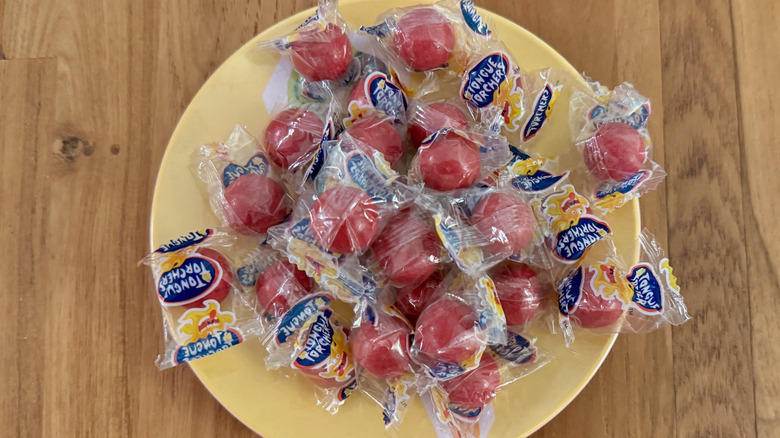
The best-known cinnamon jawbreakers are probably Atomic Fireballs. They were first made by the Chicago-based Ferrara Pan Candy Company (which also created Red Hots) in the 1950s. Atomic Fireballs are not the only cinnamon jawbreaker, though. The ones we sampled were a very similar product that was labeled Tongue Torchers. There are many similarities between cinnamon discs and jawbreakers, but there are enough differences that they deserve separate entries.
The most obvious difference is the shape. The red, marble-shaped jawbreaker is a more dramatic presentation. It looks different. It looks special. The Acme bomb shape and deep shade of red convey a little danger — as do names such as Tongue Torchers. The jawbreakers also take longer to finish, giving you more time to relish the spicy treat. Cinnamon jawbreakers are similar to the discs, but the fun shape and longer-lasting character earn them a position a few slots higher in the rankings.
3. Milk Duds
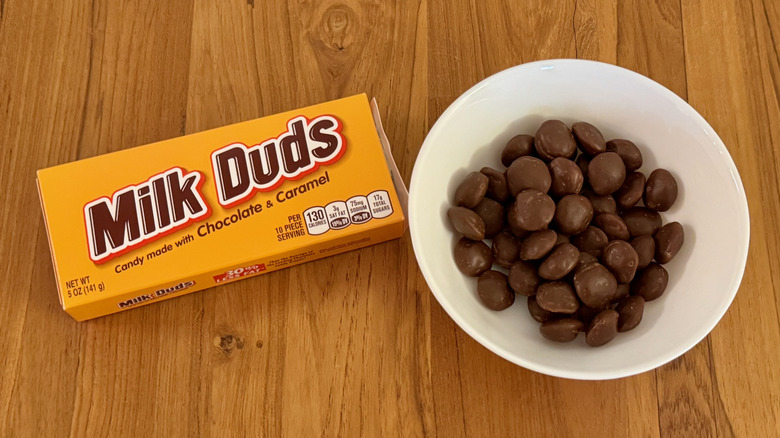
Milk Duds are the only nostalgic candy in this ranking that contains chocolate — and that alone is enough to justify their position in the top three. The chocolate coating encases a chewy caramel to create a classic flavor combination that is long-lasting and perfect for savoring during a movie or baseball game. The name was inspired by the odd lumpy shape of the candy. Duds, in the eyes of the inventor.
The miniature boxes are Halloween mainstays and are usually as exciting as finding bite-sized candy bars, but the candies carry a stronger connection with movie theaters and baseball than with the holiday. The candy was invented in 1928 in Chicago. In a stroke of marketing genius, the company partnered with movie theaters to bring the bite-sized treats to the cinema. They hit another home run in the 1970s when Milk Duds partnered with baseball to bring the treats to stadiums. Whether you are at the old ball game or on the trick-or-treat trail, the nostalgic candy passed the test of time and remains a crowd pleaser.
2. Laffy Taffy
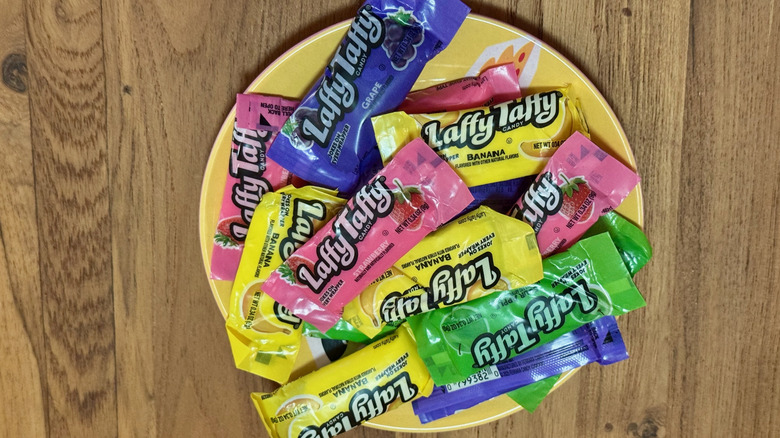
Laffy Taffy is a fun, fruit-flavored taffy with a smooth texture. It is similar to Starburst, but has a rectangular shape instead of a square one. The texture is what elevates it above other taffies. It is soft and chewy but not sticky. The candy feels like it is melting in your mouth. It comes in bold fruit flavors including banana, strawberry, sour apple, and grape. The flavors are intense but not cloying or overpowering.
If the flavor and texture weren't enough, each candy comes with a joke printed on the wrapper. What's better than a piece of candy that tells a dad joke like: Why couldn't the dog get the apple? Because it was barking up the wrong tree. The juicy flavor, soft texture, and laughs push this candy near the top of the rankings and make it one of the most exciting boomer candies passed out on Halloween.
1. Werther's Original
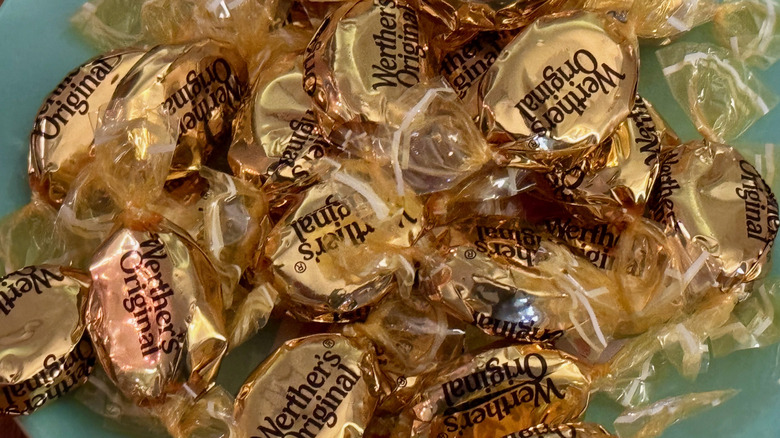
That brings us to the top of the rankings — the best boomer candy of them all. That designation goes to Werther's Original, the caramel hard candies in gold wrappers. They provide a superb combination of sweetness and feel-good nostalgia. Werther's and grandparents go hand-in-hand, and it's an association the company has nurtured. In the 1980s and 1990s, the candies were promoted in commercials that featured a grandfather passing the treat to his grandson.
While that was a purposeful marketing ploy, the candies are old enough to fit the multi-generational storyline. They originated in Werther, Germany, in 1909. But it's not clever marketing with purposefully evoked nostalgia that earns the candies the top place in the ranking. The creamy, buttery flavor is both savory and sweet. It's a luxurious, timeless flavor that feels sophisticated instead of outdated. Candy trends come and go, but Werther's caramels remain a special treat.
Methodology
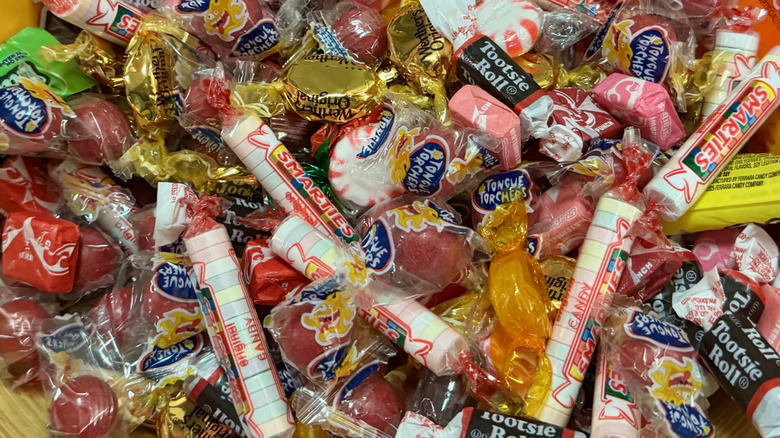
All of the candies featured here are old. Some of them are hundreds of years old. They are difficult to rank, because many of us had already formed opinions on them by the time we learned to ride a bike. Nevertheless, tasting them as objectively as possible was a key element in the rankings. All the candies were purchased from Amazon. Price was typically the deciding factor when choosing between name brand candies and generic ones. Several of the candies (peppermints, cinnamon discs, butterscotch, root beer barrels, and strawberry bon bons) came from an assorted bag.
Boomer and old-fashioned were used interchangeably when selecting the pool of candies. Laffy Taffy and Starburst are the two newest candies included, and they have both been on the market since at least the 1970s. They are also both variations of taffy, which certainly qualifies as an old school candy.
In addition to the taste test, we polled a variety of people ranging in ages from Gen Z to boomers. These are familiar candies and there was no shortage of opinions. Interestingly, there weren't discernible trends between age groups. Exactly one person (Gen X) included Tootsie Rolls in their top three. Root beer and cinnamon flavored candies were the most divisive.