

7 Actually Good 6-Packs Of Beer We Found For Under $10
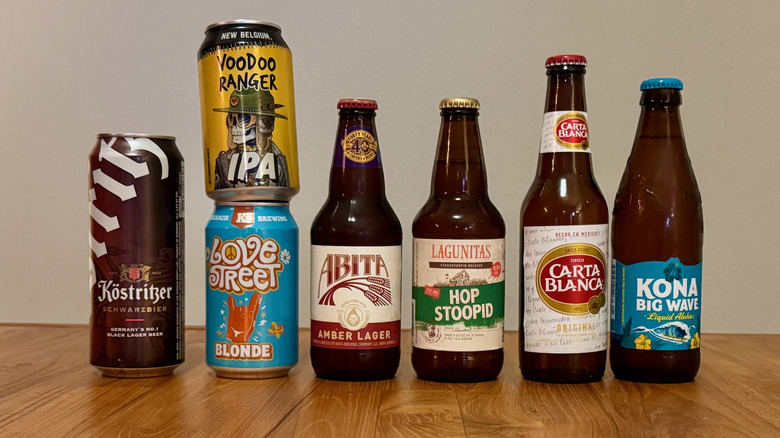
These days, it costs more to fill up the tank, the cost of beef is skyrocketing, and streaming services continue to raise fees. Given the stress this puts on budgets, it's always nice to find quality six-packs for under $10. We scoured the shelves to identify seven beers available in our hometown of Austin, Texas, that fit the bill. The rules were that the beer had to be in stock and priced under $10 — without any sales or discounts.
Defining quality was more subjective. There's information on how we did it in the methodology section at the end of this article, but the basic rule of thumb was that we were looking for inexpensive beers rather than cheap ones. Previously, The Takeout ranked 10 cheap beers and found some gems among the value-priced brews, but none of them are included here. These are the types of beers you pull out of the fridge when a buddy comes to visit — not the ones that fill ice chests at frat parties.
Mass-produced cheap beers can vary in quality, but are almost always crisp lagers. This collection features a much broader selection, including IPAs and hoppy beers as well as easy-drinking blonde ales and a German black beer. They also almost all come from craft breweries. It's not that quality beers can't be brewed at scale, but craft breweries tend to offer a more interesting variety at this price point.
Voodoo Ranger IPA
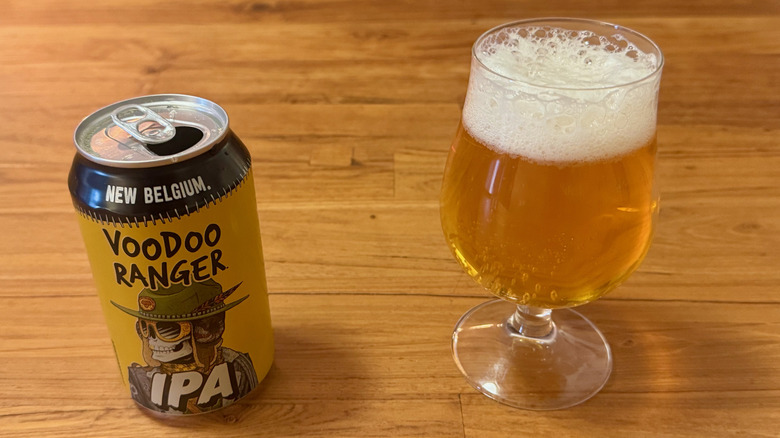
It's hard to remember that there was a time when India Pale Ales (IPAs) were uncommon in America. New Belgium Brewing Company did as much as anybody to carve out a space for them. Voodoo Ranger is the best-selling IPA in the U.S. and popular with many hop lovers. Voodoo Ranger's full lineup includes around 20 different craft beers, including some that incorporate interesting ingredients such as the 1985 Mango IPA or the Atomic Pumpkin ale. I got a six-pack of the classic IPA in a yellow and black can with the distinctive skeleton ranger on it for under $10.
The beer is a beautiful golden hue. It smells fruity, and maybe a little floral. Those who know the difference between an India Pale Ale and an American Pale Ale understand that IPAs are much hoppier. One story goes that IPA was invented in the 18th century as a way for the British to ship beer to their citizens in India. Extra hops were added to the brew to help it survive the long journey. Voodoo Ranger exhibits the characteristics of a classic IPA. The uninitiated will find it bitter because it is 50 on the IBU scale (which is something we'll talk about later). Once you get past that, there are a lot of fruity elements to enjoy. This isn't the six-pack I'd take poolside on a hot day, but it's exactly the type of beer I'd crack open on the couch for a Monday Night Football game.
Köstritzer Schwarzbier
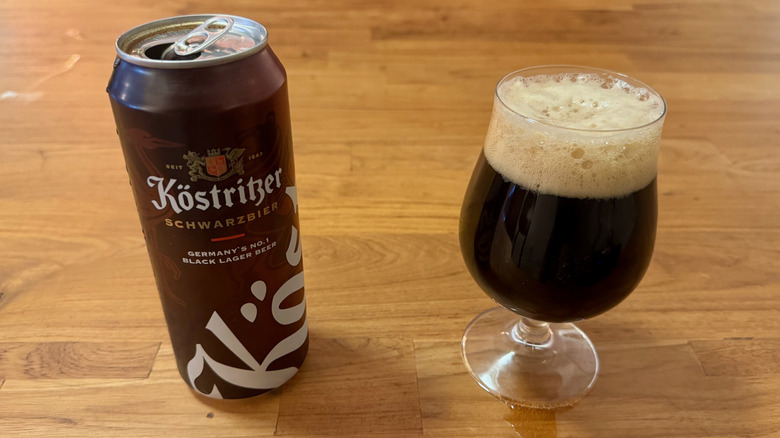
Köstritzer Schwarzbier is unique among the lineup of beers for several reasons. For starters, it's one of the few imports I found for under $10. For another, it's a schwarzbier, which is not a common brew in the U.S. (to be fair, it's a pretty niche market in its homeland of Germany, too). In that market, Köstritzer reigns, and the cans declare it Germany's No. 1 black lager beer.
Despite being a black beer, Köstritzer is extremely smooth and doesn't have the bitter flavors that many people associate with dark beers. The brewery's website says it is "full of flavor, yet refreshingly light." The beer I sampled had an inky black color and a creamy head that belonged on a root beer float. The flavor was mellow, with a taste somewhere between cocoa and coffee. It's an interesting brew that I'd expect most beer drinkers to enjoy when they are looking for something a little out of the ordinary, but still familiar.
Abita Amber Lager
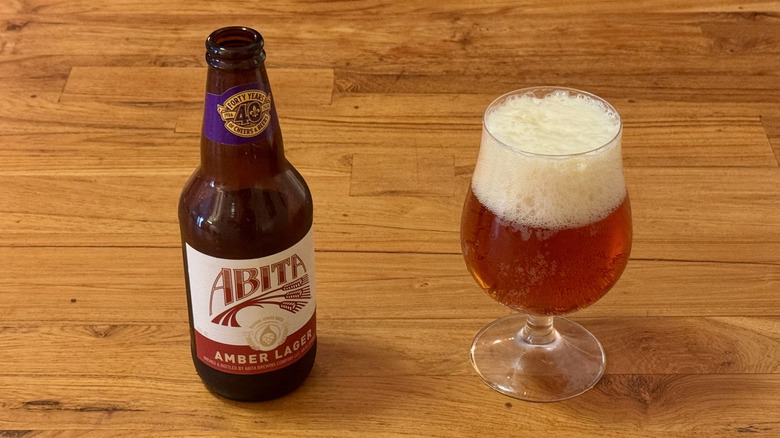
Abita Amber is an amber lager brewed in Louisiana. Abita Brewing Company started brewing beer in the piney woods north of New Orleans in 1986. If you're the type to add beer to gumbo, this is a good choice. Abita is proud of its Louisiana heritage and displays a fleur-de-lis on the label.
When most breweries talk about their beer, they start with hops and fermentation processes. Abita starts with water. The brewery is located in the town of Abita Springs and draws pristine artesian waters from its deep wells. The brewery says the water has the correct minerality and is naturally soft. Since beer is 80% to 90% water, it's a good ingredient to get right.
As the name implies, the beer was a light amber color. I found Abita Amber to be a good middle-ground brew. The beer has caramel and malt characteristics, but very little bitterness. It's flavorful without testing the boundaries in any direction. It's the type of beer I'm happy sipping in the shade on a summer day.
Kona Big Wave
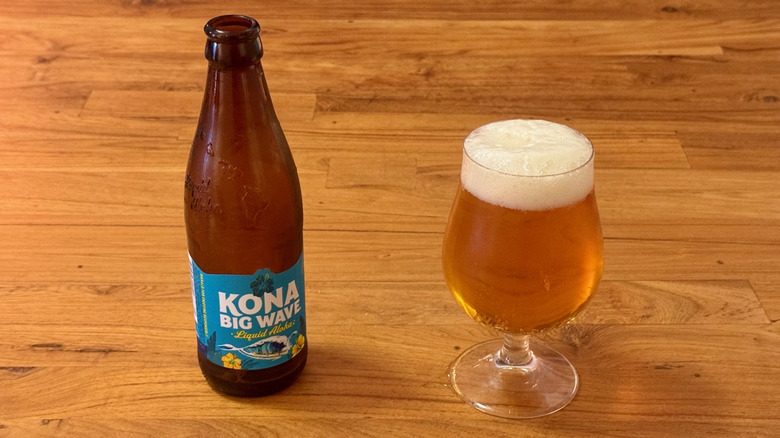
It's hard to walk past a six-pack of Kona Big Wave on a sunny summer day without it making its way into the basket. It's "Liquid Aloha," after all. Kona Big Wave Brewing Company was started by a father-and-son team in 1994. The brewery helped put Hawaiian craft brewing on the map, but shipping beer across the Pacific is not a feasible business plan. It's not only expensive, but also hard on the beer. To solve the problem, it established breweries on the mainland to handle distribution in the Lower 48. Eventually, the island-based brewery and the mainland operations split, with Anheuser-Busch taking over stateside operations while the Hawaiian brewery remained independently owned. This means the six-pack of Kona Big Wave I bought was a member of the Anheuser-Busch family of beers.
Big Wave was a light, refreshing beer with tropical vibes. It had a pale golden color with a frothy head that settled quickly. The fruit-forward flavor profile was reminiscent of an IPA, but without the bitterness (16 IBU). The marketing portrays it as an outdoor beer meant for beach parties, and that's exactly how I'd suggest drinking it. I hate to steal slogans from its competitors, but if you don't live near the ocean, Kona Big Wave is the type of tropical-inspired beer that can help you find your own beach.
Lagunitas Hop Stoopid
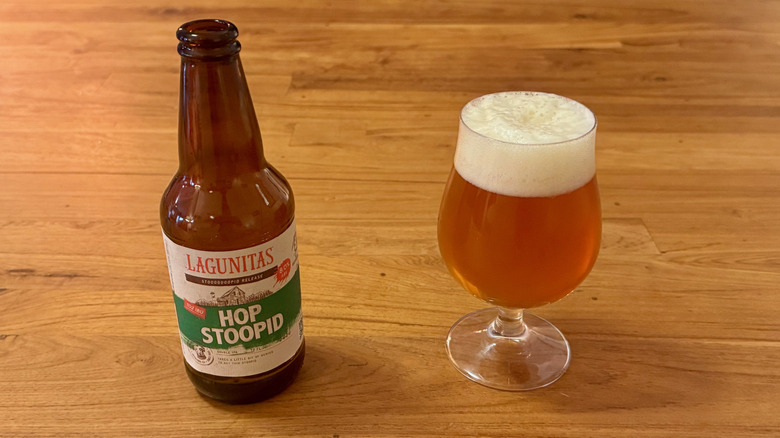
Hop Stoopid is when we finally get to talk about the IBU scale. It's easy to guess from the name, but this beer is all about the hops. The packaging for the double IPA displays 102 IBU as if it's a badge of honor. IBU stands for International Bitterness Units and is used to rate the bitterness of a beer. The scale ranges from 0 to 120, but humans typically lose the ability to distinguish additional bitterness around 100. So yeah, Hop Stoopid is nearly off the charts when it comes to IBU.
Some folks reading this are wondering how a beer with off-the-charts bitterness made a list of actually good beers. The answer is that IBUs alone are not that helpful in understanding how a beer tastes. Many other factors impact the flavor, including the malt profile and other ingredients used. Despite the high IBU rating, Hop Stoopid is a pleasant sipping beer.
It's a honey-colored brew with a sturdy foam head that gave me moustaches with my tasting sips. It was hoppy enough that sipping was as fast as I wanted to drink it. This is not a beer to choose for a shotgun contest (both the hefty 8% ABV and the hoppiness make that a bad idea). But hop lovers will enjoy this beer. It's one that I like to drink when there is time to enjoy the complex aftertaste.
Karbach Love Street Blonde
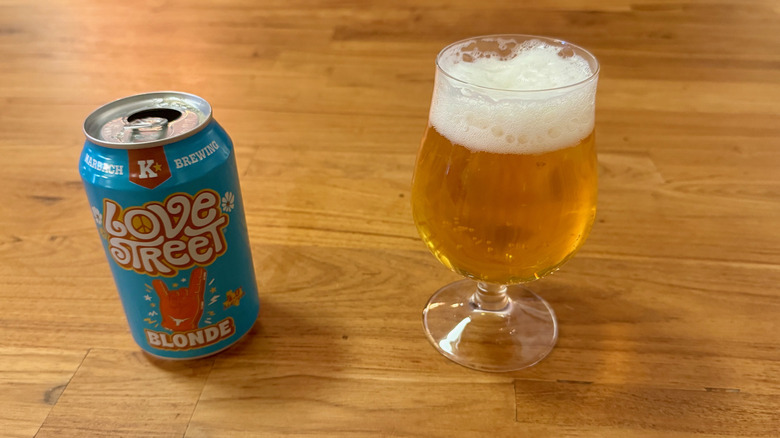
Just like early German immigrants had a profound impact on what makes Texas BBQ different, they also left a mark on the state's brewing traditions. Karbach is an example of that legacy. The Houston-based brewery's website states that its foundation is classic German brewing techniques backed by Texas spirit. Love Street is an easy-drinking, Kölsch-style blonde ale.
The name pays tribute to Love Street Light Circus, a venue that opened in 1967 and provided a stage for pioneering psychedelic rock bands such as the 13th Floor Elevators and Shiva's Headband. That reference is obscure, even to most Texans, but the Texas ties were more blatant with the burnt orange hook 'em sign on the front of the can and the claim to be the Official Craft Beer Sponsor of the Texas Longhorns.
The beer was a pale golden color with a thin head. It had a subtly fruity nose with a clean finish. It's the type of beer meant to be drunk ice cold. Love Street is just right for a round of disc golf or relaxing poolside. It's a beer I've ordered more than once at DKR while cheering on the Longhorns football team, but it's a much better value to grab a six-pack for under $10.
Carta Blanca
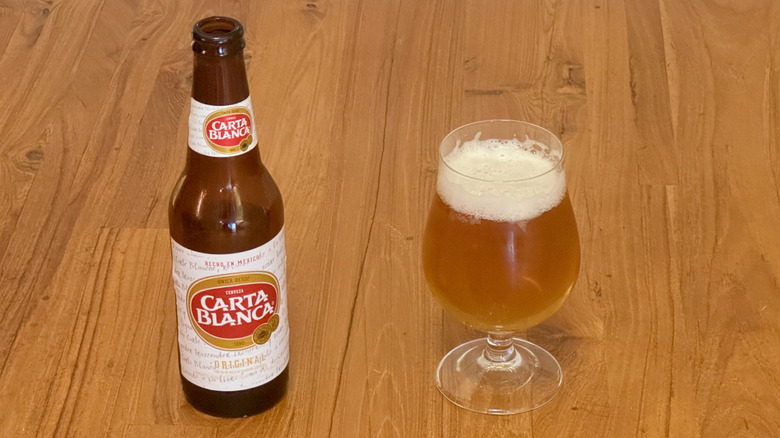
Mexican beers are popular in the U.S. In fact, Modelo became the country's best-selling beer in 2023. Corona, Tecate, and Dos Equis are popular Mexican lagers as well. Carta Blanca is easily overlooked in the crowded field, but it's a classic Mexican beer that I found for under $10.
The original brewery was founded in Monterrey in 1890 and the beer is particularly popular in the northern region of Mexico. I first encountered it on a road trip south of the border in the late 1990s. At that time, the glass bottles had notches in the bottom that worked as a bottle opener for the next beer. That appears to be a feature the company advertised in the '60s. It's not clear when it was abandoned, but unfortunately the bottles don't work that way anymore. It's still a good beer for those who like crisp, smooth brews.
I had never seen the beer in a glass before, and it had a pale yellow color with a thin head. The flavor was refreshing. It wasn't as robust as some of the beers featured in this article, and there aren't a lot of tasting notes to add. Fans of Mexican beers will get exactly what they expect with Carta Blanca. It's good with a squeeze of lime and a dash of salt.
Methodology
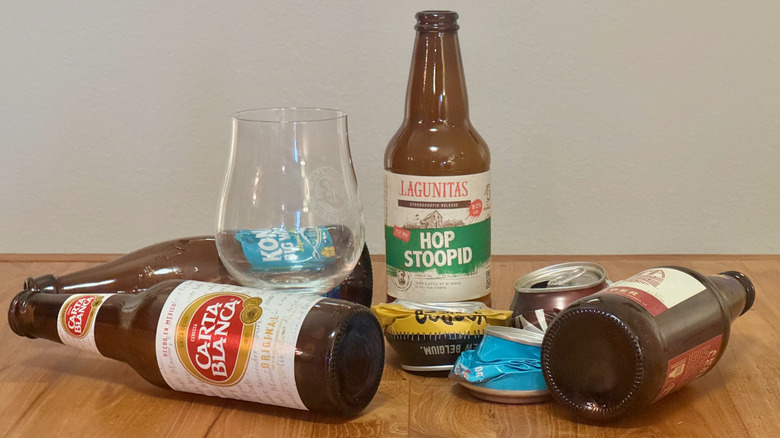
The $10 range is a sweet spot for six-packs, and these are the types of beers I'm familiar with, but I didn't want to rely just on my own experience. I also used beer forums and online reviews to gather recommendations from other beer drinkers until I compiled a long list of potential beers. The rule was that the beers needed to be in stock and under $10.
Shopping was done in one day, but multiple locations were visited. This included liquor stores, grocery stores, and corner stores around Austin, Texas. Some of the beers on my original list were eliminated for being too expensive. Others were crossed off for being out of stock. The seven finalists were selected to highlight the diversity of beers available in this price range. I avoided light beers; they are fine, but there is not much to say about them.
I didn't just want the beers to be different — they had to actually be good. I selected beers that were personal favorites but also had positive ratings on sites such as BeerAdvocate. I poured them into a glass to examine the color and sampled a sip or two to refresh my memory of the flavor before writing the article.