

14 Ingredients You Need For A Traditional Mexican Breakfast
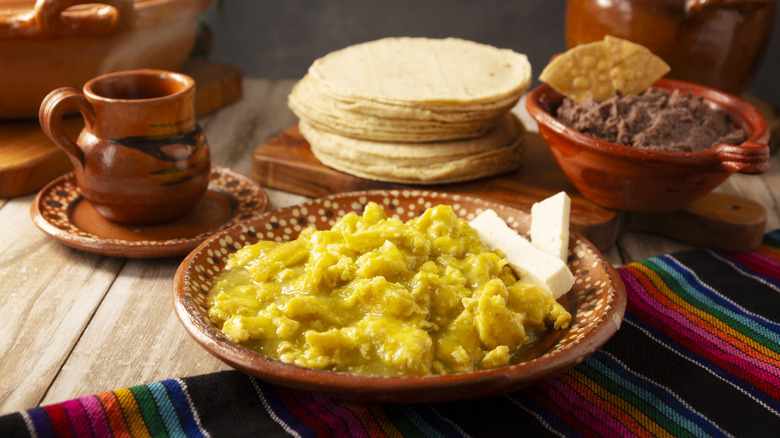
These days, breakfast in Mexico may not look all that different from breakfast eaten this side of the Rio Grande. Many of the same boxed cereal brands are popular there, as are Dunkin', Starbucks, and Mickey D's, for that matter. Some McDonald's Mexican breakfast items are a little bit different than the ones we can order here — the Mexican Special Breakfast, for example, is similar to our Big Breakfast, except you get an English muffin instead of a biscuit. Others, like the hotcakes and hash browns, look very much the same. The real difference between our countries' eating habits, however, comes when you throw in the word "traditional."
A traditional American breakfast might include waffles or bacon and eggs. In Mexico, however, a different roster of dishes is in heavy rotation at restaurants, on weekends, and on other occasions when people have time for a leisurely morning meal. Some of the ingredients, such as eggs, cheese, and potatoes, are well known throughout North America (and indeed, the wider world). Others, however, are a bit more localized — chorizo tends to be used more often than bacon or ham, while beans play a larger role than they do here in the U.S. Corn-based beverages and coffee made with unrefined sugar are also harder to find north of the border, but give them time. We're constantly embracing new foods and new cultures, so these traditional Mexican ingredients may soon find their way into breakfasts throughout North America.
Bolillos
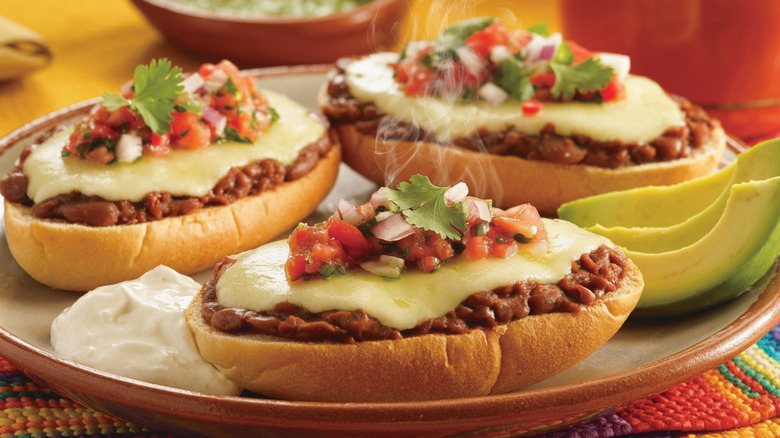
Bolillos are sandwich-sized bread rolls shaped like footballs (the U.S. kind, not soccer balls). In Mexico, they can be part of any meal, and that includes breakfast. The savory version of a continental breakfast might be something called bolillo con café, which is simply coffee with a bolillo. (The latter often being dunked into the former.) A more substantial meal, however, is a mollete, which consists of a bolillo spread with refried beans and topped with cheese. So popular is this dish that McMolletes feature on the Mexican McDonald's breakfast menu.
Chiles
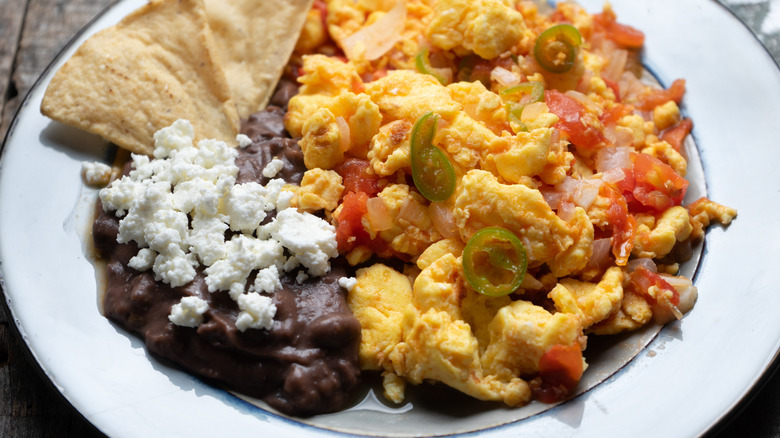
It's not true that all Mexican food is blow-your-face-off spicy, but chiles of some sort do feature in most recipes and the country grows at least 60 different varieties of peppers. They show up as an ingredient in numerous Mexican breakfast dishes, but one in which they feature particularly prominently is huevos a la Mexicana. To prepare it, you simply scramble eggs with chopped tomatoes, onions, and chiles (jalapeños are pretty typical, but serranos also work) for an easy, meat-free breakfast. You can even make a shortcut version by stirring pico de gallo into your scrambled eggs as they finish cooking.
Chorizo
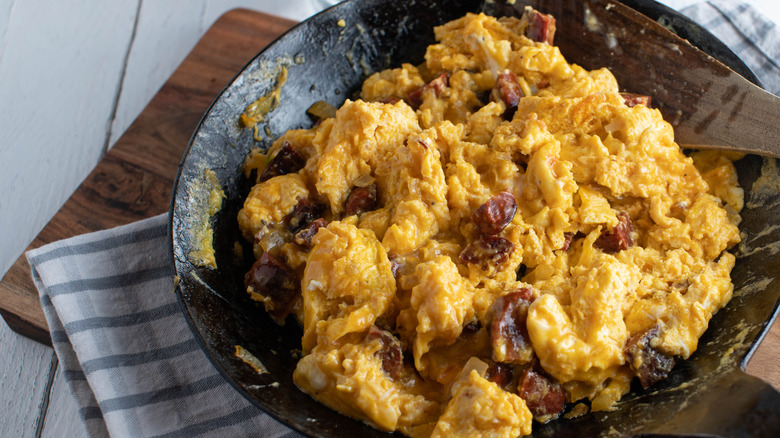
In the U.S., we have a specific meat product designated as breakfast sausage, but in Mexico, people tend to use the same chorizo that also features in lunch and dinner dishes. Mexican chorizo, unlike its Spanish eponym, is fresh and loose rather than hard and cured. This makes it easy to scramble with eggs for the traditional breakfast dish known as huevos con chorizo. The chorizo goes into the pan first. Once it's browned, the eggs are added so they can cook in the flavorful grease.
Frijoles
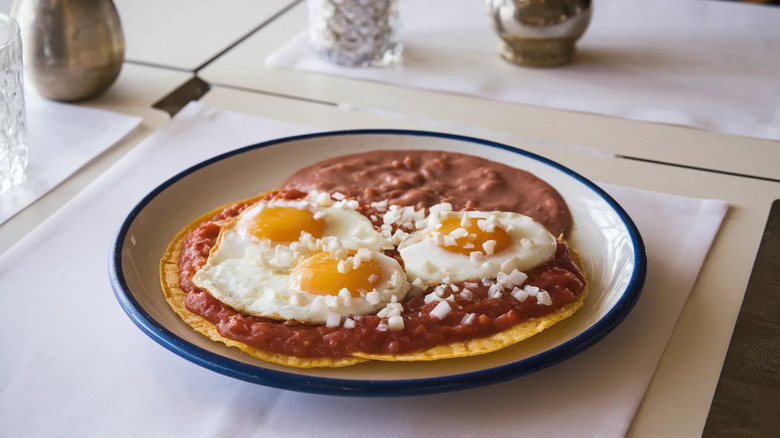
The full English breakfast features baked beans, and beans also feature as a side dish in Mexican breakfasts, as well as being an essential part of the molletes discussed above. Somehow, though, morning legumes never really caught on with U.S. diners. Well, not until they were introduced to huevos rancheros, which consists of tostadas topped with refried beans, fried eggs, and salsa. This flavorful Mexican breakfast once fueled cowboys in the Old West and now satiates mimosa-sipping brunchers all over the nation.
Fruta
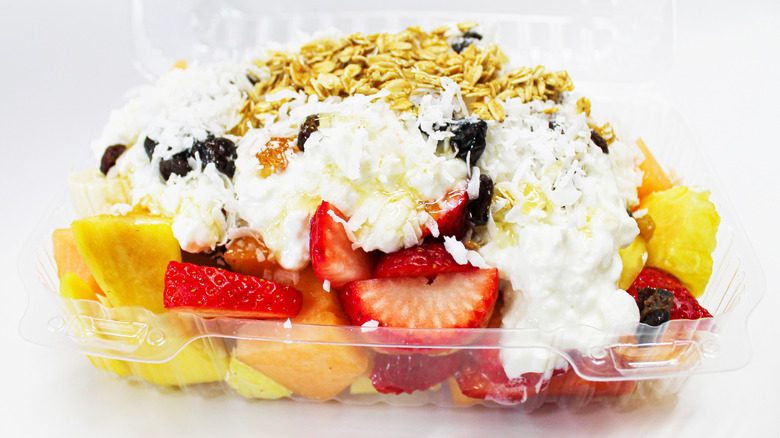
Fresh fruit often appears as part of a Mexican breakfast, just as it does in the U.S. It may, however, be dressed up with lime juice, chamoy, or Tajín to make it even tastier. If we're permitted to stretch the definition of "traditional" to encompass anything dating back to the last century, we could also include a fruit dish called bionicos that has been a popular Mexican breakfast since the 1990s. This fruit salad with roots in Guadalajara can be made from berries, melon, pineapple, or whatever other fresh produce is on hand. The whole thing is topped with honey-sweetened crema (Mexico's answer to crème fraiche or sour cream) and can also be flavored with cinnamon or jam and garnished with granola or shredded coconut.
Huevos
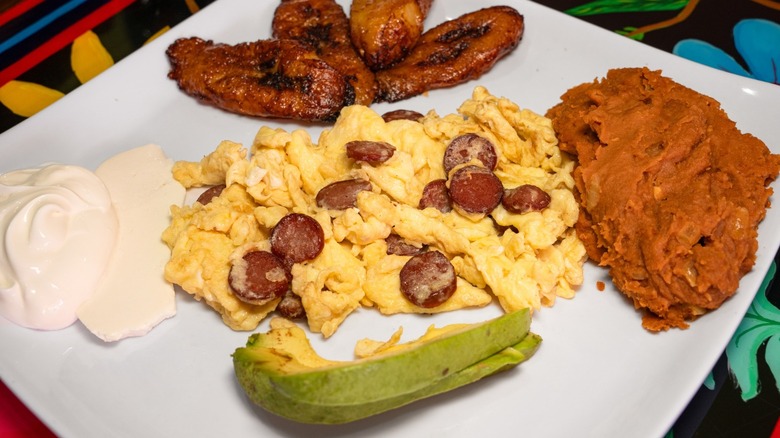
Huevos, the Spanish word for eggs, seem to be just as popular south of the border as they are on the northern side. We've already mentioned a few well-known breakfast dishes in which eggs feature prominently, but others include huevos motuleños, a Yucatan variant on huevos rancheros that also includes fried plantains, peas, and ham; papadzules, which consist of boiled eggs in corn tortillas topped with pumpkin seed sauce and tomato-based salsa; and huevos ahogados, or "drowned eggs," poached in spicy tomato salsa. Oh, and we can't forget our zero-food-waste favorite: huevos con salchicha, which can be made with leftover hot dogs sliced and scrambled with eggs.
Machaca
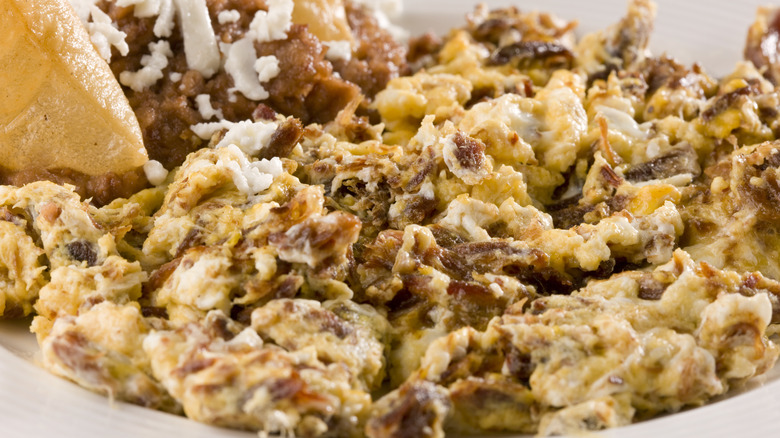
Machaca, a product of northern Mexico, consists of meat dried to a jerky-like consistency and then shredded. While it could certainly be eaten as is (tbh, it sounds a bit like Jack Links Jerky Chew), it's more commonly used in recipes. At breakfast time, the ingredient may put in an appearance in a dish called machacado con huevos. This Sonoran specialty consists of eggs scrambled with chiles, onions, tomatoes, and, of course, machaca.
Masa
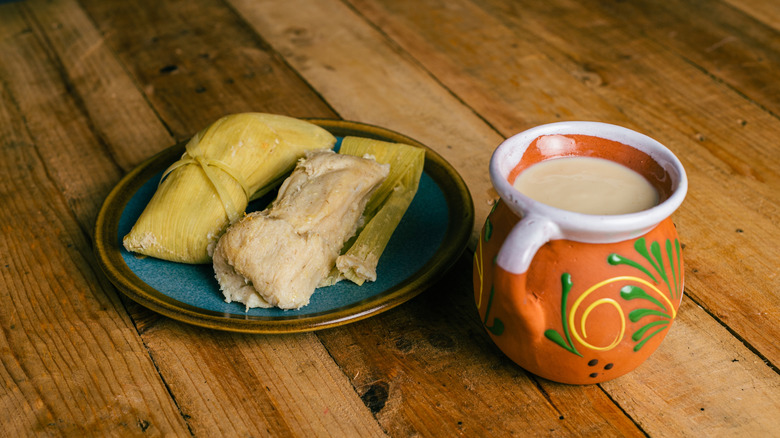
Masa, which in Mexico is dough made from nixtamalized corn, can play several different roles at breakfast time. It might be used to make breakfast tamales (even chocolate ones), while it's also a main ingredient in several breakfast beverages. These include atole, an ancient drink made of masa flavored with sugar and cinnamon, and champurrado, which is basically chocolate atole.
Queso
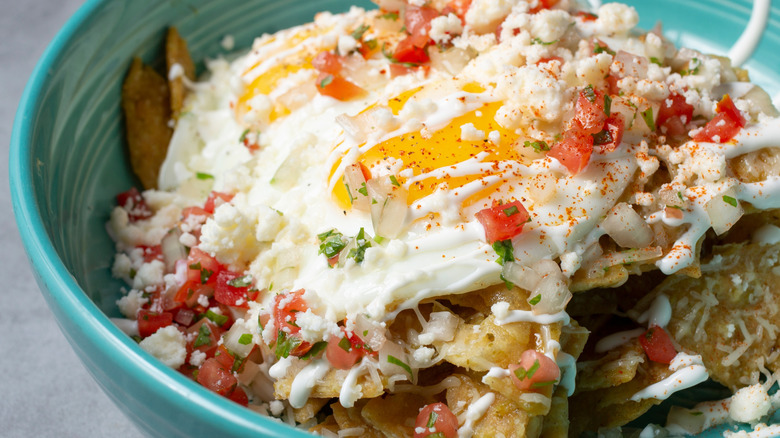
Tex-Mex cuisine may make heavy use of cheddar and pepper jack, but in Mexico, the cheeses of choice are more likely to be cotija, queso fresco, or Oaxaca. One dish that's often improved with these cheeses is the Mexican breakfast staple known as chilaquiles. Chilaquiles in their most basic form consist of fried sliced tortillas in salsa (thrifty tip: you can make them from stale taco shells, too), but they're frequently enhanced with an egg and a cheesy topping.
Pan dulce
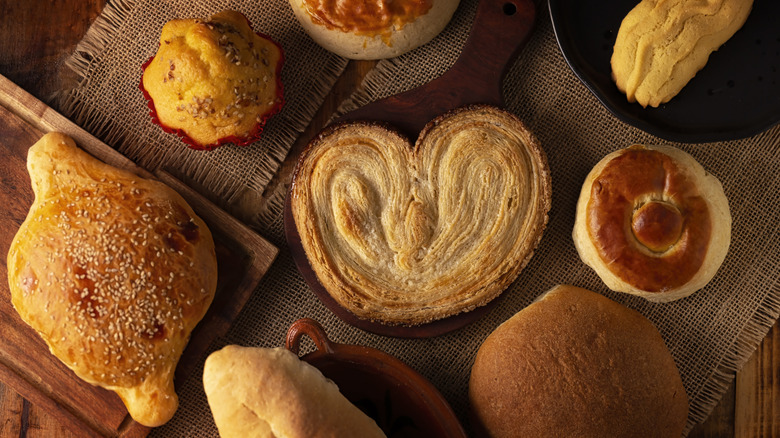
Panes dulces are Mexican sweet breads, although they're often less sugary than many of the breakfast pastries we're used to in the U.S. (doughnuts, danishes, et cetera). These baked goods were introduced to Mexico by the Spanish but evolved under French occupation. Conchas and churros are both fairly well-known north of the border, and Sam's Club Café even used to sell the latter. Other, less familiar items that Mexicans enjoy for breakfast include brocas (sugar-dusted puff pastry twists), garibaldis (cake coated in jam and nonpareils), and orejas (Mexico's answer to the elephant ear).
Papas
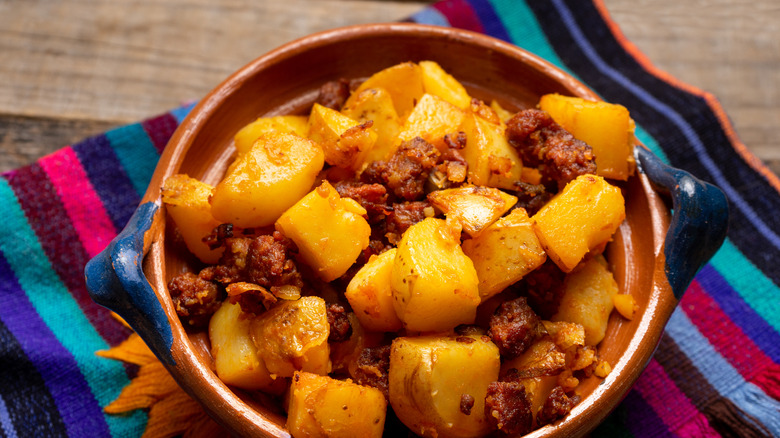
Papas, or potatoes, are a common breakfast ingredient all over North America, but in Mexico, they make them a little differently. Instead of hash browns, one of the best-known traditional breakfast dishes is papas con chorizo. This is prepared by stirring cooked potatoes into chorizo that's been fried with chiles and onions, although a fried egg can also be added to make a heartier morning meal.
Piloncillo
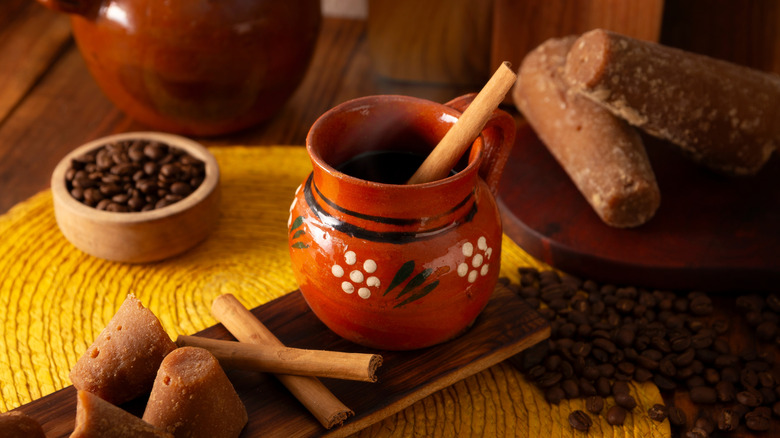
Piloncillo is hard, brown, unrefined sugar that usually comes in the form of a cone. It's an essential ingredient in café de olla, a favorite Mexican coffee drink that doesn't come from Starbucks. Café de olla beverage is made by simmering ground coffee in water to which piloncillo, cinnamon, and cloves have been added. (Sometimes orange peel and anise, as well.) It's typically served black but is more sweet than it is bitter, and it pairs quite nicely with pan dulce.
Salsa
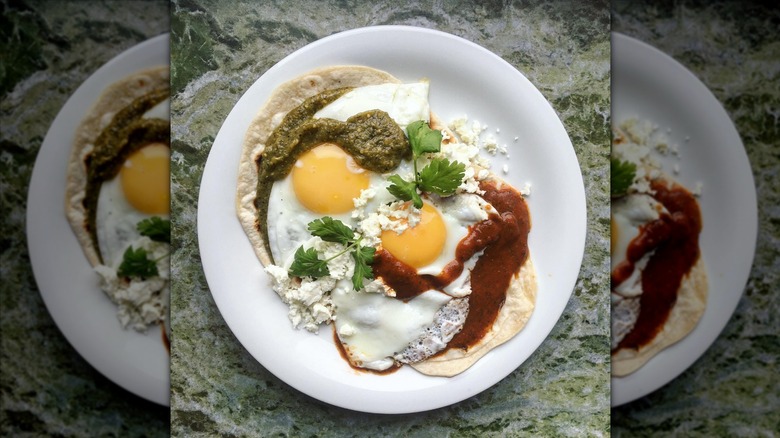
Salsa simply means "sauce" in Spanish, and sauces can play an important part in any meal. Two of the most popular are salsa rojo (red sauce), made with tomatoes and chiles, and salsa verde (green sauce), made with tomatillos, serranos, and possibly even hotter chiles. These Christmas-colored sauces appear together in a breakfast dish called huevos divorciados, which, yes, actually does translate to "divorced eggs." It consists of two fried eggs separated by a barrier of refried beans, with one egg covered in green salsa and the other in red.
Tortillas
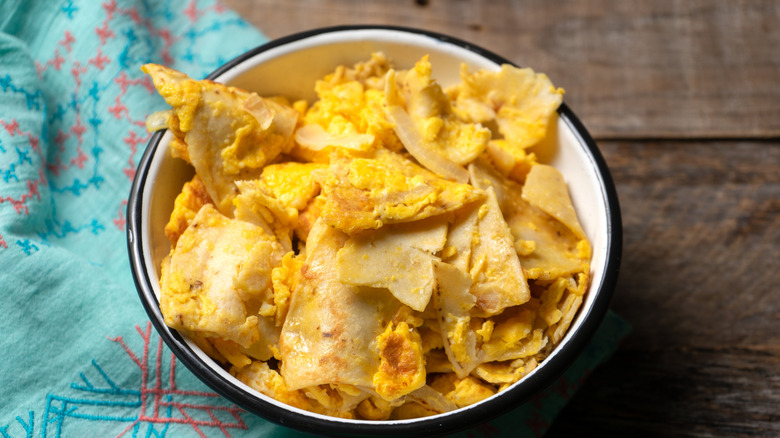
Tortillas are a pretty ubiquitous part of Mexican cooking, so needless to say, they have an important role in many a Mexican breakfast. They may be served on the side or be used as a wrapper or edible platform, but they get star billing in two similar dishes: the previously mentioned chilaquiles and the more egg-centric migas. Chilaquiles may have a fried egg on the side or served as a topper for the saucy, cheesy tortilla chips, but migas are essentially fried tortilla strips scrambled together with eggs. Cheese, salsa, and vegetables such as onions and tomatoes may also feature in a migas recipe, but this dish is all about the eggs and tortillas.