

This Flavorful Mexican Breakfast Fueled Cowboys In The Old West
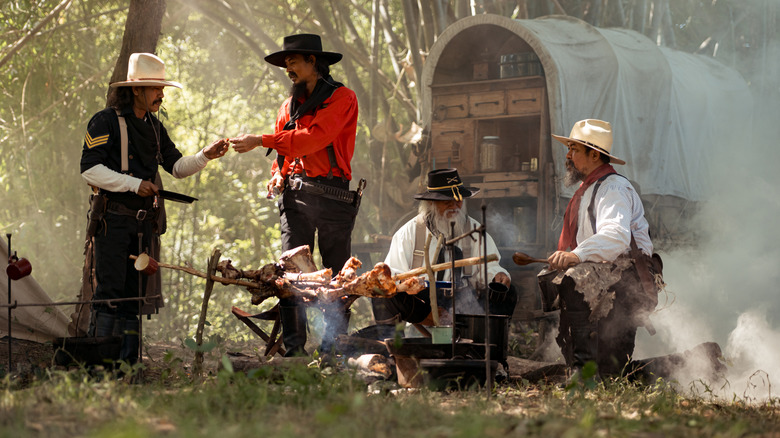
Ranch life in the Old West was grueling. You began work before the sun rose, managing land and animals as well as a household without running water or electricity. It involved hard labor, long trips trailing cattle on horseback, and cooks who made the best with what they had. Whether you were eating in the farmhouse kitchen or out of a chuckwagon, breakfast needed to be packed with enough fuel to get you through the day. In Mexico and the southwest United States, cowboys relied on a messy meal to get the job done: a heaping pile of tortillas, salsa, and eggs known as huevos rancheros.
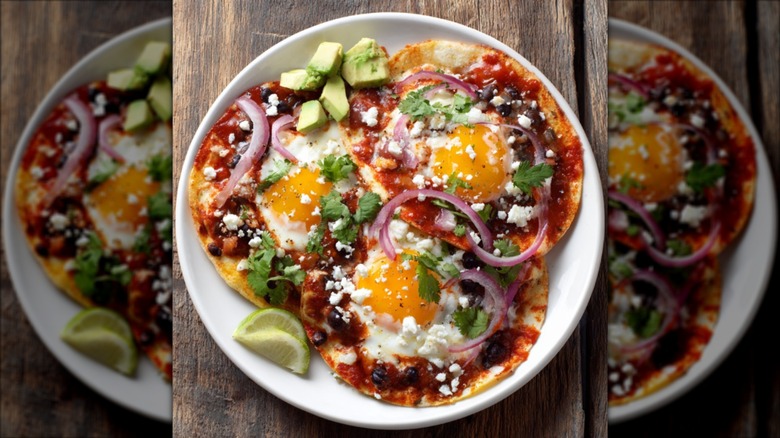
Huevos rancheros, which means "rancher's eggs" or "country eggs," is a layered, nacho-style breakfast dish that starts with a base of charred corn tortillas, refried beans, ranchero salsa, and fried eggs. It's then topped with whatever fresh veggies, cilantro, sour cream, and other garnishes you have on hand. It's one of the original Mexican dishes real-life cowboys loved in the Old West, and a meal that's been part of ranch culture from the start. The origins can be traced to 16th-century rural Mexico, where the very first North American cowboys — indigenous Mesoamerican men known as vaqueros — lived and worked on ranches. It's a poor man's meal made with the ingredients that available in Mexican kitchens and served as a second breakfast for hardworking ranch hands.
Huevos rancheros is a hearty Old West breakfast that is still going strong today
Huevos rancheros migrated to America from rural Mexico at the same time as cowboy culture expanded from the 17th to 20th centuries. Vaqueros influenced American cowboys with their chaps, lassos, and ranching skills, but also passed down recipes. The dish was an easy fit for cowboy cuisine, since it could be made with the staples real cowboys ate in the Old West. The hearty breakfast dish has become a part of Tejano home cooking and was part of an entire menu of Tex-Mex cuisine that became popular in the 1800's.
By the late 19th century, another group of hard-working Mexican Americans started popularizing the breakfast dish: the workers who built the American railroad system in the late 19th and early 20th centuries. These railroad workers lived in boxcars with their families alongside the tracks. Traditional, cheap Mexican breakfasts like huevos rancheros kept them going during long workdays. There's still a place for huevos rancheros in today's hardworking cowboy culture. It's a resourceful way to make a meal out of table scraps and you can make it in a single cast iron pan. An open fire still infuses huevos rancheros with extra flavorful, smoky notes that compliment the spice and savory fried eggs. And they still taste great served on a tin plate next to the campfire.