

11 Staples Real Cowboys Ate In The Old West
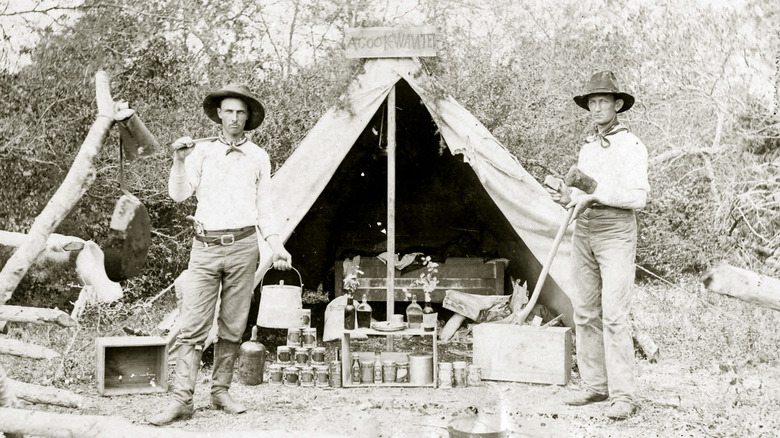
Cowboys driving cattle in the Old West traveled with a cook who made do with whatever food he brought in his chuckwagon, which was the great, great, great grandfather of the modern food truck. There were a few standard ingredients that were staples in a Southwestern cowboy's diet, chosen for how easy they were to haul, store, cook, and eat. Shelf stable items, things that were dry or preserved, and ingredients that were multifunctional, made up the bulk of their fare. Occasionally there was a surprise on the menu, if the camp cook, aka Cookie, foraged some wild berries along the way. But usually, it was pretty much the same meals, same ingredients that made up the cowboy diet.
We spoke to David Davis, chief curatorial officer at the National Cowboy Museum, about what cowboys ate during the historic cattle drives across the open range during the 1880s to 1890s. He has pieced together a good idea of cowboy cuisine based on "rare handwritten accounts, photos, and memories that have been passed down." Modern-day chuckwagon cook Kent Rollins dives deep into everything you ever wanted to know about cowboy grub on his YouTube channel and he shared a few tidbits with The Takeout, as well. We also picked the brain of Smith Fork Ranch chef Joshua Drage, who cooks elevated ranch food inspired by the recipes and techniques of his pioneer ancestors. According to these experts, here are 11 staples real cowboys ate in the Old West.
1. Coffee
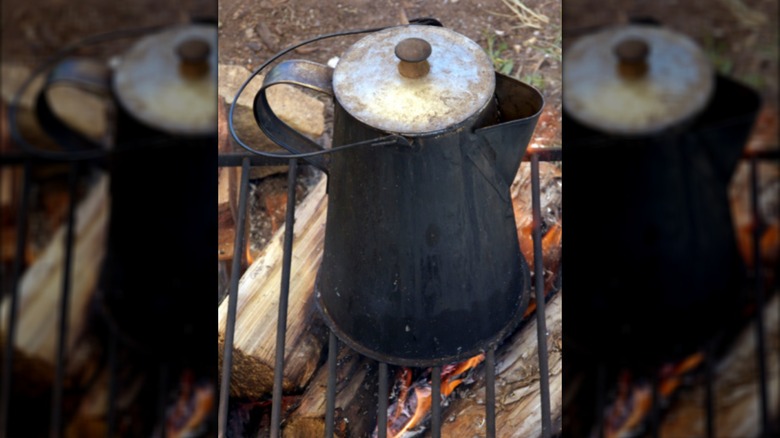
In a cowboy camp, the first thing on the campfire in the morning and the last thing taken off the fire at night was a tin pitcher of coffee. Because it had to keep cowboys alert during long, grueling days, the coffee was strong. Coffee was served at every meal because there was no other choice. Alcohol was banned by wise trail bosses who needed everyone thinking clearly and quickly.
Old Cookie would set a few gallons of coffee brewing, often just throwing in new grounds on top of the old, even though reheating coffee releases bitter acids. Kent Rollins still uses the same brewing method cowboys used back then. "Cowboy coffee is boiled, and contrary to belief, it is smooth because the boiling removes the acid," he says. "Cowboy coffee doesn't use a sock (hobo coffee), or an egg [to settle the grounds]. It is simply boiled and cold water poured at the end to settle the grounds."
Arbuckle brand coffee, advertised as "the coffee that won the West," was the bean that cowboys preferred because of its durability and flavor. Arbuckle beans were roasted with a glaze of sugar and eggs, which formed a protective layer to keep the beans fresher for longer. Cowboys could load up on a big bag of coffee beans for a long trip and not worry about them going stale or having to add a sweetener.
2. Salt pork
Contrary to what Hollywood portrays, cowboys didn't eat steaks for every meal. In fact, they rarely ate fresh beef because their job was to deliver the beef (their boss' cattle) to buyers. Eating a cow would be eating the profits. Cowboys never knew when they'd have access to fresh meat so they always carried plenty of preserved meat with them.
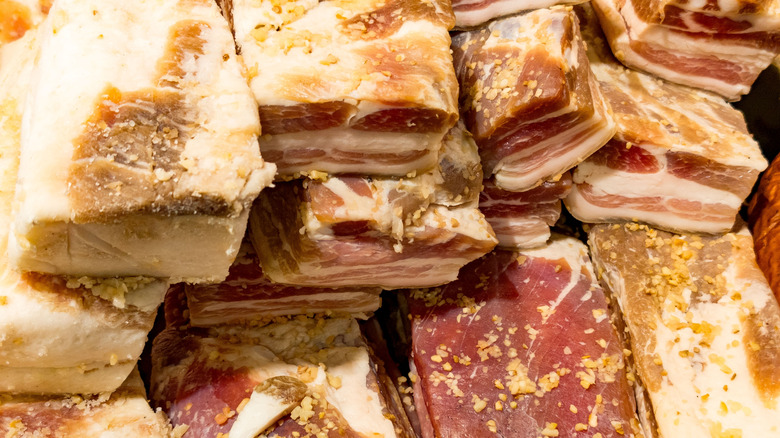
Salt-pork, known as sowbelly or pig's vest with buttons in Western slang, was a cowboy cuisine staple because of its durability and versatility. The fatty slabs of meat were salt-cured to prevent bacteria growth and extend its shelf-life for several months. "Salt-pork allowed cowboys to be on the move without refrigeration and have a high calorie meat to use in many ways," chef Joshua Drage explains. Due to the curing process, which made the pork tough and too salty to eat, the meat first had to be soaked in water for a few hours before it could be used. Salt-pork could be stewed, boiled, or fried. It softened up nicely in a long-simmering stew and added a boost of flavor and protein to a pot of beans.
Other preserved meats cowboys ate included smoked or dried beef and smoked bacon, which they called overland trout. But nothing was as versatile as salt-pork, which was not taken on the trail because it was the most flavorful cut of pork, but because of its layers of fat. Both the meaty protein and the pork fat were necessary ingredients in cowboy cuisine, as demonstrated by the next staple on our list.
3. Lard
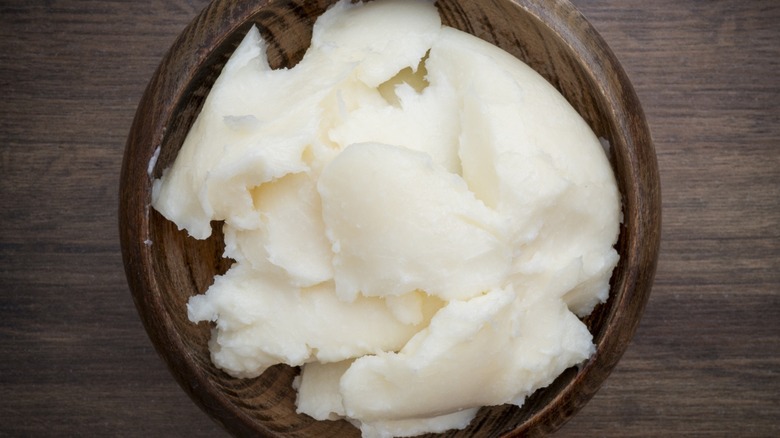
In chef Joshua Drage's opinion, the lard rendered from the fatty layers of salt-pork was more important than the meat when it came to cooking versatility. "As a building block, the rendered fat would be essential for a gravy, sautéing a potato, and quick leavened breads," he explains. "Most dishes on the trail start first by rendering the fat from salt-pork. Braised meats, beans, hash, a skillet of cornbread, a griddle of pancakes, or a batch of biscuits all happen with rendered fat."
Cowboys called the pork fat lard or Texas brand butter. One of the most common uses of lard on the cattle trail was to make gravy, or sop, as the cowboys called it. Gravy added flavor and moisture to a meal, especially if the meat was dry and the bread was stale. Even today, gravy is a shortcut to making mouthwatering dishes. However, Drage emphasizes that gravy would not have become the cowboy staple it was without the salt-pork they brought with them. The process of making gravy started with cooking the pork. The fat and juices left in the pan were mixed with flour to form a paste, which developed a deeper color and richer flavor the longer it was cooked. Finally, it was thinned with water until the gravy was just the right consistency.
4. Beans
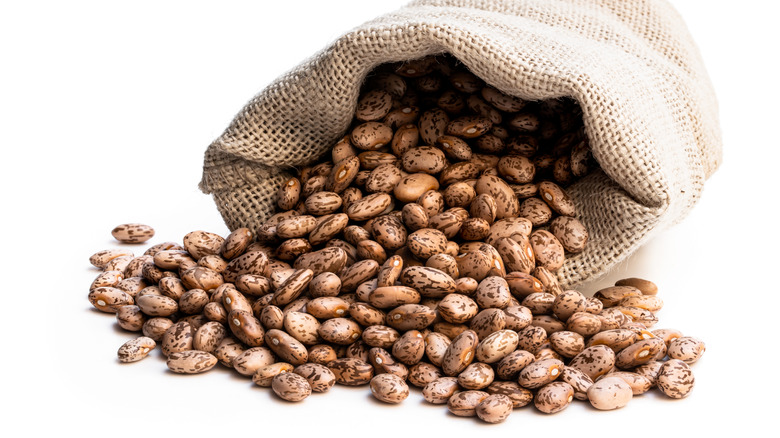
Food taken on long cattle drives had to be, as David Davis points out, "readily available, cheap, easy to cook using cast iron implements over an open fire, and would last for several months without going bad." Dried beans fit the bill in every way and then some. They also had the benefit of being a good source of protein and fiber, they didn't go rotten or stale, and they were lightweight and easy to transport. The beans did come with a minor side effect, which is best described by the cowboy slang word for beans — whistle-berries. But, ultimately, beans were simple, tasty, and filling.
Davis describes how easy it they were to cook. "The camp cook, 'Cookie', could get to the camp spot before the herd, get his fire going, get the beans on to soak, get them boiling, add some flavor such as salt-pork, and have them ready to eat with minimum effort before the cowboys got into camp for supper."
Beans are prepared pretty much the same today as they were in the Old West, but most people opt for canned beans to avoid the overnight soaking and long boiling times. The fact that the beans were nutritious and cheap was the reason they were a staple of a cowboy's diet, however it's also the reason many Americans aren't very keen on beans. Nowadays, beans carry the stigma of being cheap eats and a sign that you can't afford something better.
5. Flour and cornmeal
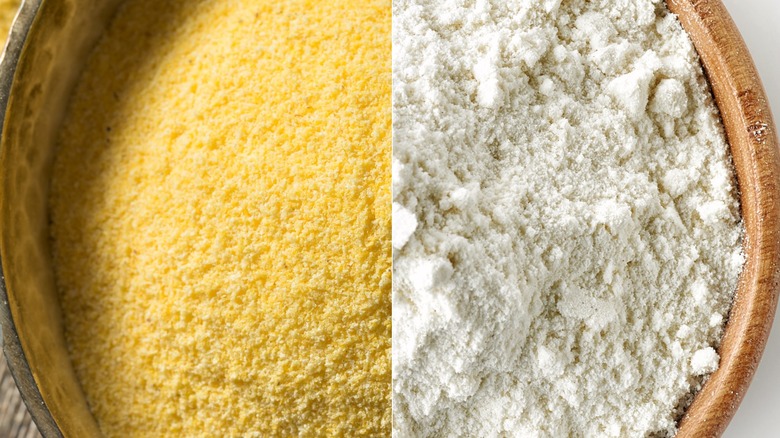
A sign that cowboys were being fed well, was that they had bread at every meal. Bread was not only tasty and filling but could be conveniently used to sop up gravy and scoop up beans. A good chuckwagon cook served a variety of breads, primarily with two types of grains: wheat flour and cornmeal. Flour made tender pancakes, quick breads, pie crusts, biscuits, and pan de campo (camp bread named by Mexican cowboys.) Cornmeal was used for cornbread, johnnycakes (flatbread), or corn dodgers (fried cornmeal patties.) According to chef Joshua Drage, the ideal way to cook breads was in cast iron cookware. "Biscuits, pancakes, and cornbread are quick and easy to make as long as you have some rendered fat from salt-pork and cast iron to cook them in or on," he says.
Even in today's kitchen, making cornbread in anything other than a cast iron skillet is a mistake, but cast iron pots and pans were the quintessential cooking vessels of the Old West due to their durability and efficiency. Cast iron dutch ovens were especially ideal for baking breads. "Dutch ovens act exactly as they are labeled, an oven," Drage says. "You can braise, bake, and cook as you would in an oven, but over coals in your camp kitchen." Coals piled underneath and on top of the dutch oven ensured the bread cooked evenly, and browned on both the top and bottom.
6. Sourdough starter
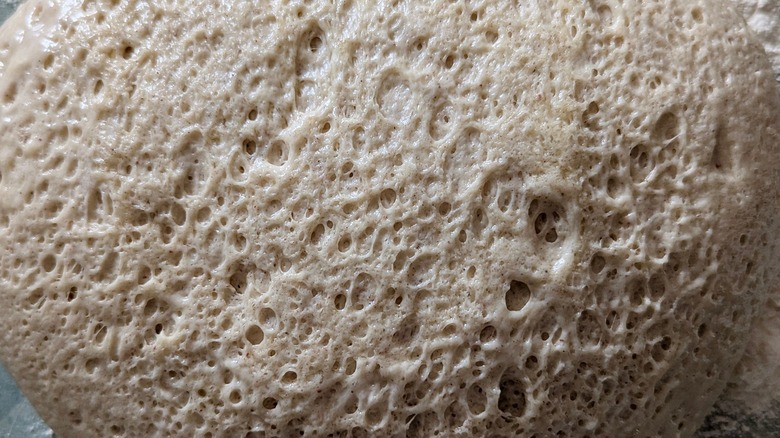
Chuckwagon cooks would also take a sourdough starter on the trail to easily make fluffy biscuits, flavorful pancakes, and crusty breads. "Sourdough starter was the leavening agent of the West," says Kent Rollins. "It was a great way to substitute for milk or buttermilk in recipes, since refrigeration didn't exist on the trail." The starter, made with flour, salt, warm water, and a bit of sugar or molasses, could last for years with proper care, so protecting it was a top priority.
"Sourdough was nearly sacred. The cook would guard it with his life," Rollins shares in one of his YouTube videos. Personal accounts reveal just how far a cook would go to keep his sourdough starter alive. According to David Davis, "There are accounts of the Cookie sleeping with the starter to keep it just the right temperature through the cold nights."
Cowboys left the handling of food to the Cookie and followed the strict rules of chuckwagon etiquette to preserve the quality of food by keeping people and dirt out of the cooking area. Davis shares some of the rules cowboys were expected to follow: "When supper was served, it was bad manners to ride your horse directly into the camp and raise dust. A cowboy didn't come into the chuckwagon area to get food until Cookie invited him in, and a cowboy always helped to clean up his dishes."
7. Stews and chilis
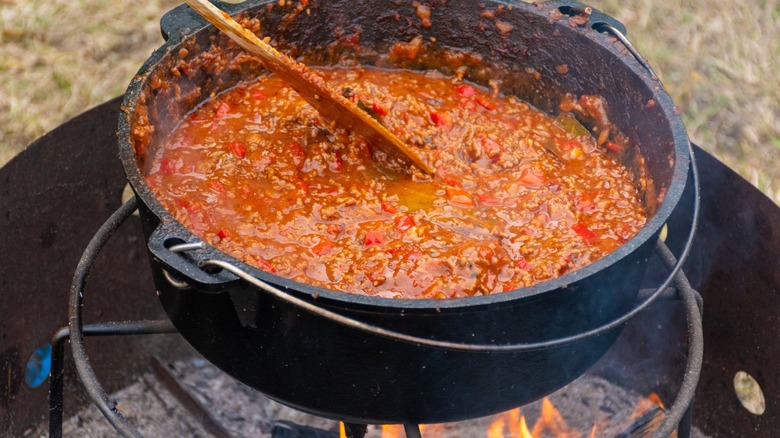
Life out on the range was unpredictable. Weather could change in an instant, blowing a chuckwagon over or getting dry ingredients wet. When food was lost or went bad, and there was no nearby town to restock supplies, chuckwagon cooks had to be creative and make do with what they had. One of the mainstays of their menu was stew, a hearty meal that could make smaller portions of meat and vegetables go farther.
Some of the ingredients and dishes cowboys ate were influenced by Mexican cowboys they worked alongside. "Mexican cooks on the trail, especially those coming out of Texas," Kent Rollins says, "used many Mexican influences, such as spices and chilis." Among the many Mexican dishes cowboys ate in the Old West, chili was a favorite. Not only could a bowl of chili deliver a kick of flavor, but the all-day simmer was ideal for softening dried or tough cuts of meat. But that's not all. The chili peppers in the broth provided another benefit, chef Joshua Drage says. "We think of chilis as a flavor profile and associate that flavor with cowboy cooking today, but it most likely became a staple back in the day because of the preservative component rather than solely a spice," he says. "The FDA isn't going to list chilis as an acceptable preservative in 2026, but back in the day, a camp cook would use chilis as a preservative as they do significantly kill microbes, stretching the life of perishable foods on the trail."
8. Wild game
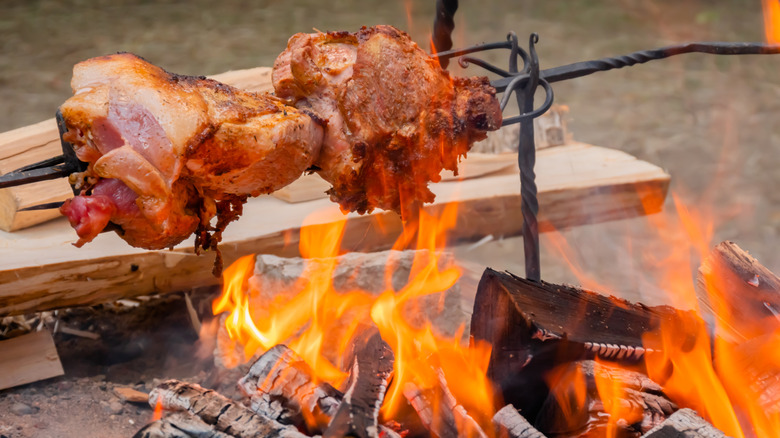
Cowboys were herding thousands of cattle, but they didn't usually eat them. Not only would it eat into profits but also the crews weren't big enough to eat all the meat off a cow before it went bad. In case you were curious, you can make 980 half-pound hamburger patties from one cow. But there was no way to keep the leftovers fresh and no time smoke-cure it, so slaughtering a cow would result in a whole lot of wasted meat.
The hardworking cowboys also didn't have much time to go hunt for animals. They worked long, grueling days. And even if a deer or antelope wandered close to the outfit, "Shooting guns around the cattle was a risky business," David Davis points out. That meant any fresh meat that made its way into a cowboy's stew was from animals that wandered close to camp, mostly small critters like rabbits and birds.
"A turkey come through camp, old Cookie wouldn't mind shooting that thing," Kent Rollins says. "There was a lot of rattlesnake. Now I'm sure old Cookie chopped the head off of any of them coming in there — that stuff didn't go to waste. You could have a little rattlesnake chili, you could have rattlesnake in a little bit of the beans."
9. Dried fruit
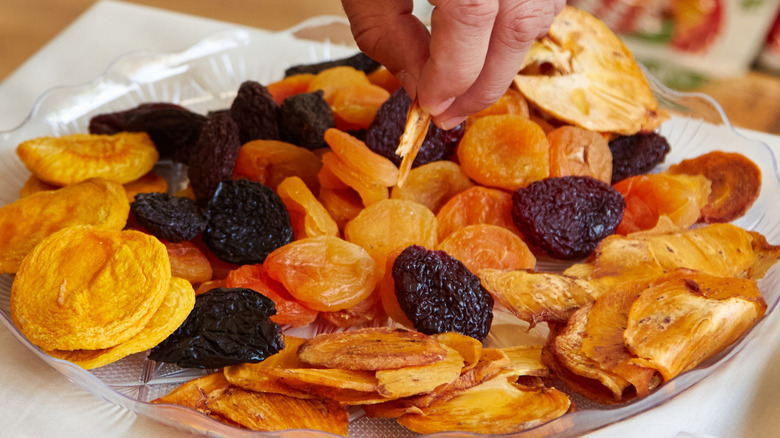
Working cowboys didn't usually have access to fresh fruit and vegetables, which didn't last long in the heat. If they did get fresh fruit, it was, as Joshua Drage suggests, brought on the trail to be eaten within the first few days of the trip, or as David Davis says, harvested from wild berry bushes or fruit trees along the way, to be eaten that same day. Both situations would be a rare treat.
A cowboy's main source of vitamins came from the dried fruit they carried with them, which was mainly dried apples, apricots, cherries, raisins, and prunes. Dried fruit could last longer than fresh fruit and so they could provide a constant supply of nutrients, flavor, and sweetness to the crew's otherwise plain diet. For the most part, these were simply eaten dried but they could also be softened up in a steamed pudding or rehydrated for a fruit pie.
The camp cook might also supplement with some canned fruit, "but not very often because of availability, weight, and cost," Davis says. If they did, it was most likely canned peaches or canned tomatoes, because back in the Old West, they understood that tomatoes are one of the most hydrating fruits. Cowboys would crack open a can of stewed tomatoes and down it as a thirst quencher on a hot day. Canned tomatoes were also the main ingredient in a treat cowboys called pooch, a mixture of tomatoes, sugar, and bread.
10. Molasses
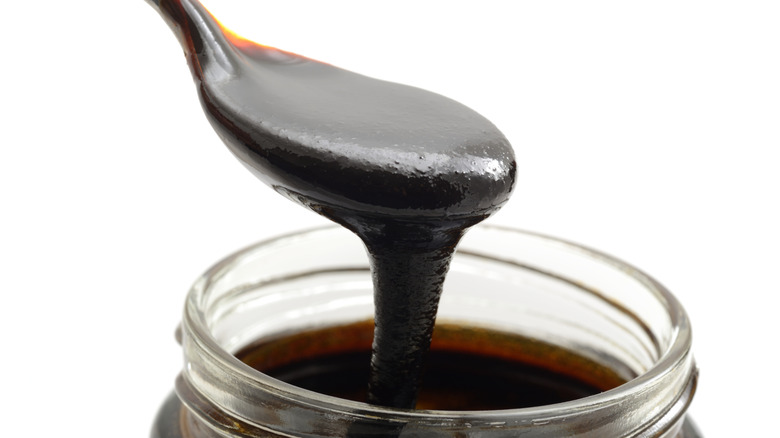
The chuckwagon carried all the cookware and food for the trip. It also had a barrel of water to keep things cool, a hammock for firewood, and a fold-down worktable. In one of the cupboards, the cook would keep jars of molasses or sorghum, which was just like molasses but made from a plant indigenous to the West. Both syrups were thick, dark, and sweet and were used to add flavor to both sweet and savory dishes.
By adding molasses to leftovers, the cook could turn them into a dessert. Stirring molasses into a simmering pot of dried beans added a deep, sweet flavor. Cowboy slang for molasses was 'lick' because it was so tasty, they'd lick it off their plates. But it wasn't always a treat. Sorghum or molasses was sometimes mixed with animal fat to make a butter substitute they called a Charley Taylor. It was nothing like the delicious compound butters we use today; it was one of those foods that didn't taste very good, but it was all they had, so they spread it on their biscuits anyway.
11. Son of a gun stew
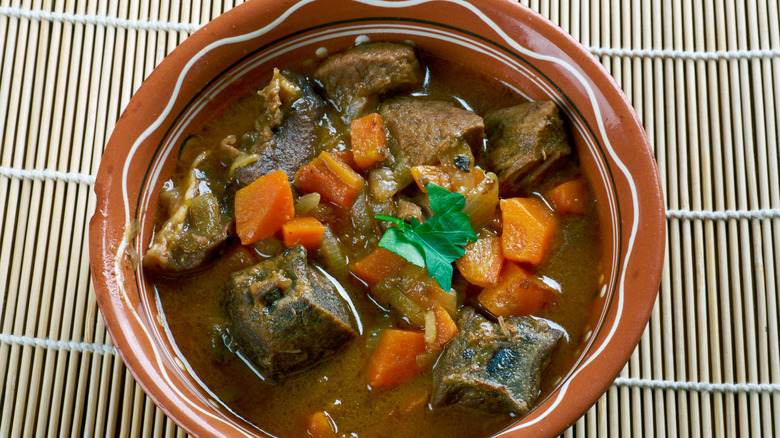
Beef wasn't a staple in a cowboy's diet while working a job driving cattle. The camp cook would only butcher a cow from the heard which had been injured or died, Kent Rollins says. Even then, the meat only lasted a day or two. However, eating fresh beef was a staple at the celebratory kick-off meal prepared at the beginning of a cattle drive. For that feast, the cook made a traditional hardy beef stew called son-of-a-gun stew (or something similar.) "What made this stew a little different was the use of pretty much all of the innards," David Davis explains. "I've heard one quote that said it used everything but the 'hair, the horns, and the holler!' Basically, the beef and organs were chopped up and put on to boil. A variety of veggies are added and spices. A little later, the sweetbreads, brains, and other non-mentionable soft tissues are added to the mix."
Cowboys ate beef again when they reached the town at the end of the cattle drive, and this time, it was sitting at a table in a restaurant. "The men from the cattle drive were surely tired of the same old beans and biscuits," Davis says. "Once they were paid, they had the money for the finer dining that was available." Joshua Drage says that a restaurant menu at that time would have included fried chicken, steak, fresh vegetables, pickled vegetables, and fruit desserts.