

5 Best Tips For Picking The Best Rack Of Ribs For Grilling This Summer
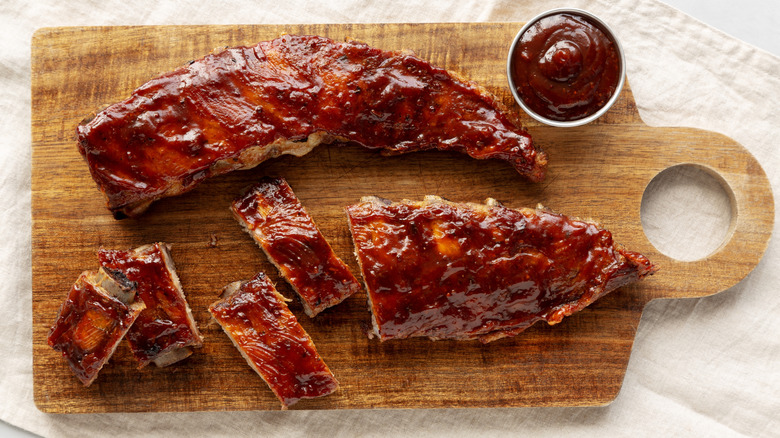
Forget the ice cold beers, charred corn on the cob, and grilled hot dogs with the perfect snap. I simply don't want hamburgers, juicy cuts of grilled steak, or skewered kabobs loaded with summer's best vegetables when there are ribs to be enjoyed. Savory, fatty, tender, and downright fun to eat; a glossy rack of ribs is the undeniable queen of the cookout in my humble, hungry opinion.
For ribs that come off the grill as the best possible version of themselves, it all starts with choosing the right package of the raw ingredient. To get some advice, we spoke to Isaac Bernal Carbajo, executive chef of the Representation of Spain to the United Nations. He shared five key tips for selecting a great rack of ribs at the market. Whether you're heading to your local butcher or the grocery store meat department, this advice will serve you well. And remember: If you need a second opinion, it's always a good idea to ask the professionals behind the counter.
Pork should be pretty
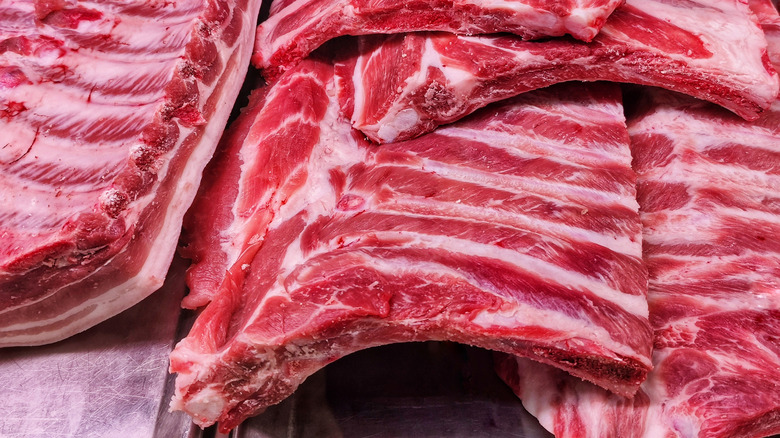
Of course, raw pork ribs won't look as appetizing as smoky, sticky, lightly charred ones served up at a cookout. However, the uncooked meat should still look nice. "Fresh pork should have a healthy pink color," Carbajo told The Takeout. That hue can range from various shades of pale pink to pinkish-red, but the meat should not be gray. The bones and fat, on the other hand, should be white and free of dark spots.
"If it looks dull, grayish, or dried out, I'd keep looking," Carbajo added. The colors should be relatively bright, so a pallid tone could indicate that the meat is past its prime or not the best quality. On the other hand, it shouldn't look slimy or shiny either, though a moist, satin-like appearance is perfectly fine. When purchasing pork ribs, you should trust your eyes. If they look iffy, it's best to select another package.
Look for a balance of meat and fat
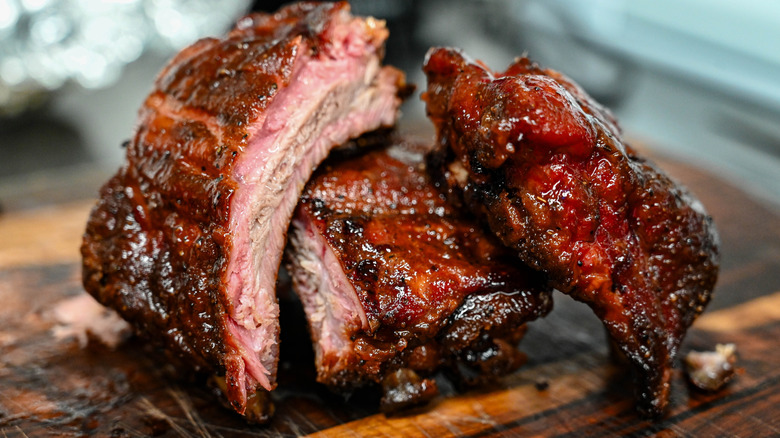
While you're taking a good hard look at the color of the meat and fat making up the rack of pork ribs, it's also important to check for balance. "One of the biggest mistakes people make is thinking that more meat automatically means better ribs," Carbajo shared. If you see ribs that have more meat than other racks, they still might not be the best choice — you need some fat in there.
"A little marbling is a good thing because that's what keeps the meat juicy during a long cook," he explained. "If the ribs are too lean, they're much more likely to dry out." Look for tiny threads of intramuscular fat running through the pink muscle. As the pork ribs cook, some of that fat will melt, basting the meat from the inside out and adding lots of rich flavor.
Select a rack of ribs with even thickness
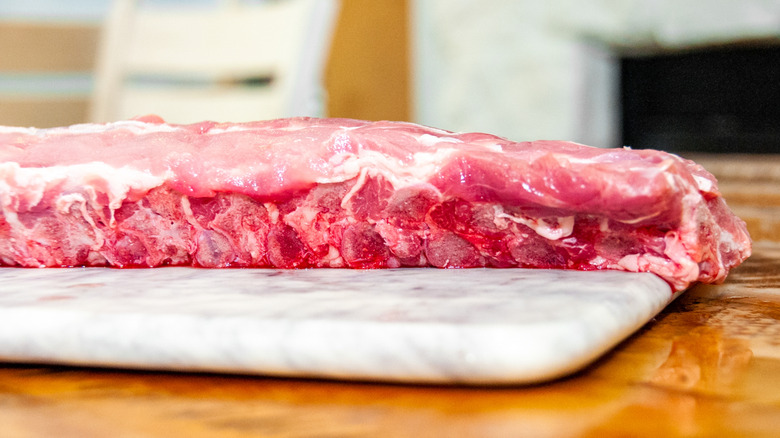
Not every rib on the rack is going to look exactly the same but you should do your best to find a product that's as evenly thick as possible. "When one end is much thinner than the other, it's almost impossible to cook them evenly," Carbajo said, and that's even if you manage to avoid all the rib mistakes that are ruining your barbecue. If the meat is uneven from the get-go, there's not a lot you can do to ensure the whole set is cooked properly. "The thinner sections will overcook while the thicker ones still need more time," Carbajo explained.
Between choosing the ideal method for the most tender pork ribs and making sticky-sweet caramelized barbecue sauce, you've got enough to think about — and that's before you get to side dishes, beverages, and keeping your cookout guests entertained. "An even rack makes the whole process much easier."
Check the package for excess liquid
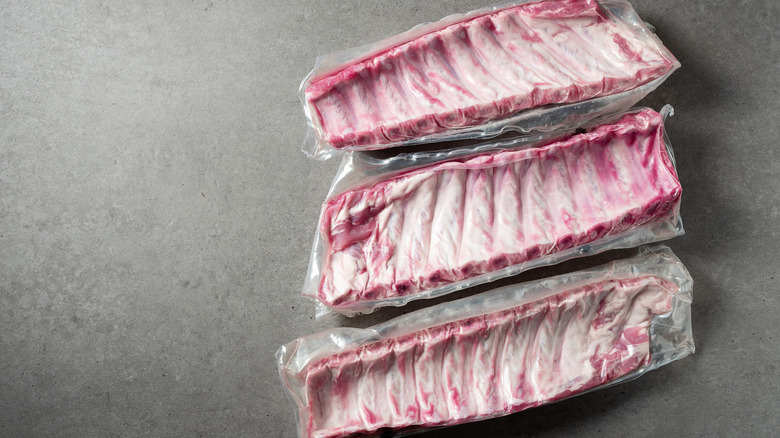
Even if the ribs themselves are checking all the boxes, you still shouldn't purchase a package if there is a lot of liquid in it. "It can be a sign the meat has lost some of its natural juices or that it hasn't been stored under the best conditions," Carbajo explained.
Some level of moisture retention is unavoidable since there is liquid in the pork that can release into the package, where it doesn't have anywhere else to go. It's not automatically a red flag, but if it seems like there's quite a bit more liquid than you're used to seeing it can indeed be a sign the ribs went through unsafe temperature fluctuations. As Carbajo noted, liquid in the package can also show how much moisture has leaked out of the muscle itself. "I always look for ribs that have a fresh appearance with very little liquid," he said.
Quality matters
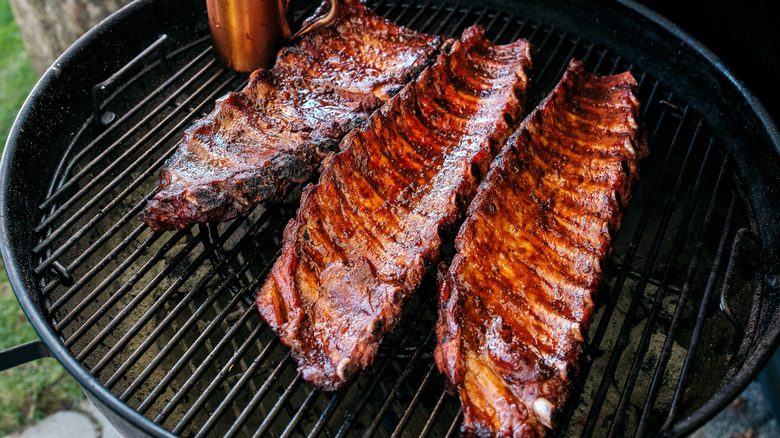
Being a thoughtful shopper gets you many steps closer to taking home a great product, yet as we've seen a lot of what to look for has nothing to do with the label. However, certain brands are known for their quality. "You don't have to buy the most expensive ribs in the store, but better-raised animals almost always give you better texture and better flavor," Carbajo shared.
Pork that comes from pigs raised with ethical, environmentally-friendly methods and who are fed good-quality feed will cost more than pork produced via factory farming. Most of the meat at the supermarket is produced using conventional methods that prioritize scale and cutting costs over animal welfare and meat quality. The result may be a cheap rack of ribs, but the taste and texture are more than likely inferior to smaller-scale operations.
"If you're taking the time to fire up the grill, it's worth spending a little more on the meat," Carbajo advised. If you don't know where to start, talk to the folks behind the counter to get their opinion. Even better, head on over to a butcher shop or farmers market that sells locally produced pork.