

The Sticky-Sweet Ingredient That Makes Caramelized BBQ 10x Better
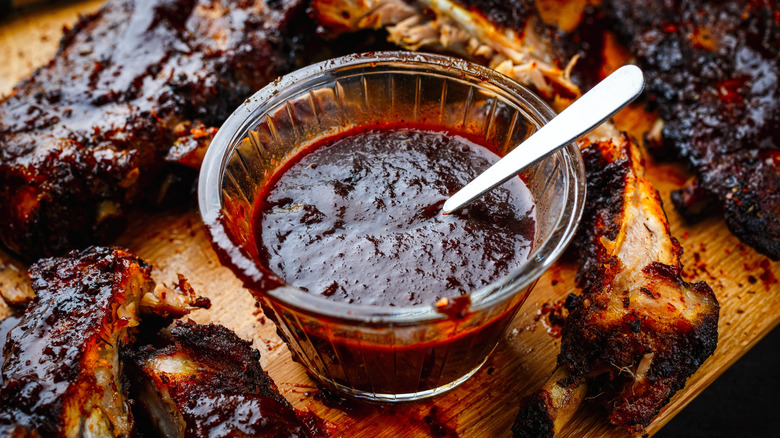
Sugar is a standard ingredient in barbecue sauces, and it can be found in many different forms. Some sauces call for honey or maple syrup; you can even make flavorful, perfectly caramelized pork chops with Dr Pepper soda. One sweet ingredient you won't normally see? White sugar. White sugar ruins barbecue sauce with its flat flavor, so many recipes call for brown sugar instead. If you really want to level up your sauce, though, reach for brown sugar's extra-flavorful cousin: muscovado sugar.
You can use straight molasses, too — many recipes call for it — but the gooey ingredient's strong flavor can overwhelm your sauce. Muscovado sugar, the middle ground between brown sugar and molasses, adds depth without drowning out spicy or savory notes. It has a rich, dark flavor, which complements savory, spicy, or acidic notes and adds complexity to the sauce. Muscovado sugar balances toffee notes with an earthiness that pairs well with meat. It has a certain smokiness, too, which makes it a good choice for meats cooked in a kitchen rather than over coals. It won't have the same intensity as, say, liquid smoke, but you won't run the risk of overdoing it, either.
What is muscovado sugar?
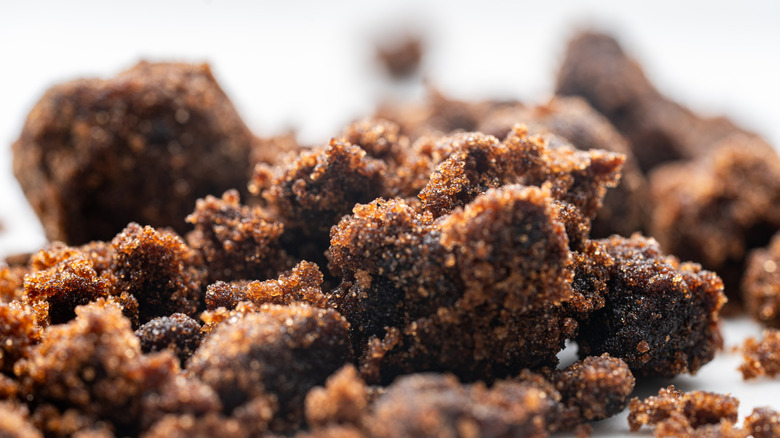
Most of the world's sugar comes from sugar cane. To make the granulated sugar you see in stores, sugar producers extract the juice from sugar cane and boil it down into crystals. It is then sent through a centrifuge to separate out the gooey brown molasses, which is considered a byproduct of sugar production. Then, the sugar is further processed until it's bright white.
Muscovado sugar stops after the first step. Most of the molasses is still there, with its strong, dark flavor. Like the brown sugar seen in stores, muscovado sugar has a wet texture. Commercial brown sugar typically has a milder taste than muscovado, though. Most brown sugar is made from white sugar with added molasses. It's cheaper, but the low price comes at the expense of flavor.
Sugar isn't the most nutritious food — whether it's refined or not — but muscovado sugar does have certain benefits over white sugar. The refining process strips white sugar not only of the caramel-forward flavor but also of natural antioxidants and minerals like magnesium, calcium, and potassium.
How to use muscovado sugar in barbecue sauce
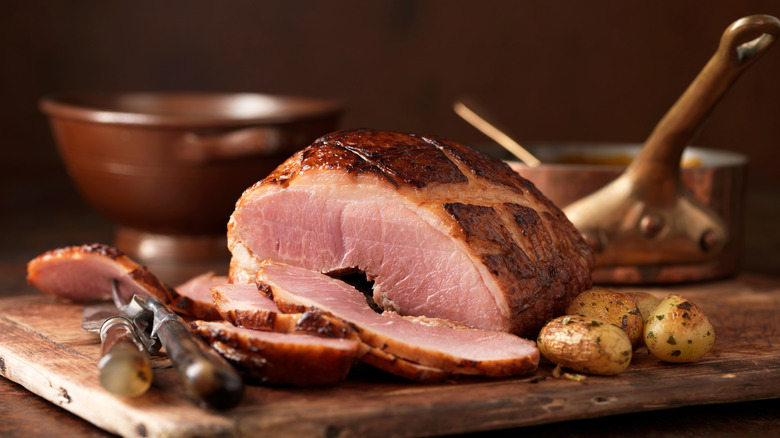
Sugar really is essential in barbecue sauce. It helps balance the sharp flavor of acids, which are often used to help tenderize the meat and balance other flavors. Sugar also helps seal in moisture by creating a caramelized crust, and it's a key part of the Maillard reaction, otherwise known as browning.
If you don't love a super sugary barbecue sauce, muscovado is the ideal option. It won't overwhelm your sauce with saccharine sweetness, and it pairs well with robust flavors, like tomato-based Kansas City or Texas-style sauces. It'll give more life to sauces that need a little extra complexity and help balance out the acidic notes of tomatoes and vinegar. The sugar can hold its own against other strong flavors, like mustard, garlic, or chile, too. Just be careful when you want something light, bright, or subtle, like in Carolina-style barbecue sauces.
Muscovado sugar comes in two varieties: light, which is milder and a bit more refined, and dark, which has all the original molasses. Opt for dark if you want a strong flavor. Other types of unrefined sugar – like jaggery or Demerara sugar — will add more complexity than standard white sugar, but don't expect the same flavor that you'd get from muscovado. Check international grocers if you can't find muscovado sugar at your standard supermarket. You should also be able to find it online, at upscale stores, or specialty shops.