

11 Ways To Make Chicken Patties Taste Gourmet
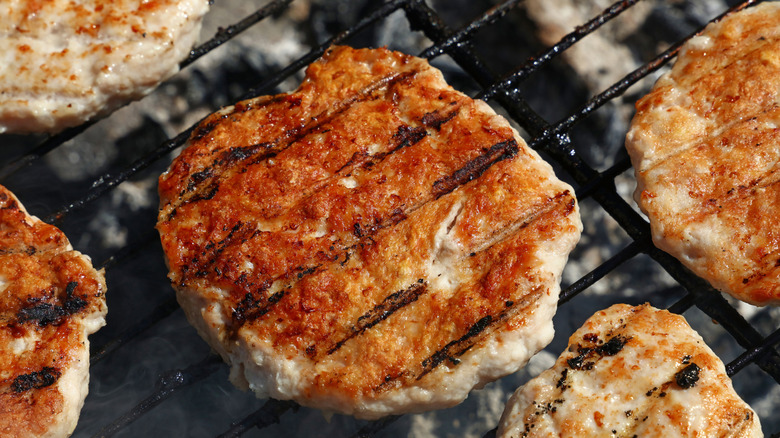
There's a problem in the world of chicken patties and it comes down to reputation. Chicken patties, when done badly or without much attention paid to them, can be dry and bland and overwhelmingly meh. Instead of being the kind of weeknight dinner you eat out of obligation rather than excitement, we decided to ask three professionals who could show us what we were doing wrong.
Ashley Lonsdale is the chef-in-residence at ButcherBox, where she develops recipes that help home cooks build confidence in the kitchen regardless of skill level. A graduate of the French Culinary Institute, she's worked as a private chef and line cook in top New York City kitchens, and now runs her own newsletter, Foodstar, full of cooking advice and easy recipes. Chef Clara Park owns eat cetera philly, a cooking school in Philadelphia, and brings over two decades of experience to the table. She's a "Chopped" champion, a former contestant on Netflix's "Snack vs. Chef", and has trained in Michelin-starred restaurants from San Francisco to NYC. She's also developed food products for brands like Campbell's, Pepperidge Farm, and Costco. They are joined by Rena Awada, who is a certified nutrition coach (PN1) and the creator of Healthy Fitness Meals, where she's been developing flavorful, family-friendly recipes since 2012. Together, they shared the techniques, ingredients, and small details that take a chicken patty from forgettable to genuinely gourmet.
Start with dark meat
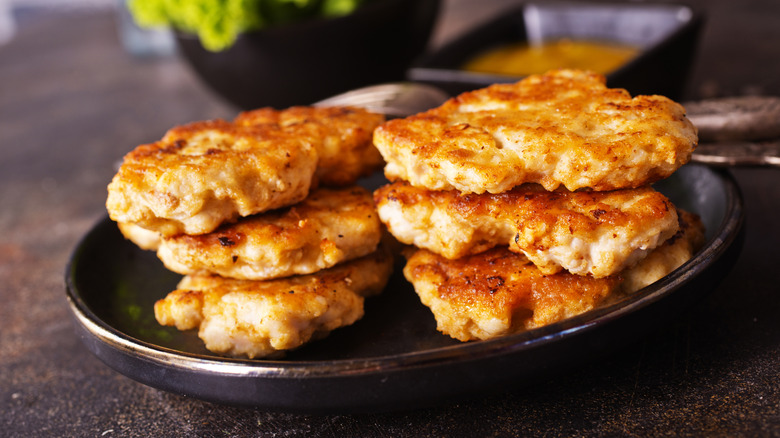
The number one factor every expert agreed on without hesitation was that the cut of chicken you choose will make or break every step that comes after. So, if you've blindly been reaching for chicken breasts, you might want to rethink your decision. "Boneless, skinless thighs make the best patty because this part has the most flavor and dries out less than chicken breast," says chef Clara Park, Chef Ashley Lonsdale explains that this is because the naturally present fat in dark meat retains more moisture, which translates to a juicier patty — something which we all want.
Rena Awada prefers to use a blend of mostly thigh, with a smaller portion of breast mixed in. According to her, chicken thighs bring richness and tenderness, while the breast keeps the patty from feeling too heavy. She agrees wholeheartedly that the common home cook mistake of mixing up an all-breast patty will just result in a sandwich that is dry, dense, and worst of all, short on flavor. That said, Lonsdale notes that if breast meat is all you have access to, don't lose hope. There are things you can add to the mix that will still get you to a juicy, flavorful result. Read on to know how.
Add moisture the smart way
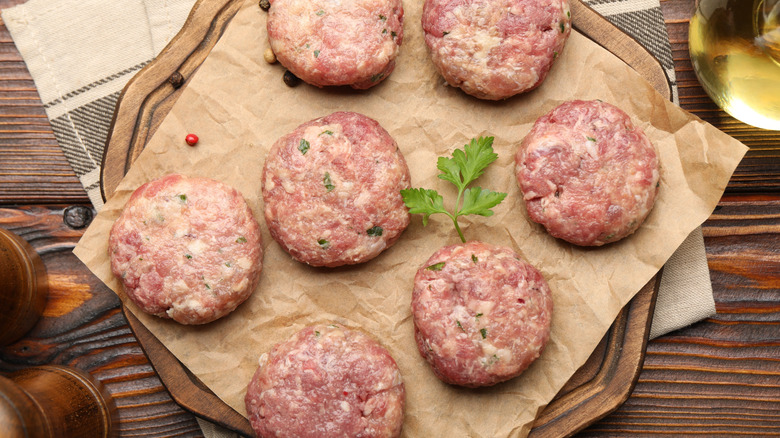
Let's talk about juicy, flavorful chicken patties and how you get them time after time. Starting with dark meat will definitely give you a head start on the juiciness front. But chicken being the type of meat it is, even a thigh-based patty can come out drier than you'd like. The good news is that there are some simple add-ins that can make a world of a difference to your patties before they even reach the grill.
Chef Ashley Lonsdale's go-to is grated veggies. "Grated vegetables like zucchini and carrots will add a juicy quality because they release moisture when heated," she explains. This keeps the meat from drying out from the inside. For a more flavorful mix, she recommends adding finely minced shallots or salted mushrooms in the mix. These not only add moisture but also give the patties a deep, savory quality. Win-win.
Rena Awada takes a slightly different approach. She uses finely chopped onions, which release moisture during cooking, along with Greek yogurt and a small amount of olive oil. "The addition of yogurt will allow for a tender patty with no extra weight, allowing you to taste the chicken," she explains. Chef Clara Park keeps things simple: "I'd add some richer ingredients like olive oil, mayo, or grated parmesan to keep it moist," she says. All three add fat, which is ultimately what you're trying to reintroduce into a lean protein.
Don't overwork the meat
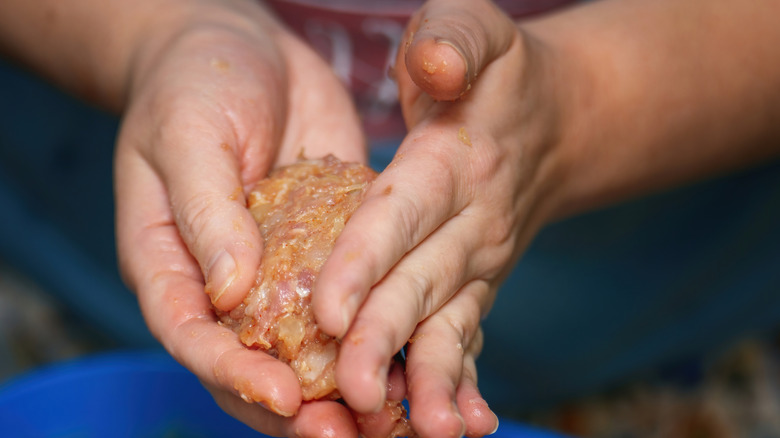
Have you ever taken a bite of a chicken patty and known immediately that the texture was all wrong? Was it dense and rubbery? A chicken patty that has been overworked is the reason. And it's important to get the technique of mixing the ingredients right. Rena Awada elaborates: "The most desirable texture is created by combining the components with a light touch and also by avoiding overworking or compacting the meat." Her formula for structure is minimal. She incorporates a single egg and a very small amount of panko breadcrumbs — enough to hold the patty together, but not so much that it weighs it down or turns it stiff.
Chef Clara Park also reaches for breadcrumbs or panko, encouraging you to use this to lighten the patty rather than bulk it up. Almond flour is another option she likes. On the binding side, she's straightforward: "Eggs act as a great binder," she says.
Chef Ashley Lonsdale's concern at this stage is about temperature as much as technique. She recommends working with cold ground meat in a cold bowl and moving quickly through the mixing process. There's a reason for this: The longer you work warm fat, the more it breaks down, and that fat is exactly what keeps the patty moist through cooking. So, to sum up: Mix your ingredients, work fast, and stop as soon as everything is just combined. Tightly packed patties may hold together better, but fail on all other fronts.
Cook in cast iron
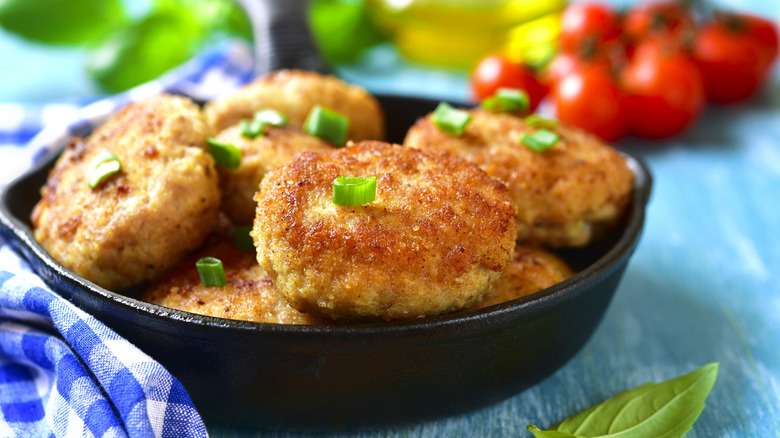
If you had to ask different chefs about the best way to cook a chicken patty, you might expect different answers. Not here. All our experts agree that cast iron is the way to go. And while there may be some foods best avoided with cast iron, chicken patties are not one of them. "Cast iron forever," says chef Clara Park fervently. "I love to shallow fry items in a cast iron skillet because they heat evenly and the pan has such a thick bottom for better distribution of heat, there are no hot spots. For a golden, delicious crisp anything, a shallow fry in a cast iron skillet is the best and easiest way to go."
Rena Awada agrees, and adds that the crust cast iron produces does more than just look good. That golden-brown exterior actually holds moisture in and deepens the flavor that's already been built into the patty. She also notes that if you're cooking multiple patties at once, finishing them in the oven ensures each one cooks through evenly without losing that crust.
For chef Ashley Lonsdale, her preferred cooking medium depends on how many patties you're making. For a weeknight dinner for two, she says a medium skillet does the job just fine. If you're cooking for a crowd? "A flat-top or griddle provides more surface area," she suggests.
Chill the patties before cooking
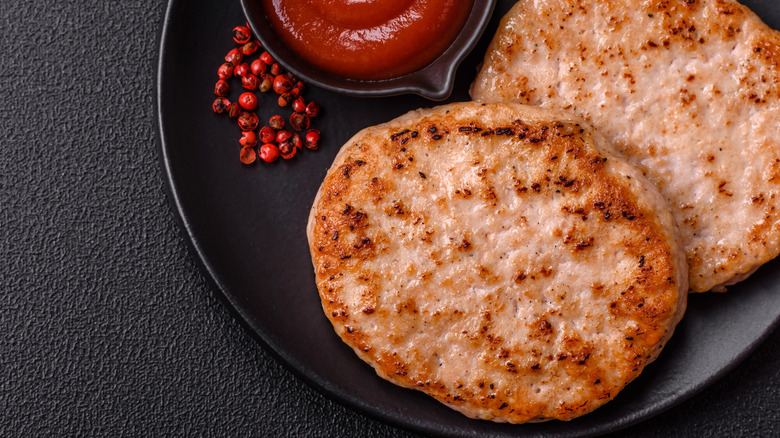
There is one step that professionals rarely skip, and that's chilling the patty before frying or grilling. Picture this: You've seasoned your mix, handled it lightly, shaped your patties, and then you head straight to the pan to fry them up. This is a big mistake. Rena Awada explains: "The chilling time will help keep the patty's rounded edges intact, enhance browning, and prevent them from sticking to your griddle." For her, the ideal chill time is in the refrigerator for at least 20 to 30 minutes before they go anywhere near heat. It's a small window of time that pays off in several ways.
The other thing Rena flags — and this one is hard to unlearn once you've been doing it — is the spatula press. Many home cooks press down on the patty during cooking, assuming it helps it cook faster or more evenly. It doesn't. All it does is push the juices out into the pan and dries out the burgers, which is the opposite of what you've been working toward since step one. Chef Ashley Lonsdale's advice about keeping the meat cold during mixing follows the same logic. When cold fat stays intact, there is moisture in the finished patty. Basically, all the experts ask you to keep things cold for as long as possible before the heat does its job.
Add a depth ingredient
While seasoning a chicken patty with the usual salt, pepper, or herbs is obviously necessary, there are versions of patties that make people stop after a bite and ask what's in it. Here's where our experts come in hot. That first a-ha moment usually comes down to adding an ingredient (or two) that isn't immediately obvious. For chef Ashley Lonsdale, that ingredient is mushrooms. "Either minced and salted fresh mushrooms or dried porcini mushrooms blitzed with a little salt," she says. The umami and intensity that mushrooms bring to chicken patties is undeniable, and what's even better is that they enhance what's already in the patty without announcing themselves.
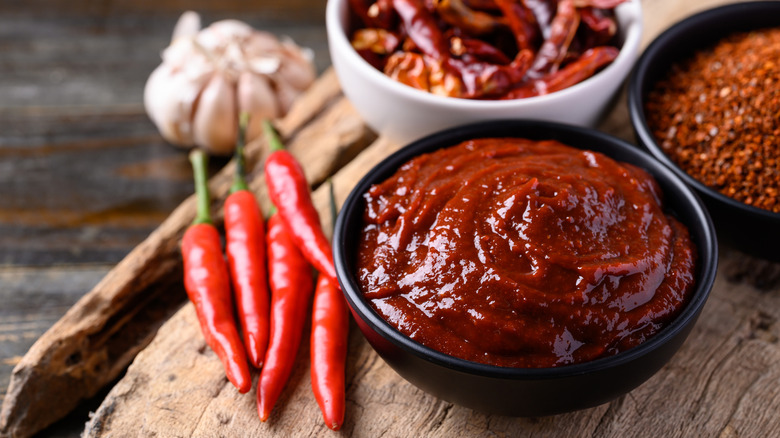
Chef Clara Park goes in a completely different direction and adds a kick to burgers with gochujang, the Korean fermented chili paste. "It adds a touch of heat, savory notes, and a depth of flavor to anything it touches," she says. She uses it in the mix, in sauces, and even in savory batters. If you haven't cooked with it before, it's worth keeping a tub in the fridge. You won't regret it.
For Rena Awada, the combination she reaches for is smoked paprika and Dijon mustard used together. These ingredients "give it a subtle complexity that always leaves people wondering what is making this patty taste so great," she says. Our experts may turn to three different flavor profiles, but the same idea behind all of them is to add a depth ingredient to turn the entire taste level up another delicious notch.
Choose your cheese like a pro
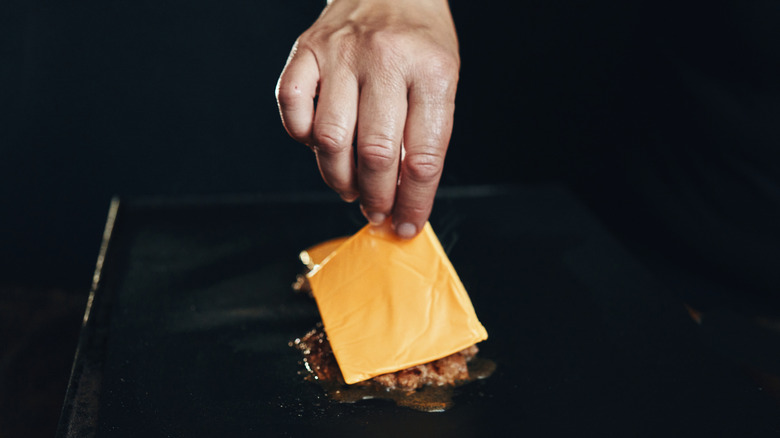
There are several ways to enjoy your patties, and the sandwich melt is one of the glorious options. However, pay heed to the cheese selection, because this is where most people make their first wrong turn. Now is not the time for grabbing at that last wilted slice at the back of your fridge. Getting the sandwich right starts with understanding what actually makes cheese melt well.
"Processed cheeses like American and Cooper Sharp are excellent melters," chef Clara Park says. "Shredding cheeses like cheddar and mozzarella also help them melt better. Choosing the right cheese and the proper format will help ensure a great chicken melt." Make a note here that one should always opt to shred the cheese yourself instead of relying on pre-shredded cheese, which is often coated in anti-caking agents that can interfere with melting. Be warned.
Rena Awada gravitates toward provolone, Havarti, and mild cheddar for their smooth melting properties. Her technique for nailing the melt is to add the cheese in the final minute of cooking and cover the pan, letting the trapped heat do the work gently and evenly. Chef Ashley Lonsdale, on the other hand, keeps it classic by using Swiss or cheddar for a diner-style chicken melt, finished under a preheated broiler. Her one note of caution: watch it carefully. The broiler works fast and your cheese and patty can cross over from perfectly melted to overdone in no time at all.
Take the bread seriously
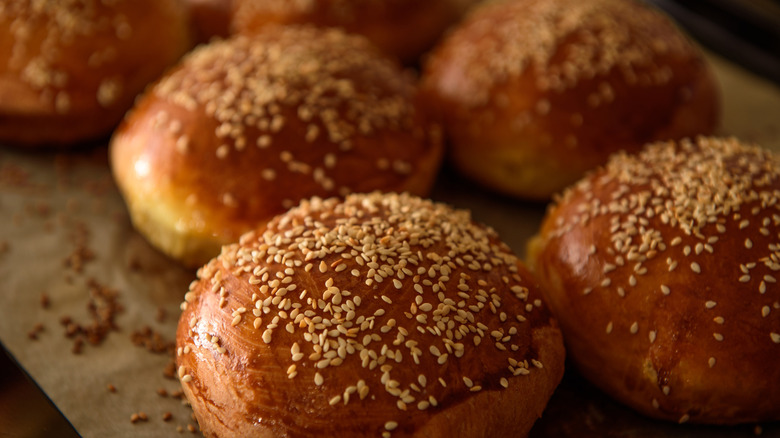
Bread should never be an afterthought. Clara Park put it most directly: "Choose a bread that is delicious enough to eat on its own. If you wouldn't want to eat it plain, why would you want to make a sandwich out of it?" Chef Park's other criteria is structural. The bread needs to be sturdy enough to hold everything together without disintegrating. "I don't want a weak piece of bread that will get immediately soggy or tear at the slightest spread of mayo," she says. Her picks are sourdough and milk bread since both have enough body to carry a sauced, loaded patty without falling apart mid-bite.
Chef Ashley Lonsdale and Rena Awada both land in similar territory, favoring potato buns and brioche rolls for their soft texture and slight richness. Chef Lonsdale also has a practical tip that's easy to overlook: Toast the buns while the patties are cooking so everything is ready at the same time. A toasted bun also creates a slight barrier that slows down sogginess, which matters if your patty has any sauce or moisture to it. If you want to think really out of the box, next time you are at the grocery store, swap your burger buns with a packet of pita instead.
Make your own sauce
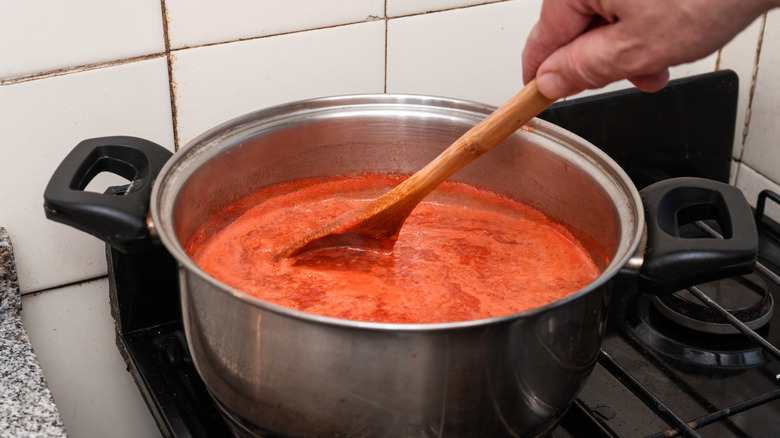
A sauce for your chicken patty is a winning combination, pulling everything together and making the whole sandwich feel intentional. All our experts prefer homemade sauces to store bought (no surprises) but the good news is that none of their recipes are complicated. Rena Awada's go-to is a blend of Greek yogurt, Dijon mustard, lemon juice, and fresh herbs. It's creamy without being heavy, and the acidity from the lemon keeps it from sitting flat against the chicken. Her philosophy is worth holding onto: "If you've already taken the time to season your chicken well, then your condiments should be able to complement or enhance what you have there instead of competing for attention."
Chef Clara Park makes a spicy aioli with mayonnaise and sriracha as the base, and toasted sesame oil or lemon juice added for extra dimension. Chef Ashley Lonsdale's answer depends on what else is going into the sandwich. If there's bacon involved, she makes a homemade ranch using Greek yogurt and plenty of fresh dill. If she's keeping things classic, she goes back to basics with mayo and ketchup. After all, when the patty is doing the heavy lifting, it's easy to keep the add-ons as simple as they come.
Season aggressively and use fresh herbs
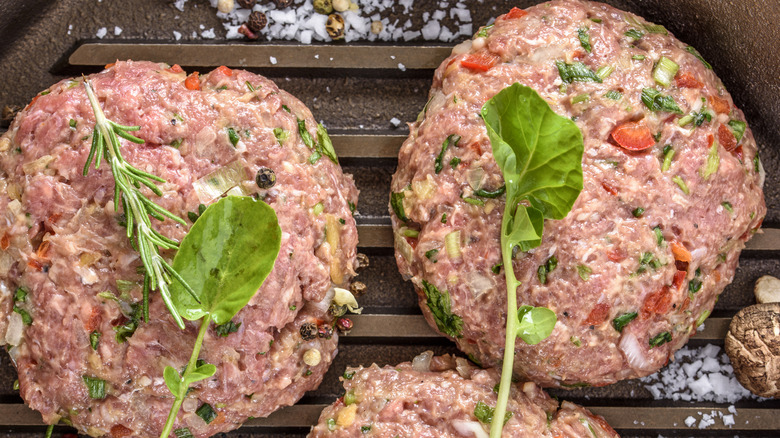
The right seasoning can often be the reason why a chicken patty tastes "fine" or tastes like something you'd pay for in a restaurant. And for chef Clara Park, this comes down to confidence at the seasoning stage. "Professionals typically use a higher quality chicken, grind the meat on their own, and season aggressively compared to home cooks. Adding fresh herbs and spices to add flavor is also something professionals do that home cooks may not," she says. Home cooks tend to under-season ground chicken, partly because it's harder to taste and adjust as you go the way you might with a sauce or a soup. Professional chefs are aware of this and deliberately over-season.
Fresh herbs are the other side of this. While dried herbs can be useful in a pinch, nothing beats the impact of fresh herbs. None of this requires a bountiful herb garden or spice rack. What it does need, though, is the correct approach to combining flavors. Herbs bring a brightness to ground chicken that dried simply can't replicate. Always season more than you think you need to, use fresh where you can, and move forward with the knowledge that ground chicken can handle more flavor than it's usually given credit for.
Have everything ready before the patties hit the pan
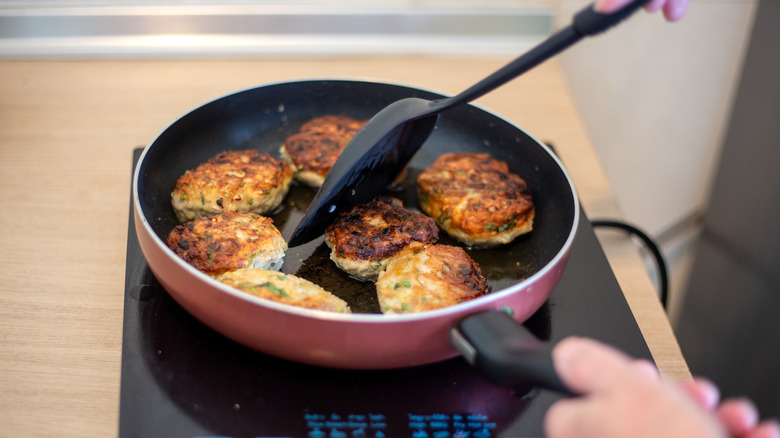
Finally, the last expert bit of advice doesn't concern the patty, but rather everything around it. Chef Ashley Lonsdale relies on the professional kitchen principle of mise en place, or having everything prepped and in its place before you start cooking. "Have everything ready to build your patties so the time between cooking and eating is as short as possible," she advises. "Toast the buns while the patties are cooking so they're ready to be dressed and crowned with the main event and all potential toppings."
It sounds simple, and once you start following it, it is. Remember, a chicken patty that sits while you're scrambling for the sauce or waiting on the toaster is a patty that's cooling down and drying out at the same time. The professional kitchen runs on this principle because time is the one thing you can't get back once the food hits the heat. Sauces made, buns toasted, toppings sliced, plates ready — everything lined up so that the moment the patties come off the pan, the only thing left to do is build and eat.
This is a simple reminder that up-leveling your meals is never about individual ingredients or techniques in isolation. It's about the whole thing coming together at the right moment. When it's done properly, that's when the magic happens.