

5 Foods That Go Bad Fast In Heat Waves
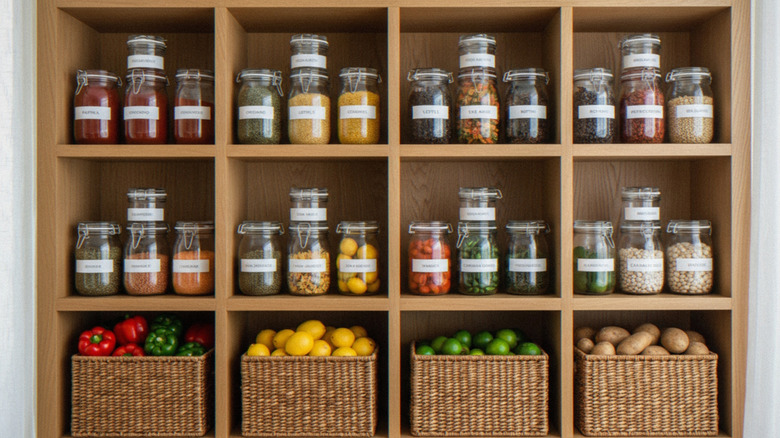
When temperatures get exceptionally high, many of the food safety rules we think of as set in stone go out the window. Unless you're lucky enough to live in a perfectly air-conditioned, dehumidified home, a heatwave like the one that just disrupted life in Europe could see you wasting food that would have been fine if you'd stored it more carefully. Or worse — getting sick from eating something that's past its best.
Luckily, once you know what to look for and which foods are susceptible to the heat, you can start preparing. Make sure your fridge and freezer are heatwave ready, and clear out space in advance of really hot days. You might need it for items that normally fare better at room temperature, such as bread, root vegetables, and bloom-on farm fresh eggs.
If you really want to keep ahead of things, you should also get yourself a reliable thermometer, explore your home to find the coolest spots, and make sure the cooler that's been in the back of the car since last cookout season is clean and functional. As summers get hotter, extreme heatwaves become more frequent, and grocery prices continue to rise, it's time for us all to brush up on our food storage best practices.
Fruit and vegetables that are usually stored at (or just below) room temperature
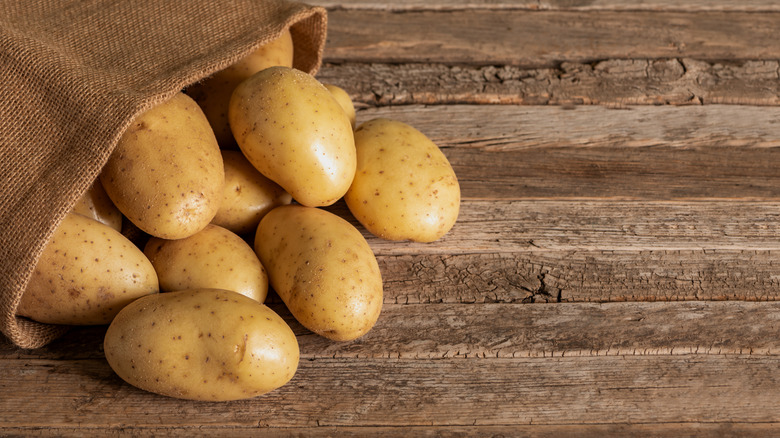
A surprising number of fruits and vegetables usually taste better and sometimes even last longer when stored outside the fridge. For example, tomatoes and stone fruit go mealy in the fridge, and alliums — with the exception of scallions — do best in a cool, dark, dry, and unrefrigerated environment. Onions should be stored in temperatures of 45 to 55 degrees Fahrenheit, and starchy tubers like potatoes and sweet potatoes should be kept away from light and moisture, which cause sprouting. In a heatwave, though? Unless you have a carefully temperature-controlled root cellar or pantry, this all goes out the window.
There's no single answer that solves the fruit and veg issue in really hot weather. If you have no other option, you can find the warmest part of your fridge using a thermometer and store potatoes there. Just make sure they remain well ventilated. Onions can be chopped and stored in the fridge or freezer in a pinch (a time-saving kitchen gadget like a food processor will make this much easier). When it comes to soft fruit and veggies like tomatoes and peaches, it's probably best to simply find a way to use them. Summer tomato recipes abound, but personally, I'd go for a European-style gazpacho to beat the heat. However, if you don't mind the mealiness, you can store them in the crisper drawers of the fridge.
Canned foods
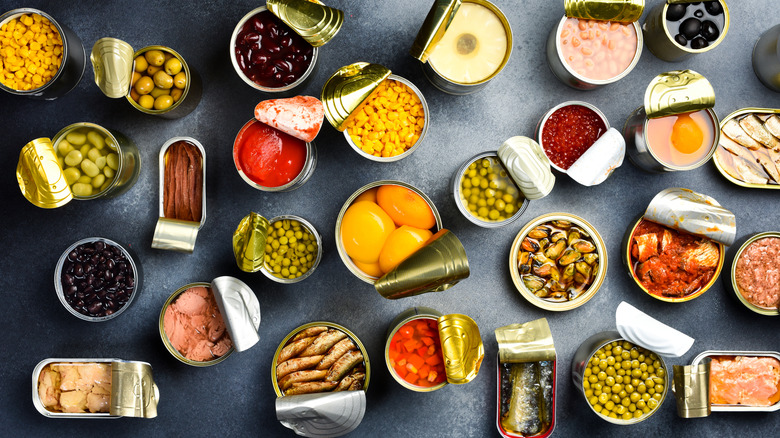
Although I was aware that there are plenty of potential mistakes to be avoided when storing canned food, the dangers of storing them at warmer temperatures surprised me. Despite my job writing about food, I fall into the "do canned foods really expire, though?" camp. But as it turns out, when the mercury tops 100 degrees Fahrenheit, all canned food has the potential to go bad. Beyond this point, the danger of spoilage rises as the temperature does, with exact pathogens and the temperature they need varying by product.
However, home-canned food kept in mason jars can begin to spoil at lower temperatures, as prolonged storage over 75 degrees Fahrenheit can degrade the containers' seals. Extended time in direct sunlight can also degrade this mechanism, as well as lowering the quality of the food inside.
As canned food remains high-quality up to at least 70 degrees Fahrenheit according to experts, and stays safe up to 85 degrees Fahrenheit per USDA guidelines, it's usually possible to find somewhere dark and cool enough for your cans even when it's hot. Lower floors, rooms with good airflow, and areas that have been kept dark are all likely to be cooler areas. If you're worried about canned or preserved food that may have been stored in warm temperatures, check for potentially dangerous signs of decay like bulging cans, excessively rusty cans, and loud hissing or bubbles when you open the food. If there's any doubt, it's best to just throw out the cans and work out better storage solutions for next summer.
Bread
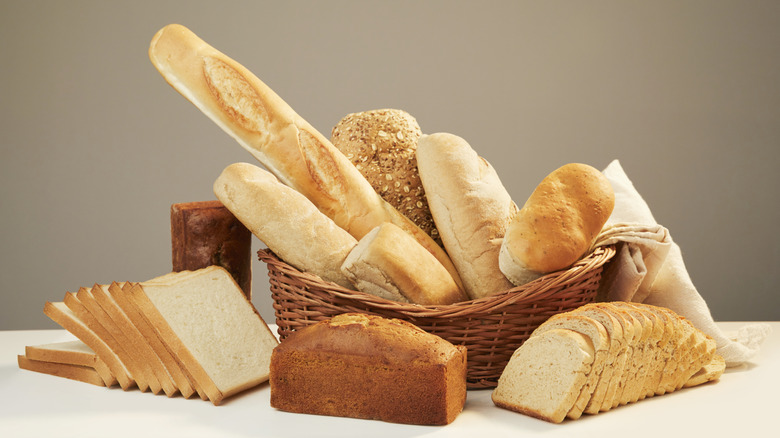
If bread lasts longer than a day in your house, then you'll know that its aging process can be kind of mysterious. Some breads, in some conditions, seem to last forever. Other loaves become rocks or bio-hazards from one breakfast time to the next. Heat, humidity, and storage choices all make a difference to the edible life of bread, and of course some styles are hardier than others.
In general, bread molds fastest with access to moisture and temperatures between 86 and 99 degrees Fahrenheit. If your kitchen or pantry isn't climate-controlled, many hotter summer days will provide these exact conditions. To avoid rapid mold growth, make sure your bread is stored in a closed but dry environment. Bread boxes are literally designed to provide this! You can also store bread in the fridge as long as you keep it sealed against moisture. Finally, sliced and similarly sealed frozen bread does well in the freezer, and works very well if you mostly use your loaves for toast.
Homemade or artisanal loaves tend to mold quicker than commercial breads, while gluten-free bread has a shorter shelf life due to a high moisture content. The longest-lasting and easiest-to-store breads are those made with a lot of sugar and preservatives, lasting almost indefinitely without mold growing (seriously, I once accidentally had a Hawaiian loaf on the go for multiple months), but even they might be tested by improper storage and high humidity during a heatwave.
Fresh eggs with bloom
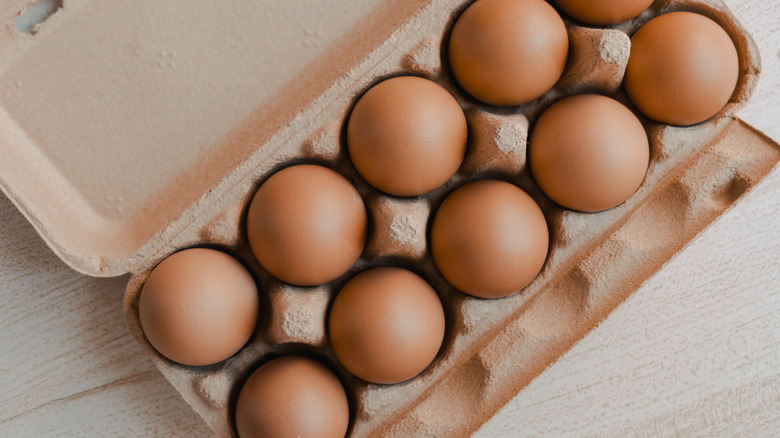
In the U.S., most eggs are washed so thoroughly before they're sold that the 'bloom' or 'cuticle' is washed away. Once the bloom is removed, eggs have to be continuously refrigerated to avoid spoiling. In many other countries, including throughout Europe, they process the eggs with the bloom, as it's an important layer of protection against bacteria. But even eggs with intact blooms need to be kept at a reasonably cool temperature, especially during a heat wave.
Ideally, eggs should be kept under 75 degrees Fahrenheit, or else it's best to transfer them to the fridge. Avoid storing them in the door to prevent temperature fluctuation as the fridge opens and closes. It's important to note that once eggs have been refrigerated, they have to stay that way. It's tough to remember if you're not usually an eggs-in-the-fridge household, but if you leave the now-chilled eggs out, they will start to sweat and spoil — a problem that isn't fixed by returning them to the fridge.
If you're not sure about your egg storage efficacy, there are plenty of signs to look for that may indicate that they're past their best. If the shells are not intact and there's an unpleasant smell, it's best not to risk it. You can also employ easy tests to double-check their freshness, like seeing whether they float or sink in water — sinking is best, but an egg is usually edible unless it bobs right up as if trying to escape.
Bag lunches and other food packed to eat out of the house
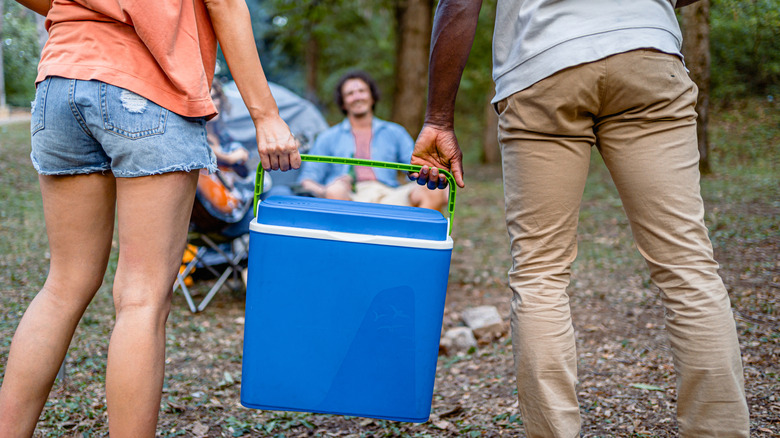
If you're packing food to eat outside of the house, you'll want to rely on a cooler or insulated bag to keep it from spoiling during a heat wave. But you should know that how long food lasts in a cooler also depends on outside temperature. In hot weather, it's harder to keep cooling containers cold. The specific period they work for will vary by type and model, with premium coolers faring best. It's best to invest in a thermometer to ensure the inside temperature doesn't exceed 40 degrees Fahrenheit.
If you plan ahead, there are plenty of tricks for keeping that cooler nice and chilly. Tightly packed coolers stay colder than those with lots of gaps, so make sure you choose the right-sized container. You can add extra ice packs, which increases sources of ongoing cold as well as helping to fill out space. Pack items in the reverse order that you think you'll need them to minimize open-lid time and avoid taking food out into the warm air before you need it. Stay organized and pack your cooler as late as possible to ensure that the food is nice and cold when you leave the house.
Finally, don't be afraid to go overboard with the number of bags and boxes! Using an insulated bag inside your cooler will add an extra layer of chilly protection, and having a second cooler for drinks means opening the food cooler less often.