

The Telltale Signs A Watermelon Has Gone Bad
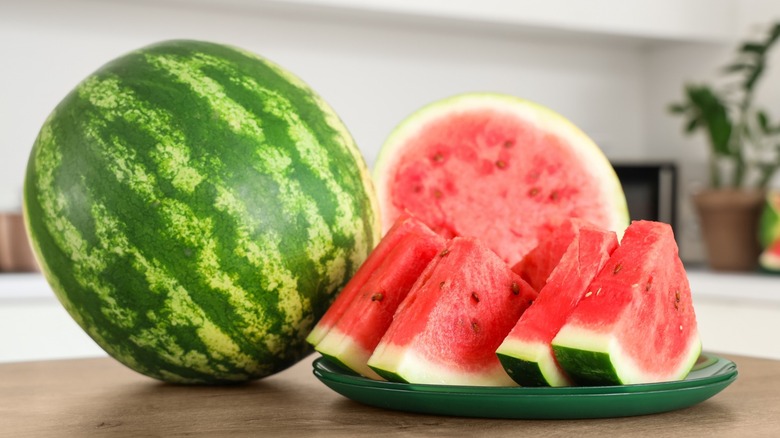
Summertime means trading boiling pots of soup for lighter, more refreshing bites that stand up to the hot weather. Instead of keeping the stovetop or the oven running, people increasingly look for meals that can be prepared with minimal to no cooking. All the better if they incorporate fresh, seasonal produce. There are plenty of fruits and veggies that hit their peak during the warmer months, from crisp cucumbers and carrots to juicy peaches. One particular seasonal fruit that people look forward to year-round is watermelon. More than 90% of the fruit is water, making it a refreshing treat to cool down midday. It shines on its own but also makes a great addition to salads or blended into soups and cocktails.
To make the most of watermelon season, however, you'll want to know the difference between a good and a bad fruit. At the store, you can pick the perfect watermelon based on a few surefire signs. But how do you know if the watermelon already at home on your kitchen counter has gone bad? Luckily, there are some telltale signs to help you out in this case, too. Some signs are visible outwardly, such as dents and mold. Others, you'll find once you've cracked open your fruit. So keep a keen eye — and nose — on any watermelons in your home and ensure you always find a sweet, juicy fruit waiting underneath the rind.
Fizzy or foaming fruit
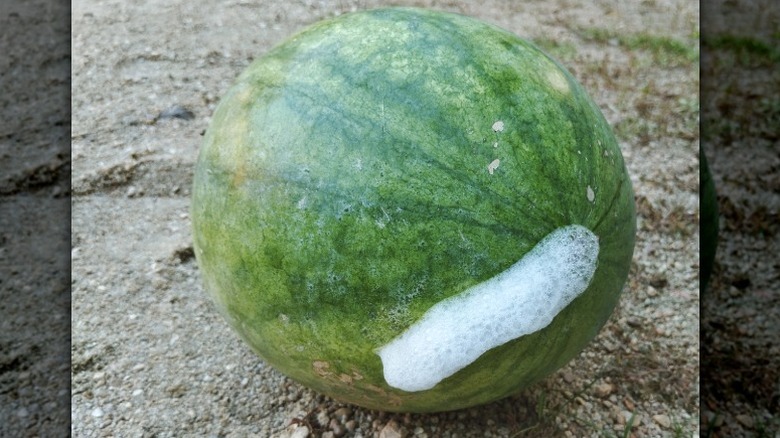
Watermelon makes the perfect flavor enhancer in summery drinks. Think watermelon-flavored sodas and floats or two-ingredient watermelon and prosecco cocktails. The carbonation paired with the fruit's light sweetness results in a burst of flavor that will have you refilling your glass in no time. But fizzy watermelon isn't always a match made in heaven. If you notice the fruit foaming through the rind, you won't want to crack it open for a bite. In fact, you might want to take a few steps back just to be safe.
A fizzy or foaming watermelon happens more often than you may think. Sugars and yeast inside the fruit can come into contact with bacteria during the growing process. Combine that with unusually high temperatures, and you have the perfect storm for a fermented watermelon. Unfortunately, this isn't the kind of fermentation process that flavors some of the world's most popular foods. Rather than a tasty snack, this kind of fermentation can leave you with a health risk on your hands.
Avoid eating foaming fruit and dispose of it before more harmful bacteria have the chance to form. In some cases, the fermentation process can cause gas to build up inside the fruit, so be wary of that before deciding to cut into it out of curiosity. If you're craving a bubbly watermelon treat, you're better off creating your own concoction.
The rind is bruised, cracked, or soft
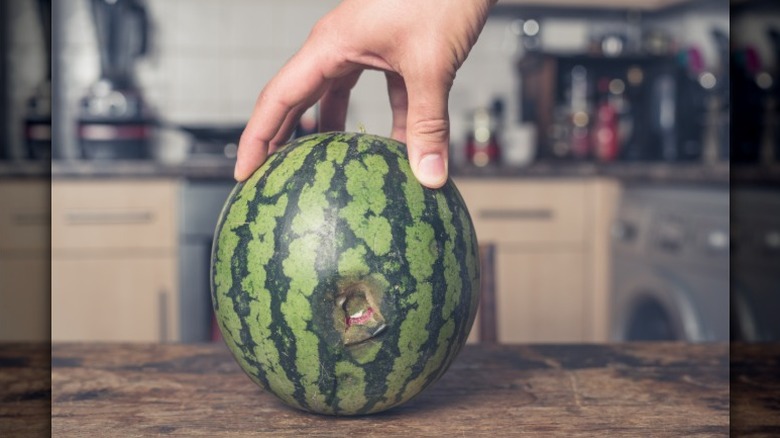
One of the most distinctive parts of a watermelon is its rind. This hard outer layer acts as a first defense against the elements, protecting the juicy inner flesh and seeds, much like the peelable skin on citrus fruits. While many people simply scoop out the flesh or eat around the rind, they're actually missing out on a lot of nutrients. Watermelon rind is packed with fiber and vitamins. It's easy to enhance the flavor by pickling or making candied watermelon rind for a healthy and tasty snack. But if you want to enjoy the rind, as well as the fruit inside, there are a few warning signs to look out for.
A good watermelon rind will be intact, showing off a vibrant, striated pattern. If you notice that your watermelon rind is cracked, the fruit's interior could be susceptible to contamination. Bruises and soft spots pose a similar risk. Dents in a watermelon's rind can also clue you in to a fruit that's overripe and even on its way to rotting. The longer the fruit ripens, the more water its cells release, turning the crisp fruit into a mushy mess.
The texture is rubbery, mealy, or dry
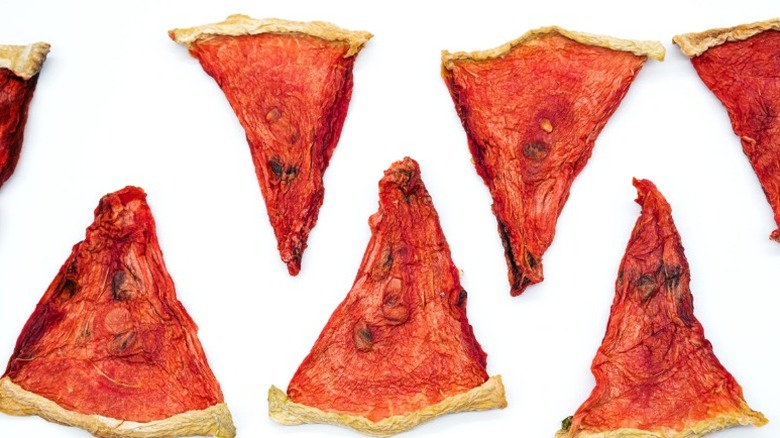
Watermelon can be quite finicky when it comes to texture. If you want that perfectly crisp, juicy bite every time, you'll have to make sure that your watermelon hasn't overripened. A watermelon that's past its prime can have a rubbery texture that would make a great chew toy for your furry friend, but makes a less-than-desirable snack for a human. This textural change happens as the watermelon begins to break down. Watermelons can also turn mealy or dry due to the same breakdown of sugars and juices inside the fruit, meaning you'll miss out on the burst of sweetness of a perfectly ripe pick. While the texture may be off-putting, there are still some ways to salvage the fruit.
If you don't want to throw out a whole watermelon and there aren't any other signs of decomposition, you can use the leftover fruit in recipes that mask the unfortunate texture. The flesh can be blended to make watermelon ice cream, frozen into popsicles, or used to make leftover watermelon alcohol slushies. Of course, don't forget to save the rind, if possible. Just a few simple tricks, and no one would guess that an overripe melon was involved in the making of their tasty treat.
There's visible mold on the fruit
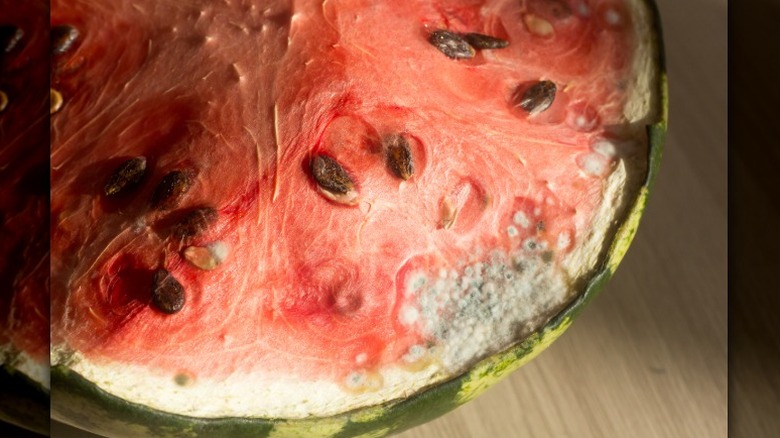
While cases of dried-out watermelon may still be salvageable, other instances require immediate disposal. If you take a look at your fruit, you may notice some imperfections. These are not always bad signs. In fact, spots on a watermelon can be a good thing. Sugar spots, for example, indicate an extra sweet melon. However, if you notice any mold growing on your fruit, this is a surefire sign that it's gone bad. This mold typically appears in fuzzy white, gray, or green spots on the watermelon's rind or flesh.
While a little mold won't spoil a block of hard cheese, cutting off molded parts isn't recommended for high-moisture fruits like watermelon. Some types of mold, especially on the soft inner flesh, can run deeper than what meets the eye and pose a serious health risk. Even the presence of more benign mold varieties means the fruit might not taste too great, so it's better to be safe than sorry. If you want to avoid a perfectly good watermelon falling victim to fungi, try storing it in the fridge instead of on the counter. The cooler temperatures do a better job at warding off unwanted visitors.
It smells rancid

A ripe watermelon has a distinctive scent that's hard to replicate. It's not a cloying sweetness that overwhelms the senses. Instead, the fruit has a subtly sweet, fresh scent with earthy notes. It shouldn't be too strong as that could mean the melon has ripened too much. Smelling too sweet, however, is a minor concern compared to more pungent smells that could emanate from the fruit. If you're cutting into a watermelon and are met with a sour or funky odor, you can trust your nose. This is one of the easiest ways to tell a watermelon has gone bad.
Some compare the aroma of a spoiled watermelon to that of milk. Unfortunately, if your watermelon smells off, there's not much you can do to save it. At best, the fruit will no longer be sweet. At worst, it can actually be dangerous to consume if the rotting process is in full swing. Toss the foul-smelling melon and sniff out a fresher replacement instead.
You've left it out too long
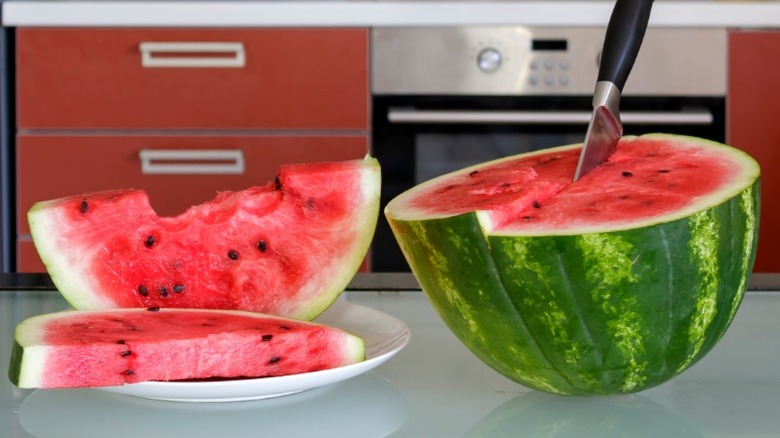
Summer is that time of year when everyone's planning backyard barbecues and pool parties full of guests. Watermelon makes a great addition to any fruit platters or summery salads that might grace your tables. While it may be tempting to beat the crowds and stock up on melons in advance, leaving out a watermelon for too long will have you throwing it out before the party's even started. Buying a whole watermelon is the best bet for keeping the fruit fresh longer, but even that has its limits.
A refrigerated watermelon lasts up to three weeks before cutting. If you're not a fan of cold watermelon, you can also opt to leave the uncut melon at room temperature for about a week. Cut watermelon can save prep time, but it also reduces the fruit's shelf life. Melon pieces typically last between three and five days if refrigerated. Whether you leave your watermelon whole or cut, once it's gone uneaten for too long, it can lose flavor, become slimy, or grow mold. To avoid your fruit meeting the trash can, store it in the refrigerator for the longest shelf life. For cut watermelon, use plastic wrap and airtight containers to keep the fruit fresh and prevent it from absorbing other smells in the environment. No one wants a garlic-forward melon at their summer bash.
Knocking on it produces a dull thud
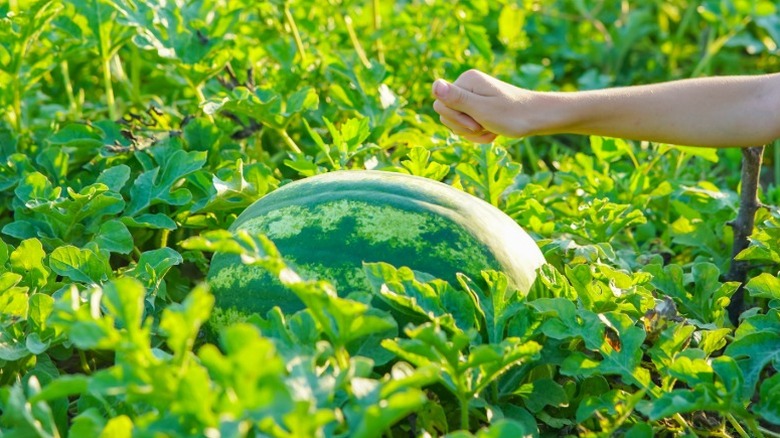
One of the most common pieces of advice given to amateur watermelon pickers is to knock on the melon. This isn't a subtle way to test your musicality. Instead, the thump test, as some call it, is designed to weed out any underripe or overripe melons. A ripe watermelon will have a slightly deep, hollow sound reminiscent of bongos. On the other hand, an overripe melon will leave you with a less-than-satisfying, dull thud. So if the watermelon you have waiting to be eaten no longer sounds like it would fit in at the recording studio, you may want to reconsider digging in.
While some disagree that the thump test is an accurate indicator of ripeness, it can also clue you in to any damage the watermelon has suffered. Much like bruising on the rind provides an outward sign, a melon that absorbs sound when knocked on may indicate a bruised interior. Next time you go to cut into your melon, try a quick rap on the exterior. You might learn something, or you may just enjoy a short tune before the main event.
It tastes carbonated or sour
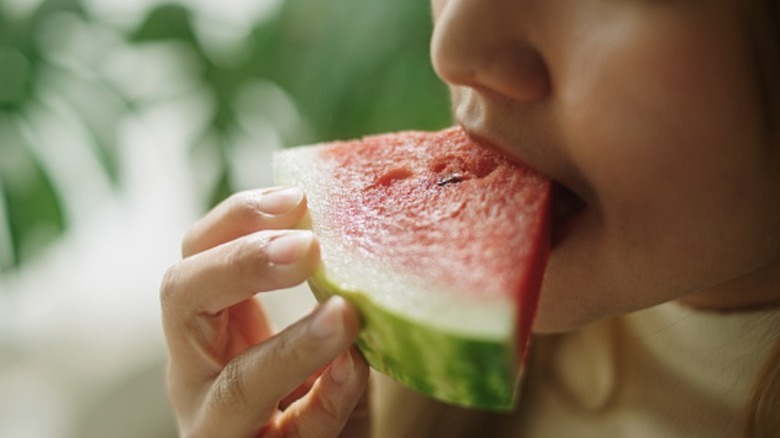
A proper, ripe watermelon has a sweetness that, much like its scent, is not overpowering. The sheer amount of water the fruit contains keeps it from being too sugary sweet while contributing a burst of juicy flavor to each bite. Thanks to its light and refreshing flavor profile, watermelon makes a great addition to both sweet and savory summer recipes. It's perfect in drinks and parfaits or mixed into salads and salsas. Adding a sprinkle of salt to watermelon slices can also bring out a little more of that natural sweetness. But just like a watermelon's scent can go rancid, the taste can also be a sign of a decomposing fruit.
If your mouthful of watermelon leaves a sour taste in your mouth or tastes fizzy like you mixed it with seltzer, it's probably fermented. While people do eat fermented watermelon, like the sour watermelon that is made in Hainan, China, this is produced through a controlled process. If you've simply left your melon out too long and it's started the process all on its own, it's better to avoid consuming the fruit. Stick to candy instead for your sour watermelon fix.
The flesh is discolored
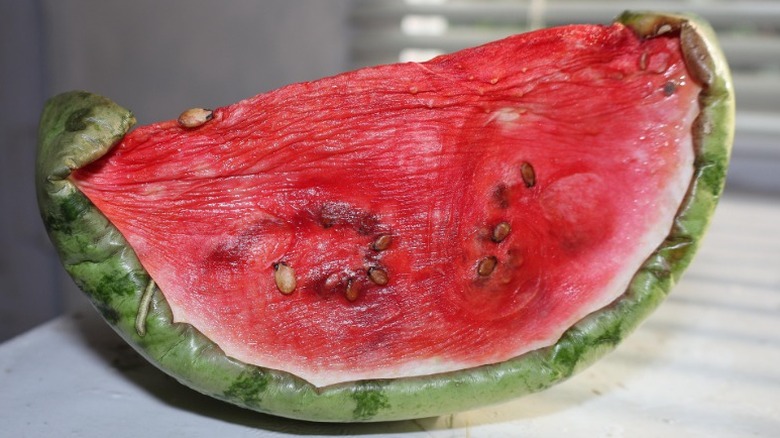
While the prototype of a watermelon is usually one with a dark green, striated exterior and a juicy, red interior speckled with black seeds, not all watermelons fit the bill exactly. These fruits come in yellow, orange, and red varieties. Both yellow and orange watermelons are missing the lycopene that gives many watermelons their distinctive red color. However, despite the color difference, yellow watermelons can actually be even sweeter than their red counterparts. Unfortunately, not all color differences lead to a tastier melon. If you cut into a melon and find the flesh is discolored, it's likely past its prime.
Darker spots or bruises in a watermelon's flesh mean it's too ripe and will probably have an unpleasant, mushy mouthfeel. Sometimes discoloration can also be a growth defect. If the discoloration is particularly dark or widespread, or if you notice any mold forming around it, you can toss it. If it's not too bad, however, you could save some of the overripe fruit by blending it into a dessert or drink.
The inside turns stringy or develops large pits
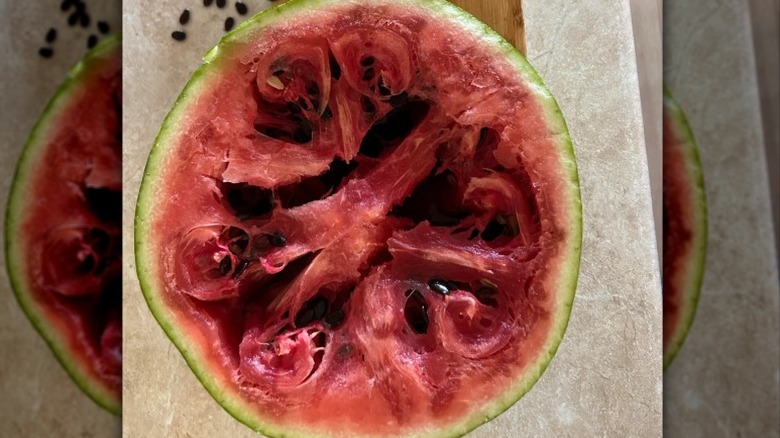
While the uniform, seed-speckled watermelons we see in stores and at farmers markets are a thing of beauty, they're also a product of modern-day makeovers. If you look back in history, to Renaissance-era paintings in particular, you'll find very different depictions of watermelons. The ones you'll find on the canvas look significantly less bright and juicy, with spiral pattern segments inside. While that may have been the norm back then, selective breeding has largely weeded it out. So if your 21st-century watermelon looks like it jumped out of a Giovanni Stanchi piece, it's probably a bad sign.
Sometimes watermelons that have been sitting out too long and dried out develop a stringy appearance and texture. It may not be dangerous to eat at this stage, but it certainly won't taste like a fresh watermelon. The fruit's interior may also develop pits. While some watermelons experience a physical defect called "hollow heart" that causes cracks in the flesh and can still taste perfectly fine, other cases can indicate a rotting melon. If the pits have eaten away at most of the flesh, you'll want to avoid taking a bite. Not only is there less fruit left to go around, but it will likely be dry and bland.