

11 White Lies Bartenders Tell All The Time
Lies, as unfortunate as some of them are, are just a part of everyday life. From the huge whale-sized lies to the tiny but socially acceptable falsehoods about how a person is doing, they come in many shapes and sizes. By far the most popular type of lie, though, would be the white lie. These are typically more on the innocent side, meant to save face or protect someone's feelings from the truth. Telling your cousin that you love that sweater they gifted you, when in reality wearing it makes your skin itch, is an example of this. On the other hand, when a seafood restaurant lies about where its fish comes from, it's not a white lie — that's just a completely self-serving lie that omits important information from customers.
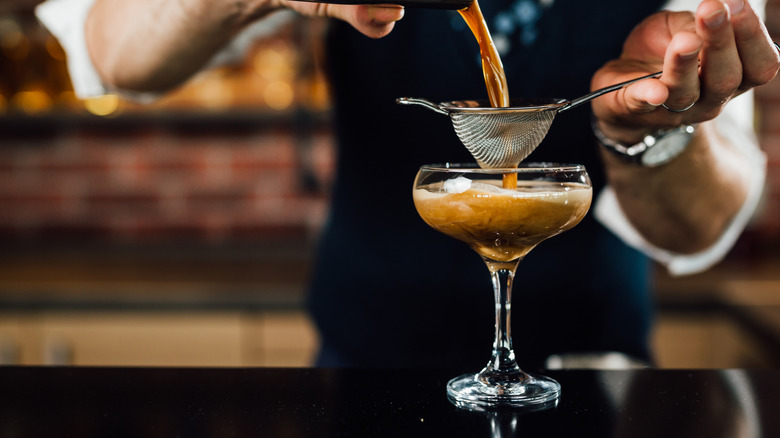
With this said, white lies do serve their place in the food and beverage industry, even down at your local watering hole. That bartender serving your espresso martini is not immune to the wiles of telling a white lie now and then. To help us determine which white lies are commonly told by bartenders, we turned to the experts. Matthew Sinagoga is both the founder and lead mixologist of Mixology Matt, a business that specializes in providing both mixology and consulting services as well as cocktail workshops. His experience, combined with that of Nick Peach, the founder of BareBones Bartending (Canada's longest-running cocktail workshop program), has provided us with some insight into the fibs commonly told at the bar.
The blender is broken
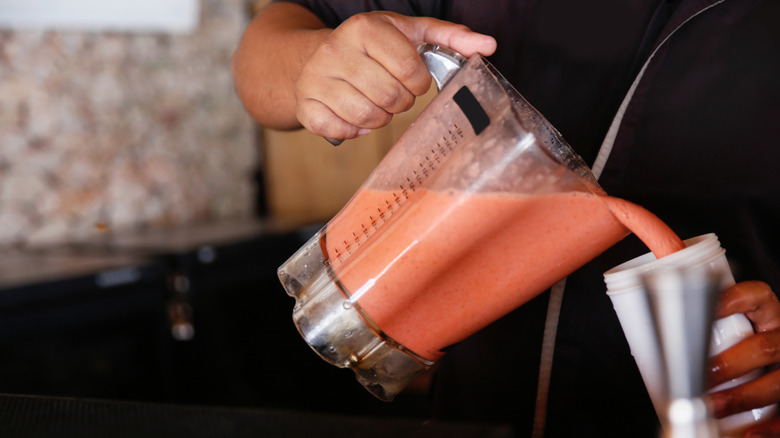
If you finish your piña colada, only to be told that the blender has suddenly broken when you go to order a second one, there might be more than unfortunate luck at play here. Those who are well acquainted with the blender — or who even consider it to be the vintage kitchen appliance that you should never replace – might suspect that there's more to the story.
Frankly, in some scenarios, you might be right. If there is suddenly a swarm of customers to serve, or you are ordering on a busy Friday night, you may have just been told a white lie for the bartender to shave some time off your order and better serve the crowd.
"How many times has your blender broken?" Nick Peach chimes in, noting that his own parents still have a finely functioning blender from 1985. "What piece of machinery has less parts than a blender? It's a motor attached to a jar. So yeah, if your bartender told you the blender was broken, it's probably not." If you can see that the bar is busy, Matt Sinagoga says to ditch your worries about the blender entirely. In his point of view, "Working, not working — it doesn't matter. If it's a Friday night rush, that blender is emotionally and spiritually broken, and no one is getting a frozen daiquiri."
Mentioning they've tried something on the menu
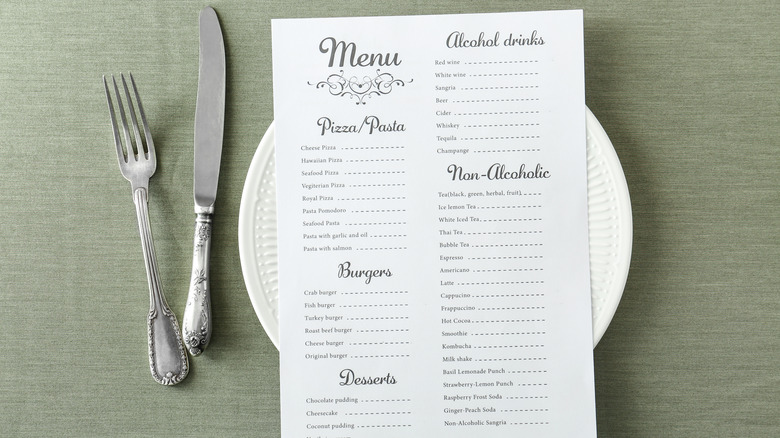
One of the first questions your server or bartender asks after you've scanned the menu is often, "What do you recommend?" After all, they're the authority on the items being offered, especially when you go out on a limb and try a new restaurant or bar. But this question often assumes something that may not be true. The simple fact is that not every bartender has tried everything that the menu has to offer. In fact, in some cases, they might not have tried any of it at all. Even if they give you a glowing and detailed review of an item that seems promising, this might actually be a well-crafted white lie.
Nick Peach confirms that bartenders often haven't tried everything on the menu — but adds that this shouldn't always matter. "We had an absolutely fantastic bartender on our team at one of the clubs I worked at who was sober for eight years, she could describe each drink in vivid detail and upsell them." He goes on to say that, "You don't have to be a pilot to fix an airplane, and you don't have to drink to be a bartender."
Matt Sinagoga offers a slightly different perspective on the subject, noting that whether or not a bartender has actually tried certain menu items really depends on seniority. "The career bartenders and managers likely helped create the menu, so they've genuinely tasted everything," he says. "On the other hand, I have absolutely watched a green new hire smile, nod, and completely fake their way through a glowing review of a cocktail they've never even seen."
Saying they are out of an ingredient during a rush
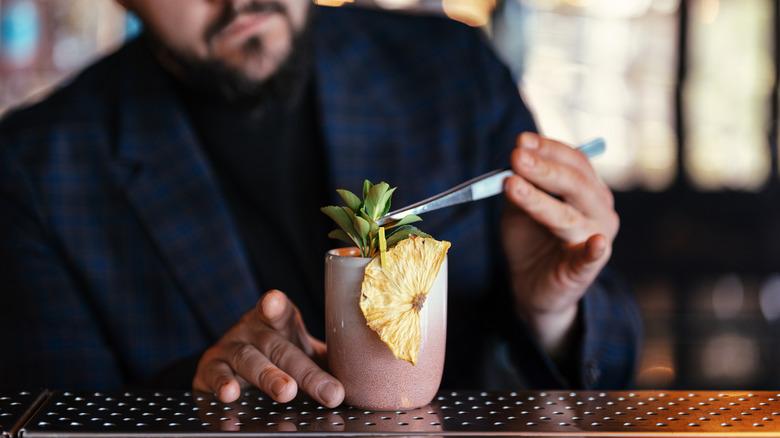
If what was a quiet restaurant a few minutes ago is now exploding with hungry (and thirsty) patrons, you might suddenly find your bartender mentioning they are out of an ingredient for the drink you're craving. If this leaves your spidey senses tingling, then you might not be surprised to learn that this is another common white lie: Sometimes during a rush, bartenders just don't have the time on their hands to make that finely crafted drink you were eyeing.
Matt Sinagoga says that one of these ingredients they might apparently run out of is fresh mint, as "mucking around with a quality mojito" can take more time than it's worth. "If a bartender is slammed, suddenly the bar is 'out of mint' for the rest of the shift," he says.
On the other hand, Sinagoga admits that sometimes they truly are out of mint, with the ingredient running out fast in the summer. Nick Peach also concedes that this isn't always a lie — the mint in your mojito is kept in an ice bath to keep it looking attractive, and genuinely does run out. However, he adds that he has falsely told customers they're out of another ingredient in the past. "I've told someone I was out of Clamato when I didn't want to make a Caesar 10 minutes before last call, because what is wrong with you."
They are unable to change the music or air conditioning
If it's the middle of the summer, and you're sweltering in your chair, skin sticking to the seats, you might find yourself asking the bartender to please turn up the air conditioning. Similarly, if you're trying to talk to your partner and all you can hear is the yowling of a song about long-lost love that you've listened to about 500 times, you might ask the bartender to change songs. Oftentimes, these requests are met with a shrug of the shoulders and an apologetic, "I can't". The question, as you continue to melt into your seat, is whether they are actually telling the truth.
The answer actually depends on many different factors. Nick Peach says, "When I owned my bar in Toronto? Sure, I could change [the air conditioning and music]. Soho House? I was allowed to change the music if Tommy Lee Jones is asking. Working at a chain restaurant? Heck no, the thermostat had a key." Matt Sinagoga has had similar experiences. "It's a toss-up depending on the venue, but when it comes to the music, it's personal," he says. "If a customer asks to change the music and the bartender is currently vibing to their own hand-picked playlist, they will absolutely lie and say the system is locked just to keep their tunes going."
Let me check if we have that
If you're asking for something specific to be added to your drink, or swapping something out for an off-menu item, you may be met with a furrowed brow and a promise to check on that for you. But sometimes bartenders already know the answer to your question and are just going through the entire ritual to keep the peace. While most can appreciate the gentle buffer before the negative answer comes, this is still a white lie all the same.
"It's a 50/50 split," Matt Sinagoga explains. "Sometimes I really am checking, but other times I say it purely to appease the customer and give them a soft landing. I have definitely told someone, 'Let me check if we have Coke Zero in the back,' knowing full well we only carry Diet, just so they feel like I tried."
This appears to be a common experience. Nick Peach admits to something similar — although he will sometimes actually go and ask about certain menu adjustments for the sake of entertainment. "If it's not busy and I need a walk, I'll take a stroll to the kitchen to ask [the] chef if we can take the cheddar out of the cheddar soup, when I know the answer is going to be a spatula thrown at me," he says.
They are sold out of a menu item

If you're trying to place an order and a bartender tells you that they are sold out of a certain item, you might want to consider a few things before believing it. For example, in a Reddit post discussing the lies bartenders most often tell customers, one response mentions lying that they were sold out of a charcuterie board. The individual mentioned doing this because pressing pause on making cocktails is inconvenient during a rush, which makes sense. No one wants to calculate how much cheese they need per guest in the middle of the bar being slammed.
When asked about the most common lies told by bartenders, Matt Sinagoga admits that some of "the classics" include, "'We're actually sold out of that tonight,' or, 'Unfortunately, we can't make that exact one, but I can get you something close.'" He goes on to mention that the Ramos Gin Fizz is one drink that bartenders tend to avoid making. "It is a legendary labor of love. You have to dry-shake it like it owes you money for a solid two to three minutes, let it settle, and pour it just right. It's a beautiful drink, but hearing someone order it during a rush gives bartenders physical anxiety."
Telling you your first choice is an amazing option

Whether you happen to be seated in one of the restaurants with the longest menu selections you've ever seen, or one with a specially curated menu only a few options long, sometimes decisions are hard to make. That's especially the case when your stomach is rumbling, or when there are simply too many different beverages that you want to try. If you are being particularly indecisive, you might notice your bartender leaping on the first item you mention, singing the praises of the dish or drink with a fervor you may not have been expecting. Though this may fill you with confidence in your decision (because, after all, who better to give feedback on the decision than those working there), it may not always be because you chose a bang-up menu item.
Sometimes a bartender will actually enthuse about one of the items, just to help you make a decision more quickly. This happens especially during peak times, where there is little time for flip-flopping. "When a customer is agonizing over the menu during a rush, if they mention a drink (literally any drink), I will jump on it like it's the best idea I've ever heard just to get their order moving," Matt Sinagoga admits. "I am 100% guilty of the enthusiastic, 'Oh, that's an amazing choice, let's do that!'" So, while there's a chance they, too, are extremely passionate about the first cocktail you say out loud, you may want to take that excitement with a grain of salt.
Saying they taught the other guy you want to make your drink everything they know
If you have been served by a specific bartender before and really enjoyed their service and candor, it's only natural that you might want to be served by them again. But if you ask the new bartender in front of you if so-and-so can make your drink instead, you might not get the answer you're looking for. Sometimes, if a bar is experiencing a rush, asking someone else to make a drink for you is simply not a request that they have the time for. In that case, you might be met with a bit of a run around, such as the bartender saying they taught that person everything they know, so they can make it better.
Nick Peach provides us with some great insight into the situation. "If I walk over and ask my co-worker that during a rush, I'm getting a death stare," he explains candidly. "So I'll come up with a polite excuse or tell them I taught that person everything they know; my version must be better." This white lie then saves the other bartender, who is likely already swamped with orders, and will likely get you your drink a little more quickly. Everybody wins.
Saying their boss has cut you off
The vast majority of people who indulge in alcohol have, at some point in their lives, ended up in a position where they've had a little too much to drink. When that spills over into particularly excessive territory, then you may (or may not, we aren't judging) remember being told that the bar manager has cut you off from any more alcohol. You may not question the statement — as, in some cases, the manager will be the one to cut off intoxicated customers — but in some cases, this may actually be a well-crafted white lie.
Nick Peach admits that he has definitely done this. However, he also says that he has done this to avoid confrontation. "I imagine avoiding confrontation is preferable in most professions, except maybe mixed martial arts," he says. "Sometimes it's easier to tell someone who's had too much that it's actually not me that's cut you off, it's my boss, who just stepped out."
He's not the only one who thinks this is the case. Matt Sinagoga confesses that he has also lied in these situations. "I've only had to flat-out lie a handful of times," he says, "but when you're trying to avoid a massive, sloppy confrontation on a busy night, a little tactical deception goes a long way for everyone's safety." He goes on to add that he has also "absolutely served 'double water on the rocks' to someone who had hit their limit." A slightly different (yet still effective) approach to the old cut-off trick.
Making customers feel special

Not all white lies are meant to simply evade questions or avoid gumming up the drink line during a rush. Some white lies are told with kind intentions in mind, along with the desire to make customers feel special. A part of a bartender's job is to make customers feel comfortable and create an experience that will encourage them to return again and again. In fact, this is so important that in a Reddit post where a newer bartender was asking for ideas on how to improve customer service, multiple responses mentioned selling the experience of visiting the bar as a whole, not just the drinks.
Nick Peach mentions that one of the most common ways of making a customer feel special is, believe it or not, lying about how impressively big the customer's tab is. "It's nice making someone feel like a rockstar," he explains. In this case, even if this white lie isn't exactly true, it's the sentiment that matters. If the goal is to make customers feel welcome and provide a memorable visit, white lies like this certainly help, as do other gestures that make customers feel important. With this in mind, you might want to brush up on the 12 things that bartenders hate customers doing, so you can return the conscientious favor.
Telling you a drink isn't that strong when it is
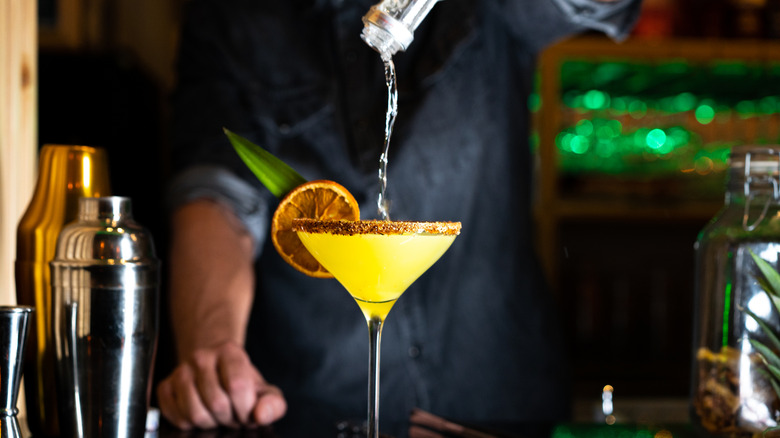
If you don't drink very often, or if you are trying one of the new swanky cocktails on an upscale menu, you might not know what to expect in terms of a drink's strength. Some alcoholic beverages hit you lightly, while the effects of others arrive like a city bus at full speed. This distinction often determines whether you place the order or not. As the one crafting your drink, it only makes sense that the bartender would be your go-to authority on the subject.
However, it seems that you may want to trust your instincts on this one over the reassurances of the bartender. Matt Sinagoga shares that when he heard a bartender tell a customer that a Long Island iced tea wasn't a strong drink, it was one of the most absurd lies he's ever witnessed. "If you've ever had a properly poured Long Island, you know it hits like a freight train," he says. "Telling someone that is just asking for chaos."
In reality, the strength of a drink depends on several factors. If you are truly concerned, you can check its ABV (alcohol by volume) on the menu. If not present, there are estimate calculators available online from organizations such as the National Institute on Alcohol Abuse and Alcoholism. With a standard drink being considered 0.6 ounces in the U.S., it might surprise you to learn how many standard drinks are in your cocktail.