

The 14 Best Flavonoid-Rich Foods To Add To Your Shopping List

It was a Hungarian scientist named Dr. Albert Szent-Györgyi who first discovered flavonoids in 1938. Initially, he called these phytonutrients (natural chemicals that protect plants) vitamin P. The word "flavonoid" itself is an umbrella term for what's literally thousands of different chemicals, which can be broken down into numerous subclasses and categories. And just like how flavonoids can fortify plant life, they can also infuse the fruit and vegetables derived from these plants, which in turn can offer benefits to those who consume them.
What kind of benefits are we talking about? Scientific analysis has shown that eating a lot of flavonoids may reduce the risk of diabetes, heart disease, and even some cancers. The good news is that a lot of readily available grocery store items are packed with flavonoids. For the purpose of this article, we looked at foods and drinks that are rich in the following different flavonoid subclasses: anthocyanins, flavanones, flavones, flavonols, and flavan-3-ols. Each of these subclasses consists of a slew of compounds that can really drive up an article's word count, but might be too didactic to mention here (there's no shortage of literature on the internet if you are interested in the chemical minutiae).
For now, though, we'll try to simplify things as much as possible when listing the 14 best flavonoid-rich foods to add to your shopping list. After all, is it easier to ask someone at your grocery store for oranges or hesperetin? Celery or luteolin? The bottom line, these items will do a body good.
Blueberries
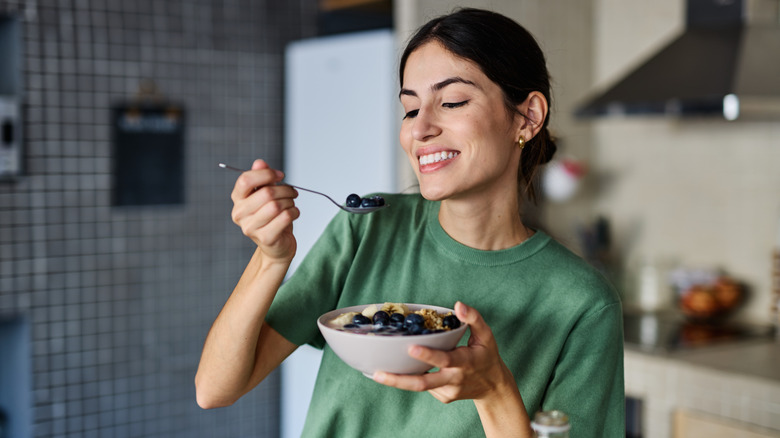
Flavonoids, along with their health benefits, also provide the defining color for many different foods. Anthocyanins are a subclass of flavonoids that color purple, red, and blue fruit (which probably won't ever stem the debate over the existence, or lack thereof, of truly blue natural foods).
There are a number of mistakes one can make when buying blueberries — from buying fresh ones out of season to thinking the bigger the berry, the better — but adding the diminutive fruit to your shopping list is a great way to deliver flavonoids into your and your family's diet (especially when it comes to the little ones, for whom blueberries are a commonly enjoyed snack).
Other berries rich in anthocyanins are strawberries, blackberries, and raspberries. But none seem to add up to the amount that blueberries contain: 163 milligrams of the stuff per 100 grams, as compared to, say, raspberries, which only have about 38 milligrams per 100 grams by comparison. Blueberries also go cross-category, by providing 51 milligrams of another flavonoid compound, flavan-3-ol. Whether you're enjoying them as is, combining them with yogurt or in a grain bowl, or just flicking them at your annoying little brother, blueberries should be in your grocery bag.
Bananas
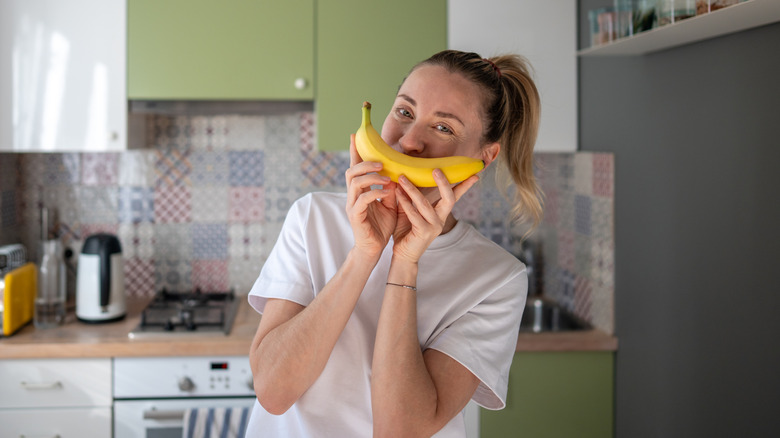
Bananas, with yellow skin and off-white flesh, are another good source of the flavonoid anthocyanin, despite not being red, blue, or purple. Sure, they don't hold up to blueberries in this regard, at least not pound-for-pound, but they are still a worthy contender.
Bananas are one of the leading sources of the U.S. population's total consumption of anthocyanins – making up more than 20%, second only to blueberries at over 30%. This is just one of a number of nutritional advantages offered by bananas, with their high levels of potassium and vitamin C helping to combat digestive issues and boost the immune system.
Now, if you're eating your bananas like Elvis Presley did, fried in a sandwich with peanut butter and bacon, you're probably canceling out any of the fruit's health benefits. The same can even be said for classic banana bread. But, enjoying bananas solo or as part of a healthful medley can go a long way in supporting your overall nutrition.
Strawberries
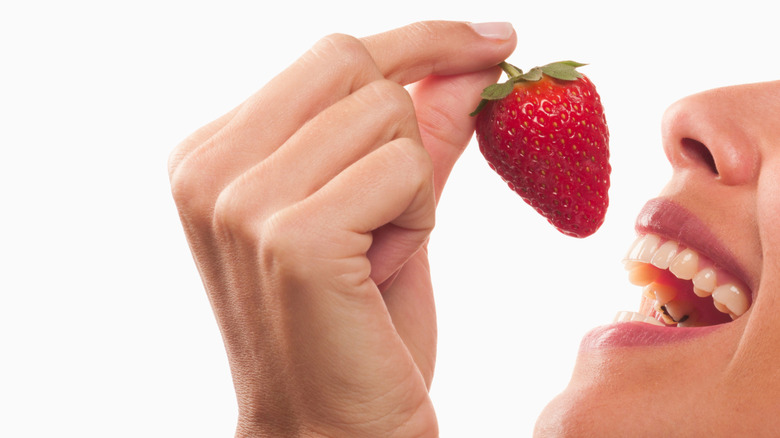
We mentioned some of the red, blue, and purple (okay, just red and purple) berries that are packed with the flavonoids known as anthocyanins. And when you think of a red fruit, one of the first that comes to mind is probably the mighty strawberry. The strawberry has a lot going for it. Its low-glycemic level means that it has little negative effect on blood sugar, and the antioxidants found in strawberries (known as polyphenols) are plentiful and make it a beneficial berry to the body.
Of course, it might be either fair or pedantic to point out what many people already know: a strawberry isn't technically a berry. It's actually part of the rose family, more of a flower product than a fruit. Either way, when you bite into a delicious, juicy, red strawberry, you're getting, among other things, lots of flavonoids — to the tune of almost 34 milligrams of anthocyanins and 5 milligrams of flavan-3-ols per 100 grams. Although not enormous numbers on their own, strawberries are responsible for about 14% of the American population's consumption of anthocyanins.
Cherries

Here we finally have an anthocyanin bomb that can somewhat rival the blueberry in its flavonoidal robustness. Another famously red fruit, the cherry is a flavonoid-rich food that can really help neutralize those free radicals in your body. For those who don't know, free radicals are unstable, cell-damaging molecules that can lead to all sorts of problems in the bod, both big and small.
The antioxidants rich in flavonoids can help combat free radicals. As far as the specific anthocyanin count for cherries, we're talking 80 milligrams per 100 grams. Although no other foods are really sniffing blueberries in this category, cherries are one of the fruits that get closest to a whiff.
Adding cherries to your shopping list might bring a groan. After all, the pitted ones are the best, with one downside: they're pitted. Good thing there's a great chopstick hack for pitting cherries that will make the challenge of full-on cherry indulgence seem much less imposing.
Pears
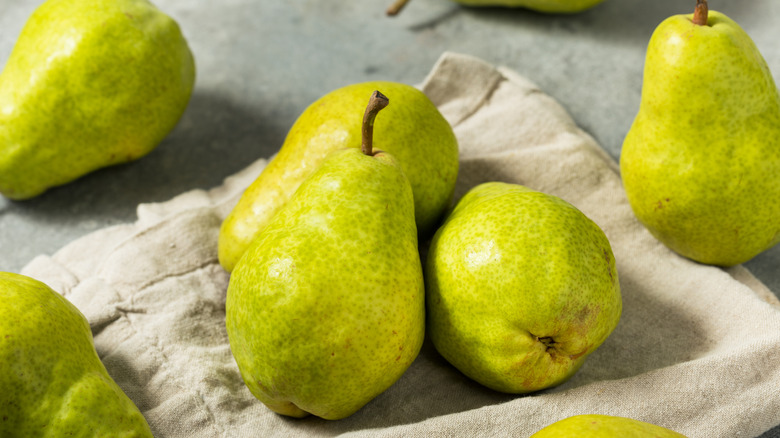
Sure, they're great for a still life, but pears are not always at the top of people's shopping lists (the vast majority of whom are not using their time to paint still lives). They fall well behind the popularity of, say, apples and oranges when it comes to mainstream America's fruit preferences, and often have an acquired taste and texture. But pears are not just nutritious because of their prebiotic properties; they also offer a double helping of flavonoids.
Pears are one of these foods, like blueberries, imbued with flavonoids from different categories. Their anthocyanin count is about 12 milligrams per 100 grams, while their flavan-3-ol count is over 6 milligrams. Pears are also rich in catechins, a flavonoid commonly found in tea, with potent antioxidant and anti-inflammatory properties.
Although canned pears don't offer the same health benefits that fresh pears do, since much of the fiber and antioxidant properties are in the skin, cooked pears can still be nutritious, like when they're stewed or poached.
Black tea
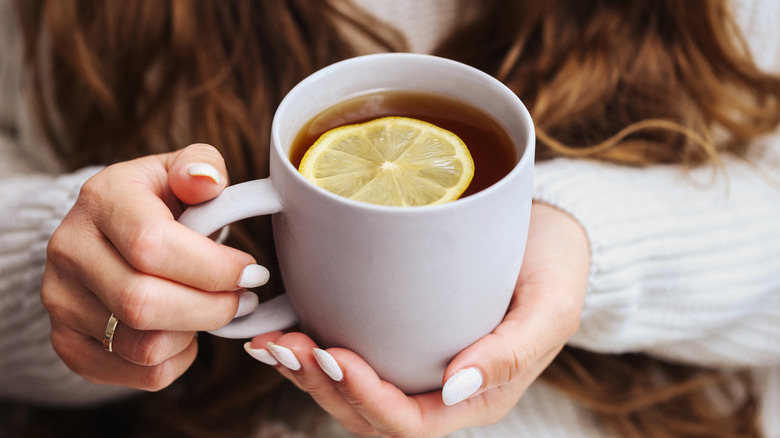
Speaking of catechins, there are few food items more potent in this nutrient than tea. Black tea (black because the leaves are more exposed to oxygen) is the common, almost default tea that folks in the Western hemisphere are used to — think Earl Grey or English Breakfast.
Regular brewed black tea contains over 115 milligrams of flavan-3-ols per 100 grams, while decaffeinated black tea contains over 53 milligrams for the same serving size. Regular black tea also contains almost 4 milligrams of flavonols, with the decaf option offering 4.5 milligrams (and black tea does have some of the highest levels of caffeine for any tea).
When breaking down that latter number, it shows that black tea makes up an incredible 32% of the total U.S. population's flavonol intake. So, even if you're a coffee person, you might want to consider adding some black tea to your shopping list.
Beer

Before you go around thinking beer is actually healthy for you, which would probably be one of the three genie wishes far too many of us would use, let's take a beat. Sure, okay, beer can be a solid source of things like magnesium, potassium, and calcium. But as soon as you cross that strongly recommended threshold for beer (two drinks per day for men, one for women), you pretty much immediately go from potential health benefits to horribly unhealthy, putting yourself at risk for all kinds of afflictions (hey, don't fling a beer bottle at the messenger).
Now, back to the good news and, oh, yes, it is very much flavonoid-based, party people. Beer, like black tea, is a member of team flavan-3-ol. Although beer doesn't come near the output of black tea (only about 2.5 total milligrams per 100 grams), the fact that it offers any kind of return in this capacity is great. So, next time you're either stocking up for a bash or just want to unwind at home, maybe pass on the booze and stick with suds — you know, for the flavonoids.
Oranges
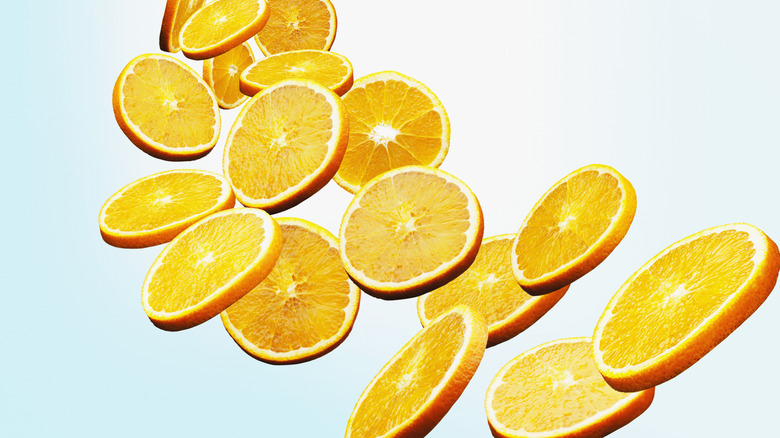
Now we're moving onto a new group of flavonoids called flavanones. These are the ones often found in citrus foods. And, although these are the ingredients that cause the bitter taste you get in peels and some citrus juices, they can also aid in lowering cholesterol and inflammation.
Oranges, that most common of citrus fruits (although there are plenty of other foods with more vitamin C), are a bonanza of flavonoids and flavanones. Raw oranges have almost 43 milligrams per 100-gram serving, which accounts for more than half of the population's flavanone intake. Not only that, but orange juice itself also packs a wallop, with almost 30 milligrams per 100-gram serving for frozen concentrate, and almost 14 milligrams for raw juice. Oranges even contain a little bit of another flavonoid compound — flavone — to the tune of 1.14 milligrams per 100 grams.
Along with the good things oranges can do, like boost immunity, provide fiber, and help with absorbing iron, you're getting the substantial antioxidant hit of the flavonoids teeming in the fruit. Grab some next time you're in the produce section. Seriously, do it. This article is watching.
Grapefruit juice
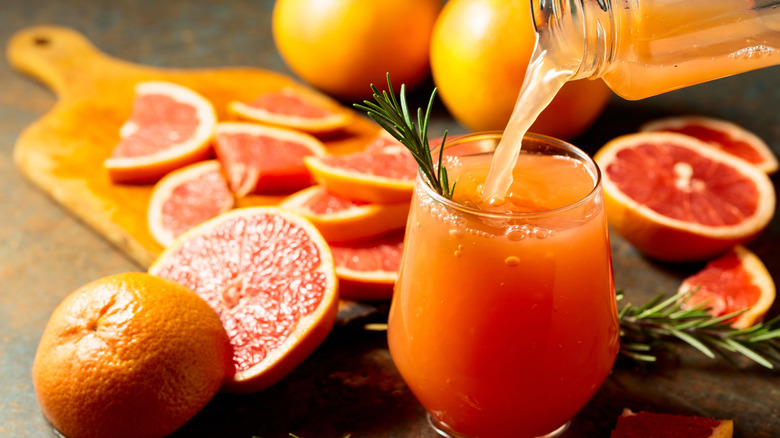
There are very few things more annoying than buying a grapefruit thinking it's either pink or red, only to find out when you get home that it's actually the opposite. Not saying that's happened to this writer on more than one occasion, causing a disproportionate level of anger over a fruit. We're just not not saying that. Regardless of personal shopping gripes, grapefruits — either pink or red — are a fantastic source of flavonoids.
And, like the orange, it's the citrus-friendly flavanone compounds that are populating the grapefruit. And where that's most prominent is in the juice. Grapefruit juice that's frozen from concentrate (concentrate meaning all of its natural waters have been removed, making it more syrupy) gives you 31 milligrams of flavanone per 100 grams. Even canned grapefruit juice, not from concentrate, still has 19 milligrams per serving. We're not saying go off and have Martha Stewart's favorite grapefruit-based cocktail every day of the week, but buying some grapefruit juice will make your home more flavonoid-abundant.
Parsley
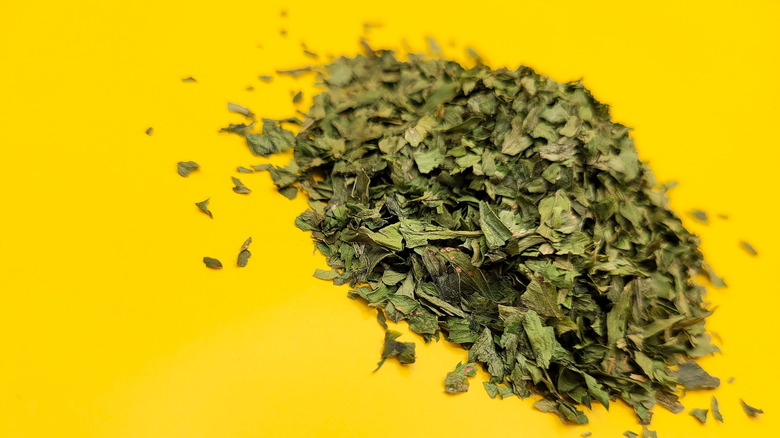
For many people, the difference between fresh parsley and dried parsley can be akin to the difference between LeBron James and a cardboard cutout of LeBron James. Each does serve its own purpose; however, fresh parsley works better as a garnish or a late addition to a dish, while dried parsley works more as an ingredient for longer simmering.
There is one area where dried parsley wins out over fresh parsley, however, and it's in the flavonoid department. Parsley is very high in flavones, in particular. The dried variation of the herb, in fact, has a stunning amount of the flavonoid in its makeup: 13,525 milligrams per 100 grams, in fact. That truly dwarfs any other entry on this list when it comes to pure flavonoid numbers per 100 grams.
Even raw parsley is a flavone goliath (though nowhere near its dried-out cousin) with 227 milligrams per 100 grams. So, whether you're trying to replace cilantro in a recipe because it tastes like soap to you, or just want more flavonoids in your life, go big. Go parsley.
Peppers
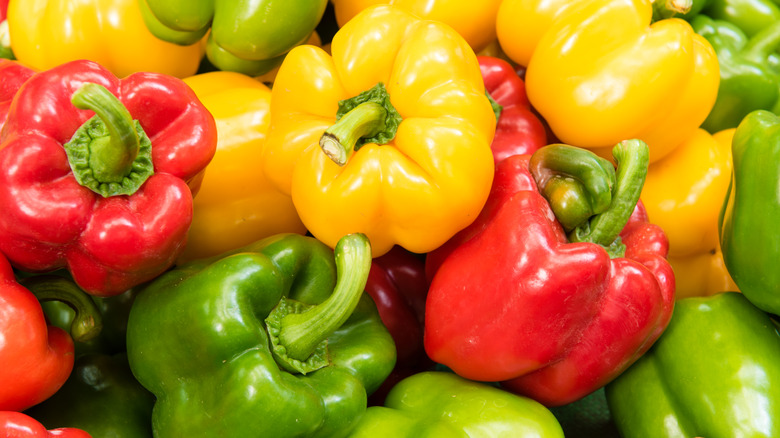
Parsley, for all its flavonoid robustness, is not hogging up all the flavones in the world. There is another edible item that can give a healthy dose of the compound, and it's a food that's used in everything from salads to sandwiches, crunchy tacos to crudités: peppers.
Whether it's cherry peppers, cubanelles, hot chili peppers, pimentos, or some kind of bell pepper, you're getting a nice hit of flavones: nearly 5 milligrams per 100 grams for sweet peppers, and over 5 milligrams per 100 grams for hot peppers. And when you factor in the sheer amount of peppers that can be either incorporated into recipes or general snacking habits, this can be a shopping list item that will continually supply you with the nutritious compounds.
Add to this that bell peppers are a great source of vitamin C (one medium-sized red bell pepper can give you close to 170% of the daily recommended value), this should be a no-brainer nab in the produce section.
Celery
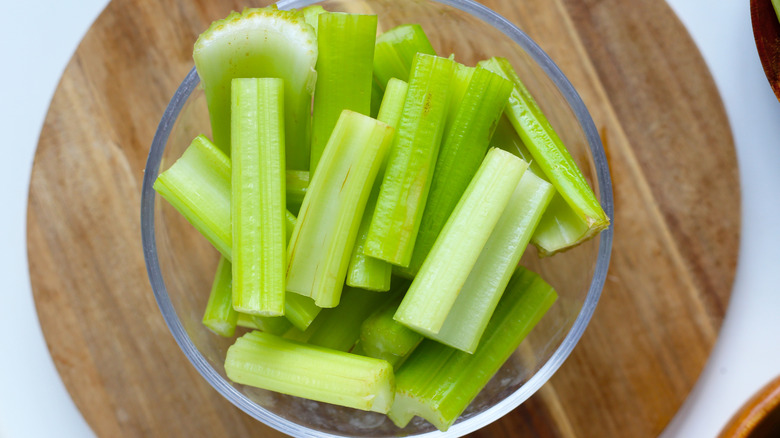
Celery. Is there a more exciting word in the English language? (Don't answer that.) The reason celery makes this list is because of relativity. Not as in Einstein's theory of, but as in the fact that celery offers any nutritional return for what it is. And what it is, is virtually nothing.
That's not an exaggeration — celery is 95% water. A single stalk of celery contains a comically paltry amount of calories: around 6. That's probably fewer calories than if you swallowed a fly. (Although the myth that chewing celery actually burns calories isn't true.)
With all that said, celery still somehow offers around 3 milligrams of total flavones per 100 grams, making up roughly 6% of the entire U.S. population's flavone consumption. That's pretty impressive. Throw it in your reusable shopping tote, make some ants on a log, and enjoy the flavonoid rush of celery. Can you handle it?
Onions
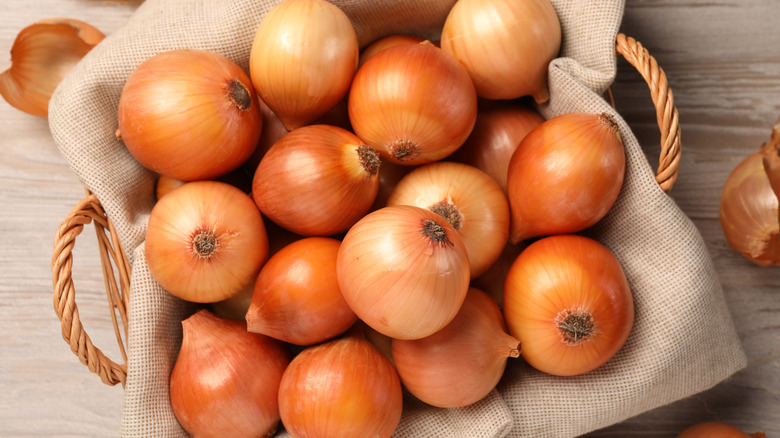
Flavonols are a heavily studied group of flavonoids. They include compounds such as myricetin, fisetin, and quercetin. Household names — if your house were a research laboratory. Flavonols are chock-full of health benefits, and many produce staples are jam-packed with them. One example is the onion.
The humble onion is queen of the flavonols. A raw onion has 27 milligrams per 100-gram serving. Even boiled and drained onions still contain over 24 milligrams per serving. So, no matter how you slice it (or mince it, or julienne it), onions have got a whole store of the good stuff.
The onion far tops the flavonol content of foods like tomatoes, iceberg lettuce, and apples. All onions are healthy, but the red onion (or purple onion, if you prefer to call it that) seems to be the best of the best, being absolutely crammed with flavonoids like quercetin.
Apples
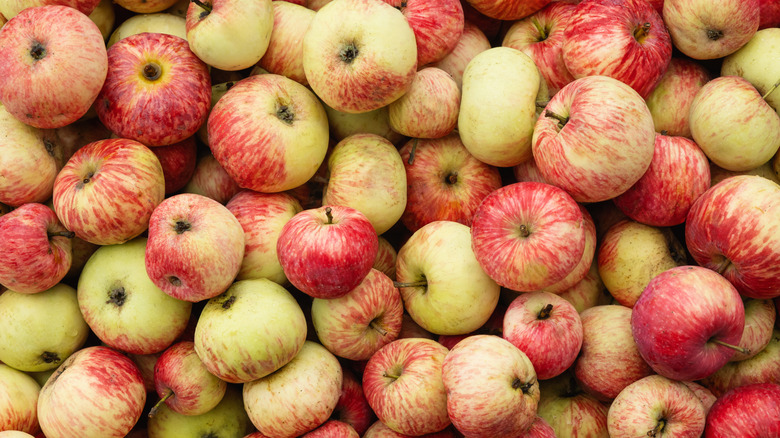
There were once more than 17,000 varieties of apples in North America. Industrialization has whittled that down to around 4,500 these days. Still, it means you could have a different variety of apple every day for about 11 years without repeating one. And if you did, you would be getting a daily dose of flavonoids as a bonus to the sweet, juicy crunch.
Apples are one of the foods that cross flavonoid categories, containing no less than three different subgroups: flavone, flavanol, and flavan-3-ol. For that last group, raw apples with the skin have 8 milligrams per 100 grams. For flavones, you'll get just half a milligram per 100-gram serving. And for flavonols, we're looking at almost 6 milligrams.
Even apple juice will get you the flavonoids you didn't know you needed. Bottled, unsweetened juice sports almost 6 milligrams of flavan-3-ol per 100 grams. Apples might feel like a quintessentially American fruit, but anybody from anywhere who eats apples regularly is making a great move for their health.