

The Best Time Of Year To Buy Fresh Cabbage
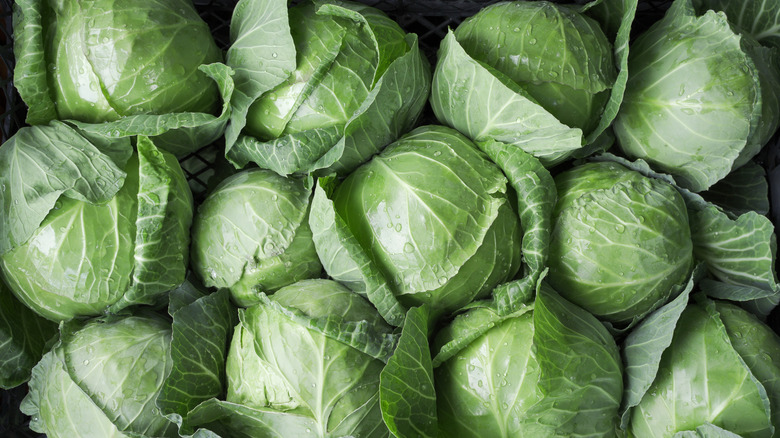
Cabbage is one of the most consumed vegetables in the world, and for good reason. Whether you prefer it cooked into hearty stews or chopped into refreshing coleslaw (which is not the same as slaw), cabbage is a year-round staple for home chefs across the globe. However, like most produce items, the versatile vegetable is best enjoyed in peak season. Luckily for cabbage lovers, in contrast to famously fleeting fresh produce such as strawberries and ramps, the cruciferous veggie's season is impressively long. In fact, it's actually more like three seasons – cabbage is typically best enjoyed from fall through spring, or September through May, in most parts of the United States.
Cabbage and most of its cruciferous cousins are cool-weather crops, meaning they grow best at temperatures below 75 degrees Fahrenheit. The hardy brassica stands up fairly well to freezing temperatures, but balmy summer weather stresses the plants and can cause growth to slow or halt. As such, fresh cabbage tends to thrive in the chillier months, which is perhaps part of why so many people eat cabbage on New Year's Day.
What happens if you buy fresh cabbage out of season?
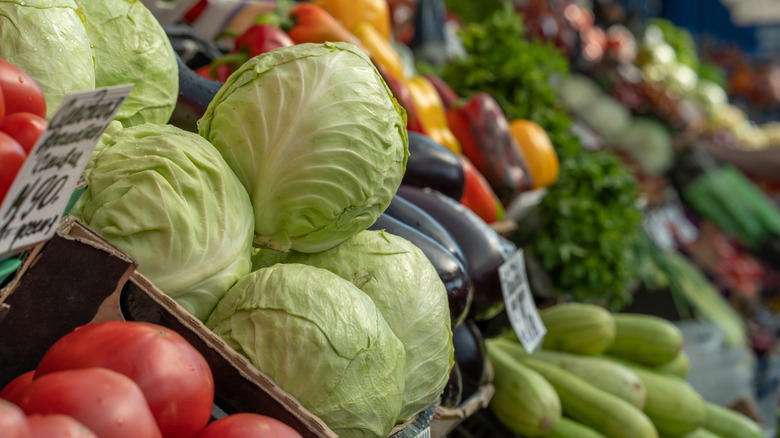
It's generally best to purchase fresh cabbage from fall through spring, but that doesn't mean you can't enjoy tangy Carolina coleslaw at a summer cookout. It's easy to find the cruciferous vegetable in grocery stores year-round, and unlike the fruits and veggies you should avoid when they're out of season, there's not typically a dramatic difference in the quality and price of cabbage during the hot summer months. For one thing, cabbage has an incredibly long shelf life – whole heads can easily last well over a month when stored properly – so you could still be enjoying "in season" cabbage well into July. Cost-wise, cabbage is consistently one of the cheapest vegetables in the supermarket, so a difference of a few cents per pound is unlikely to make or break your produce budget.
Heads of summer cabbage may be a bit larger and have less tightly packed leaves than winter cabbage, and may have a slightly shorter shelf life. Perhaps the most significant difference is that cabbages grown in cooler weather tend to develop a sweeter flavor, which many chefs and eaters prefer. Whether you're whipping it into meatless veggie steaks or hearty French onion soup, cabbage is a cheap, nutritious, and tasty produce powerhouse, particularly from fall to spring. If you're looking for more ways to perfect your cabbage game, make sure to avoid these 11 mistakes people make when cooking with cabbage.