

11 Mistakes People Make When Cooking Cabbage
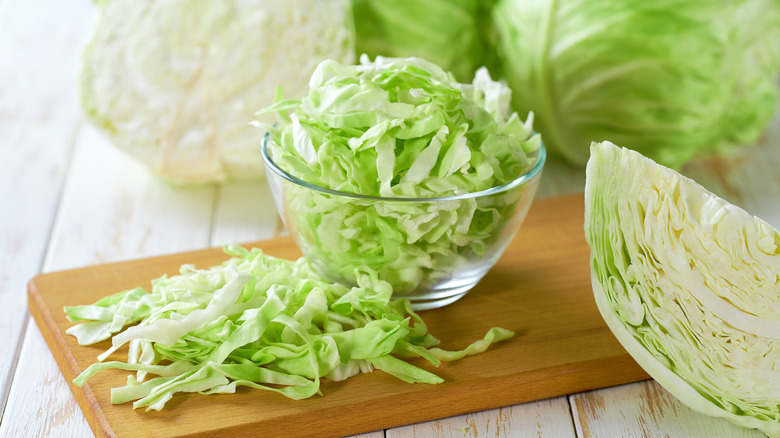
Is there any vegetable as unjustly maligned as the humble cabbage? Okay, maybe Brussels sprouts do give cabbage a run for its money, but at least Brussels have experienced a resurgence in popularity as of late, as restaurants and home cooks alike have caught on to the fact that these delicious morsels don't have to be boiled and can, in fact, be roasted or fried to perfection. Cabbage, meanwhile, still by and large has a reputation as a stinky food that's, again, relegated to boiling or, at best, coleslaw.
However, cabbage is so much more than that. Roasted, it becomes a succulent side dish or even a full meal all on its own. Paired with the right dressings, it transforms into a salad addition or topping that's far from your average, mayo-laden coleslaw. Fermented, it's a tangy, delicious treat that's good for your gut.
So, yes, if you're not using cabbage in your kitchen more often, you're missing out. That said, if you aren't careful, your cabbage may not turn out quite so impressive. From picking the wrong cabbage at the grocery store to not picking the right cooking method to storing it incorrectly and letting it go bad before its time, these are some of the top mistakes that people make when cooking cabbage, and how to avoid them.
Limiting yourself to boiled cabbage
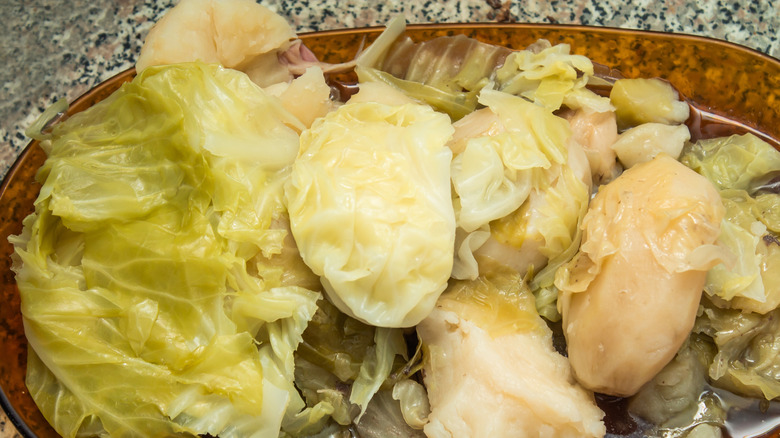
Let's start with the biggest mistake of all: limiting yourself to just boiled cabbage. Sure, boiled cabbage has its place; for example, if you're copying the easy, old-school way that Lidia Bastianich cooks cabbage and potatoes, you'll shred and boil the cabbage alongside your potatoes until they're cooked, before then sautéing the winning combo in garlic, olive oil, and butter. However, you'll notice that even this recipe requires you to sauté the cabbage after boiling, for extra flavor. If you literally just boil your cabbage and then serve it plain, you're going to be in for a bland, potentially slimy time.
So, explore the alternative great ways to cook your cabbage. Beyond sautéing, roasting is a favorite cooking method for cabbage, just as it is for Brussels sprouts. It makes sense that the two vegetables have so many similarities — polarizing flavor profiles, myriad cooking pitfalls, a strong smell if you're not careful, etc. — when you realize that Brussels sprouts are a member of the cabbage family.
All you have to do is crank up the oven to a high heat, cut the head of cabbage into wedges, brush them with the fat and seasonings of your choice, and then let them get all crispy and caramelized. Or, try braising your cabbage; it's one of the best ways to cook truly flavorful cabbage, while also being one of the easiest.
Choosing the wrong cabbage
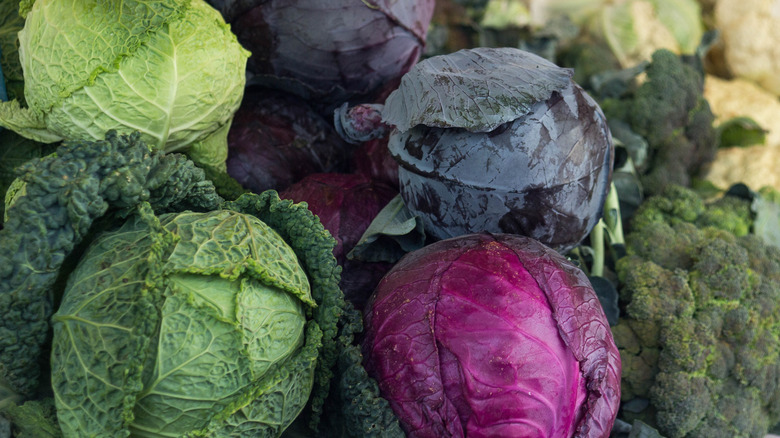
When you think "cabbage," you probably think of the typical green head that's readily available in any grocery store. Maybe you think of the purple cabbage you might use for slaw. However, there are many other types of cabbage and picking the right variety for your intended use is critical.
For example, green cabbage (which is sometimes also called cannonball cabbage) and red/purple cabbage are definitely ideal for slaw, and the former is often used for sauerkraut and in traditional dishes like corned beef and cabbage, or cabbage rolls. However, if you're making kimchi or looking for a cabbage to stuff into steamed buns or spring rolls, you might look to napa cabbage. Savoy cabbage offers loose, tender leaves (which means it's not going to last as long in the crisper drawer as that head of green cabbage that you purchased two weeks ago), but this quality makes it an excellent choice for a quick sauté.
January king cabbage is less well known and has a slightly purple hue, but it's not the same thing as red or purple cabbage; it's a great pick for roasting. Bok choy, meanwhile, is excellent for stir-frying or adding to soups or broader dishes, like rice or curry. Lastly, black Italian cabbage can be swapped out for kale in many dishes.
Not salting and draining the cabbage
If you're making a cabbage-based dish that requires a bit of crunch, then this is one mistake you absolutely don't want to make. Just like salting and draining eggplant is often considered necessary for drawing out moisture and preventing a poor texture and a bitter flavor in your final dish, so is salting and draining cabbage key to achieving a just-crunchy-enough texture and a superior taste.
Let's say that you're making coleslaw. If you just chop your cabbage, take it to your mandoline or run it through the food processor, and then toss it with your mayonnaise-based dressing, the water in the cabbage will leak out into the dressing, making it watery. Meanwhile, the cabbage itself may be too tough. However, if you salt the cabbage and let it sit for several minutes (literally, it can take as little as five minutes, though some may let their cabbage sit for up to a few hours), then rinse and press it between some paper towels to remove moisture, you'll find that the excess liquid is gone and it doesn't end up in your dressing. This means that the cabbage is just a tad tenderer. Use approximately ½ teaspoon of salt for every cup of cabbage you're using.
Overfilling your cooking receptacle
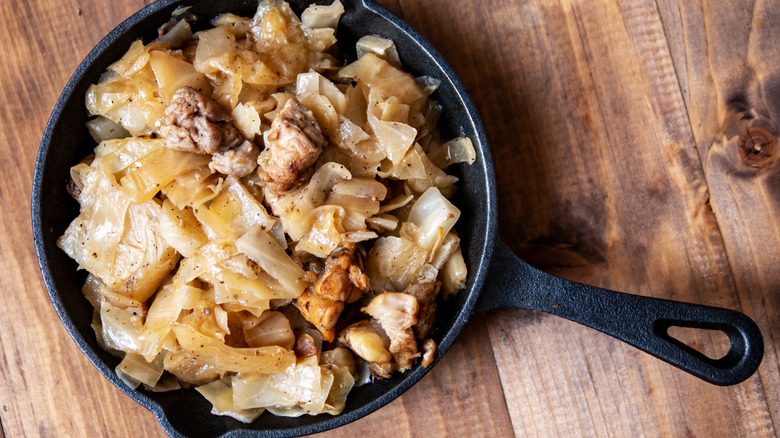
If you're frying or sautéing cabbage, there's one huge pitfall that can really ruin your end dish: overfilling your cooking receptacle. You think it's not going to be any big deal. You're just trying to get that whole head of chopped and sliced cabbage into your frying pan so it's all done at the same time. Not so fast, though — it's a common mistake that turns fried cabbage into a mushy mess. When you overfill your cooking receptacle, the cabbage doesn't have enough room to truly fry, but because it's being heated nonetheless, the cabbage begins to emit water and steam. This mans that you end up with not fried cabbage, but steamed, overly soft cabbage.
It's the same thing that happens when you're cooking anything and the pan is overcrowded, and it comes down to simple science. Anytime you're frying or sautéing an ingredient, you're likely aiming for a golden, slightly crispy exterior. That color and texture come from the Maillard reaction, a chemical reaction that occurs between sugar and amino acids, resulting in a characteristic flavor. The reaction occurs at 280 to 330 degrees Fahrenheit. However, if your pan is overcrowded and the food is leaching water, and the water doesn't have enough room to evaporate, the water will stick around, keeping the pan's temperature to a cool 212 degrees Fahrenheit — which means no Maillard reaction, no golden color, no flavor, no texture. As such, leave your cabbage plenty of room. Use a big pan or cook in batches.
Overcooking cabbage
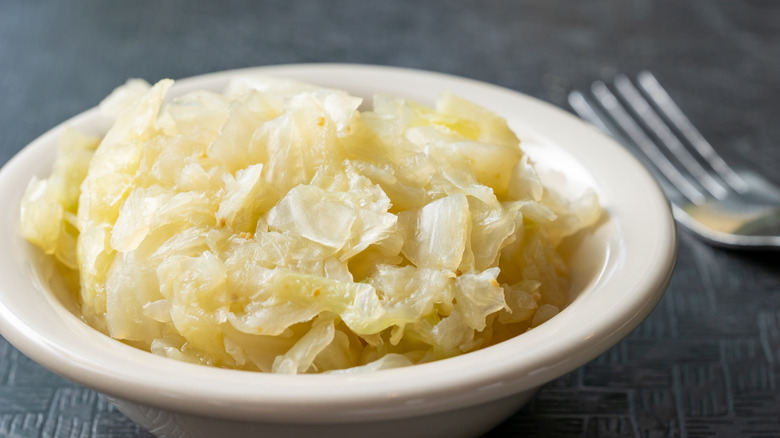
If your parents or grandparents cooked boiled cabbage, you may have childhood memories of homes filled with a distinct stench, and plates of slimy, unappetizing leaves. We think of prior generations as often cooking cabbage for a very long time — but the truth is, you really don't need to, and the longer that cabbage is cooked, the more it stinks and the slimier it gets.
In fact, the molecules that are responsible for that characteristic boiling cabbage odor double between the fifth and seventh minute of cooking. So, the next time you make cabbage, keep in mind that, if you're boiling it, it can be done in as little as five minutes. And don't fall for the "trick" of adding baking soda to your boiled cabbage to lessen the smell and retain the color over a longer cooking time; it'll leach the vitamins from the cabbage.
But let's assume for a moment that you're reading this too late and you have some seriously overcooked cabbage on your hands. Is there anything you can do to salvage it? Blend it with some mashed potatoes and mashed carrots. If you don't prefer to eat this combination as a three-vegetable mash, add in some eggs and breadcrumbs, form it all into patties, and fry them. You can also blend the overcooked cabbage down and use it as a base for soup, or combine it with mashed potatoes for a pierogi filling.
Forgetting to ferment
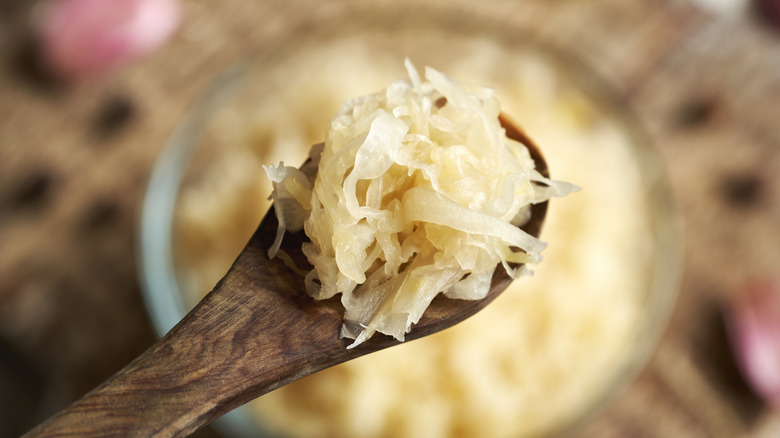
As you're boiling, roasting, or mixing up a slaw, don't forget that you can also ferment cabbage for some delicious sauerkraut or kimchi. If you've never fermented food at home, you might be intimidated by the process, but don't be — it's pretty easy.
For homemade sauerkraut, you only need cabbage, salt, and some basic equipment: two jars (one should be able to fit into the other), a weight inside that smaller jar (like marbles), and cheesecloth. Shred and massage the cabbage with salt, stuff it into your jar, and use the weighted smaller jar to keep the cabbage pressed down below the water it will begin to emit. Let it sit for anywhere from three to 10 days. Keeping the cabbage submerged is key, but it's ultimately a difficult process to mess up (though you'll know it's off if it's turned a weird color, smells yeasty, or grows slime or mold).
Kimchi comes together via a similar process, but requires more ingredients, beyond your cabbage and salt, such as seasonings, sugar, fish sauce, and similar. All the ingredients go into a jar, taking care to keep them submerged, and then you wait, with fermentation occurring in as little as a day.
Storing cabbage incorrectly
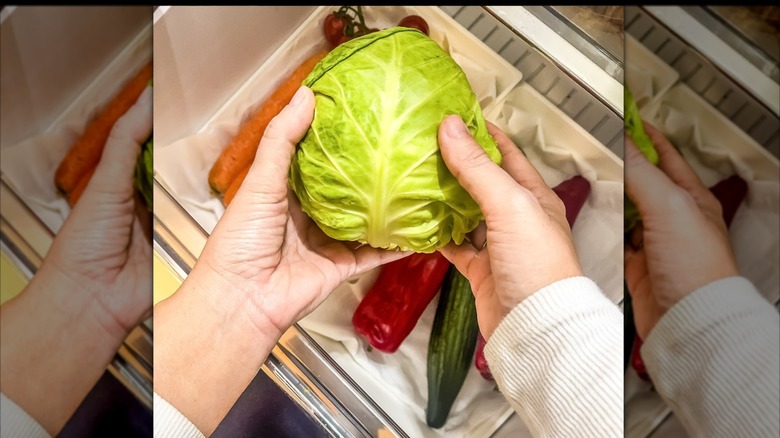
One of the primary reasons why some home cooks just love cabbage? It's one piece of produce that you can buy at the grocery store on a Monday and, on Friday, it'll still be just as good. You don't have to worry about cabbage going all slimy in your crisper drawer while your back is turned. This is a vegetable that will reliably keep. That said, you do have to take a few precautions to ensure your cabbage doesn't go bad before its time and that it retains its overall quality.
When you get it home from the store or farmers market, if your cabbage still has its outer leaves attached, don't remove them until you're actually ready to use the cabbage. That'll help keep the moisture inside. Additionally, don't wash the cabbage as soon as you get it home, either. Toss it into the fridge crisper drawer, produce bag and all, and let it hang out as is. Handle it with care, too, as any bruising not only will make the cabbage go bad faster, but it will also negatively impact the cabbage's vitamin content.
With the right TLC, that cabbage can last up to two months in your fridge. Once it's cut, however, it only lasts a few days. To store cut cabbage so it stays crunchy, use an air-tight leftover container or bag, and keep the cabbage in the coldest part of your fridge.
Not properly cleaning the cabbage
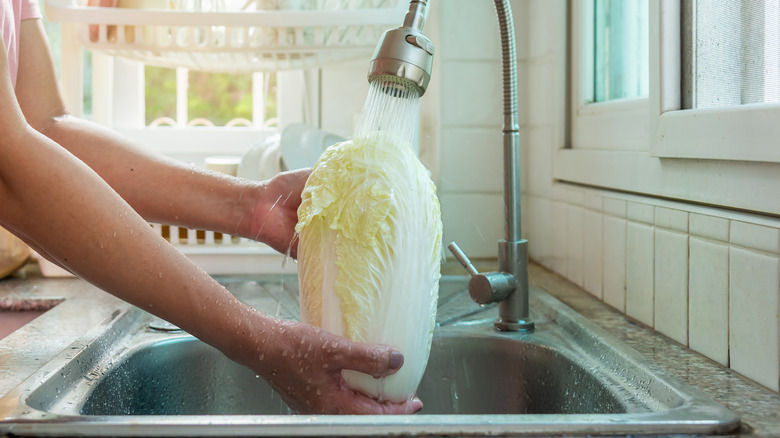
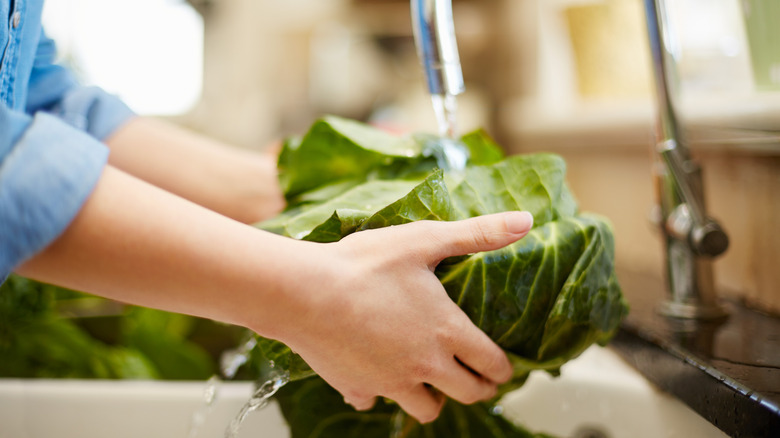
When you are ready to eat the cabbage, don't just assume that, because many varieties have all those tightly bound leaves, that its innards are completely clean and ready to use. Just like any other produce, cabbages need to be properly cleaned, and we're not talking just a light rinse. Due to those aforementioned tightly packed leaves, you'll need to take a little extra care to clean out any dirt from the fields or bugs (yes, bugs).
Remove the outer leaves that you're not going to use and toss them. Cut the cabbage into portions suitable for your use and give them a rinse. If you're coming across any signs of dirt or bugs, or if you just want to be extra thorough, you can further let the cabbage soak in cold water, with a bit of salt, for 15 minutes. Drain the cabbage in a colander and dry the pieces with paper towels, before moving on to the rest of your recipe.
Cutting the cabbage incorrectly
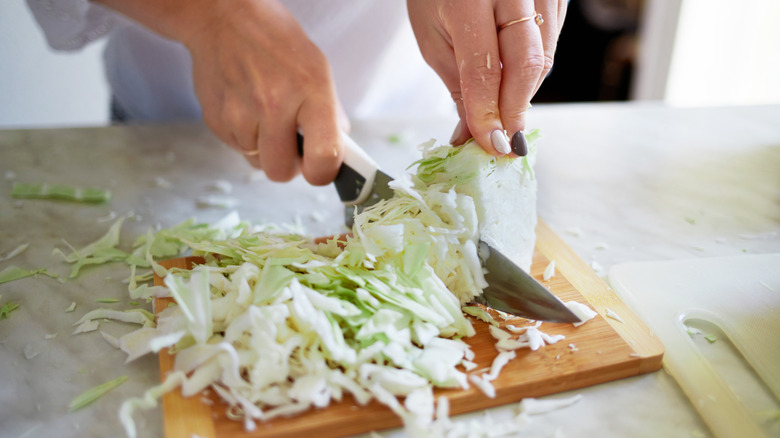
If this isn't your first time in the kitchen, you probably feel like you have, if not expert chef-level knife skills, enough know-how to get you by. You might not be able to execute a pristine julienne, but you can chop your way through a pile of veggies. However, don't become so comfortable in your knife skills that you assume you can cut any ingredient, any way, and it won't negatively impact your end dish. When it comes to cabbage, there's a proper technique.
First, you remove all of the outer leaves (and if you're following proper cabbage cleaning protocol, you will have already completed this step before moving on to chopping). Then, use a chef's knife to evenly quarter the cabbage. Make sure that you remove the core from each quarter piece. You do not want to chop the core into the rest of the cabbage, as it's tough and bitter. Your recipe may call for you to use these quarter pieces as is, but if not, continue cutting as needed from there. For safety's sake, always be sure to cut with the quartered cabbage's flat side against your cutting board — as opposed to the rounded side, which will move.
Not eating it raw
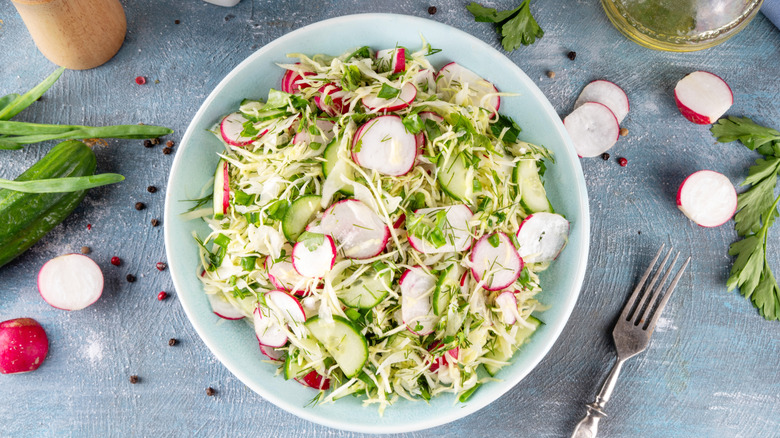
You've probably eaten the occasional cabbage-based slaw, maybe with your barbecue or atop tacos or even a chicken sandwich — but if you're not eating cabbage raw in other ways, you need to add some new recipes to your repertoire. There are many ways to use raw cabbage.
To start off simple, why not begin adding it to your salads? You can even use cabbage as your primary base, leaving out all the other greens and dressing the cabbage with a homemade vinaigrette, herbs, and seasonings — though if you want to add a bolder dressing or some complementary crunchy ingredients, we wouldn't blame you either. Add cabbage to your spread of raw vegetables at your next gathering. Some even use raw cabbage in their smoothies, particularly red cabbage, in part thanks to its affordability compared to some more traditional smoothie ingredients.
Just note that some individuals who enjoy eating cooked cabbage may find that they're not able to tolerate raw cabbage well. They may experience digestive woes. However, eating smaller portions of raw cabbage over time, or opting for fermented cabbage (which is technically still raw), may be easier on the body.
Freezing it incorrectly
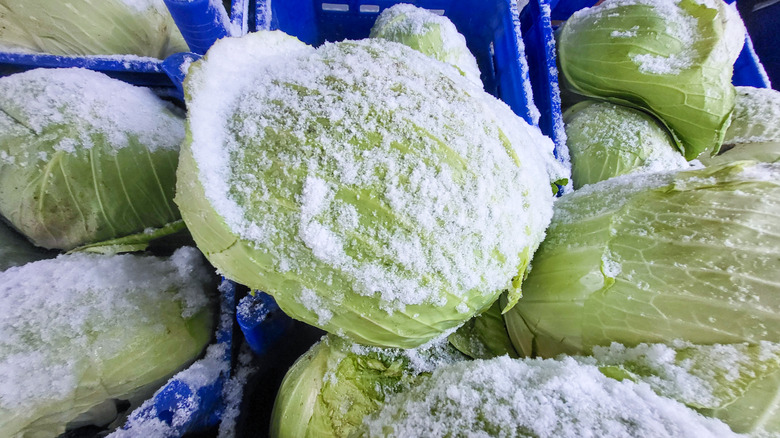
While cabbage will certainly stay good for a long time in the fridge, if you want to extend its shelf life even longer, you can freeze it. That said, you do have to be careful to freeze cabbage correctly.
If you're only keeping the cabbage around for two months, you don't need to take any additional steps. Freeze away (or don't; as previously mentioned, the shelf life of cabbage in the fridge can extend up to multiple months anyway). If you want to keep your cabbage for longer than two months, though, blanching is a necessity. If you don't blanch the cabbage ahead of freezing, you'll find that, when you take that cabbage out of the cold, six months later, it's a bit lackluster when it comes to texture and flavor. In general, though, frozen cabbage isn't as crispy as raw, fresh cabbage anyway, making frozen cabbage better suited to cooked dishes.
To blanch and freeze cabbage, place the cut cabbage into boiling water for 90 seconds, drain it, dry it, and portion it into your air-tight freezer bags. Any moisture that makes its way into the bag raises your risk of freezer burn, so do your best to avoid it. From there, the blanched cabbage will last for up to nine months. When you're ready to use it, thaw it overnight in the fridge.