

Andrew Zimmern's Favorite 'Cheap' Fish - And His Top Cooking Tips

We may receive a commission on purchases made from links.
There's one particular line in Andrew Zimmern's new cookbook that shows just how much seafood means to him, both in a personal and professional sense: "Hope is abundant in our waters." The Emmy and James Beard Award-winning TV personality and chef co-authored "The Blue Food Cookbook: Delicious Recipes for a Sustainable Future" with Barton Seaver to share the joy in cooking sustainable seafood, be it through shopping in-season, reading labels, or embracing new types of fish.
The book, which was created in partnership with Fed by Blue, is extensive and shows the pride Zimmern takes in his work across food equity and climate activism. But perhaps one of the most important takeaways is that sustainable seafood doesn't need to be expensive — something we wanted to explore further by learning Zimmern's top tips for saving money at the grocery store.
The Takeout caught up with Zimmern to flesh out one of his and Seaver's key pieces of advice from The Blue Food Cookbook: "Buying great quality seafood is ultimately easy, and it's available to everyone in a range of product forms, and can be found in any grocery store, specialty shop, or big box market." Here's what he had to say.
The budget-friendly fish that are 'quiet overachievers'
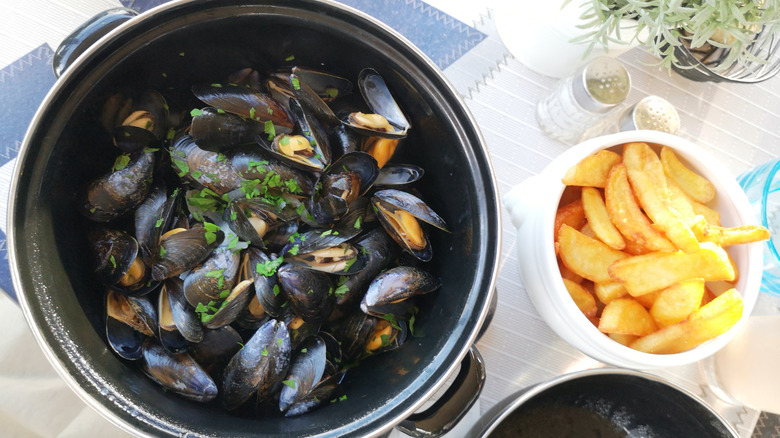
Some of the most popular fish in American grocery stores are often among the priciest on the shelves. For example, a pound of fresh, farm-raised salmon can cost as much as $16 per pound, depending on the area, while fresh, wild-caught cod can retail for over $23 per pound. However, Andrew Zimmern says that there are so many cheaper options available.
Some of his favorites include tilapia and mussels, which are typically priced at just $6 to $9 per pound, depending on the location. There are also a ton of great options to be found in the canned aisle, like sardines. "Sardines, mackerel, mussels, tilapia, and farmed trout are the quiet overachievers here," he says. "They're inexpensive, widely available, packed with omega-3s, and far more forgiving to cook than the fragile fish like sole. Bonus: most of them are also among the most sustainable choices, which means you get to feel both thrifty and virtuous."
Say yes to smelts
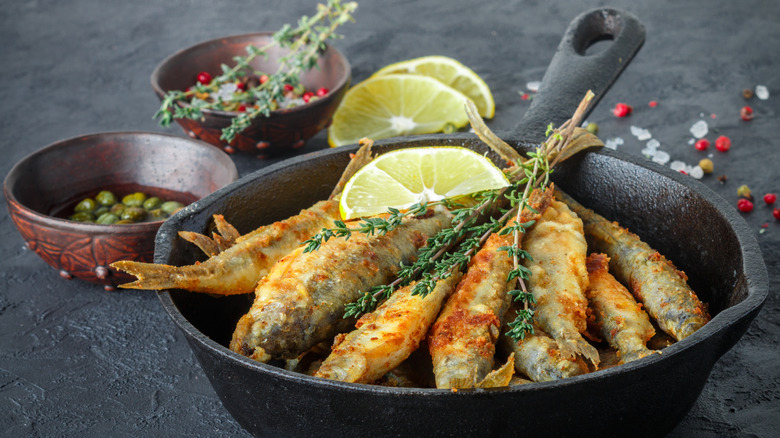
Another of Andrew Zimmern's favorite budget-friendly options is smelts. A small, freshwater fish found in both estuaries and offshore around the U.S., smelts are long and slender, with a mild, cucumber-like taste and soft, buttery texture. Because they're always served bone-in, people tend to shy away from them, but there's actually nothing to be found in their stomachs – and they taste delicious when prepared the right way.
Many people like to deep-fry smelts, but Zimmern opts to shallow-fry in a pan. He says, "Dredge them lightly in seasoned flour or rice flour, flash fry until crisp, and hit them with salt and lemon the second they leave the oil." You can find smelts for as little as $2.99 per pound, and they're in season year-round.
They're usually sold frozen and dressed, so you don't need to season them too much, but they do come fresh in the springtime. Zimmern's favorite way to enjoy them? "Eat them whole, bones and all, preferably with a cold beer and something pickled on the side." In the new book, he suggests something along the lines of a radish and apple salad with chili and herbs, but anything fresh and bright will do. You could even embrace the aromas of the smelts by making a half-sour cucumber salad.
Stock your pantry with these seafood must-haves (yes, you should buy tinned fish)
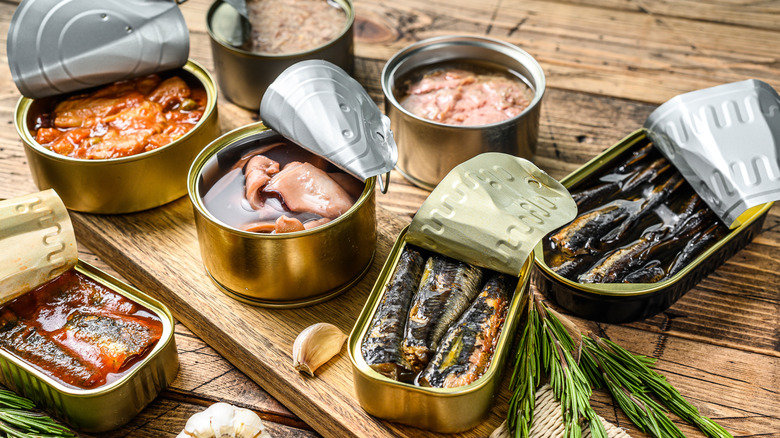
Speaking of preparation, Andrew Zimmern also has some great advice for what to keep on hand to ensure you're equipped to cook any seafood. A fat, like butter or oil, is essential, as is some form of citrus or vinegar, such as the fruity vinegar that Zimmern uses almost every day. Beyond that, you don't need to keep the pantry too stocked. Just ensure the ingredients you're using are high quality.
Zimmern says, "Good olive oil, a sharp acid like lemon or high-quality vinegar, and something briny like capers ... give you fat, brightness, and depth, which is 90% of great seafood cooking." However, there is one other pantry staple that shouldn't be overlooked: tinned fish. Zimmern keeps a range of them in his kitchen, especially during the winter, like smoked mussels, clams, and smoked trout. Again, buying different types of tinned seafood is a great way to save money, and the products are often packed with flavor.
What would Zimmern say to anyone who isn't convinced? "They're missing one of the great culinary cheat codes of the modern kitchen. High-quality tinned fish is shelf-stable, deeply flavorful, and often handled with more care than fresh product bouncing around a supply chain. If you think it's all sad tuna, you haven't tried Spanish anchovies or Portuguese sardines."
Save money by utilizing the freezer aisle
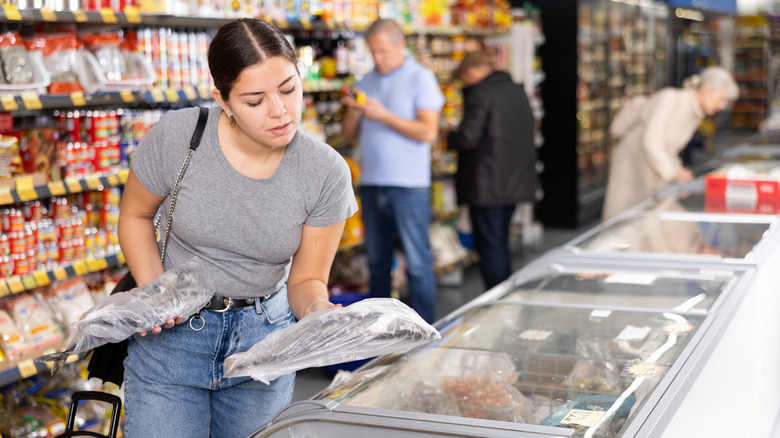
Once you're finished in the canned aisle, Andrew Zimmern recommends moving right on over to the freezers. Frozen fish not only lasts longer than fresh, but it's also much cheaper, and you might actually be getting a product that was sealed at a better time. Plus, it's easy to thaw fish from frozen.
Zimmern says, "Frozen seafood is typically processed and sealed at peak freshness, which reduces spoilage and extends shelf life dramatically. That means less waste at home and better pricing at retail because the supply chain is more efficient. You're paying for the fish, not the clock ticking on it. And it's a great convenience food, quick to thaw and can even be cooked from frozen."
Some of his favorites include scallops, salmon, and cod. He actually recommends buying most white fish fillets frozen. "In many cases, they're frozen at sea within hours of harvest, which can make them fresher than 'fresh' fish that's spent days in transit," he says. "If you thaw them properly, you're starting from a good place."
The seafood you should never buy fresh
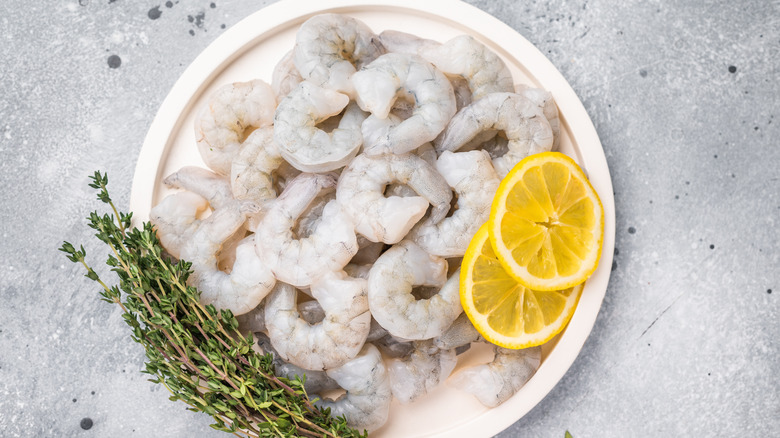
Andrew Zimmern says that shrimp is another one of the top items to buy frozen. In fact, he doesn't think you should ever buy it fresh, which is one of the best shrimp-buying tips you can receive. This is because, unless you live in an area where shrimp are sold right off the boat, the ones you're buying have probably already been frozen. Shrimp degrade quickly, so they're often flash frozen very quickly in order to preserve them. They might not be in the freezer when you see them, but that certainly doesn't mean they haven't been touched.
Zimmern says, "Frozen is often the better buy since most 'fresh' shrimp has already been frozen once and is quietly thawing in the case." The issue is that there are so many types of frozen shrimp available. White, pink, Argentinian red. Tail-on, tail-off. Raw, cooked. And then there are all the various sizes. Be sure to look at the label. Wild shrimp taste better than farmed, and shell-on provides more flavor.
He says, "Ignore the marketing spin and look for specifics: where it's from, how it was raised or caught, and whether it's been treated with preservatives like sodium tripolyphosphate. ... Shell-on, head-on if you can find it, gives you better flavor and value."
The benefits of buying fish whole
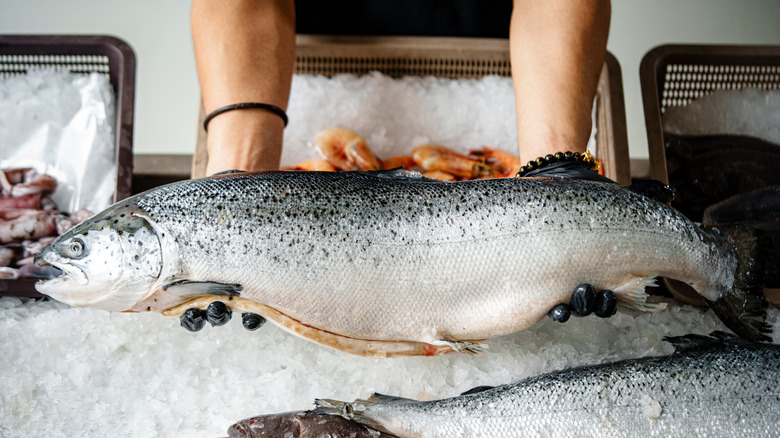
Andrew Zimmern's final money-saving tip is to skip the fillets and go straight for the whole fish if it's available. Not only does it give you more authority over your pieces, but it also prevents waste, provides a fresher experience, and puts dollars back in your wallet. And there are tons of whole fish you can serve to impress your friends.
He says, "Buy whole fish when you can and either learn to break them down or make friends with your fishmonger and they can filet them for you. Trust me, you're getting more for your money and a bonus pile of heads/bones for stock."
If you want to make a stock, turn it into an umami powerhouse with an ancient ingredient, kombu. Feel free to experiment — both with your broth and with the fish you buy in general. Zimmern says, "Lean into under-loved species that haven't been hyped into luxury pricing. Ask for the catch of the day. And cook what you buy the day you bring it home, because throwing seafood in the trash is the most expensive mistake of all."