

12 Myths About Eggs You Can Stop Believing Immediately
You might think that eggs are pretty straightforward — and aren't they? For many home cooks, they may remember eggs as being one of the very first things that they actually learned to cook. While yes, it is possible to make scrambled eggs, fried eggs, or boiled eggs that are less than perfect, as far as cooking really goes, producing any of these is relatively simple. There's not a huge amount of technique, ingredients, or even measuring strictly required.
That said, as simple as the humble egg may seem, they still present some misconceptions and even avoidable cooking safety mistakes. For example, you may think that certain types of eggs are healthier than others. You might believe that eggs may harm or help your health in certain ways. You may assume that certain egg "hacks" are the key to a pristine pile of fluffy scrambled yolks. However, you could be misled.
To get the intel on all things eggs and the misconceptions surrounding them, we spoke to a handful of experts in the field. Here's what they had to say about the top egg myths that you can stop believing right now.
Dark yellow or orange yolks mean healthier eggs
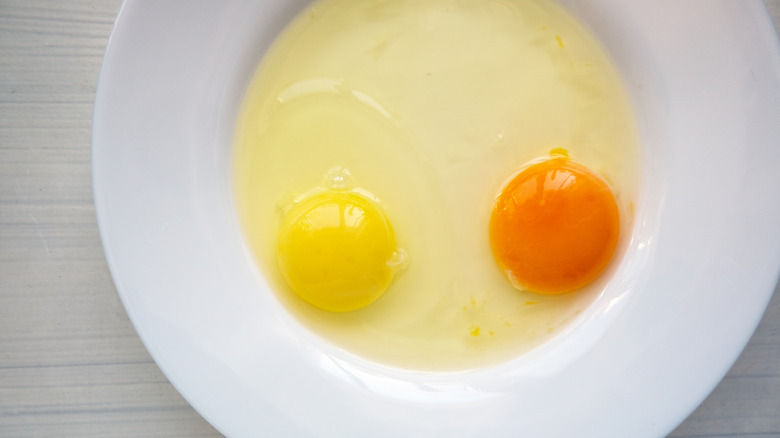
If you follow a good number of foodie influencers on social media, you've probably stumbled upon a post or two showing off some gorgeously vibrant deep yellow or orange yolks. The caption may have then gone on to credit this beautiful hue to the eggs' healthy properties, essentially saying that a dark yellow or orange yolk correlates to a fresher egg and healthier hen. However, while you could in some instances legitimately make this connection, the correlation isn't as straightforward as it seems. In this case of correlation not translating to causation, Kristy Foster, the vice president of supply chain, food safety, and quality assurance at Farmer Boys, and a farmer herself, gave us the lowdown.
"Yolk color does reflect a chicken's diet to some degree — free-range chickens eat a wider variety of foods, which can produce richer, darker yolks," she said. "However, commercial operations have caught on to the perceived value of deep-colored yolks and are now adding marigolds and other color-enhancing ingredients to feed to achieve the same effect. So a darker yolk isn't necessarily a sign of a healthier or more naturally raised egg."
The American Egg Board's Jen Houchins, PhD, RD, director of nutrition research, concurred, adding, "Hens that consume feeds rich in natural pigments called carotenoids produce deeper yellow or orange yolks. In the U.S., most yolks are yellow or yellow-orange because hens commonly eat corn, which contains carotenoids such as lutein and zeaxanthin."
You need a rooster to get eggs
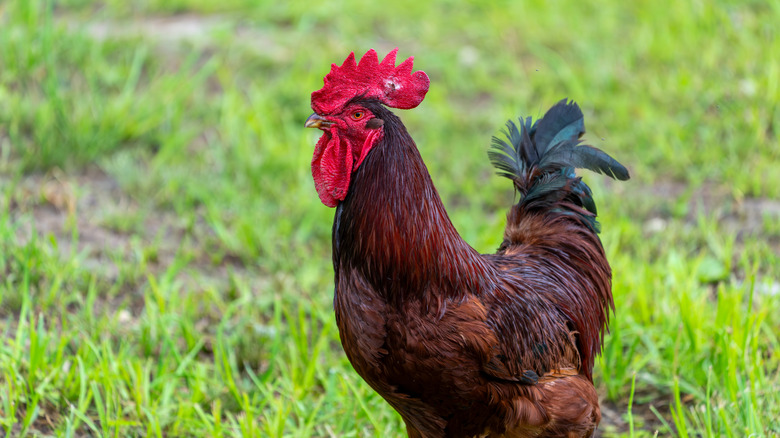
Where do eggs come from? Well, obviously, a Mommy Hen falls in love with a Daddy Rooster, and then an egg is laid ... right? Not at all. Turns out Daddy Rooster isn't as necessary to the process as he (or we, as consumers) might think. Farmer Boys' Kristy Foster told us that hens lay eggs all on their own. "No rooster required, similar to how the human reproductive cycle works," she said. "A rooster is only needed to fertilize eggs and produce baby chicks."
That said, the rooster isn't entirely without his purpose. In free-range flocks, roosters can keep an eye on the hens' safety, alerting them and the farmer if a predator creeps too close. Their presence can also ensure the hens stick around where they're supposed to, without wandering off.
Rooster or no, a hen can lay up to an egg a day, as it only takes about 24 hours to produce one. Various environmental factors, though, can influence how often a hen produces eggs. Light is a big consideration, with the longer daylight hours in the spring and summer triggering hens to begin producing eggs, and the shorter daylight hours in the winter signaling hens to pause the process. Farmers who want year-round eggs, then, have to consistently ensure their hens get the right amount of light each day.
Brown eggs come from brown chickens
Firstly, did you know that hens have earlobes? While chickens may not have ears in the same way humans do, they still obviously have them, and they come complete with their own earlobes. A chicken's ear is situated directly behind its eye, and the lobe is a more visible piece of tissue right beneath it. Why do you need to know this? Well, the earlobe color will actually often tell you what color eggs the chicken lays.
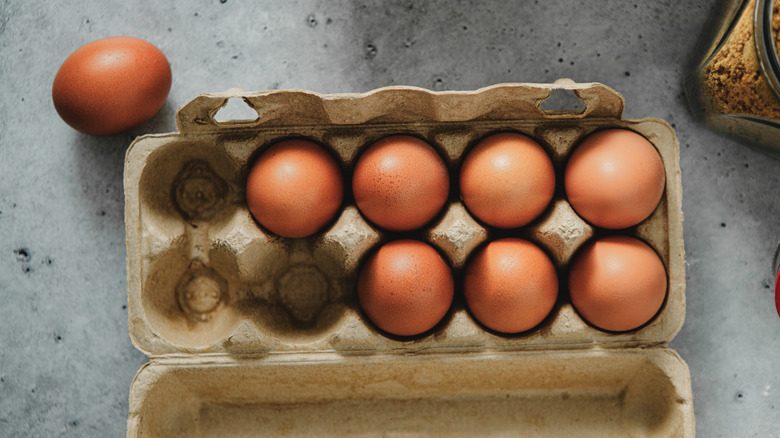
Kristy Foster explained: "The color of a chicken's earlobe is actually the best indicator of what color eggs it will lay. Hens with red earlobes tend to lay brown eggs, while those with white earlobes typically lay white eggs. It's not an absolute rule, but it holds true more often than not." So, no, brown eggs do not come from brown chickens; they come from chickens with red earlobes.
When it comes to brown eggs, additionally, don't fall for the myth that brown eggs are healthier than white eggs. Jen Houchins at the American Egg Board said, "Shell color has no impact on nutrition, flavor, quality, or cooking performance. Brown and white eggs have essentially the same nutritional value unless they are specifically labeled as nutritionally enhanced." As to why those brown eggs may sometimes cost you more at the grocery store? Houchins noted that the hens that produce brown eggs may be of a breed that is slightly larger, thus requiring more feed.
All eggs need to be refrigerated
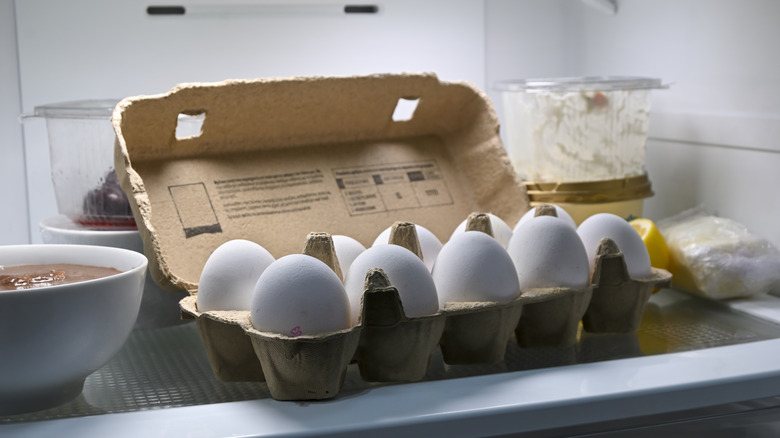
When you get your eggs home from the supermarket, you probably immediately pop them in the fridge. After all, if you don't, they'll go bad, yes? Turns out that's not always the case. While sometimes, you do need to refrigerate your eggs, other times, you might not.
According to Kristy Foster, "Eggs are laid with a natural coating called a 'bloom,' which acts as a protective barrier against pathogens. Once that bloom is washed off, as is standard practice in commercial egg processing in the U.S., refrigeration becomes necessary to keep the eggs safe."
In other words, if you're buying commercially produced eggs within the United States, you need to refrigerate them. However, if you're buying eggs in other countries, the eggs may not be sanitized before sale, so you can leave them out at room temperature without worry (this is popularly the case in Europe). Additionally, if you're buying your eggs from a small or local farm in the United States, that doesn't sanitize, wash, or pasteurize its eggs, those eggs should still have their "bloom" intact, protecting them, as Foster mentioned, and making them suitable for room temperature storage.
Cage-free and free-range eggs are the same

If you're concerned about how your animal protein consumption impacts animal welfare, then you probably go out of your way to source meat and eggs from farms that promote and follow high standards of animal care. That likely means you're looking for certain buzzwords on product packaging that assure animals were raised humanely. However, when it comes to eggs, it's important to realize that words like "cage-free" and "free-range" are not the same.
Tom Flocco, CEO of Pete & Gerry's, explained: "There is particular confusion between 'cage-free' and 'free-range,' which are completely different standards. The reality of cage-free is not what consumers envision: These hens are indoors, rarely (if ever) seeing the sun. Free-range, in stark contrast, indicates that the hens are free to roam outdoors." Understanding this difference, Flocco said, may just inspire you to reach for free-range and pasture-raised eggs over all else.
Egg labels are straightforward

The confusion and difficulty surrounding picking the best eggs for your ethics doesn't end with just understanding the difference between "cage-free" and "free-range." According to Ginger Shields, a board member with the American Pastured Poultry Producers Association (APPPA), and a farmer herself, the label claims on a carton aren't always straightforward or even true, muddying the waters further.
"The sad reality is that there is no FDA label approval process for shell eggs. This is an incredible lack of oversight at the FDA, allowing shell egg producers to manipulate terms like 'pasture-raised' and 'free-range' to fit their own definitions of those terms," she said.
She continued to explain that consumers often envision pastured-raised eggs to come from hens that are living mostly in diverse pasture environments. In contrast, some large egg farms may be raising their hens in barns, on dirt, with a pasture, while technically accessible, located as far as a half a mile away — and yet those farms still call their eggs pasture-raised. As a result of these discrepancies, the APPPA currently has an active petition with the FDA, requesting that the organization adopt a true definition for "pasture-raised," and then begin enforcing it on labels.
Eggs raise heart disease risk
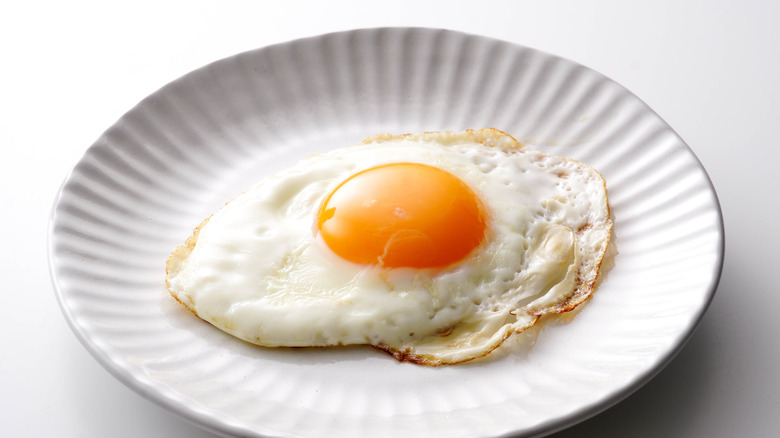
For the longest time, it was believed that eggs were something to be consumed in extreme moderation. This is due in large part to a 1960s American Heart Association recommendation that Americans eat no more than three eggs every week. The belief was that the eggs' cholesterol could raise the risk of heart disease. However, while some still may cling to this myth, it's been largely disproven.
At the American Egg Board, Jen Houchins noted, "While eggs contain cholesterol, research shows that for healthy people, dietary cholesterol from eggs does not increase the risk of heart disease. Long-term studies following participants for up to 32 years found egg consumption was not associated with increased cardiovascular disease risk." Today, the American Heart Association has amended its recommendations and now says healthy adults can safely eat up to seven eggs per week, while older adults with normal cholesterol can eat up to two eggs per day.
Doing so can come with some benefits beyond the protein that eggs are well known for, added Houchins. "Two eggs contain 12 grams of protein along with nutrients including choline, which supports brain health, mood, and memory," she said. "Choline is under-consumed by about 90% of Americans, and two eggs can provide roughly 50–70% of daily needs."
The date on the egg carton tells you when eggs go bad
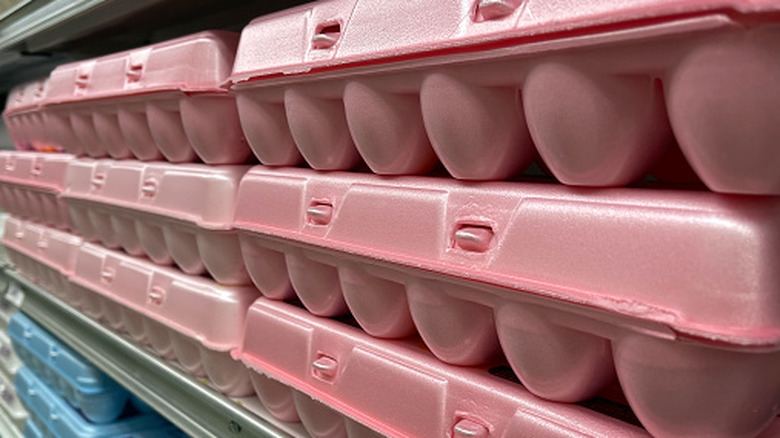
Before you throw out those eggs just because the date on the carton has passed, hold up. That date may not mean what you think it does. According to Elisa Maloberti, food safety manager at the American Egg Board, "Dates on egg cartons indicate quality, not safety. A 'sell-by' date helps retailers know when to remove eggs from shelves, while a 'best-by' or 'use-by' date indicates peak quality. When stored properly in the refrigerator, shell eggs can typically be kept up to four weeks after purchase."
So, beyond this general timeline, are there any other ways you can tell if an egg is bad? There are a few signs that your carton of eggs has gone bad, regardless of date. A strong, unpleasant odor is one, while visible cracks or a powdery texture on the shell are others. You can also tell if the eggs in your fridge are still good by using the float test. Just drop the egg in a glass of water. If the egg floats, it's older. If it sinks, it's fresher.
You need milk for fluffy scrambled eggs
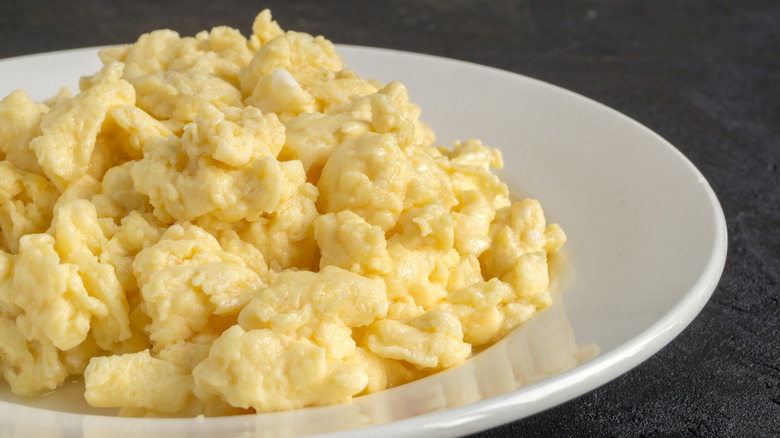
Milk is often touted as the go-to secret for better scrambled eggs, but it might not be the right addition to your eggs, personally. While scrambled eggs are basic, people like them various ways. Some prefer creamy and moist eggs. Others like fluffy and cloud-like eggs, and if you're in this latter camp, milk is not your friend.
Elisa Maloberti said, "For light, fluffy scrambled eggs, water often works better than milk. Adding about a teaspoon of water per egg creates steam as the eggs cook, which gently puffs them up. Milk can add creaminess, but it can also result in a slightly denser texture."
So, ditch the milk and reach for water for truly fluffy scrambled eggs. Other tips you can try? Rather than plain water, use non-flavored soda water. The carbonation creates air pockets that make for airier, fluffier eggs. Or, add a bit of lemon or lime juice. The acidity reacts with the protein in the eggs, creating fluffier and softer eggs overall.
Blood spots or a green ring mean the egg is bad
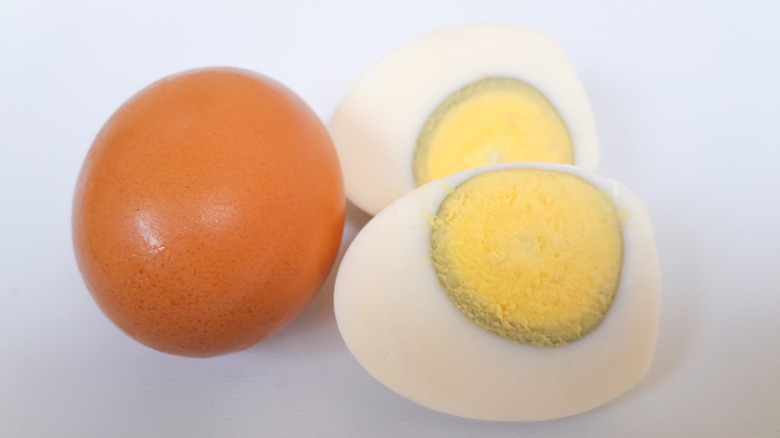
As you're attempting to find out if your egg is fresh, you might simply break it open and take a good look at the yolk and white. If you see anything that's out of the ordinary, though, don't automatically take it as a sign the egg needs to be tossed. Likewise, if you move forward with cooking the egg and see some discoloration, that's not immediately a bad omen either. According to Elisa Maloberti, there are two odd things you might see in or on your egg that many consumers think are signs of spoilage, but that are actually totally safe: a green ring around a cooked yolk or a blood spot in a raw egg.
She said, "A greenish-gray ring around a hard-cooked yolk is not a sign of spoilage. It usually forms when eggs are overcooked or cooled too slowly. The color results from a natural reaction between sulfur in the egg white and iron in the yolk. It affects appearance but not safety."
As for the blood spots, she added, "Blood spots are a natural occurrence caused by a small blood vessel breaking during egg formation. They do not mean the egg is fertilized, and they do not automatically make the egg unsafe. Many cooks simply remove the spot and continue cooking."
Fresh eggs are always best
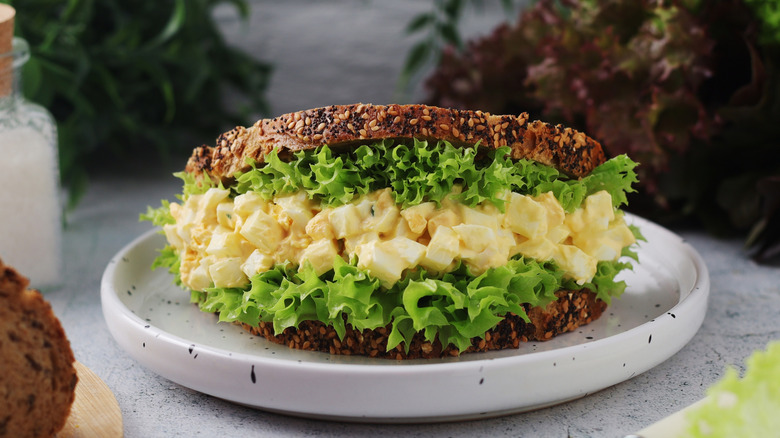
Believe it or not, while fresh eggs may seem like the superior choice, they're not the greatest pick for every single recipe. Nelson Serrano-Bahri, chef and director of innovation at The American Egg Board told us, "Fresh eggs are great for many uses, but they are often harder to peel after hard-cooking. As eggs age slightly, changes inside the shell make peeling easier." Yep, using older eggs is an expert method for hard-boiled egg shells that slip off with ease. Serrano-Bahri, in a prior Takeout interview, noted that the best egg age for hard boiling and peeling is around seven to 14 days.
So, if you're making, say, an egg salad, maybe don't reach for the eggs you purchased at the farmers' market just this morning. While you're at it, make sure you're also using the hands-down best mayonnaise for egg salad, Kewpie, and that you're leveling up your egg salad with unexpected ingredients like chopped bacon, potatoes, olives, and cream cheese.
Shaking eggs before cooking makes them creamier

Some so-called cooking hacks will tell you that you need to really give your eggs a good shake before cooking them, in order to get a creamier scramble. Elisa Maloberti, though, says that might not really be the way to go.
"Shaking eggs in a jar or protein shaker can help combine the yolks and whites," she said, "but it is not the best way to create creamy scrambled eggs. Too much aeration can lead to eggs that feel drier or spongier. Creamy scrambled eggs come from gentle heat and small, tender curds, not maximum bubbles. Whisking eggs in a bowl gives better control and helps produce a smoother mixture before cooking."
You can also try adding extra creaminess to your scrambled eggs by incorporating other, naturally creamy ingredients. For example, cream cheese brings creaminess and tang to your scrambled eggs. Meanwhile, sour cream or crème fraiche can make your eggs creamier as well.