

11 Fried Egg Mistakes That Are Ruining Your Breakfast
We may receive a commission on purchases made from links.
Whether they are thrown into a traditional American breakfast combo or cooked by themselves, eggs are a delicious staple for most of us. The combination of inexpensiveness and the versatility they offer makes them widely considered a kitchen provision that should be consistently within arm's reach. But, although this is impressive, this isn't all that the mighty egg offers, as they are also high in nutritional value. They are a great source of protein, vitamin A, and choline, which means if they aren't high on your list of potential morning meals to cook, you should strongly reconsider.
While they might seem like an obvious choice to grab in the wee hours of the morning, what isn't always so easy is cooking them, or, more specifically, frying them. Sure, the process might seem straightforward, but creating a fried egg involves a bit more attention to detail than just popping it straight into a searing hot frying pan. From trouble with the eggs sticking to the pan to the final product appearing unappealing with burnt edges, the pitfalls of what at first appears to be an uncomplicated cooking method are plentiful. This means that arming yourself with the knowledge of what can go wrong during the process will save you heaps of frustration and your poor eggs from being wasted. Here are the primary mistakes home cooks make when frying eggs and some tips for avoiding them.
Egg bits get stuck to the bottom of the stainless steel pan
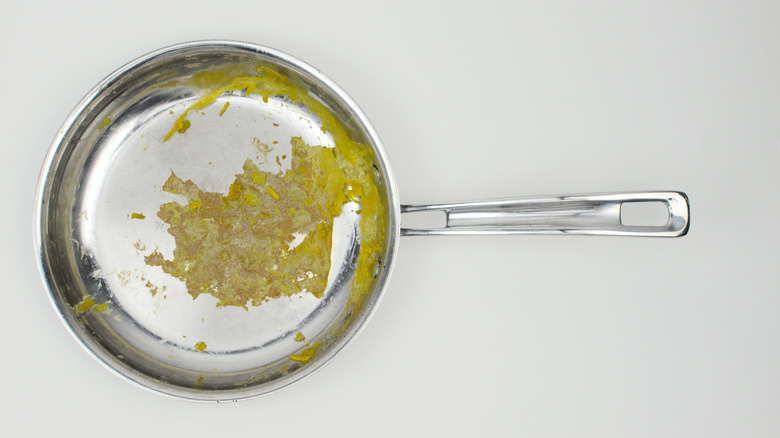
If your egg immediately clings to the bottom of a stainless steel pan after plopping it in, this is an immediate sign that something has gone awry. Your fried egg should be sliding around the pan easily, not frozen in the same spot where it landed when you added it to the cooking vessel. If it isn't moving around easily from the start, things are only going to get worse when you try to flip or serve it. This can result in a layer of caked-on eggs and/or a broken yolk.
The good news is that this is a problem that can easily be solved. If your eggs are constantly sticking to one spot, this is because your stainless steel pan is not heated to the correct temperature. There is a specific cooking temperature, which is optimal for cooking fried eggs in a stainless steel pan, a fact that not everyone knows. The pan should be heated to approximately 320 degrees Fahrenheit. Anything cooler or hotter will result in the eggs adhering to the pan. The easiest way to check this precisely is to invest in an infrared thermometer, like this one from ThermoPro. This is an easy-to-use tool that will give a precise temperature reading without even touching the pan.
Not using a lid
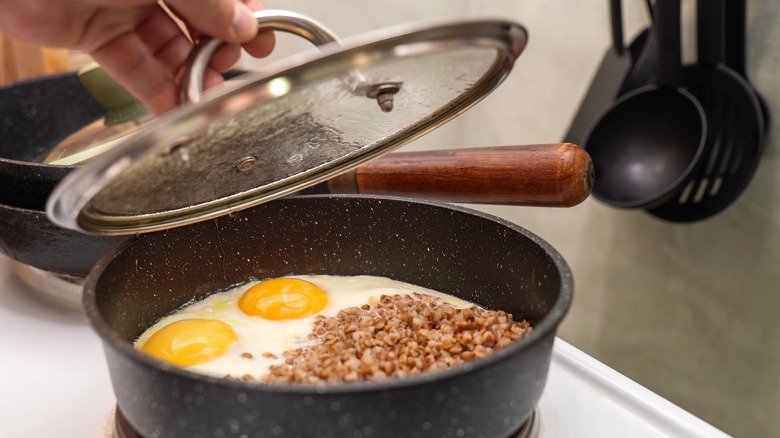
If you haven't been using a lid to cook fried eggs, then you are missing out. The lid can keep the splatter from your cooking grease of choice locked inside the pan, leaving you with less of a mess to clean up. It is also part of a great egg flipping hack, where people slide the egg onto the lid and use it to turn the egg over, flopping it back into the pan with ease. The greatest benefit of all, though, is that it helps prevent your eggs from overcooking.
When you use a lid that fits the pan properly, steam is created. This steam expedites the cooking process, thereby setting the egg yolks faster. If the lid is left off, there is a greater chance of the whites of the egg burning while the yolk sets. If you are against using a lid, your egg can still come out just fine, you'll just have to keep a close eye on the whites to avoid burning them.
Crying over a spilt egg yolk
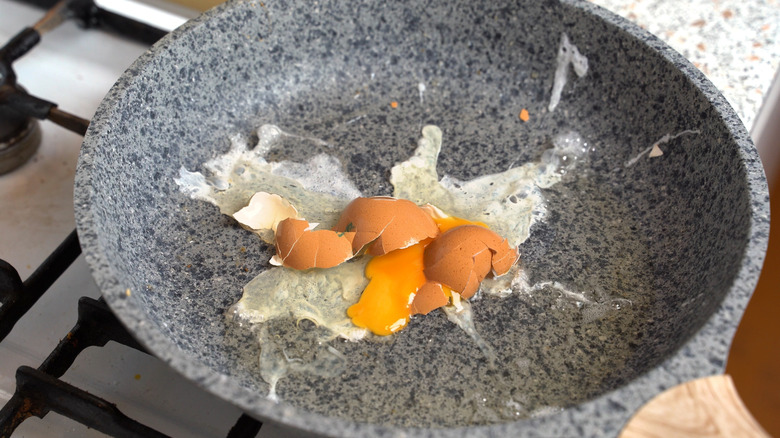
If you enjoy a runny egg yolk, then breaking it during the cooking process may be an error that's upsetting. However, there's no need to throw in the towel or toss your broken-yolked egg into the garbage can. It can still be turned into a fabulous, albeit less gooey, breakfast. Actually, in a true one person's trash is another person's treasure moment, your broken-yolked egg is actually the over-hard fried egg that some people strive for. People often opt for over-hard eggs because they are less messy, especially when making a breakfast to-go.
If you've broken the yolk unintentionally, just pretend that you meant to do so in the first place. It can still be the shining star of your breakfast by popping it into a sandwich or even adding it to some toast with avocado or smoked salmon. And, if you're still hankering for that gooey golden yolk, there's no rule that says you can't cook a second egg with a perfectly runny yolk to rest alongside it on your plate.
Thinking all fried eggs are the same
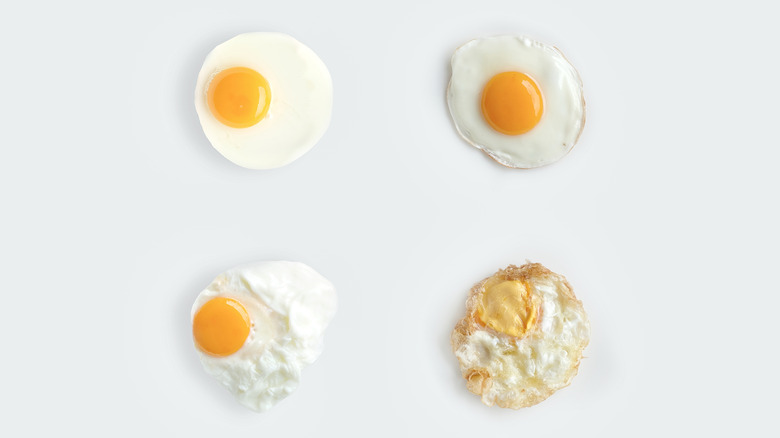
Fried eggs are not all the same, despite what you may think. There are several different types of fried eggs which all have different textures, levels of crispiness, and cook times. The over-hard egg, which has already been mentioned, is one of the most heavily cooked options, but there are also sunny-side-up, over-easy, and over-medium, all of which range from extremely gooey to firm-yolked. The type of fried egg that suits you best will heavily depend on whether you enjoy your egg yolks runny or set.
For example, if you enjoy runny and gooey eggs, then a sunny-side-up egg may be the way to go. These are fried eggs that aren't flipped, remaining only cooked on the bottom, with barely set yolks. Similar to this is the over-easy egg, which is flipped over, but barely cooked on both sides. The yolk remains runny, but the whites are thoroughly cooked. With over-medium eggs, the cooking time lasts longer than with both sunny-side-up and over-easy ones. This is a great option if you prefer a yolk that is partially cooked, yet still creamy. If you don't like the drippy and fluid texture of a runny yolk, then sticking with over-hard fried eggs might be the best bet, with a yolk that's been cracked and thoroughly cooked until hard.
Not greasing the pan
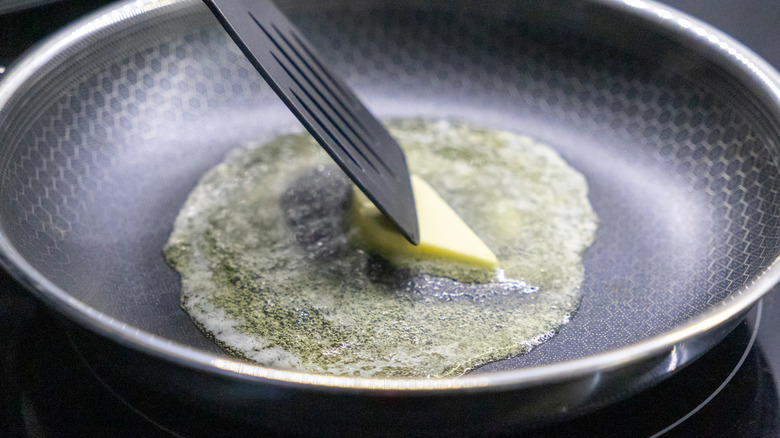
In general, it's important to grease a pan when using it for cooking to prevent sticking. This is doubly important in the case of fried eggs, particularly those that are over-hard, where the yolk may adhere even when using a nonstick pan. The most common methods for greasing a pan when frying eggs are to use butter or oil, but there is also a strong case for using bacon grease. There are countless opinions out there as to what the perfect pan grease for frying eggs is, but at the end of the day it's all about the flavor and texture you are looking for.
Oil, for example, is known for crisping up the edges of the egg whites and providing a touch of flavoring, which varies depending on the type chosen. Butter has a higher fat content, which means the taste of that fried egg is going to be richer as it is absorbed. Meanwhile, the case for bacon grease is two-fold. If you're a bacon lover, frying the meat first and then simply popping the egg into the same pan saves you valuable clean up time. It also provides a boost of salty and savory flavor to your eggs. If you're unsure which to use, there are plenty of people who have run comparisons of these methods, such as whether bacon grease works better than butter for fried eggs. A simple search can even find specific oils that may upgrade your fried eggs.
Not adding a dash of water to the pan
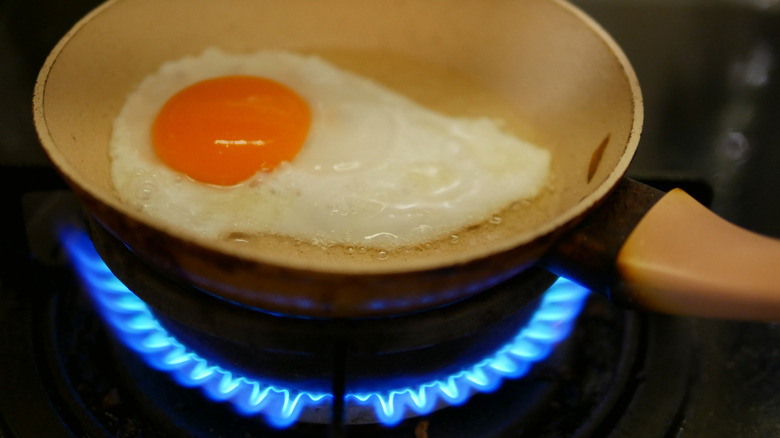
Believe it or not, there is an item lurking in every kitchen that has the ability to spruce up the average fried egg. That item is water. This is not referencing the trick bopping around the internet where people are frying their eggs entirely in water (without any sort of grease), a method that may not be all that it's cracked up to be. The technique referenced here is actually a middle ground between the average greased method and this water hack, and discounting it before you've given it a try is not a mistake you will want to make.
Here, the cook starts by heating the pan and adding the grease. Once the eggs have cooked for approximately 30 seconds, a small amount of hot water is added to the pan. The egg is continuously basted with the water until cooked to the desired doneness. The belief here is that the water will create steam, which will cook the egg whites more evenly than they would have otherwise. The egg will still have the benefits of the grease of choice, but you can use less. This process will also guarantee the egg whites haven't overcooked or become rubbery. This is a simple addition to the cooking process that can help new and seasoned cooks alike ensure their eggs don't fall victim to whites that resemble plastic.
Forgetting to add spices or condiments
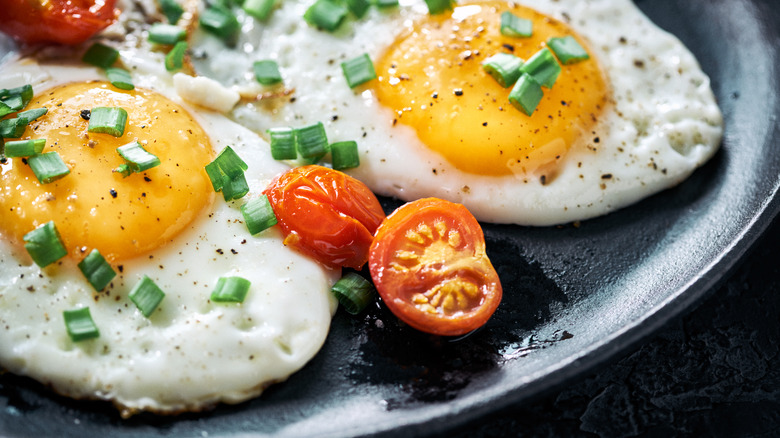
If you're cooking your fried eggs with just a dash of salt and pepper every time, this is a mistake. There is a whole world of spices and condiments just waiting for you to grab that can turn your fried eggs into a flavorful experience. Just a quick search will give you 16 ingredients that will make your fried eggs unforgettable or a spicy condiment that you should try frying your eggs in. Some ideas include using paprika, garlic powder, cayenne pepper, Old Bay seasoning, or even a few dashes of soy sauce to add flavor to the eggs. If you like a kick to your food, fried eggs also pair nicely with sriracha or hot sauce.
There is also the method of blooming spices, which can add flavor to your fried eggs. This is when spices are cooked in oil, which encourages the release of fat-soluble flavor compounds contained within them into the oil. This oil can then be used to cook the eggs, packing a tasty punch. It can also be sprinkled over the eggs for an added kick. A bonus of this method is that you can bottle the oil after blooming the spices and use it at a later time as long as it is stored properly in an airtight container in the refrigerator.
Not using the correct spatula
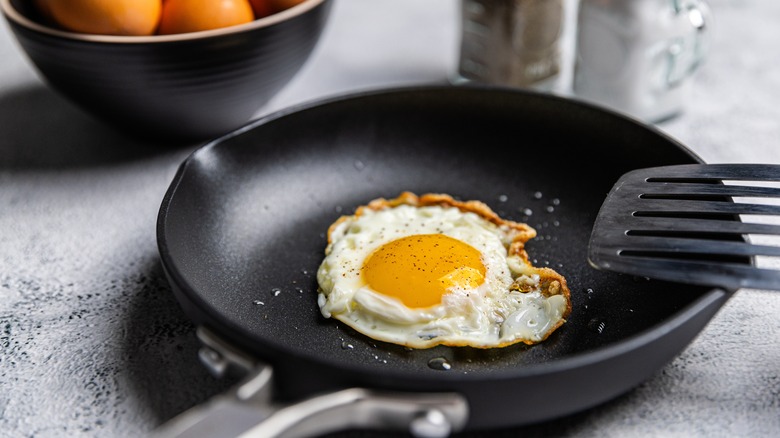
If you walk into your local cookware store, the amount of spatulas hanging from the wall might seem overwhelming. The decision seems almost dire when considering that the wrong selection of a spatula could spell disaster for your future fried eggs. The pitfalls are plentiful enough when making fried eggs without your choice of spatula working against you. The type of spatula you select will depend on the pan used to cook the fried eggs. For example, some non-stick pans are not safe to be used with metal spatulas, as they can scratch the coating which may release toxic chemicals into your food. This is why it's important to ensure the pan and spatula are compatible.
Out of the options available, some of the top picks for fried eggs appear to be the silicone spatula and a fish spatula. Both are created with thin, pliable material, which leads to a careful egg flip that keeps the precious yolk intact. If you're feeling crafty and want to forego the spatula entirely, you could also try doing so by flicking the pan using your wrist to flip the egg in the air. You may want to practice with some pieces of bread first in a cool pan just to get the hang of it before trying this method, otherwise you might end up with a big mess on the floor if you don't catch the eggs in the pan.
Cooking cold eggs
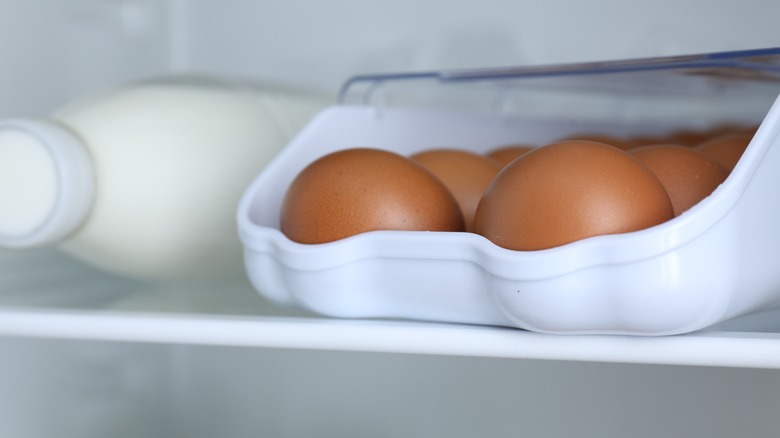
It might seem like madness because normally eggs are a refrigerated item in the U.S., but cooking them cold is actually an easy prep mistake that can lead to overcooked fried eggs. Eating a sunny-side-up egg with a slightly cold yolk is not the peak fried egg experience you were picturing for your breakfast. Taking the eggs out of the refrigerator about 30 minutes before you start cooking is a hack that will ensure your eggs turn out just right. The egg whites have a greater chance of cooking evenly and the yolk will be warmed to the perfect temperature for toast dunking.
Now lets say you're in a hurry. Perhaps you woke up late, or forgot to take the eggs out of the fridge half an hour before. There is a quick solution to this that will still give you room-temperature eggs without the long wait. All you need to do is place your eggs in a bowl of hot water, which will speed up the process to only about a 5-10 minute wait. If this still isn't fast enough, put the eggs in a bowl or under a running tap of warm water for approximately 2-5 minutes, until they have lost their chill.
Cracking eggs on the side of the pan
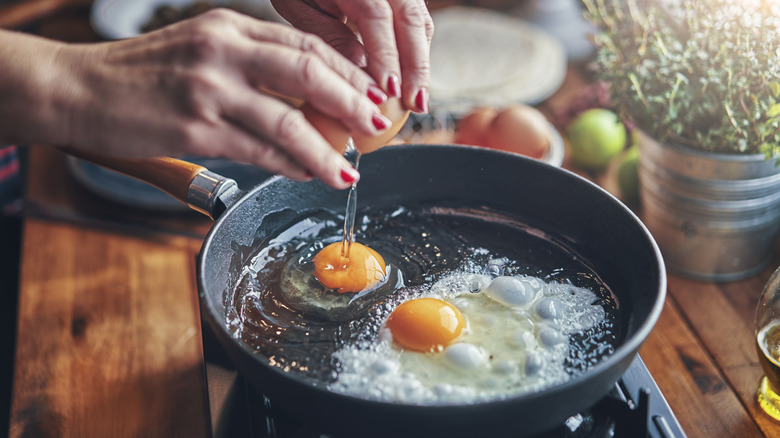
This might seem a bit like nitpicking, but yes, it really does matter how you crack your egg. Cracking an egg by using the rim of a bowl or pan is a commonly used method, but it has a few cons to it when frying them. The same goes for using a knife edge to crack your eggs. Although it seems like a simple way to get the job done, the reality is that the thin edge is likely to get pieces of shell into your egg or even break the membrane of the yolk before it's ever begun its cooking journey.
Luckily, you can prevent both of these from happening by cracking your eggs on a flat surface. Cracking your eggs on a flat countertop or table will shatter the shell into larger pieces than the rim of a bowl or frying pan or even the edge of a knife would. The larger pieces are not as likely to fall off, and, even if they do land in the egg after it is placed in the pan, they are easy to retrieve due to their size.
Not using fresh eggs
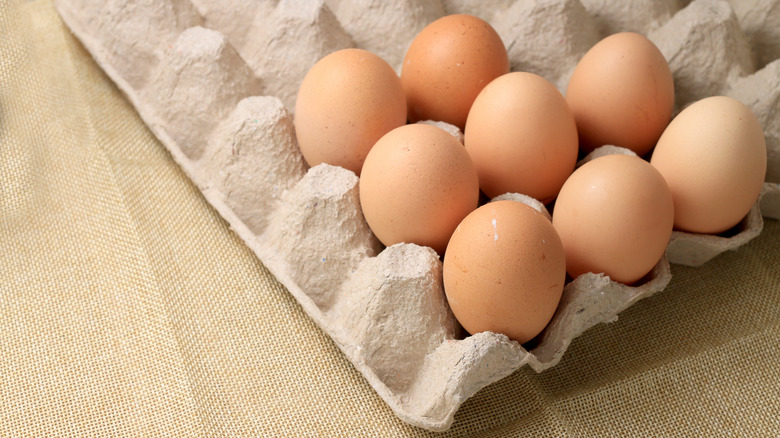
Sure, on the outside, it's hard to tell the difference between a fresh egg and one that has set up camp in your fridge for awhile. But old eggs actually have a weakened membrane, which translates into a much more fragile yolk that is susceptible to breaking during the cooking process. Older eggs may also not cook evenly and lose their form in the pan, creating a misshapen fried egg that may not match what you were picturing.
One way to tell the age of an egg is the water test. As eggs age, they develop larger air pockets that will cause them to float. While this may measure freshness, it does not measure the safety or quality of the egg, which may still be contaminated with pathogens. The only way to ensure this is to use your senses. Look for damage to the shell or off aromas. Additionally, when the egg has been cracked open and removed from the shell, the yolk should remain perky and have a bright yellow hue. Older eggs will flatten out when cracked onto a plate and their whites will be loose and runny.