

How AI Is Reshaping The Restaurant Industry — For Better And Worse

Artificial Intelligence is bleeding into every industry and only picking up pace. As innovation continues, AI will be prominent throughout the restaurant industry as well. It's already present in restaurants, and customers are interacting with different forms of AI and automation whether they realize it or not. As leaders in the restaurant industry learn the ways they can implement AI to streamline their processes, it's likely to spread from the front of the house to the kitchen and every place in between. The biggest area that will be affected by AI investments is customer service.
The adoption of AI is going to completely transform the customer experience over time as it grows in popularity, and also change the way restaurant employees work. It will be used heavily by fast-food and casual dining brands as industry adoption grows. AI technologies will also affect inventory processes, employee training, marketing, and other areas as new uses are discovered to help make restaurants run more efficiently and cost-effectively.
With every new technology roll-out, there are learning curves, and pros and cons. While AI is expected to be a positive for the restaurant industry, there are still challenges that will need to be navigated. The AI conversation is gaining traction as more restaurant brands figure out how to tap into it, and this is just the beginning. Let's look at some of the most common changes AI will foster in the restaurant industry.
Mobile apps will provide more personalization
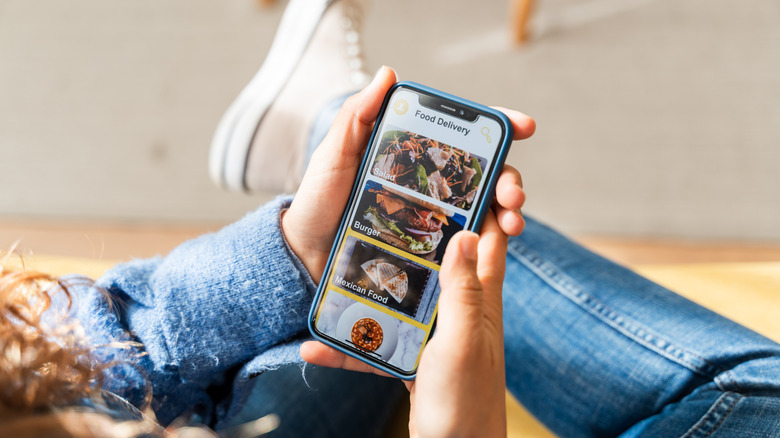
If you are a frequent patron of fast-food chains, you likely have multiple related apps on your phone. You can use them to place orders, claim offers, and the functionality is going to continue to flourish with the aid of AI. Ordering your meal through the restaurant app already speeds things up since it's prepared while you are en route and ready for pick up at a drive-thru, the counter, or a curbside spot.
When you use a mobile app to order food, you probably already notice some level of personalization. It's no accident that your burger meal with fries and a coke shows up front and center on the screen with an easy reorder option. That's purposeful and the result of an AI algorithm doing its thing. The in-app offers may be tailored to preferences based on your ordering history. You might receive relevant coupons or promotions to sweeten the pot and encourage you to order. That's all AI.
AI technologies are created to learn your patterns to present more tailored and relevant experiences for you. The ability of AI to create more interactive customer experience is a huge opportunity. Ordering through mobile apps is not just a convenience for patrons, it's helping restaurants give customers exactly what they want and will become even more intuitive. It's already proven to increase repeat business, and that's only going to continue.
The drive-thru process will be smoother
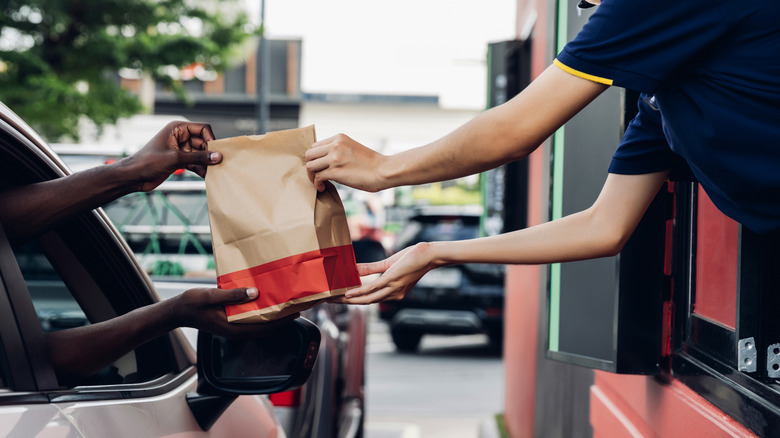
Have you entered the drive-thru of your favorite fast-food chain lately and been welcomed by an automated voice? That is AI hard at work, and it's poised to be able to take over drive-thru responsibilities completely eventually. It's not the best news for the job market, although it does increase effectiveness for the restaurant.
By taking advantage of AI technology, the entire drive-thru experience will change for both customers and employees. It can greet customers and take their orders while helping minimize human error before sending the ticket to the kitchen. Offloading the drive-thru process to AI will shorten time customers spend waiting in the line, while also making long lines in general a headache of the past.
AI will make fast-food fast again by adding a higher level of efficiency from the moment a customer pulls into the drive-thru with a hankering for french fries. Because of technologies like Natural Language Processing (NLP), AI can better understand human requests and questions. NLP is already being used daily by 34% of restaurants according to a recent survey by Deloitte, with another 37% using it on a smaller scale or in pilot programs.
Kiosks inside restaurants will enhance self-service
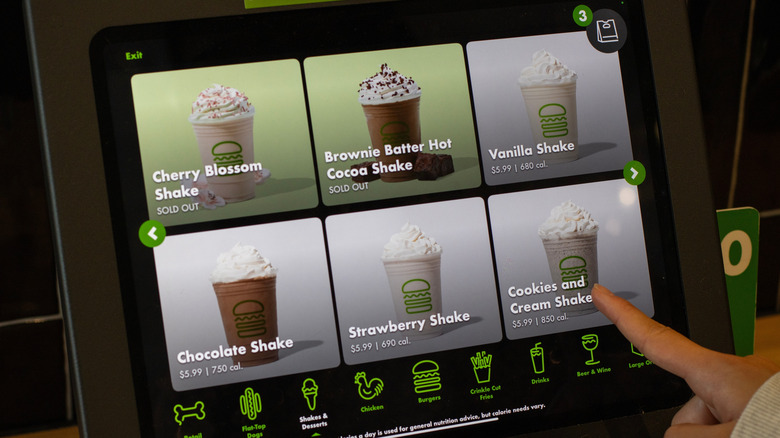
The use of kiosks for self-service in the restaurant industry is exploding. Similar to diminishing human error in the drive-thru, kiosks using AI inside the restaurant are accomplishing the same thing. When you walk into a restaurant and your first point of contact is a self-serve kiosk, it's another tangible example of how the restaurant industry is embracing AI.
When customers can place their own order through a user-friendly touchscreen and system fueled by smart AI-based technology, the chance for mistakes in their order is greatly decreased. Everything happens on that screen, and it couldn't be easier. Customers can place and customize their orders and pay right there in the same place.
There's no doubt that the kiosks refine and simplify the entire ordering process. That is a huge win for the restaurant side, as is the need for less staff to take orders. It proves more cost effective for a restaurant's bottom line by needing less staff, however that's not such a win for job seekers in the restaurant industry. Not to mention that with kiosk ordering, restaurants lose the human touch that goes into the classic upsell that typically goes down at the register.
AI is now part of the cooking line in the kitchen
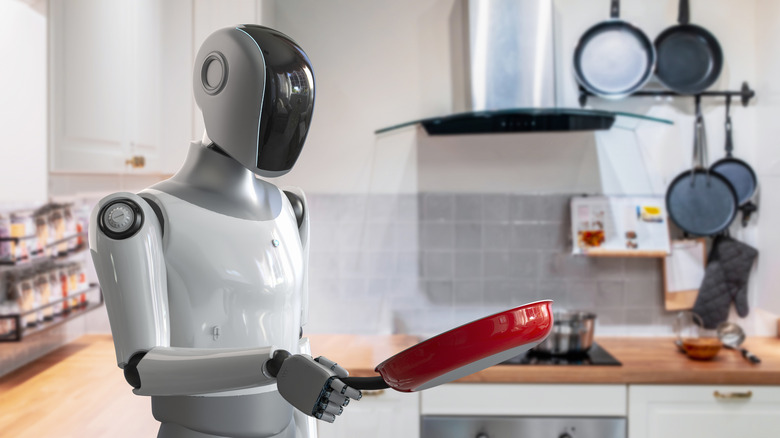
If you have a special love in your heart for tech, and particularly anything robotic, get ready to geek out. Picture your favorite burger joint and think about the organized chaos that occurs behind kitchen doors while staff do a delicate dance around each other so they don't disrupt respective roles. Cooks are pressured to turn over orders quickly and with consistent food quality.
This is where AI comes into the kitchen with swagger. Instead of a line cook making burgers one after another and another and another, restaurants can put robots on the job. A robot whose sole purpose is to flip the burgers and is programmed to do it the exact same way every time, changes the entire flow of the kitchen.
With the AI burger flipping master locked in, human employees can turn their attention to tasks that require more nuance. Think about all of the prepwork that can be handled by an AI chef. It's not a replacement for a human chef, it's an enhancement. The more monotonous jobs that can be handed off to an AI, the more human chefs can actually chef.
The front of the house will be transformed

Get ready to see a completely reimagined front of the house when AI plays a bigger role in restaurants. You'll still see a flock of servers swirling around the dining room delivering food to tables and engaging with diners. However, the mundane tasks that usually tie them up at the hostess stand can now belong to AI.
The days of waiting for a flustered hostess to get off the phone so she can seat you are fleeting. The bottleneck in those areas create bigger problems that translates to significant money lost. Almost half (40%) of calls are missed by the restaurant when a human is fielding them, according to NRN. You might need to mentally prep for the dollars wasted because of those missed calls. Ready? It's $20 billion right down the drain.
Handling customer calls is a huge, often time-consuming job that AI can tackle. Host staff can focus on engaging with customers and making their experience even better. In addition to managing customer phone calls, AI can also make, manage, and confirm reservations. The same AI powered transformation can also make its way into the admin offices and run the bookkeeping and other related tasks.
Menus will get a glow up

The entire menu process is about to have a moment. The restaurant industry is harnessing the power of AI to help with everything from menu design to what's on it. It's like a soup-to-nuts menu development process that's majorly ingenuous. There's technology to touch all parts of your menu creation and take the heavy lifting off a restaurant's plate.
Restaurants can tap AI to develop logos and generate a menu design to match its vision and branding. That includes food photos and other menu images or elements needed. Coming up with menu descriptions for every single item is a huge time commitment. Save the brain power while AI whips them up faster than you can type the word appetizers. Think about the amount of time the family who owns the cute little bakery near your home spent brainstorming ideas for all the menu items, when they could have been putting energy into more important tasks.
AI can analyze a menu and determine if there are items not selling enough so the restaurant can make necessary changes. It does the data collection and creative grunt work so relevant employees can focus on polishing the end result exactly the way they imagined. It's not a replacement of the human touch needed to finesse details. AI is a way to speed up the process and skip to the part where restaurant brands make their own mark by personifying the brand on the menu.
Pricing will become more dynamic

Restaurants will no longer be beholden to static prices. AI opens the door to more flexibility with costs, and the ability to adjust them in real time. For restaurants, this is a welcome tool, but it's not always a good thing for the customer.
Different AI technologies and platforms can provide a window to show restaurants peak times, items in higher or lower demand, and more intel about what is being ordered, when, and how often. This allows the restaurant to charge higher prices when the demand is higher. It's an easy way for them to maximize profits and limit waste, but inevitably customers will pay the price — literally.
Restaurants can now use AI to increase prices immediately on a whim if the item demand justifies it based on the market. However, that means AI can also be used to match competitor prices in real-time, which could be a positive for customers. Overall, AI can track trends and activity that impact pricing and a restaurant's bottom line, giving the business the option to adjust costs as it sees fit.
Restaurants will decrease waste

The amount of food items wasted in the restaurant industry is too significant to ignore. In the U.S. alone, a huge amount of food goes to waste. If you look at food waste on a global scale, it accounts for $2.6 trillion, per Fourth. Relying on AI to track patterns and predict orders is paramount to bringing waste numbers down. Restaurants don't have to worry about employees ordering too much or too little of anything, since AI can manage the process with ease and effectiveness. It can keep track of stock and automatically place necessary orders, which not only cuts frivolous waste, but also means fresher ingredients.
AI gives the inventory process a boost by helping employees manage it in real-time digitally, instead of wasting time manually counting everything in stock. It can also manage inventory across different locations to streamline the process when more than one restaurant is involved. Processes that take employees hours to complete can now happen rapidly and in real-time with much greater accuracy. As AI evolves and becomes more embedded in the inventory cycle, that will only grow.
All sides win, since AI can better predict exactly what is needed based on customer demand and current stock. Restaurants diminish waste while increasing profit and providing higher quality, fresher food on a consistent basis.
Customers will see more targeted marketing and loyalty perks
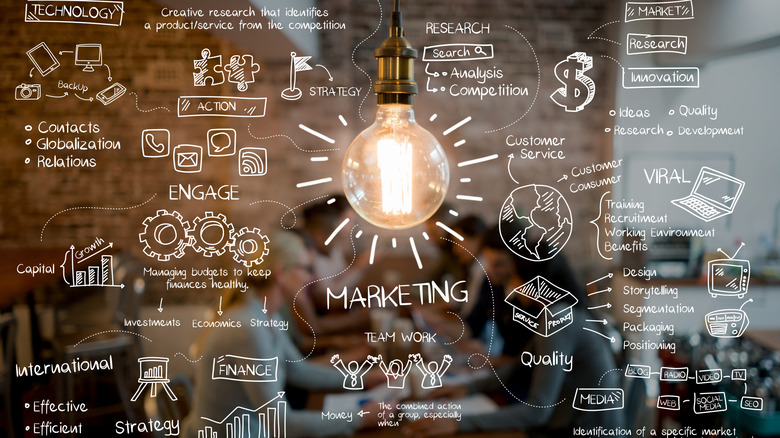
Just wait until you see what AI is capable of doing with restaurant marketing. All content creation can be done by AI, and done well. This includes blogs, social media, ad campaigns, and anything else meant to appeal to customers, and it's not arbitrary. With AI, restaurants can grasp things like tone and context to deliver impactful results that means something to diners.
When AI is used properly in marketing materials and efforts, it means more targeted, personalized connection for customers. Many restaurants are already utilizing AI to deliver marketing customized to specific customers. They get promo codes for items they regularly order, suggestions for menu items that are similar to their likes, and other tailored marketing efforts that make customers feel considered and valued.
Restaurants will lean into conversational marketing on a deeper level using AI to create promotional material that fosters connection and increases interaction. Any loyalty programs touched by AI become more meaningful and appreciated by customers because of the level of personalization. The marketing doesn't stop when the customers leave the dining room, either. AI allows restaurants to maintain relevancy in marketing that is super-strategic and also ultra-personal to customers.
Food delivery will be streamlined and more efficient

How many times have you ordered takeout or delivery from a chain restaurant and either received an incorrect order or someone else's meal? Thanks to AI, those instances will be diminished. Marketing is not the only area where AI is strengthening customer connection. Food delivery is getting much needed attention and a facelift thanks to AI. It can be used to forecast ideal delivery times, which will also improve the customer experience.
Trouble spots for food delivery, including support and returns will also be championed by AI. Instead of customers being stuck with the wrong food order and heading over to TikTok to share the experience, AI will help the restaurant industry tackle these challenges and remove kinks from the process.
Instead of trying to salvage an incorrect order after it's delivered, AI can help provide more proactive support to address logistics and stop it from happening to begin with. This is a huge benefit for customers who frequently use delivery platforms but don't always get what they ordered and paid for. Customer satisfaction should not just be a concern in the dining room. Restaurants also need operational excellence when it comes to delivery.
Restaurants will reach even higher safety standards
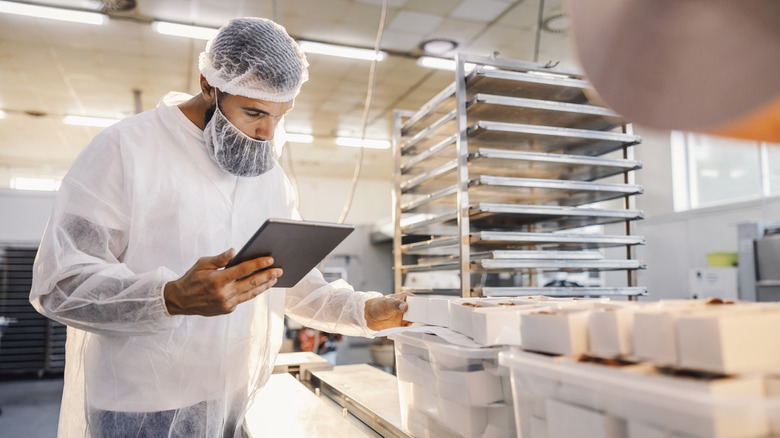
Food safety should be front and center as a concern for all restaurants. With AI trickling into food safety, there are better health inspections in every restaurant's future. AI can make sure all temperatures related to food storage are accurate. AI can also be employed to decrease chances of contamination of food.
AI powers important sensors and other technology that can ascertain any food safety concerns that need to be handled before customers are affected by things like food poisoning or allergic reactions. Food safety is one of the priorities in restaurants that should never be left to chance. There's zero reason to take a gamble and potentially make any customers sick, especially when it can easily be managed by AI.
This also means more efficient and proper handling of food labeling and meeting necessary food safety regulation standards. With AI in its corner, more restaurants can avoid health violations, pass food inspections with flying colors, and maintain a solid reputation for quality leading to satisfied and loyal customers.
Training staff will be quicker and more effective
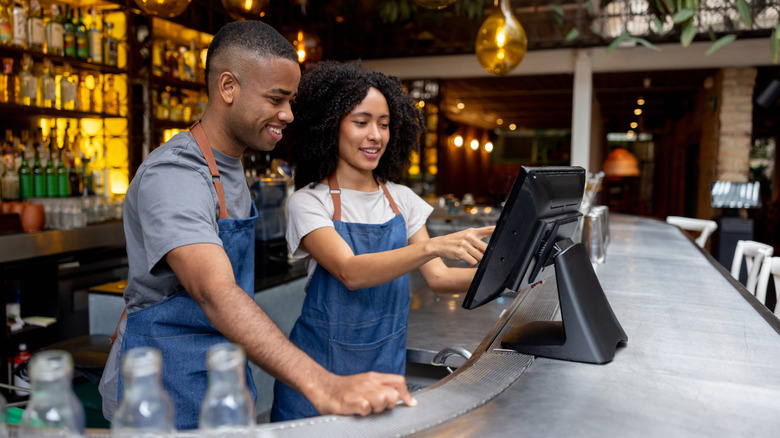
From smarter scheduling to training, AI is already at work behind the scenes in many restaurants. Staffing issues have traditionally been a common pain point throughout the restaurant industry. AI is revolutionizing employee training by offering digital training modules that do not lack interaction. Employees can go through them at their own pace and without the need to take valuable higher level employees off the floor to oversee training.
Employees get up to speed and on the job faster, and can even continue to have performance monitored by AI technologies to determine if there are areas needing additional training support. It's a way to streamline the onboarding process of new employees and keep things moving rapidly. Restaurant staffing is already fickle with a high turnover in the industry. Successful training and giving new and existing employees tools to help improve their performance and skills is one way to help reduce the problem.
Traditional training processes can cost around $2,000 per new employee (per Unlocking Tech) and with the lack of stability tied to employee turnover, that's a big price tag to risk. Simplifying training through AI and delivering targeted programs that help restaurant employees be more successful in their roles is important with an already shaky workforce. Because AI can help with scheduling, it also offers a huge opportunity to affect the burnout that often feeds the high turnover rates. This further optimizes operational effectiveness while decreasing labor costs and increasing employee satisfaction.