

16 Canned Vegetables You Should Always Have In Your Pantry
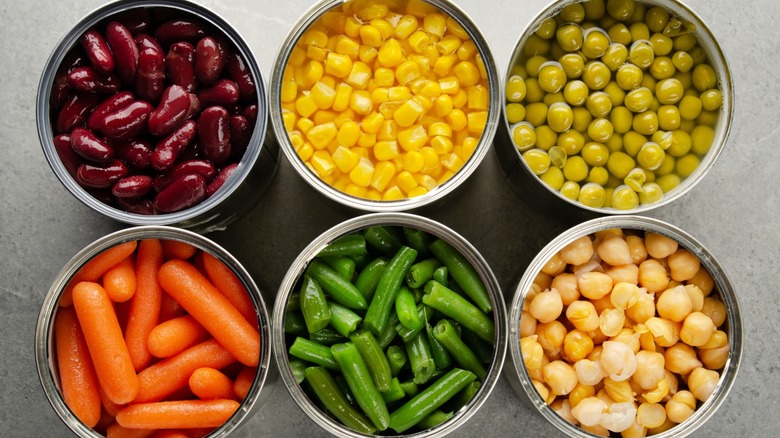
Imagine having a garden packed to the brim with fresh vegetables, always at your disposal. Gone would be the days of putting off recipes until the ripest crops came around. In reality, fresh veggies aren't always so reliable. While in-season produce is bright, and aromatic, those same vegetables can experience significant downgrades in flavor, texture, and even nutrient density when out of season. Buying some fresh vegetables can also put a dent in your wallet, and make it harder to keep up with your five a day.
The solution to many of these problems comes packed neatly in a can. While canned vegetables often get a bad rap, they can be just as delicious as, and even preferable to, their fresh counterparts. For one, they often come at a cheaper price point than fresh vegetables. Since canned foods can last far past their best-by dates, this means you can stock up, and worry less about future grocery trips. You also won't have to double-check what month it is. Vegetables are canned when they're ripest, so you can enjoy the peak flavor, and nutritional benefits of your favorite veggies, year-round. Here are 16 you should always have in your pantry.
Corn
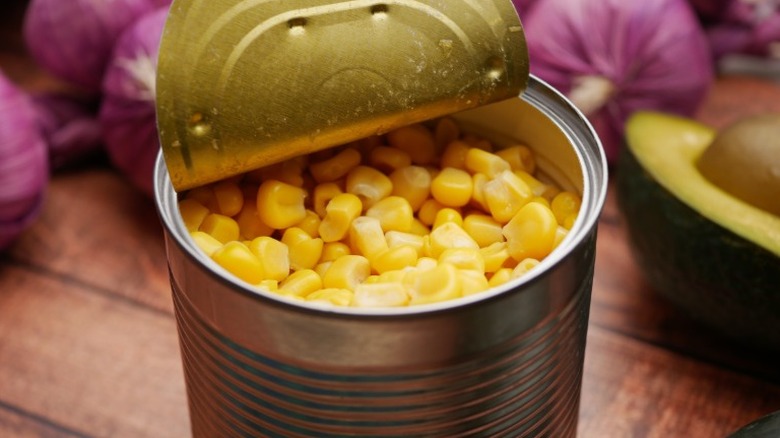
Corn is a versatile, mild-flavored vegetable, especially when compared to other veggies like kale, and Brussels sprouts. One of the most commonly consumed types of corn is sweet corn, the kind you probably associate with backyard barbecues, and hot summer days. But there are plenty of other varieties of corn, ranging from ultra-sweet to those with a more subtle, nutty flavor profile.
Use canned corn correctly, and you'll be able to match the flavor, and the nutrition factor of the fresh stuff. Canned corn has the same nutritional benefits, and saves on time. Instead of shucking, and cutting the kernels off the cob, you can add your vegetables straight into your dish. One way to elevate the taste of canned corn is to call on the magic that is butter. Combine the corn with lima beans (which can also be canned), peppers or tomatoes, add a generous helping of butter, and seasonings, and you have a side dish that tastes like summer. The natural sweetness of corn makes it a great dessert candidate as well — perfect for making puddings, ice cream, cakes, you name it. Canned corn has a place in your main courses, desserts, and certainly your pantry.
Tomatoes
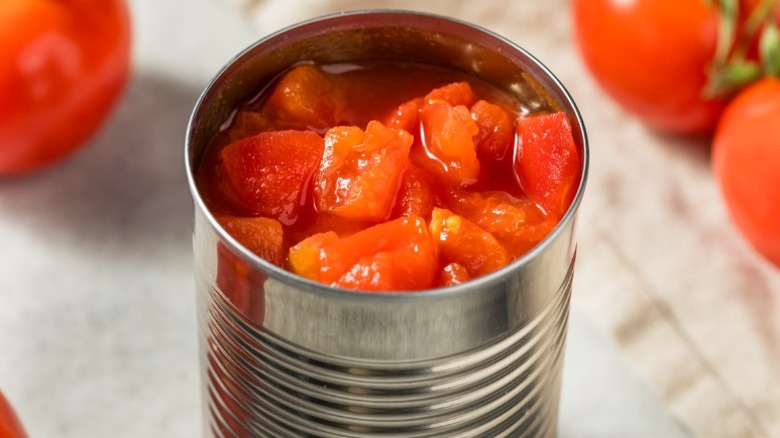
If there's one canned vegetable that you should never skip out on, it's tomatoes. These are a pantry staple for good reason. After all, they stack up remarkably well against the fresh kind — so well that even professional chefs use canned tomatoes, sometimes choosing them over fresh ones. One of their biggest perks lies in consistency. With fresh tomatoes, you have to worry about variations in ripeness, and changes across seasons. When canned, the tomatoes are as ripe as possible, so whenever you get around to opening that can, you can rightly expect to get the best flavor, and texture.
Varieties of canned tomatoes include whole, diced, crushed, and pureed. Whatever dish you're making, there's a canned tomato for it. They make great additions to soups, and chilis, where they can be left in bigger pieces for a juicy bite. They also taste great when incorporated into an easy pasta sauce or salsa. Canned tomatoes can last around 18 months, so you can enjoy the fresh flavors of summer no matter the season.
Pumpkin
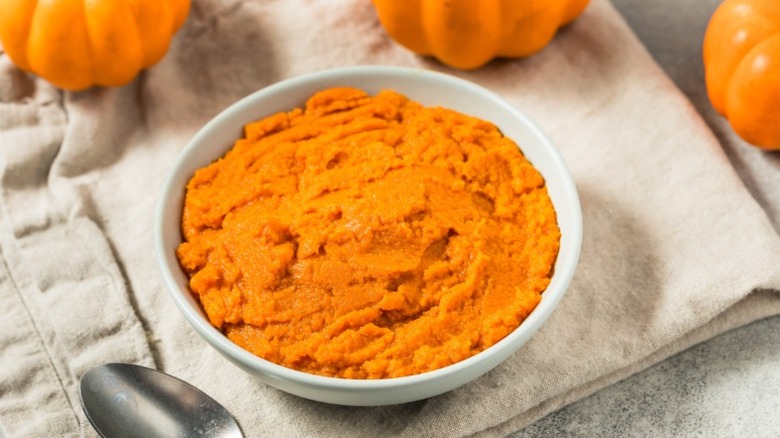
Is pumpkin a fruit or a vegetable? Given its sweet applications — namely pumpkin pie, and the ever-trendy PSL — it can be hard to tell. The truth is, actually, it's a bit of both. Botanically speaking, a pumpkin comes from a pollinated flower, making it a fruit. But in the culinary world, it's often treated as a vegetable, and used in savory dishes as well. Other common vegetables — like cucumbers, bell peppers, and tomatoes — fall into the same category, so it seems fair that pumpkin should stand among your canned veggies.
Canned pumpkin's ambiguous status makes it a versatile staple to have around. Of course, it's stellar when transformed into pumpkin pie, pumpkin bread, and pumpkin pancakes. If you're worried that your family might be able to detect a lack of fresh pumpkin in your next Thanksgiving pie, don't be. Canned pumpkin better achieves that silky, sweet filling everyone expects of a classic pumpkin pie. A can of pumpkin can also add depth to soups, chilis, and even mac and cheese.
Green chiles
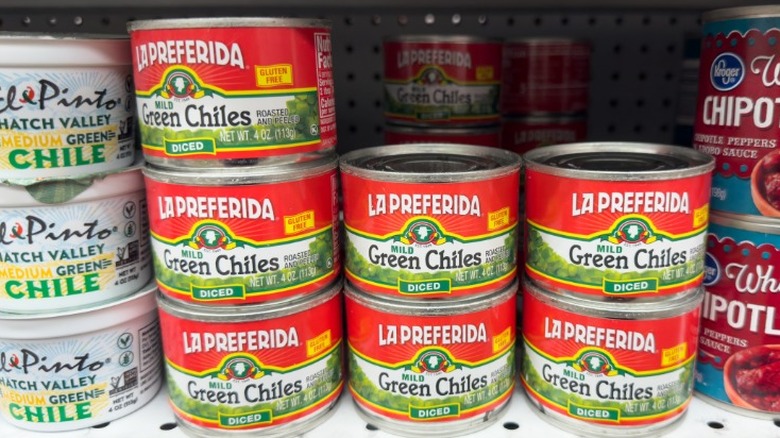
Sometimes the pantry shelves can start to feel a little boring. If you're looking to spice up your selection, green chiles are the way to go. While adding some much needed intrigue to your food, they come with a variety of health benefits. Green chiles are a good source of vitamin C, potassium, and fiber. If you're worried about too much spice, you'll be glad to know that these chiles range in spice level from mild to hot. You can choose the variety that best matches your tastes, and culinary needs.
You've probably seen Hatch chiles at your local grocery store. These are one of the more popular varieties of canned green chiles, often enjoyed straight from the can atop a juicy burger or in an easy enchilada sauce. To get a jumpstart on your morning, use a can of Hatch green chiles in scrambled eggs. If you can't get your hands on that particular variety, you can try any other type of green chile to add a nice, smoky heat to cornbread, guacamole, and Mexican-inspired dishes.
Hearts of palm

Hearts of palm are sadly underrepresented in many pantries. Some people haven't even tried the vegetable. Others know the name but are out of their depth when it comes to actually cooking them up. As the name suggests, hearts of palm are the actual hearts, or cores, of palm trees. Ancient Mayans cultivated the plant long ago, and it is still grown in South and Central America. It's rare to find fresh hearts of palm, and even if you do find them, the price will probably shock you. Thus, the canned variety makes for a convenient, affordable alternative.
These white, cylindrical veggies have a fairly mild flavor, often compared to artichokes. But hearts of palm have a crunchier texture that makes them a great addition to fresh salads, and stews where they will hold their shape, and texture. Many vegetarians and vegans use them as a meat substitute in dishes that call for scallops, crab, and lobster. They can also be shredded to mimic the texture of pulled pork.
Olives
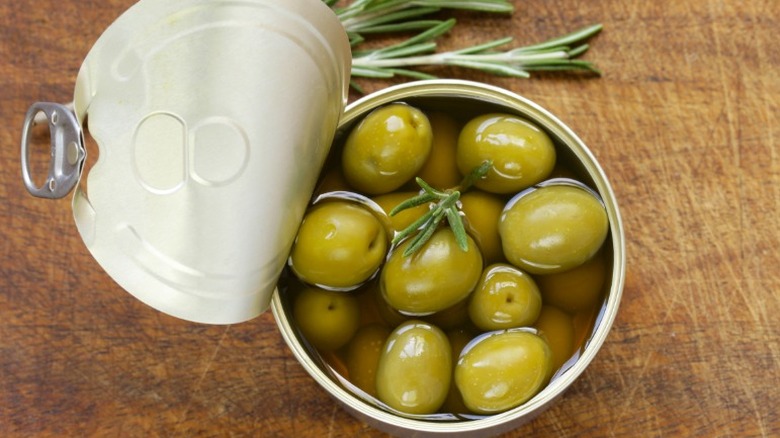
Olives aren't for everyone. Some hate everything about them. But for those who appreciate olives, having a can on hand at all times can be a life-saver. They come in many varieties, all of which pack heart-healthy fats, fiber, and vitamins. The difference between green and black olives is that the former are firmer, and stronger in flavor; the latter are softer, and milder. If neither of those sounds appealing, Kalamata olives may be another good alternative. The indecisive shopper, meanwhile, may choose a can of mixed olives.
Canned olives make a great snack when picked straight from the can or placed onto a charcuterie board with cheeses, fruits, and meats. They can be marinated whole, chopped and added to a salad, or featured in your main dish. One of the best parts of using canned olives is that you also get the liquid in the can. As the olives sit in it, their flavor is infused throughout the brine. That brine can be added to pasta sauces, vinaigrettes, and even cocktails. If you don't plan to use it right away, make sure to transfer the liquid from the can to another container, and refrigerate or freeze it to lock in the flavor.
Artichoke hearts
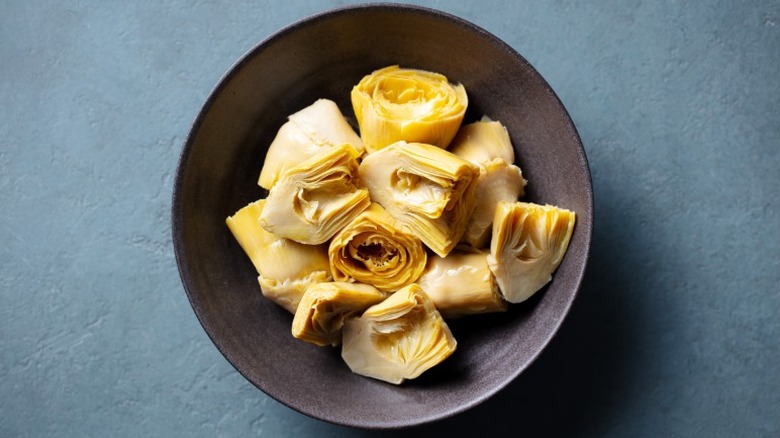
Artichoke hearts are the little treasures found at the center of globe artichokes. Underneath the leaves lies a tender, almost meaty vegetable with a tangy flavor. One reason to opt for canned artichokes is that the preparation of fresh artichokes can be quite laborious, as it involves peeling away at those outer leafy layers to slowly, and surely, reach the center. The canned stuff gets you to the "heart" of the problem more quickly, if you will.
The protein content of canned artichoke hearts might surprise you: They have about three grams per serving. Add to that high amounts of fiber, potassium, and vitamins, and your body will thank you for stocking up on these. An easy way to prepare canned artichoke hearts is to chop them, and add them to salads or pasta sauces. They also make for a simple, classic spinach artichoke dip. Much like olives, you'll want to hold on to the liquid inside your can of artichokes. Instead of tossing it, mix it into pastas, tuna salads, and slaws.
Red peppers
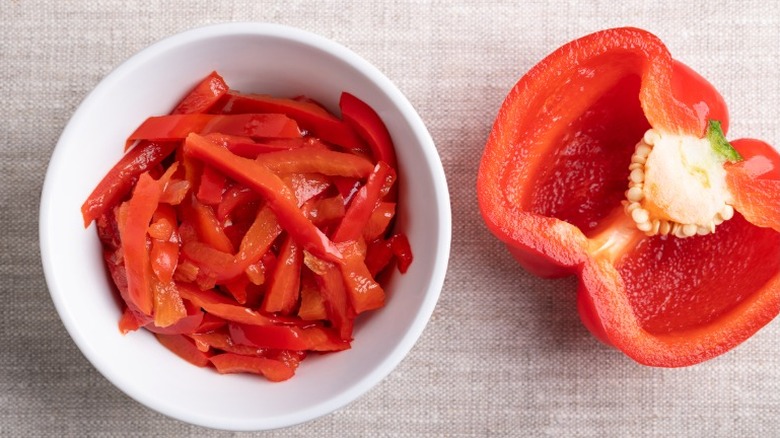
If the idea of keeping peppers in your pantry intrigues you, but the idea of spice makes you shiver, canned red bell peppers are the solution. Bonus points if you opt for the roasted variety, which impart a smoky depth of flavor to any dish. Rather than overpowering your tastebuds with heat, these red peppers are sweet, and mild. You'll find that even kids can appreciate their flavor.
Bell peppers contain plenty of the fiber needed for a healthy digestive system, and the amount of zeaxanthin and lutein present in them makes them good for the eyes. Thanks to their mild flavor, canned red bell peppers can be used in many different ways. The next time you make pesto or hummus, blend some in for a vibrant pop of color, and flavor. They also make a perfect pairing with tomatoes in soups, and sauces. They can be added to salads, and even used to top off pizzas, and sandwiches.
Water chestnuts
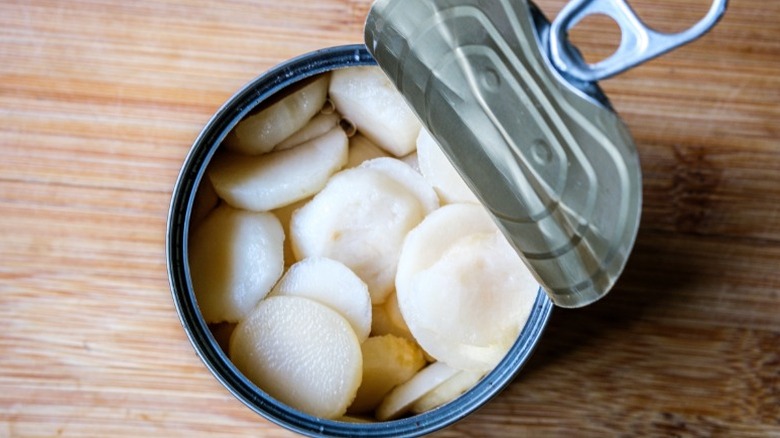
Another less common vegetable in U.S. pantries is water chestnuts, a mainstay in many Asian cuisines. You've probably crunched into one while enjoying a stir-fry, perhaps without knowing exactly what it was. Despite the name, water chestnuts are not nuts. They grow in marshes, near rice paddies, especially in Southeast Asian regions. The small bulbs are found at the end of the plant's root, and peeled to reach the white centers. Water chestnuts don't have a very strong flavor. They taste slightly sweet, with a crunchy, juicy bite thanks to their high water content.
The classic way to use up a can of water chestnuts is to add it to a stir-fry. You can adjust the other vegetables to your preferences, and the water chestnuts will retain their crunchy texture, even after cooking. For a less conventional take, a can of these will give your tuna salad a little crunch. Since their natural flavor isn't overpowering, they make a great canvas for experimenting with other flavors in your dishes.
Lentils
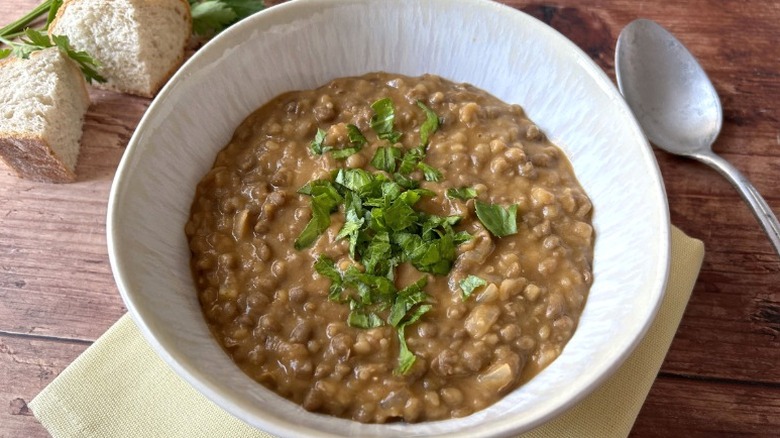
Every well-stocked pantry needs a couple cans of lentils to round it out. Despite their tiny size, lentils are chock full of nutrients. They are high in protein, and fiber; low in fat, and cholesterol; and even gluten-free, making them a viable and healthy meal for many. During World War II, lentils were often eaten in lieu of meat since they were more affordable, while still being nutrient-dense, and filling.
Today, lentils are still a great meat alternative. In fact, even with the advent of meat substitutes like Impossible, lentils are still the easiest ground meat replacement out there. The key to transforming a can of lentils is to add liquid, and be generous with the seasonings. Taco seasoning, and stock can take your lentils from standard to stellar very quickly. Other dish options are hearty lentil soup, creamy daal, and "meaty" lentil burgers. Lentils can even make tasty desserts that satisfy your sweet tooth while boosting your nutrient intake.
Mixed vegetables
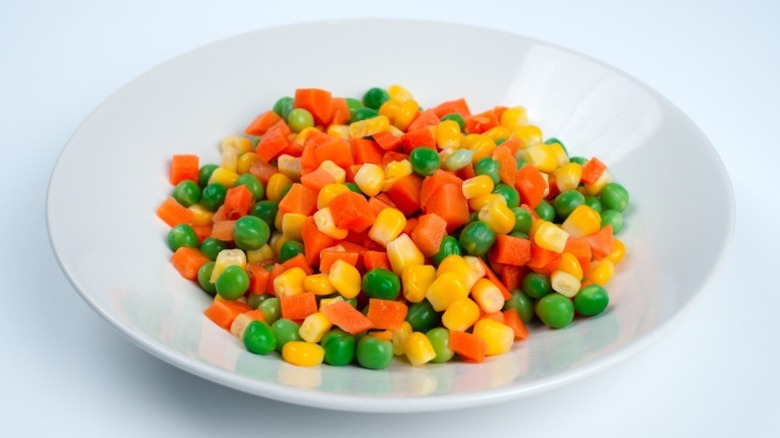
Sometimes, you're craving a little bit of everything for dinner. But nobody wants to spend the extra time it takes to prep multiple vegetables after a long day at work. Luckily, you can buy just one can, and still enjoy a variety of flavors, and textures. Mixed vegetables let you reap the benefits of nutrients from more than one veggie, with most cans featuring at least four: corn, peas, green beans, and carrots. However, some contain up to seven kinds in one can. Other common inclusions are lima beans, and potatoes.
A can of mixed vegetables is often used to make soup, either with other veggies, grains or meat like chicken added for a heartier meal. It can also make the perfect addition to a pot pie or fried rice. If you're looking for delicious baked potato toppings to try out, drain a can of these veggies, and add them directly to your spud to brighten up the meal.
Lima beans
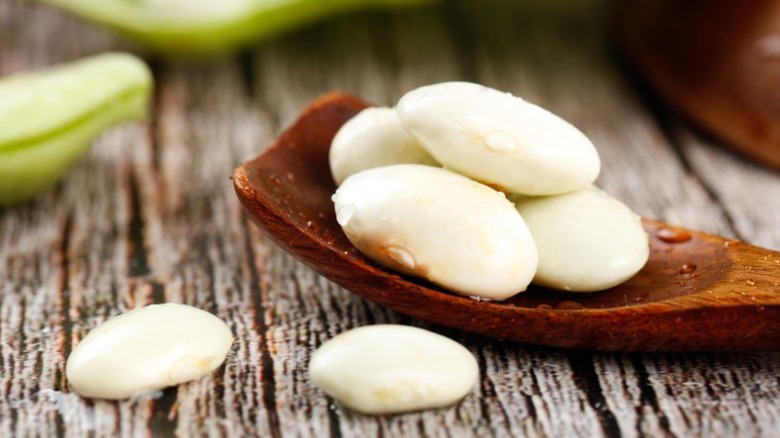
Of all the canned beans you could keep in your pantry, lima beans might not be the first that come to mind. But you'll find both the younger, green-colored beans, and mature white beans from the same plant in stores, and they all pack a nutritional punch. One cup of lima beans can exceed half of your daily fiber needs. The same amount puts a dent in your daily iron intake, providing more than 20% of what an adult needs.
Some people may know these legumes by the name of butter beans, which makes them sound a bit more appealing. Cook up a can of these correctly, and you'll be converting even the most stubborn of lima bean haters. You can keep it fresh with a lima bean salad that makes sure you know who the star of the show is — or, if that's not your style, turn your beans into a flavorful sidekick via a bowl of chili or a shepherd's pie. Play up their creamy texture, and mild flavor, and you're sure to have a hit on your hands.
Chickpeas
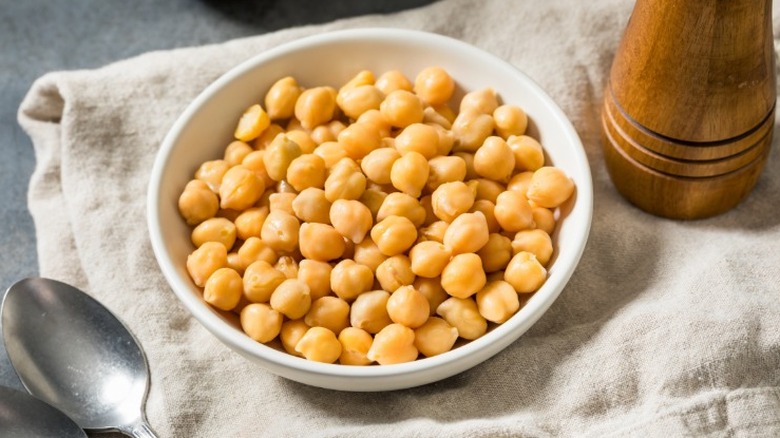
Another strong contender in the world of meat substitutes is the humble chickpea. Chickpeas, or garbanzo beans, have been used in everything from veggie burgers to "tuna" salad. The liquid from the can, called aquafaba, can meanwhile be transformed into an airy meringue. But these aren't just for vegetarians, and vegans. Despite their unassuming appearance, chickpeas pack a good amount of protein, and are low in saturated fat.
Not only are they nutrient-dense, but chickpeas are also filling. Roasting canned chickpeas with your choice of seasoning makes for a quick, easy shortcut to a hearty snack. They can, of course, be used to make hummus or added to curries, and salads. And if you've ever had trouble with hard beans, even after cooking, adding baking soda is the way to soften canned chickpeas. Simply add half a teaspoon in a pan with the canned chickpeas and their liquid, and boil for up to twenty minutes or until they reach your desired softness.
Beets
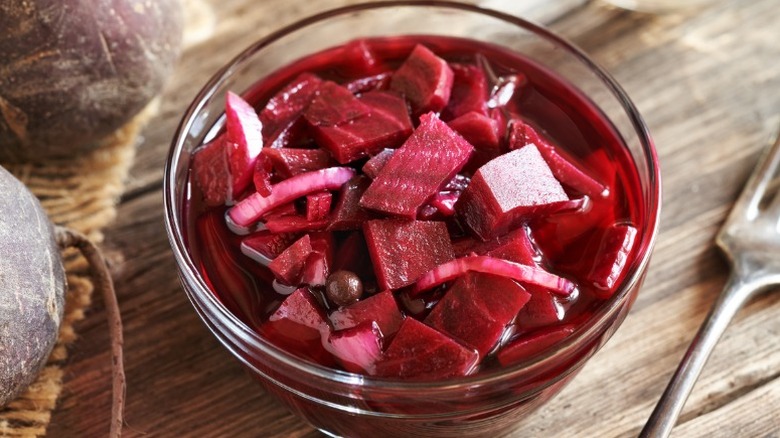
Beets are another one of those hit or miss vegetables. Some people love them; others can't stand them. If you hate beets, blame your genetics, as some people's genes make them more sensitive to the scents of geosmin, and 2-ethylfenchol, both found in beets. If that's you, you probably think beets taste more dirt-forward. If your genes have saved you from this particular plight, though, you probably appreciate the sweet, subtly earthy flavor that these vibrant veggies have to offer.
Besides their visual appeal, beets provide a hefty dose of antioxidants, and iron. Studies have shown beetroot may even help fight tumors. If you want to take advantage of all the health benefits of beets, one of the best dishes to make is borscht. This is a classic soup eaten in many Eastern European countries, but especially common in Ukraine. The main star is the beets, but potatoes, carrots, onions, and cabbage are common additions. Top it all off with a dollop of sour cream that stands out against the deep red liquid, and you've got a showstopper.
Potatoes
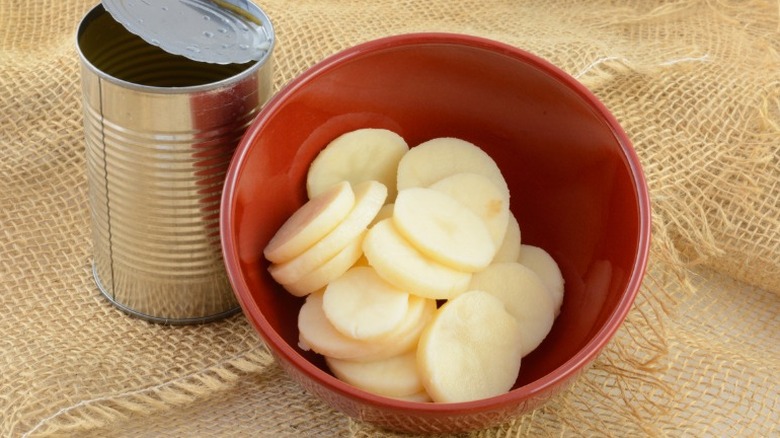
The best thing since sliced bread might just be sliced, and canned, potatoes. A can of potatoes does away with boiling rock-hard spuds to the perfect consistency, and also the time spent cleaning, cutting, and peeling. These little discs come pre-boiled, pre-peeled, and pre-sliced, so you'll be sitting down to eat in no time. Of course, you can also opt for whole canned potatoes, depending on the dish you're making.
You can make a simple side dish fit for any meal by simply adding canned potatoes to a pan with a little bit of oil, and seasonings, until they turn golden. You can also step it up, and make an easier version of shepherd's pie or chicken pot pie for a filling main course. Even when potatoes aren't the main focus of the dish, you can take advantage of their natural starches by pureeing them into soups or stews for a thick, creamy consistency.
Black or pinto beans
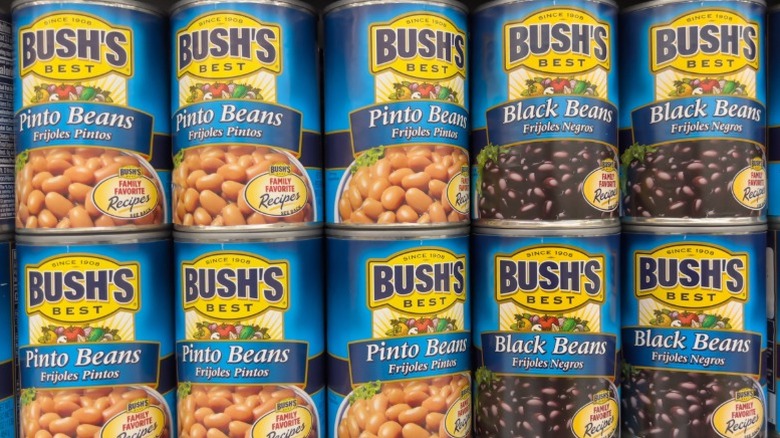
Last but certainly not least, no pantry is complete without a few cans of black or pinto beans. Both are great ways to make any meal more hearty, and delicious. Black beans have a firmer texture, and an earthy flavor that's great in salsas, and soups. Pinto beans are softer, with a creamy, slightly nutty taste. They work well as refried beans thanks to their creaminess, and are tasty when scooped up with a warm tortilla.
Canned beans can be served alongside meat or as meat substitutes. Research suggests that eating canned beans in place of other protein sources can actually contribute to healthier eating. Mixing different types of beans in a single dish, such as a chili made with both pinto and black beans, can play up their meatier textures, and complimentary flavors. Beans also make wonderful burger patties, and faux taco meat. Despite their differences, black and pinto beans are similarly nutrient-dense, packed full of protein, iron, and fiber. You can't go wrong with either, but you'll want to have at least a can stored away at all times.