

Huge Flops That Fast Food Chains Want You To Forget About
Products like The Big Mac, The Whopper, Munchkins, and the Frappuccino have become part of the fabric of daily life. But for each of those succulent success stories, there are countless fast food menu items that were brought to market only to fail to attract consumers, and eventually fail from memory. Chains are always trying to introduce the next big thing, or copy a great idea from a rival. These corporations invest a lot of time, effort, and money to make it happen — only to sometimes see it not happen.
There are so many fast food flops that we could fill an entire encyclopedia with them. We're starting with this list, skimming from the top of the flops, ready to present to you the cream of the crap. Some of these items — like breakfast pizza or Subway actually slicing fresh meat — sound like good ideas, but others — like healthier-ish French fries or KFC branching off into roast beef — seem so off-brand, it's like they were doomed from the start. Sit back, relax, and prepare yourself to flip for the biggest fast food flops that chains want you to forget about.
Kentucky Roast Beef (1968)
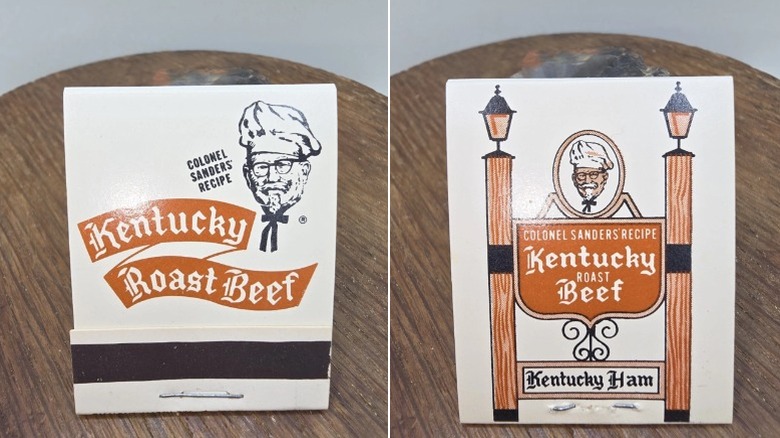
In the 1960s, Arby's was making a name for itself with its roast beef sandwiches, and other chains wanted a piece of that bunned action. McDonald's pushed its own roast beef sandwich in 1967, and after Kentucky Fried Chicken branched out to launch fish and chips, and a chain of Colonel Sanders Inns, it introduced Kentucky Roast Beef.
Las Vegas played host to the new concept, which centered roast beef, and ham sandwiches. By 1968, armed with a $9 million ad budget, and Colonel Sanders' famous seasonings, Kentucky Roast Beef was ready to franchise. A year later, 15 standalone Kentucky Roast Beefs were in operation, and the company unveiled its goal to open 400 in the early '70s.
Needless to say, KRB did not become the next great acronym. By 1973, locations were closing, with some being turned into Kentucky Fried Chicken outlets. And by 1974, Colonel Sanders' relationship with KFC's corporate owners, Heublein, had soured. The founder was reportedly upset that his good name was being used to promote pastries, bread, and diary products, as well as provide back pay to support the failed Roast Beef chain, and hotel ventures. The roast beef and ham sandwiches were sold at KFC locations throughout the '70s, with some offering the former as late as 1984.
Domino's Bake-Ups (1984)
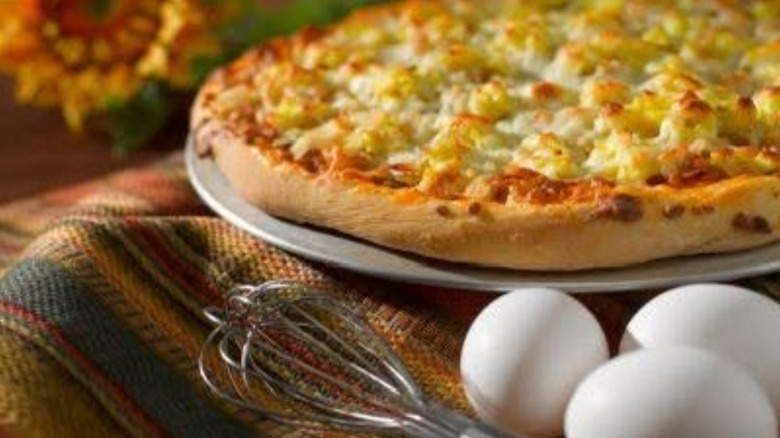
In 1984, a Dayton, Ohio Domino's franchisee, Eric Marcus, set out to make breakfast pizza a thing. The final product was the Bake-Up, a 10-inch pie topped with breakfast-appropriate items like eggs, cheese, veggies, sausage, ham, and bacon. For those with a sweet tooth, other versions featured apples, blueberries, and cinnamon streusel. For six months, Bake-Ups were available from 5 a.m. to 11 a.m., and cost $4.95 each. They could be ordered that morning or the night before, and were delivered with a 24-ounce cup of coffee, and a copy of USA Today at no extra charge.
While Bake-Ups earned a 95% approval rating among those who tried them, sales lagged. Marcus told the Dayton Daily News in 1985, "McDonald's lost money on breakfast the first two years ... At this point we're losing a little more than we expected." After the trial period was up, the plug was pulled on the experiment — but Bake-Ups weren't done for good. The idea was revived in 2010, when the first 24-hour Domino's opened in the Dayton area, and was more successful the second time around. Within three years, breakfast pizzas were being served all day, every day at 19 locations, and were still available until at least 2017. Eventually, they were discontinued once again, and the 24-hour location called it a night in 2019.
McDonald's McPizza (1985)
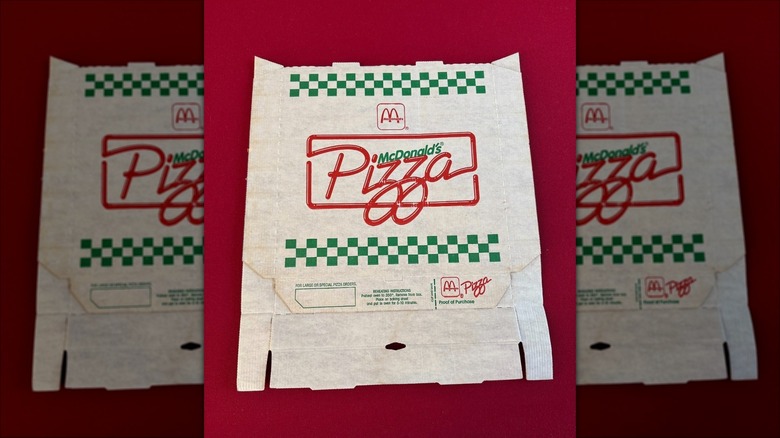
One item that the McDonald's test kitchen has repeatedly tried to turn into money-making reality is pizza. In 1985, the first version of McPizza surfaced in Philadelphia, and was essentially its apple pie, but made with pizza fillings. Two years later, customers at select Utah, and Charlottesville, Virginia locations were treated to the next iteration: a 7-inch, oval-shaped personal pie. Then, in 1989, McDonald's got serious, and unveiled the McDonald's Pizza — with a catch: It was only sold after 4 p.m.
This version of the McPizza went big on everything, with the 14-inch pie requiring a kitchen and drive-thru remodel in the test market of Evansville, Indiana, so that the pizzas would fit. For whatever reason, or many reasons, the McPizza was never introduced as a national product. (Canada did try, but eventually pulled the plug as well.) In some test markets, though, it managed to live on until 2017, when McDonald's HQ forced its locations in Pomeroy, Ohio, and Spencer, West Virginia, to turn off their ovens for good. Today, if you'd like to try McPizza, you'll have to travel to the world's largest McDonald's in Orlando to do so.
Burger King's Herb ad campaign (1985)
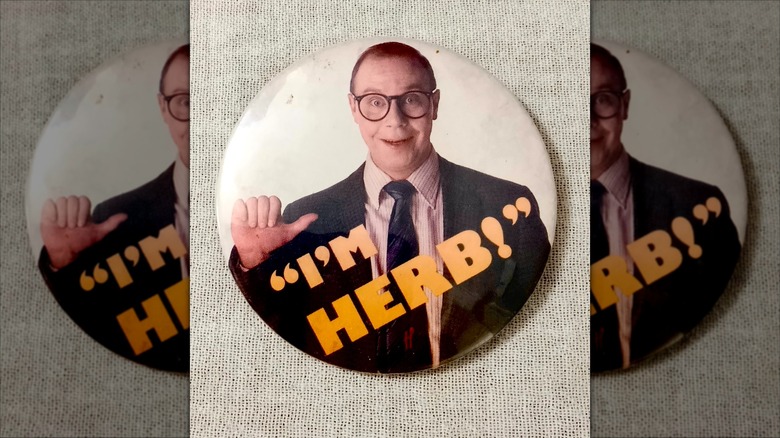
In 1985, the Home of The Whopper launched a wild ad campaign with a mysterious star: an unknown man named Herb who had supposedly, somehow gone his entire life without entering a Burger King. The campaign kicked off a nationwide search for Herb that lasted six weeks, culminating in two commercials that aired during the Super Bowl XX. Those spots revealed Herb to the public, and also relaunched the manhunt, as the actor who played Herb — Jon Menick from Wisconsin — went on tour, randomly appearing at Burger Kings throughout the U.S. and Canada. The first customer to spot Herb in one would win $5,000, and a chance at a million more.
While the ads did raise brand awareness for Burger King, the $40 million campaign didn't exactly translate into sales. Even James B. Patterson, an executive at the ad agency behind the campaign, J. Walter Thompson, admitted to The New York Times in 1986 that maybe Herb "should have been a surprisingly attractive individual." That agency was replaced a year later, while Menick went on to appear in minor roles before retiring from acting in 2011. When he passed away in 2022, his obituary proudly hailed his time spent as Herb.
Jack In The Box renamed itself Monterey Jack's (1985)
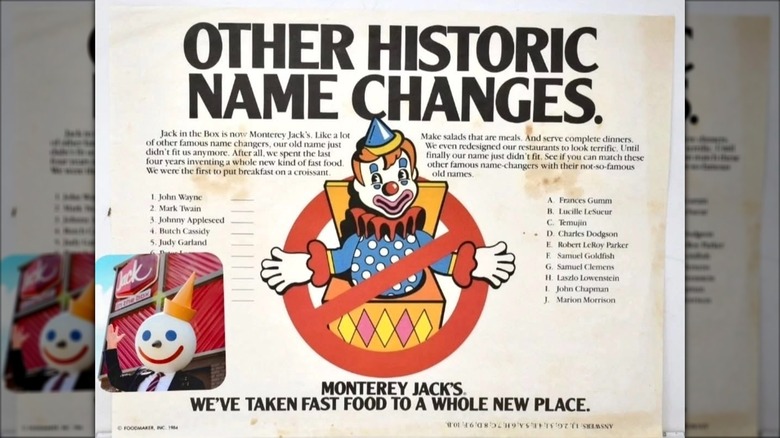
Always seemingly suffering from an identity crisis, Jack In The Box has changed its logo a number of times. In 1985, the brains behind Jack decided to ditch the clown in favor of a more mature mascot: Monterey Jack. Senior Vice President Michael Purvis told The San Francisco Chronicle that this was to "closely identify with the new market — fewer families, more upscale."
The rebrand came with new menu items like salads, and croissant breakfast sandwiches, and the decor was upgraded with Tiffany lamps, wool carpeting, brass rails, plants, and stained glass. Print ads explained the name change with taglines like "The Best Known Stranger In Town," while the makeover was implemented at 60 locations across the U.S.
Despite positive feedback, Monterey Jack's reverted back to its original name a year later. Victor B. Elkind of parent company Foodmaker Inc. admitted to The Belleville News-Democrat, "We found that it's not what you're called that's important — it's what you are." The clown remained sidelined, but Jack returned to duty in 1994, after the chain's reputation was tarnished by one of the country's deadliest E. coli outbreaks.
BK Dinner Service (1991)
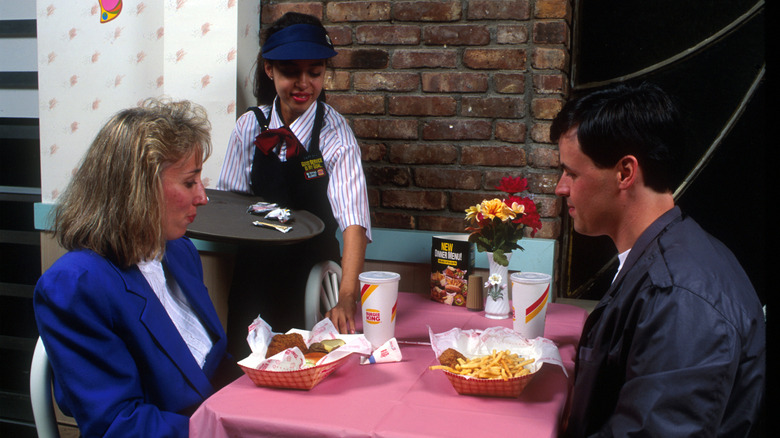
In early 1991, Burger King attempted to slow fast food down by offering sit-down table service. Bossier City, Louisiana was the first location to offer BK Dinner Service, and within two months, over 900 Burger Kings were serving guests table-side. Positive feedback from those customers prompted Burger King to expand the program to 5,700 locations in October of '92.
The service at these gussied-up Burger Kings included free popcorn, and an expanded dinner menu with baskets of fried shrimp, steak sandwiches, and bunless crispy chicken filets. Side options included salads, coleslaw, and baked potatoes.
While the idea had merit, it couldn't halt Burger King's downward slide, and the chain continued to lag behind its rivals. Following the weakest sales gains, and a loss in the market share, the company streamlined its menu in the summer of 1993, cutting niche programs like Weight Watchers, and the Basket Dinners. Availability was reduced to select locations before the servers' aprons were hung up for good.
McDonald's McLean Deluxe (1990)
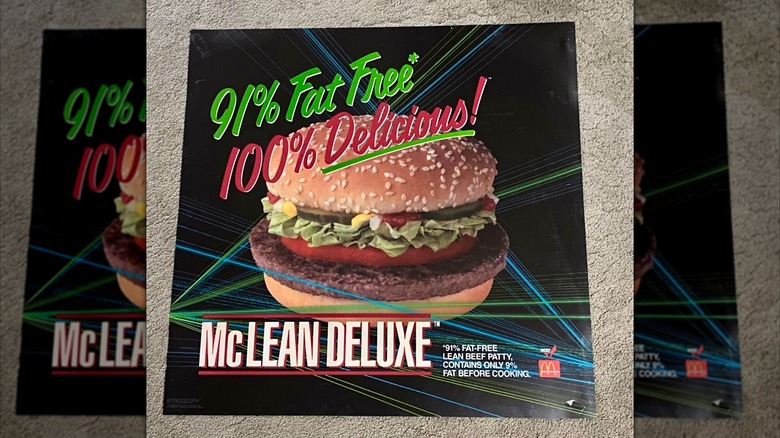
The 1980s brought mounting pressure to get fit. Fast food chains responded by moving away from frying in beef tallow, then launched efforts to reduce fat in beef. MacDonald's partnered with Auburn University to introduce a beef product that used carrageenan from seaweed, and only carried about 9% fat. On a bun, this innovative protein became the McLean Deluxe.
Harrisburg, Pennsylvania served as the test market in 1990 but, on April 26, 1991, the McLean Deluxe went nationwide. McDonald's preemptively addressed the inevitable skepticism with TV ads promising its new burger would blow customers away. But after a year on menus, those customers said otherwise, and The Washington Post dubbed the McLean "the Flopper." After investing $70 million in researching and marketing the low-fat burger, the brand pivoted to prioritize the McRib instead. The McLean DeLuxe was decommissioned in 1996 — but if you ask us, it's one of the McDonald's menu items that deserve a comeback.
KFC's Rotisserie Gold Chicken (1992)
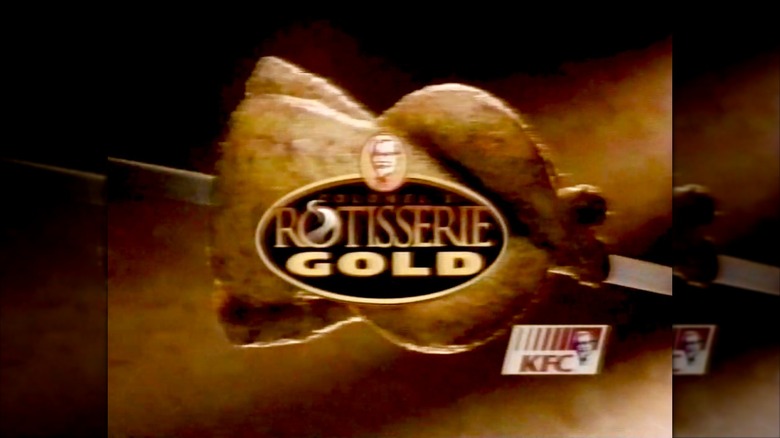
In 1989, in the interest of offering healthier alternatives, Kentucky Fried Chicken gave charcoal chicken a shot. Two years later, it rebranded to KFC to hide its fried heritage, and launched the Lite'n Crispy line. Then, in 1992, in a bid to take on Kenny Rogers Roasters, and Boston Market, KFC unveiled Rotisserie Gold Chicken. The new item boasted 40% less fat than other options, and was available in test markets as whole, half, and quarter pieces.
Within a year, after investing $100 million in equipment and advertising, KFC took Rotisserie Gold nationwide, and saw immediate results. The chain recouped its investment, and became one of the nation's top sellers of rotisserie chicken. By 1994, KFC was selling 2 million orders a day. But when its rotisserie machines reportedly began to break down, it seemed the chain was losing its Midas touch. The goldmine that was Rotisserie Gold had run dry, and by 1996, KFC let that product fly the coop.
To replace Rotisserie Gold Chicken came Tender Roast, which had crispy skin, and more natural chicken flavor. But this wasn't built to last, either. KFC's Oven Roasted Strips arrived in 2004, only to be replaced with Kentucky Grilled Chicken in 2009. But unfortunately, KFC gave up on grilled chicken, too.
Chick-fil-A Cranberry Orange Bagel (2006)
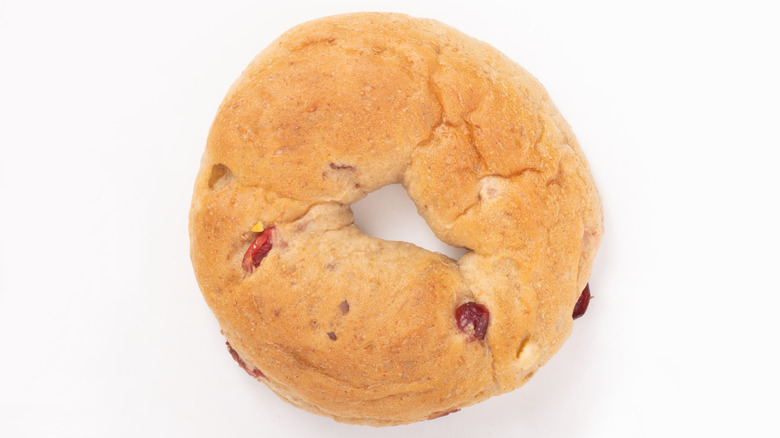
Outside of Chick-Fil-A's Little Blue Menu of wings, burgers, and pizza, the chicken chain doesn't usually stray from its classics. However, there have been quite a few experimental foods that never made it out of Chick-Fil-A's test kitchen, including Biscuit Cinnamon Rolls, Chicken Quesadillas, and a Rosemary Garlic Flatbread. And one test kitchen item was so odd, we should probably be thankful that we never had the chance to order it: the Cranberry Orange Bagel. (Honestly, it doesn't even sound like something worth ordering at a bagel shop.)
The fruity, square-shaped bagel was served with a breakfast chicken fillet, and cream cheese on the side. After amassing fans in its own kitchen, the bagel was slated for a 2006 debut as part of Chick-Fil-A's breakfast menu — but it never quite made it. On the company's blog, Chicken Wire, in 2019, Chick-fil-A chef Christy Cook remembered it fondly. "It was just so far out there, ahead of its time," she proclaimed, then added: "The market isn't ready for it." The legacy of this curious bagel lived on for a time with the Chicken, Egg and Cheese Breakfast Bagel, but Chick-fil-A bid adieu to bagels altogether in 2021.
Pizza Hut's P'zolo (2012)
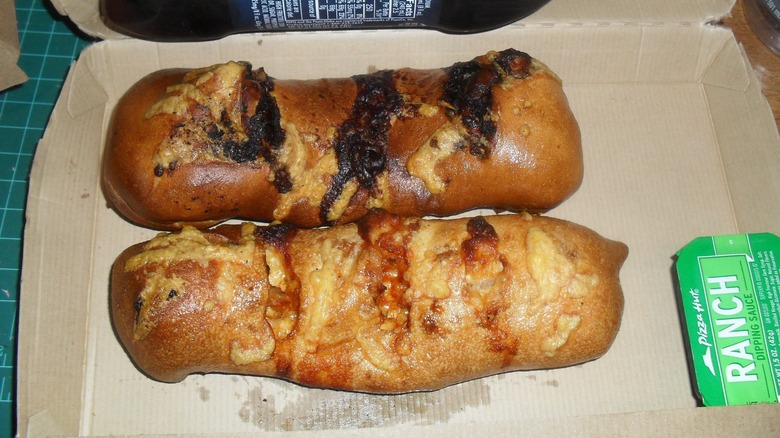
In 2012, Pizza Hut took on Subway's sub sandwiches when it introduced its P'Zolo concept. The 7-inch sandwiches, which looked like pizza burritos, were billed as something innovative, and heavily advertised as a new food that defied categorization. They cost $3 a pop, and came in three flavors: the Meat Trio, Italian Steak, and Buffalo Chicken.
While some early reviews of Pizza Hut's new sandwiches called them tastier, and fresher than Subway's, most weren't exactly stellar. In fact, Denver publication Westword gave the P'Zolo "a big fat P'Zero." And sure, the hot, straight-out-of-the-oven appeal of P'zolos was a draw, but it came with a major downside: You had to wait 15-plus minutes to get one into your hands.
Despite the fact that it arrived with great fanfare on June 4, 2012, by August, the P'Zolo had already become a thing of the forgotten past. That doesn't mean the pizza chain has given up on winning the sandwich game, though. Today, the company has pivoted to promoting Pizza Hut's new Melts, which come in four flavors, and look more like traditional slices.
Subway's Flatizza (2013)
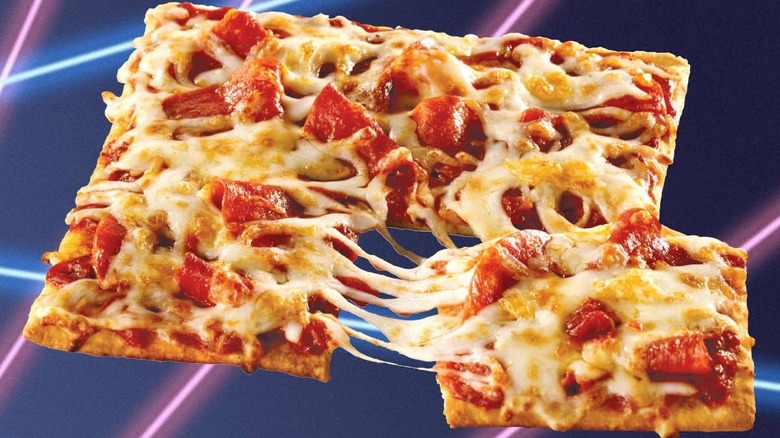
In 2013, shortly after Pizza Hut took aim at Subway's main breadwinner, Subway struck back by testing a flatbread pizza product in Michigan. After considering names like Flatini, Cristada, and Crustini, Subway ultimately moved forward with a portmanteau that was hard to pronounce: Flatizza ("flah-TEE-zah"). The 6- by 6-inch Flatizzas repurposed the flatbreads that Subway was already using for its breakfast menu, and added marinara, mozzarella cheese, and one of four standard topping options: plain cheese, veggies, pepperoni, and spicy Italian.
From the start, the public was both mystified, and skeptical of Flatizzas. NPR's "Wait Wait ... Don't Tell Me!" delivered such barbs as, "Remember in the 15th century, when everyone thought pizza was flat?" Unfortunately, public opinion didn't improve once people tried it. Upon sampling the Flatizza, a Facebook user called it "the most fresh stale pizza I've ever had," and Dave Portnoy's One Bite Pizza Review anointed it merely better than Sbarro's. The flatbread flatlined sometime in 2015, and was removed from national menus, becoming one of the many discontinued Subway menu items we'll never eat again.
Burger King's Satisfries (2013)
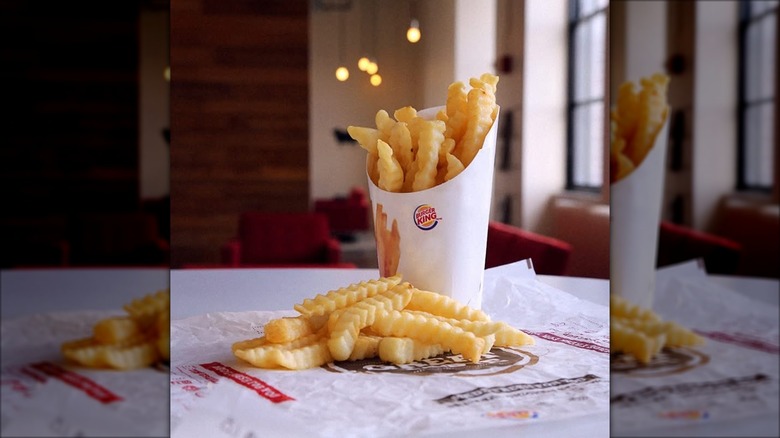
Burger King seems to never be satisfied with its French fries. It's changed the recipe a few times now, and on September 24, 2013, it offered a new version altogether. Called Satisfries, the crinkle cut fries used a less porous batter to ensure they absorbed less oil in the frying process, resulting in 40% less fat, and 30% fewer calories than McDonald's golden fries.
By the following February, Burger King's U.S. sales had risen by a mere .2%. But the company's President in North America, Alex Macedo, still championed the healthier fries, telling The Associated Press, "It's not a mainstream product, it doesn't have the broadest appeal, but it is a premium product and has had success."
Ultimately, Satisfries weren't all that satisfying, and the product lost support before it turned a year old. When given the choice, 5,000 out of 7,500 Burger King locations kicked them to curb, and the rest eventually followed. To add in-salt to injury, that announcement coincided with the return of the chain's Chicken Fries, while The Onion peeled back some humor with the faux quote, "An apology for providing healthy options would go a long way toward restoring our trust in the brand."
Starbucks' Oleato (2023)
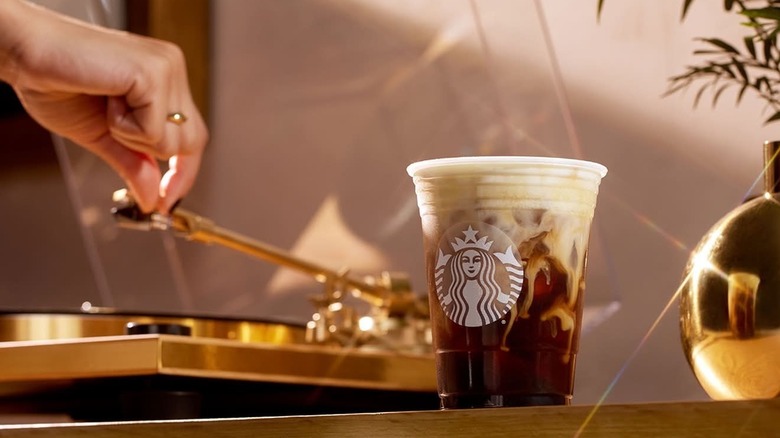
The best ways to use olive oil are many. It works wonders for pastas, salads, pizzas, potatoes, and dips — but can it do the same for coffee? Starbucks CEO Howard Schultz believed it so, and willed into being the Oleato, a line of Italian-inspired beverages made to celebrate the unique alchemy of two revered ingredients.
The drinks, infused with Partanna extra virgin olive oil, debuted in Italy in February of 2023. Within a year, customers in the U.S. and Canada could join the Italians in ordering an Oleato, Starbucks' strangest product, available in latte, espresso, or cold brew form. For all variations, and even in our definitive ranking of Starbucks' Oleato olive oil drinks, the reviews were beyond mixed. To make things worse, the beverages induced some unwelcome side effects, including plenty of upset stomachs that sent both customers, and employees alike running for the restroom.
That summer, Schultz' replacement, Laxman Narasimhan, claimed that the Oleato was a resounding success, and announced a plan to expand its reach to more stores. By that fall, however, Oleato had its own fall. Brian Niccol became the company's new CEO, and it didn't take long for him to try to right the ship, taking measures that included Starbucks ditching the Oleato entirely. Thus ended the drink's run, and the runs that the drink caused.
Subway's Freshly Sliced Meats (2023)
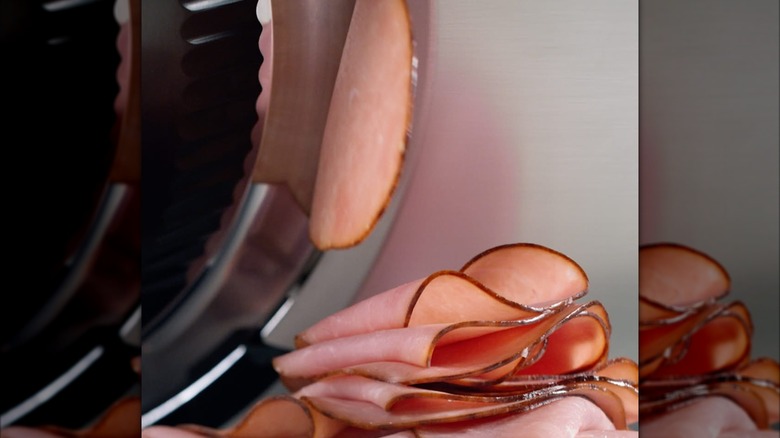
Subway has touted its commitment to eating fresh since as early as 2000. Over two decades later, the company sought to freshen things up even further with the launch of a new initiative: freshly sliced meats. The endeavor involved the corporate office making major adjustments to its supply chain, and investing $80 million dollars into meat slicers that it then gifted to 20,000 franchises across America. The sandwich chain was clearly ready to go all in on building a better sandwich, putting its money where its mouth was.
As both a functional tool, and a means of performance, Subway's new meat slicers were meant to add to the actual quality of its sandwiches, and also their perceived quality. However, the fancy new devices came with some unforeseen hurdles. For one thing, they add more labor time to cutting the meats, and then require more time to clean. In the case of low volume stores, a lot of meats have entered into a losing race against best-by dates, leading to a lot of un-sliced waste. While they are still in place today, it's not clear that they were worth the expansive investment, especially since customers can't really see what difference Subway's deli slicers make. Chairman Bill Mathis, of the North American Association of Subway Franchisees, told Restaurant Business a year into the venture, "Nobody is saying this is the greatest thing since sliced bread."