

Beef Stew Bursts With Flavor When You Add These 12 Seasonings
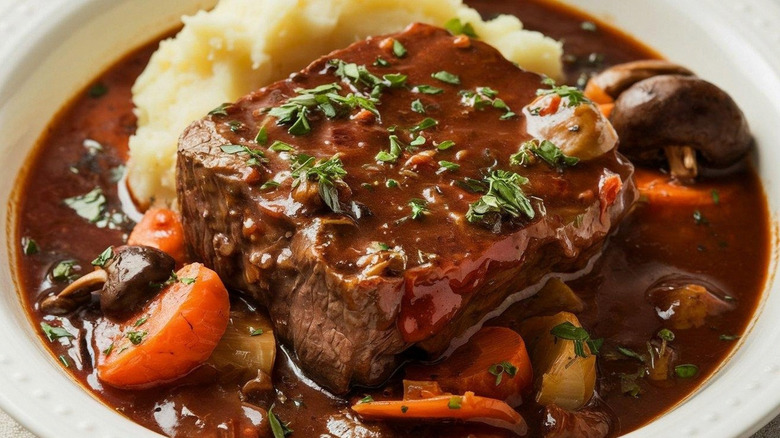
When the days get shorter, and the air turns cold, it's normal to embrace the things that make you feel warm and cozy. Fuzzy pajamas, heated blankets, a cup of hot cocoa, and a bowl of stew simmering on the stove. Few things feel quite as good. But there's a very real catch here — a stew can simmer all day and still taste flat if the seasoning isn't right.
That's why we asked five experts who work with herbs, spices, and slow-cooked stews to share what they choose to put in the pot. First up is Ty Sherrell, founder of TX Brew & Barbecue in Midlothian, Texas. He is joined by Jennifer Kellison, director of innovation at Simply Organic and Frontier Co-op, who works alongside a team that's constantly in the test kitchen developing and testing spice blends and recipes, and Samantha Binkley, founder and CEO of the organic spice company Healthy On You, who develops blends for a living and teaches technique in her cooking classes.
Dagan Lynn, executive chef at Beef. It's What's For Dinner, brings a chef's view of building flavor around beef. And finally, Jagatjoti Khalsa, chief revenue and innovation officer at Starwest Botanicals, a provider of organic herbs, spices, and botanicals for more than 50 years, knows how aroma and flavor can lift a dish. Here are the seasonings they reach for, so your next stew has more keeping it going than just a long simmer and a bit of luck.
Thyme
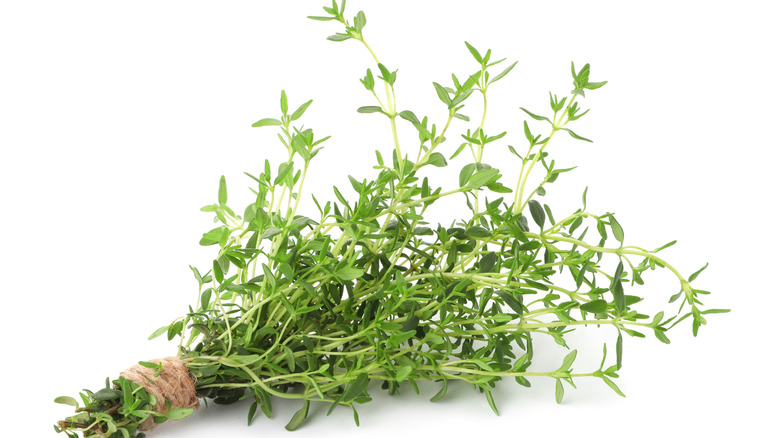
For Jagatjoti Khalsa, thyme is his go-to stew seasoning. "Thyme, beef, and time belong together," he says. He describes the herb as "earthy and a little floral," complementing the richness of the beef. As thyme has the ability to hold up throughout several hours on the heat, so it's a seasoning that keeps giving.
That staying power is also why thyme goes into your pot of stew early. Ty Sherrell adds about three sprigs along with the stock, for a pot with roughly 2 pounds of beef and 4 cups of stock. Khalsa, on the other hand, builds his foundation with dried thyme, which also goes in early so it has time to settle in and melt into the layers of flavor in the stew. Sherrell, however, does recommend taking the stems out before serving, so the flavor stays in the stew and the twigs stay out of the bowl.
Samantha Binkley agrees with the timing of adding the herb and explains that the flavor in dried herbs is locked up in oil, which is why it takes fat and hours of heat to bring it out. That's why a dried herb added in the last 10 minutes "tastes dusty." In addition to timing, the quality matters as well. Khalsa prefers dried thyme that is grown well and both dried and stored properly. This will "outshine a sad bunch of fresh thyme that's spent a week wilting in the crisper drawer."
Bay leaf
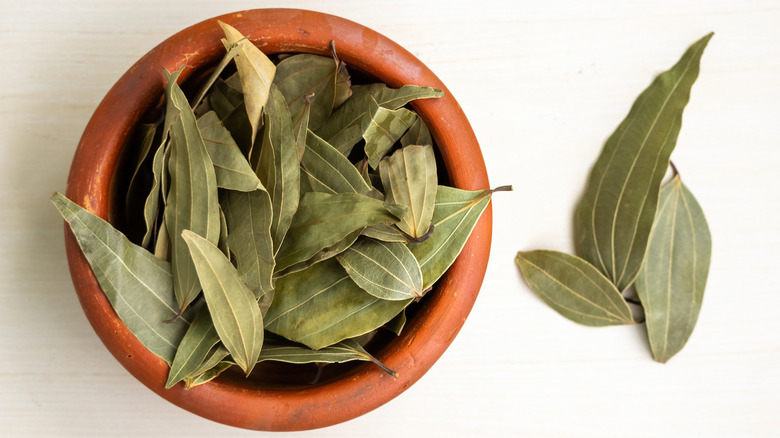
Bay leaf might be the most overlooked ingredient in the stew pot. "Nobody ever tastes a stew and says, 'Ah, bay.' But take it out, and the stew feels like it's missing a friend," says Jagatjoti Khalsa. In other words, bay leaf is the ingredient you only tend to notice when it's not present. Khalsa and Samantha Binkley both agree that dried bay goes in early, along with the thyme and rosemary, so it has time to settle in and become part of the stew.
Ty Sherrell adds a single bay leaf to the stew. That's a lot of heavy lifting for one single leaf, but as long as it's added in early, simmers for as long as the stew does, and comes out before serving, it does what it's meant to do. Nobody will name it when they taste the stew, but they might notice that it tastes complete. The subtle background aroma is what makes all the difference. And oh yes, don't forget to take the leaf out before serving.
Rosemary
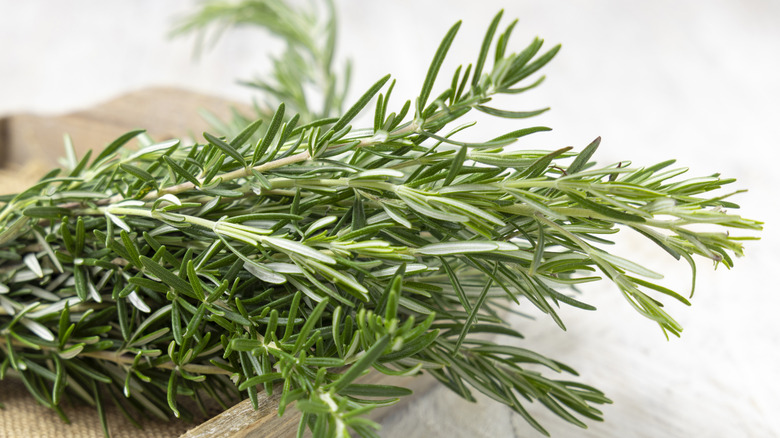
Jagatjoti Khalsa has a rule for handling rosemary, especially in a stew. "Rosemary is wonderful, but treat it like a loud guest at dinner: invite it, just don't seat it at the head of the table," he explains. It's part of his stew's foundation, alongside thyme, bay leaf, and black pepper, but he warns that too much rosemary has the tendency to take over a pot of stew. That said, timing the addition of rosemary does give it a chance to settle down. Khalsa prefers to add dried rosemary early, along with the thyme and bay leaf, so it has time to become part of the stew and doesn't announce itself at the table.
Jennifer Kellison explains where that volume comes from. "Thyme," she says, "adds a light earthy note, rosemary brings a more robust, woodsy flavor." She still puts it in her starting lineup for beef stew, next to thyme, a bay leaf, garlic, and black pepper. It simply needs a lighter hand than the rest. So remember — invite rosemary in early, give it hours to mellow in the broth, and it takes its place with the others without overshadowing everything else.
Garlic
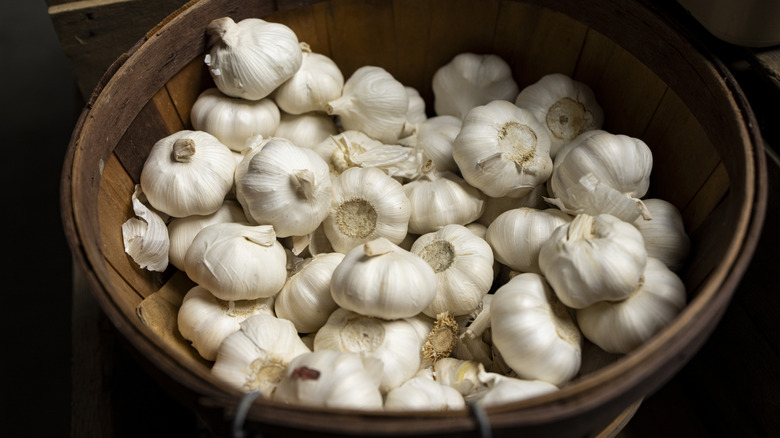
Our experts agree on one thing: Garlic should never be added first to a pot of stew. Samantha Binkley's rule is that nothing goes into the pot before the beef is seared. "Not the onions, not the garlic, not the carrots," she says. The seasoning must hit dry meat in hot fat in order to properly toast into the crust, and the aromatics follow in the fat. Dagan Lynn seasons the beef and browns it well, then "build[s] the flavor base with onions, garlic, and dried herbs, followed by tomato paste, wine or broth." Garlic and freshly cracked black pepper, he says, provide a "savory foundation" for the beef.
Meanwhile, Ty Sherrell browns the beef first, and while the onions cook down, he adds about 2 tablespoons of tomato paste, stirring it into the fat until it turns a "deeper rusty red." The chopped garlic goes in after this so it can become "fragrant without burning." After that, the stock is added to the mix, and the long simmer takes over.
Garlic can also come back for a second appearance if the finished stew needs more depth. Jennifer Kellison suggests adding a little more garlic or thyme if your stew tastes lackluster. Her rule is to "make one adjustment at a time, stir and taste again." You can always add more of an ingredient, but it's challenging — if not impossible — to remove one. Here's an easy hack if you hate handling garlic!
Black pepper
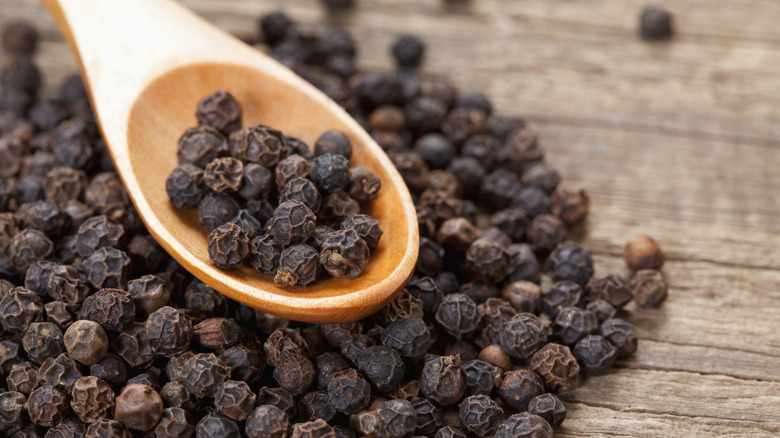
Black pepper is invariably the one seasoning every stew cook automatically adds to the pot, but Jagatjoti Khalsa still thinks we undersell it. He calls it "the most underestimated spice in the kitchen." Freshly cracked pepper is "aromatic and alive," he says. In comparison, pre-ground pepper is "mostly a memory of pepper." Good pepper should sit right up there alongside thyme, bay leaf, and rosemary as the building blocks for a robust stew.
Dagan Lynn uses pepper as part of his first line of defense when a stew tastes flat. He starts with a little salt and freshly cracked black pepper. If it's too heavy later on, he adds a touch of vinegar or a small amount of wine. Khalsa's rescue order is similar but slightly different: taste for salt first, add a little acid if the salt is right, and if something is still missing, try freshly cracked pepper or fresh parsley. Pepper also does a second job once the long simmer is over. Khalsa says another crack of black pepper at the end "brings back the liveliness that long cooking softens."
Tomato paste
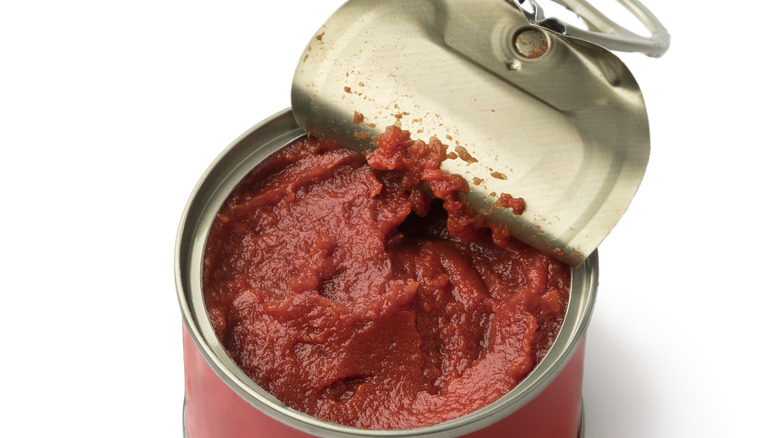
The experts say the secret of a good stew lies in how you use that humble can of tomato paste hiding in the back of your pantry (don't keep said paste for too long, by the way). "How you use it matters more than that you used it," explains Samantha Binkley. Her rule is not to stir the paste into the liquid. Once the meat and aromatics are out of the pot, she first fries the paste in the fat.
Ty Sherrell backs her on this and uses tomato paste in much the same way. For a stew with roughly 2 pounds of beef, he adds about 2 tablespoons after browning the beef and cooking the onions, then stirs it into the fat. The one thing to avoid: scorching the paste. What he's after is "a richer, more rounded flavor" in the base of the stew.
Jagatjoti Khalsa describes what is happening in the pan. A minute in the fat before the liquid goes in is all it takes, and the paste goes from "bright and sharp and acidic to deep and savory." It's the same ingredient, with a very different personality by the time the stock arrives. The paste can also come back as a fix. When a stew tastes flat, Dagan Lynn says a little tomato paste — or a touch more beef broth — will help. His rule for any rescue is to make small adjustments and taste between each one.
Worcestershire sauce
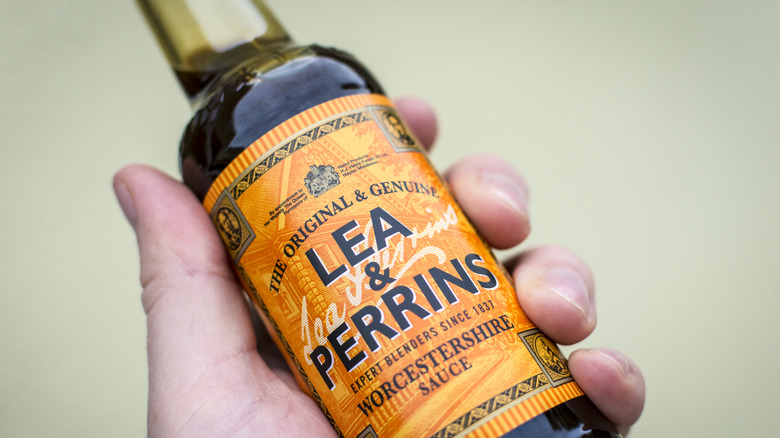
If you reach for your bottle of Worcestershire sauce only when making burgers or a Bloody Mary, now's the time to expand its repertoire. "Worcestershire sauce earns its spot in the pantry," Ty Sherrell says. For a stew with roughly 2 pounds of beef and 4 cups of stock, he starts with about 1 tablespoon in the broth, which adds "savory depth and tang." Keep an eye on the overall salt levels when adding Worcestershire sauce, though, and always use a low-sodium stock as the base.
For Dagan Lynn, "Worcestershire brings savory complexity." A good beef broth, in his words, "ties everything together." It also shows up when a stew needs rescuing — when Lynn's stew tastes flat, he adds a small amount of Worcestershire sauce or vinegar to liven things up. He's firm about the pace, though. "Make small adjustments, taste between each one, and give the flavors a moment to come together," he says.
Fish sauce

Fish sauce might not be on the list of ingredients you usually associate with a traditional beef stew, but it's one that experts say will win you over. "Fish sauce is another option that surprises people," Ty Sherrell says. His advice is to add a teaspoon near the end of the cooking process, stir it, and taste, since the goal is a "fuller savory flavor." If you are using fish sauce, keep an eye on the sodium levels in your stock so that you have room to play around with the seasoning.
Jennifer Kellison appreciates the umami boost fish sauce brings with even the smallest addition. Likewise, for Samantha Binkley, even ½ teaspoon of anchovy or fish sauce "vanishes and leaves the savory behind." That's the idea behind the whole trick. Nobody should be able to taste the fish, only the depth it leaves in the pot.
Restraint and a light hand are definitely needed here. Kellison recommends going slow and tasting as you add more to avoid "overpowering your base." Binkley adds a warning that makes a good rule for the whole savory shelf. Fish sauce belongs to a group that includes ground dried mushrooms and a Parmesan rind. "They all do the same job, so I would only choose two," she says. "Six gets you a muddy stew, and you lose the beef."
Smoked paprika
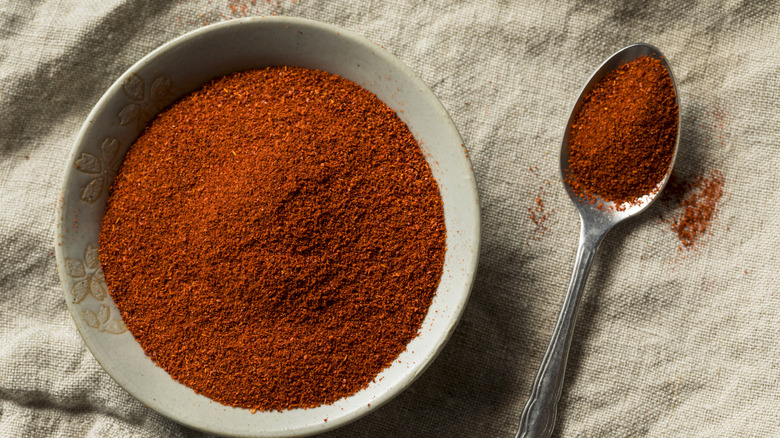
Smoked paprika, Jagatjoti Khalsa says, "lets you add smoke without owning a smoker." Even a small amount can add warmth that will complement a tender meat stew. For that reason, it's one of his go-to pantry staples.
Similarly, Samantha Binkley reaches for smoked paprika as part of a trio (more on the other two elements in a moment). In her list, each has a specific job. The smoked paprika adds a complex layer of smokiness — and the best part is that all three transform entirely after a few hours in the pot.
Khalsa has a rule for getting the most out of your paprika. Ground spices benefit from a "short warm-up in the fat before the liquid arrives," which enhances their aroma and helps it proliferate throughout the whole pot. The catch is that you shouldn't roam too far from the stove. "Burnt paprika is bitter," he warns, and it requires close attention. All you need is a small spoonful, a minute in the fat, and a close eye on the pan for the ideal end result.
Dried porcini
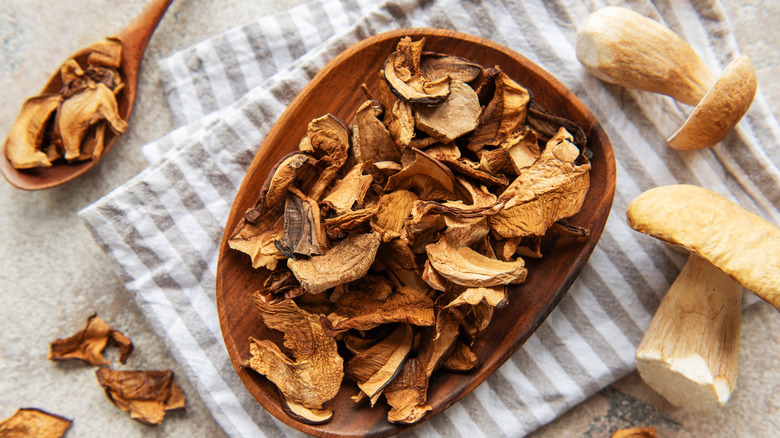
Remember that go-to trio of ingredients used by Samantha Binkley to enhance her beef stew? Well, one of those is porcini mushrooms. Binkley, who develops spice blends for a living, treats the fungi differently in a beef stew. While you might normally soak them in warm water and roughly chop them before using, her version starts with a spice grinder. Ground fine, the porcini turn into a powder that dissolves into the stew, and "the umami spreads evenly through the pot." Whole pieces, on the other hand, "stay chewy and sit apart from the sauce." The powder is dense in glutamates, so it makes a stew "taste more savory without more salt."
In Binkley's experience, flat stews are usually "short on savory rather than salt." When a stew tastes thin or not meaty enough, she says, savoriness is the missing element. Porcini powder is one of the ways she fixes it. Salt comes later, a little at a time. If you'd rather keep the shelf simple, she suggests porcini salt as a one-jar alternative.
Coffee

Putting coffee in a beef stew may sound completely out of the box, and the very real worry is that you might end up with a very strange-tasting dish, but hear our experts out. They argue that when it's done right, you won't taste the coffee at all. "You don't need much," says Dagan Lynn, "but it can add a wonderful depth and complexity to the broth." Coffee enhances the richness of the beef while simultaneously balancing some of the sweetness you gain from the likes of veggies. "The key is to make the bold flavor work in the background, not to make the stew taste like coffee."
Samantha Binkley makes coffee one of her three go-to enhancements for beef stew, ground into the rub on the meat. Coffee and seared beef are both browning, so the coffee doesn't read as coffee and instead just makes the sear louder. Behind it, she puts ground dried porcini and smoked paprika, and "none of the three tastes like itself after a few hours." Binkley is clear about when to add it, though. You need to use it at the start, she says, in the rub. By the end of the cooking process, that means it "has had fat, the sear and a long braise to round out." That's when it turns into a roasty aroma and offers a welcome depth of flavor. "Add it late and it just tastes like coffee," she warns.
Fresh parsley
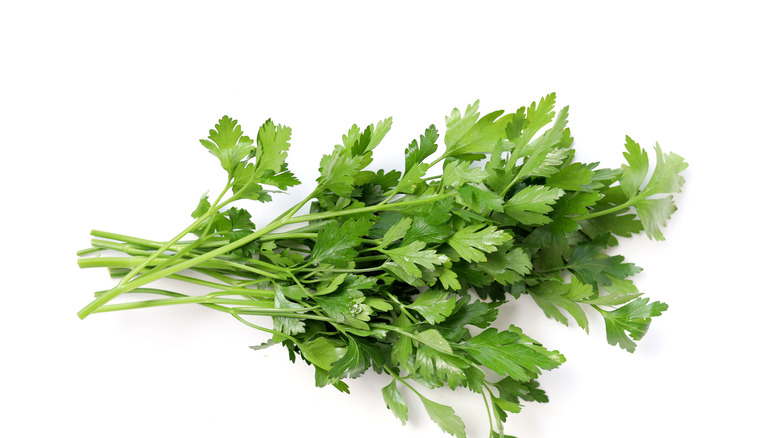
A stew spends hours building flavor, and by the end it can use a little pep. According to Ty Sherrell, a great stew needs "flavor built at the beginning and a little life added back at the end." For him, this "life" comes from fresh parsley. He saves his fresh herbs for the end, when "its freshness can actually show up," and tops the pot with chopped parsley and freshly cracked black pepper.
Fresh and dried herbs aren't rivals, explains Jagatjoti Khalsa, just different ingredients. "Fresh herbs bring brightness," while well-dried herbs bring the "concentrated, rounded flavor" necessary for something that cooks slowly over a long period of time. With that in mind, he builds the foundation with dried herbs and adds fresh herbs at the end. That's when parsley, black pepper, or a squeeze of lemon "brings back the liveliness that long cooking softens." Likewise, for Samantha Binkley, her motto remains: "Dried for the long haul, fresh for the finish." She tends to add her fresh herbs when the stew is complete and no longer on the heat — because, in her words, "those flavors boil off in minutes."