

9 Things You Should Never Say When Ordering At A Barbecue Joint
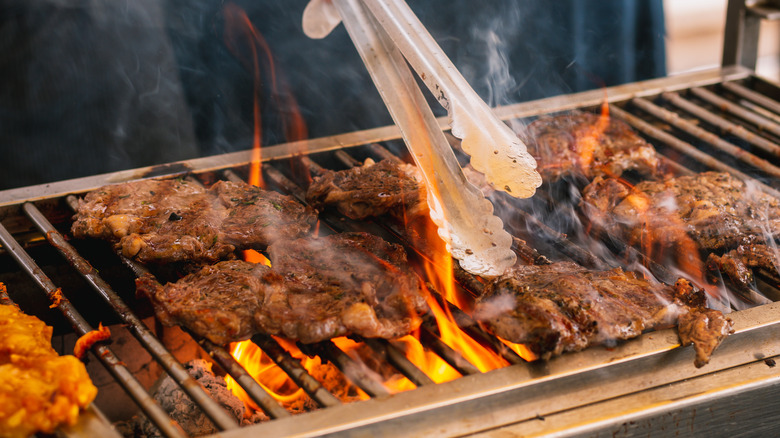
Barbecue is one of those foods people have very strong opinions about. A lot of that comes from how much time and care goes into it. It's also thanks to the ton of online videos and to-dos surrounding either making (or not making) barbecue dishes at home or which restaurant does what best. There are times when everyone seems to know the rules except you and some of the things said with the best intentions land very differently with the person on the other side of the counter. The good news is that none of this is rocket science to learn. A few small changes in what you say can make your order smoother, your meal better, and the person at the pit a whole lot happier.
To help you get it right, we asked two barbecue pros for their best advice on how to order your next meal at a barbecue joint. Scott Thomas is the founder of The Grillin' Fools, a grilling site known for step-by-step, picture-by-picture, foolproof instructions. Part of his job is answering the comments people share online, so he's heard it all. Craig Haley is the CEO of Smokey Mo's TX BBQ, which has multiple restaurants across Texas and smokes its brisket, ribs, sausage, and more in-house every day. Between them, here's what should be left unsaid the next time you step up to the pit, and what to say instead.
1. Do you have pulled pork?
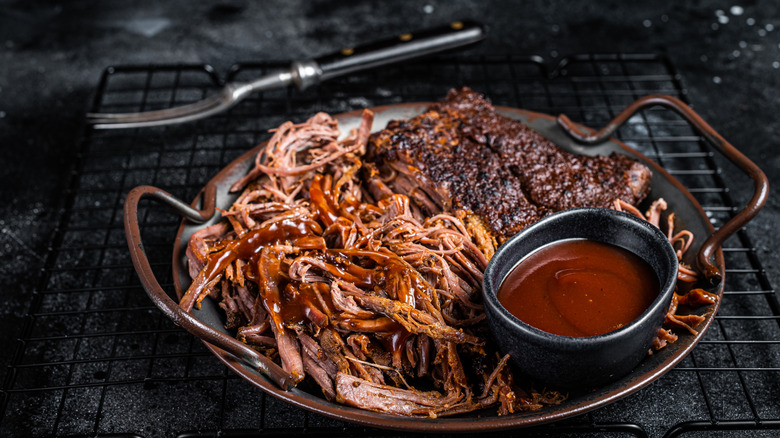
Walking into a Texas barbecue joint and asking the person behind the counter if they have pulled pork sounds like a perfectly reasonable question (in your opinion). But that one question, in fact, says a lot about you. Craig Haley says guests who aren't familiar with Texas barbecue "might try to order pulled pork." He explains why this is an issue: "Texas barbecue is all about dry rubs and meat cooked low and slow in a smoker." In Haley's words, "We smoke all of our meats in-house over post oak wood every day." The menu includes brisket, ribs, sausage, and more. Now, none of this makes pulled pork a bad thing to want, it's just not what would be the best thing to order at certain barbecue joints.
Scott Thomas explains that pulled pork takes many hours of low, slow heat to break down and render all the collagen and fat. And for Haley, that simply isn't what Texas barbecue is about. At a Texas counter, the menu has a different focus. Barbecue is regional, and every part of the country has its own favorite cuts and its own particular way of cooking them. If you are afraid to order the wrong thing, it's best to do a little bit of research beforehand and find out what the place is known for. If you aren't sure what that is, ask. It sometimes really is as simple as that.
2. Just give me some brisket
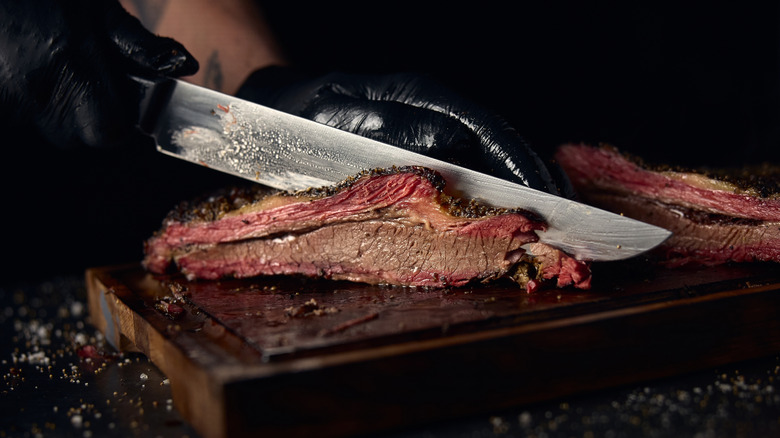
On the flip side, it's tempting to walk up to a Texas barbecue joint and simply say, "Give me some brisket," and leave it there. Be prepared for some follow up questions though. Craig Haley says Texas barbecue regulars already know how they like their brisket: lean, moist, or a combination known as cutter's choice. Newcomers are another story. In Haley's words, "Customers who aren't familiar with Texas barbecue may need a little coaching to find their favorite cut!"
Brisket is a big cut of meat made up of two muscles, the flat and the point. The flat is the leaner part while the point is fattier, which is where the lean versus moist choice comes from. Undoubtedly, brisket is a must when dining at a barbecue joint but it's as important that you ask for it the way you like it. If you've never ordered brisket before, you don't need to pretend. Tell the cutter you're new, or ask what they'd recommend. It works a bit like asking a sommelier for a wine pairing, since the person who knows the menu will serve you better than a random guess. Haley's own recommendation is cutter's choice, and he stands behind the people doing the slicing at his restaurants: "We have the best cutters in the barbecue business, and you won't be disappointed."
3. Can I get some sauce on that?
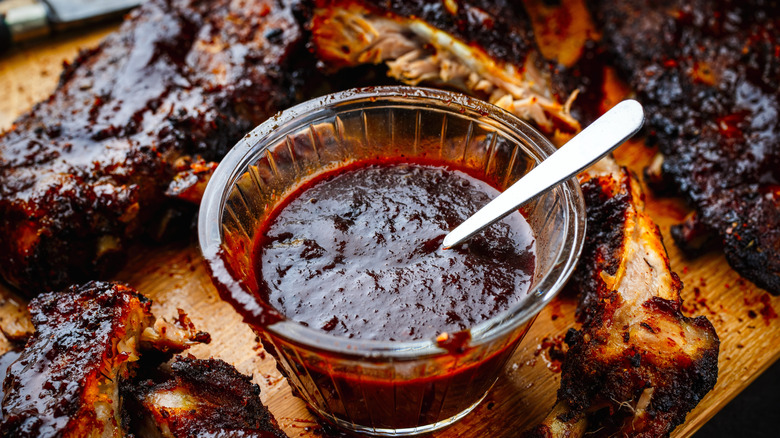
At most barbecue places, you sit down, the food arrives, and the sauce is within reach. But Craig Haley has an earnest request: "We make our own sauce, and it's honestly great, but I hope everyone tries our meat without it before deciding to add sauce." According to Haley, all of the smoked meats stand on their own, and he calls the sauce "just a matter of preference." He just wants to make sure you taste the meat first. Haley says guests who are new to Texas barbecue sometimes ask why the ribs aren't cooked in sauce. If you grew up on sticky, sauced ribs, like South Carolina style barbecues, a dry-rubbed rack might look unfinished at first. Haley points back to the style of the region, which relies on a dry rub and a smoker: "We have some sauced items, but that's not the main focus in our region."
Our suggestion? Take a bite of whatever you ordered with nothing on it, because that bite tells you what the pitmaster was going for. Then decide whether it needs anything. If you want sauce, by all means go for it but it's best to ask for it on the side and add a little at a time. A small pour is easy to add while a heavy pour can't be taken back. Everyone has a favorite style, and Haley's message isn't to skip the sauce. He just hopes you'll enjoy the meat alone first.
4. I'll take several whole chickens
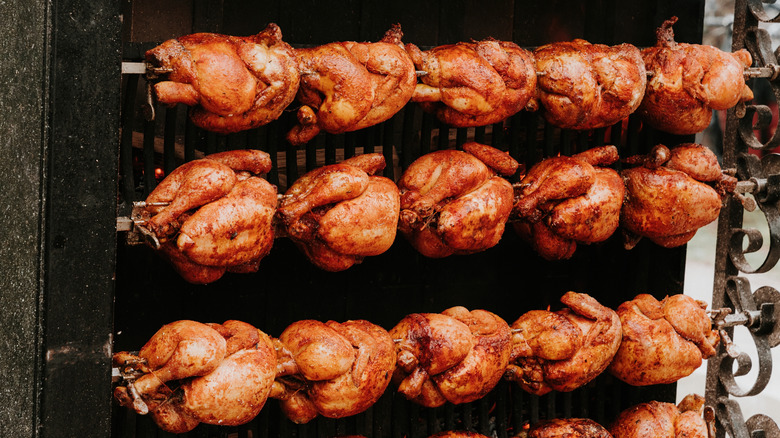
This point has a lot less to do with how you eat your barbecue and more about planning any large orders in advance. Say you take a bite of smoked chicken and love it so much that you want to carry a stack of whole birds home for the weekend. While that's definitely a compliment to the establishment, it can still cause a small problem at a busy barbecue joint.
Craig Haley promises that his restaurants are always happy to accommodate large orders. However, the catch is the way the food is made. Everything at Smokey Mo's is smoked in-house, so when a guest wants "a bunch of whole chickens to take home, it can mean other guests have to wait while we smoke more meat." Haley says each location smokes all of its meats over post oak wood every day. The restaurant strives to never run out, with one exception, which Haley says is a big, unexpected order. He reminds us that a "good Texas barbecue takes time." Smoked meat can't be rushed, and a kitchen can only produce so much in a day. If you just want a little extra to take home, a regular order is no trouble. Haley's concern is the large, unexpected one that holds up the line.
5. Is this chicken undercooked?
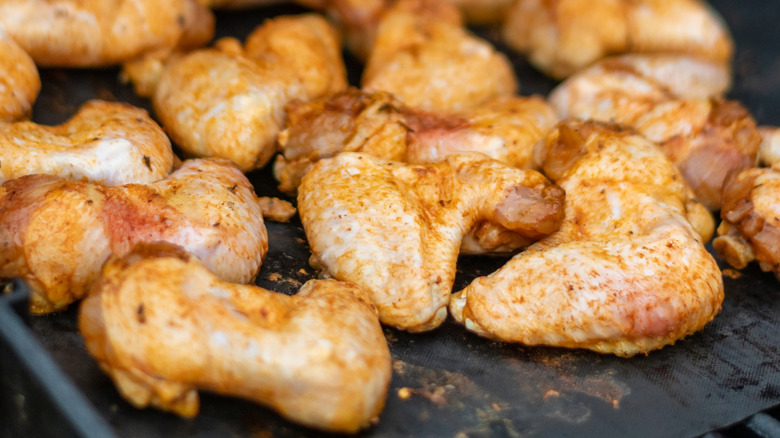
The chicken lands on your tray with a rosy tint and your brain sounds the alarm. Craig Haley says it's common to have this reaction especially with the poultry. Guests worry the meat looks underdone, and Haley says the reason is that "the combination of spices and smoke can give it a pinkish hue." However, well trained barbecue staff are here to reassure you that all is well. Haley says, "We assure them it's fully cooked and that it'll be the best turkey or chicken they've ever had." Since each location smokes all of its meats in-house, the same smoke and spices are working on the turkey and chicken from the start (which is a good thing, by the way!).
When cooking at home, for example, you should never judge poultry by color alone. A thermometer is the only reliable way, and the USDA's safe minimum for poultry is 165 degrees Fahrenheit. In a restaurant you can't poke a probe into your plate, so the sensible move is to ask. A place that smokes birds all day has heard the question before, and Haley's own answer suggests the staff will gladly reassure you. That said, if something looks off, like meat that's cold in the middle or has an odd texture, say so politely and let the kitchen look into it.
6. I like my ribs fall-off-the-bone
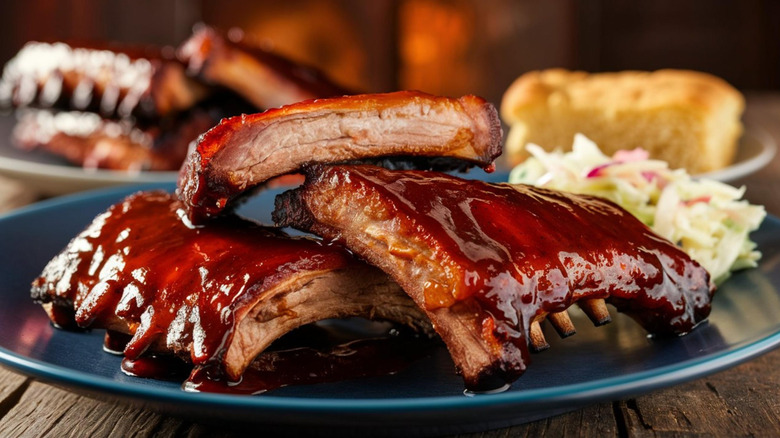
Most of us grew up hearing "fall-off-the-bone" as the highest praise a rib can get. You've probably said it yourself. When requested at a barbecue joint, though, it can come across a little differently. When a well-cooked rib is tender, it still should have some sort of structure and "hold." The rack holds together when you pick it up. When you bite in, the meat should come away cleanly from the bone, ideally leaving a neat bite mark behind. Contrary to popular opinion, if it slides off at the slightest touch, it has gone past tender and into mushy. And what this means is that it was cooked a little too long.
So what could you say instead of "fall-off-the-bone?" Maybe a more open-ended request like "What are the ribs like today?" shows you're curious and allows the person at the counter tell you what they're proud of. If you still prefer ribs on the softer side, that's ultimately a personal call, and it's easy to tell the kitchen what you enjoy. We recommend you taste first, though. Pull one bone from the rack and see how it feels. A good rib tells you a lot about the cook who made it, and you might discover you like a bit more chew than you expected.
7. You burnt it
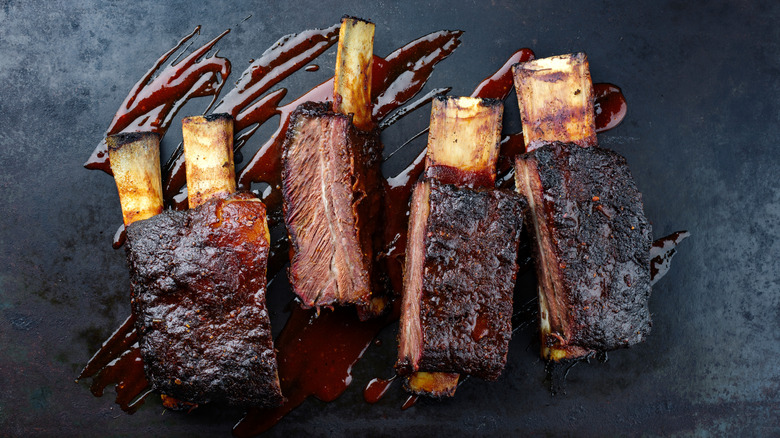
You spot a brisket with a deep, almost black crust, and the thought crosses your mind: that looks burnt. Scott Thomas hears this a lot especially with regard to his his pulled pork and brisket posts. Commenters tell him the outside is all black and that he needs to learn how to cook better. Thomas' reaction is to educate first, and his standard answer starts with time. Brisket needs many hours of low and slow heat.
For brisket, that long cook breaks down the connective tissue so the meat turns tender and stays juicy. For pulled pork, it renders the collagen and fat. It is precisely this long session that creates the "bark" on the outside of the meat. Thomas describes it as "the combination of the seasoning, rendered fat, smoke, and heat that forms a dark outer layer." And here's the part that might change how you look at your next plate: "In fact, the bark is the tastiest part of the shoulder or brisket."
So what should you look for instead? We say go by smell and taste. A good bark smells smoky and savory, with a deep, well-seasoned flavor. If you're unsure, ask the person at the counter for a piece from the edge and taste it for yourself before you decide. Chances are you'll end up asking for a second piece (and more).
8. Why is it gray inside?
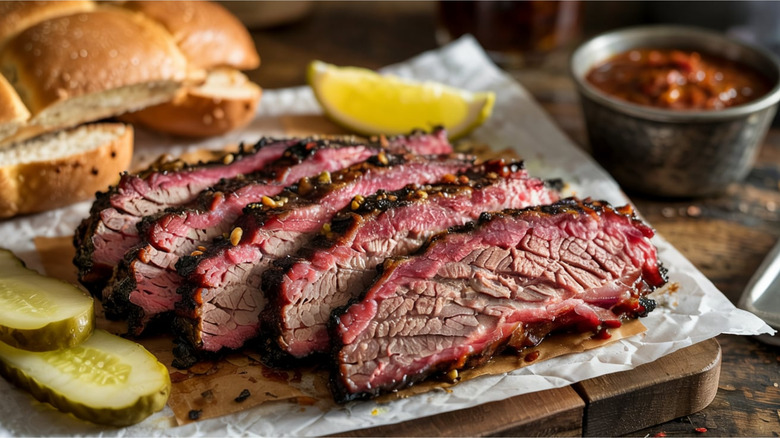
The slice lands on your tray, and the middle isn't the rosy pink you might expect from a steak. It's gray, and the thought forms quickly: they ruined it. Scott Thomas hears a version of this all the time. Commenters on brisket posts tell Thomas the meat is gray on the inside, so the cook must have botched it. Thomas is here to explain that it all comes down to temperature. "Brisket is cooked to north of 200 degrees Fahrenheit," Thomas says, calling that "beyond well-done by a lot." At that point, gray is simply what the meat looks like: "Any brisket, if cooked properly, is going to be gray."
The reason comes down to the cut. Brisket cooks for many hours at fairly low temperatures, and that long, slow cook breaks down all of the connective tissue so the meat turns tender and stays juicy. Keep in mind that brisket follows a completely different clock. For any slow cooked meat, it is better to skip judging it by color and instead look at texture. A good slice of brisket should hold together when you pick it up, bend a little without snapping and taste juicy when you chew. If it does all that, the gray middle tells you the meat went through a long cook.
9. Where's the smoke ring?
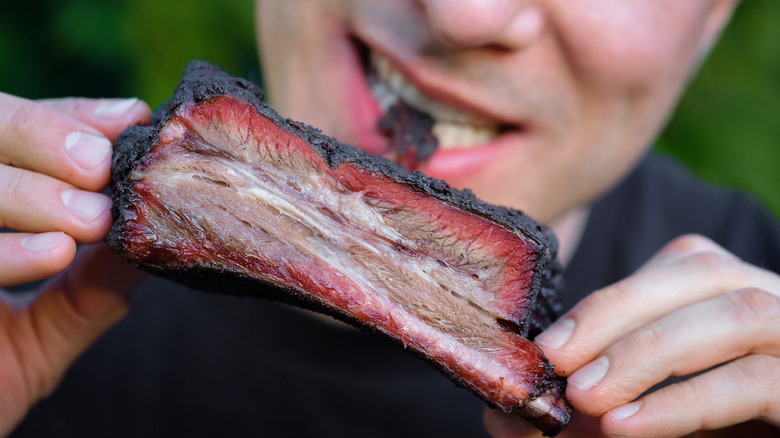
By now everyone has seen enough YouTube videos and food channel tips to look for the smoke ring on a piece of barbecued meat. But what happens when a brisket slice comes out, and you look for the pink band around the edge, the one that shows up in barbecue photos and it isn't there? Scott Thomas keeps hearing that if there's no smoke ring, the meat must taste like charcoal. But Thomas says it tells you nothing about how the brisket tastes: "The smoke ring is purely decorative. It has no impact on flavor whatsoever." So the ring can look great in a photo, but it really doesn't mean much about how tasty the meat is going to be.
Thomas also says charcoal has very little flavor, since the best charcoal is usually around 90% pure carbon. The smoke flavor comes from the wood, and the charcoal plays no part in that. That's useful to know when you're ordering. If you're curious about how a place gets its flavor, ask what wood they smoke with. Craig Haley says each Smokey Mo's smokes its meats over post oak wood every day, and a pitmaster anywhere is usually happy to talk about the wood they use. The takeaway is to judge the brisket by what's on your tongue. Take a bite and pay attention to the smoke, the seasoning, and the tenderness — all pointing to what's more important for your overall barbecue experience.