

11 Celebrity Chef Tips For Making Gorgeous Steak Dinners
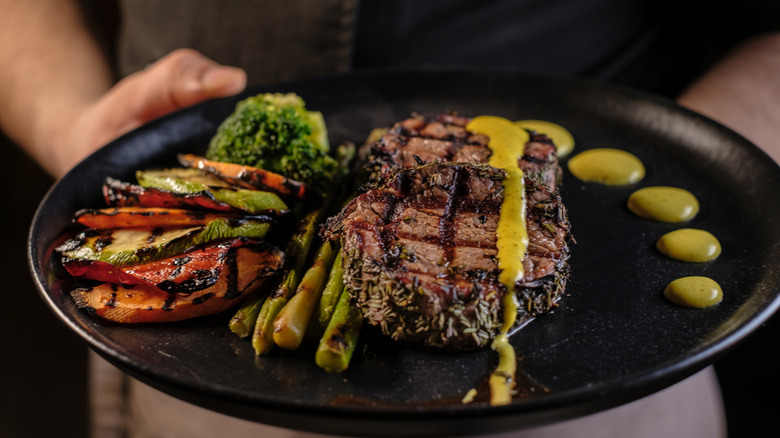
Who doesn't love a beautiful steak dinner, crafted by the pros at a favorite, high-end steakhouse? The expertly cooked cut, the delectable sides, the perfect wine pairing — it's enough to make your mouth water just thinking about it. However, it can be difficult to replicate that experience at home. There are tons of pitfalls that you can encounter throughout the process, from picking the wrong steak at the grocery store to not prepping your steak appropriately to not serving it the right way.
Luckily, the experts have offered plenty of advice over the years to help you make as close as possible to a restaurant-quality steak from the comfort of your own kitchen. You don't even need to go hunting far and wide for that advice, because we've done the hard work for you. We've compiled some of the top celebrity chef tips for making gorgeous steak dinners as a home cook. Here's how they say you should handle your steak for the best possible results.
Wolfgang Puck: Follow the right temperature guidelines
Let's start with one of the fundamental basics: temperature. Temperature comes into play during just about every step of the steak-cooking process, and it's something that you want to get right. If you don't, you could experience myriad issues.
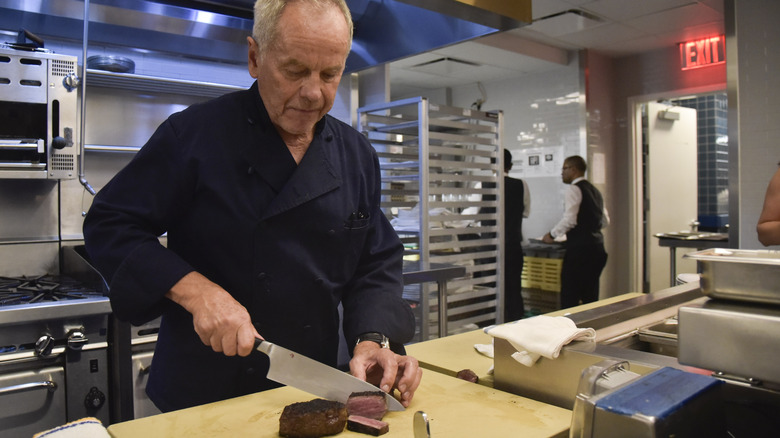
In a Michelin Guide article, Wolfgang Puck cited temperature (twice) among his top five rules for grilling meat. First, he said, you have to ensure the meat itself is the right temperature before you cook it. Then, you have to choose the ideal temperature for cooking that meat. As for the meat itself, he advised not cooking it until it reaches room temperature. As for the cooking temperature, he didn't name any specifics, but he said it's best to start high and then go to medium. This allows you to sear the meat while avoiding overcooking it.
It is worth noting that Puck's advice regarding letting steak hit room temperature before cooking is a topic of debate. Some call this a steak myth, while others say it's absolutely crucial if you want a juicy filet mignon and a more evenly cooked steak in general.
Martha Stewart: Preheat your pan
It's not just the steak's temperature that you have to worry about before the cooking process can even begin. Your cooking surface needs to be the right temperature as well, before you start.
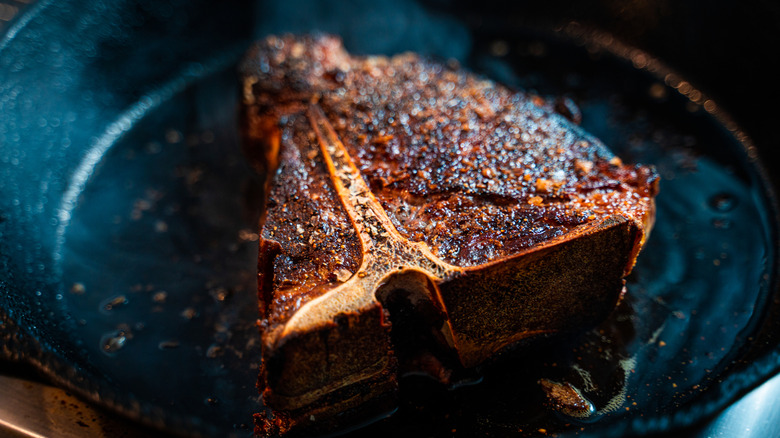
If you're cooking your steak inside, you're probably doing so in a pan. Choose cast iron if you're cooking a thick, hearty steak and stainless steel for thinner steaks. Whichever you choose, though, Martha Stewart claims that you'll need to preheat it. When you're ready to cook, you want that steak to hit the pan and start sizzling and searing right away. (An interesting side note? Martha Stewart, like Wolfgang Puck, is also pro letting your raw steak come to room temp before cooking.)
Again, though, this is a steak tip that is argued. Some chefs believe that cold searing — or starting your steak in a cold pan and letting the pan and steak heat up simultaneously — is a beginner-friendly method of searing steak that's less intimidating, results in less mess, and could make for a more even cook. Try both methods and decide for yourself!
Ina Garten: Use two grill zones
Let's say you're not cooking inside, though, and you're actually cooking outdoors, on the grill. It's a preferred method for many, but the temperature rules that apply inside the house, when you're cooking a steak in a pan, don't always apply when you're cooking a steak on the barbecue.
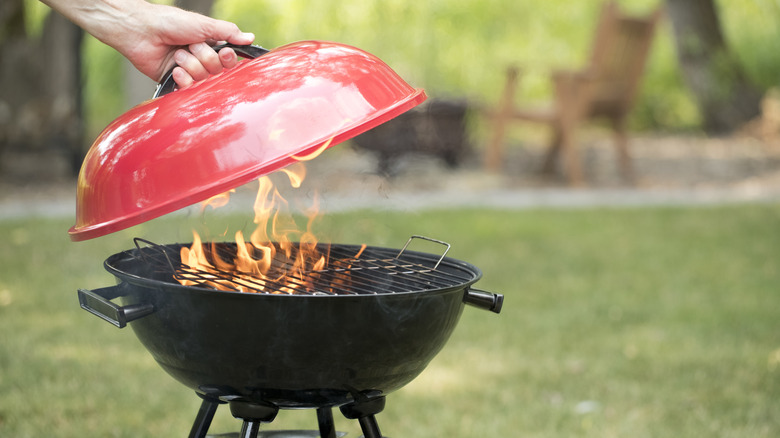
For perfect steak-cooking temps, Ina Garten recommends creating two separate zones on your grill. You'll need a hot zone for the initial searing and a warm zone for finishing the steaks off. This aligns with the previously mentioned Wolfgang Puck advice to start your steaks off at a high temp and then move them to a medium temp.
It's pretty simple to achieve these two zones. If you're working with charcoal, limit all the charcoal you're using to one half of the grill. This half of the grill will get really hot, and it will be perfect for searing your steak. Once you sear the steaks to your liking, you will then transfer them to the other half of the grill, where there's no charcoal. Here, the steaks will still receive ambient heat from the other side, continuing the cooking process. If, though, you're grilling with gas, achieving the two temperatures is even easier, as you just adjust your burners accordingly.
Giada De Laurentiis: Oil the steak
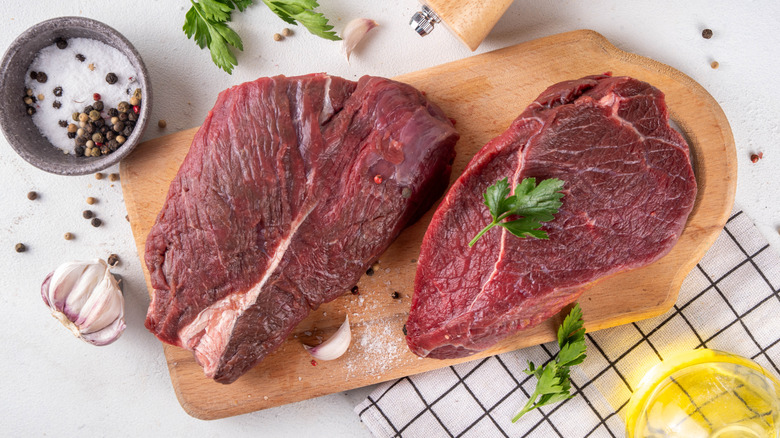
If you're grilling steak, Giada De Laurentiis advises against oiling up your grill grates before adding your steaks to the heat, even if that's what some recipes might tell you to do. The risk that comes with directly oiling your grates is that it can lead to potential fire hazards. That said, you do still need some oil, so add it directly to your steak instead. It'll prevent sticking, as you want, plus there's a lower risk of singeing your eyebrows off.
Choose the right oil, too. The best fat for cooking steak on the grill is an oil with a high smoke point. Otherwise, you could end up with an oil that burns when exposed to the high heat, before your steak even gets a chance to cook, leading to nasty smoke and undesirable flavors. Potential options include avocado oil, grapeseed oil, or canola oil.
Alton Brown: Prep your steak well in advance
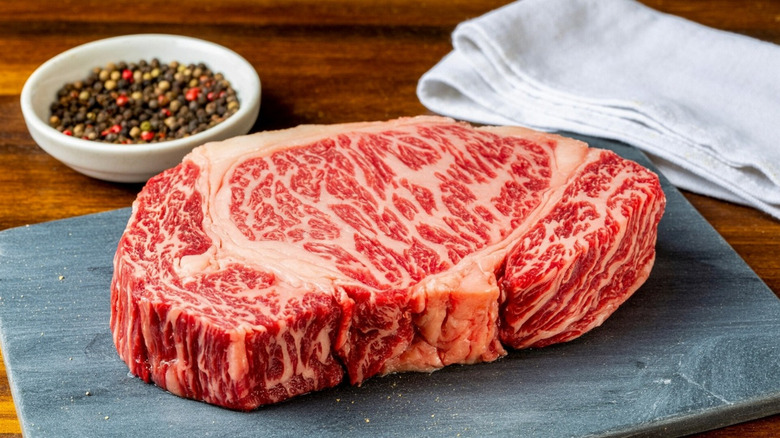
If there's any celebrity chef who's going to dig into the science behind steak and use that knowledge to their culinary advantage, you can bet that it's probably going to be Alton Brown. Working with New York strip steaks, he actually begins his process eight to 12 hours before he's going to even cook the steaks. That's a lot of prep time! The raw steaks get a coating of salt, and then they go on a sheet pan into the fridge, where they'll begin their long wait. Brown positions a fan into the fridge as well, but that might be a little excessive for the average home cook — particularly if you have neither the fridge space nor a rechargeable fan.
So, what's the point of all this extra prep time? According to Brown, while the steaks sit in their salty glory, the magic of science means the salt and time will ultimately result in steaks that retain their moisture better. Brown then smokes his steaks, but he said you can also bake the steaks to an internal temperature of 120 degrees Fahrenheit for similarly moist results. His final step is to sear the steaks very quickly.
Gordon Ramsay: Don't overcomplicate things
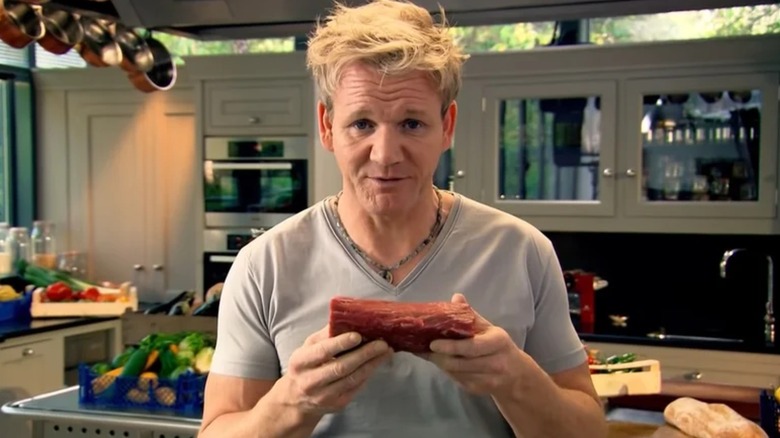
Sometimes, simpler is just better, even — or maybe especially — when it comes to steak. Some celebrity chefs will tell you to follow complicated cooking processes. Others might give you a laundry list of ingredients so that you can make not only the steak, but also a seasoning rub, sauce, topping, etc. However, this can feel like a bit too much for the at-home steak-cooking novice. If that sounds like you, you might want to turn to some advice from Gordon Ramsay.
Ramsay cooks the perfect steak using just four ingredients, and yet those four ingredients produce spectacular results. All you do is salt and pepper your steak, let it sit for 15 minutes or so, and then sear it in your pan. Plop some unsalted butter in there as well, alongside a few sprigs of rosemary and a few cloves of garlic. Once it all melts and melds, coat the meat in all that tasty goodness. It doesn't get any easier than that, but you'll find your steak is incredibly flavorful nonetheless.
Giada De Laurentiis: Don't poke the steak
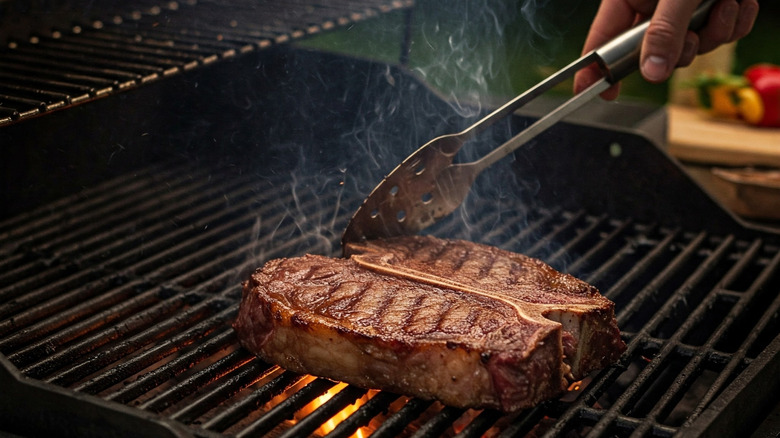
Whether you're grilling or searing in your cast iron, it's tempting to poke your steak. You've put your steak on the heat. You've left it on there for a minute or so, and things are really sizzling. Is it done on that side? Should you move it? You reach for a fork or knife, poke the steak, and lift it up — and you've just committed two steak mistakes that Giada De Laurentiis warns against committing if you're truly looking for a restaurant-worthy steak dinner.
One, De Laurentiis says, you shouldn't be moving your steak around all that much. Put it on the grill and let it do its thing. If not, you could end up with a less-than-best sear. You might also find that the steak takes longer to cook overall. Two, when you do need to actually flip your steak (or move it at all), use tongs, not a knife or fork. Otherwise, you're just creating holes through which all that juicy steak moisture can leak out and into your pan or the fire.
Bobby Flay: Use enough seasonings
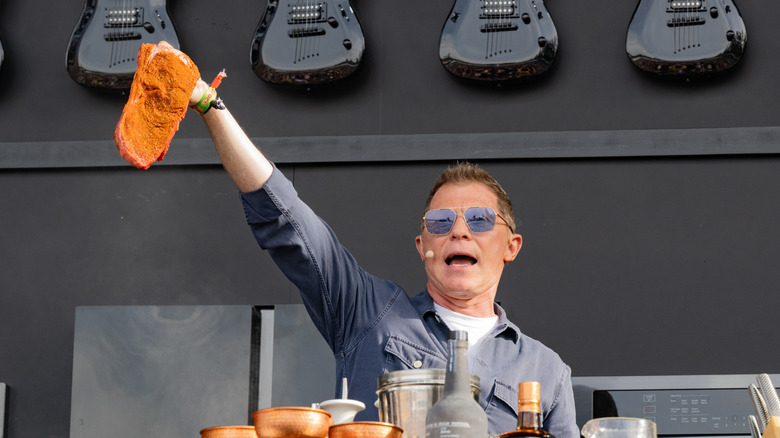
While a top-quality, well-cooked steak can often be delicious all on its own, if it's restaurant-level steak dinner goodness that you're after, Bobby Flay says you have to lean into the seasonings with abundance. This is something he believes sets professional chefs apart from the rookies. Sure, use your salt and pepper, but go further.
You could, for example, try making Flay's own steak rub previously used at his now-closed restaurant chain, Mesa. The recipe is a blend of ancho chili powder, paprika, oregano, coriander, dry mustard, cumin, salt, pepper, and chile de arbol. Yes, that seems like quite a lot to put on a steak, especially if you've gone the simpler route in the past, but trust the process. Even if you are just using salt and pepper, Flay's advice is not to be stingy with these seasonings, particularly if you're cooking a large or thick cut.
Ree Drummond: Add toppings
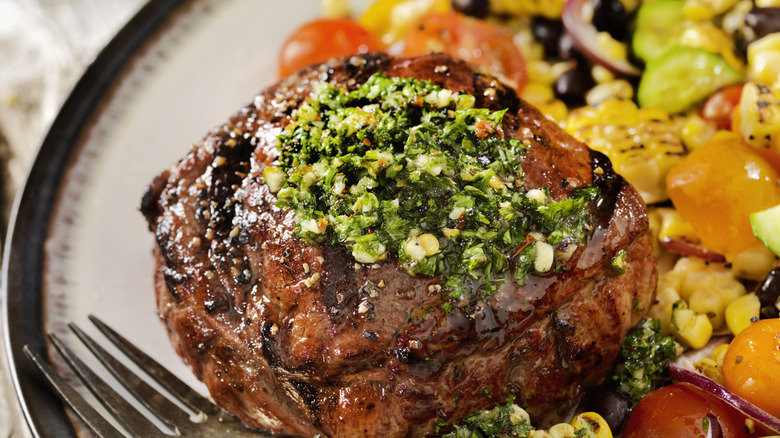
Along the same lines of adding bigger and bolder flavors to your steak, the Pioneer Woman, aka Ree Drummond, agrees with Bobby Flay that you really ought to season your steaks liberally (she throws out some unique potential options such as sumac and cinnamon). However, she believes that toppings can take things to the next level. Butter is a classic, but the possibilities are vast and varied. For example, you could take inspiration from your favorite restaurant steak dinner and add on some mushrooms or caramelized onions. Drummond even recommends some lighter options like a slaw or gremolata.
If you don't want to take the time to actually make or cook an entirely separate sauce or dish, in some cases you can just reach into the fridge and grab some toppings that are already at the ready. Sprinkle on some crumbled blue cheese or gorgonzola. Dollop on a small serving of caviar. The world is your oyster.
Giada De Laurentiis: Cut against the grain
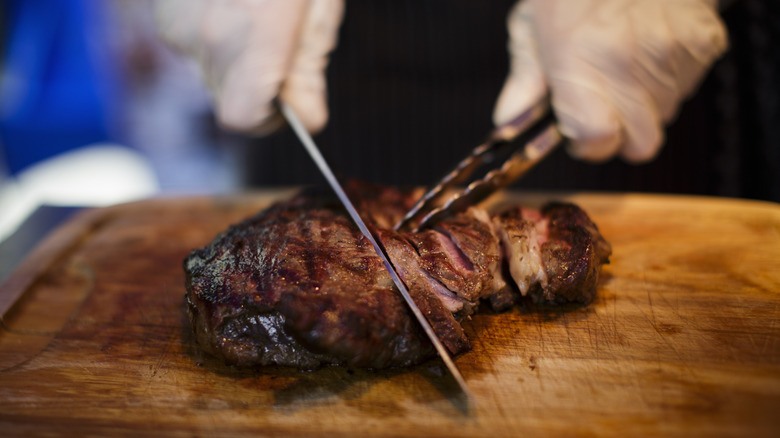
Once your steak is perfectly cooked and seasoned, and you have a topping on deck, and you're ready to serve, don't forget — potential pitfalls exist all along the process. To serve your steak the restaurant way, you'll want to cut it correctly. Specifically, Giada De Laurentiis says you need to cut it against the grain.
Those lines running through your steak, or the grain, are muscle fibers. Depending on the exact cut of meat, those fibers will be larger or smaller. When you cut along the grain of the meat, you're leaving longer muscle fibers intact — and that makes for a lot of chewing and a tougher bite. However, cut the steak against the grain and the fibers fall apart more easily as you bite into them. Thus, your steak is more tender. Again, this is just another way that achieving the perfect steak all comes down to science.
Andrew Zimmern: Try budget-friendly cuts
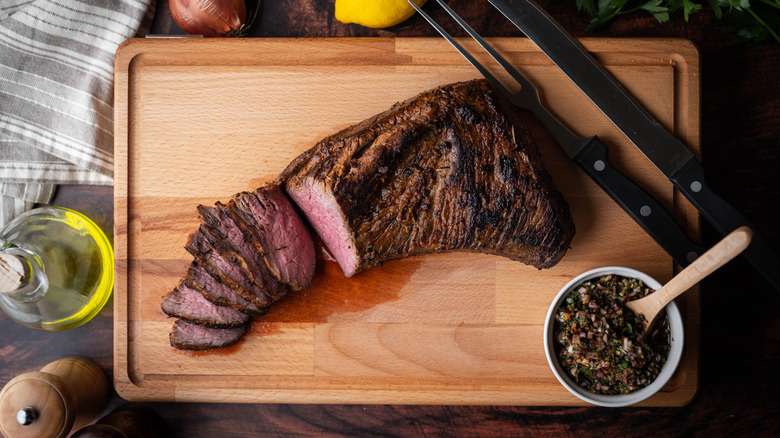
Lastly, as you're shopping for your steak and prepping for your restaurant-quality dinner, don't assume that you have to buy the most expensive cut of steak out there. Sometimes, a more budget-friendly cut is the way to go.
For example, the cut of meat Andrew Zimmern loves for budget-friendly grilling? The tri-tip. If you're not familiar with this cut, it's basically a cut that comes from the sirloin and is known for being lean and flavorful, all at the same time. Zimmern does say that it matters where you buy that tri-tip, though. If you want high quality, you're going to have to seek out a high-quality producer.
Zimmern certainly isn't alone in his love for the tri-tip. Guy Fieri says that the tri-tip is the best budget-friendly steak to throw on the grill as well. Regarding shopping for the cut, he also alluded to having to hunt down the best place to buy it. In some cases, it might not even be available at your chain grocery store, necessitating a trip to the local butcher's.