

7 Foods That Are Banned From The International Space Station
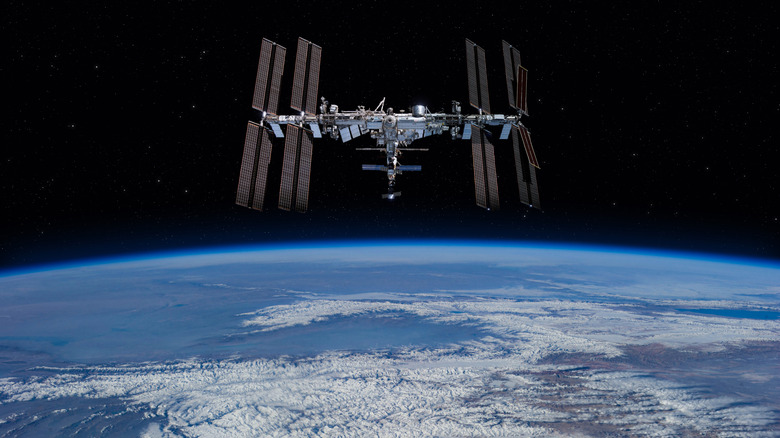
When you think of what astronauts eat on the International Space Station, shelf-stable products probably come to mind. Indeed, most of the foods brought along into outer space are dehydrated, dried, irradiated (treated with ionizing radiation), or thermostabilized (heat-treated). Any hardy fresh produce is eaten within the first couple of days, and the rest of the pantry consists of items that won't quickly spoil, like nuts.
But it's a different world up there. Just because a food technically falls into one of those categories doesn't mean it's permitted on the space station. Because of zero gravity, complex equipment, human biology, and the forces of physics, a meal that would be totally innocuous here on Earth could cause huge issues in space. That's why these foods are absolutely not allowed to be consumed by astronauts when they're at the office — and by office we mean a Kevlar, ceramic, and aluminum vehicle catapulting around the Earth's thermosphere on the cusp of the infinitely expanding universe.
MREs
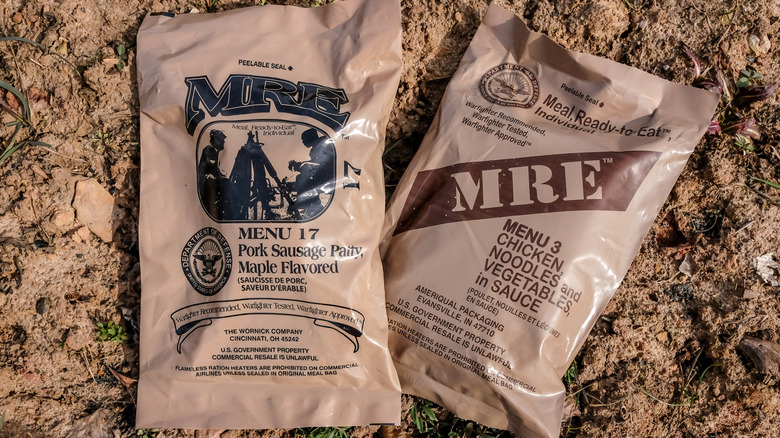
An MRE, which stands for Meal, Ready-to-Eat, sounds like exactly the kind of item that would survive well in outer space. These shelf-stable meals — consisting of a main, vegetable, carb, fruit, dessert, hot drink mix, and an electrolyte or energy drink mix — come with a flameless heater and keep service members fed.
Even though they can last for years, MREs are really designed to be used in survival situations, not for daily sustenance. They're very high in salt and fat, which is incredibly important during natural disasters or battles here on Earth, but they're not well-balanced enough for an astronaut to consume daily. Importantly, that high level of salt has a negative effect on bone density, which is also something folks on the space station have to be very aware of. Because they are living in zero gravity, their bodies don't have to work as hard as they do on Earth. There is simply far less resistance, so their bones weaken no matter what, and the heavy salt in an MRE would only add to the issue. Though the packaging of many of the foods they do carry with them is pretty much identical to MREs, the contents are specially engineered to serve the needs of astronauts.
Seasonings and spices
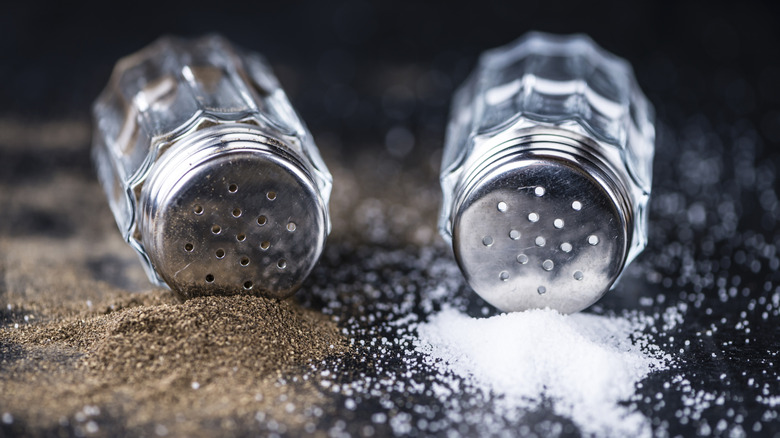
When you eat or drink in outer space, anything that doesn't make it down the gullet can end up floating around. With bits as small as salt grains or ground black pepper —and the lack of gravity — trying to season food would inevitably result in tons of particles swirling about. Not only would that be painful if it ended up in an astronaut's eye, but those little bits could work their way into machinery, equipment, or tools. A powder like that might jam up the whole ventilation system or lead to an electrical fire.
While you won't find any shakers of fiery Trader Joe's seasoning blends on the International Space Station, the folks up there are still eating flavorful food. Those seasonings are kept in liquid form. Instead of packets of granules, the salt astronauts have access to is dissolved in water, and the ground black pepper is mixed with oil. Condiments like mayonnaise, mustard, ketchup, and hot sauce are also available for flavoring meals.
Bread
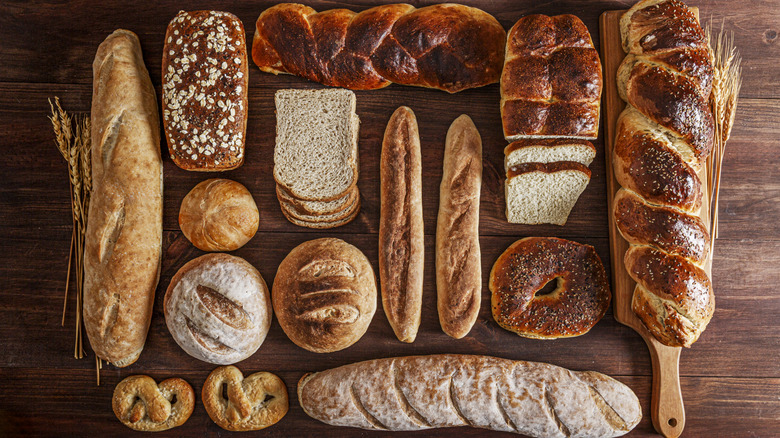
Any type of bread you usually consume without a second thought could be a serious issue on the International Space Station. It's the crumbs (otherwise known as Foreign Object Debris, or FOD, for short) that are the problem here. They can wreak havoc on humans or machines in a similar way as seasonings. Any astronaut craving a whole wheat sourdough loaf, dinner roll, or Southern-style biscuit will have to wait until they are back on solid ground to enjoy it. Aside from the dangers of floating crumbs, bread also spoils or goes stale relatively quickly.
That's why tortillas are a staple food that's been served on the space station since 1985. They're a favorite for folks working that high up in the atmosphere because they last a long while, produce very few crumbs, are quite nutritious, require minimal storage space, and can be used in so many different ways. Aside from Mexican-inspired meals, they can take the bread's place in outer space-ready versions of cheeseburgers and peanut butter sandwiches.
Alcohol

Astronauts that are up on the International Space Station are not allowed to drink alcohol, and, no, it's not because they would technically be drinking on the job. It's actually due to the Environmental Control and Life Support System (ECLSS). This is the mechanism responsible for filtering air and water. Of course, there is not an endless supply of oxygen and fresh water up there like there is down on Earth; and it would be impossible to bring up enough fresh water to provide a sufficient supply for the months-long stays of the numer of astronauts typically on board at once.
Instead, the ECLSS purifies waste water, condensation, air, and urine, recycling the oxygen and regenerating water that is safe to drink. However, the ethanol that would be in an astronaut's breath and urine after consuming alcohol, as well as what evaporates into their surroundings, can throw off the whole system.
Fizzy drinks
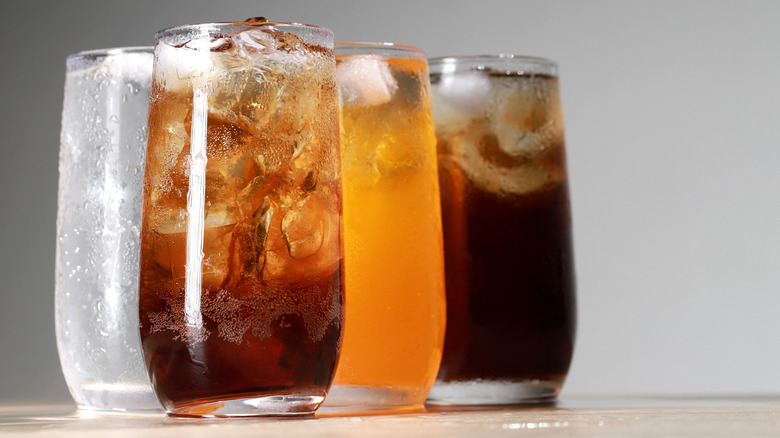
Astronauts may not be able to enjoy any type of sparkling wine, but what about soda pop or seltzer? Unfortunately, the answer is still no, but for reasons that have more to do with physics, biology, and unanswered questions. Carbonation comes from dissolved carbon dioxide, which, once consumed, makes its way out of the body either via the front door or the back — at least here on the blue planet.
However, carbon dioxide behaves differently when under the effects of minimal gravity. A bubbly drink doesn't fizz and pop like you'd expect it to; instead, that carbon dioxide never separates from the liquid. The person drinking the soda consumes a whole lot more bubbles than would be typical, which naturally leads them to burp, but the liquid and gas are still bound. The result is a very wet and uncomfortable belch. There's also the fear that those bubbles could get stuck somewhere in an astronaut's digestive system, causing harm or pain.
Crunchy foods (with one exception)
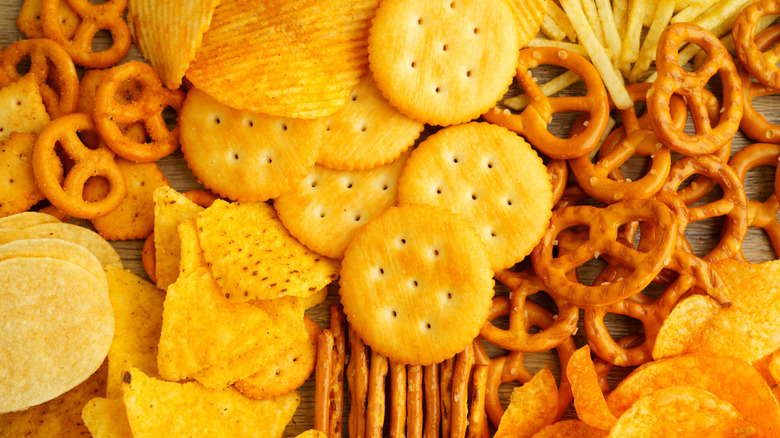
Crumbs are seriously hazardous on the International Space Station, so bread isn't the only crumb-producing food that's banned up there. Crunchy cookies, crispy chips, and delicate crackers are generally not allowed because they're just too risky. Even the flavorful coatings and powders on many snacks can pose an issue, just like stand-alone seasonings can.
There is an exception to this rule, though. If the food can be eaten in a single bite, greatly minimizing how many crumbs are accidentally sent floating around, it could be permissable. A small sandwich cookie, for instance, is something that has been allowed. As another example, miniature corn chips coated with an oil-based seasoning and packed into special canisters to prevent breakage, have also been enjoyed by astronauts up into space. Trail mix, bite-sized cookies, dried fruit, Goldfish crackers, candy-coated chocolates, chewing gum, hard candies, gummy worms, and Rice Krispies Treats are also permitted.
Astronaut ice cream
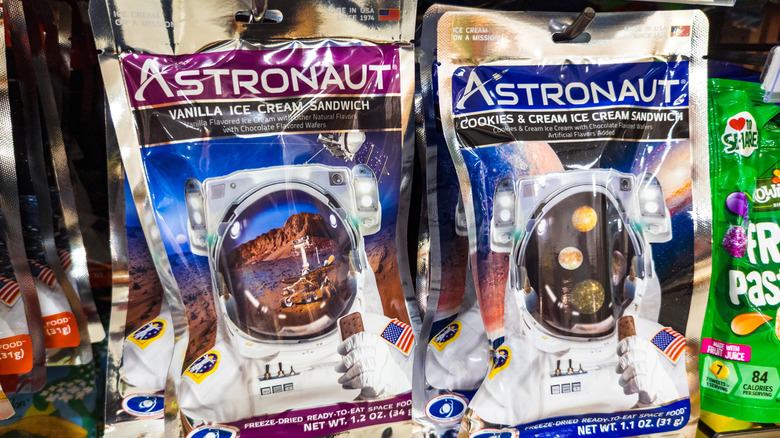
It's in the name, right? Certainly astronaut ice cream can be enjoyed by literal astronauts. Unfortunately, those pesky Foreign Object Debris are to blame for the prohibition again. The dehydrated dessert is delicate and crumbly, and it could lead to the same disastrous issues as bread, chips, cookies, and crackers.
Though this chalky treat is a mainstay in science museum gift shops, it's there for the novelty, not because it's something that's actually consumed by the professionals. In fact, it seems that those iconic silver pouches of astronaut ice cream were created in the mid-1970s specifically to appeal to museum visitors. They were never actually meant to meet the rigorous standards for sustenance sent up into outer space.
These days, some lucky astronauts may even get to sample real ice cream on occasion. Shuttles sent on resupply missions have freezers that are there to bring scientific samples back to Earth, but ice cream can sometimes hitch a ride up to the International Space Station, much to the delight of any homesick astronaut with a sweet tooth.