

15 Celebrity Chef Tips For Making Restaurant-Quality Lasagna
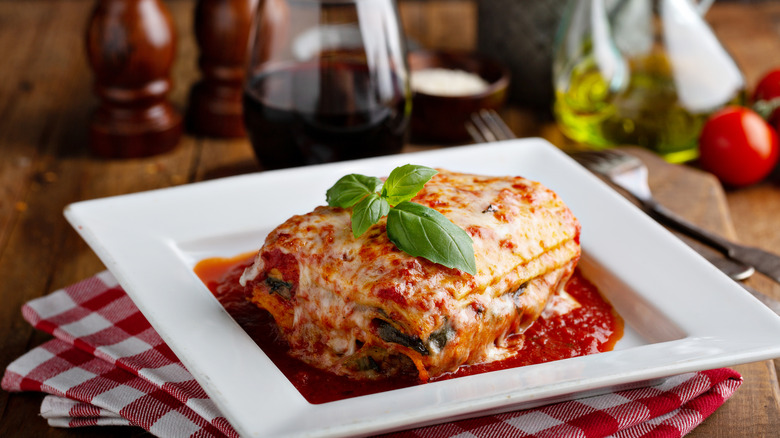
Most home cooks have a lasagna recipe in their back pocket. After all, lasagna can be made incredibly simply. At its most basic, you're just layering noodles with sauce and cheese. However, there's a big difference between a bare-bones homemade lasagna and a truly rave-worthy, restaurant-quality lasagna. So how can you take yours up to the next level?
To find out, we turned to some of the best tried-and-true tips provided from celebrity chefs over the years. These are the faces and names you already know — think experts like Ina Garten, Gordon Ramsay, and Ree Drummond (who, somewhat surprisingly, is actually kind of renowned for her lasagna, even if that's not the first dish you'd think to connect to a "pioneer woman"). Here's what they've recommended across their own recipes and previous interviews. Some of their tips are shockingly straightforward, while others may have you questioning every time you've made lasagna in the past.
Add lots of seasoning
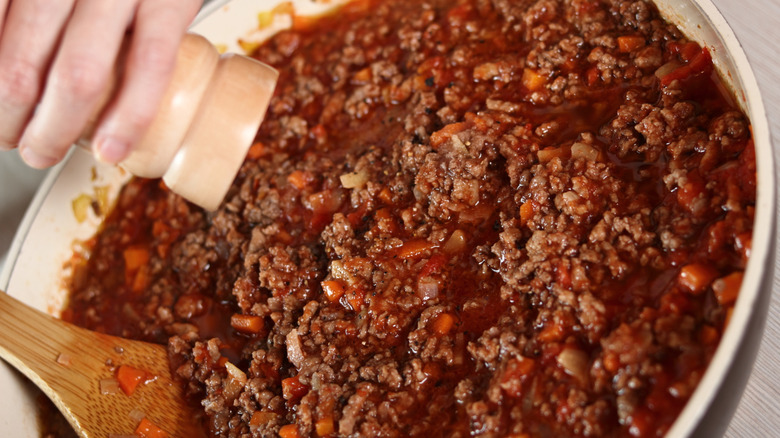
Seasoning makes everything better, and, accordingly, you won't want to rely on just the seasoning in your store-bought jar of sauce alone for giving your lasagna all the flavor that it needs. In a 2025 interview with The Kitchn, Gordon Ramsay stressed the importance of seasoning each and every one of your various lasagna ingredients and layers. If you're adding meat, the meat should be seasoned. If you're adding vegetables, the vegetables should be seasoned, too. As for what seasonings you should actually use? Ramsay recommended cayenne, paprika, or turmeric.
In an interview with Bon Appetit, Giada De Laurentiis said the same thing, naming lasagna as a dish she sees too often "ruined," in part because there's just not enough seasoning. She, again, noted the importance of seasoning every element of the dish. (Though she did also say that it's okay to use store-bought sauce for convenience sake.)
When one Redditor asked the Cooking subreddit how they could amp up their boring lasagna, many other users chimed in with seasoning tips, too, with one commenter summing up the stance nicely. They said the goal with seasoning is to ensure that the components you add to your lasagna taste great on their own, before you put all the layers together.
Prep your lasagna noodles
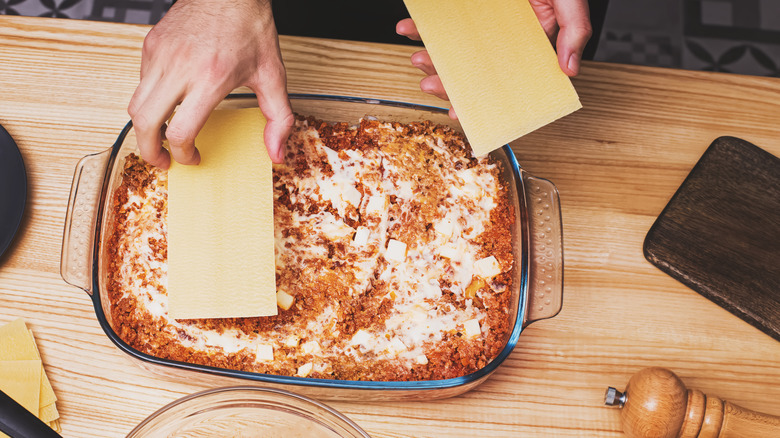
If you're not thinking about your lasagna noodles when you're putting together your dish, and you're just throwing some no-boil noodles in your casserole and calling it a day, you could be making a big mistake. While no-boil noodles are convenient and fast, they can cause issues. You may end up with a dryer lasagna or the noodles could not cook perfectly within your recipe's allotted cooking time, remaining hard, crunchy, or half-cooked when you cut through the lasagna's layers.
So, ditch the no-boil noodles ... but don't think that you need to go the boiling route either. If you're looking to cut down on your time spent putting a weeknight dinner together, multiple celebrity chefs have commented on the need to prep your lasagna noodles for use before layering your lasagna, but that doesn't always require boiling them.
For instance, Ina Garten recommends simply soaking regular lasagna noodles in warm water. This tactic results in softer, more moist noodles (that still retain some texture, rather than turning into mush). Likewise, Mary Berry lets her pasta soak by actually assembling the lasagna with dried pasta sheets in advance of baking it — by as much as 24 hours. The sauce soaks into the noodles while the lasagna sits in the fridge. So, if you have an extra bit of time on your Sunday afternoon, and want to get ahead of Monday's meal prep, the Mary Berry route might be ideal for you.
Pipe the ricotta
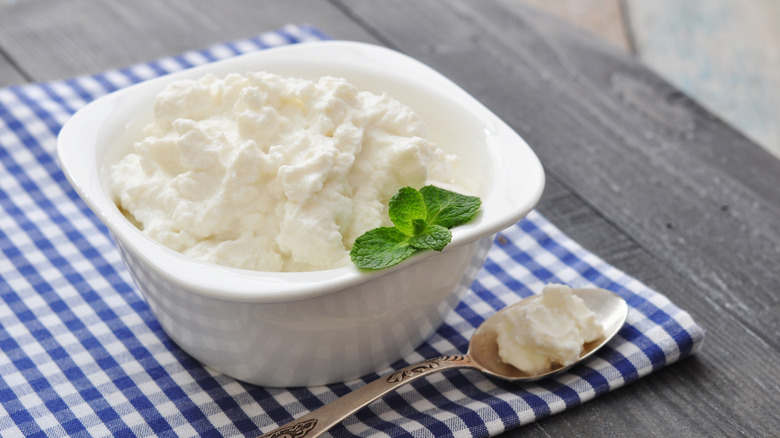
This next tip may seem a little fussy, but it could be worth the extra effort. When assembling your lasagna, rather than dumping globs of ricotta onto the dish by the spoonful and spreading them out haphazardly (and potentially tearing the layer of noodles underneath in the process), dig out your piping bag. (Or, if you don't have a piping bag handy, use a zip-top bag and cut off one of the corners, forming an impromptu piping bag that will do in a pinch, no matter what you're piping.) According to Chef Michael Symon, when speaking with Food & Wine about his mother's lasagna, piping the ricotta onto the lasagna ensures that the cheese is dispersed evenly and neatly, for equal, nice layers.
Lacking both the piping bag and the ricotta? Some chefs say you can get away with swapping ricotta with other substitutes in lasagna, including cottage cheese, béchamel sauce, mascarpone, cashew cheese, and Greek yogurt.
Purée your vegetables
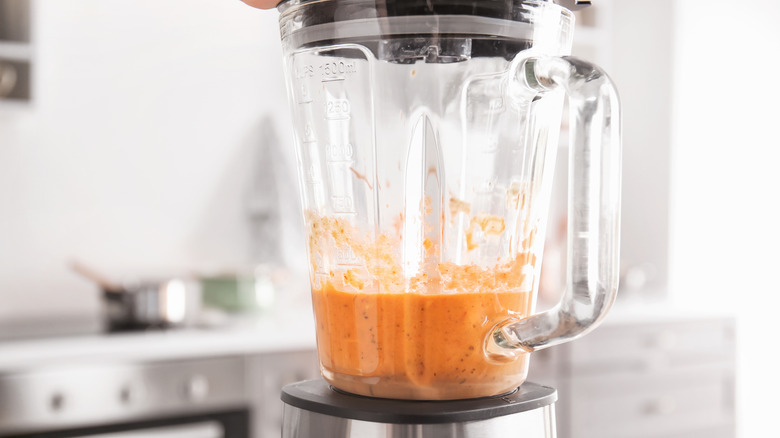
Back to another lasagna tip that Gordon Ramsay gave during his interview with The Kitchn. This one is going to both elevate your lasagna's texture and save you some minutes in the kitchen — it's a win-win. Basically, if you're adding any vegetables to your lasagna sauce or meat, from onions to carrots, ditch all that chopping and dicing you might normally do. Opt for puréeing them. Not only is it more convenient and faster, but Ramsay said the veggies will then integrate with the sauce a little smoother and they'll cook more evenly and quicker.
Another bonus? One Reddit thread pointed out that this is a great way to incorporate veggies into your lasagna sauce if you have an aversion to the texture of certain vegetables. While it can change the sauce's color and flavor, the texture will remain smooth — no chunks! Beyond the typical onions, carrots, and celery that Ramsay mentioned blitzing into your sauce, the Reddit users also pointed to other potential options, including peppers, squash, mushrooms, and spinach.
Avoid a watery sauce
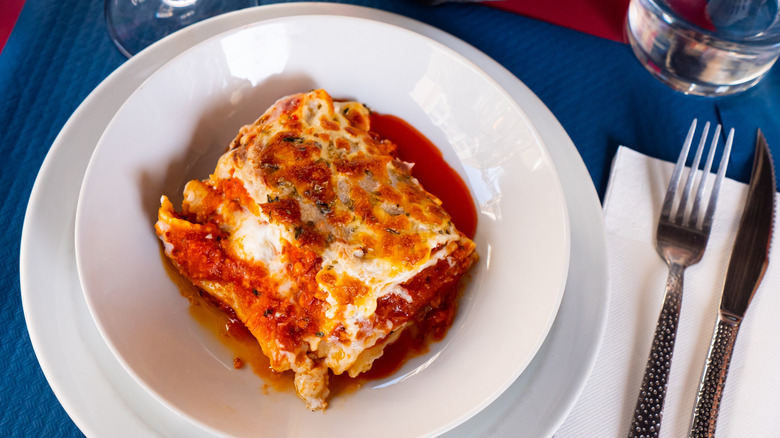
Have you ever cut into a lasagna, began dishing slices out onto plates, and then realized that, slowly, a puddle of moisture seemed to be seeping from the slice and onto the dish? It's both unpleasant to look at and it warns you of what's coming, texture-wise, before you even take that first, mushy bite. You definitely (or hopefully) wouldn't find watery lasagna in a restaurant, so how do you avoid this issue at home?
According to Gordon Ramsay's interview with The Kitchn, a watery lasagna could be caused by a few different things. Your red or meat sauce could be too thin. If you're using béchamel sauce rather than ricotta, it could also be too thin.
To fix either issue, you just have to bulk them up. For a sauce, this can be done by adding flour when you're initially cooking the sauce's vegetables or meat (kind of like how you would when making a roux). For the béchamel sauce, add more cheese.
Simmer the sauce
While lasagna may not feel very pioneer-esque, Ree Drummond's pretty confident about her "best lasagna ever" for a few reasons. Apparently it's received rave reviews across the board, and the story goes that it inspired her now-husband to propose. Whatever the case, it's become quite popular. So what's the secret?
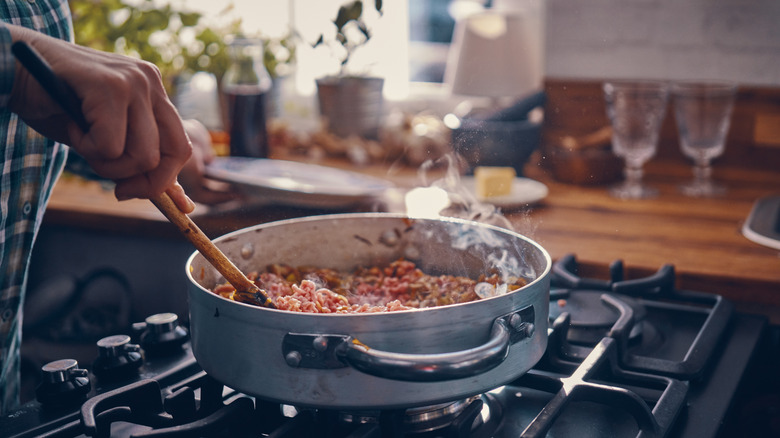
For one, Ree Drummond's lasagna gets a spicy kick by way of swapping some of the beef with hot breakfast sausage. Drummond also ditches the classic ricotta for cottage cheese — a money-saving tactic that a lot of people won't even notice once the lasagna is cooked. Drummond does not, though, skimp on time in the kitchen. For lasagna of this caliber, you're going to have to hang out by the stove a bit, simmering your sauce for nearly an hour. While that may seem like overkill, it results in a more flavorful end product.
Not really feeling like classic lasagna? Ree Drummond also has recipe that combines pizza and lasagna, adding Italian sausage and pepperoni to the beef. She also augments the sauce with bell peppers, olives, mushrooms, and onions.
Finish off with fresh cheese
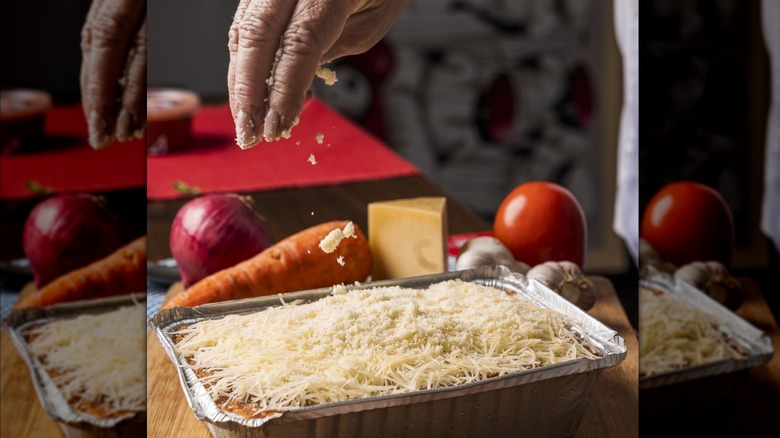
So maybe you've followed some of the above chefs' advice and you've assembled what you feel will be your best lasagna ever. You're getting ready to pop it into the oven — but not so fast. Could you make that lasagna even better? Take a page out of Michael Symon's book. As he told Food & Wine, you're going to want to add a little bit of mozzarella and parm to the top of your lasagna to finish everything off. Make sure it's the fresh stuff, too! None of this grated parm powder in a green canister.
Fast-forward to when you're pulling your baked lasagna from the oven. Your job's not done then, either. You can finish this lasagna with even more cheese, per Gordon Ramsay's interview with The Kitchn. Throw on some more fresh parm, and even some fresh herbs, if you're feeling fancy. He recommends oregano or basil.
Make your lasagna on a sheet pan

Lasagna on a sheet pan? It may sound like a TikTok fad, but it's actually a chef-approved approach — or at least it is where Giada De Laurentiis is concerned, and she's definitely one you can trust when it comes to all things Italian cooking at home. As she posted on Facebook in 2025, making your lasagna on a sheet pan isn't only easy, but it also results in a crispier texture — perfect if you love those crispy-crunchy outer edges of the dish, and you're known to leave the lasagna in the oven just a tad longer than necessary.
De Laurentiis' recipe takes all the layering out of the equation. You basically cook your pasta and sauce, combine the two into a basic pasta dish, spread it out on the sheet pan, and then top it with your ricotta and cheese, before baking. It's unconventional for sure, but it definitely provides a level of ease and texture that you're not going to get with your standard homemade lasagna.
Swap the noodles for roast zucchini
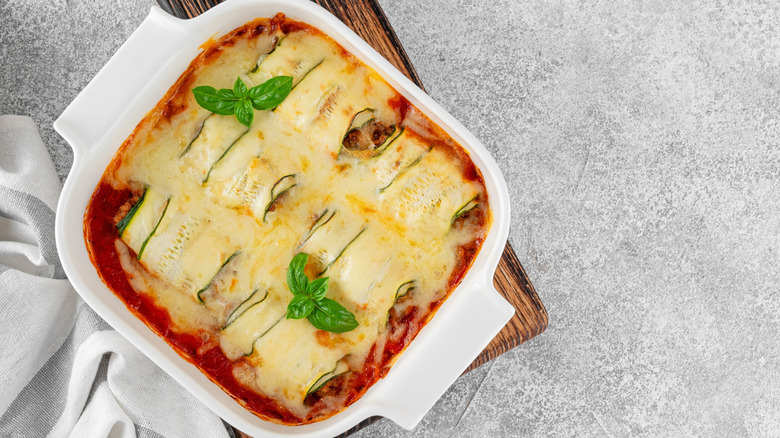
Maybe you followed all the chef tips and tricks related to getting your lasagna noodles just right that you've come across ... and yet they still turn out either mushy and overcooked or crunchy and hard. Well, consider forgoing the noodles altogether and swapping them for some roast zucchini, an option that the Pioneer Woman has been known to promote.
Of course, the Pioneer Woman isn't the first person to come up with the grand idea of swapping noodles for zucchini (remember the big "zoodle" fad?). However, she has used her expertise to take this concept to the next level. Rather than using plain raw or boiled zucchini for the noodles, she actually roasts the zucchini instead. It reduces the amount of moisture in the squash, so that you can avoid the dreaded, watery lasagna, and it also adds extra flavor.
Time your foil correctly
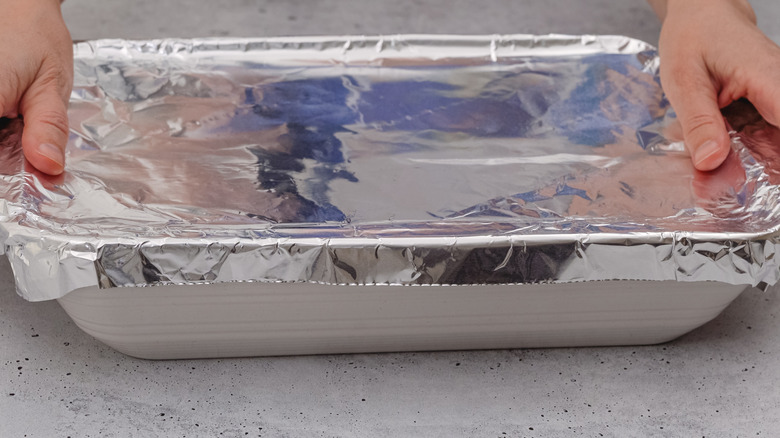
Should you cover your lasagna in foil or not? And if you do, how long should you cover it for? Turns out, aluminum foil is the secret to a perfectly baked lasagna. By covering your lasagna with foil, you retain the dish's moisture and that helps ensure that all the layers cook evenly.
However, you don't want to leave the foil on top of your lasagna during the entire cooking process. The timing has to be perfect in order for your lasagna to properly brown and turn golden-cheesy on the top. Michael Symon told Food & Wine that the foil should remain in place until just the last 10 minutes of cooking. After that, take it away. No foil on hand? Some Redditors have found that placing a cookie sheet on top of your dish works for lasagna, if you're in a bind.
All that said, there is one situation wherein you absolutely do not want to wrap your lasagna in aluminum foil — when you're storing your leftovers. Anything with a lot of tomatoes (aka, high acid) can erode the foil as it sits over a long period of time (such as hours or days), causing the aluminum to leach into your food, negatively affecting the lasagna's taste.
Add butter
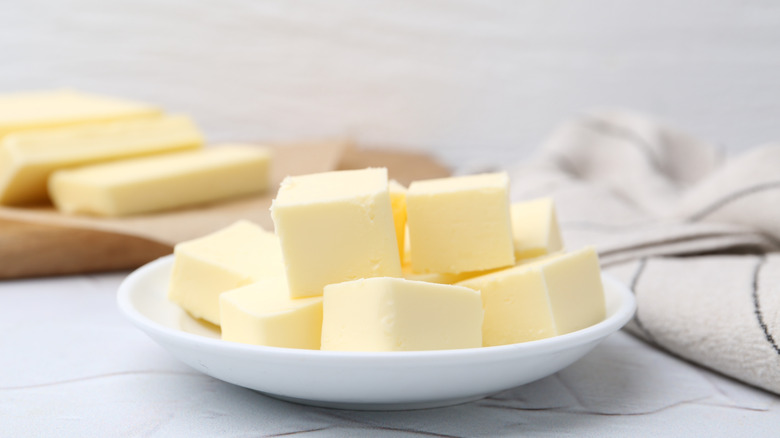
Just about everything you make from scratch is going to require a fat. When you're making lasagna, you might assume that the fat you'll reach for should be olive oil. It's a staple of Italian cooking and having a good bottle on hand can really impact your final dish. However, don't leave butter out of the picture.
Giada De Laurentiis' classic lasagna recipe actually calls for adding butter to the top of the lasagna after it's assembled. Why? She says that the butter helps the lasagna brown (just like you might use butter to help a baked good turn all golden and perfect in the oven). She only uses two tablespoons, so it's not a ton, but enough to make a difference. She also incorporates butter into her tomato sauce, to enhance the flavor. As such, butter may very well be one of the lasagna upgrades you need to try — especially if you want to take some shortcuts for easier lasagna without sacrificing flavor.
Let the lasagna set
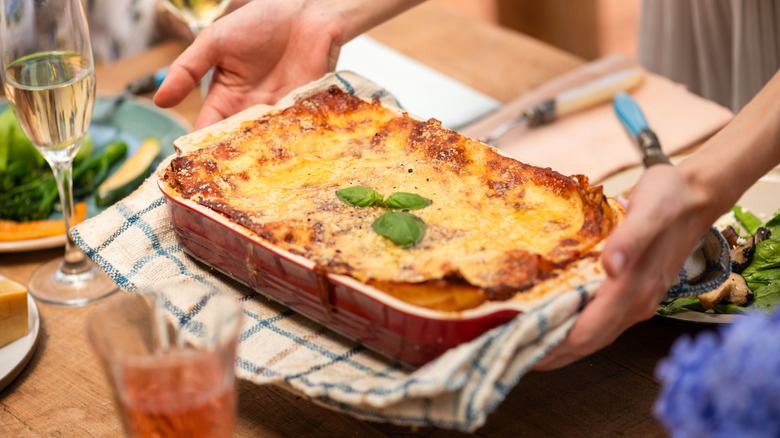
Once you've finally removed your lasagna from the oven — the one you've worked so hard to perfect — you're going to be entirely tempted to dig in right away. That, though, is a recipe for disaster, both for the lasagna itself and your poor tastebuds that are going to be scorched into oblivion. Instead, let things set a bit. It's a tip that many chefs push.
In an interview with Popsugar, Giada De Laurentiis said this was actually one of the tips that she gave Prince William when meeting with him in 2011, after hearing that his prior lasagna efforts had turned out less than royal-worthy. Alex Guarnaschelli has similarly reiterated this tip, saying that if you don't let the lasagna properly cool, it's just not going to cut into nice, neat pieces.
It's a little like trying to cut into a pie or similar baked good straight from the oven. The filling will go all over the place. Any work you did to avoid a soggy, watery mess of a lasagna is moot. So, practice patience.
Perforate the cheese before serving
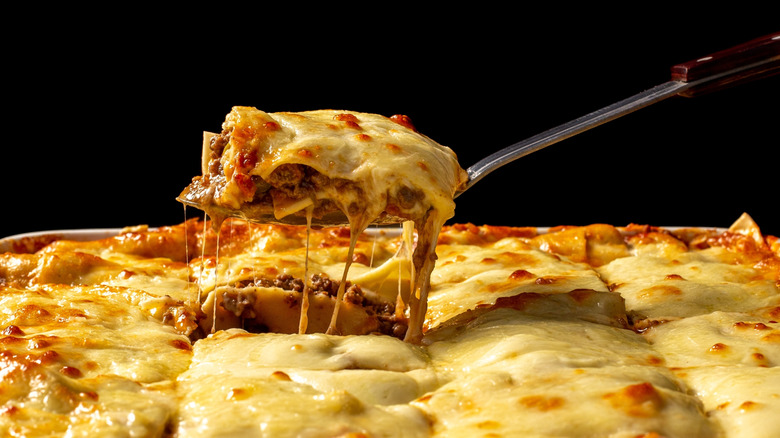
If you're really going hard on the cheese for your lasagna, this tip might just be exactly what you need. While a perfect cheese pull can be a glorious thing, as you're digging into your lasagna and divvying out servings to your hungry family members, if every slice is dragging some extra cheese along with it, you could find that your cheesy topping disappears quicker than you'd like.
To avoid this, Food Network's Sunny Anderson recommends that, when the lasagna is done (and you've let it set!), you take a fork and poke the top of the lasagna wherever you plan on cutting servings from the dish. Basically, you're going to use your fork to make an outline of where you plan to slice the lasagna up. That way, the cheese breaks free a little easier, and you're not pulling cheese off the entire top of the dish with every slice.
Go the one-pot route
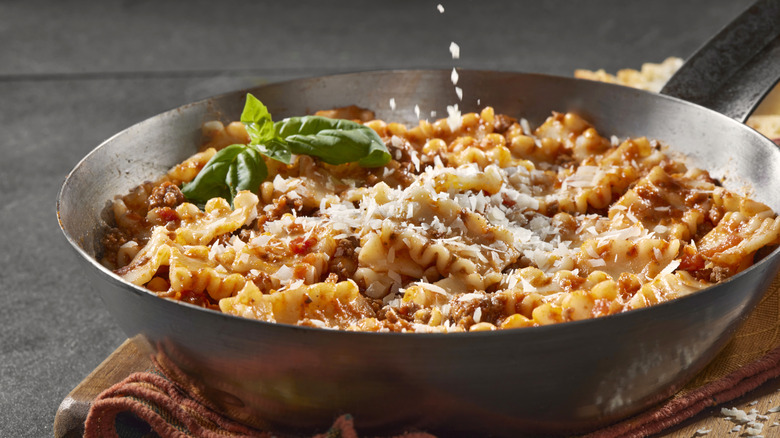
Maybe you've tried out Giada De Laurentiis's recommendation for making your lasagna on a sheet pan, for something a little new and possibly even better than the original (if you're prioritizing convenience and those crispy edges, that is). But, the new and inventive ways to enjoy lasagna don't end there. For example, Valerie Bertinelli might tell you to avoid the oven all together and go the skillet lasagna route. On an episode of the Drew Barrymore Show, Bertinelli showed off a no-oven, one-pot lasagna that's going to cut down on your cooking and cleaning times.
The concept is simple. Cook your meat in one big pot. Add in some pasta sauce and water, plus your noodles. Let it cook, add your cheese and seasonings, and you have a comfort dish that makes lasagna-style flavors easy, even on a busy weeknight. No wonder Barrymore called this dish a "hug in a bowl."
Utilize your leftovers properly
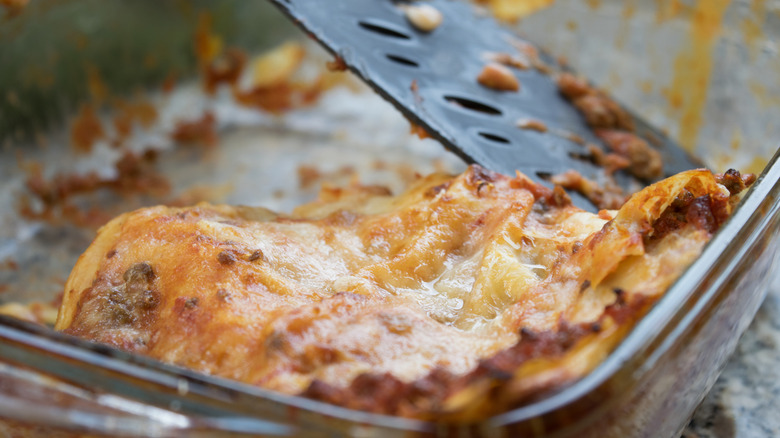
So you made that lasagna and it was amazing, but you do have some leftovers. After all, most lasagna recipes make enough to feed a small army (or at least a large family), so leftovers are pretty much the norm. What can you do with them? Chefs have tips there as well.
For one, keep the lasagna as is and eat it later. For this, Alex Guarnaschelli says that, first, you have to store your leftovers appropriately. That means securely wrapping them and freezing the lasagna for six weeks max. Then, when you're ready to reheat and eat, add either extra sauce or water to the lasagna and cook it for about an hour. Make sure to cover the lasagna with aluminum foil, too, so that it doesn't lose all that precious moisture.
Want to repurpose the lasagna into something a little more creative? Some Redditors have found success frying leftover lasagna, either directly in a pan and then served between garlic bread as a sandwich, or by breading it with flour, egg, parmesan, and breadcrumbs before deep frying.