

11 Celebrity Chef Tips For Perfectly Fluffy Scrambled Eggs
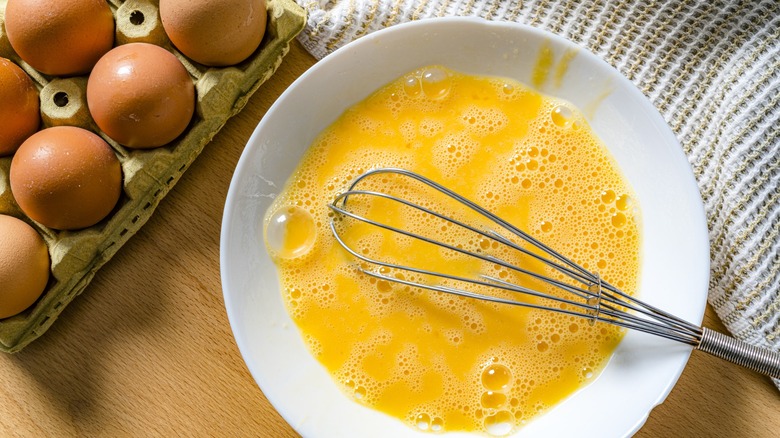
Celebrities live in a dazzling world of red carpets, blinding camera flashes, and big and small screen appearances that leave us all in awe. But, celebrity chefs? They have a unique niche influence. These are the popular high profiles who can turn a humdrum recipe into an instant worldwide obsession, make a previously unknown technique feel absolutely essential, and even convince gazillions of home chefs that we MUST try a dish or ingredient. So, when those celebrity chefs have something to say about scrambled eggs? Let's just say we're listening.
There are many ways scrambled eggs are prepared around the world, and, in good old America, classic diner eggs (the fluffier the better) are always in style. Yet, for something that seems so simple, scrambled eggs can be surprisingly easy to get wrong (at least according to celebrity chefs). Cranking thing up with too much heat can render them rubbery, while paying too little attention can end in a disastrously dry scramble, and one single, seemingly insignificant twist of a technique switch-up can make or break your morning routine.
Thankfully, celebrity chefs have spent plenty of time figuring out the exact details of what makes winning scrambled eggs, and have spent equally lengthy amounts of time (in aired televised segments, book chapters, and more) letting us in on all the eggy secrets. So grab your skillet — we're taking a few fluffiest-ever scrambled egg cues from the chefs who know best.
1. Use the less is more approach with liquids
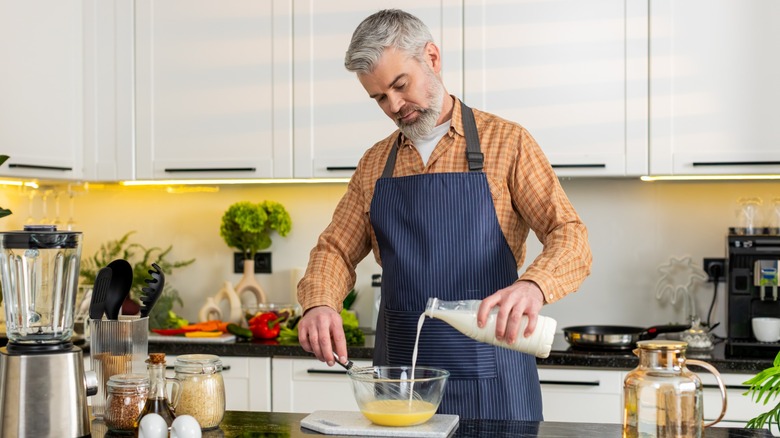
We've shared about how the best dairy substitute for scrambled eggs is just a simple splash of water, but did you know that some celebrity chefs even advise eschewing the majority of additional liquids? You heard that right, and that advice came straight from the lips of culinary diva, The Barefoot Contessa herself, Ina Garten.
So, if your usual scrambled eggs get a good old pour of milk before hitting the pan, Ina has a mandate that just might awaken the '80s Baby in you: Just Say No. The celebrity chef is a proponent of using less liquid, with the idea that inundating the egg mixture with tons of liquid isn't the surefire shortcut to fluffiness many believe it is. In fact, according to this culinary contessa, less can be more when the end game is focused on a light, fluffy, and cloud-like quality.
Pro chefs, like Alex Guarnaschelli are in agreement (though her concern is more about additions of milk or cream making scrambled eggs too heavy). Celebrity chef J. Kenji López-Alt also supports making scrambled eggs without relying on the usual liquid dairy additions. And, students in culinary school are even taught that liquid isn't necessary for fluffy eggs ... at all. So before you get your scrambled egg on at breakfast, just remember your fluffiest scramble may need less liquid help than you thought.
2. Add salt
Salt may not be the highest billing star on your scrambled-egg recipe, but celebrity chef J. Kenji López-Alt gives it a leading role that far surpasses the supporting one that simply concerns making breakfast taste seasoned. In his estimate, salt is certainly giving main character energy, and his fluffy scrambled egg technique calls for salting freshly beaten eggs about 15 minutes before cooking, giving the seasoning time to affect the texture as well as the taste.
The idea comes from López-Alt's cookbook "The Food Lab," in a chapter devoted to the science of eggs, dairy, and breakfast. According to the information provided there, letting salted, whisked eggs sit changes how their proteins behave. The salt disbands the proteins in the yolk as the mixture rests, helping keep them from clumping during cooking. This yields softer, fluffier egg curds versus the water-riddled eggs that are the un-invited guests nobody ever wants showing up to brunch.
There's even a visual cue to look for as you gauge how things are going. As salted eggs rest, they tend to shift from a potent, rich, yellow hue to more of a clear orange-ish tone, signaling it's go time. As for pro chef Alex Guarnaschelli, she agrees that when to add salt is a much-debated question, but confirms that she cracks her eggs into a bowl, adds the salt right then and there, and then whisks everything together before cooking.
3. Reserve some egg mixture until the end
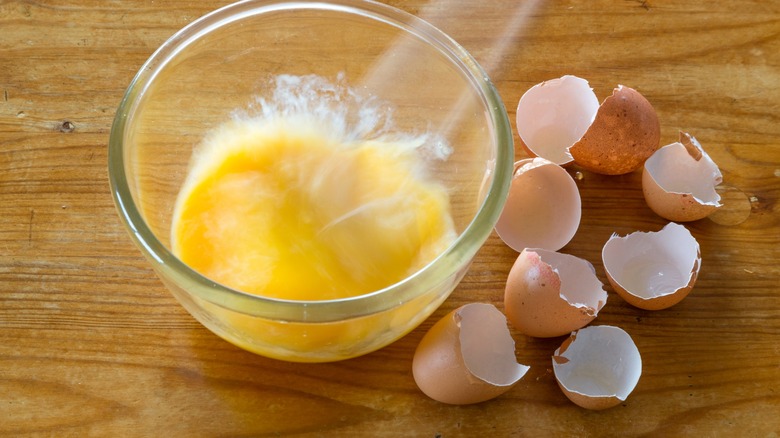
Celebrity chef Julia Child had a clever way to keep scrambled eggs from crossing the line between fluffy and creamy to cooked-to-death. She saved a little of the raw egg mixture and provided it with a hero moment at the very end of the scrambling. Her method, revealed in her "The Way to Cook," cookbook and accompanying instructional videos, calls for reserving about two tablespoons of beaten egg while the rest goes in the pan.
Child cooked the initial lion's share of the egg mixture low and slow in butter (shifting the eggs away from the pan edge, to the middle, as they heat). The ideal aim was to usher the eggs gently into a custard-adjacent phase, without letting the heat become too high and ruining the breakfast by relegating the moist and fluffy scrambled eggs to a plate of dry, lifeless bits.
Then came the celebrity chef magic trick. Once the eggs were nearly where she wanted them, Child reached for those previously set-aside tablespoons of raw, beaten eggs and added them to the pan. The heat already present in the cooked eggs finished cooking the newly added reserved portion, helping stop the scramble from becoming overdone. Celebrity chef Jacques Pépin agrees this is the way, also reserving some egg for the grand finale, and giving this technique a second famous-chef vote.
4. Add heavy whipping cream
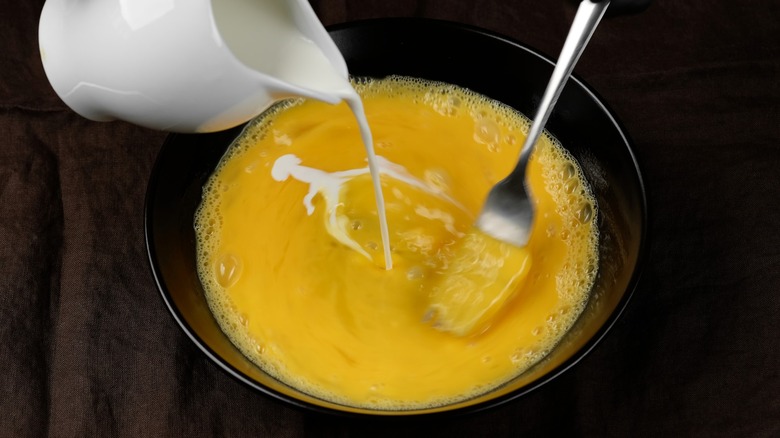
Celebrity chef Gordon Ramsay has shared several of his expert scrambled eggs methods with fans over the years, including adding a splash of heavy cream when whipping up his magical scrambled egg meals. And, while most folks already know how Ramsay is not exactly known for gently tiptoeing his way around the stove, this celebrity chef's fluffy scrambled egg advice is surprisingly mild. It simply involves the minute addition of heavy whipping cream. Specifically, Ramsay's method calls for only a smidge (like a tablespoon or two) of the dairy to be mixed into the eggs, which is said to add a rich quality, while also ensuring the texture remains tender, fluffy, and silky smooth.
The pivotal phrase here is "only a smidge," and that distinction matters, especially alongside Ina Garten's aforementioned "less is best" approach to liquids. (The unofficial celebrity chef fluffy scramble egg advisory committee may be divided on whether cream belongs in the bowl at all, but they do seem to agree that moderation matters).
Celebrity chef Jacques Pépin has his own fluffy scramble egg techniques, where he adds a little heavy cream at the finale and keeps whisking. In this case, the cream arrives near the finish rather than simply being incorporated before cooking, which is intended to help stop the cooking so the eggs don't overcook and become tough. This gives home cooks two celebrity chef approaches to consider as they crack those next eggs.
5. Whisk thoroughly for max aeration
The favorite childhood food of celebrity chef Jacques Pépin may be eggs Jeannette, but he's also known to make some mean and oh-so-fluffy scrambled eggs (and offers great advice for how you can, too). In fact, one piece of sage scrambled egg wisdom could be considered among the best cooking lessons from Monsieur Jacques Pépin yet.
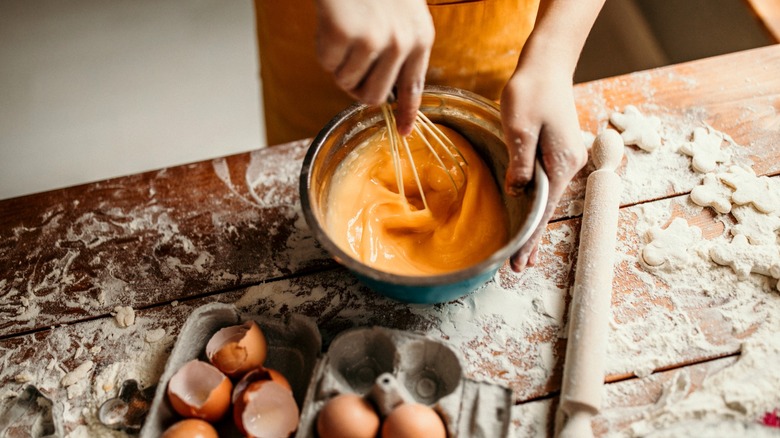
Let's just say that in the world of celebrity chefs, if scrambled eggs had a red-carpet entrance, Jacques Pépin would be the one who'd likely want them arriving with a wind machine. To create the wind for his scrambled eggs (okay, we all know we mean aeration here), Pépin is all about the whisking. Specifically, the French chef advises using vigorous, nearly continual movement to combine the eggs and incorporate air before and during the cooking process.
This is critical because aeration is a huge part of achieving that fluff factor that is the envy of every egg scrambler. Beating the eggs strongly brings an influx of air, which then expands as the eggs cook, thus aiding to create a lighter, fluffier final product. Gordon Ramsay has his own whisking endorsement, specifically recommending the use of an actual whisk (not a Pépin-approved fork) when beating the eggs. The reasoning behind this is that extra prongs allow greater airflow, further aerating the mixture for an even fluffier finished scramble.
6. Try a cornstarch slurry
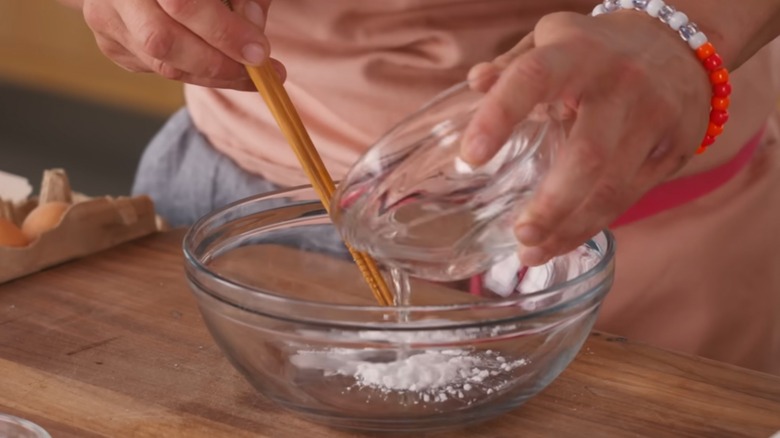
Culinary king J. Kenji López-Alt's fluffy scrambled egg secret sounds misleadingly close to a fast-food favorite. But, one of this celebrity chef's winning tricks of the trade is actually called a slurry, and it's made with cornstarch of all things. López-Alt combines the starch with water or milk to make this slurry, then infuses it alongside cold butter cubes into the eggs before cooking.
Apparently, the way the starch interacts with the egg proteins enables the mixture to avoid tightening to the extent that it's reduced to a dry, rubbery scramble. This way, eggs stay soft, creamy, and fluffy. The chef knows it sounds unusual, but this is one of those celebrity chef methods that makes you want to grab a bowl and investigate, which is exactly what folks have done (from food editors for prominent publications to social media chefs, and even home cooks).
The expert food editors who tested it found that the slurry delivered the dreamiest of creamy textures with little added labor, while also helping the eggs remain creamy, even after sitting a while after plated. And, the social media guinea pigs? They described the result as similar to a cloud, exceptionally light, and quite possibly the most fluffed-up scrambled eggs they've feasted on. Fun fact: The technique is more commonly used in Asia, adding a unique culinary context to an otherwise unexpected scrambled egg power move.
7. Use cold butter cubes
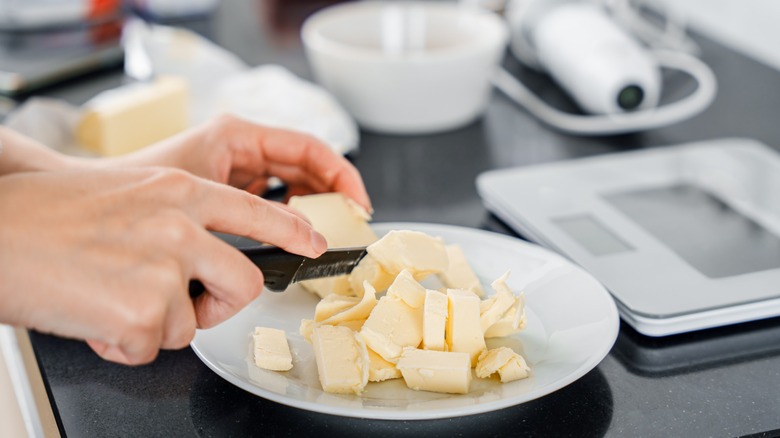
While cold butter cubes may sound like a strange guest to invite to the scrambled egg get together, celebrity chef J. Kenji López-Alt nonetheless puts them in his pan. Rather than melting butter first and pouring the eggs over it, his method starts by mixing cold, cubed butter directly into the raw eggs alongside a cornstarch slurry.
As the mixture heats, the butter melts gradually, a slower process that helps the eggs remain tender, moist, and creamy instead of allowing them to cook too much, too fast. The cornstarch is there to prevent the egg proteins from overly tightening. Together? They work to create a fluffy and oh-so-satisfying egg scramble. Yes, it's odd, as most folks are accustomed to gazing at butter as it foams and fizzes in a piping hot skillet before the eggs ever make their entrance. But, there's good reason behind López-Alt's seemingly Mad-Hatter method. The key here really boils down to being able to better control what happens as the eggs cook.
J. Kenji López-Alt's approach has even caught the attention of the New York Times Cooking channel, which highlighted the technique, confirming that it's an intriguing (and deliciously successful) celebrity chef trick to have in your breakfast recipe rolodex when craving the fluffiest scrambled eggs. So, maybe think of cold butter cubes as part of a carefully designed dynamic duo with the cornstarch slurry (kinda like the Batman and Robin of the scrambled egg realm).
8. The on-and-off heat method
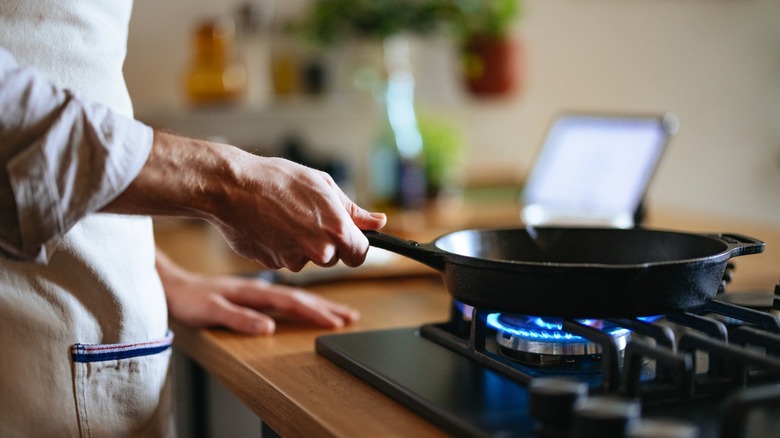
Gordon Ramsay is a celebrity chef that no one wants to come up against in a debate (have you seen "Hell's Kitchen"?). So when he comes out with a method for the fluffiest scrambled eggs that revolves around one core command? You do your darnedest to follow that order. And, that culinary missive is three succinct words: Control the heat. Ramsay, rather than leaving the pan parked over the burner until the eggs are finished, repeatedly moves the skillet on and off the heat source on an intermittent cycle changing roughly every 30 seconds.
That near constant alternating helps guard the pan from becoming too hot, so instead of letting the eggs careen at light-speed toward overcooking, by interrupting the heat while continuing to work the mixture, the chef is makimg scrambled egg magic. You will see the product of this sorcery is a far more fluffy, silky egg scramble that wouldn't be placed in the same vicinity as the adjective dry (much less overdone). This particular Ramsay technique has definitely got its fans. Chefs and everyday home cooks have tried the on-and-off approach on social media, with some saying they were so impressed by the results that they couldn't fathom whipping up fluffy scrambled eggs by any other method now.
Bottom line? It's that temperature management that cracks the code here. It turns out the fluffiest scrambled eggs don't have to be cooked by one uninterrupted blast of face-melting heat.
9. Fold in creamy cheeses at the end
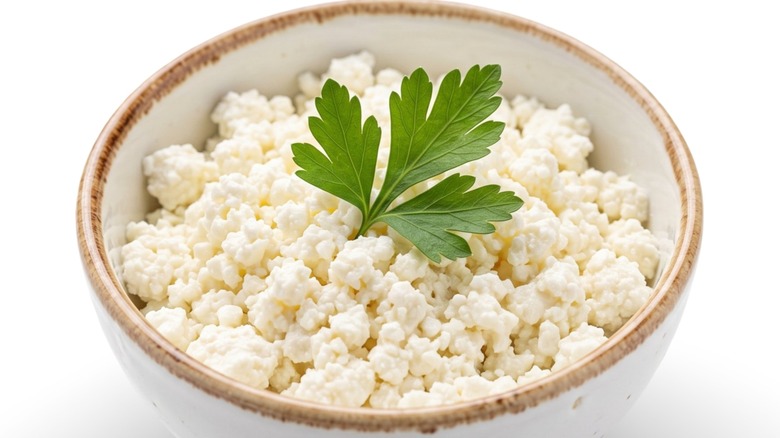
If you've ever wanted to make scrambled eggs like celebrity chef Bobby Flay, you'll want to start with embracing the notion that the fluffiest scrambled eggs can go beyond just butter, salt, and pepper. One way to give this breakfast favorite the celebrity chef treatment is to fold in a creamy cheese at the finale, which will result in decadently divine pockets of dairy paradise spread throughout the soft curds.
Flay is partial to goat cheese, but that's hardly the only type that can make scrambled eggs sing. While celebrity chef Ina Garten is also a fan of adding goat cheese, the Food Network has highlighted scrambled eggs made with a rich scoop of ricotta. There have even been mentions of mascarpone, whispers of cream cheese, and a little buzz about Boursin, so suffice it to say, egg scramblers have plenty of room to choose their favorite dairy pleasure.
And, while we touched on it initially, we will reiterate how much timing matters here. Rather than cooking the cheese from the beginning, celebrity chefs advise gently folding it into the eggs as the scrambles are nearly finished. This way, the cheese and all its flavors are front and center, not having already faded or burned away in the heat of the (long) moment. So, whether you're team goat cheese, ricotta, mascarpone, or cream cheese, just remember the secret to your fluffy scrambled egg dreams lies in that final fold.
10. Cool things down with crème fraîche
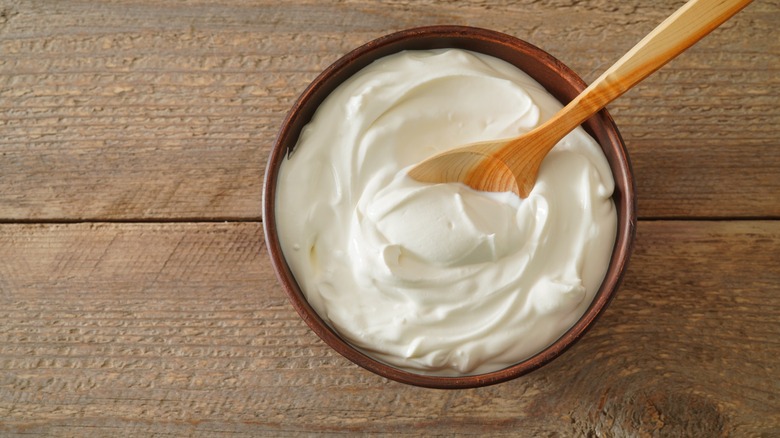
One more piece of Gordon Ramsay's fluffy scrambled egg advice has a smart finish, which is adding a spoonful of cold crème fraîche after the pan comes off the heat. The chilled dairy helps bring down the temperature, while adding both a rich decadence, and bit of zing, to the eggs. This cooling step is important since scrambled eggs can keep cooking from residual heat even after you've moved the pan away from the burner.
Ramsay's method uses the cool crème fraîche to interrupt that process before the eggs become overdone or tough. And, since crème fraîche has a higher fat content, it is less likely to curde when exposed to heat. Chefs on social media have tried Ramsay's way of adding crème fraîche at the end of their scramble specifically to cool the eggs and help prevent overcooking, with great success.
What's more, Ramsay is known to add the dairy delight straight from the refrigerator, so you know he means it needs to be chilled. Home cooks seem to appreciate the sheer simplicity of this fluffy scrambled eggs trick. Just cook the eggs, remove the pan from the heat, then stir in a spoonful of cold crème fraîche. No complicated ingredient list at all. Just a cool, creamy finale that keeps scrambled eggs silky, with a good amount of fluff.
11. Kill the heat early
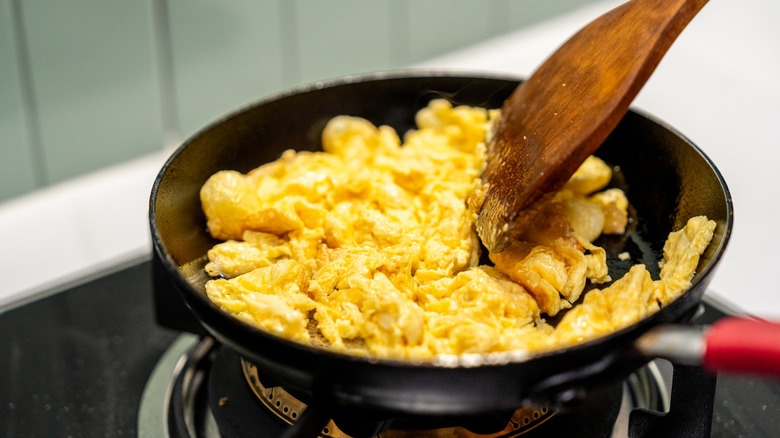
Perhaps one of the most difficult lessons to accept when striving to make the fluffiest scrambled eggs, is the all-too-true reality that the pan doesn't have to stay on the heat source until the eggs appear completely cooked through. But, don't just take our word for it, pro chefs Ina Garten and Alex Guarnaschelli both advocate for an earlier exit. Specifically, they champion the choice of removing the eggs from the heat while they're still slightly wet and soft, then allowing the residual heat in the pan finish the job.
That may seem like it's stopping too soon (glossy eggs make some folks unsettled). But, these celeb chefs point to carryover cooking as the moment you must trust your gut instincts. Since we know eggs continue cooking from the residual heat in the pan, we also are aware, logically, that leaving them on the burner until they look entirely cooked can end up pushing them well past the texture you're aiming for.
For egg scramblers, the success of this tip hinges not on knowing about some special ingredient, but on knowing when to walk away. This is why those glossy eggs that may have freaked you out before are exactly the kind of soft, just-this-side-of-wet curd quality you need to look for. The moment you catch a glimpse of that tiny window ... stop.