

This Is How Much A 6-Pack Of Beer Cost The Year You Were Born
Chances are, you had no idea what was going on the year you were born. You were too worried about eating, sleeping, and getting basic sensorial stimulation. The average going rate for a six-pack of beer at the grocery store wasn't really on your list of newborn priorities. Thankfully, we have the gift of retrospection. As a fully mature and literate human being, you can now find out how much a sixer would set you back the annum you debuted on Earth — be you a Baby Boomer, a Gen X-er, a millennial, or a Gen Z-er.
We're rolling back the years and cracking open a few cold ones to reveal how obnoxiously cheap — at least on the surface — take-home brews once cost. This may seem especially stark when considering how the craft beer presence has made those numbers on store shelves tick up a bit, what with your double IPAs, imperial stouts, and the lot. But the practical results, when inflation is taken into consideration, may actually surprise you enough that you need to settle your mind with a beer.
Starting in 1950, we're examining the mean retail price of a good old American peewee every five years until we reach the birth of the current-day 21-year-olds. We can witness, big picture-wise, the very trajectory of beer-flation and, in a way, the story of beer in America. Or at least some of it. This has to be the most beer-related fun you could possibly have, right?
1950
By the time the 1950s opened, beer sold in packs of six had only been in existence for around a decade. Yes, the six-pack for beverages was invented by Coca-Cola back in 1923, but beer wasn't packaged that way until the late 1930s or so, with several breweries credited as the first, including Ballantine's in New Jersey, Jax Brewing in Florida, and even Pabst. The origins may be murky, but what's crystal clear is that beer sold in rations of sixes would become the norm.
While data only stretches back to 1952, you could nab yourself one of these absolute norms in the early '50s for what would seem like a paltry sum: $1.57 or so. The thing is, it ain't so paltry when you factor in what that value is in today's money. (This is going to be a running theme throughout the piece.)
$1.57 in 1950 is roughly equal to roughly $21.80 today. When framed that way, it's a lot of money for a basic six-pack. These weren't artisanal hazy IPAs being sold either, yet that's more than most 12-packs in 2026 — or a more mainstream sixer, if you're shiftless enough to order it on Uber Eats and just splurge lazily on the delivery fees.
1955
Midway through the decade, Baby Boomers were still popping out into the world at a rapid rate. The year 1955 saw Elvis Presley sign a major contract with RCA Records, Ray Kroc open his first franchised McDonald's, and Johnny Carson premiere his eponymous show. In the midst of the Eisenhower presidency, the six-pack saw a slight uptick in price from 1950, though it still remained nothing to sneeze at when inflation is retrospectively considered.
The Ike Hike (a term we just made up for this very specific span of time about this very specific thing) saw the average six-pack in 1955 go for $1.61, which is actually a tad lower than its 1954 price, according to Cheapism (we're talking literally a penny, but every little helps). With that increase from 1950, however, that moves the equivalent in today's money to over $20.
Again, this is for six beers. A pretty eye-opening notion, especially when you consider the fact you can find plenty of quality six-packs that retail for under $10 in 2026. Those old glory days don't seem so glorious anymore. Maybe that's why the national highway system was constructed in the 1950s in the first place: People needed to drive across state lines to search for cheap six-packs.
1960
You have to figure a lot of beer was imbibed during the first presidential debate broadcast live on TV between John F. Kennedy and Richard Nixon (around 70 million tuned in, by some estimates). 1960 was also a year the beer industry itself was rocked, as suds scion Adolph Coors III was kidnapped for ransom, then subsequently shot to death, setting off one of the biggest FBI manhunts ever seen.
To use that grim event as a jarring, if not irrelevant, segue: What did a six-pack of Coors cost at the time? Well, the average, general sixer in 1960 would run you $1.70. Granted, not too much had changed from the 1950s in this regard, including the equivalent value in today's money — which would be, once again, a little over $19.
This would shift a bit as the 1960s went on, and the average price would spike in higher increments, while the inflation-adjusted cost would go down at a similarly substantial rate. A lot of America would change in the '60s, much more radically than the beer economy. Still, a sign of things to come.
1965
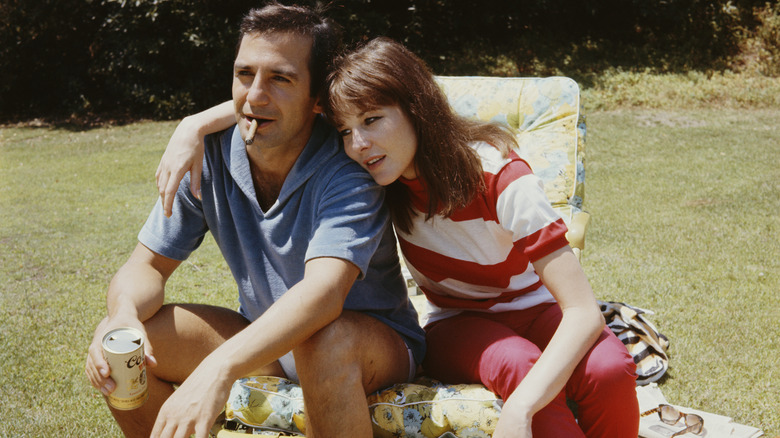
The '60s were in full swing by now, as was Beatlemania. Like any good, red-blooded Brit, the Beatles liked a pint. And no doubt they went for a portable beer or two as well, as did many, many Americans. The mid-1960s saw the beginning of a per-capita rise in American beer drinking that would continue for decades.
In 1960, the average American of drinking age consumed 21.95 gallons of beer annually. By 1965, that rose to over 23 gallons (although this would just be a drop in the bucket — or, er, keg — compared to what would come during the 1970s and '80s).
How much was the average six-pack in 1965 then? We're now looking at $1.76, which takes us to just under $19 in 2026 when adjusted for inflation. A year later, global beer lover William Shatner would be starring as Captain Kirk on "Star Trek" — although Kirk's drink of choice, Romulan Ale, wouldn't actually hit the market for decades.
1970
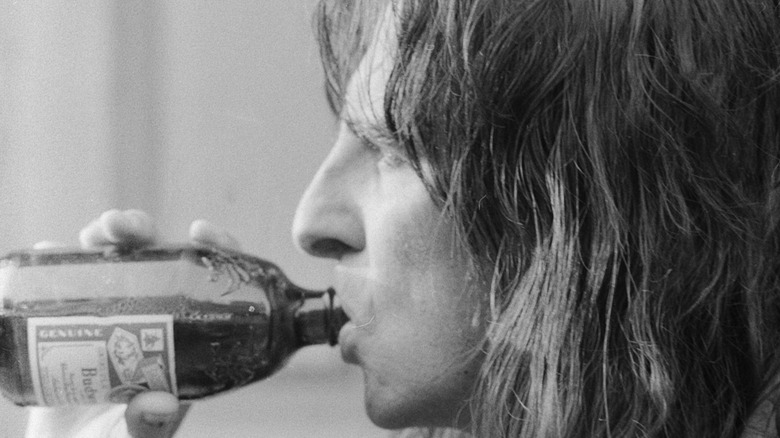
As the 1970s stormed in, Anheuser-Busch was beginning to pull away as the dominant force in brewing. The decade would also see the twilight of several other beer brands that still remained in the top 10 in barrels sold, including bygone names such as Falstaff, Schlitz, and the rarely seen lager Schaefer. In general, beer consumption among Americans continued to swell, despite the fact that prices had gone up.
They did so by breaking the $2 mark for the first time in 1971, regarding the cost of an average six-pack to an average customer. Although in 1970, the mean cost was still $1.98 (around $17.55 in today's bread). The '70s overall would be met by a period of economic stagflation ("stagnation" and "inflation" combined). This meant prices were rising, but the money in people's pockets wasn't keeping up. Never a fun combo (and sadly relevant to now).
As mentioned, this didn't turn people away from beer. Really, who could blame them, what with crushing financial stress and related pressures? You would even understand if they went full Viking and turned to potent mead instead of mere beer. Hey, people need a strong one at the end of a hard day — or a hard decade.
1975
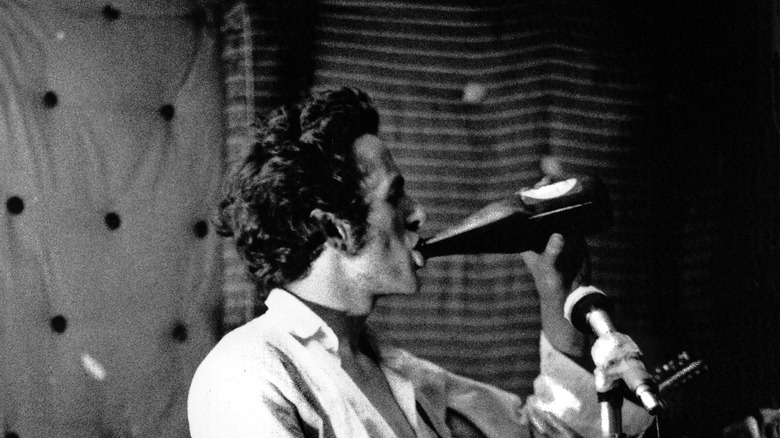
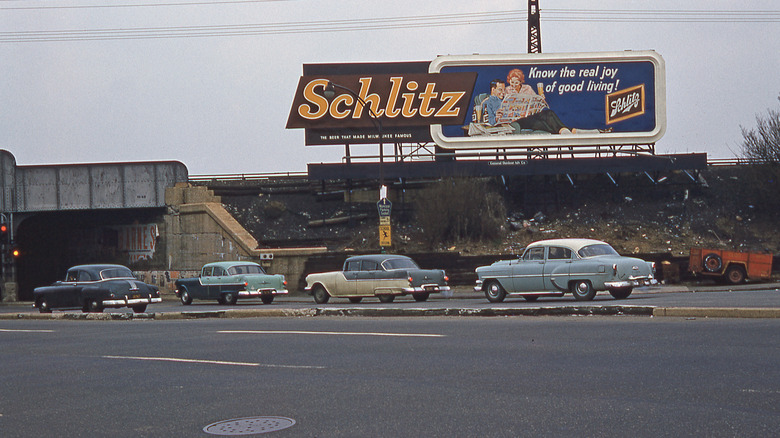
The mid-1970s saw the beginning of the end of a powerhouse beer brand. Schlitz, once the steady number two in American beer sales after Budweiser and considered the quintessential Milwaukee brew, had an ugly demise. Selling over 21 million barrels a year in the early '70s, a series of unfortunate events led to the original operation being sold off in the early '80s and Schlitz itself being relegated to something of a relic before Pabst discontinued the label completely in 2026 (although it did note that there was hope for it to return in the future).
Yet, in 1975, there were still plenty of Schlitz six-packs available. And its offering, grouped in with all the other six-packs for sale in the U.S., cost on average $2.55. The good news — for who knows what type of person, a time traveler perhaps — was that the inflation-adjusted price had ticked mightily downwards from the start of the decade: $16.40.
This is a curious quirk of economics when a contemporaneous retail price markedly increases, but the inflation calculation shows that it's also falling from today's standpoint. I guess, from a layman's POV, this shift would have to happen at some point so that the modern-day cost could become, well, the modern-day cost. Man, money is confusing.
1980
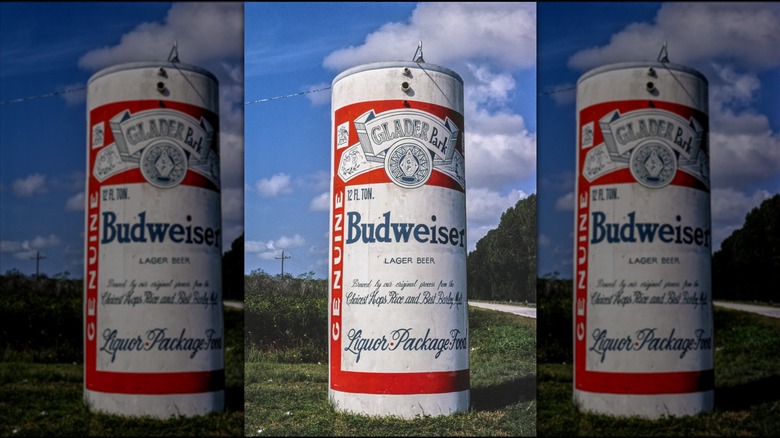
Remember how we mentioned the start of a steady, relentless rise in beer consumption back in 1965? By 1980, Americans were consuming an average of over 30 gallons of beer per year – up 7 gallons from the mid-'60s. In the late 1970s, Miller Brewing claimed its spot as the steady number-two in beer sales to perennial top dog Anheuser-Busch, meaning the beer landscape was looking very different than in years past.
Another number that would have a pronounced growth from 1965: the price of a six-pack. 1980 sees us well into the $3 range for an average six-pack price ($3.40 to be precise). The age of excess was dawning, greed would be considered good, and so dropping less than four smackeroos on a little parcel of a good time wasn't much of a problem for a lot of folks.
This was also bringing the inflation-adjusted rate down to $14.64 for a six-pack. Still feels like a lot for your mainstream lager in 2026, but, unlike past decades, it's not astronomical. Plenty of half-dozeners go for more than this in a 2026 grocery store.
1985
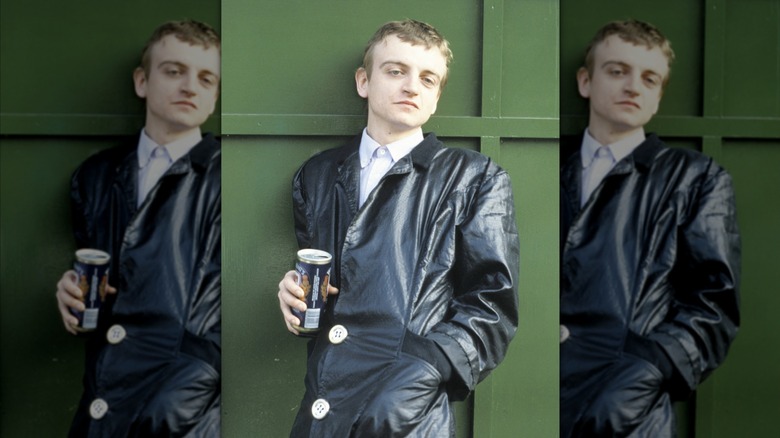
By 1985, we've fully transitioned from Gen X bambinos being born to millennials (in '85, these would still perhaps be considered the wizened "elder" millennials of lore). By this moment in brewing history, the craft beer movement was in full swing. The previous few years saw the founding of Samuel Adams, Sierra Nevada, and Bell's, while the first microbreweries began to appear in many states.
These brought a manifold increase in options in the six-pack section of the grocery store. This also corresponded with a spike in the average price of a six-pack, which, by now, was $4.29. That's almost an entire dollar increase from five years earlier — yet when adjusted for today's money, it's also significantly (and proportionally) less than five years previous: $13.62.
This is a six-pack price range that many millennials would have found themselves used to once they came of drinking age — which was, of course, very definitely 21 and not one day before. We can all thank 1984 for that, by the way, as that was the year the National Minimum Drinking Age Act was introduced, pushing all states to raise the age to 21.
1990
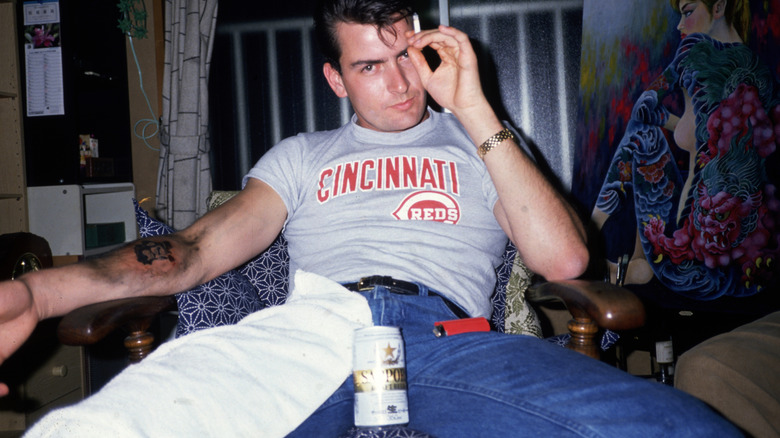
This is where the millennial split, if we can call it that, is most apparent (and probably even warrants a subgrouping). There's just too big a reference gap between being born in 1990 compared to being born in the early '80s. Those born in, say, 1982, were more than likely having their first proper beers at some point later in the 1990s, unlike the younger set.
How much were people paying for a six-pack back in 1990, however? Whether you were of age or a teenage Gen X-er chancing it at a corner store with a fake ID (probably their older sibling's driver's license or something), on average, those prospective beer drinkers would have dropped about $4.96 on a six-pack.
For those of us who remember the '90s, this is a minuscule amount that seems almost laughable to think about now. Less than $5 for a six-pack? Even though an inflation calculator tells us it's the 2026 equivalent of just over $13 – which is undoubtedly true — it just feels so much less. So, so much less.
1995
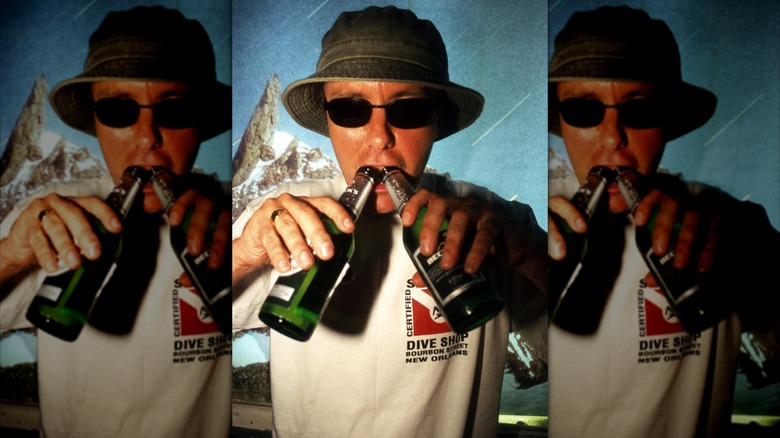
We come upon the swan song of millennial births and the transition to the nascence of Gen Z. This was also the year that saw the peak of the early '90s craft-beer rise, with annual volume growth in that sector going from 35% in 1991 to 58% in 1995. The preponderance of craft beer on sale, with higher retail costs than your now run-of-the-mill Buds and Coors, may have started to have an effect on the average price of a six-pack.
And what was that price? $5.78 ($12.88 in current cashola). Yet another thing that makes us look back on the decade and yearn nostalgically, along with long-lost '90s fast-food items and '90s ice cream treats.
The decade would not only see out the century and the millennium, but also usher in the end of the average six-pack being under $6. Sad days. Beer for under a dollar each, beer that you can scrounge up some loose change for, beer that even on your worst day you could probably afford and enjoy in the sun? Finito. Gone. Yeah, yeah, the internet and tech and stuff were big turning points too, we guess. But this was major.
2000
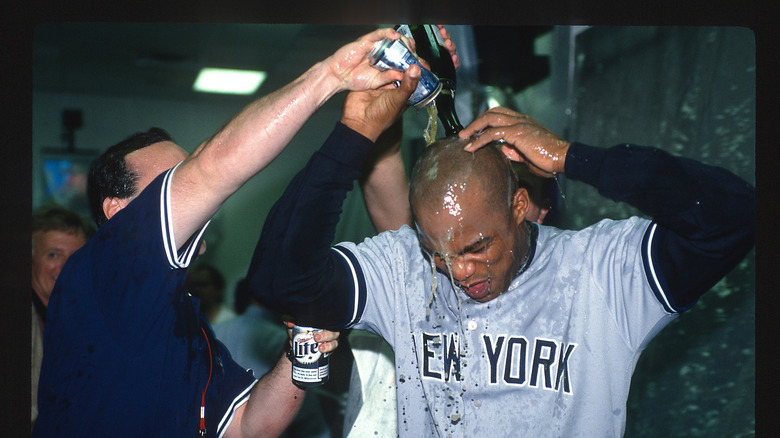
The noughties would witness Guinness truly find its prominent place in the American market, entering the top-10 in barrels sold before the decade was out, while also potentially throwing off the six-pack data by selling its beer in four-packs. Setting that stout-centric anomaly aside, what was the cost of the average six-pack at the turn of the millennium?
Even as recently as the year 2000, the price was only $6.30. Oof, that feels low. Not in the head but in the gut. It's equal to $12.50 two and a half decades later. However, to put that into a more salient perspective, the median cost of a single beer at a restaurant in August 2026 was estimated to be $6.62. Again: oof.
There's more bad news on that last point. Beer prices appear to remain steadily rising, especially at bars and eateries. Looks like the store six-pack is going to have to be relied upon, perhaps more than ever. Or, at the very least, that Pringles and Miller Lite mashup that no one really asked for. Second thought, let's just stick with the six-packs.
2005
This is the year the 21-year-olds of 2026 came into existence, the vanguard beer drinkers of our current age. And despite reports and rumors to the contrary, it seems Gen Z is generally as keen on alcohol as the older generations. Welcome to the party, Zoomers. You've got the wisdom of half a century of hangover cures in your senior demographics. Utilize them. By the way, how much were they all paying for a six-pack the year you were born?
The answer is $7.09. That's $12.45 in 2026 bills, which is only $0.05 less than it was in 2000. It's not until the next year, 2006, that you see a notable inflationary drop ($12.10), which is interesting to ponder. However, the inflation value would fluctuate significantly over the subsequent 20 years. For example, in 2021, the average six-pack price, inflation-wise, was $11.56 in 2025 money, but the actual average 2025 six-pack price was under $11.
With all this said, and with what's reflected in the inflation-based values, beer in this day and age is actually cheaper — yes, cheaper, relatively — than it's really ever been. So much so that a study published by the National Library of Medicine reported a public health concern over the affordability of beer back in 2018. Beer has gone up about $2 per average six-pack since that report was published, but it's still way less expensive in 2026 — considering inflation, of course — than in decades.